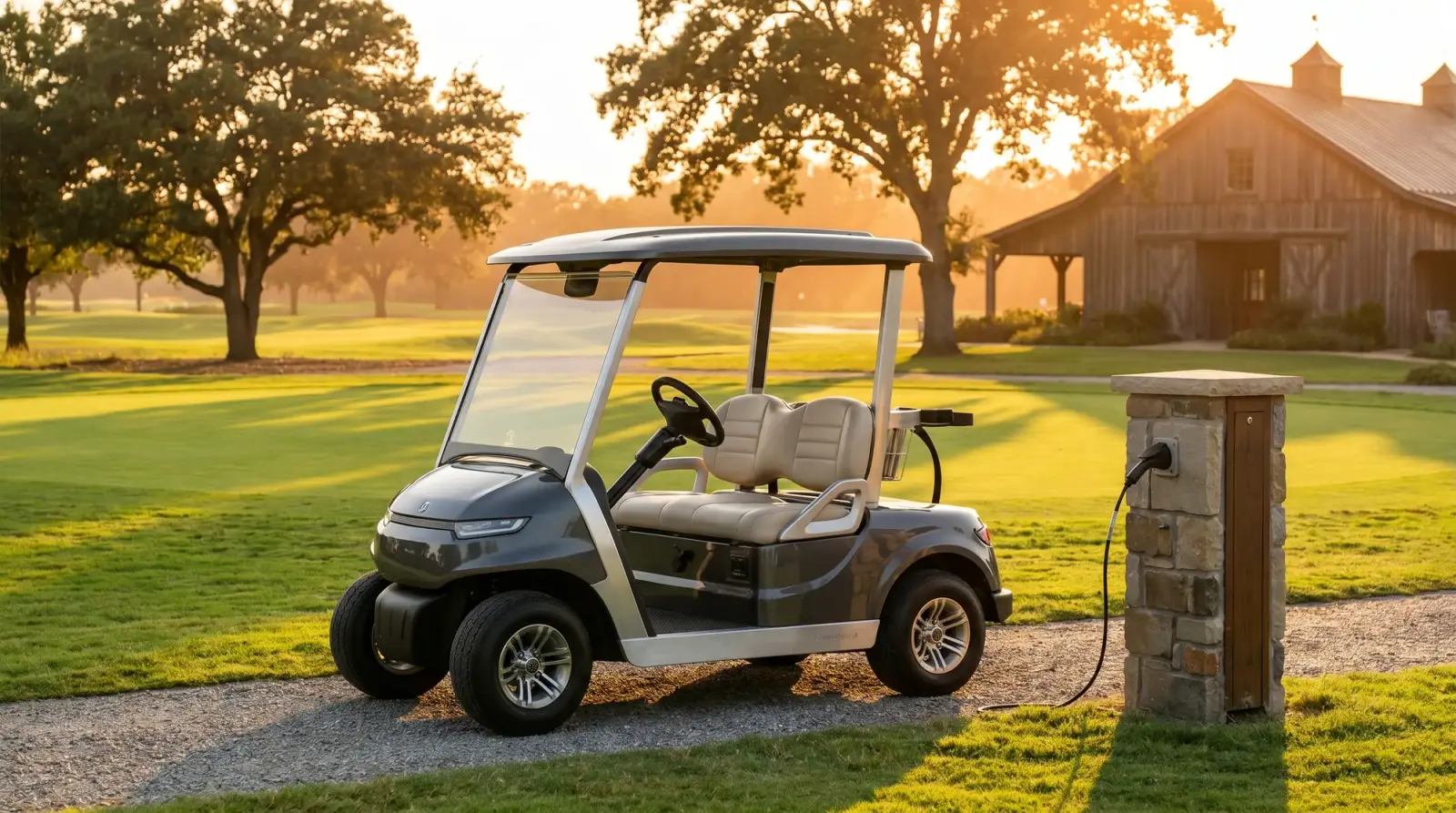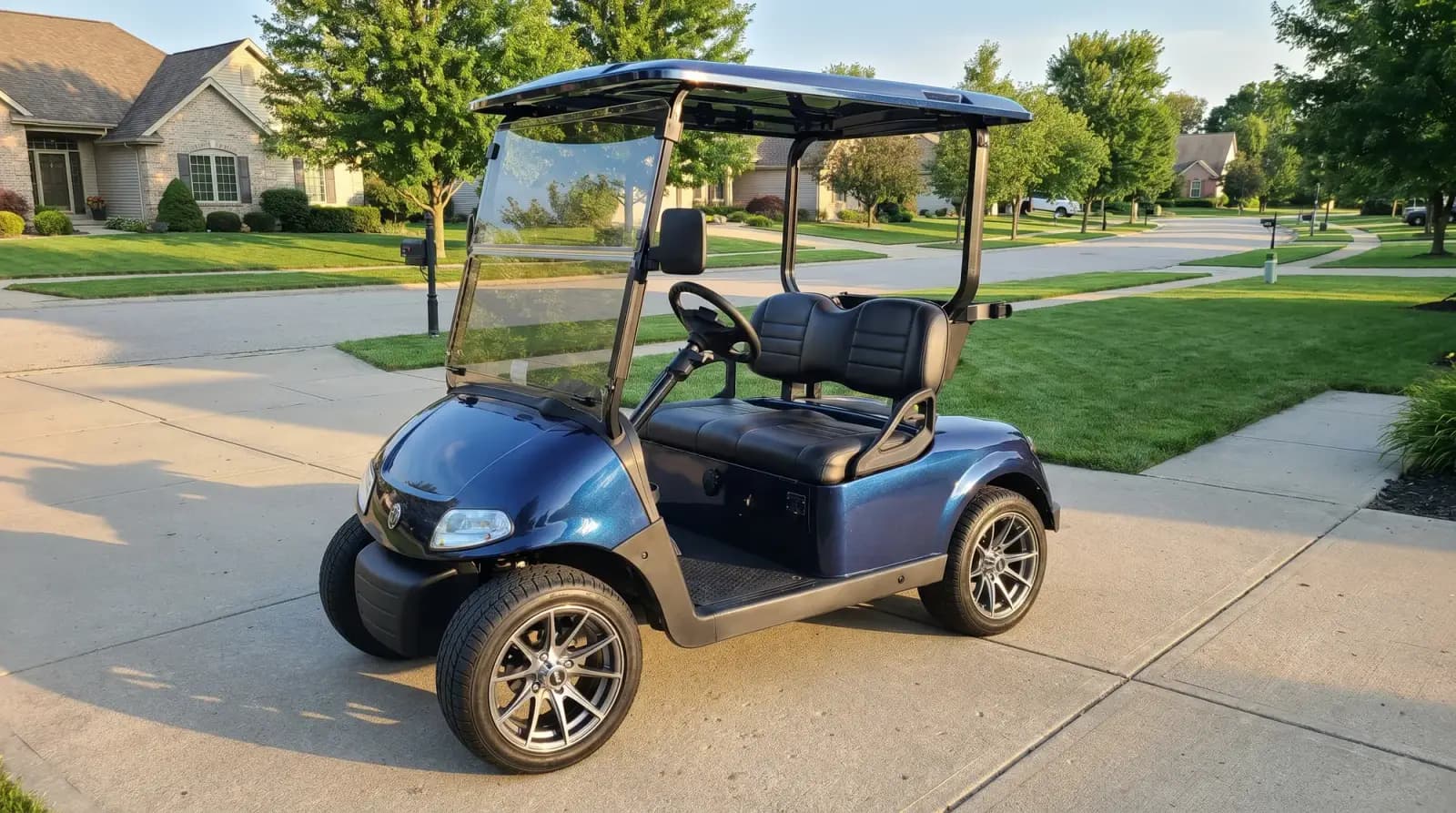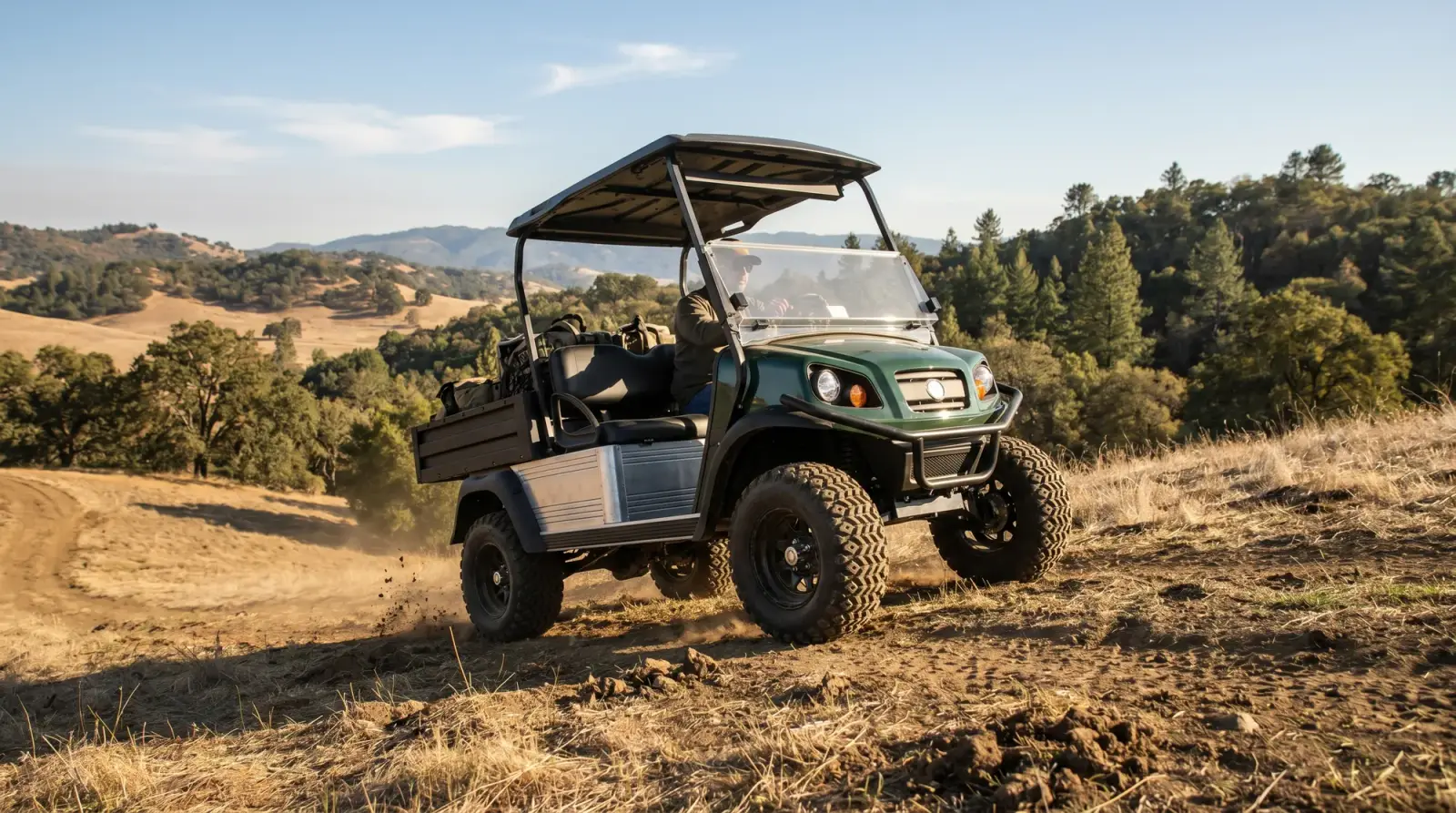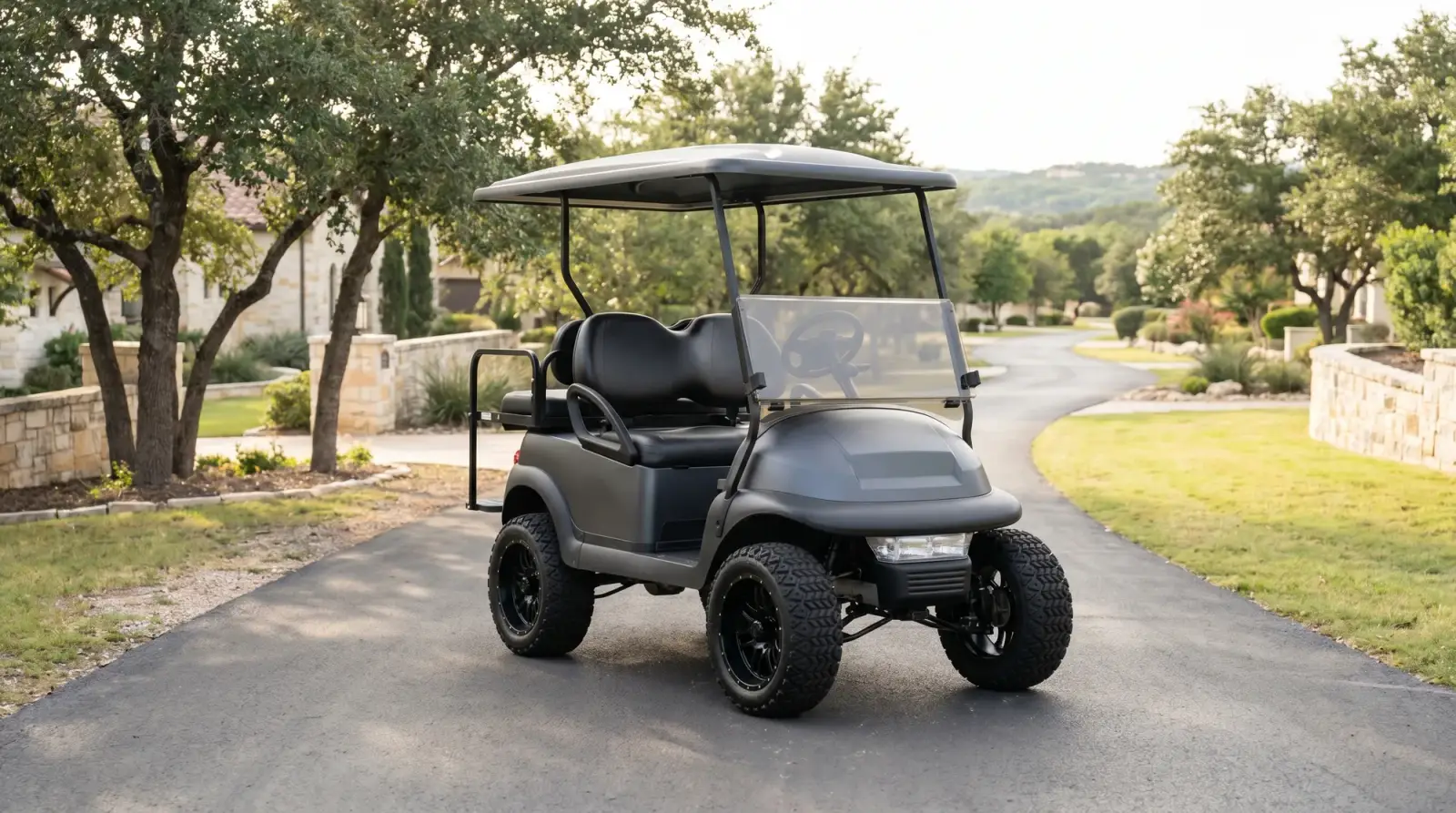
- Electric golf carts are quieter, cleaner, cheaper to run and need less maintenance; modern lithium models also offer strong range and power.
- Gas golf carts refuel in seconds and suit very long days far from any power, but they are louder, smell, and need more servicing.
- For most resorts, communities and courses, an electric cart is the better all-round fit, especially with a lithium pack.
- Gas can still make sense for remote, heavy-duty, all-day work where charging is impractical.
- Hawke builds premium electric carts on lithium power, chosen for low running cost, quiet operation and long life.
Electric or gas golf cart? For most people, an electric cart is the better choice: it is quieter, cleaner, cheaper to run and needs far less maintenance, and modern lithium models deliver plenty of range and power. Gas carts have one real advantage, you refuel in seconds and can run all day far from any outlet, but they come with noise, fumes and more upkeep. The right answer depends on how, where and how long you drive.
The honest trade-off in one table
- Electric (lithium)
- Low, charge from a regular outlet
- Gas
- Higher, ongoing fuel cost
- Electric (lithium)
- Very quiet
- Gas
- Loud engine noise
- Electric (lithium)
- None at the cart
- Gas
- Exhaust fumes and smell
- Electric (lithium)
- Minimal, no oil or engine servicing
- Gas
- Regular, oil, filters, spark plugs, belts
- Electric (lithium)
- Plug in, full by next use
- Gas
- Refuel in seconds at a pump or can
- Electric (lithium)
- Strong with a good lithium pack
- Gas
- Long, limited only by tank and fuel
- Electric (lithium)
- Resorts, communities, courses, daily use
- Gas
- Remote, all-day, heavy-duty work
| Factor | Electric (lithium) | Gas |
|---|---|---|
| Running cost | Low, charge from a regular outlet | Higher, ongoing fuel cost |
| Noise | Very quiet | Loud engine noise |
| Emissions and smell | None at the cart | Exhaust fumes and smell |
| Maintenance | Minimal, no oil or engine servicing | Regular, oil, filters, spark plugs, belts |
| Refuel or recharge | Plug in, full by next use | Refuel in seconds at a pump or can |
| Range per fill/charge | Strong with a good lithium pack | Long, limited only by tank and fuel |
| Best for | Resorts, communities, courses, daily use | Remote, all-day, heavy-duty work |
Running cost and maintenance
This is where electric pulls clearly ahead. Charging a cart from a standard outlet costs a fraction of buying fuel, and there is no engine to service, no oil changes, no filters, no spark plugs and no belts. A gas cart has a small engine that needs the same kind of attention as any other small engine, which adds up over the years in both money and downtime. If you want the lowest fuss and lowest running cost, electric wins comfortably.
Noise, comfort and the experience
An electric cart glides almost silently, which transforms the experience on a course, around a resort or through a residential community. You can hold a conversation, you are not announcing your arrival, and there is no exhaust drifting back over your passengers. Gas carts are noticeably louder and produce fumes, which is fine on an open work site but far less pleasant for guests, families or anyone driving regularly near homes.
The quiet of an electric cart is something owners notice on the very first drive and never want to give up.
Range, power and hills
A common worry is whether electric can keep up on long days or steep ground. With a properly specified lithium pack, the answer is generally yes. Lithium holds its power as it discharges, so the cart pulls as strongly on the last hill as the first, and range is sized to the job at build time. Gas still has the edge for genuinely long, continuous use where there is simply no chance to charge, because you can refuel in seconds anywhere you can carry fuel.
If hills and rough ground are your main concern, our guide to the best golf carts for hills and off-road goes into specifying power and torque properly.
When gas still makes sense
- All-day, continuous use far from any power source, where recharging is impractical.
- Heavy, remote utility work on large estates, ranches or sites without electrical infrastructure.
- Situations where refuelling in seconds from a can is genuinely more practical than plugging in.
Outside these cases, the reasons to choose gas keep shrinking as lithium electric carts improve. For most resorts, gated communities, golf clubs and private owners, electric is the better fit.
Environment, neighbours and the long view
There is a wider point worth making. An electric cart produces no exhaust at the cart and runs almost silently, which matters in residential communities, near homes, around guests and anywhere noise and fumes would be unwelcome. A gas cart, by contrast, announces itself and leaves a smell behind it. For venues that care about the experience they offer, and for owners who simply want a calmer, cleaner ride, that difference is felt on every single trip rather than just on paper.
Take the long view on ownership too. Across the years you keep a cart, the lower fuel and maintenance costs of electric accumulate, and a quality lithium pack avoids the frequent battery replacements that dogged older electric carts. When you weigh up the total experience, quiet, clean, cheap to run and low-maintenance, electric is hard to beat for everyday use, which is exactly why we build around it.
Thinking electric? Let us spec the right cart.
We build premium lithium-powered carts to order, sized to your range, terrain and seating. Tell us how you will use it and we will recommend the right build.
How to decide
- 01
Estimate your daily distance and hours
If you can recharge between uses or overnight, electric covers most needs comfortably.
- 02
Check charging access
A regular outlet near where you park is usually all electric needs. No outlet anywhere is the main reason to consider gas.
- 03
Weigh noise and setting
Resorts, communities and courses strongly favour quiet, clean electric.
- 04
Factor in running cost and upkeep
Over years of ownership, electric's lower fuel and maintenance costs add up. See our [buyer's guide](/guides/gas-vs-electric-vs-lithium-buyers-guide-us).
Frequently asked questions
Is an electric or gas golf cart better?+
For most buyers, electric is better: it is quieter, cleaner, cheaper to run and needs less maintenance, and modern lithium models offer strong range and power. Gas mainly wins for all-day, remote use where charging is impractical.
Are electric golf carts cheaper to run than gas?+
Yes. Charging from a standard outlet costs far less than buying fuel, and there is no engine servicing, oil, filters or spark plugs. Over years of ownership the savings are significant.
Do electric golf carts have enough power for hills?+
With a properly specified lithium pack and motor, yes. Lithium holds its voltage as it drains, so the cart keeps its power on climbs. For steep terrain, the cart should be specced with hills in mind.
How long does it take to charge an electric golf cart?+
It depends on the pack and charger, but lithium charges faster than older lead-acid and is happy with partial top-ups. Most owners simply plug in between uses or overnight.
Do gas golf carts still have any advantages?+
Yes, mainly fast refuelling and the ability to run continuously far from power. For heavy, remote, all-day work without charging access, gas can still be the practical choice.
Related solutions
Ready to explore what we build?
See the vehicles and the setting this applies to, or get a tailored quote built around your site.
Ready to find the right buggy?
Tell us how and where it will work and we will specify a vehicle and a tailored quote built around you. Every build comes with a 3-year warranty and a 24-hour priority call-out.
Our guides are written and reviewed by the Hawke Electric Vehicles team, the people who specify, build, deliver and support the vehicles. We focus on honest, practical advice and flag where a figure depends on the build rather than guessing.
More guides by Hawke