Electric buggies turn up in UK retirement villages in two distinct ways: operator-run shuttles that carry residents between apartments, the restaurant and the wellness centre, and resident-owned buggies driven on the village's private roads. Both are growing fast as integrated retirement communities get bigger, and both need clearer rules than most operators currently have.
To be clear about scope: this guide is about resident transport in village-scale communities, the Audley and McCarthy Stone style of development with 100-plus units and a private road network. It's not about staff vehicles moving laundry around a care home's grounds, which is a different job with different maths. If you operate a village, or you live in one and fancy a buggy, here's how the pieces fit.
- Larger integrated retirement communities increasingly run resident shuttles between apartments, the village centre, restaurant and clinics.
- Residents driving their own buggies on private village roads is the operator's call. Good policies cover insurance, a 5 to 10mph limit, and where buggies park and charge.
- A buggy carries a passenger and the shopping and suits longer private-road runs. A Class 2 or 3 mobility scooter has pavement rights a buggy doesn't.
- Charging at apartment blocks needs planning, especially for lithium batteries. Never charge in internal corridors or escape routes.
- Accessible spec is non-negotiable: low step height, grab rails and simple controls matter more than anything on the spec sheet.
Do UK retirement villages run buggy shuttles?
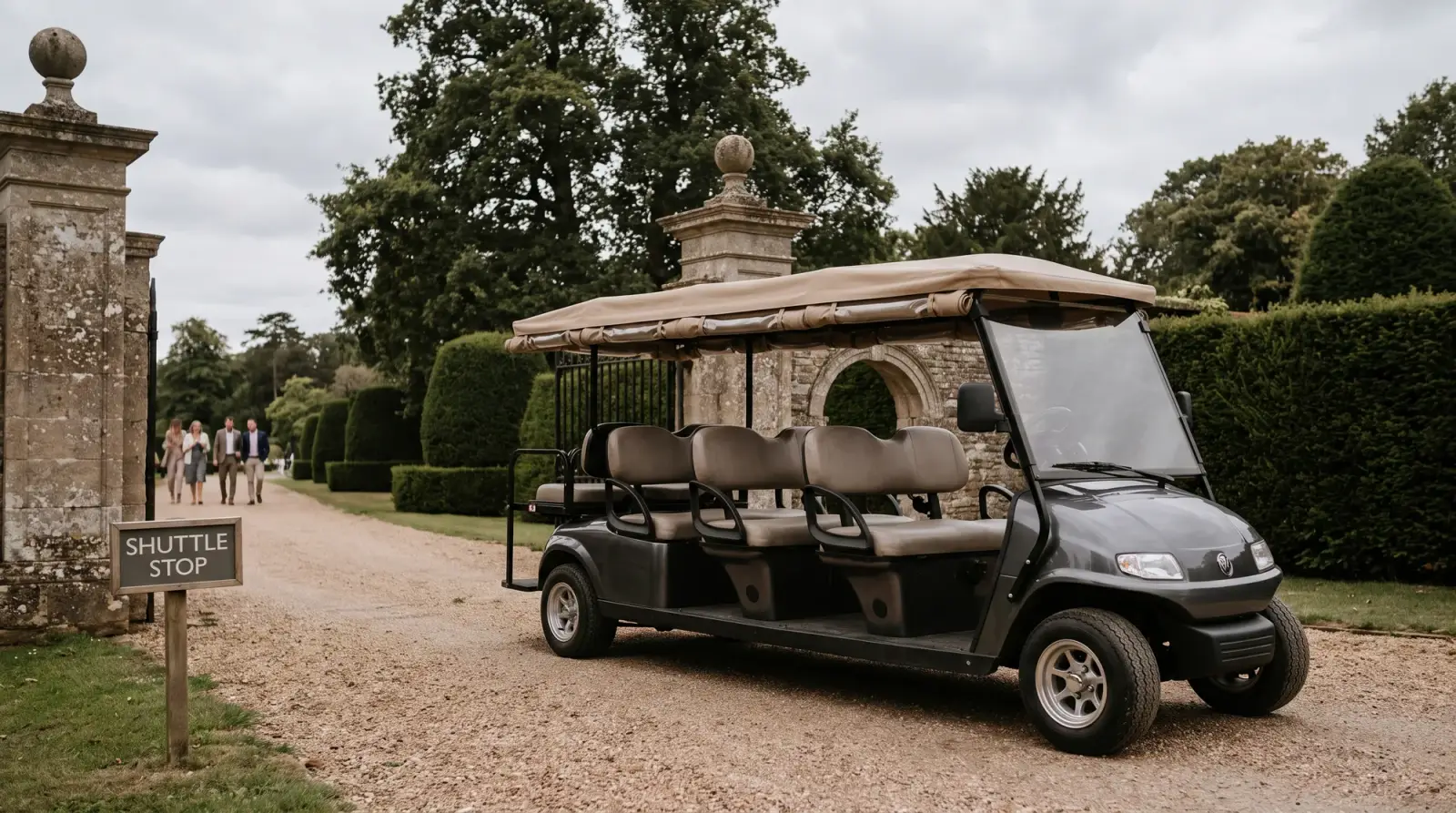
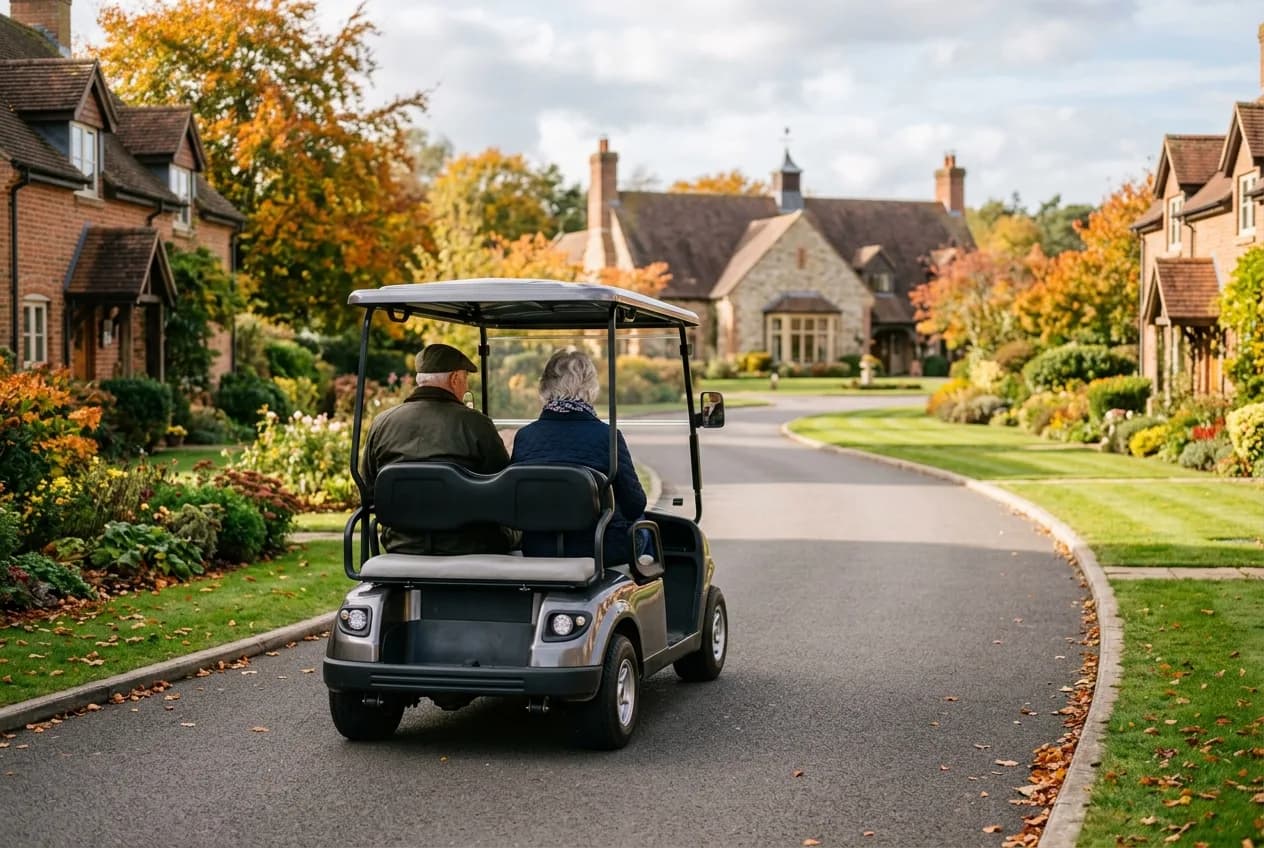
Increasingly, yes. Once a community passes roughly a hundred units, the walk from the far apartment block to the restaurant can be 400 metres or more, which is a genuine barrier for the residents the village exists to serve. Operators respond with a shuttle: typically one four to six-seat electric buggy, driven by a team member or a volunteer resident, running to a loose timetable around lunch and activity times plus an on-request service for clinic appointments and visitor pickups.
The shuttle earns its keep beyond convenience. It keeps less-mobile residents using the restaurant and events programme (which is where village life actually happens), it helps on icy mornings when nobody should be walking, and it gives the operator a visible, photographable answer to the accessibility question every prospective family asks on a tour.
Can residents drive their own buggies in the village?
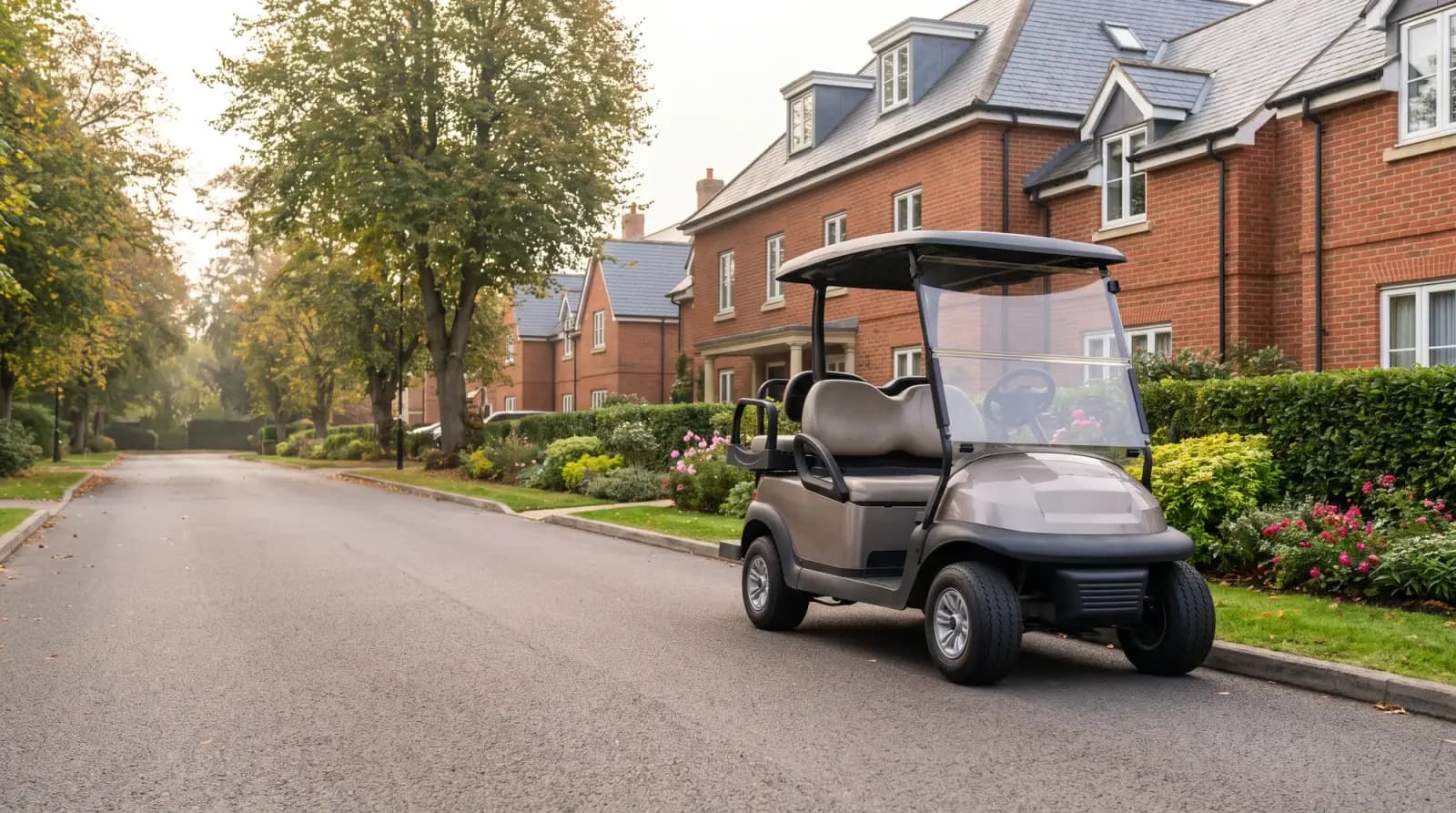
On private village roads, that's entirely the operator's decision. There's no DVLA registration or driving licence requirement on private land, so the village's own policy is the rulebook. The good policies we've seen share four ingredients: proof of insurance before the buggy arrives, a village speed limit of 5 to 10mph, designated parking and charging locations rather than a free-for-all, and a simple competence check with the estates team before first use. Some operators also cap numbers or require pre-approval of the specific model.
It's worth being explicit with residents about what a buggy is not. It has no right to use public roads or pavements outside the gate, unlike a registered mobility scooter, and driving one to the shops down a public lane is a non-starter. Our guide to whether golf buggies are road legal explains why the public-road door is firmly shut.
Buggy or mobility scooter: which suits village life?
They're different tools, and plenty of residents end up wanting both. The scooter wins outside the gate; the buggy wins inside it, especially for couples.
- Electric buggy
- Driver plus 1 to 5 passengers, room for shopping
- Class 2/3 mobility scooter
- Driver only, small basket
- Electric buggy
- Private village roads only, where the operator permits
- Class 2/3 mobility scooter
- Pavements at 4mph; Class 3 can use roads at 8mph once registered
- Electric buggy
- Limited to 5-10mph under village policy
- Class 2/3 mobility scooter
- 4mph on paths, matching pedestrians
- Electric buggy
- Canopy or full cab options
- Class 2/3 mobility scooter
- Usually none without aftermarket canopies
- Electric buggy
- Longer private-road runs, couples, guests, the weekly shop
- Class 2/3 mobility scooter
- Independence beyond the village gate
| Electric buggy | Class 2/3 mobility scooter | |
|---|---|---|
| Carrying capacity | Driver plus 1 to 5 passengers, room for shopping | Driver only, small basket |
| Where it can go | Private village roads only, where the operator permits | Pavements at 4mph; Class 3 can use roads at 8mph once registered |
| Typical village speed | Limited to 5-10mph under village policy | 4mph on paths, matching pedestrians |
| Weather protection | Canopy or full cab options | Usually none without aftermarket canopies |
| Best for | Longer private-road runs, couples, guests, the weekly shop | Independence beyond the village gate |
What spec suits older drivers and passengers?
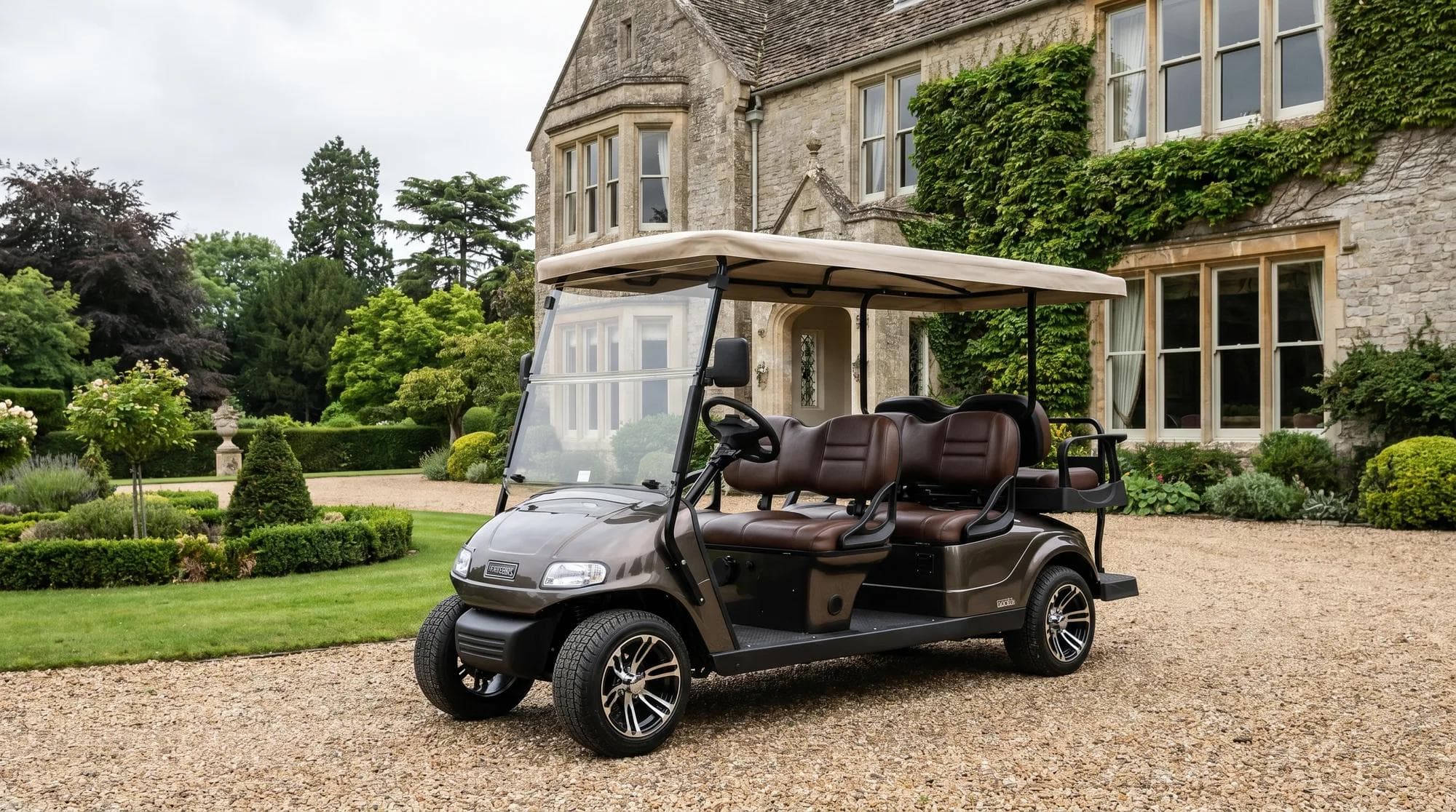
Accessible spec first, everything else second. That means a low, flat entry step (under 30cm), grab rails at every seat, a bench the resident can slide across rather than climb into, and controls that are simple and forgiving: one pedal for go, strong automatic braking when you lift off, no fiddly switchgear. Quiet electric drive helps residents with hearing aids hold a conversation on the move. For shared shuttles, add a rack for walking frames and a step light for winter afternoons. Speed governors matter too; a buggy limited to 10mph feels brisk enough on a village road.
Who insures and charges a resident's buggy?
Insurance sits with the resident, and the operator's policy should demand proof annually. Specialist leisure vehicle policies cover buggies for liability, theft and damage at modest cost; our golf buggy insurance guide explains the options. The operator should also check its own liability position with its insurer once resident buggies are permitted on the roads it manages.
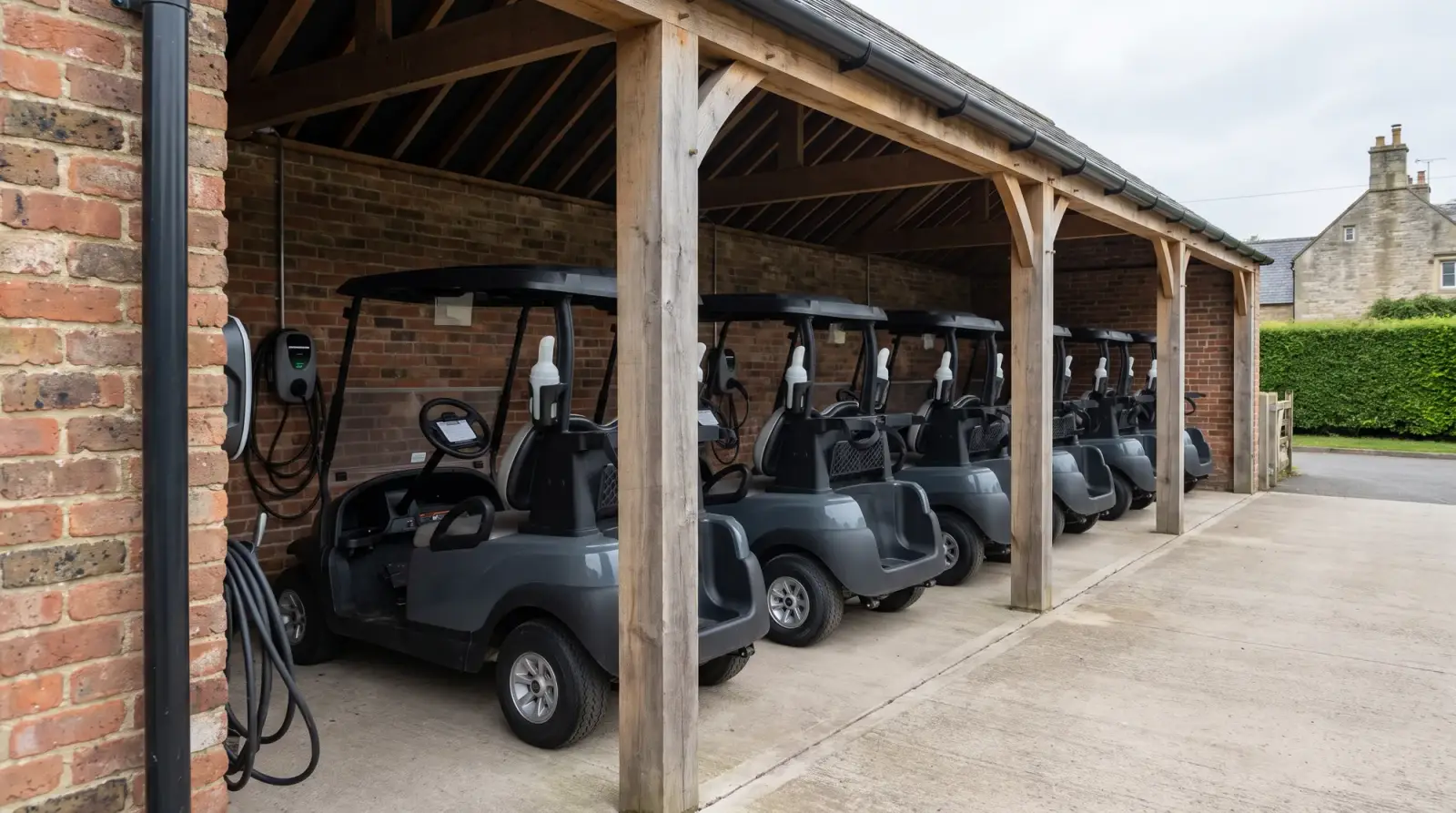
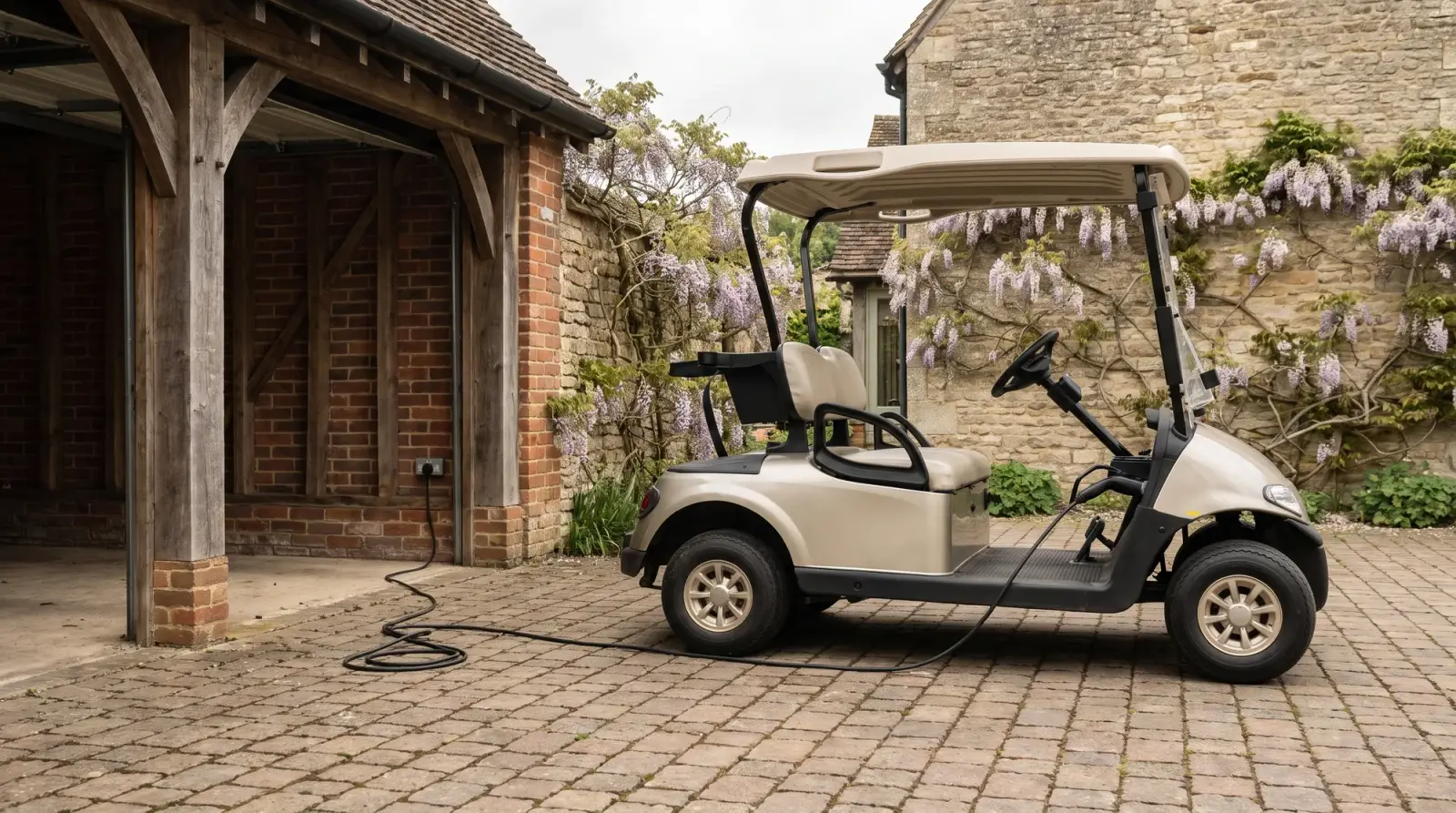
Charging needs more thought than most villages give it. A buggy at a house with a garage is easy. A buggy at an apartment block is not: trailing cables through communal areas are a trip hazard and a fire-safety failure, and lithium batteries should never charge in internal corridors or escape routes. The clean answer is a designated outdoor or garage charging area with metered sockets, agreed with the fire risk assessor. Our guide to lithium buggy battery fire safety covers the standards worth writing into policy.
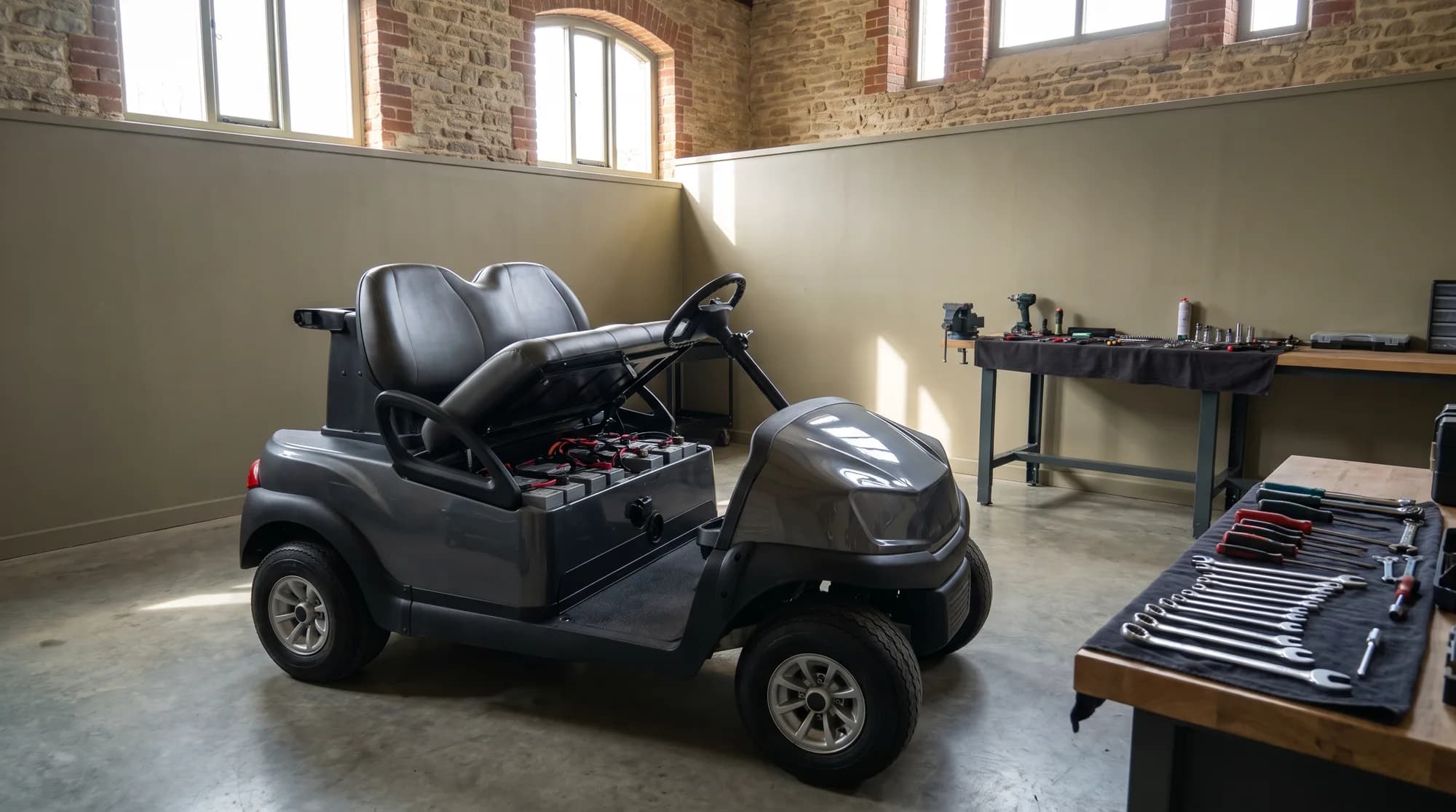
Maintenance is the last piece. A shuttle working every day needs an annual service at minimum, plus brake and tyre checks the estates team can log monthly, and resident-owned buggies should be serviced on the same schedule as a condition of staying on the road. A fixed-price service plan keeps that predictable for the operator and simple to enforce in the policy.
Frequently asked questions
Can residents drive golf buggies in a UK retirement village?+
On the village's private roads, yes, if the operator permits it. No driving licence or DVLA registration is required on private land, so the village policy sets the rules: insurance, speed limits, parking and charging arrangements.
Do retirement villages provide buggy shuttles?+
Larger integrated retirement communities increasingly do, typically a four to six-seat electric buggy running between apartment blocks, the village centre, restaurant and clinics, staffed by team members or volunteer residents.
Is a buggy or a mobility scooter better for village living?+
A buggy carries a passenger and the shopping and suits longer private-road runs, but it can't leave the village. A Class 2 or 3 mobility scooter has legal pavement rights outside the gate. Many residents who can afford both use each for different trips.
Who insures a resident's buggy?+
The resident, through a specialist leisure vehicle policy covering liability, theft and damage. Operators should require proof of cover annually and check their own liability position with their insurer.
Are buggies allowed on private village roads?+
That's the operator's call, and most permit them under a written policy with a 5 to 10mph limit and designated parking and charging. They remain barred from public roads and pavements outside the village.
The smart move for operators is to get ahead of it: write the resident-buggy policy before the third resident asks, and start the shuttle with one accessible six-seater rather than waiting for a business case with perfect numbers. The shuttle sells apartments. The policy prevents the argument.
Adding a shuttle or setting a village fleet policy?
Hawke supplies accessible electric buggies and people movers with low step heights, grab rails and speed limiting to suit retirement communities, backed by a 3-year warranty and UK-wide servicing. Tell us about your village and we'll recommend the right spec.
Ready to find the right buggy?
Tell us how and where it will work and we will specify a vehicle and a tailored quote built around you. Every build comes with a 3-year warranty and a 24-hour priority call-out.
Our guides are written and reviewed by the Hawke Electric Vehicles team, the people who specify, build, deliver and support the vehicles. We focus on honest, practical advice and flag where a figure depends on the build rather than guessing.
More guides by Hawke