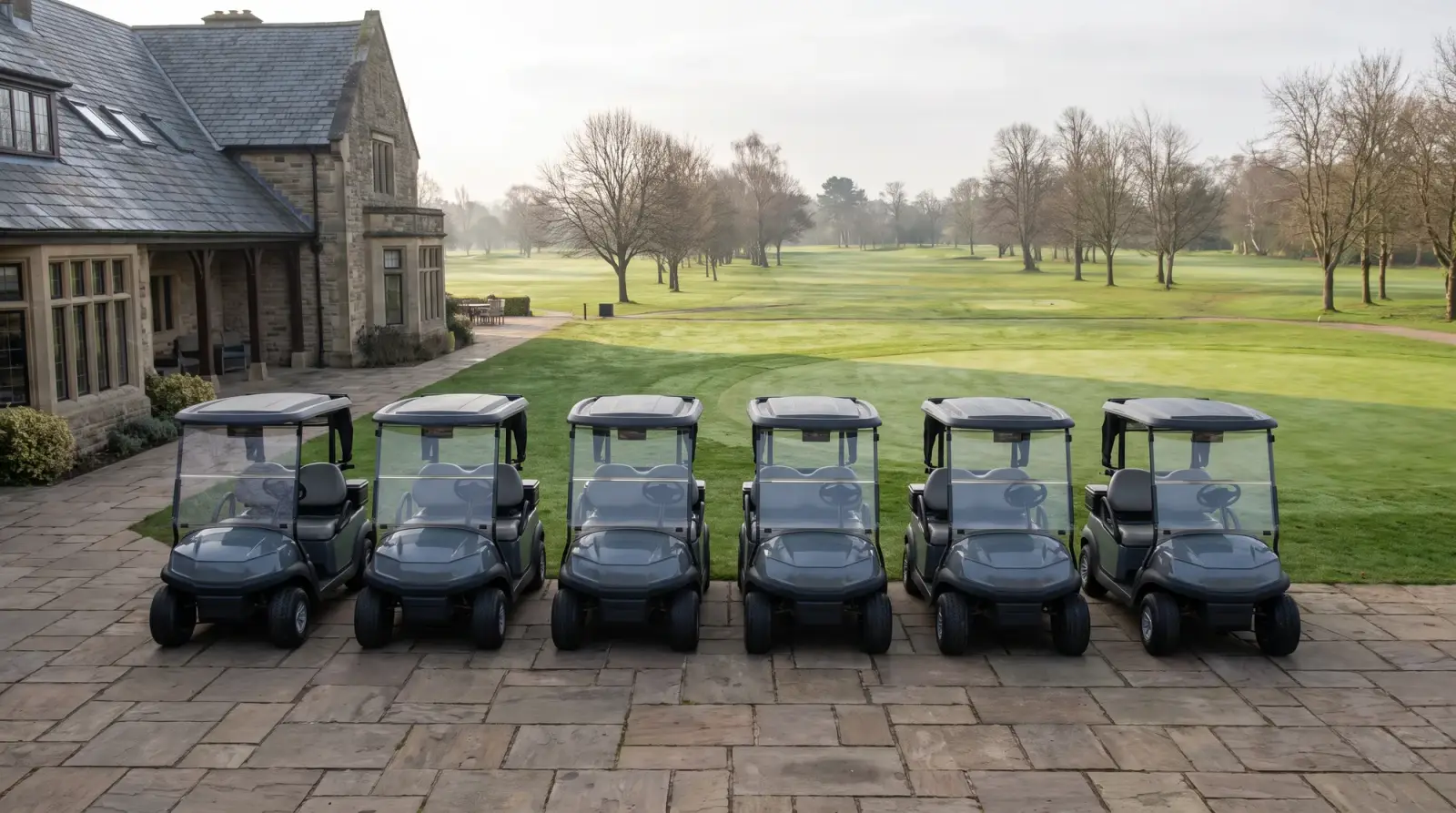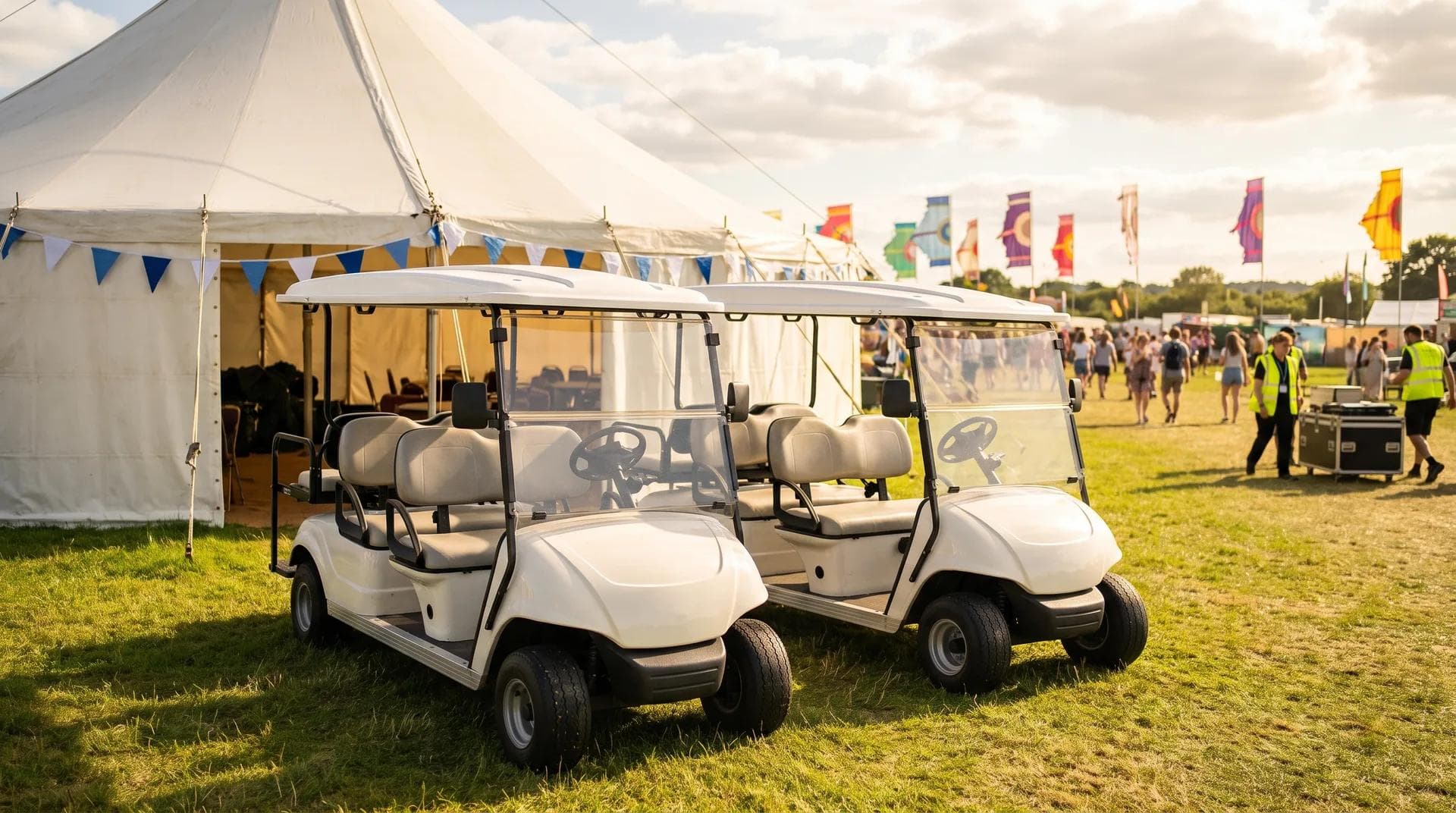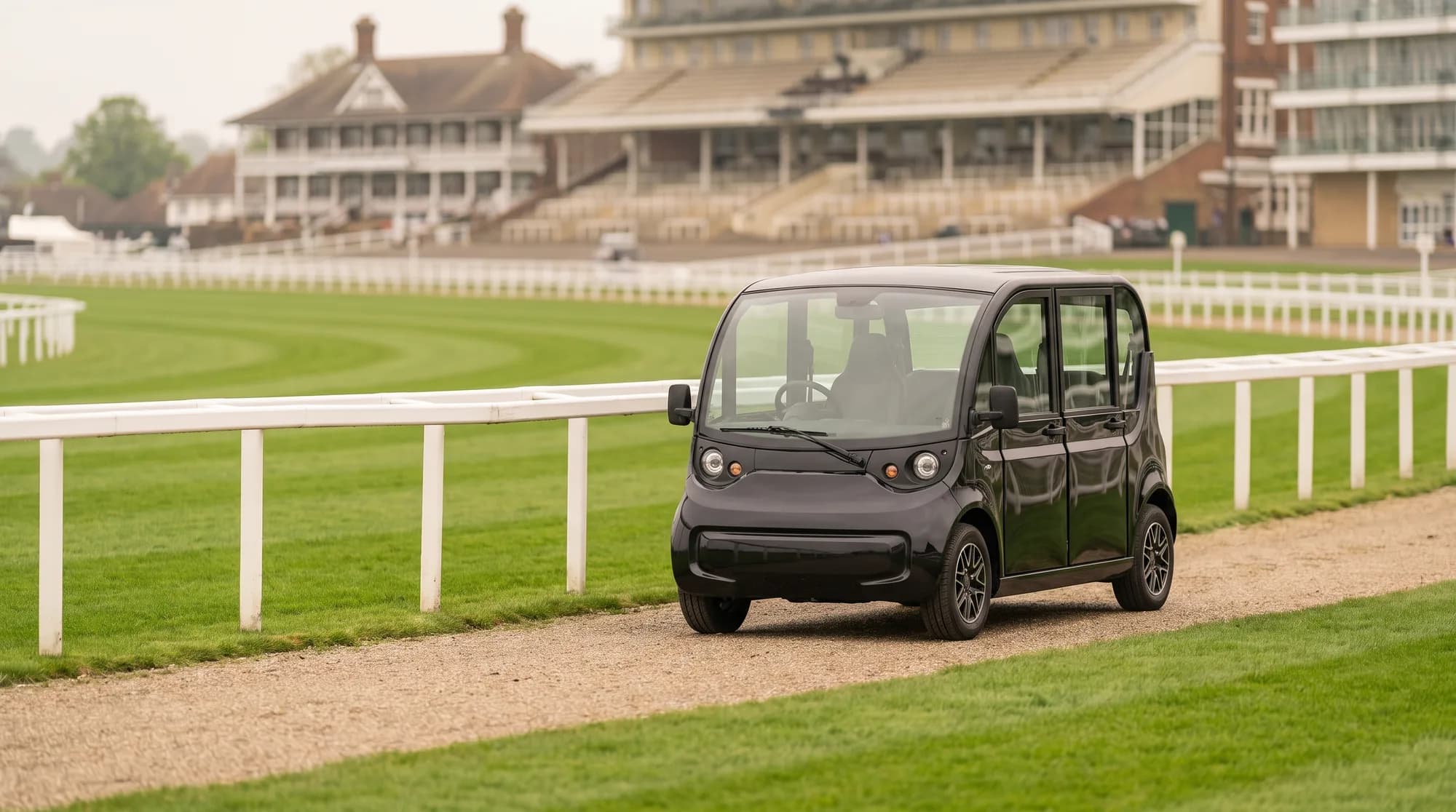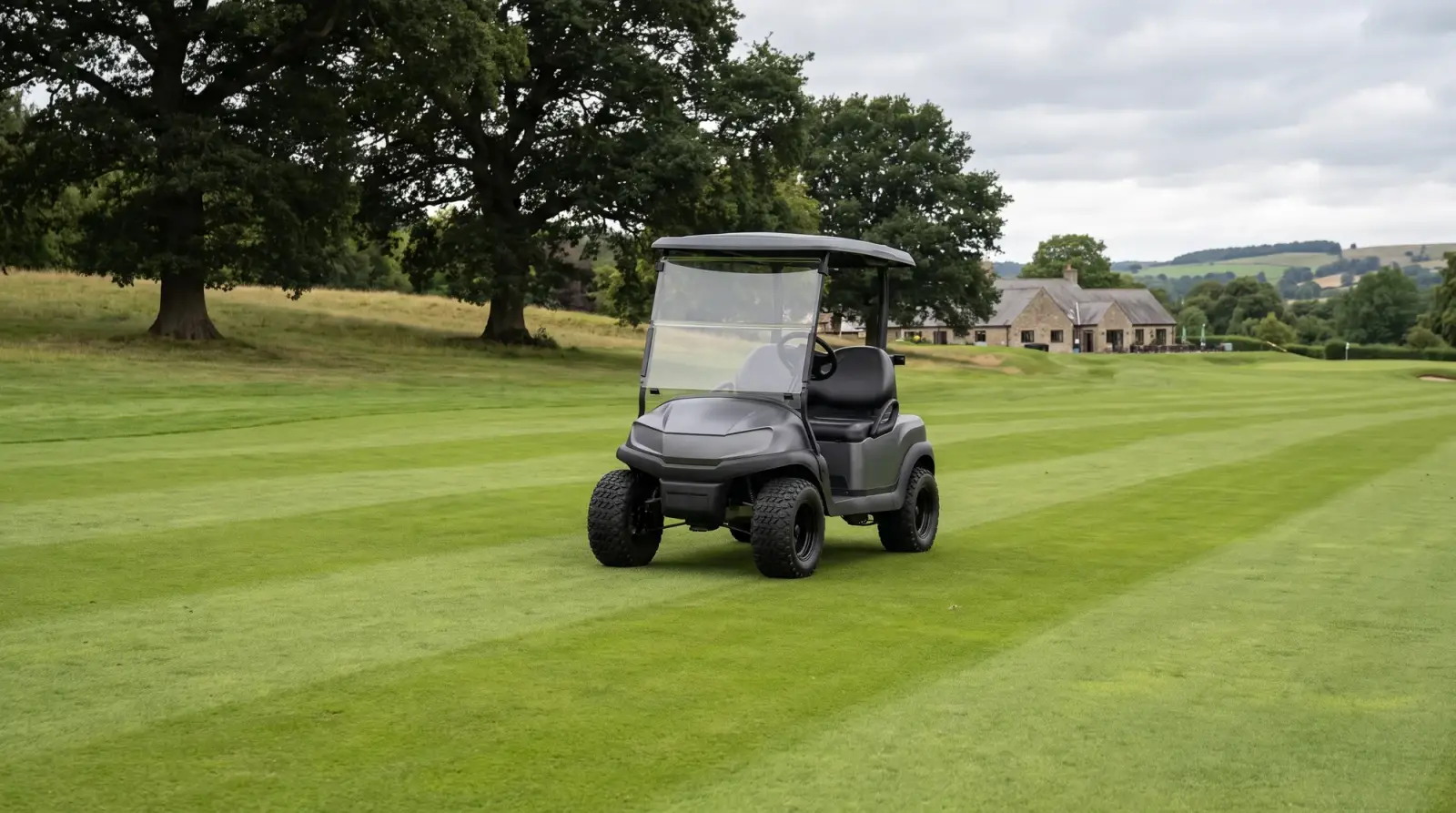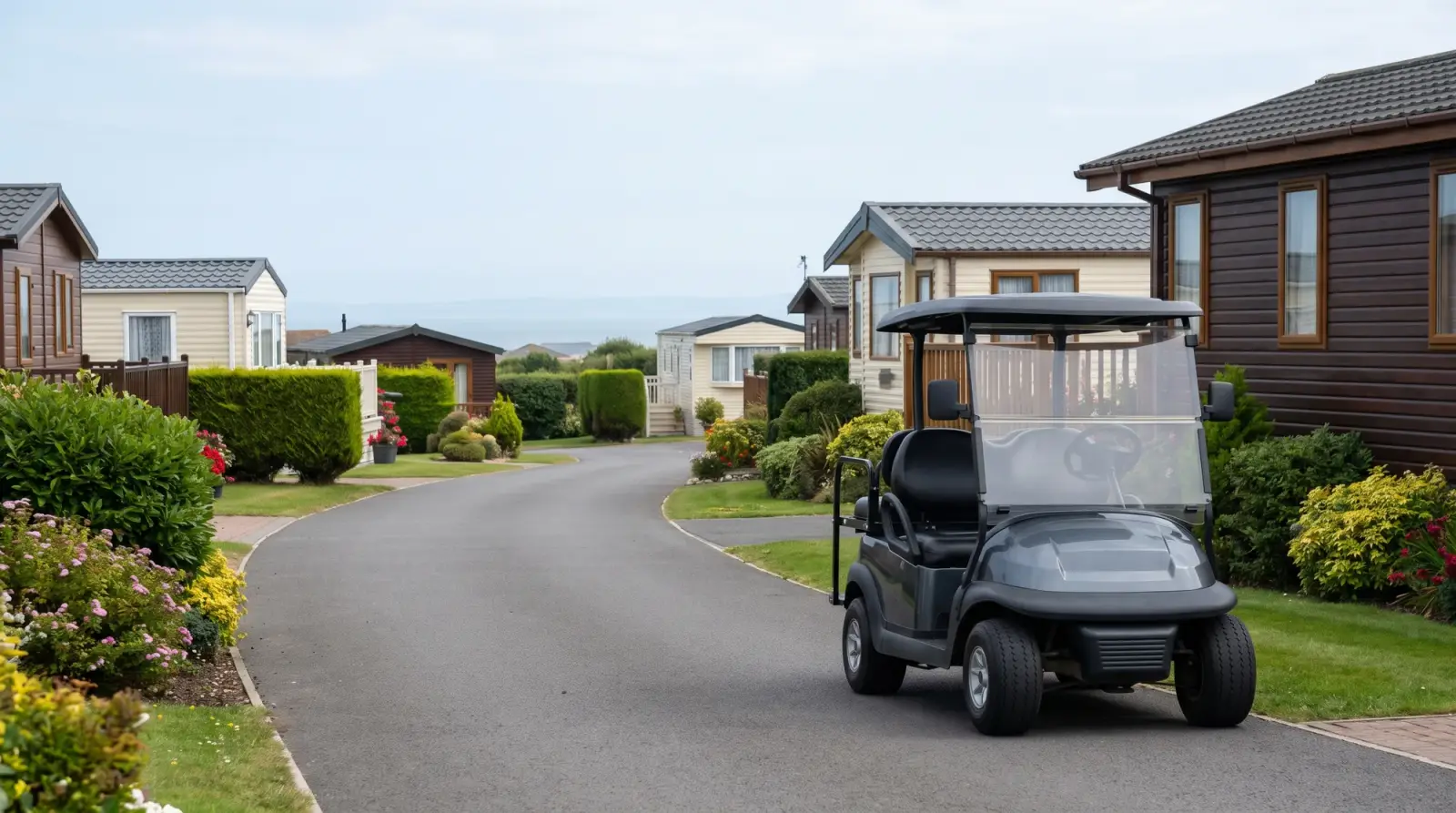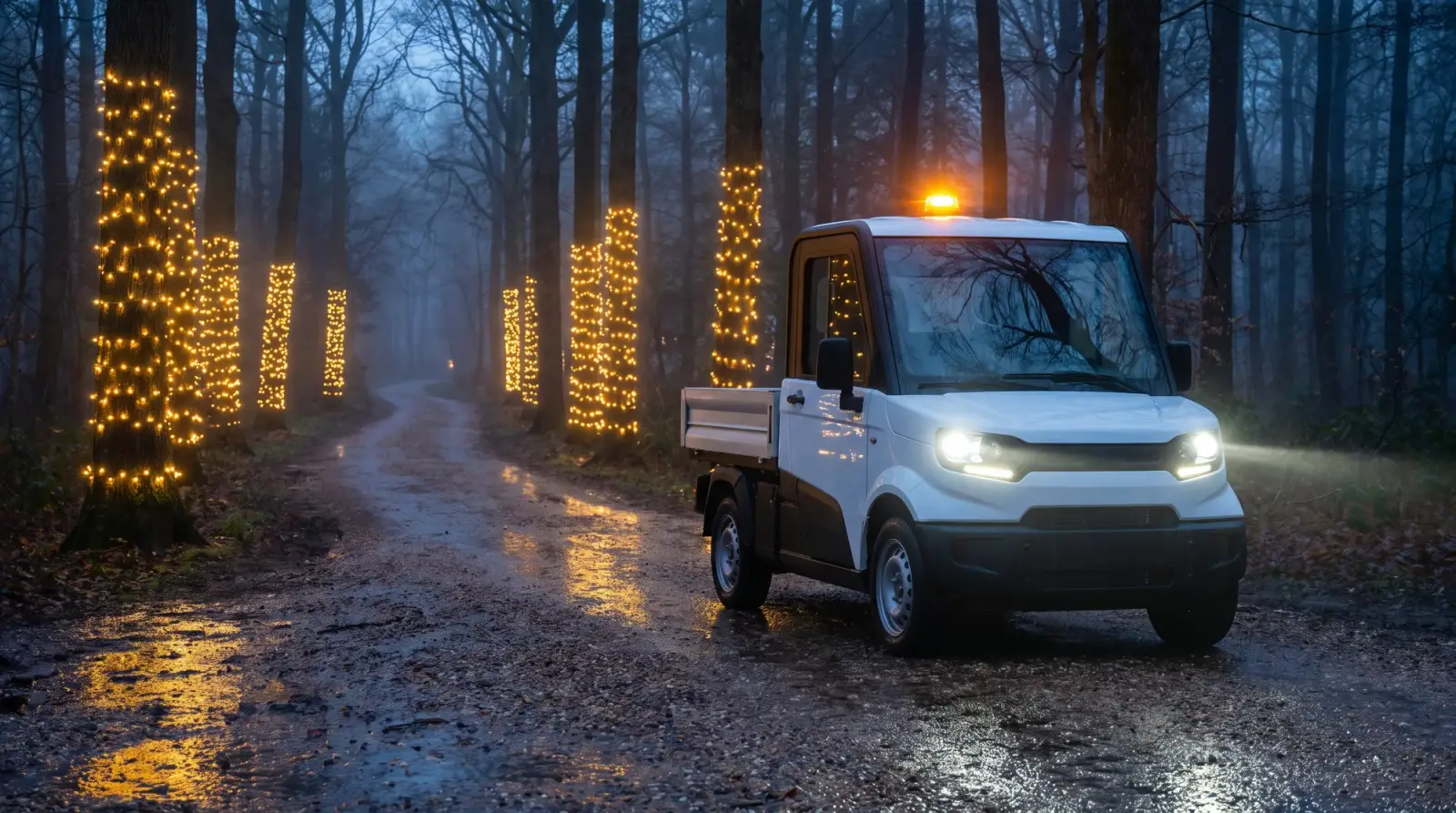
A Christmas light trail is a hard environment for any vehicle: a 1.5 to 3km woodland loop, pitch dark by 4.30pm, wet underfoot from November through December, and thousands of visitors a night moving through it. Electric buggies have become the workhorse of these events because they do four jobs at once: accessibility shuttles, crew and kit movement, towing, and emergency response along the trail.
If you operate a light trail, a pumpkin patch or a winter festival in the Luminate or Forestry England mould, the vehicle decision comes down to spec and timing. Get the lighting, tyres and battery chemistry right and the fleet disappears into the background all season. Leave the hire booking until autumn and you'll find the good vehicles already gone.
- Buggies do four jobs on a light trail: accessibility shuttles, crew and kit movement before opening, towing generators and props, and emergency response.
- An accessibility shuttle is often what makes a bookable 'access session' possible rather than turning less-mobile visitors away.
- Winter spec is specific: road-grade headlights plus beacons, wet-weather cabs, all-terrain tyres that won't chew wet grass, and lithium batteries for cold-weather range.
- Hire is the natural model for an October-to-December season, but seasonal fleets book out by late summer, so confirm vehicles in spring.
- Lithium loses far less range in the cold than lead-acid, which matters when the whole season happens at 0 to 8 degrees.
What jobs do buggies do on a light trail?
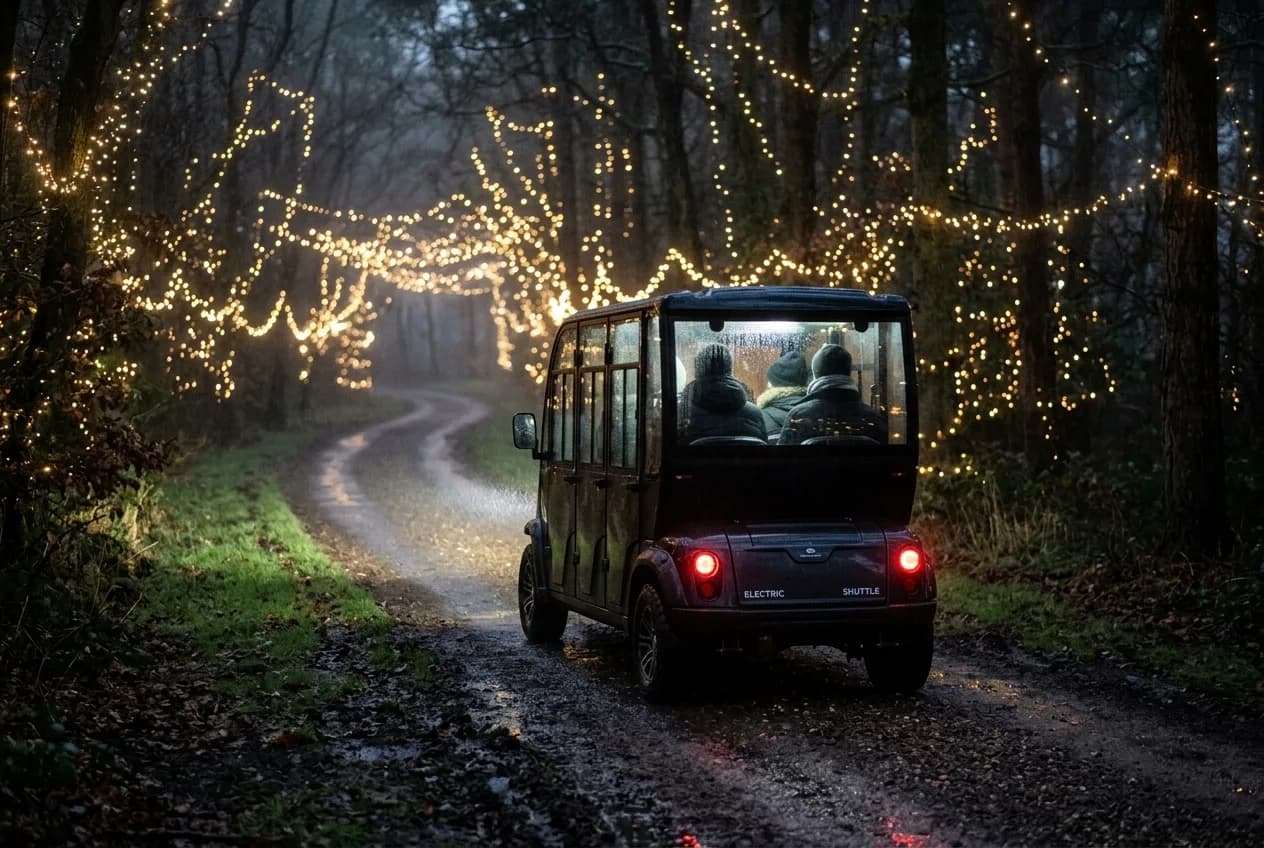
Accessibility comes first, because it changes what you can sell. A trail that's a beautiful 2km walk for most visitors is a closed door for someone who can't manage the distance, and refunding those bookings hurts twice. A six-seat buggy with a driver turns that into a bookable access session: a slower-paced trip around the trail for less-mobile visitors, often at the start of the evening before crowds build. Operators tell the same story again and again: the shuttle is the difference between saying yes and saying sorry.
Then there's everything the public never sees. Crews move light fittings, cabling and props along the trail every afternoon before gates open, and a utility buggy with a cargo bed saves hundreds of trudged kilometres a season. Towing matters too: generators, water bowsers and staging shift between zones behind a buggy with a decent tow hitch. And when something goes wrong mid-evening, a first aider on a buggy reaches the far side of the loop in three minutes instead of twenty on foot.
What spec survives wet woodland in December?
Lighting first. Standard golf-course buggies are built for daylight, and a light trail operates entirely after dark. You want proper road-grade headlights, a rear-facing work light for hitching and loading, and an amber beacon so the vehicle reads as operational traffic among thousands of pedestrians. Reflective panels on all sides finish the job. Remember the trail itself is deliberately dark between installations; your drivers are threading a vehicle through the one environment designed to have no ambient light.
Tyres decide whether the site survives you. Smooth turf tyres spin and slide on wet grass; aggressive knobbly tread rips it up. The sweet spot is an all-terrain pattern with modest tread depth, run at low pressure, which grips wet paths without chewing the parkland you'll be handing back in January. We cover the turf-damage question properly in do golf buggies damage grass. Add a full wet-weather cab with doors and a screen wiper for driver stamina; four hours of December drizzle in an open buggy ends shifts early.
Battery chemistry is the quiet decider. Cold weather cuts battery range, and it cuts lead-acid hardest. A lead-acid buggy that manages 40km on a summer's day can lose a third or more of that on a freezing night, right when your shuttle is running continuous loops. Lithium packs typically lose far less usable range in the cold and charge faster between sessions. The full comparison is in our lithium versus lead-acid guide.
- Lithium
- Modest drop, typically around 10-20%
- Lead-acid
- Can lose a third or more of summer range
- Lithium
- Fast enough to top up in a gap
- Lead-acid
- Usually too slow; you need the full overnight
- Lithium
- Charge above freezing; unheated barn storage is fine once charged
- Lead-acid
- Must be kept charged; a flat battery can freeze and be ruined
- Lithium
- The safe choice for continuous night shuttles
- Lead-acid
- Workable with a bigger fleet and strict charging discipline
| Lithium | Lead-acid | |
|---|---|---|
| Usable range on a cold night | Modest drop, typically around 10-20% | Can lose a third or more of summer range |
| Recharge between afternoon setup and evening shuttles | Fast enough to top up in a gap | Usually too slow; you need the full overnight |
| Cold-weather care | Charge above freezing; unheated barn storage is fine once charged | Must be kept charged; a flat battery can freeze and be ruined |
| Fit for light-trail work | The safe choice for continuous night shuttles | Workable with a bigger fleet and strict charging discipline |
- Road-grade headlights plus rear work light
- Amber beacon and reflective panels on all sides
- All-terrain tyres at low pressure, checked weekly
- Wet-weather cab with doors and wiper
- Tow hitch rated for your generator trailer
- Two-way radio clipped in the cab
- First-aid kit and torch aboard the response vehicle
- Charging point under cover, above freezing
Should you hire or buy for a seasonal event?
For a ten-week season, hire, and it isn't close. Buying means owning vehicles that sit idle for nine months, storing them properly (batteries hate neglect), and carrying servicing and depreciation on the books year-round. Hire puts the whole cost inside the season, matches the fleet to this year's event rather than last year's, and hands maintenance to the supplier, which matters when a dead shuttle on a sold-out Saturday is a refund machine. The exception is a venue with year-round grounds work, where an owned utility vehicle can earn its keep and hire covers the seasonal peak. Typical rates are in our seasonal buggy hire cost guide.
Frequently asked questions
How do light trails transport less-mobile visitors?+
Most run an accessibility shuttle: a six or eight-seat electric buggy with a driver, carrying visitors around the trail at a gentle pace, often as bookable access sessions early in the evening before crowds peak.
Should a seasonal event hire or buy buggies?+
Hire, in almost every case. A ten-week season doesn't justify owning vehicles that then need storage, battery care and servicing for nine idle months. The exception is a venue with genuine year-round grounds work for a utility vehicle.
What vehicles work on wet woodland trails at night?+
Electric buggies with road-grade headlights, amber beacons, wet-weather cabs and all-terrain tyres run at low pressure. Lithium batteries are strongly preferred because cold weather cuts lead-acid range hard.
What lighting and safety kit do event buggies need?+
Proper headlights, a rear work light, an amber beacon, reflective panels, a two-way radio and a first-aid kit on the response vehicle. The trail is deliberately dark, so the vehicle has to make itself seen.
When should you book seasonal buggy hire?+
Spring or early summer for an October-to-December event. Winter-spec hire fleets are the scarcest vehicles in the UK events calendar and are typically fully booked by late summer.
For a first-year trail, hire one six-seat shuttle with a cab and lights for access sessions and one utility buggy with a tow hitch for crew and kit, adding a second shuttle only if access bookings sell out. Then diarise next year's hire booking for April. The operators who struggle aren't the ones who chose the wrong buggy; they're the ones who rang in October.
Planning a winter event fleet?
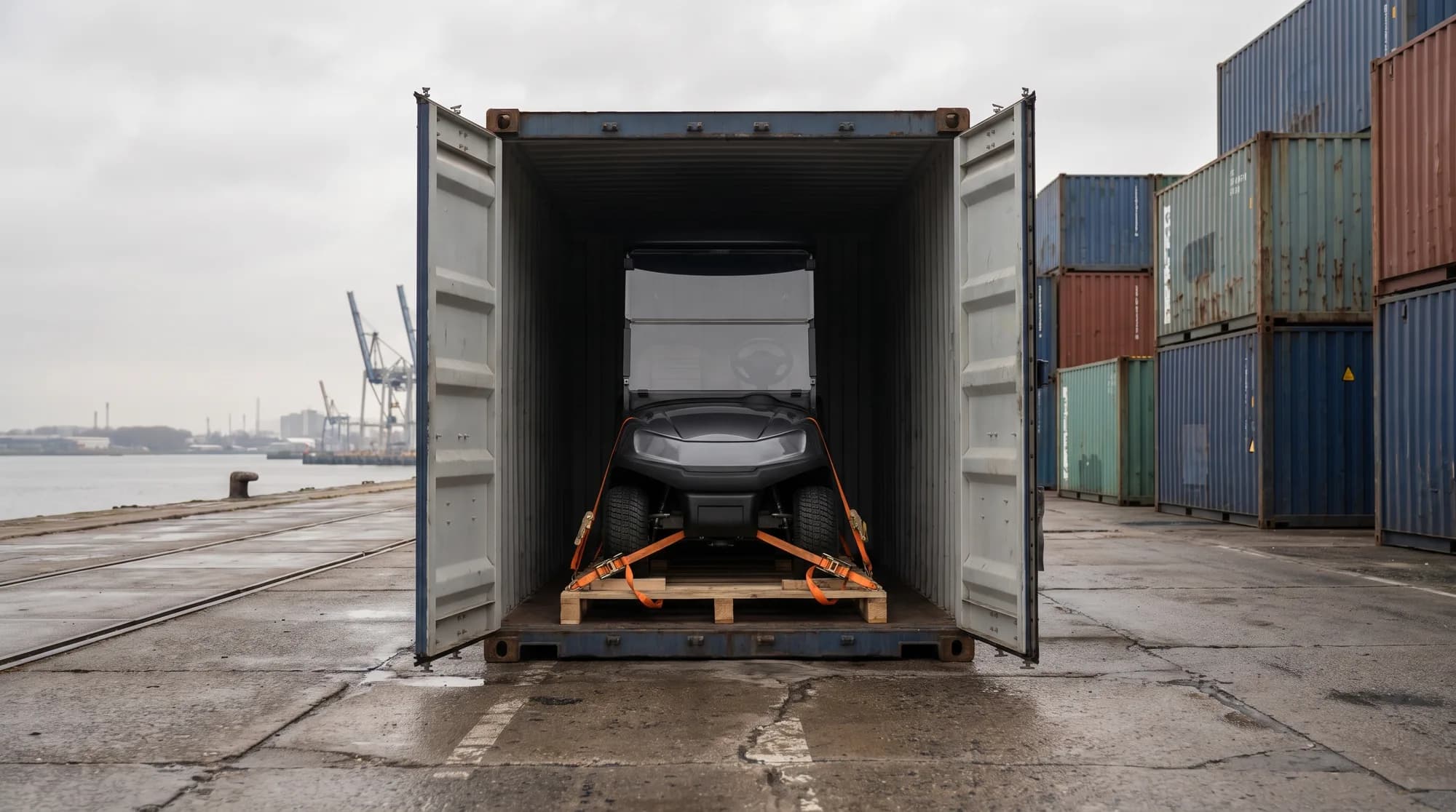
Hawke hires winter-ready electric shuttles and utility buggies UK-wide, with lighting, cabs and all-terrain tyres suited to trail work, and delivery to site. Tell us your dates early and we'll hold the fleet.
Ready to find the right buggy?
Tell us how and where it will work and we will specify a vehicle and a tailored quote built around you. Every build comes with a 3-year warranty and a 24-hour priority call-out.
Our guides are written and reviewed by the Hawke Electric Vehicles team, the people who specify, build, deliver and support the vehicles. We focus on honest, practical advice and flag where a figure depends on the build rather than guessing.
More guides by Hawke