More UK links courses allow buggies than most golfers assume, but usually only for players with medical evidence, and often on condition that a caddie or approved driver takes the wheel. St Andrews Links, to take the most famous example, publishes a policy permitting single-rider vehicles for golfers with a documented medical need, at the time of writing.
The catch is that no two links handle it quite the same way, and policies change season to season. Some offer open hire to anyone, some run a strict medical-evidence model, and a few offer no buggies at all because the terrain won't take them. If you're planning a links trip and walking 18 holes through dunes isn't realistic, this guide explains the three policy types you'll meet, what evidence to carry, and what it'll cost. One rule above all: always confirm with the course before you book.
- Most championship links restrict buggies to golfers with medical evidence, and many add a caddie or approved-driver condition.
- St Andrews Links publishes a single-rider policy for players with documented medical need, at the time of writing.
- Some links simply don't offer buggies because dunes, narrow walkways and steep banks make them unsafe.
- Buggy hire at top courses typically costs £30 to £60 a round where it's available.
- Policies change; email the course with your evidence well before you travel, and never rely on a third-party website's summary.
Why are links courses stricter about buggies?
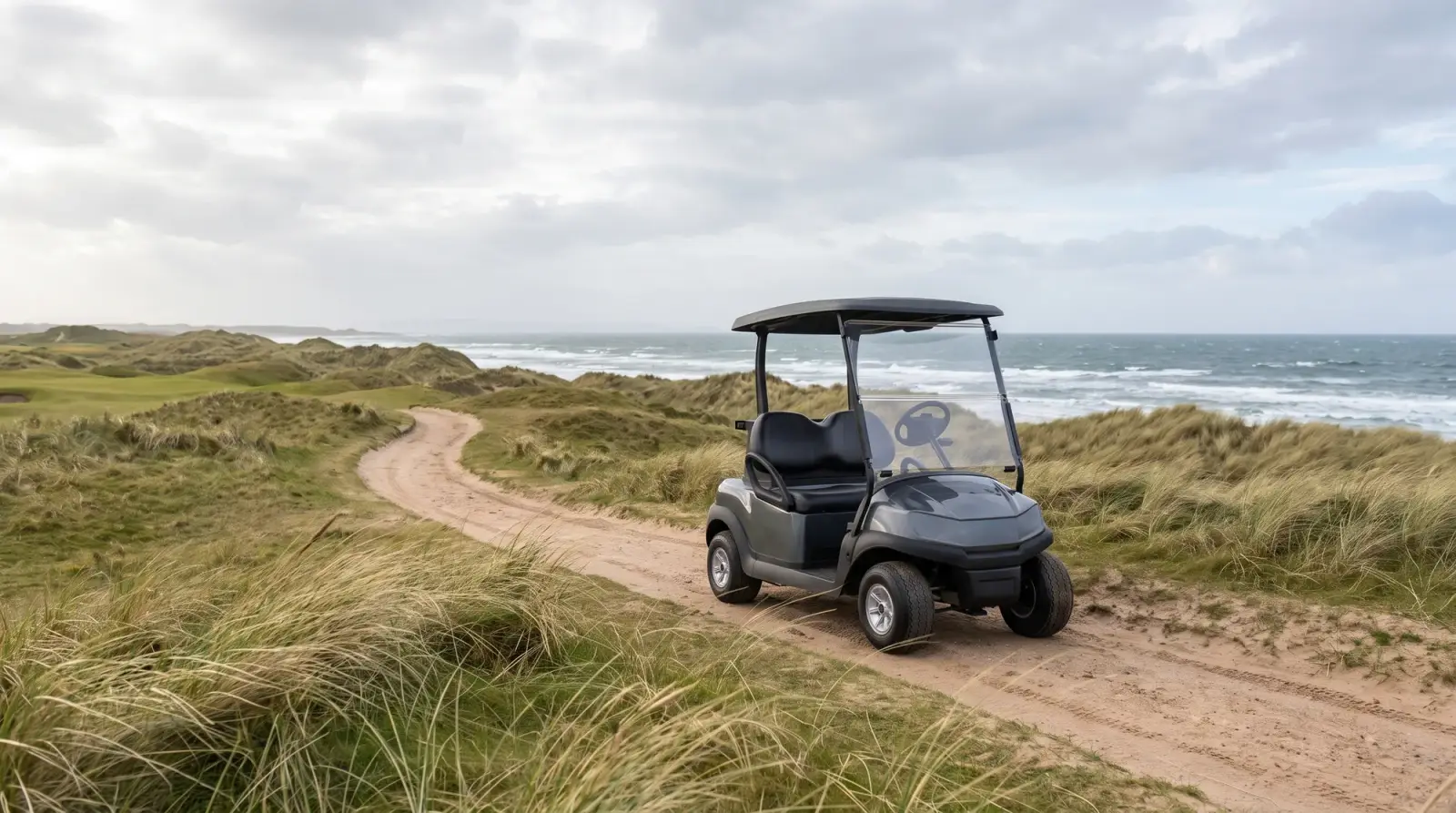
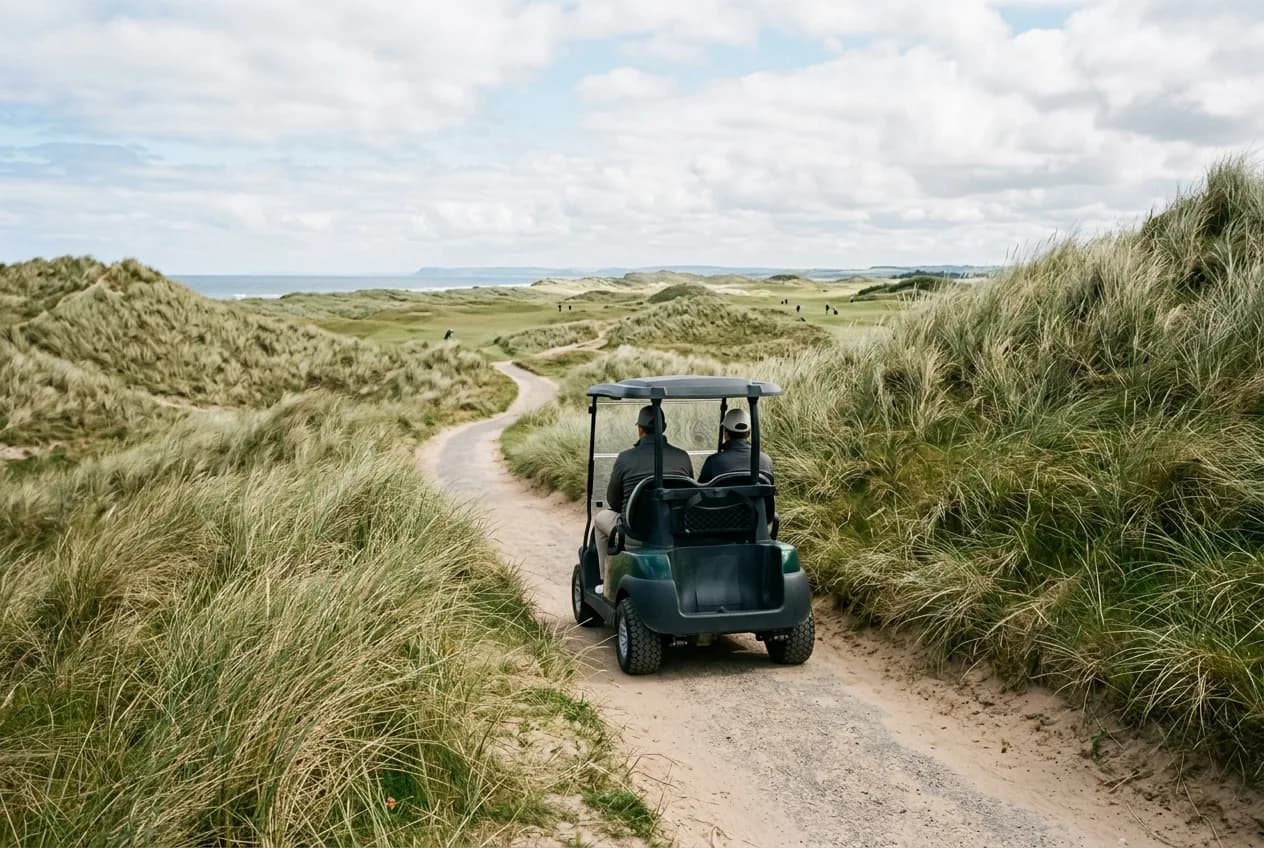
Terrain, mostly. A parkland course is broad and relatively flat, so a buggy can wander up the rough with little drama. A links threads between dunes on narrow walkways, with blind crests, steep revetted banks and drops a buggy could actually roll down. Add fine fescue turf that recovers slowly from wear, wind that shoves a light vehicle around on exposed crests, and heavy summer traffic on the famous names, and you can see why many links treat buggies as an exception to manage rather than a service to sell.
That's also why the caddie or approved-driver condition exists. It isn't gatekeeping for its own sake. A driver who knows the course keeps the buggy on safe lines, away from banks that slip and carries that can't be seen over. On several championship links that condition is the whole reason buggy access can be offered at all.
The three policy types you'll meet
Almost every links policy falls into one of three buckets. Knowing which bucket a course sits in tells you what to prepare before you call. Treat the examples below as representative rather than gospel: policies really do change, and the course's own website or reservations office is the only source that counts.
- What it means in practice
- Anyone can book a buggy, subject to availability and course conditions
- Typically found at
- Resort links and modern links-style courses with wide paths and buggy-friendly routing
- What you'll need
- A booking and the hire fee; a driving licence is commonly requested
- What it means in practice
- Buggies reserved for golfers with documented medical need, sometimes with a caddie or approved driver mandatory
- Typically found at
- Most championship links, including St Andrews Links and, at the time of writing, several Open rota venues
- What you'll need
- A GP or physio letter or medical certificate sent in advance, plus the hire fee
- What it means in practice
- No buggies offered at all; the course may suggest alternatives such as caddies
- Typically found at
- Some traditional links where dune terrain and narrow walkways make buggy use unsafe
- What you'll need
- A plan B: caddie, push trolley, or a nearby buggy-friendly course
| What it means in practice | Typically found at | What you'll need | |
|---|---|---|---|
| Open hire | Anyone can book a buggy, subject to availability and course conditions | Resort links and modern links-style courses with wide paths and buggy-friendly routing | A booking and the hire fee; a driving licence is commonly requested |
| Medical evidence required | Buggies reserved for golfers with documented medical need, sometimes with a caddie or approved driver mandatory | Most championship links, including St Andrews Links and, at the time of writing, several Open rota venues | A GP or physio letter or medical certificate sent in advance, plus the hire fee |
| Not available | No buggies offered at all; the course may suggest alternatives such as caddies | Some traditional links where dune terrain and narrow walkways make buggy use unsafe | A plan B: caddie, push trolley, or a nearby buggy-friendly course |
St Andrews and the championship links
St Andrews Links is the useful benchmark because it publishes its position openly. Golfers with a documented medical need can arrange single-rider or standard buggy use, with evidence provided in advance, at the time of writing. That's the medical-evidence model working as intended: access for the golfers who need it, managed carefully on one of the busiest courses in the world.
Other championship venues broadly follow the same shape, with local variations: evidence in advance, limited fleet, sometimes a caddie or staff driver required, and buggies pulled on days when weather makes the routes unsafe. We'd hesitate to print a course-by-course table of specifics here, because those details shift. What doesn't shift is the model, and if you carry the right evidence you'll find the famous links far more accommodating than their reputation suggests. The paperwork that gets you on is the same medical exemption certificate you'd use for club competitions at home.
What does links buggy hire cost?
Where hire is offered, budget £30 to £60 a round at well-known courses, with single-rider vehicles sometimes priced differently from standard two-seaters. A handful of venues include the buggy in premium green-fee packages; others add a refundable damage deposit. Compared with a caddie, typically £60 to £80 plus gratuity at championship links, a buggy is usually the cheaper option, though plenty of golfers with medical clearance book both and let the caddie drive.
If you're taking several links trips a year, the arithmetic starts to favour ownership for home use plus hire away, and our hire versus buying guide works through the break-even honestly. Nobody hauls their own buggy to the Old Course, but paying £50 a round at home soon outstrips the cost of owning.
How to plan a links trip when you need a buggy
- 01
Shortlist by policy type, not by fame
Start with courses whose websites mention buggy or single-rider availability. A trip built around two confirmed buggy-friendly links beats one built around a famous name that turns you down in the car park.
- 02
Email your evidence before you book anything
Send your GP or physio letter to the reservations team and ask them to confirm buggy availability for your date in writing. Ask about caddie or driver conditions at the same time, because that affects your budget.
- 03
Book early tee times and allow weather slack
Fleets are small, often just a handful of vehicles, and they go first. An early slot also gives you a fallback later in the day if morning weather pulls the buggies off the course.
- 04
Carry the paperwork on the day
Bring the original letter and keep a photo on your phone. Starters change shift; the person who approved your booking by email won't necessarily be the one standing on the first tee.
Build the trip around the medical-evidence model rather than fighting it: get one solid letter, email it ahead to every course on your list, and give the famous names a chance before assuming they'll refuse. The pleasant surprise of links golf in 2026 is how many of them say yes.
Frequently asked questions
Can you use a buggy on the Old Course at St Andrews?+
St Andrews Links operates a published policy allowing buggy and single-rider use for golfers with documented medical need, arranged in advance, at the time of writing. Casual buggy hire for able-bodied golfers isn't offered on the Old Course. Confirm current details with St Andrews Links directly before you travel.
Do Scottish links courses have buggies?+
Many do, though most of the famous ones reserve them for golfers with medical evidence, sometimes with a caddie or approved driver required. Resort-style links tend to be more open. Policies vary course by course and change over time, so always check directly.
Should I take a caddie or a buggy on a links course?+
If you can walk comfortably, a caddie adds more to a links round than a buggy does. If walking is the problem, the buggy is the answer, and some golfers with medical clearance book both so the caddie can drive. A caddie typically costs £60 to £80 plus tip; buggy hire runs £30 to £60.
Do you need a medical certificate to hire a buggy at a links course?+
At most championship links, yes. A GP or physiotherapist letter confirming you need transport is the standard evidence, sent in advance. Resort courses with open hire policies generally don't ask, though conditions on the day still apply.
How much is buggy hire at UK links courses?+
Typically £30 to £60 a round at well-known venues where hire is available. Single-rider adapted vehicles are sometimes priced separately, and a refundable damage deposit isn't unusual. Smaller links away from the tourist trail are often cheaper.
Need buggies for a golf trip or event?
Hawke hires modern electric buggies UK-wide, from single vehicles to full event fleets, delivered and collected. Quote-based pricing with no surprises.

Ready to find the right buggy?
Tell us how and where it will work and we will specify a vehicle and a tailored quote built around you. Every build comes with a 3-year warranty and a 24-hour priority call-out.
Our guides are written and reviewed by the Hawke Electric Vehicles team, the people who specify, build, deliver and support the vehicles. We focus on honest, practical advice and flag where a figure depends on the build rather than guessing.
More guides by Hawke