- A used golf cart can be good value, but the battery is the single biggest risk and the costliest thing to replace.
- Inspect the battery, motor, controller, frame, brakes and tyres, and always test drive on a slope.
- Ask for service history and the battery's age; in Australia's heat, a tired battery fades faster.
- Older lead-acid carts are cheap up front but heavy on running cost and replacement.
- If you want a specific spec, warranty and a cart built for the climate, new and custom can work out better value over time.
Is buying a used golf cart in Australia a good idea? It can be, if you inspect the right things and price the risk honestly. The battery is the part that makes or breaks the deal, because it is expensive to replace and degrades faster in heat. Beyond that, you are checking the motor, controller, frame, brakes and tyres, and confirming history. This checklist walks you through it, and is honest about when buying new and custom-built makes more sense.
Why the battery is the make-or-break
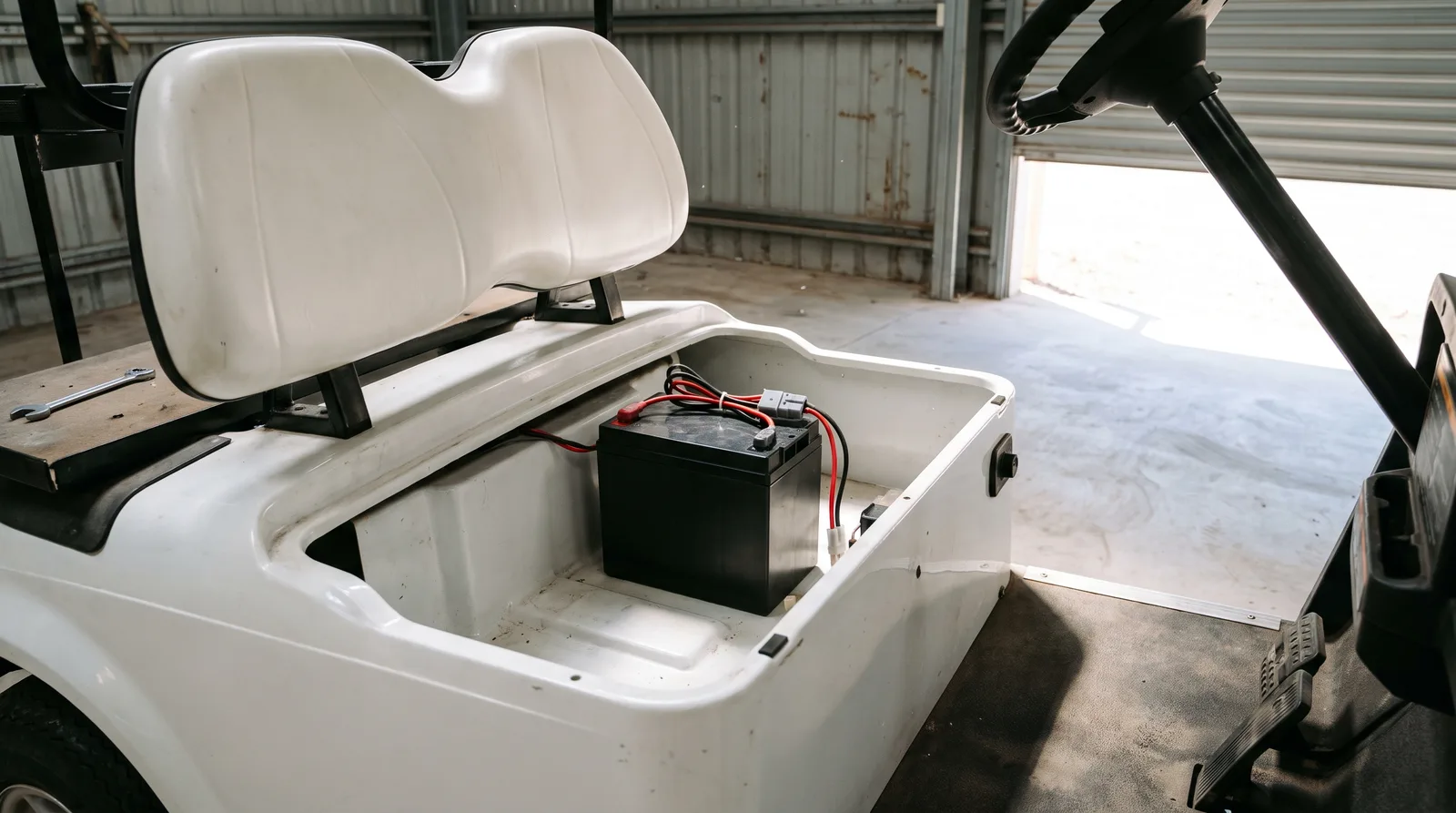
On any electric cart, the battery pack is the most valuable single component and the one that wears. In the Australian climate, heat accelerates that wear, so a pack that looks fine on a short flat run can sag badly on a hill or after an hour of use. A cheap used cart with a dying battery is not cheap at all once you add a replacement pack. Read up on what to expect in our lithium golf cart batteries guide.
The inspection checklist
Go through every one of these before you hand over money. Take your time and do not be rushed.
- Battery: type, age, and how it charges. Watch the charge level under load, not just at rest.
- Motor and controller: listen for unusual noise, check for warning behaviour, confirm smooth acceleration.
- Frame and chassis: look for rust, cracks, past repairs and corrosion, especially near the coast.
- Brakes: test that they pull up firmly and evenly on a slope.
- Tyres: check tread, age cracking from sun exposure, and even wear.
- Steering and suspension: no excess play, no knocking over bumps.
- Charger and leads: confirm the correct charger is included and works.
- Body and seats: sun damage, cracked plastics and faded upholstery are common in Australia.
- Lights and accessories: confirm anything fitted actually works.
The test drive that actually tells you something
A flat car park lap proves very little. You want to load the cart and challenge it.
- 01
Drive it up a slope
A weak battery or tired motor shows itself climbing under load, not on the flat.
- 02
Carry some weight
Sit the number of people you will actually carry, or add equivalent load.
- 03
Run it for a while
Watch whether performance fades after ten or fifteen minutes of real use.
- 04
Brake hard once safely
Confirm it stops straight and firm, then check nothing is overheating or smelling.
Coastal and outback wear to watch for
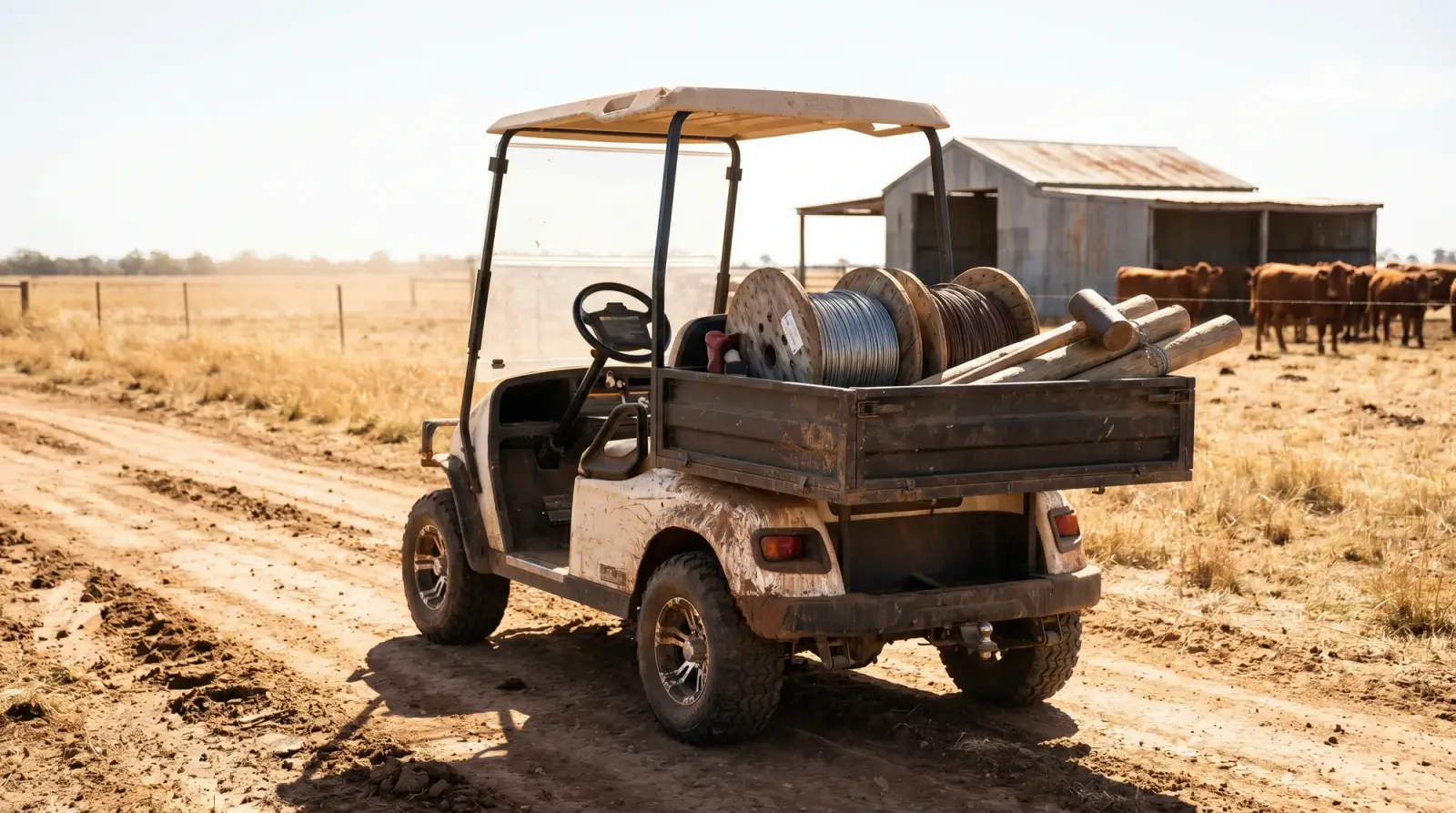
Where a cart has lived matters. Coastal salt air drives corrosion on the frame, fasteners and electrical connections. Inland sun and dust crack plastics, perish tyres and bake batteries. Ask where the cart has been kept and look for the tell-tale signs. A cart stored under cover will almost always be in better shape than one left out in the sun.
Comparing used against a fresh build?
Tell us your seating, your site and your budget. We will help you weigh a used cart against a custom build with a 3-year warranty, and confirm the figure on a tailored quote.
When new and custom is the smarter buy
Used makes sense for a simple, occasional cart on private land where a tired battery is no disaster. But if you want a specific number of seats, a utility set-up, lithium power and a cart built for the climate, the maths can tip toward new. A custom build comes with a 3-year warranty and no guesswork about history. Browse the range to see seating and utility options, and compare drivetrains in our electric versus petrol guide.
Negotiating fairly
Price the cart on what it will cost you to bring up to scratch. If the battery is near end of life, factor in a replacement. If tyres are perished and the charger is missing, count those in. A fair offer reflects the real condition, not the listing photos. For more buying and ownership reading, see our guides.
Frequently asked questions
What is the most important thing to check on a used golf cart?+
The battery. It is the most expensive component to replace and it degrades faster in Australian heat. Ask its age and type, and watch the charge under load on a slope rather than trusting a flat test.
How long does a golf cart battery last?+
It varies with type, use and care. Lithium generally lasts longer than lead-acid, and heat shortens both. Always ask how old the pack is and how it has been charged before you buy.
Should I buy lead-acid or lithium used?+
Lead-acid carts are cheaper up front but heavier on running and replacement cost, especially in heat. Lithium costs more but lasts longer and copes better. Factor the difference into your offer.
Is it cheaper to buy used or new?+
Used is cheaper up front, but a tired battery or hidden corrosion can erase the saving. If you want a specific spec, lithium power, climate-ready build and a 3-year warranty, a custom build can be better value over time.
Can a used cart be made road legal?+
That depends entirely on your state, territory and council, and on the cart's equipment. On-road use is never assumed in Australia, so confirm the rules locally before counting on it.
Related solutions
Ready to explore what we build?
See the vehicles and the setting this applies to, or get a tailored quote built around your site.
Ready to find the right buggy?
Tell us how and where it will work and we will specify a vehicle and a tailored quote built around you. Every build comes with a 3-year warranty and a 24-hour priority call-out.
Our guides are written and reviewed by the Hawke Electric Vehicles team, the people who specify, build, deliver and support the vehicles. We focus on honest, practical advice and flag where a figure depends on the build rather than guessing.
More guides by Hawke