- Heat is the main enemy of golf cart batteries; sun and high temperatures shorten range and life if you let them.
- Charge sensibly, store in shade or cover, and let a hot battery settle before charging after heavy use.
- Lithium copes with heat better than lead-acid, but both benefit from good habits and the right specification.
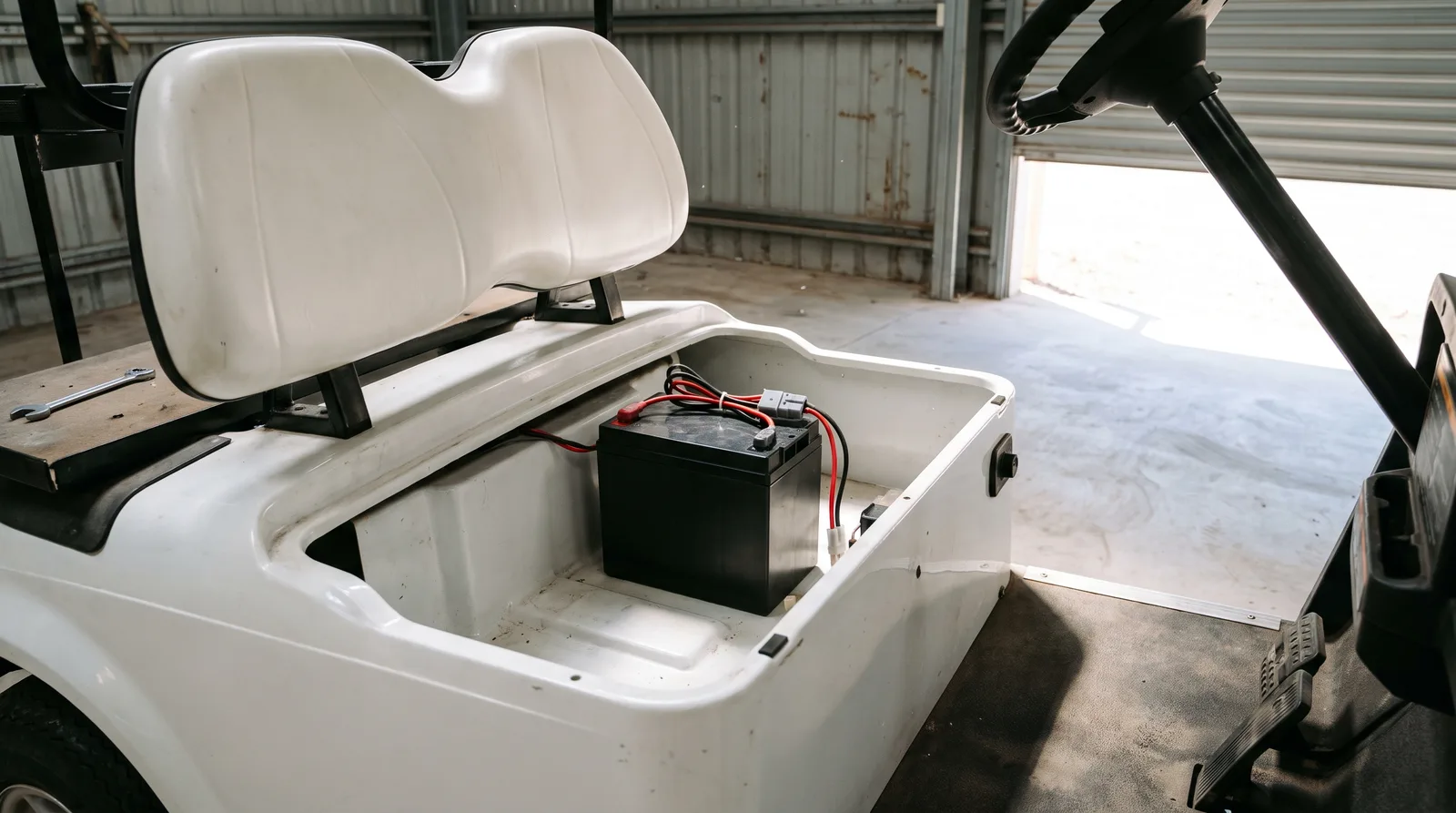
- Keep terminals and connections clean, and watch for dust, which is hard on electrics.
- Specifying the battery for hot conditions from the start makes the biggest difference of all.
How do you keep a golf cart battery healthy in Australian heat? The short answer is to keep it cool, charge it sensibly and specify it for the climate from the start. High temperatures and direct sun are the main thing that shortens both range and battery life, so shade, good charging habits and clean connections do most of the work. Lithium handles heat better than lead-acid, but both reward care. Here is exactly what to do.
Why heat matters so much
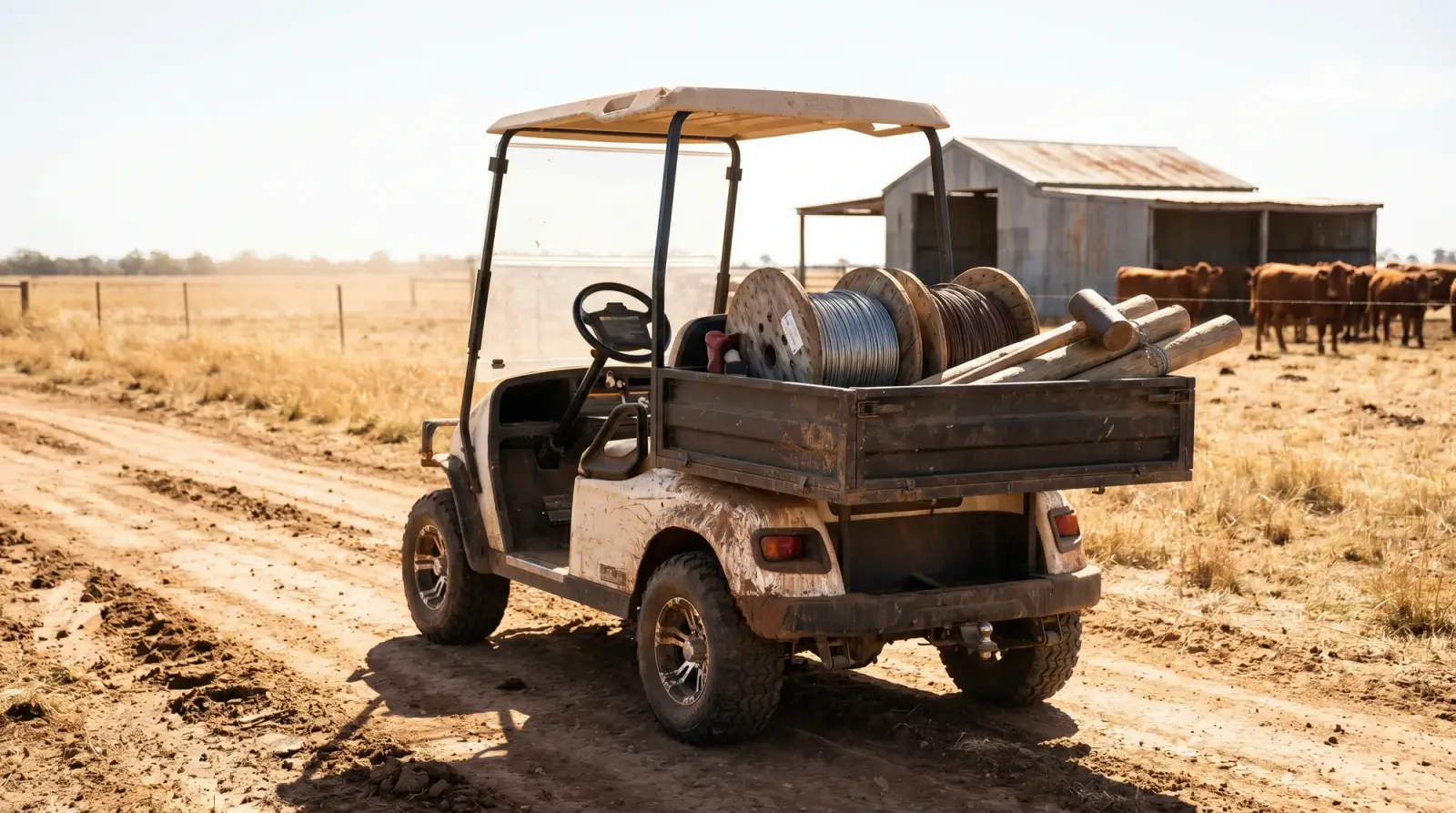
Batteries are chemistry, and heat speeds chemistry up, including the wear. Sustained high temperatures and charging a battery while it is already very hot accelerate degradation, which shows up as reduced range and a shorter overall life. In much of Australia, surface temperatures in the sun are far higher than the air temperature, so a cart left out can cook its own pack. Good habits are not fussy, they directly protect a costly component.
Daily and weekly care habits
None of this is hard. It is a handful of habits that add up to real life and range gains.
- Park in shade or under cover wherever you can.
- Let a hot battery settle and cool before you put it on charge.
- Charge overnight at off-peak rates when it is cooler.
- Do not leave a battery sitting flat for long periods.
- Keep terminals and connectors clean and free of dust and corrosion.
- Check tyre pressures; under-inflated tyres make the motor and battery work harder.
Lithium versus lead-acid in the heat
- Lithium
- Better, especially when specified for it
- Lead-acid
- More sensitive to heat
- Lithium
- Minimal
- Lead-acid
- Needs regular checks
- Lithium
- Generally longer
- Lead-acid
- Shorter, fades faster in heat
- Lithium
- Lighter, strong range
- Lead-acid
- Heavier
| Factor | Lithium | Lead-acid |
|---|---|---|
| Heat tolerance | Better, especially when specified for it | More sensitive to heat |
| Maintenance | Minimal | Needs regular checks |
| Life in hot climate | Generally longer | Shorter, fades faster in heat |
| Weight and range | Lighter, strong range | Heavier |
If you are choosing a new cart, lithium is the stronger pick for the climate. We go deeper in our lithium golf cart batteries guide.
Charging in hot conditions
Charging is where good habits pay off most. The aim is to avoid charging while the pack is at its hottest and to do it in the coolest part of the day.
- 01
Cool down first
After a hot, heavy run, let the battery settle before plugging in rather than charging it hot.
- 02
Charge in the shade
Charge under cover or in a shed, not in direct sun.
- 03
Use off-peak overnight
Overnight is cooler and cheaper, which is good for the battery and your bill.
- 04
Use the correct charger
Always use the charger matched to your battery; the wrong one can do real harm.
Want a cart specified for your climate?
Let us know where the cart will live and work. We will specify a battery and build suited to hot Australian conditions, with the figure confirmed on a tailored quote.
Storage between seasons
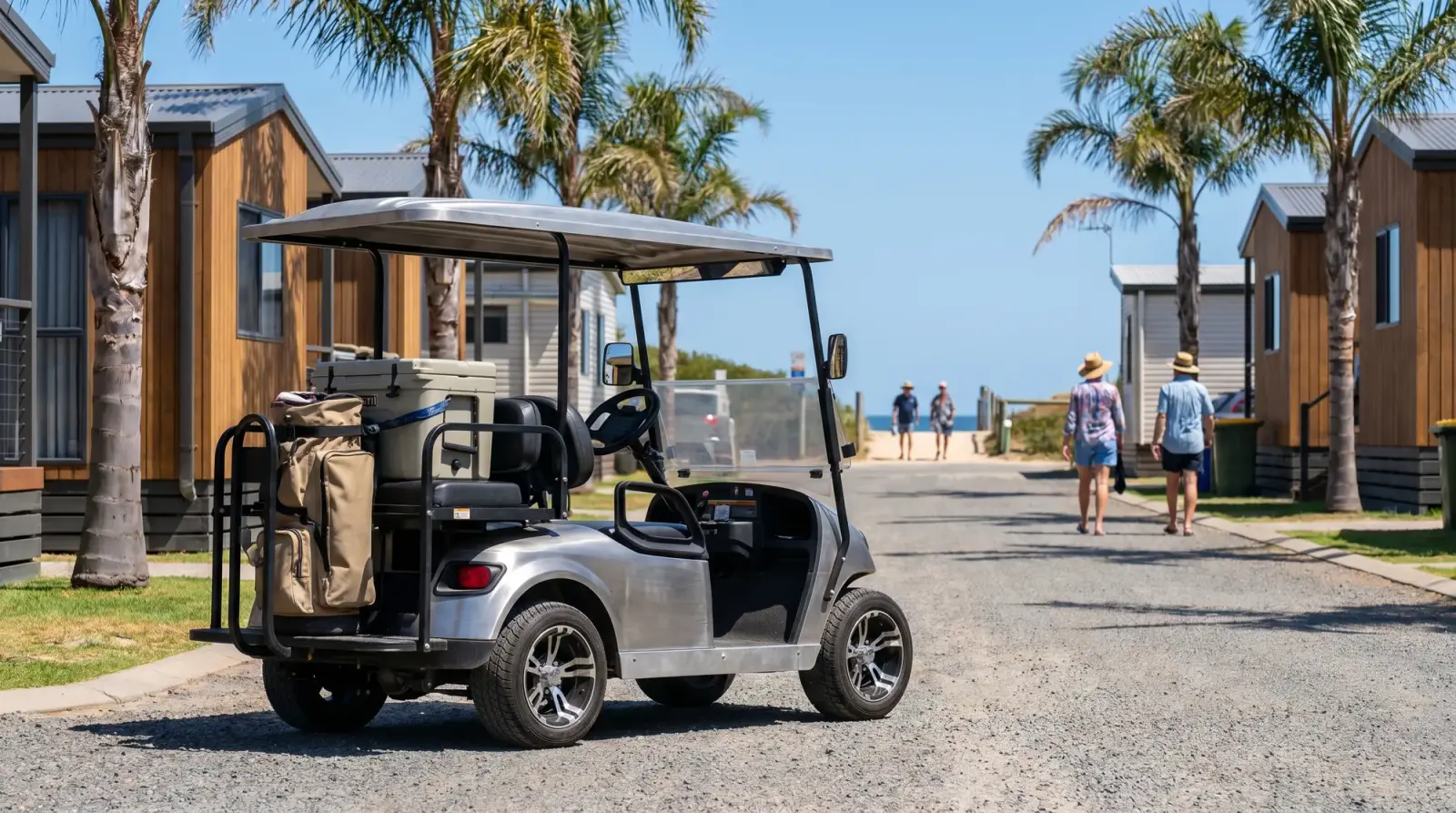
If a cart sits idle, for example at a holiday park out of season, store it properly. Keep it under cover, out of the sun, and follow the maker's guidance on charge level for storage. A pack left flat or baking for months will not be the same when you come back to it. This matters especially for seasonal sites; see our resorts and caravan parks guide.
Shade and sensible charging do more for battery life than any gadget.
Signs your battery is struggling in the heat
It pays to notice the early warnings rather than waiting for the cart to leave you stranded. Heat-related decline usually shows up gradually, and catching it early can save a replacement or at least let you plan one. Watch for these signs across a hot stretch of weather.
- Range drops noticeably from what the cart used to manage on a charge.
- Performance sags on hills or under load, especially later in a hot day.
- The battery feels very hot to the touch after use or charging.
- Charging takes longer or the charge does not seem to hold.
- The cart recovers somewhat when it cools, then fades again in the heat.
If you see several of these together, ease off charging the pack while it is hot, get it into shade, and have it checked. Often the cause is simply heat and habits rather than a failed battery, and small changes restore most of the lost performance.
Buying with the climate in mind
The single biggest decision is specifying the battery and electronics for heat at the point of purchase. A cart built for the climate, then cared for with these simple habits, will hold its range and last far longer. Browse the range or read more in our guides.
Frequently asked questions
Does heat really shorten golf cart battery life?+
Yes. Sustained heat and charging a very hot battery accelerate wear, which reduces range and shortens overall life. Shade, sensible charging and a battery specified for the climate make a big difference.
Should I charge my cart straight after use in summer?+
Let a hot battery settle and cool first, then charge, ideally in the shade or overnight when it is cooler. Charging a battery at its hottest is one of the worst things for it.
Is lithium or lead-acid better for hot climates?+
Lithium generally copes with heat better and lasts longer, especially when specified for hot conditions. Lead-acid is more heat-sensitive and fades faster, though good habits help both.
How do I store a cart over the off-season?+
Keep it under cover and out of the sun, follow the maker's storage charge guidance, and do not leave the battery flat for months. Proper storage protects the pack until the next season.
Can you build a cart specifically for Australian heat?+
We can. Building to order means the battery and electronics are specified for hot conditions from the start. Tell us where the cart will live and work and we will spec it accordingly.
Related solutions
Ready to explore what we build?
See the vehicles and the setting this applies to, or get a tailored quote built around your site.
Ready to find the right buggy?
Tell us how and where it will work and we will specify a vehicle and a tailored quote built around you. Every build comes with a 3-year warranty and a 24-hour priority call-out.
Our guides are written and reviewed by the Hawke Electric Vehicles team, the people who specify, build, deliver and support the vehicles. We focus on honest, practical advice and flag where a figure depends on the build rather than guessing.
More guides by Hawke