- There is no single national rule. Whether a golf cart can use a public road depends on your state or territory and, often, the local council.
- Most states treat an ordinary golf cart as an off-road vehicle that is not built for general road use without an exemption or special permit.
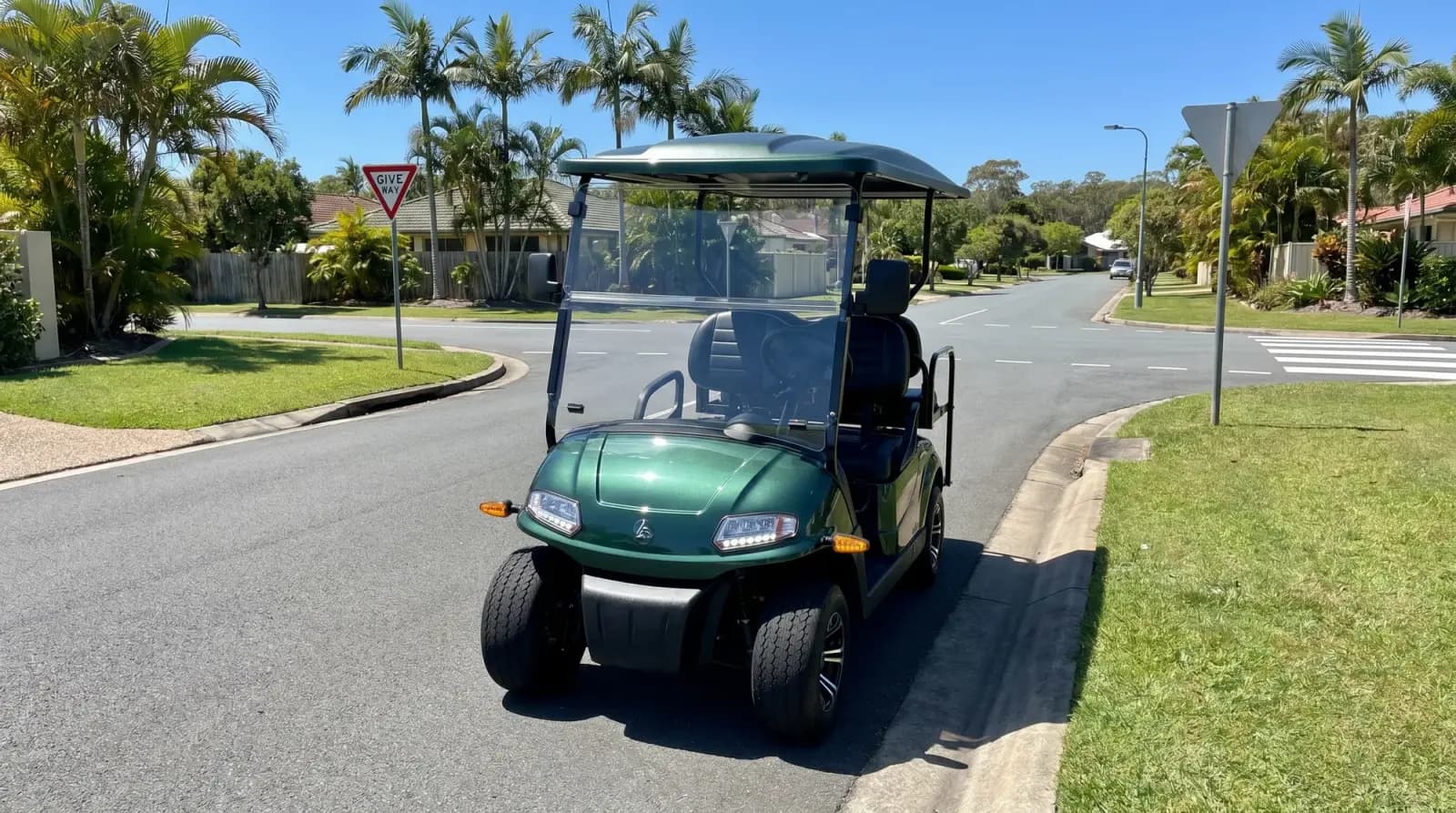
- Some councils run approved low-speed precincts (for example certain Queensland communities) where local road use is permitted under conditions.
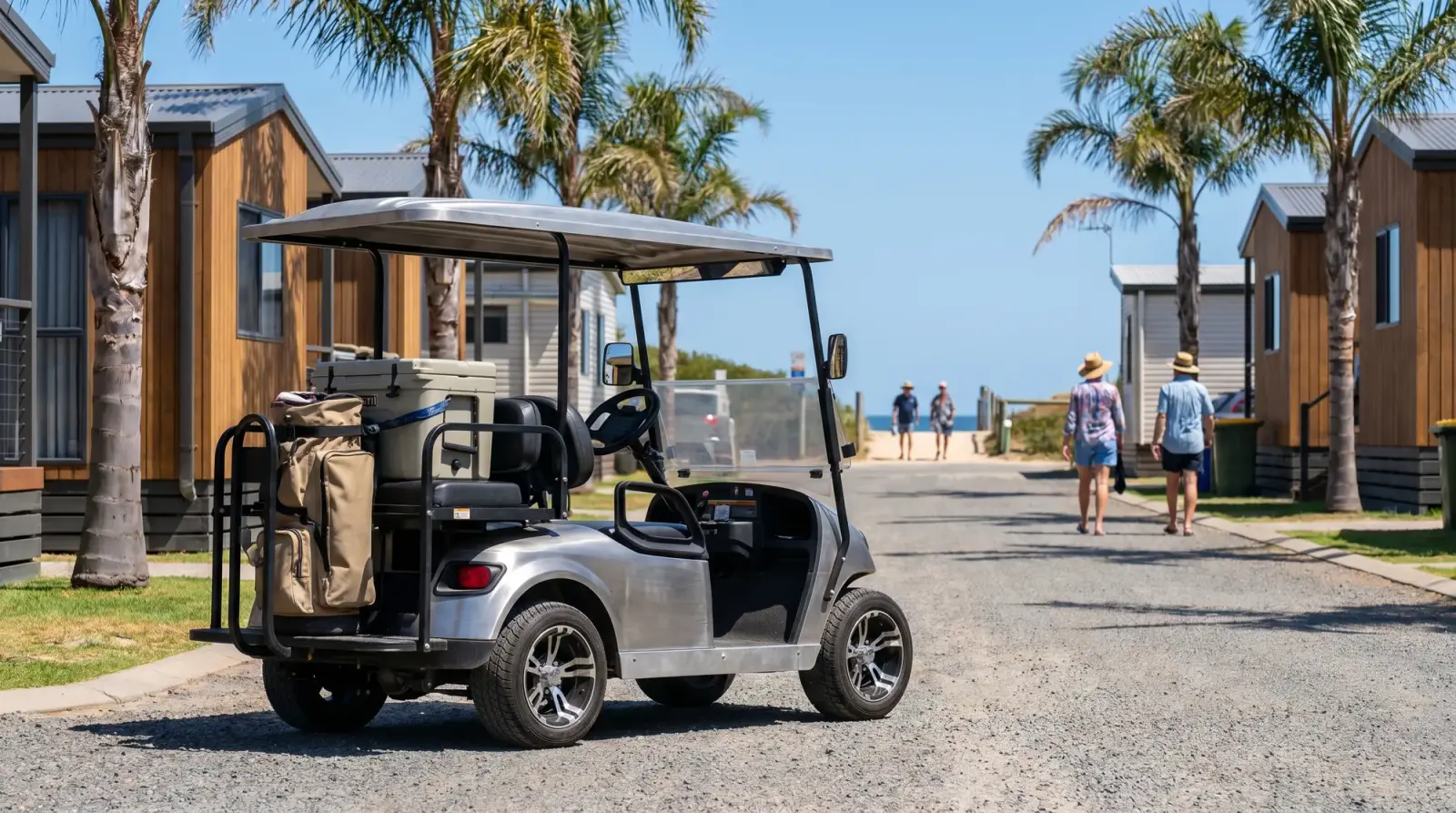
- Private land, resorts, farms, golf courses and gated communities are a different matter, and that is where most carts in Australia are used.
- Always confirm with your state transport authority and your council before assuming any on-road use is legal.
Can you legally drive a golf cart on the road in Australia? Honestly, it depends on where you are. There is no single national answer. Road rules are set by each state and territory, and on top of that individual councils can run their own permit schemes for specific areas. A standard golf cart is generally treated as an off-road vehicle that is not designed or approved for ordinary road use, so for most people the safe assumption is private property only unless a specific exemption applies. This guide walks through what that means in practice and where to check.
Why there is no single answer
Australia splits vehicle and road regulation across states and territories. Each has its own transport authority, its own registration categories, and its own view on low-speed vehicles. A golf cart that is perfectly fine to drive around a caravan park in one region may have no clear on-road pathway in another. Where on-road use is allowed at all, it is usually under a tightly defined permit or an approved local-area scheme, not a blanket right.
A plain state-by-state overview
Here is the honest version, kept general because the detail genuinely shifts by area. Use it to know what to ask, not as a final ruling.
- New South Wales: golf carts are generally treated as off-road and are not registered for normal road use. Some controlled environments and special permits may apply, so check with Transport for NSW and your council.
- Queensland: a number of communities operate approved golf cart precincts where local road use is permitted under conditions such as speed, lighting and permits. Outside those approved areas, general road use is not assumed. Check with the Department of Transport and Main Roads and your council.
- Victoria: golf carts are generally not built for or approved for general road use. Confirm any exemption with VicRoads and your council.
- Western Australia, South Australia, Tasmania, ACT and the Northern Territory: each runs its own categories and exemptions. The common thread is that ordinary on-road use is not a given, and any approval is local and conditional.
- Everywhere: private land, golf courses, resorts, farms and gated estates are where carts are most commonly and comfortably used.
The pattern across the country is consistent even if the detail is not. Off the road, on private or controlled land, a golf cart is simple. On a public road, you need to prove a specific legal pathway exists for your area.
Where golf carts clearly work without the road question
Most of our customers never need a public road. The cart lives and works entirely on land they control. That removes the registration headache and keeps the use case clean.
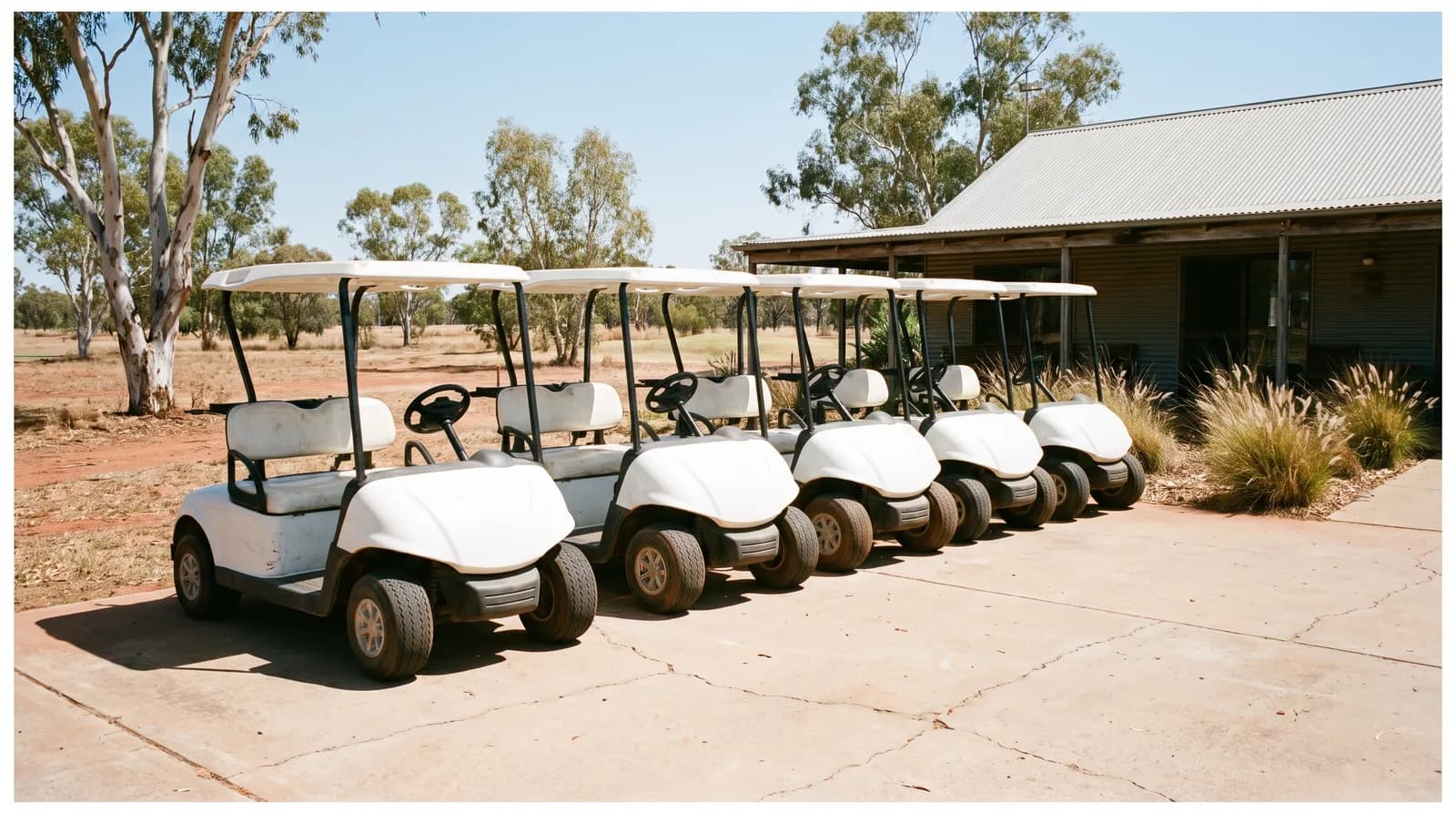
- Golf clubs running fleets across the course and clubhouse grounds.
- Caravan and holiday parks moving guests and luggage on internal roads.
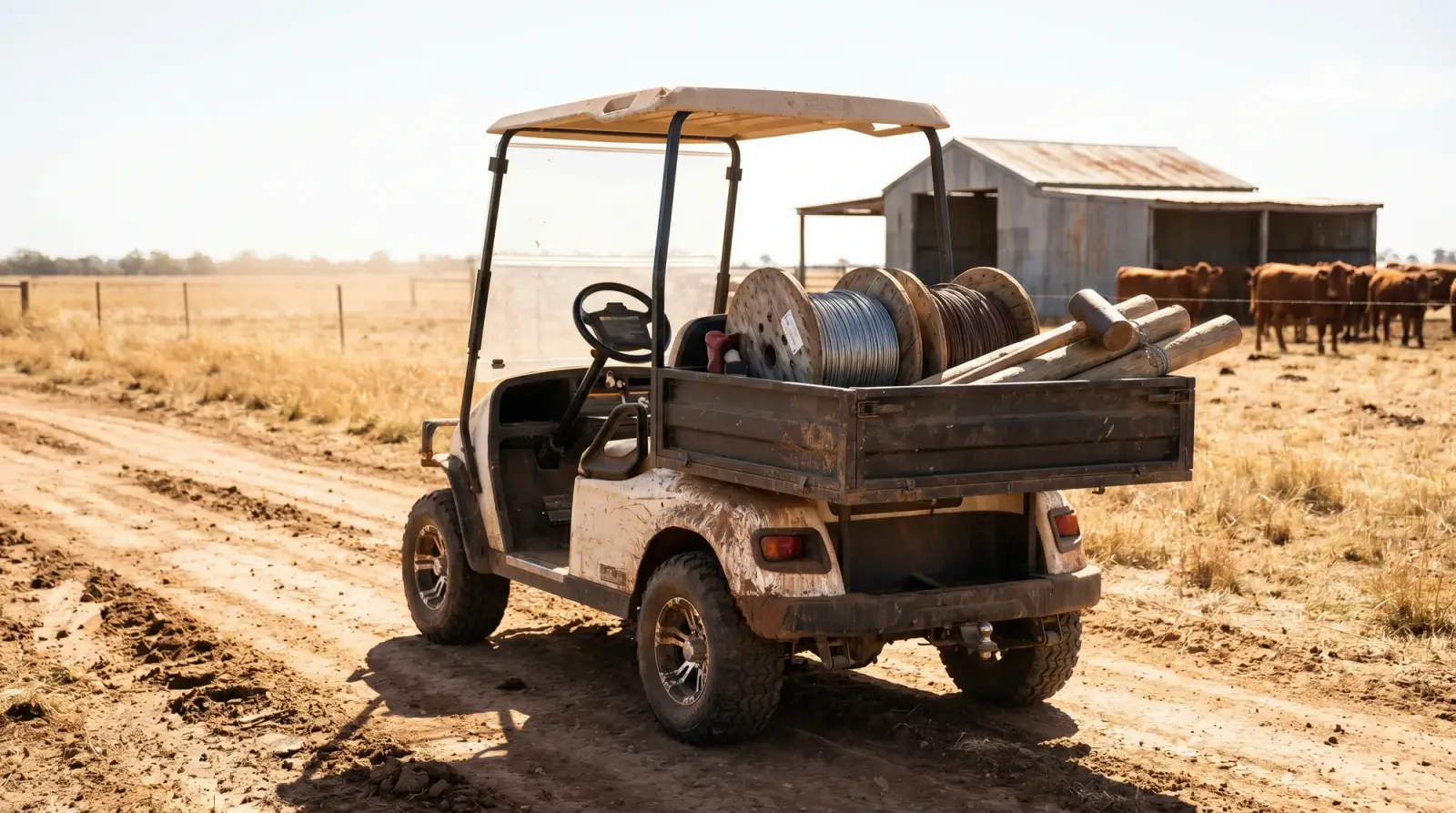
- Farms and acreage using a utility cart for tools, feed and fencing runs.
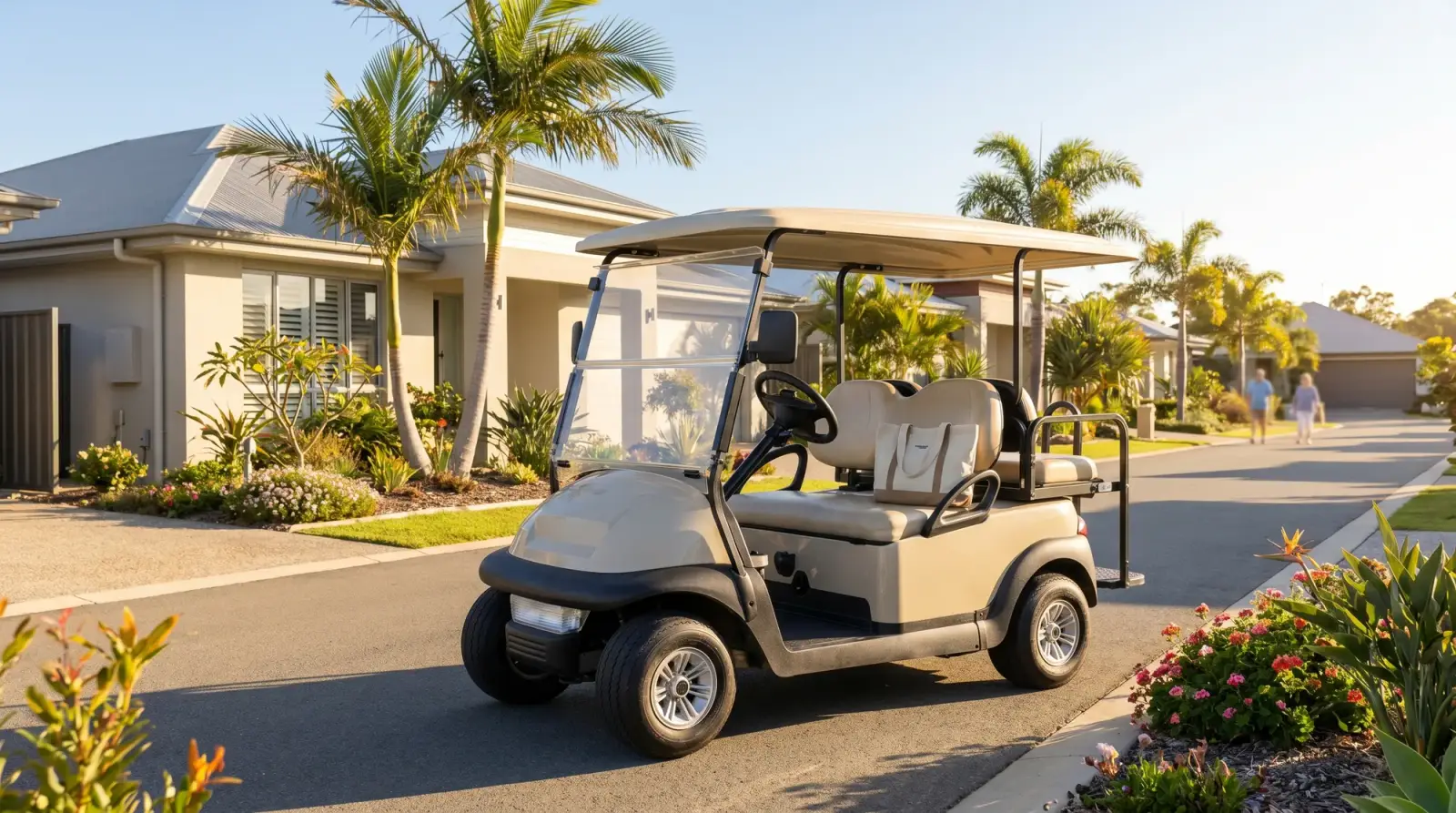
- Lifestyle and retirement villages with internal pathways and shared roads.
- Resorts and large private venues shuttling people and equipment.
If your use is one of these, you can browse the range and choose seating and a utility set-up without worrying about road classification at all.
If you genuinely need on-road use
If you have a real reason to cross or use a public road, treat it as a project. Do not assume, ask.
- 01
Define the exact route
Write down the specific roads or crossings you need. The answer often depends on the individual road and its speed limit.
- 02
Call your council
Ask whether an approved golf cart area or local permit scheme covers your route, and what conditions apply.
- 03
Check your state transport authority
Confirm the vehicle category, any registration or exemption, insurance, lighting and driver licence requirements.
- 04
Specify the cart to suit
If on-road use is permitted, your cart may need lights, indicators, mirrors and a compliant speed set-up. Build that in from the start rather than retrofitting.
Not sure how the rules apply to you?
Tell us your state, your council and how you plan to use the cart. We will help you specify a vehicle that fits your use case and the conditions you confirm locally.
How to research your own rules quickly
You can usually get a clear answer in a couple of phone calls. For more background on classification and what a registered cart actually involves, see our companion piece on street-legal and registered golf carts in Australia, and compare drivetrains in our electric versus petrol golf carts guide. You can also browse our guides for more practical articles.
Frequently asked questions
Can I drive a golf cart on the road anywhere in Australia?+
Not as a blanket right. It depends on your state or territory and often your council. Some areas have approved schemes that permit local road use under conditions, but ordinary on-road use is not assumed anywhere. Always confirm locally first.
Which state is most golf cart friendly for road use?+
Queensland is well known for approved golf cart precincts in certain communities, where local road use is permitted under conditions. Even there, it applies only inside the approved area and under the stated rules, so check the specifics with the council.
Do I need to register a golf cart in Australia?+
For private land use, generally no. If you want any form of on-road use, registration or a special exemption may be required, and that is set by your state transport authority. Confirm before you assume.
Are the rules different on private property?+
Yes. On private land such as a farm, resort, golf course or gated estate that you control, road registration rules generally do not apply, which is why most carts in Australia are used this way.
Can you tell me my exact local rule?+
We cannot give a definitive local ruling because it changes by council and over time. We can help you specify the right cart once you confirm your local rules with your council and state transport authority.
Related solutions
Ready to explore what we build?
See the vehicles and the setting this applies to, or get a tailored quote built around your site.
Ready to find the right buggy?
Tell us how and where it will work and we will specify a vehicle and a tailored quote built around you. Every build comes with a 3-year warranty and a 24-hour priority call-out.
Our guides are written and reviewed by the Hawke Electric Vehicles team, the people who specify, build, deliver and support the vehicles. We focus on honest, practical advice and flag where a figure depends on the build rather than guessing.
More guides by Hawke