- For most Australian sites, an electric golf cart is the better all-round choice on running cost, noise and maintenance.
- Petrol can still appeal where there is no easy charging and very long continuous range is the priority, such as remote acreage.
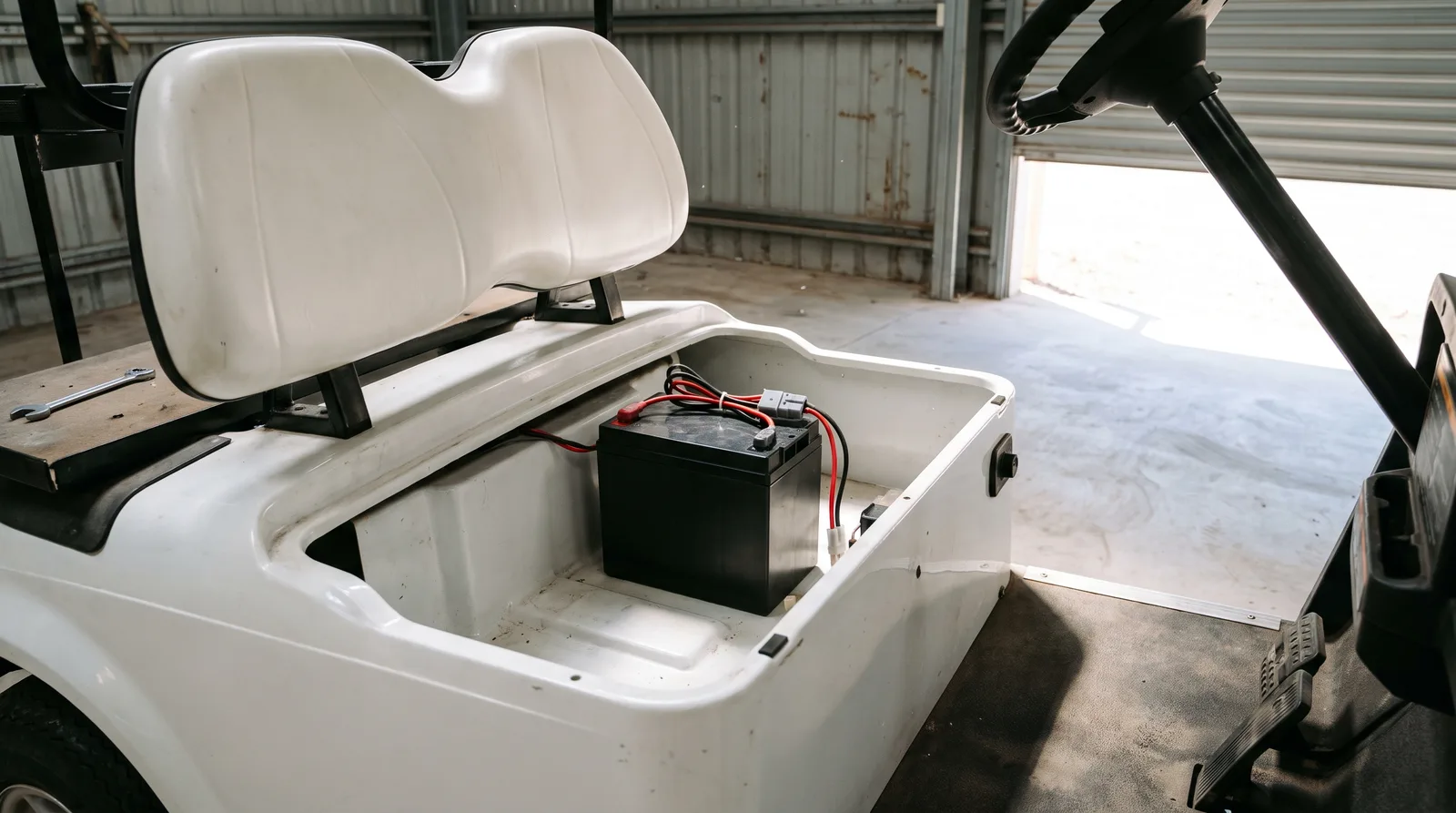
- Lithium electric carts handle heat well when specified and cared for properly, and they recharge cheaply overnight.
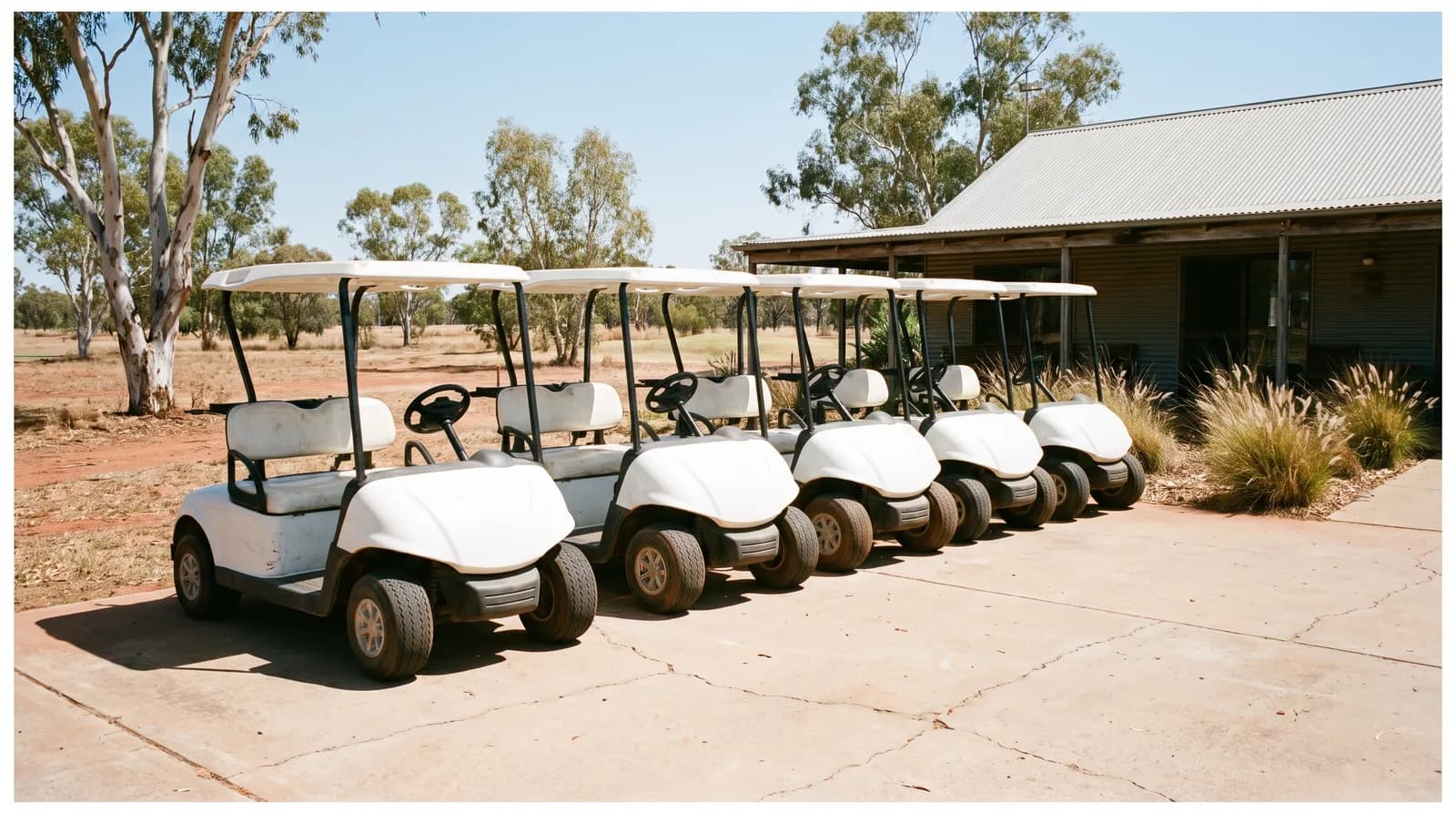
- Electric carts are quieter, which matters at resorts, golf clubs and retirement villages.
- The right answer depends on your site, charging access and daily distance, so match the cart to your use case.
Should you choose an electric or petrol golf cart in Australia? For the large majority of sites the answer is electric. A modern lithium electric cart is cheaper to run, far quieter, needs less maintenance and recharges overnight for very little. Petrol keeps a narrow advantage where charging is genuinely difficult and you need long unbroken range, such as remote properties. Below is an honest comparison so you can choose for your situation rather than the hype.
The short version
- Electric (lithium)
- Low, cheap overnight charging
- Petrol
- Higher, ongoing fuel
- Electric (lithium)
- Very quiet
- Petrol
- Engine noise
- Electric (lithium)
- Minimal, few moving parts
- Petrol
- Servicing, oil, filters
- Electric (lithium)
- Good when specified and cared for
- Petrol
- Good, but engine heat adds up
- Electric (lithium)
- Plug in overnight
- Petrol
- Carry or store fuel
- Electric (lithium)
- Most sites with charging access
- Petrol
- Remote sites, very long continuous range
| Factor | Electric (lithium) | Petrol |
|---|---|---|
| Running cost | Low, cheap overnight charging | Higher, ongoing fuel |
| Noise | Very quiet | Engine noise |
| Maintenance | Minimal, few moving parts | Servicing, oil, filters |
| Heat tolerance | Good when specified and cared for | Good, but engine heat adds up |
| Refuel or recharge | Plug in overnight | Carry or store fuel |
| Best for | Most sites with charging access | Remote sites, very long continuous range |
Running cost over the life of the cart
This is where electric pulls clearly ahead. You charge overnight from a normal supply at off-peak rates, and there is no fuel to buy, store or carry. Over a fleet or several years of family use the saving adds up. Petrol means an ongoing fuel bill plus the hassle of safe fuel storage, which is a real consideration in a hot, dry climate.
Noise, and why it matters here
Electric carts are near silent. On a fairway at dawn, in a quiet retirement village, or around resort accommodation, that silence is a genuine feature, not a nicety. Petrol engines carry across open space and can be intrusive early and late in the day. For any guest-facing or residential setting, the quiet of electric is hard to beat.
Heat and the Australian climate
A fair concern is how each handles Australian heat. Both can cope, but they cope differently. A lithium electric cart handles high temperatures well when it is specified for the climate and looked after, including sensible charging habits and shade where possible. Petrol engines add their own heat and need cooling and servicing. We cover the electric side in detail in our guide on heat and battery care in the Australian climate.
- Park in shade where you can to keep surface temperatures down.
- Avoid charging a very hot battery straight after heavy use; let it settle.
- Specify the battery and electronics for hot conditions from the outset.
- Keep terminals and connections clean, dust and heat are hard on both.
Maintenance and reliability
An electric cart has far fewer moving parts. There is no oil to change, no filters, no spark plugs and no fuel system to maintain. That means less downtime and lower servicing cost, which matters most when a cart is part of a working fleet. Petrol carts are well understood and robust, but they need regular servicing to stay reliable in the heat and dust.
Want help choosing electric or petrol?
Share your site, your daily distance and your charging access. We will recommend a drivetrain and specification that genuinely fits, and put the figure on a tailored quote.
When petrol still makes sense
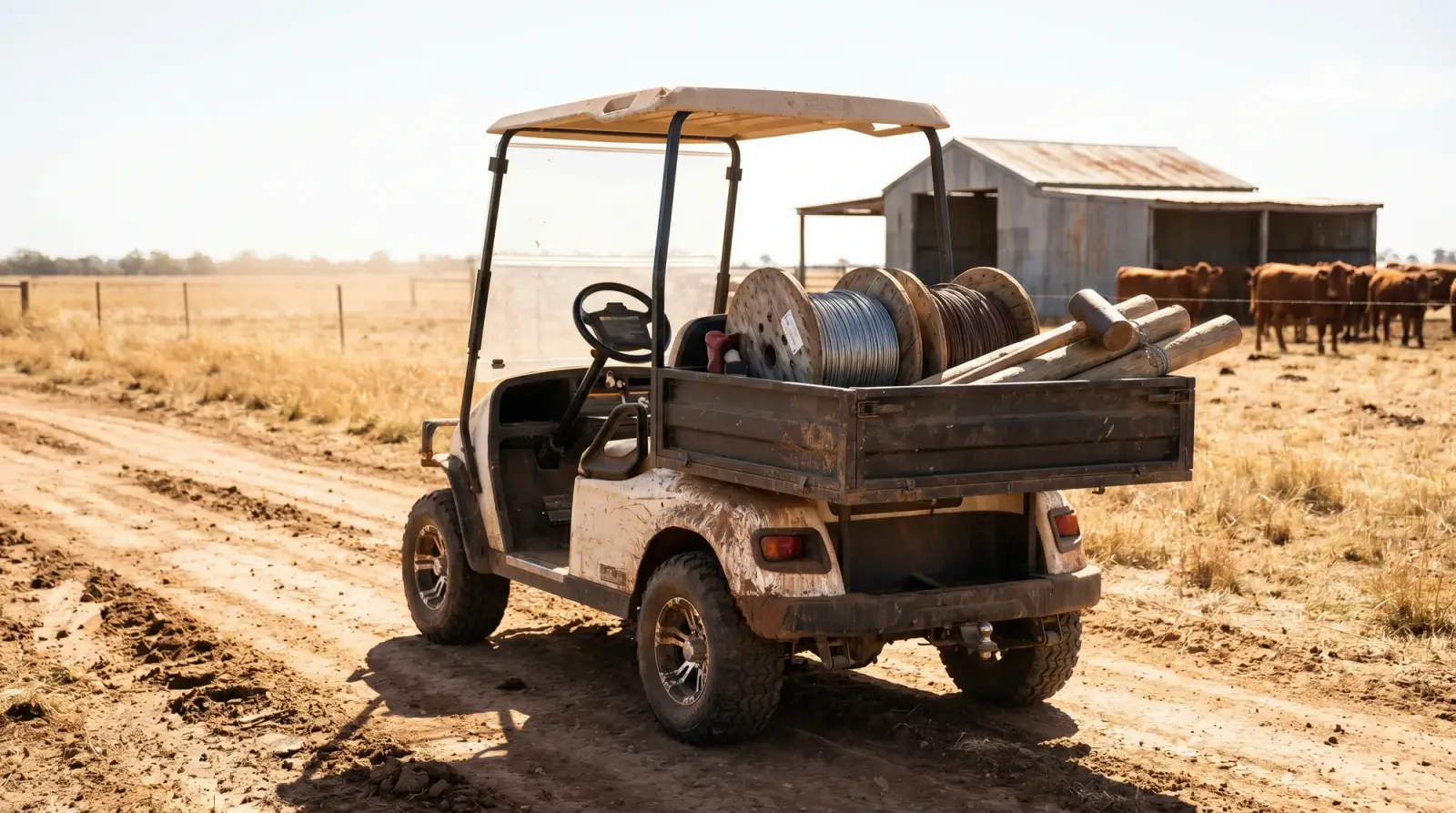
Petrol is not dead. If you are on remote acreage with no convenient charging and you need very long continuous range across a big day, petrol can be the pragmatic choice. The same goes for sites where refuelling from a stored supply is genuinely easier than running power to a charge point. For most other situations, including farms with shed power, electric wins. If you are weighing up a utility build, see our farm and acreage utility golf carts guide.
Electric for almost everyone; petrol where charging is genuinely out of reach.
How to decide
Run through these questions and the answer usually becomes obvious. For more background, browse our guides.
- 01
Can you charge overnight?
If yes, electric is almost always the better choice.
- 02
How far per day?
Most sites are well within electric range. Very long, unbroken distances on remote land may favour petrol.
- 03
Who is around the cart?
Guests, residents or early-morning golfers all benefit from electric quiet.
- 04
What is the climate like on site?
Both cope with heat; specify your electric cart for it and follow simple care habits.
Frequently asked questions
Is an electric golf cart cheaper to run than petrol in Australia?+
Generally yes. Overnight charging at off-peak rates is far cheaper than fuel, and electric carts need less maintenance. Over the life of the cart, and especially across a fleet, electric is usually the lower-cost choice.
Do electric golf carts cope with Australian heat?+
Yes, when specified for the climate and cared for sensibly. That means shade where possible, good charging habits and clean connections. We can build the battery and electronics to suit hot conditions.
Is petrol better for range?+
Petrol can offer very long continuous range without stopping to charge, which suits remote sites. For most sites the range of a well-specified lithium cart is more than enough for a full day's work or play.
Which is quieter?+
Electric, by a wide margin. That quiet is a real advantage at resorts, golf clubs and retirement villages where engine noise would be intrusive.
How much does each cost to buy?+
Our carts are custom built and priced on a tailored quote, so we do not show public pricing. Request a quote with your seating, drivetrain and utility needs and we will confirm the figure.
Related solutions
Ready to explore what we build?
See the vehicles and the setting this applies to, or get a tailored quote built around your site.
Ready to find the right buggy?
Tell us how and where it will work and we will specify a vehicle and a tailored quote built around you. Every build comes with a 3-year warranty and a 24-hour priority call-out.
Our guides are written and reviewed by the Hawke Electric Vehicles team, the people who specify, build, deliver and support the vehicles. We focus on honest, practical advice and flag where a figure depends on the build rather than guessing.
More guides by Hawke