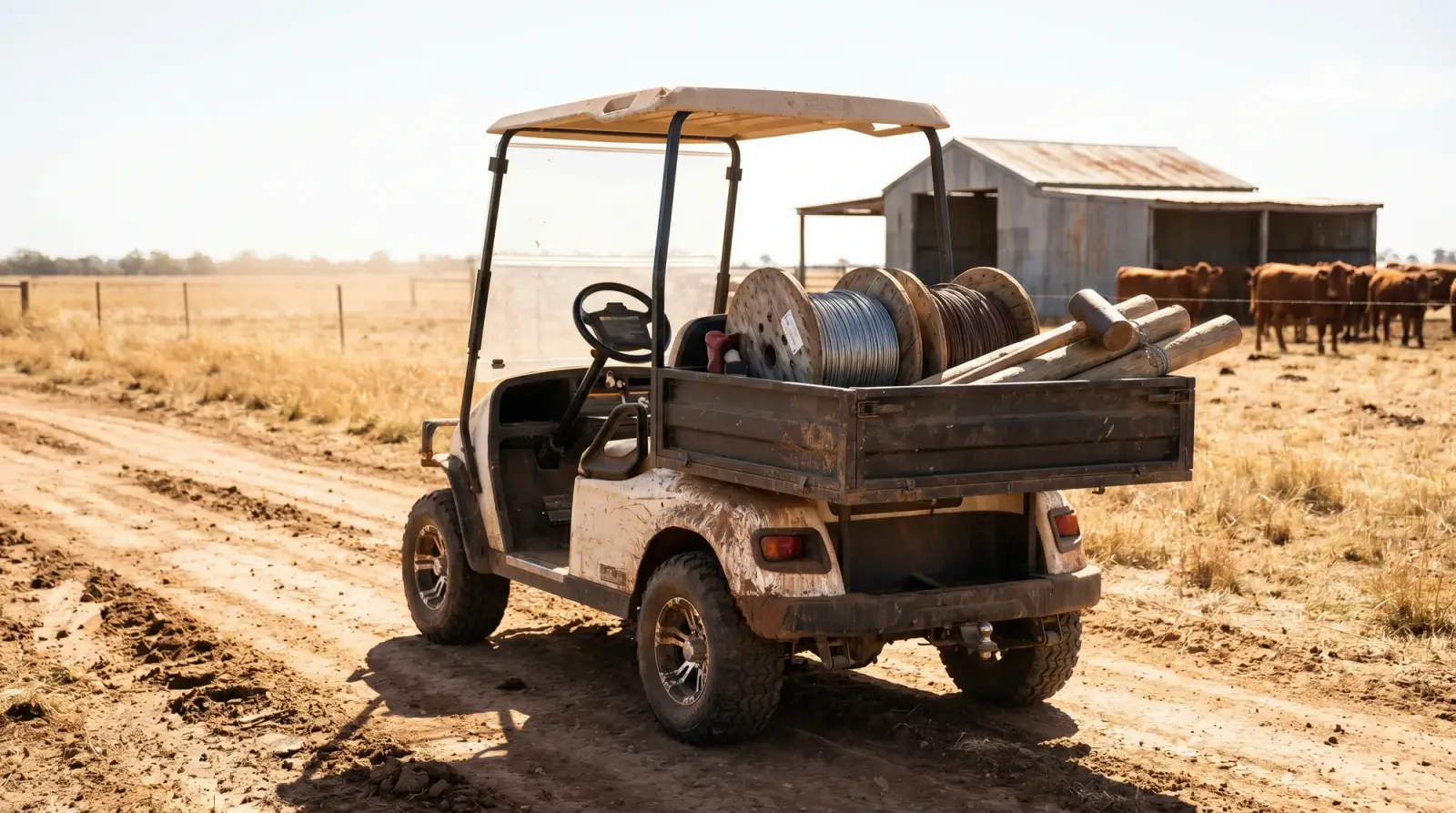
- A utility golf cart suits the short, frequent jobs on a farm or acreage: feed runs, fencing, tool carrying and checking stock or pumps.
- Choose a cargo bed or tray, the seating you need, and a drivetrain matched to your terrain.
- Electric is cheap to charge from shed power, quiet around livestock and low maintenance.
- Spec for your land: slopes, rough tracks and load all affect motor, tyres and battery choice.
- It complements rather than replaces a ute; it shines on the everyday short hops that cost fuel and time.
Is a golf cart any use on a farm? For the short, repeated jobs, very much so. A utility golf cart takes over the constant feed runs, fencing trips, tool carrying and stock or pump checks that otherwise rack up fuel and wear on a ute or quad. With a cargo bed, the right seating and a drivetrain matched to your terrain, it does those jobs cheaply and quietly. It will not replace heavy towing, but for everyday acreage work it earns its keep fast. Here is how to choose one.
The jobs a utility cart does well
Think about the trips you make many times a day that do not need a full-size vehicle. That is the cart's territory.
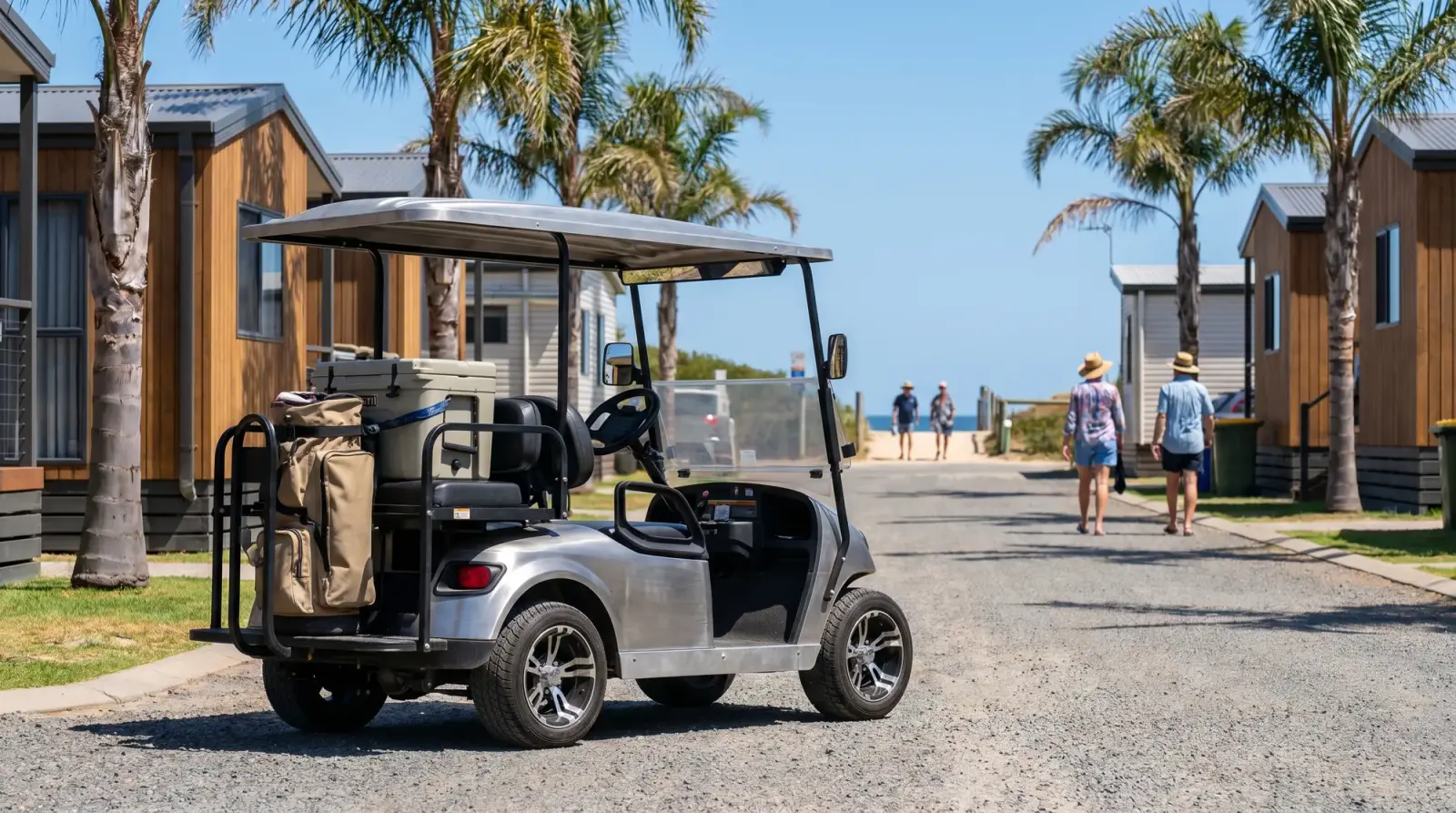
- Carrying feed, tools, fencing wire and posts around the property.
- Checking troughs, pumps, tanks and stock without firing up the ute.
- Moving small loads between sheds, yards and paddocks.
- Getting workers and visitors around a large block quietly.
- Light grounds work around the homestead and gardens.
Cargo, seating and terrain
- What to choose
- Cargo bed or tip tray
- Note
- Match capacity to your typical load
- What to choose
- 2-seater with bed, or larger
- Note
- Balance seats against cargo space
- What to choose
- Heavier-duty tyres and suspension
- Note
- Important on rutted or rocky ground
- What to choose
- Stronger motor and battery
- Note
- Hills drain a weak set-up fast
| Need | What to choose | Note |
|---|---|---|
| Carrying loads | Cargo bed or tip tray | Match capacity to your typical load |
| Carrying people too | 2-seater with bed, or larger | Balance seats against cargo space |
| Rough tracks | Heavier-duty tyres and suspension | Important on rutted or rocky ground |
| Slopes | Stronger motor and battery | Hills drain a weak set-up fast |
Since every cart is made to your order, seating and a cargo set-up can be combined to fit your work exactly. Browse the range to see utility and seating options.
Electric on the land
Most farms already have power in a shed, which makes electric straightforward. You charge overnight for very little, there is no fuel to cart around or store in the heat, and the cart is quiet enough not to spook livestock. Maintenance is minimal too, which matters when you are busy and far from a service centre. We compare both drivetrains in the electric versus petrol guide.
Heat, dust and battery care
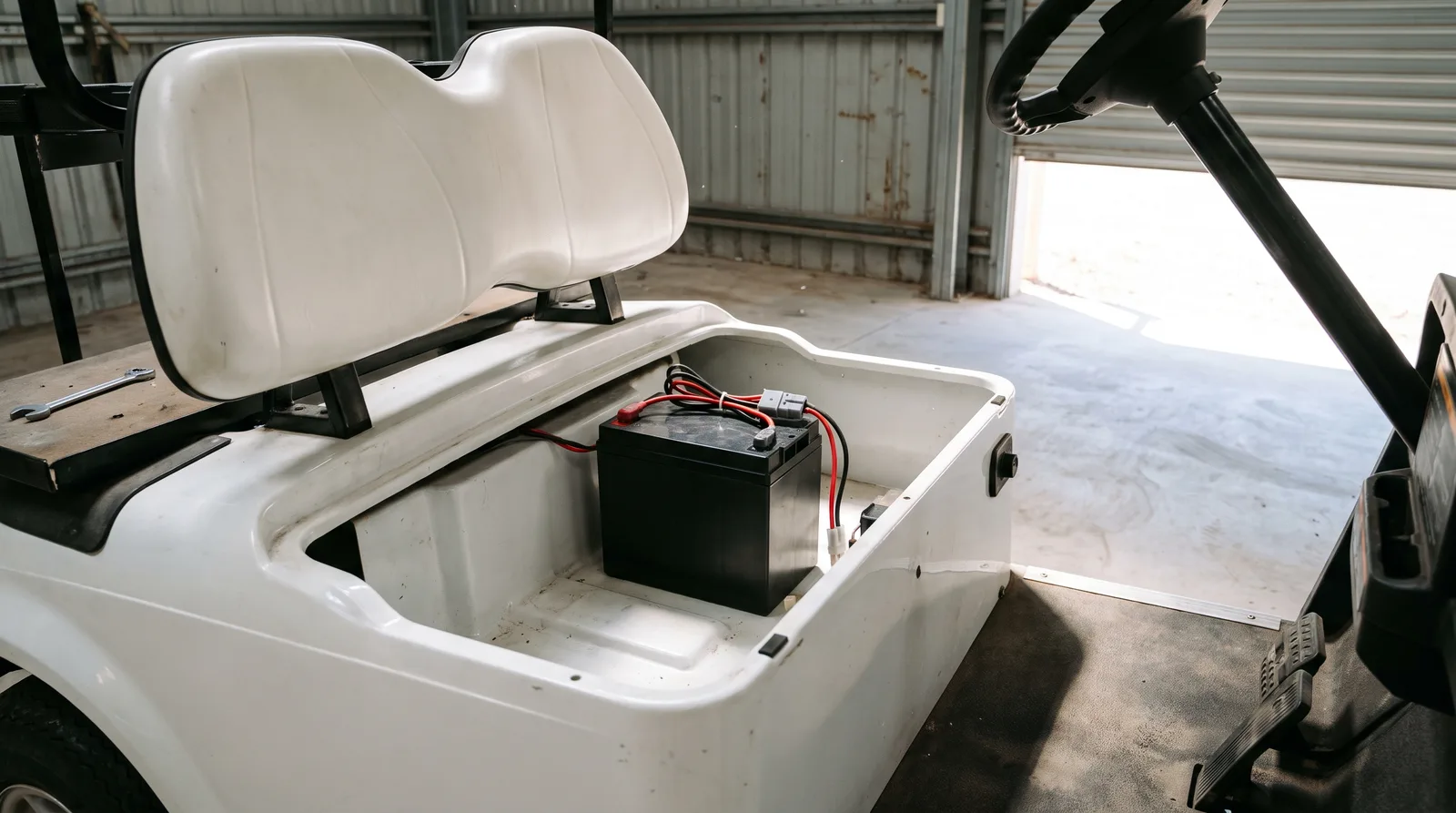
Australian farm conditions are hard on any vehicle. Heat, dust and sun all take a toll, and the battery is the part to protect.
- Specify the battery for hot conditions from the outset.
- Store and charge in the shed, out of direct sun where possible.
- Keep terminals and connectors clean; dust gets everywhere.
- Let a hot battery settle before charging after heavy use.
There is more detail in our heat and battery care guide and our lithium batteries guide.
Want a utility cart built for your block?
Tell us your terrain, your typical load and how far you travel in a day. We will spec cargo, seating and power to suit, and confirm the figure on a tailored quote.
How to spec yours
- 01
Map your terrain
Note the slopes, the roughest tracks and the longest run. This drives motor, tyre and battery choice.
- 02
Size the load
Decide your typical and heaviest load so the bed and capacity are right.
- 03
Balance seats and cargo
Choose how many people you carry against how much space you need for gear.
- 04
Plan charging
Confirm shed power and where the cart lives overnight.
What it saves you over a ute or quad
The case for a utility cart on a farm is mostly about the small trips that quietly add up. Every short run to the trough, the shed or the back fence in a ute burns fuel, adds wear and ties up a vehicle you may need for heavier work. A quad does the job but is noisier, less stable carrying a load and not always the safest option around the yard. An electric utility cart takes those short, frequent jobs off the ute and quad, runs almost for free off shed power, and carries tools and feed in a stable, easy way. It will not tow a heavy trailer or cross a flooded creek, so it complements rather than replaces, but for the everyday it earns back its keep faster than people expect.
- Cuts fuel and wear on the ute for short, repeated jobs.
- Quieter and calmer around livestock than a petrol quad.
- Stable, easy load carrying for feed, tools and fencing gear.
- Frees the ute for heavy towing and long hauls.
A word on roads and tracks
On your own land you can use a cart freely. If a job takes you onto a public road, even a quiet rural one, remember that on-road use is governed by your state and council and is never automatic in Australia. Check first; see our road rules by state guide. For more practical articles, browse our guides.
Frequently asked questions
Can a golf cart handle rough farm terrain?+
Within reason, yes, when specified for it. Heavier-duty tyres, suspension and a stronger motor and battery handle rutted tracks and slopes. Tell us your terrain and we will build to suit, though it is not a replacement for heavy four-wheel-drive work.
Will a utility cart replace my ute?+
No, it complements it. The cart takes over the short, frequent jobs that waste ute fuel and time, while the ute still handles heavy towing and long hauls.
Is electric practical on a farm?+
Usually yes. Most farms have shed power, so overnight charging is easy and cheap, the cart is quiet around stock and maintenance is low. Petrol suits remote land with no charging and very long daily range.
How much can a utility cart carry?+
It depends on the build. We match the cargo bed and capacity to your typical load. Tell us what you carry most and we will specify accordingly.
How do I protect the battery from the heat?+
Specify it for hot conditions, charge and store in the shade or shed, keep connections clean and let a hot pack settle before charging. See our heat and battery care guide for detail.
Related solutions
Ready to explore what we build?
See the vehicles and the setting this applies to, or get a tailored quote built around your site.
Ready to find the right buggy?
Tell us how and where it will work and we will specify a vehicle and a tailored quote built around you. Every build comes with a 3-year warranty and a 24-hour priority call-out.
Our guides are written and reviewed by the Hawke Electric Vehicles team, the people who specify, build, deliver and support the vehicles. We focus on honest, practical advice and flag where a figure depends on the build rather than guessing.
More guides by Hawke