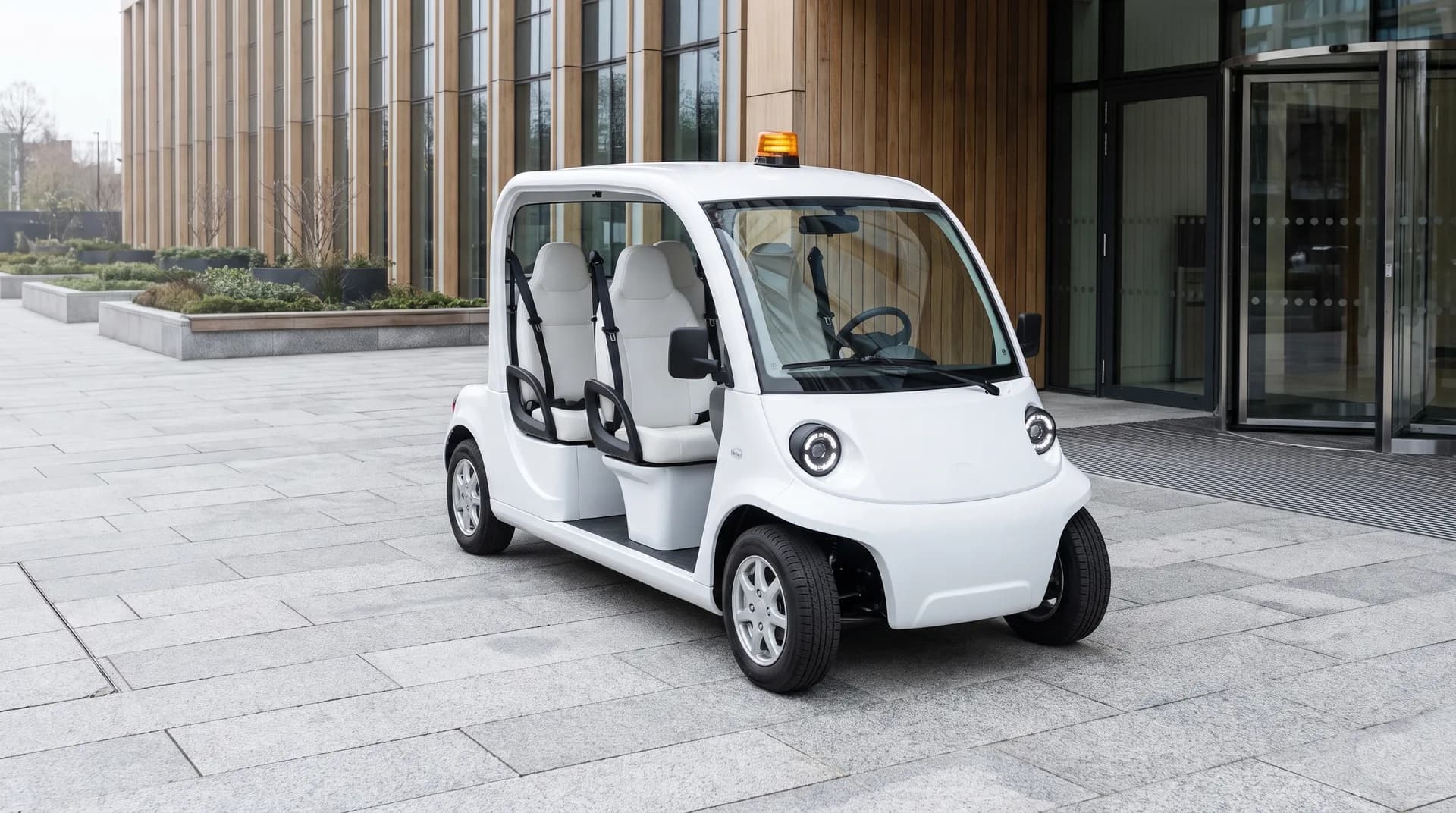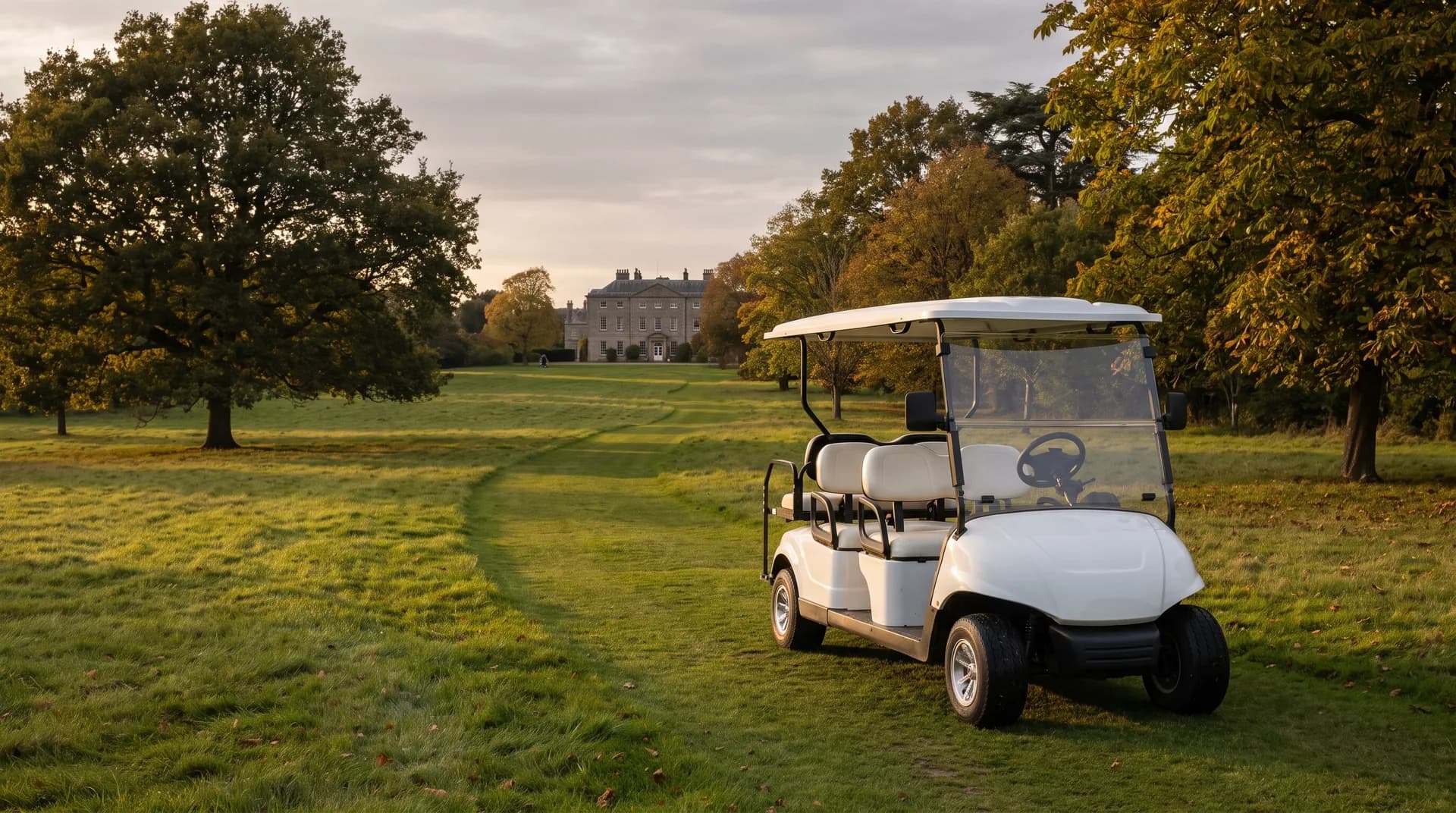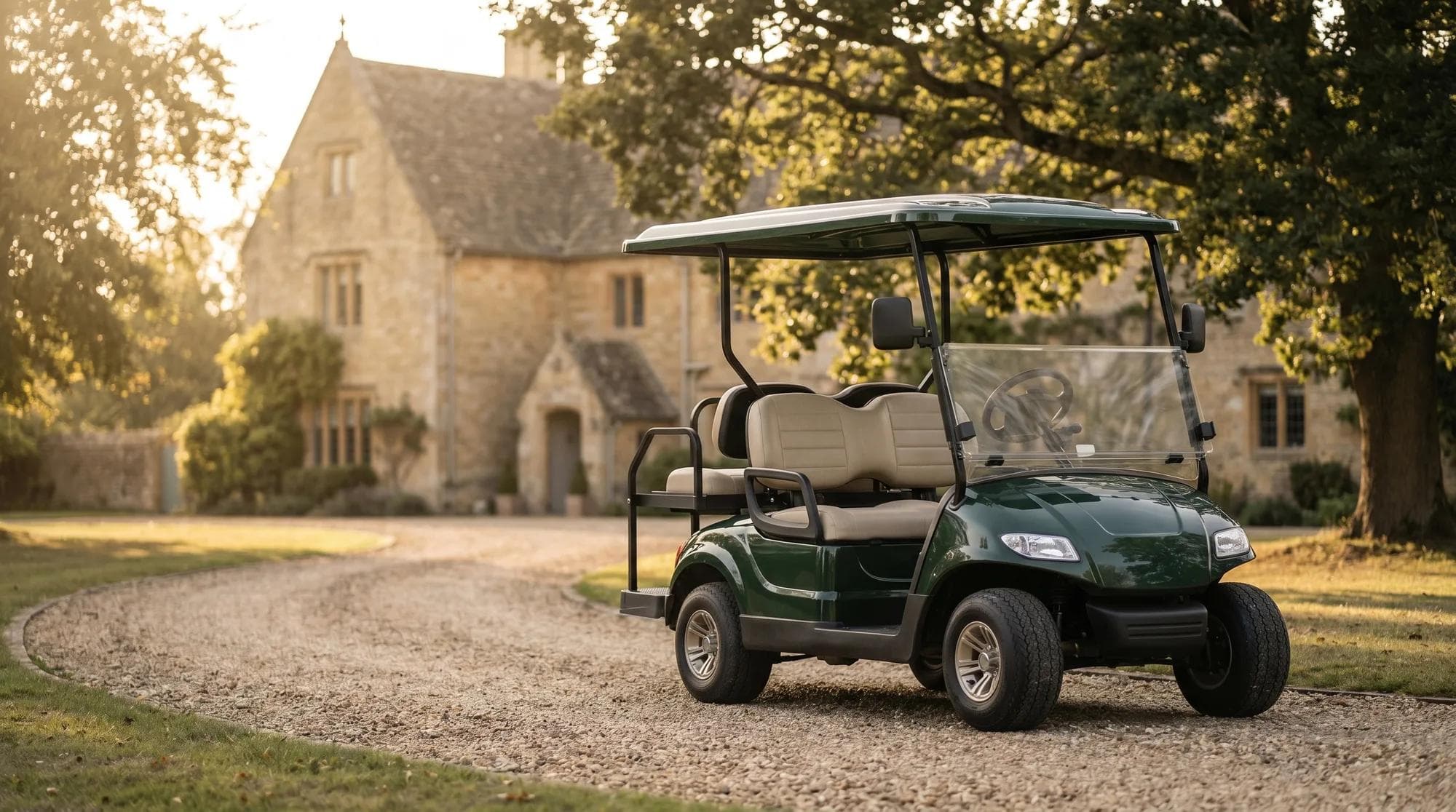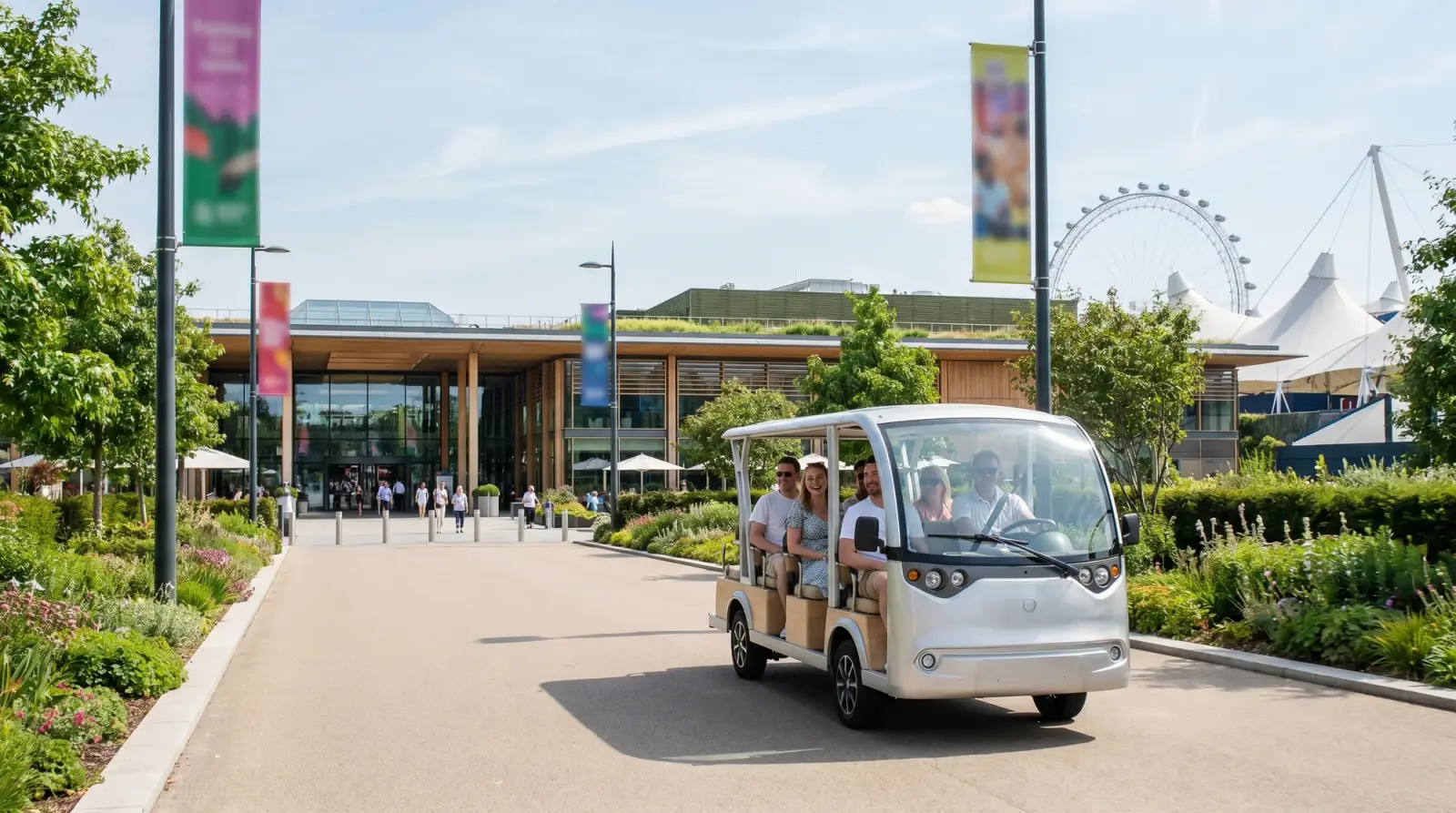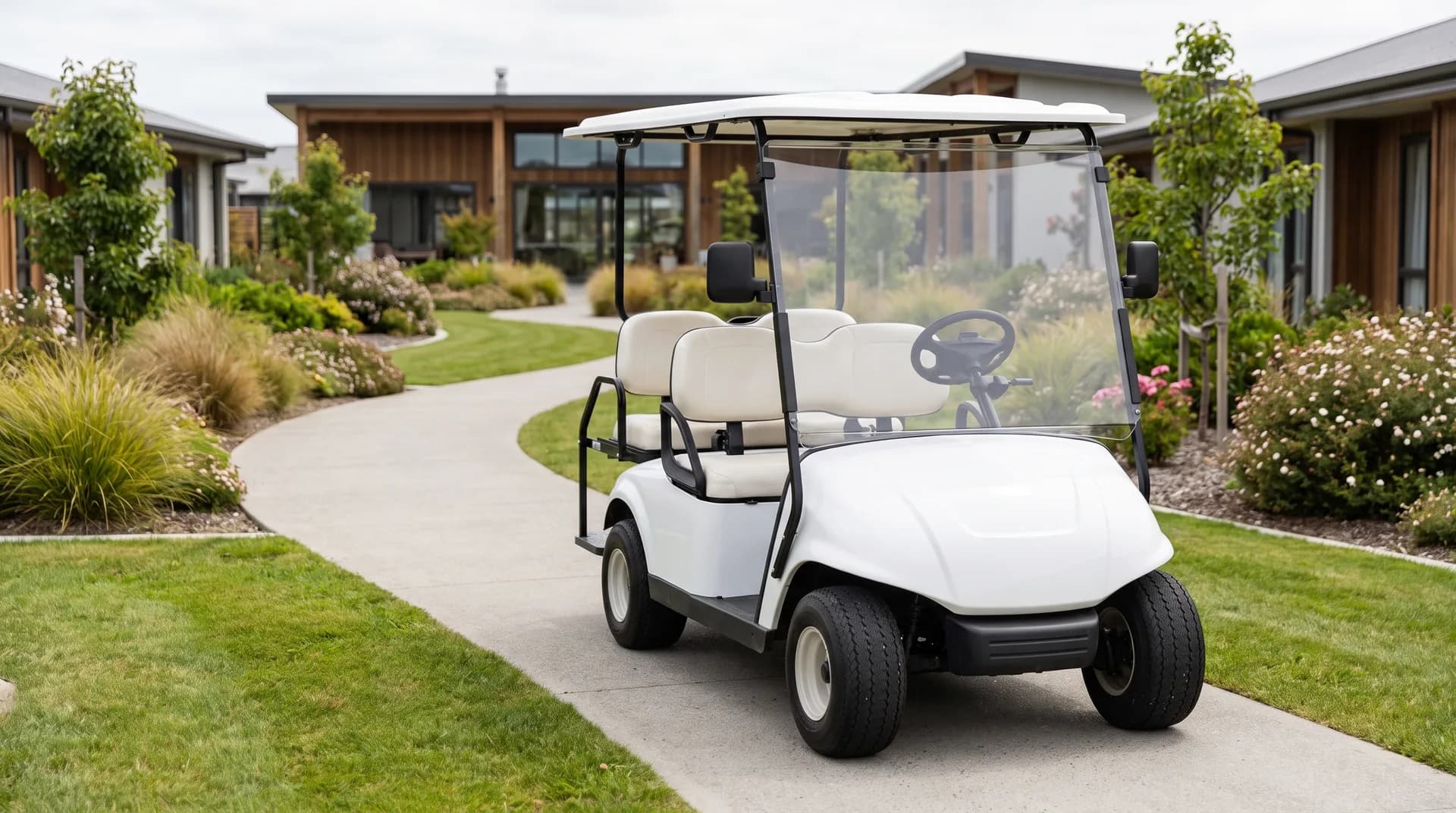
A care home or retirement village is a community spread across grounds that not every resident can walk. The distance from a room to the dining hall, the gardens or the gate can be the difference between a resident joining in and staying behind. An electric buggy closes that gap with dignity: it carries residents and staff quietly and cleanly, with a step-free option for those who need it, so the grounds stay open to everyone. This guide sets out how to choose one for a care setting.
- Dignified, comfortable transport keeps residents part of the community, not left behind.
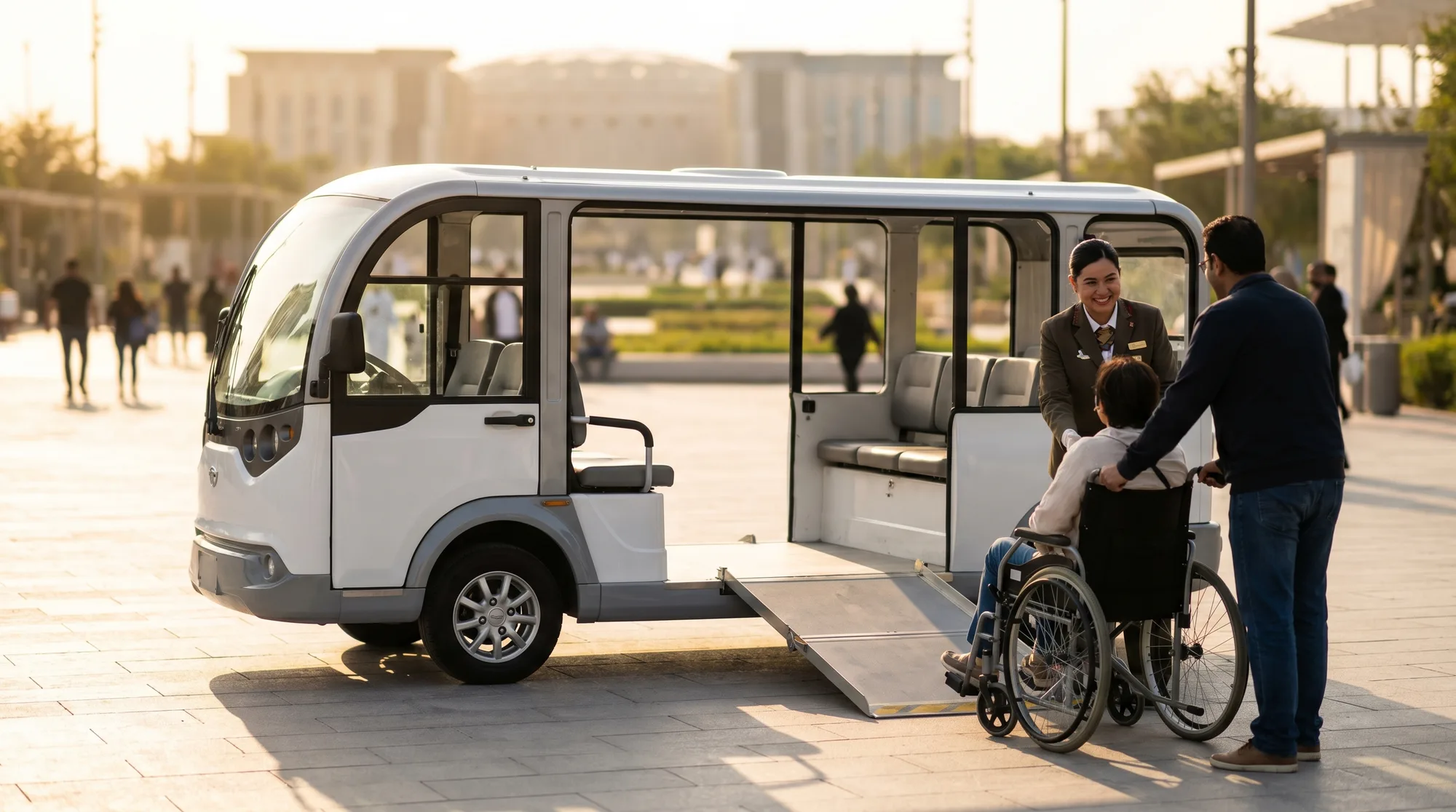
- A wheelchair-accessible configuration lets residents travel in their own chair, level and secured.
- Quiet, fume-free running suits a calm setting and indoor-to-outdoor journeys.
- It carries staff, supplies and residents alike across a spread-out site.
- Specified for gentle, safe use, with the features a care setting needs.
Dignity and independence
The point of transport in a care setting is not just logistics; it is keeping residents included. A comfortable, well-finished buggy lets a resident be taken to the gardens, an activity or the gate to meet family without a struggle, and a wheelchair-accessible configuration means those who use a chair travel in it, level and secured, rather than facing a transfer. This is the same dignified approach as our passenger mobility and PRM work, applied to a care community.
Quiet, clean and gentle
A care home is a calm place, and its transport should be too. Electric running is near silent with no exhaust, so a buggy can move between the building and the grounds without fumes or noise, and its gentle, controlled pace suits carrying residents safely. We specify speed limiting and the safety features a care setting needs, so the vehicle is reassuring for residents, staff and families alike.
For staff and the site too
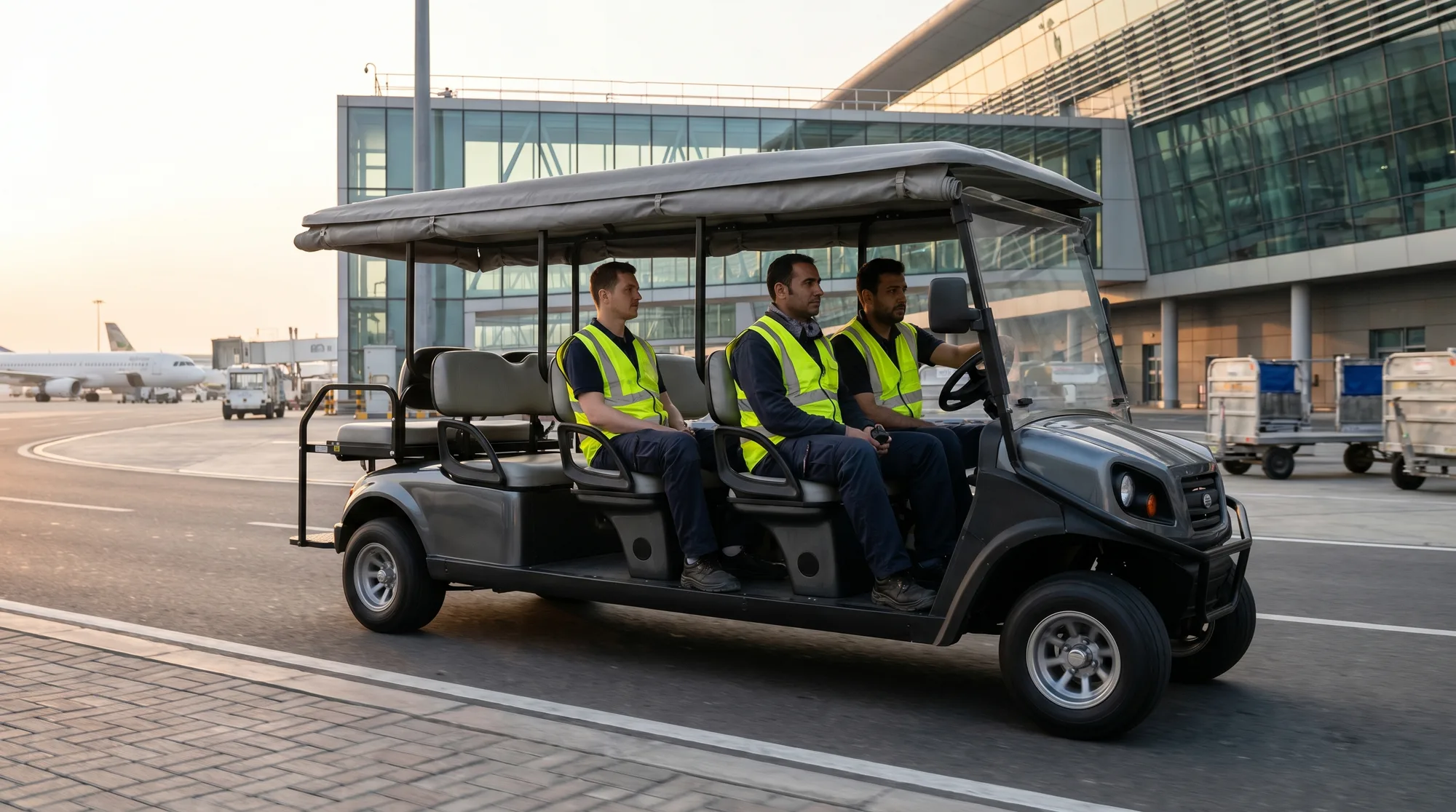
The same buggy earns its keep beyond resident transport. Staff move between buildings, supplies and linen cross the site, and the grounds need tending, all of which a well-chosen vehicle handles quietly through the day. For a larger village, a small mixed fleet of a passenger buggy and a utility model often suits, sized to the site and how you operate.
Frequently asked questions
Are electric buggies suitable for care homes?+
Yes. They provide dignified, quiet, step-free transport for residents around the grounds and between buildings, keeping people included rather than left behind by distance. We specify the speed limiting and safety features a care setting needs.
Can a resident travel in their own wheelchair?+
Yes, in a wheelchair-accessible configuration. The resident boards by ramp and travels in their own chair, level and secured, avoiding a transfer. We specify the access for genuine step-free travel.
Is it safe and gentle for residents?+
Yes. Electric power is delivered smoothly and the speed can be limited for a care setting, and we specify seat belts and other features as needed, so the ride is controlled and reassuring.
Can it be used indoors and outdoors?+
With no exhaust and near-silent running, it suits journeys that move between indoor concourses and outdoor grounds, so one vehicle can carry a resident the whole way.
Can it help staff as well as residents?+
Yes. The same vehicle, or a small mixed fleet, carries staff, supplies and linen across a spread-out site and helps with grounds work, so it earns its keep beyond resident transport.
Specify transport for your care setting
Tell us your grounds and how residents and staff move around them, and we will specify dignified, safe transport and quote to your setting.
Related solutions
Ready to explore what we build?
See the vehicles and the setting this applies to, or get a tailored quote built around your site.

Ready to find the right buggy?
Tell us how and where it will work and we will specify a vehicle and a tailored quote built around you. Every build comes with a 3-year warranty and a 24-hour priority call-out.
Our guides are written and reviewed by the Hawke Electric Vehicles team, the people who specify, build, deliver and support the vehicles. We focus on honest, practical advice and flag where a figure depends on the build rather than guessing.
More guides by Hawke