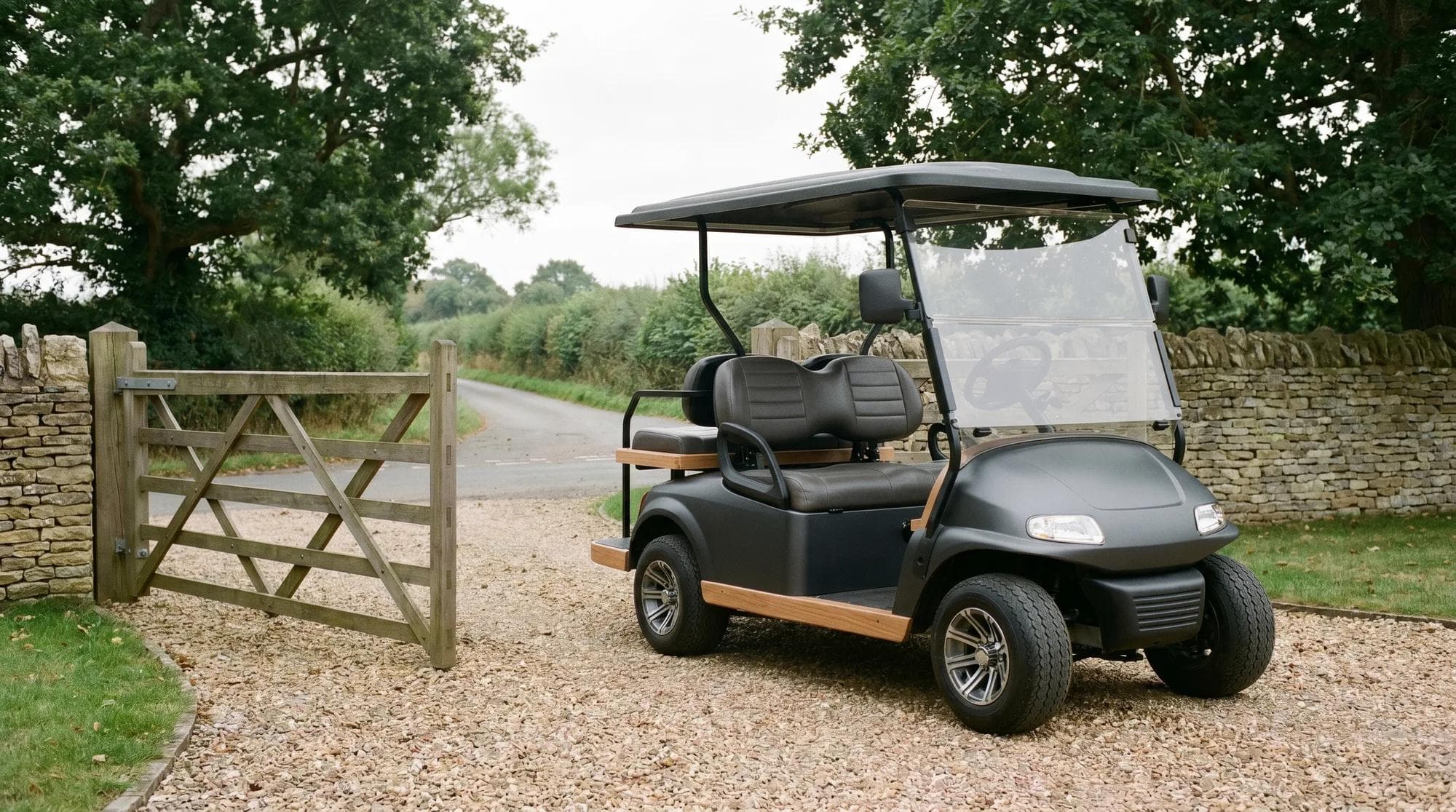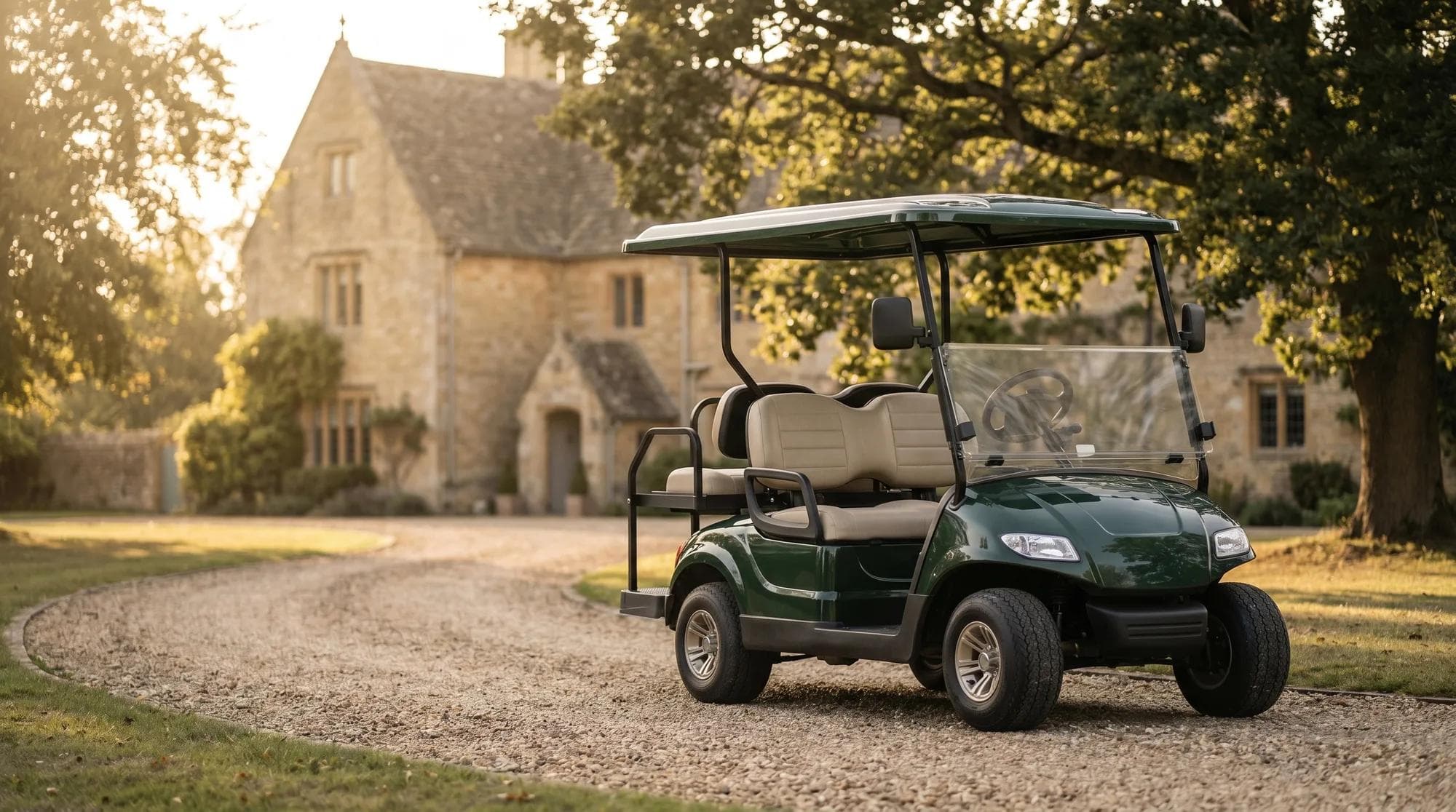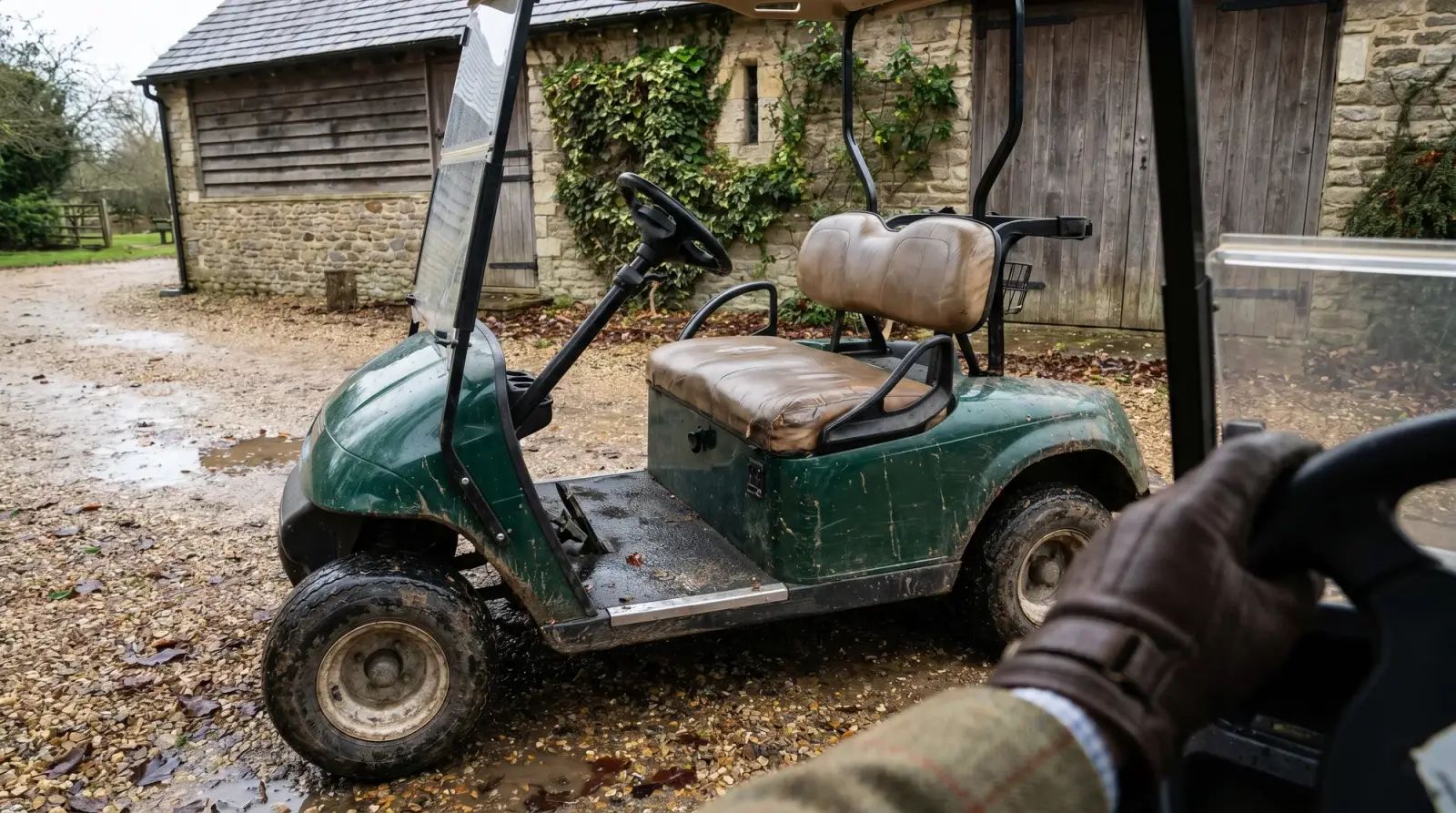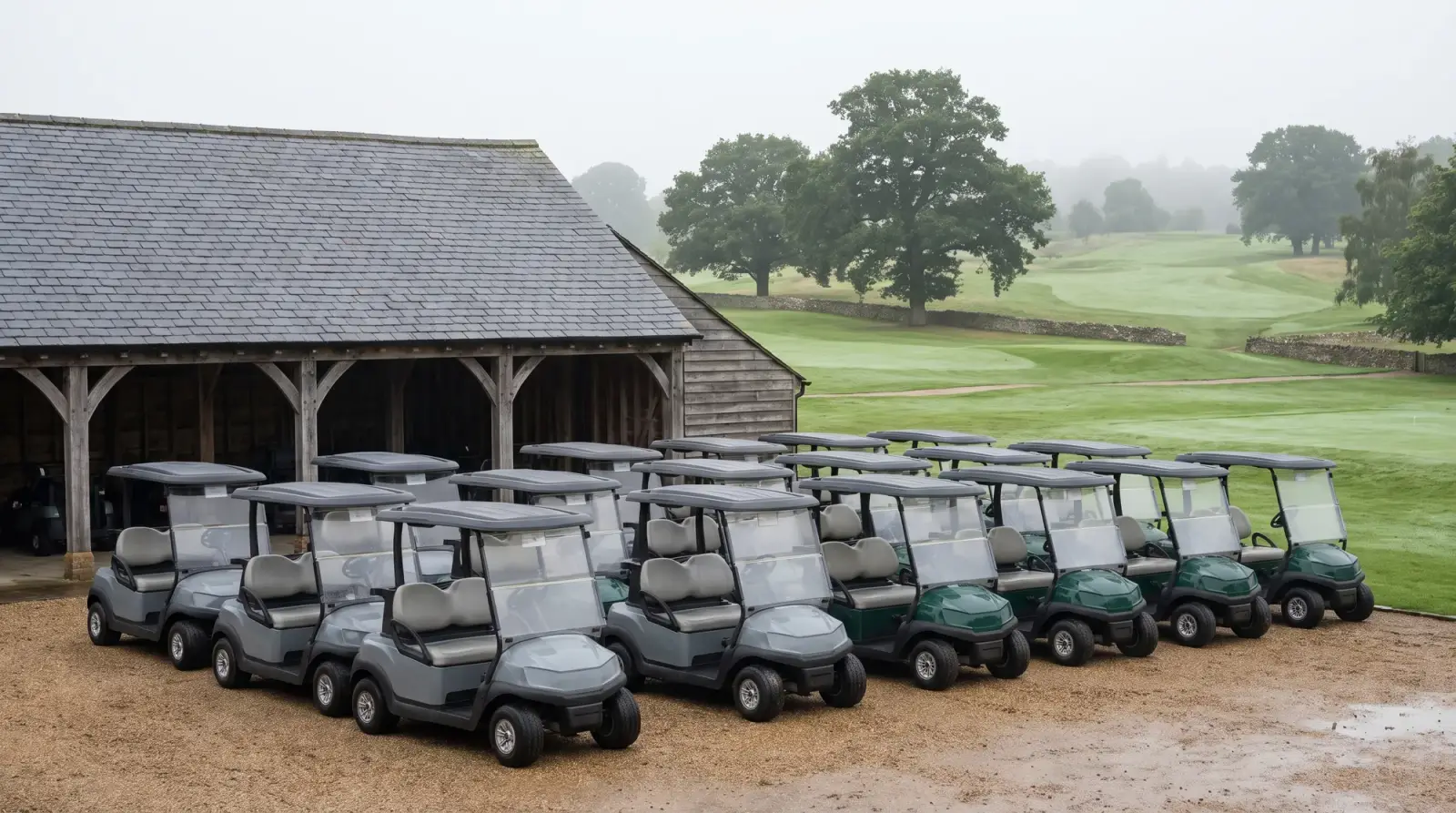
- For private-land use, a golf buggy generally does not need DVLA registration or road tax.
- DVLA registration and road insurance come into play only if a vehicle is to be used on a public road.
- Most golf buggies are supplied for private use and are not built or registered for public roads.
- On genuinely private land insurance is not compulsory, but land the public can freely access can count as a 'public place' where motor insurance is required, so liability cover is wise either way.
- For any road or registration question about your exact vehicle, confirm the position with the DVLA and your insurer.
Do you need to register a golf buggy with the DVLA in the UK? For normal private-land use, generally no. A golf buggy used on a golf course, estate, holiday park or other private site does not usually need DVLA registration or road tax, because those requirements attach to using a vehicle on a public road. The honest answer is that it depends entirely on where the buggy will be used, and the default, private use, is the simple case. This guide explains both, but treat it as a plain-English overview rather than legal advice: for your exact vehicle and use, confirm the position with the DVLA and your insurer.
This pairs closely with the question of whether you can drive a buggy on the road at all, which we cover in our guide to road legal golf buggies. Read the two together if road use is on your mind. Otherwise, the range and the rest of our guides focus on choosing the right buggy for private use.
Private land: the simple case
Used on private land, a golf buggy sits outside the road-vehicle registration regime. You do not register it with the DVLA to drive across your own ground, and there is no road tax to pay. This is how the vast majority of buggies are used, and it is why most owners never deal with the DVLA at all.
- No DVLA registration required to drive on private land you own or control.
- No road tax for private-land use.
- No compulsory road insurance simply to drive across your own ground.
- You remain responsible for safe use and any site owner's rules.
When registration and road insurance apply
The registration and insurance picture changes the moment public-road use enters the equation. A vehicle used on a public road must be registered and insured for that road, and most golf buggies are not supplied to that standard, which is the practical reason they stay off it. So the registration question and the road-legal question are really the same question seen from two angles.
- Private land
- Not generally required
- Public road
- Required
- Private land
- Not applicable
- Public road
- May apply by class
- Private land
- Not required (but wise)
- Public road
- Required
- Private land
- Supplied for this
- Public road
- Not supplied for this
| Requirement | Private land | Public road |
|---|---|---|
| DVLA registration | Not generally required | Required |
| Road tax | Not applicable | May apply by class |
| Road insurance | Not required (but wise) | Required |
| Typical golf buggy | Supplied for this | Not supplied for this |
Tell us how you'll use your buggy
If registration or road use matters to your situation, say so up front. We will be honest about what is possible and tailor the specification and quote to your real use.
Insurance worth considering for private use
Even where the law does not require it, a sensible owner thinks about cover, because a buggy is a real vehicle that can cause injury or damage. The right cover depends on your circumstances, so speak to a broker, but these are the kinds of protection worth weighing up.
- Liability cover for injury or damage caused while using the buggy.
- Cover for the buggy itself against theft, fire or accidental damage.
- Cover appropriate to a club, estate or business operating buggies around the public or staff.
Why the road question keeps coming up
People ask about registration far more than the answer warrants, usually because they have seen a buggy somewhere near a road and assumed there must be a simple way to make any buggy road legal. There is not. The honest position is that registration follows classification: a vehicle has to be built and approved to a road standard before it can be registered for one, and a standard golf buggy is built to neither. So for the great majority of owners, registration is simply not part of the picture, and that is a feature, not a gap.
If your situation genuinely involves a public road, perhaps a crossing between two parts of a site, the right move is not to assume but to ask. Confirm the position for your exact vehicle and route with the DVLA and your insurer, and tell us early so we can be honest about what is and is not feasible. Our companion guide on road legal golf buggies walks through the private land versus public road distinction in more depth.
A note for used buyers
If you are buying used, confirm what you are getting alongside the buggy: proof of ownership and the right to sell, and clarity on how it was used. A buggy only ever used on private land will not come with road registration, and that is normal. Our checklist for buying a used golf buggy covers the paperwork to ask for.
Frequently asked questions
Do I need to register my golf buggy with the DVLA?+
For normal private-land use, generally no. DVLA registration applies to vehicles used on public roads. Most golf buggies are used on private land and are not registered, taxed or insured for the road.
Do I need insurance for a golf buggy?+
Road insurance is required for public-road use but not legally required to drive on private land. Even so, liability cover for private use is wise, and most clubs and estates carry it.
When would I have to register a golf buggy?+
Only if it is to be used on a public road, and even then the vehicle has to be built and registered to that standard, which a standard golf buggy is not. Confirm the position with the DVLA for your exact case.
Is this legal advice?+
No. This is a plain-English overview. Registration, classification and insurance rules are specific to your vehicle and use, so confirm the exact position with the DVLA and your insurer.
What about buying a used buggy?+
A used buggy used only on private land will not come with road registration, which is normal. Confirm proof of ownership and the right to sell, and ask how and where it was used.
Related solutions
Ready to explore what we build?
See the vehicles and the setting this applies to, or get a tailored quote built around your site.

Ready to find the right buggy?
Tell us how and where it will work and we will specify a vehicle and a tailored quote built around you. Every build comes with a 3-year warranty and a 24-hour priority call-out.
Our guides are written and reviewed by the Hawke Electric Vehicles team, the people who specify, build, deliver and support the vehicles. We focus on honest, practical advice and flag where a figure depends on the build rather than guessing.
More guides by Hawke