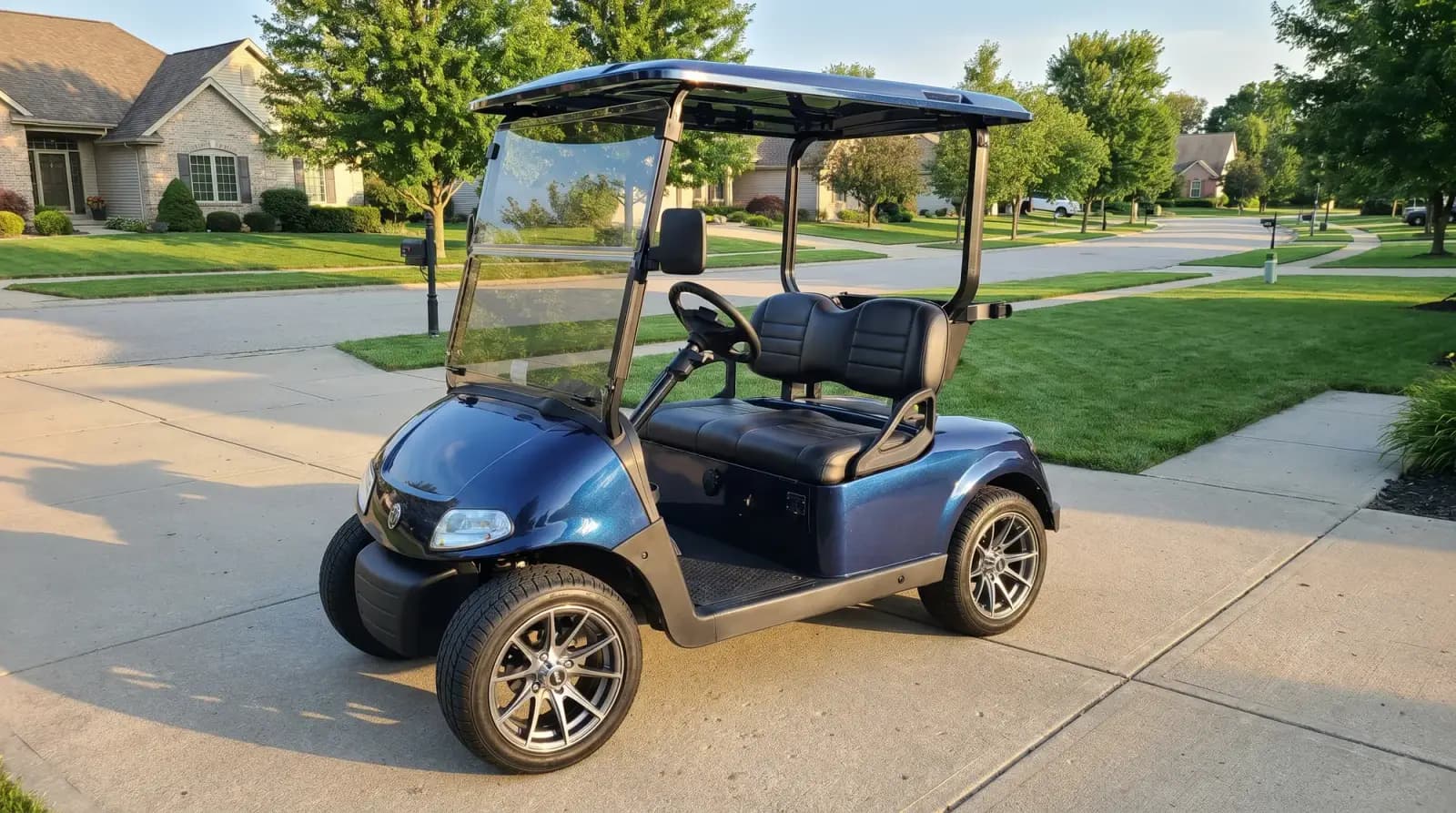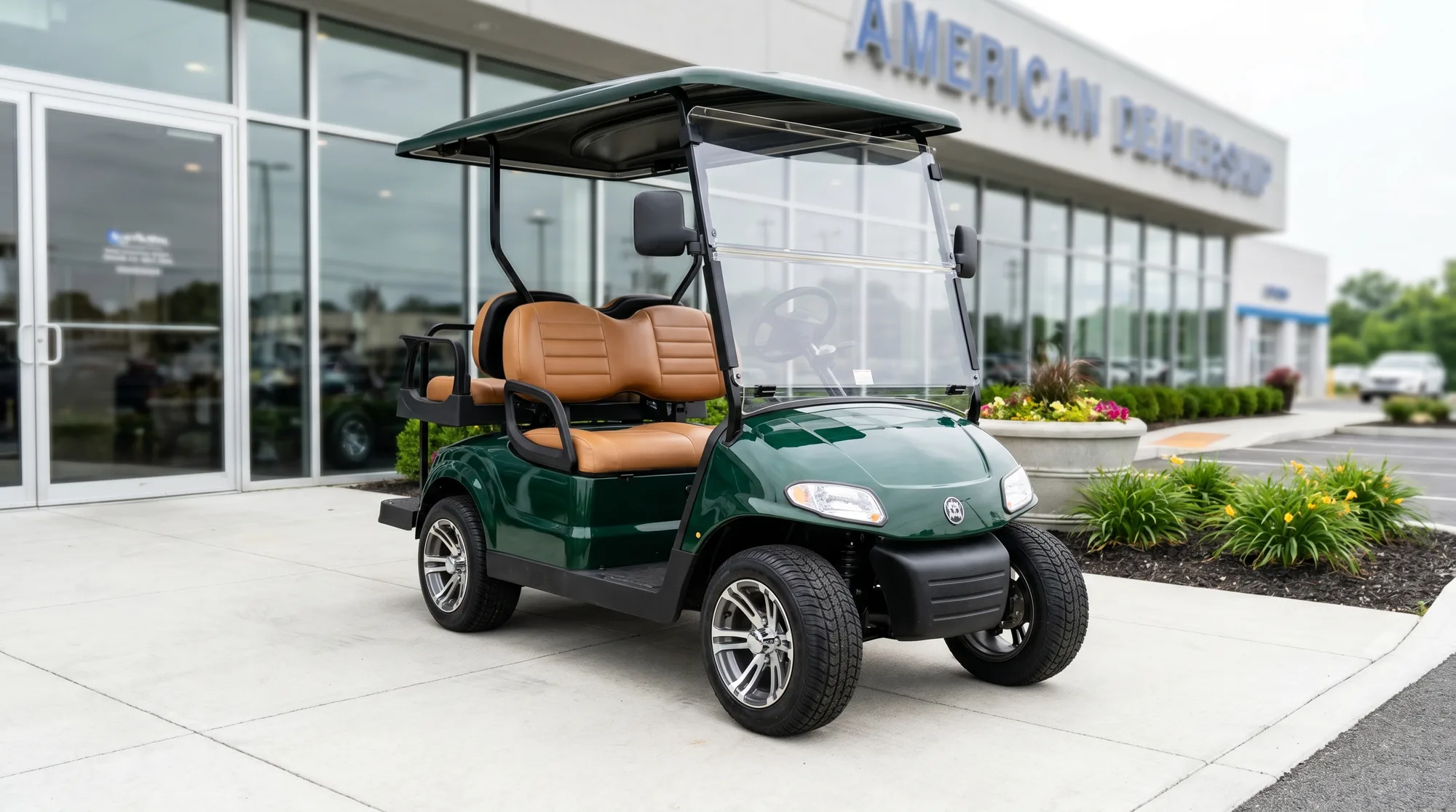
A golf cart is an open vehicle, which is wonderful in mild weather and miserable in extremes. The right accessories change that. In a hot southern summer the priorities are shade, airflow and protecting the battery from heat; in a cold northern winter they are warmth, an enclosure and keeping the pack alive through layup. This guide groups the accessories that genuinely help by climate, explains what each one does, and flags the ones that matter most so you spend on comfort that lasts rather than gadgets that gather dust.
- Hot-climate priorities are shade, airflow and protecting the battery from heat; cold-climate priorities are an enclosure, a heater and battery protection.
- An enclosure is the foundation of cold-weather comfort; everything else builds on it.
- Heat shortens lead-acid battery life and cold cuts available range, so battery care is part of climate kit.
- Cooling fans, tinted or roll-down windows and good seats handle the human side in summer.
- Match accessories to your real climate; a Florida cart and a Minnesota cart need almost opposite kits.
Start with the battery, whatever your climate
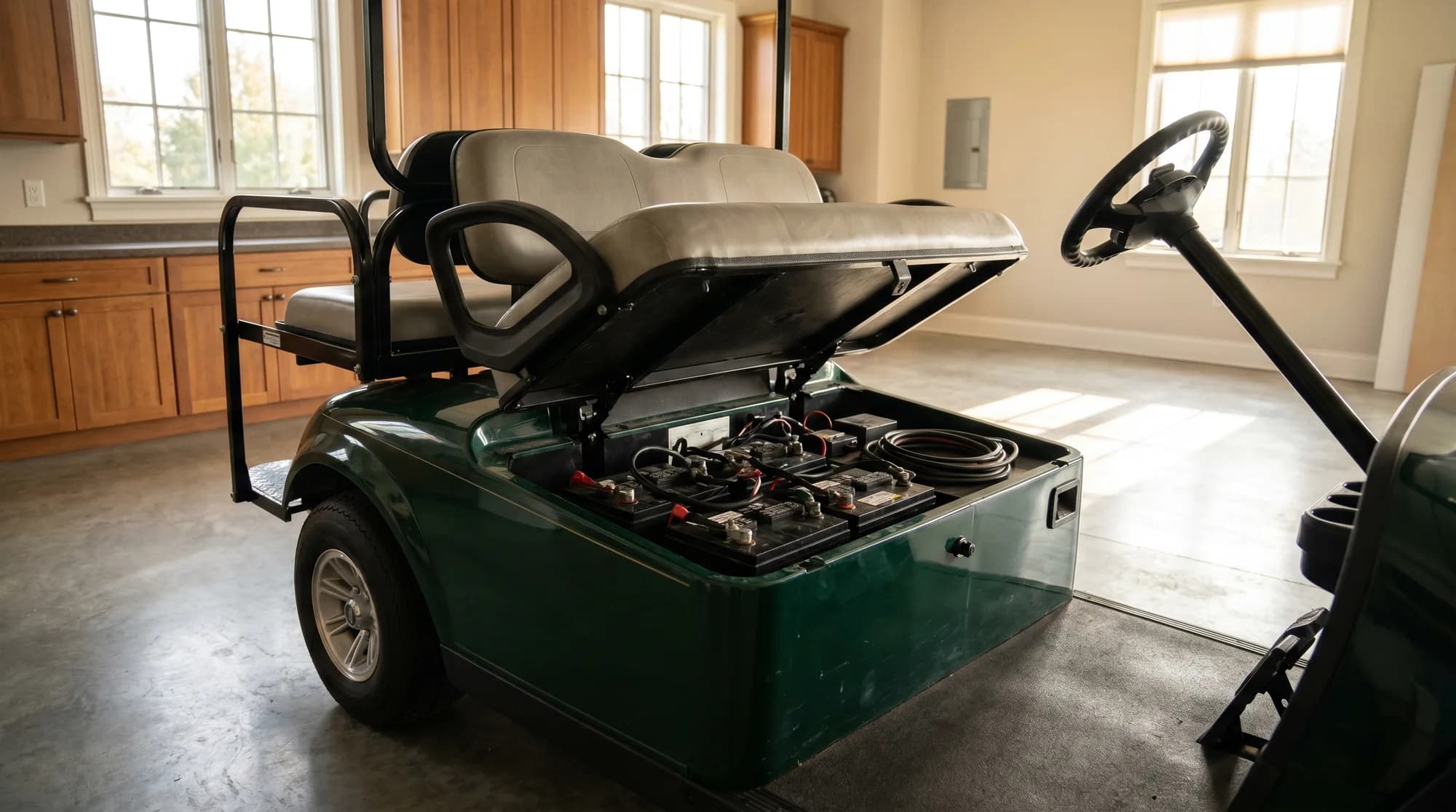
Before the human comfort kit, protect the pack, because temperature hits batteries hard at both ends. Heat accelerates wear and water loss in lead-acid, while cold reduces the range you can actually use and makes charging a very cold lithium pack risky. Garaging the cart, charging in moderate temperatures and keeping up the routine in our battery care and lifespan guide all help. In extreme cold, storing the pack charged and maintained, as covered in our covers and storage guide, prevents a flat, ruined pack by spring.
Hot-climate accessories
In hot, sunny regions the enemy is sun and still air. The goal is shade overhead, moving air and surfaces that do not scorch.
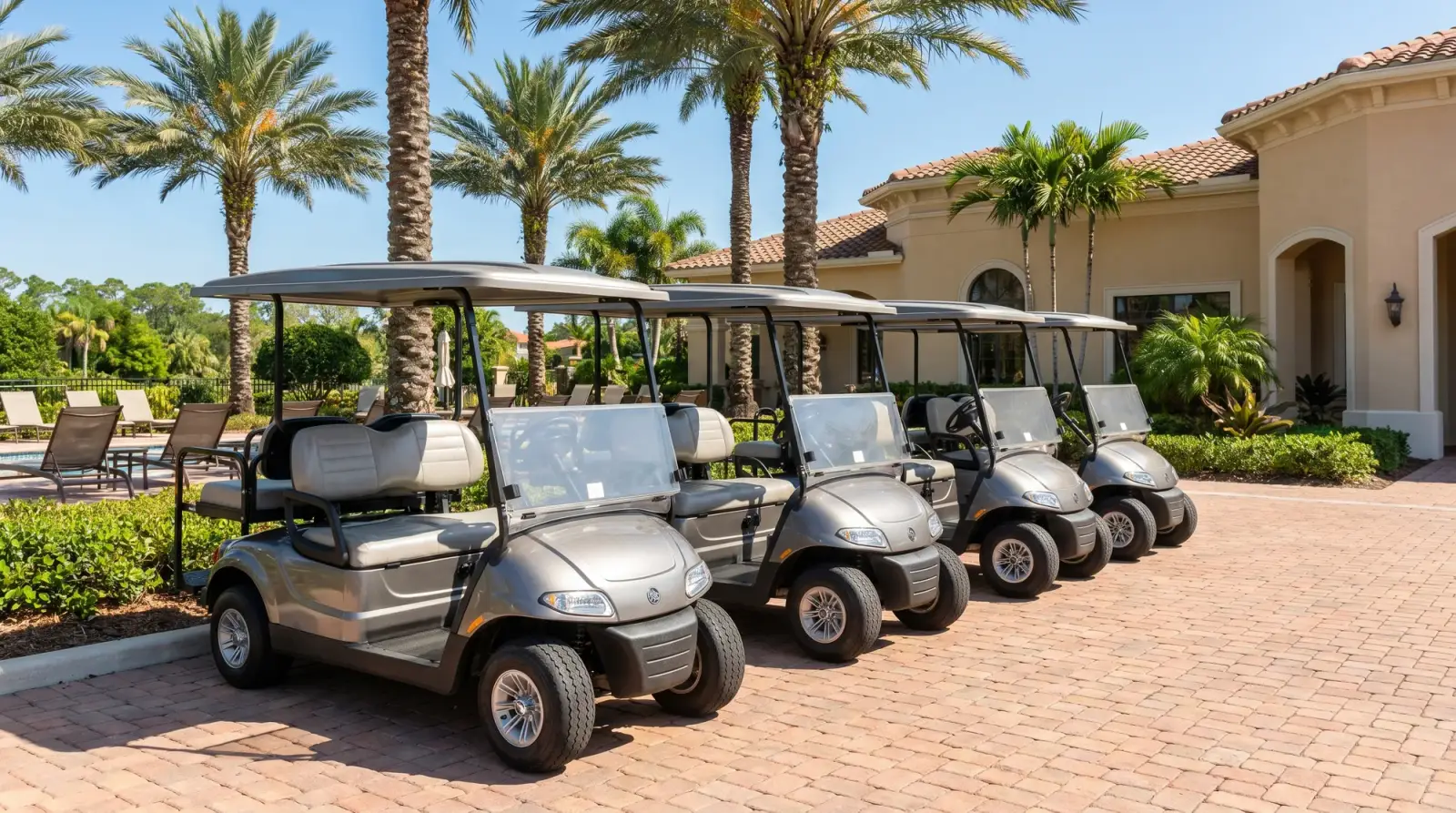
- A solid roof or roof extension for shade; a longer roof shields more of the cabin from direct sun.
- Tinted, roll-down or removable side windows that keep sun out while letting a breeze through.
- 12-volt cooling fans mounted in the cabin to move air at low speed and at rest.
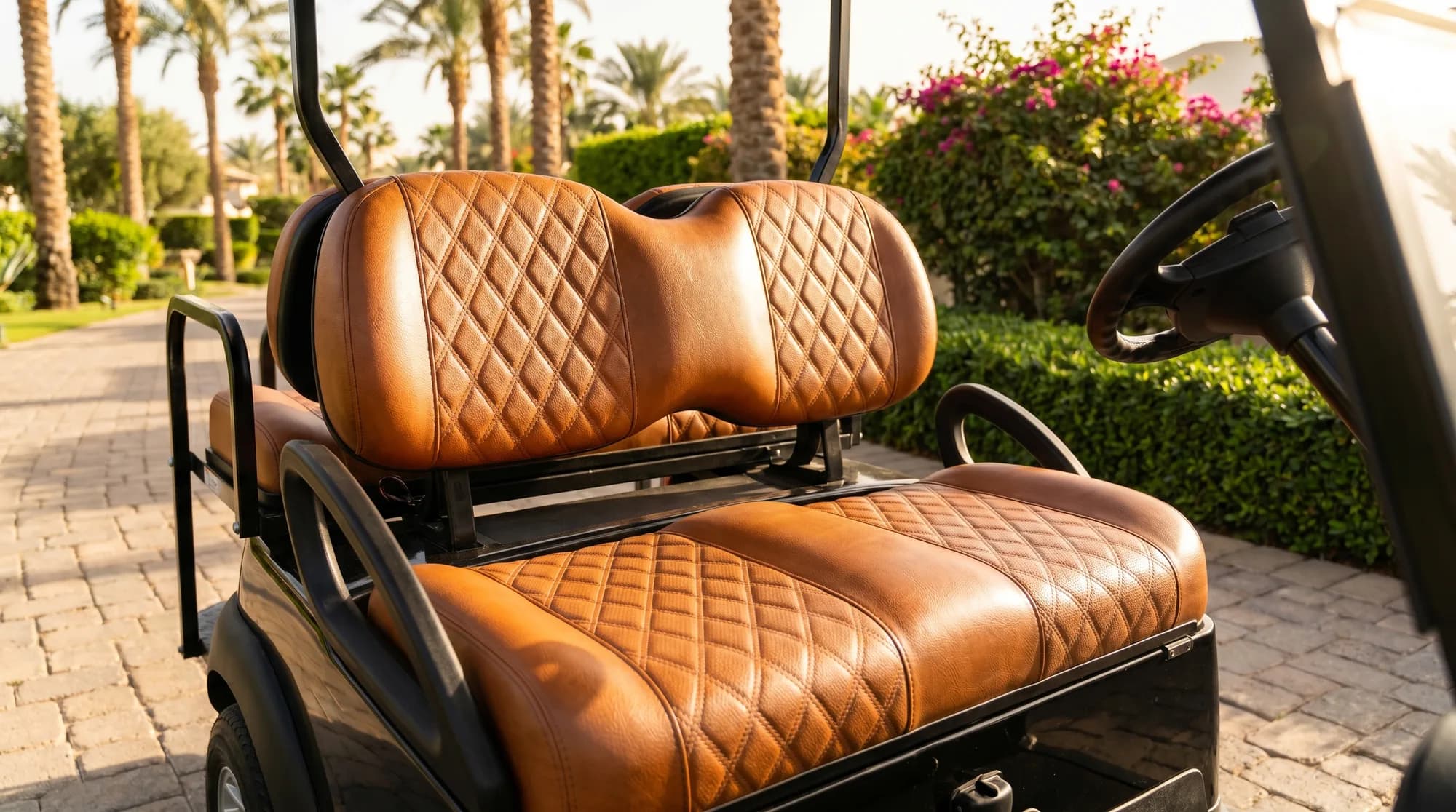
- Light-colored, breathable or vented seat covers that do not bake; see our seat covers and comfort guide.
- A cooler mount and cup holders so cold drinks travel; a small but real comfort in summer.
- Sun-stable materials throughout, because cheap vinyl and trim degrade fast under constant UV.
Cold-climate accessories
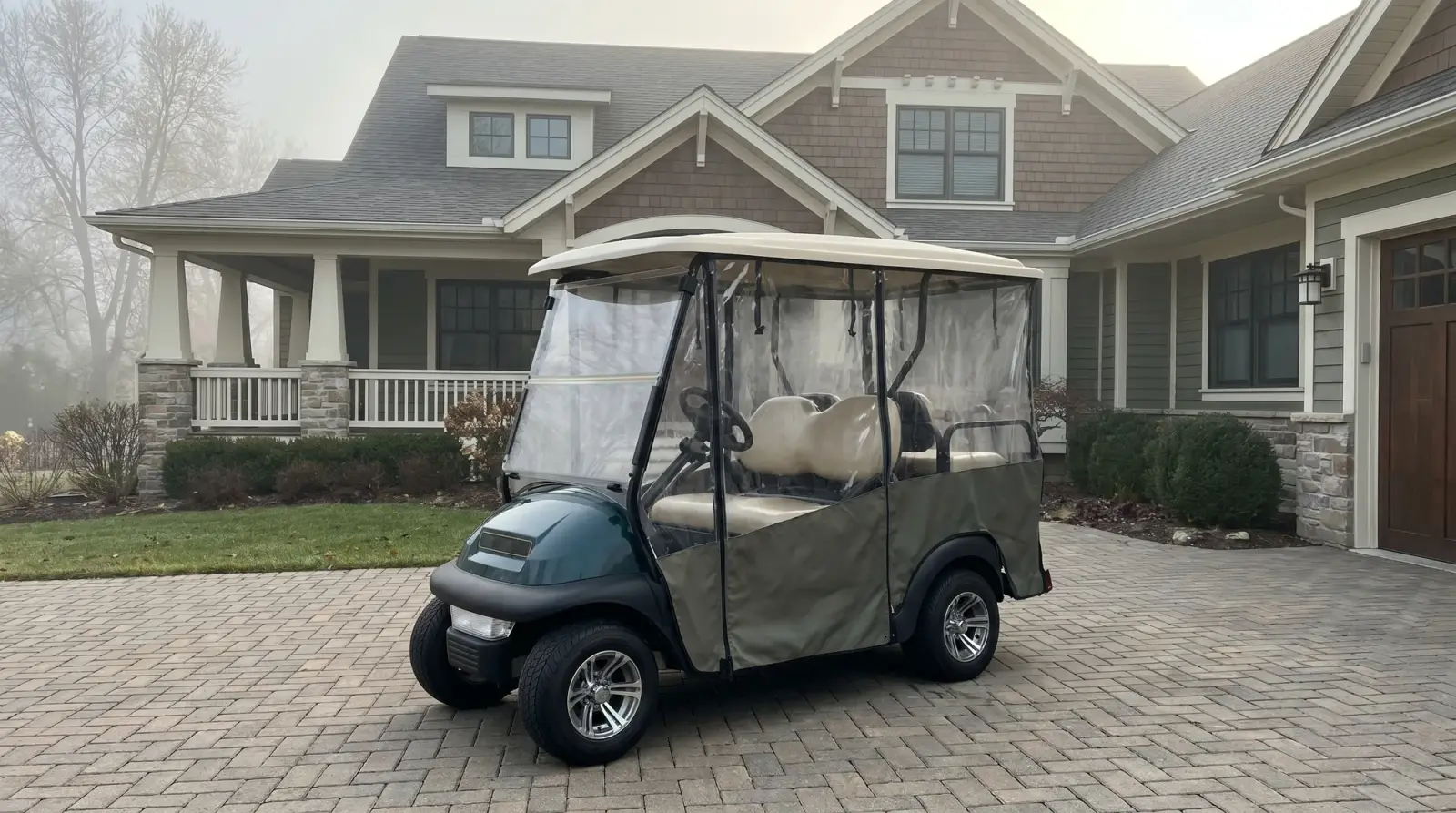
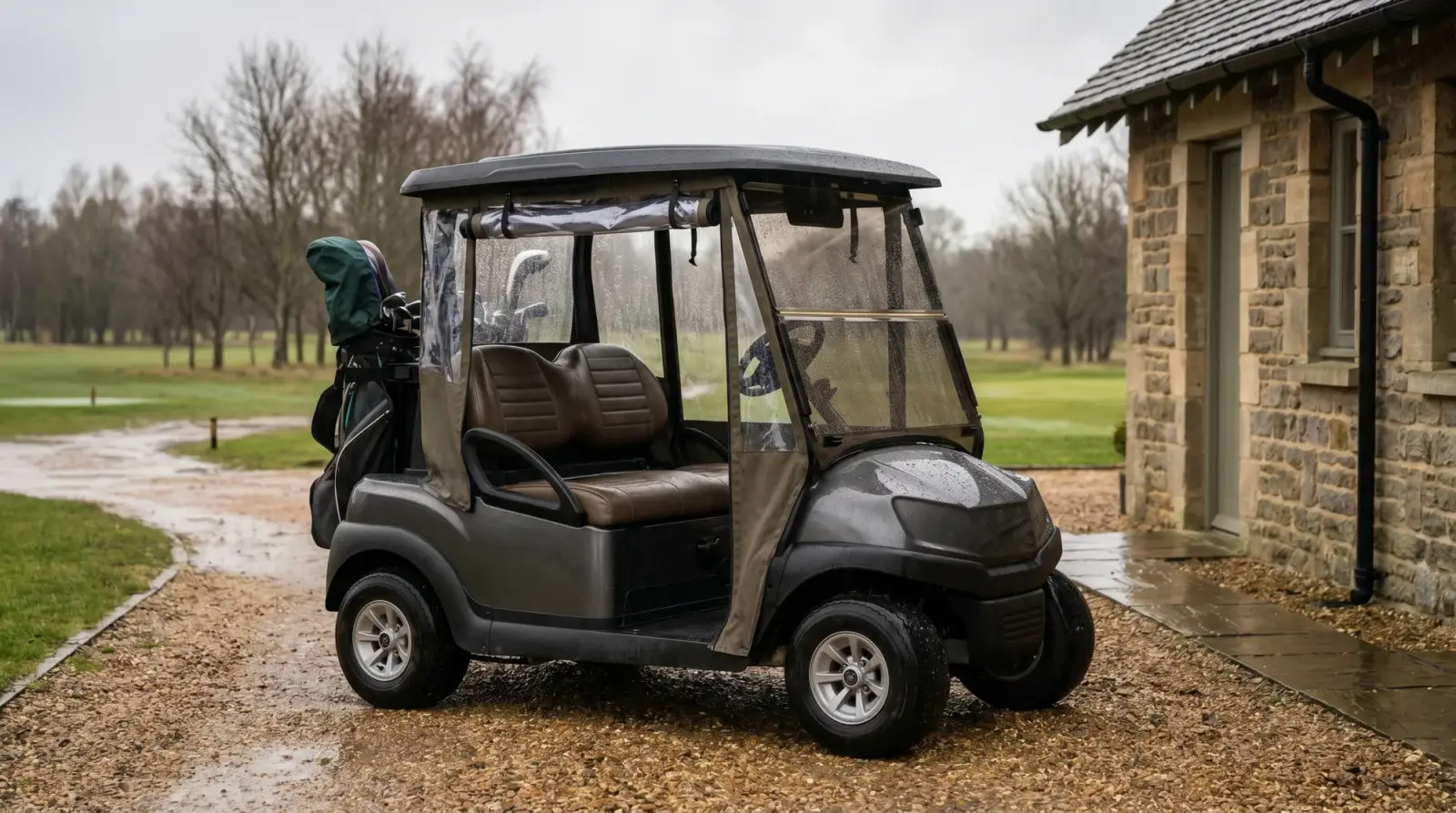
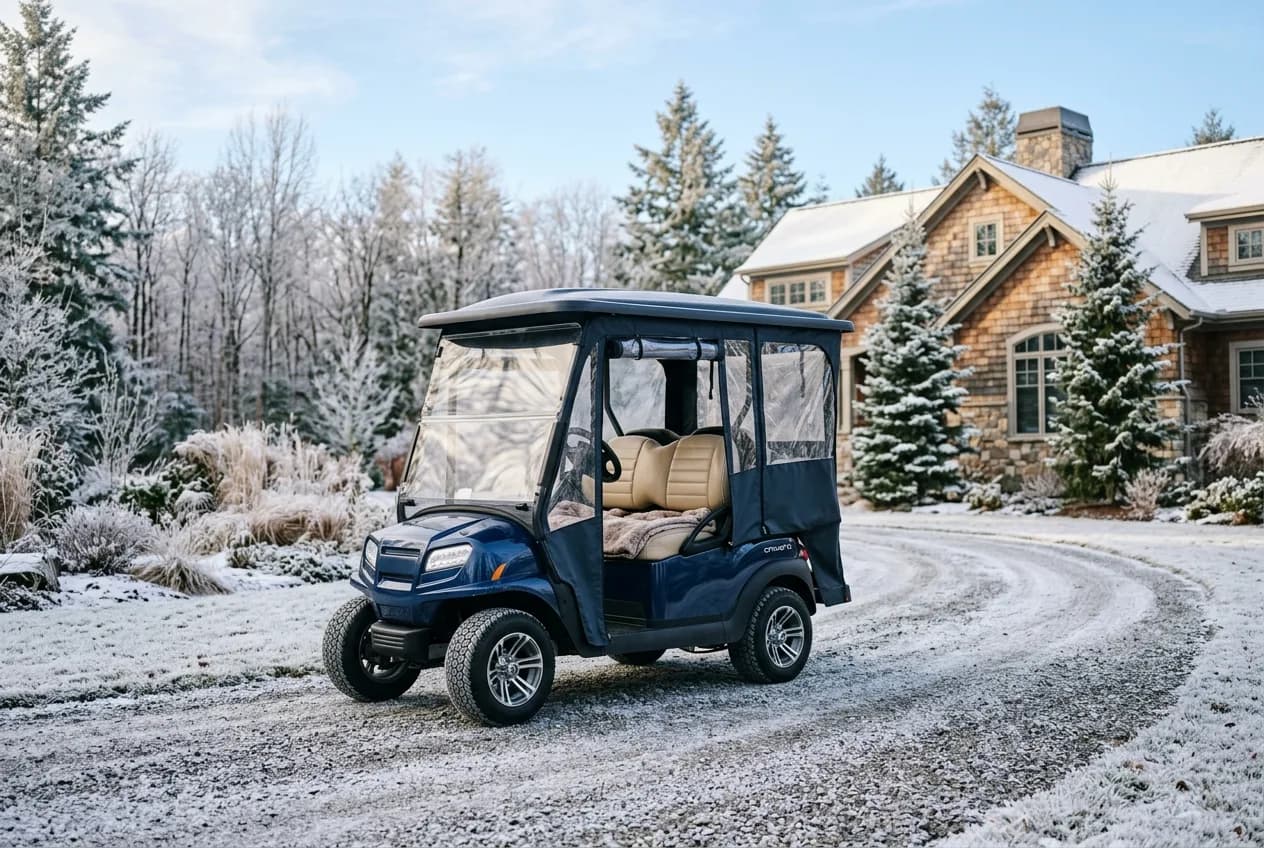
In cold regions the foundation is an enclosure that keeps wind and wet out, and from there you add warmth and traction. The single biggest comfort upgrade for a winter cart is a good enclosure; everything else builds on it. See our enclosures buyer's guide for choosing between soft and hard systems.
- 01
Fit an enclosure first
A quality soft or hard enclosure stops wind and rain and makes every other warmth upgrade work. Without it, a heater just warms the outdoors.
- 02
Add a cabin heater
A 12-volt or propane-style cart heater takes the edge off; size it to your cabin and follow ventilation and safety instructions, especially for any fuel-burning unit.
- 03
Sort the windshield and demist
A fixed windshield plus ventilation keeps the glass clear; a sealed cabin fogs without airflow, which is a safety issue.
- 04
Improve traction and grip
Suitable tires and, where legal and needed, traction aids matter on cold, wet or icy paths. Heated grips or warm gloves help the driver.
Accessories that work in both extremes
A few upgrades earn their place whether you fight heat or cold. Quality seating that is comfortable across temperatures, good lighting for short winter days and bright summer evenings, and weather-resistant storage all carry over. Many of these are covered in our accessories worth it guide, which separates the upgrades that justify their cost from the ones that do not.
- Hot climate
- Shade and airflow
- Cold climate
- Full enclosure
- Hot climate
- Cooling fans
- Cold climate
- Cabin heater (ventilated)
- Hot climate
- Tinted, roll-down
- Cold climate
- Sealed with demist airflow
- Hot climate
- Shade, garage, moderate charging
- Cold climate
- Store charged, avoid cold charging
- Hot climate
- Breathable, light color
- Cold climate
- Warm, weather-resistant
| Hot climate | Cold climate | |
|---|---|---|
| Cabin | Shade and airflow | Full enclosure |
| Comfort device | Cooling fans | Cabin heater (ventilated) |
| Windows | Tinted, roll-down | Sealed with demist airflow |
| Battery | Shade, garage, moderate charging | Store charged, avoid cold charging |
| Seating | Breathable, light color | Warm, weather-resistant |
Match the kit to your real climate
The mistake is buying a generic accessory bundle. A cart in coastal Florida wants shade, airflow and corrosion resistance; a cart in the upper Midwest wants an enclosure, a heater and serious battery storage care. Some regions need both across the year. Decide your dominant problem, kit for that first, then add the dual-purpose items. If you are choosing a cart from scratch, our guides on what size cart you need and the best carts of 2026 help you start from the right base.
The happiest year-round cart owners spend on the climate they actually have. Shade and airflow in the south, an enclosure and a heater in the north, and battery care everywhere. The rest is extras.
So where should you start?
Protect the battery first because it costs the most to replace, then fit the one big comfort item for your climate, an enclosure for cold or shade and airflow for heat, then layer in the smaller comforts. If you want a cart specified for genuine year-round use in your region, tell us where you are and how you drive and we will build a kit list with honest numbers.
Spec a cart for your climate
Tell us your region and how you use the cart, and we will recommend a climate kit with an honest price.
Frequently asked questions
What accessories keep a golf cart cool in summer?+
Shade from a solid roof, tinted or roll-down windows for airflow, 12-volt cabin fans, breathable light-colored seats and battery protection from heat. Airflow plus shade beats a sealed cabin.
Can you heat a golf cart in winter?+
Yes. Fit an enclosure first so warmth is retained, then add a cart-rated heater. Any fuel-burning heater must be properly ventilated and used exactly per the maker's safety guidance.
Does cold weather affect golf cart batteries?+
Yes. Cold reduces the range you can use and makes charging a very cold lithium pack risky. Store the pack charged and maintained, and avoid charging a very cold battery.
Does heat damage golf cart batteries?+
Heat speeds up wear and water loss in lead-acid batteries. Garage the cart, charge in moderate temperatures and keep up watering and charging care to protect the pack.
What is the most important cold-weather accessory?+
An enclosure. It keeps wind and rain out and makes every other warmth upgrade effective. Choose between a soft or hard system based on how much you drive in winter.
Related solutions
Ready to explore what we build?
See the vehicles and the setting this applies to, or get a tailored quote built around your site.
Ready to find the right buggy?
Tell us how and where it will work and we will specify a vehicle and a tailored quote built around you. Every build comes with a 3-year warranty and a 24-hour priority call-out.
Our guides are written and reviewed by the Hawke Electric Vehicles team, the people who specify, build, deliver and support the vehicles. We focus on honest, practical advice and flag where a figure depends on the build rather than guessing.
More guides by Hawke