- Whether a golf cart is street legal in the US genuinely depends on your state, county and town, there is no single national yes or no.
- A standard golf cart and a low-speed vehicle (LSV) are not the same thing in the eyes of the law.
- An LSV is a distinct vehicle class with its own federal safety equipment requirements and a capped top speed.
- Equipment like lights, mirrors, seat belts, a windshield and a horn is often required for road or LSV use.
- Always confirm the rules with your state DMV and local authority before driving on public roads, and ask us to build to the right spec.
Are golf carts street legal in the US? The honest answer is: it depends entirely on where you live. There is no single national rule. Some towns allow golf carts on certain low-speed streets, others do not, and many roads are only open to a separate class of vehicle called a low-speed vehicle, or LSV. Before you drive anywhere public, you need to check your state and local rules, because they vary a great deal.
Golf cart vs low-speed vehicle (LSV): the key distinction
This is where most confusion starts. A typical golf cart is designed for courses and private property. A low-speed vehicle (LSV) is a separate legal category: a four-wheeled vehicle with a top speed capped at 25 mph under the federal definition (more than 20 mph but not more than 25 mph) that, at the federal level, must carry specific safety equipment. Many places that allow carts on public roads actually require them to meet LSV standards, not just golf cart standards.
- Standard golf cart
- Courses, resorts, private land
- Low-speed vehicle (LSV)
- Public low-speed roads where permitted
- Standard golf cart
- Not a road vehicle by default
- Low-speed vehicle (LSV)
- A defined motor vehicle class
- Standard golf cart
- Varies, often lower
- Low-speed vehicle (LSV)
- Capped within a set low-speed range
- Standard golf cart
- Minimal by default
- Low-speed vehicle (LSV)
- Lights, mirrors, seat belts, windshield, more
- Standard golf cart
- Usually none
- Low-speed vehicle (LSV)
- Often required, varies by state
| Aspect | Standard golf cart | Low-speed vehicle (LSV) |
|---|---|---|
| Intended use | Courses, resorts, private land | Public low-speed roads where permitted |
| Legal class | Not a road vehicle by default | A defined motor vehicle class |
| Top speed | Varies, often lower | Capped within a set low-speed range |
| Required equipment | Minimal by default | Lights, mirrors, seat belts, windshield, more |
| Registration/plate | Usually none | Often required, varies by state |
Equipment that road or LSV use usually requires
While the exact list depends on your jurisdiction and whether the vehicle is registered as an LSV, road-legal use commonly calls for a recognizable set of safety features. If you are planning to use a cart anywhere public, build for this from the start rather than retrofitting later.
- Headlights, tail lights, brake lights and turn signals
- Rear-view and side mirrors
- A windshield
- Seat belts for every seat
- A horn
- Reflectors and, in many cases, a registration plate and identification number
Where golf carts are commonly allowed
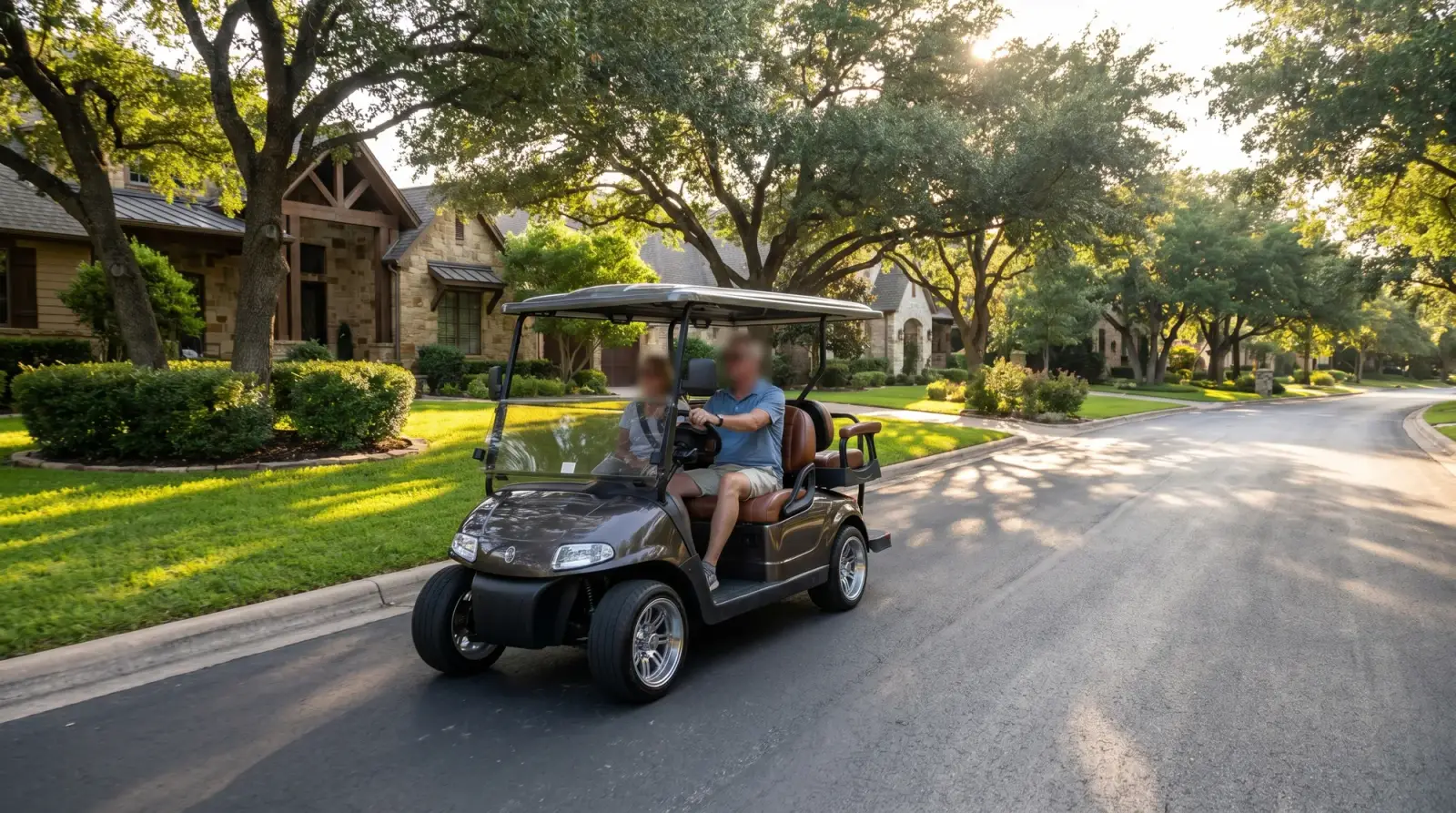
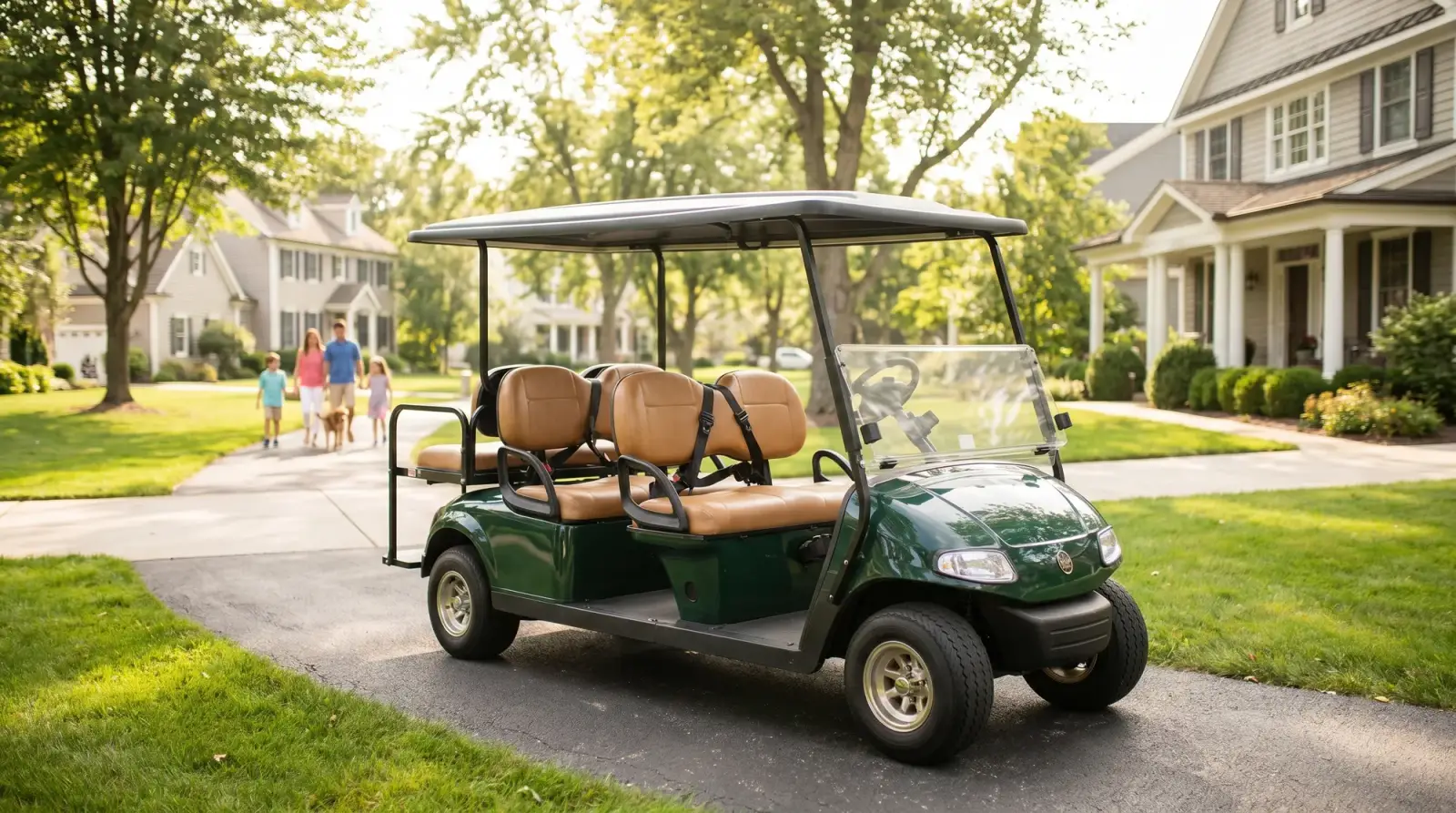
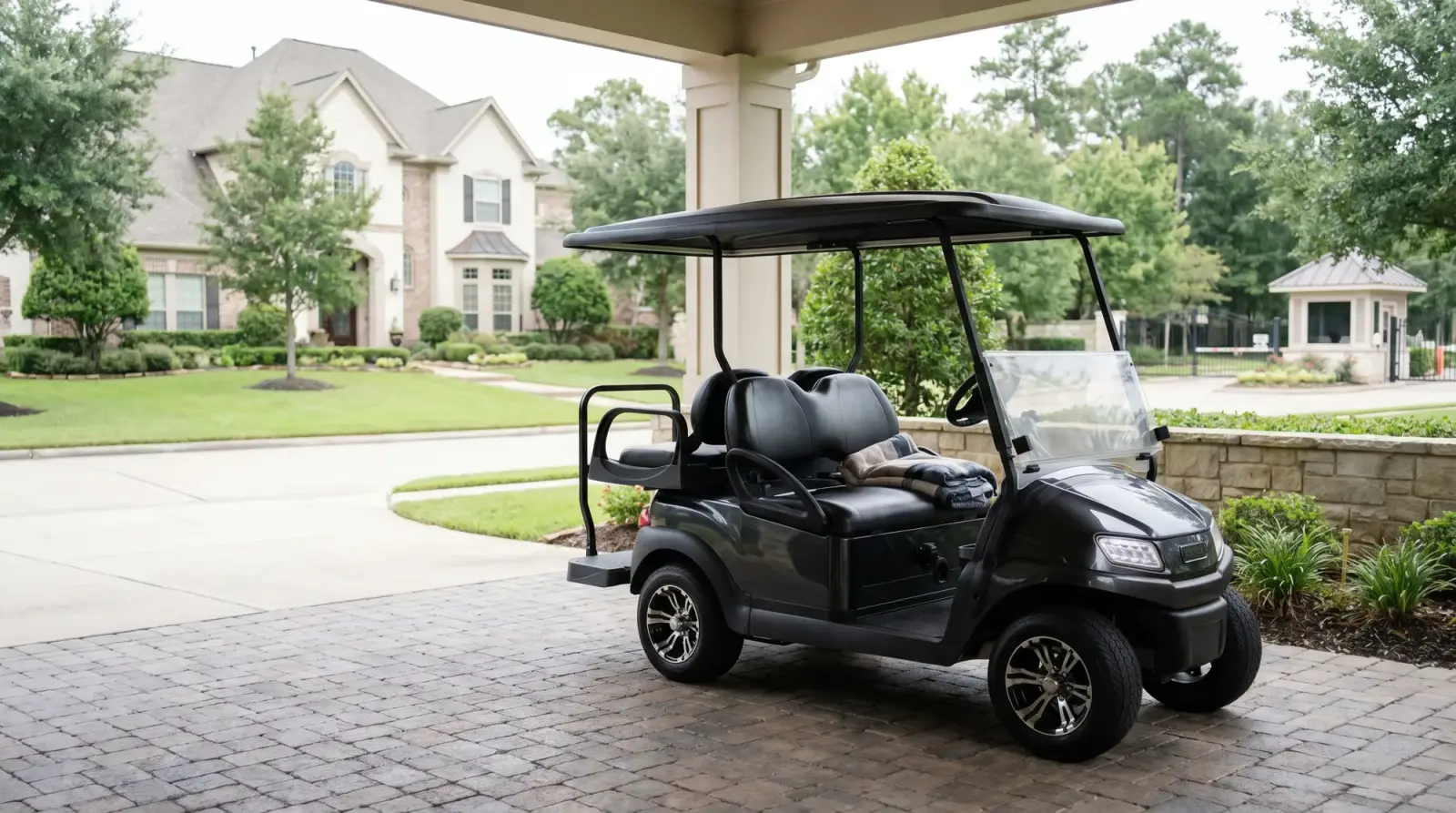
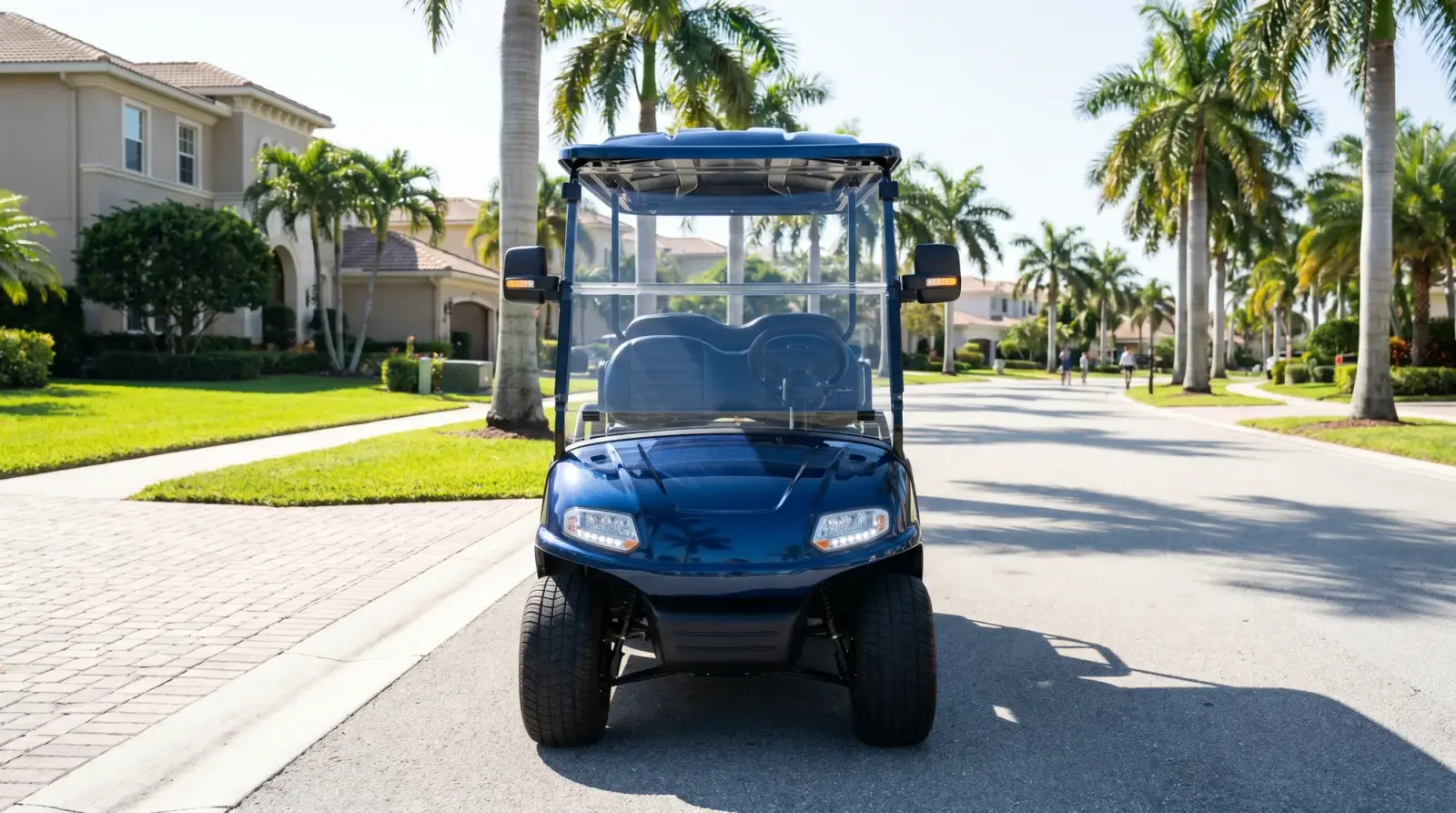
Plenty of places are well suited to carts even where open public roads are restricted. Gated communities, planned developments, resorts, large estates and private campuses often run carts extensively on their own roads. Some sunbelt towns have built cart-friendly street networks. The pattern is that the more private or low-speed the environment, the more freedom you usually have, and the fewer formal requirements you face.
If you are in a managed community, the homeowners association may set its own rules on top of state law. Our guide to golf carts for HOA and gated communities covers what to check there.
How to find out the rules where you live
- 01
Start with your state DMV
Search your state's department of motor vehicles for golf cart and low-speed vehicle rules. This sets the baseline.
- 02
Check your county and town
Local ordinances can be stricter or more permissive than the state. Call the town clerk or county office if it is unclear.
- 03
Ask your community or HOA
If you live in a managed community, confirm their cart rules, which streets, what equipment, any permit or sticker.
- 04
Confirm insurance needs
Road or LSV use often changes your insurance position. See our [golf cart insurance guide](/guides/golf-cart-insurance-guide-us).
- 05
Spec the build to match
Once you know the standard you must meet, have the cart built to it. [Request a quote](/request-a-quote) with your requirements.
Need a cart built to the right road or LSV spec?
We build custom carts to the equipment and use case you need. Tell us where and how you will drive, and we will spec it correctly from the start.
A note on honesty and responsibility
We will not tell you a golf cart is street legal everywhere, because that is not true and it could land you in trouble. What we can do is build a cart to a clear specification and help you understand the categories involved. The legal call always rests with your local and state authorities. When in doubt, check first and drive on private property until you have confirmed what is permitted. For broader safety guidance, see our guides.
Frequently asked questions
Are golf carts street legal in the US?+
It depends on your state, county and town. There is no national rule. Many public roads only allow vehicles that meet low-speed vehicle (LSV) standards, while some communities permit carts on specific low-speed streets and others ban them entirely. Always confirm locally.
What is the difference between a golf cart and an LSV?+
A golf cart is designed for private and course use. An LSV is a defined motor vehicle class with a capped top speed and required safety equipment, intended for certain public low-speed roads. Many road rules apply specifically to LSVs, not standard carts.
What equipment makes a golf cart road legal?+
It varies by jurisdiction, but commonly headlights, tail and brake lights, turn signals, mirrors, a windshield, seat belts and a horn, plus registration in many states. Build to the standard your area requires.
Can I drive a golf cart in my neighborhood?+
Often, yes, especially in gated or planned communities, but it depends on local ordinances and any HOA rules. Check both before driving on neighborhood streets.
Do I need to register a street-legal golf cart?+
If it is used on public roads as an LSV, many states require registration, a plate and identification. Standard carts used on private property usually do not. Confirm with your state DMV.
Related solutions
Ready to explore what we build?
See the vehicles and the setting this applies to, or get a tailored quote built around your site.

Ready to find the right buggy?
Tell us how and where it will work and we will specify a vehicle and a tailored quote built around you. Every build comes with a 3-year warranty and a 24-hour priority call-out.
Our guides are written and reviewed by the Hawke Electric Vehicles team, the people who specify, build, deliver and support the vehicles. We focus on honest, practical advice and flag where a figure depends on the build rather than guessing.
More guides by Hawke