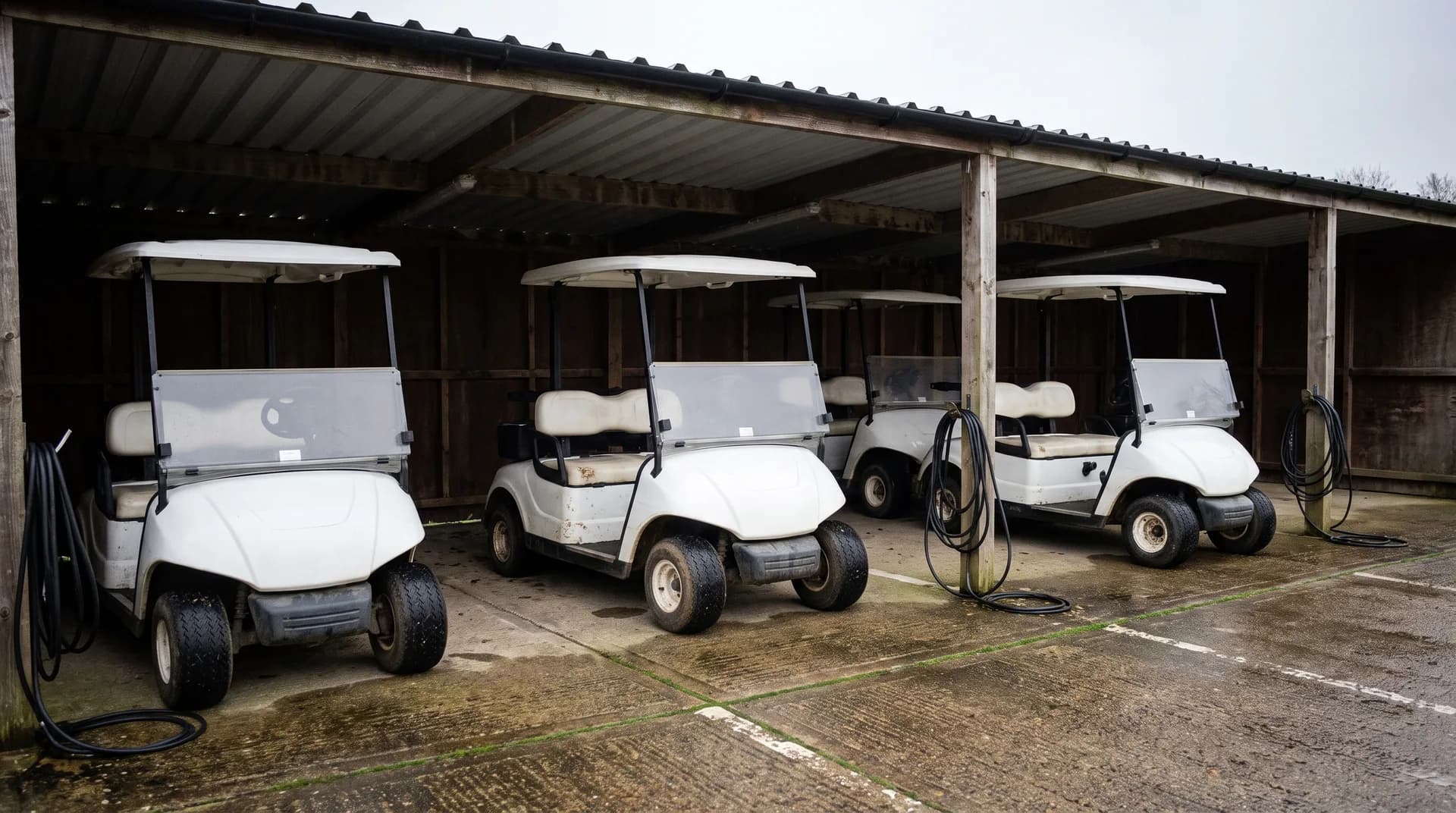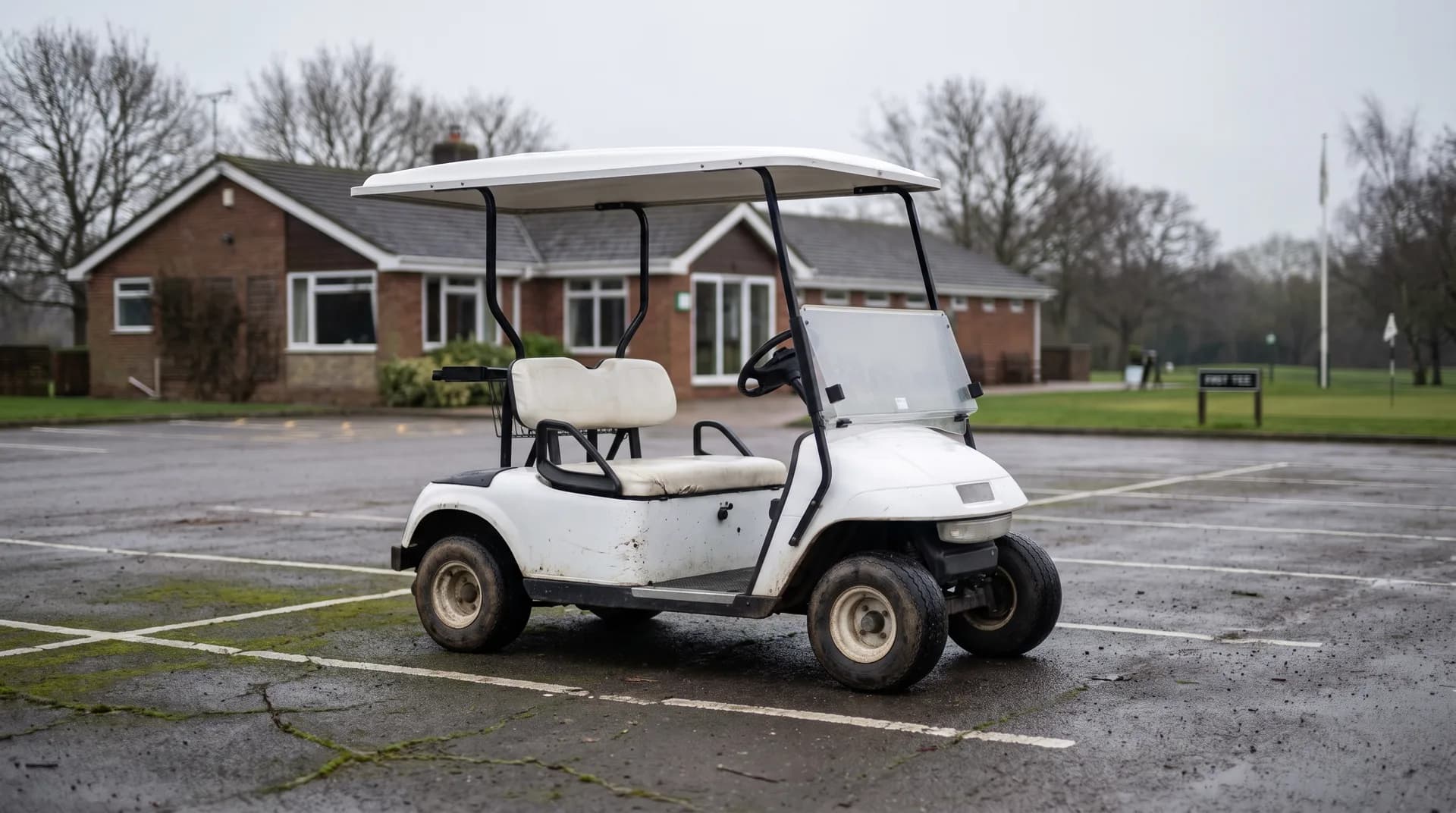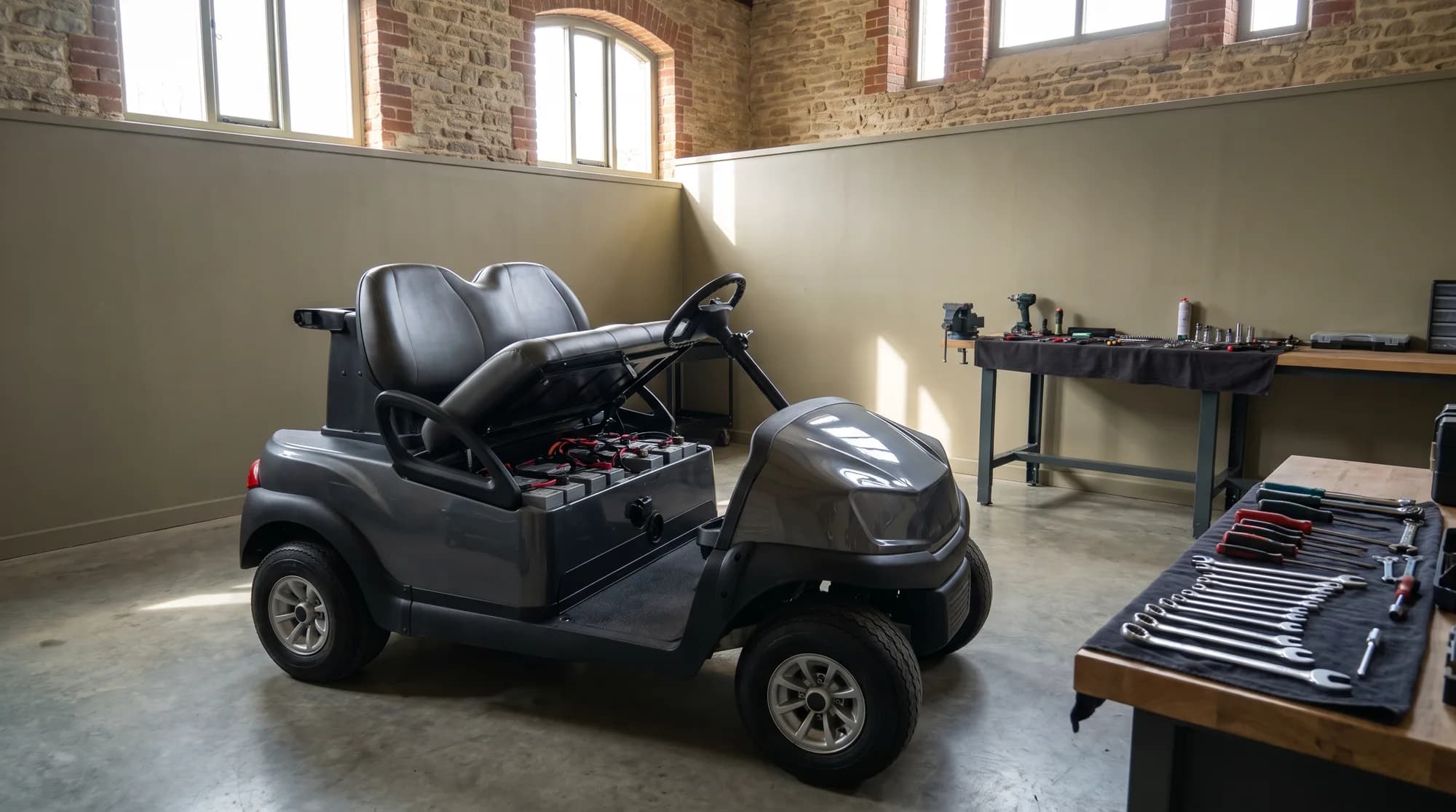
Converting a golf buggy to lithium typically costs £900 to £1,800 in parts in the UK, depending on capacity, plus fitting, and almost always a new charger on top. Done on the right machine, it's the single best upgrade a buggy can have: 40 to 100kg lighter, no battery watering, faster charging and a pack that outlasts three or four sets of lead-acid.
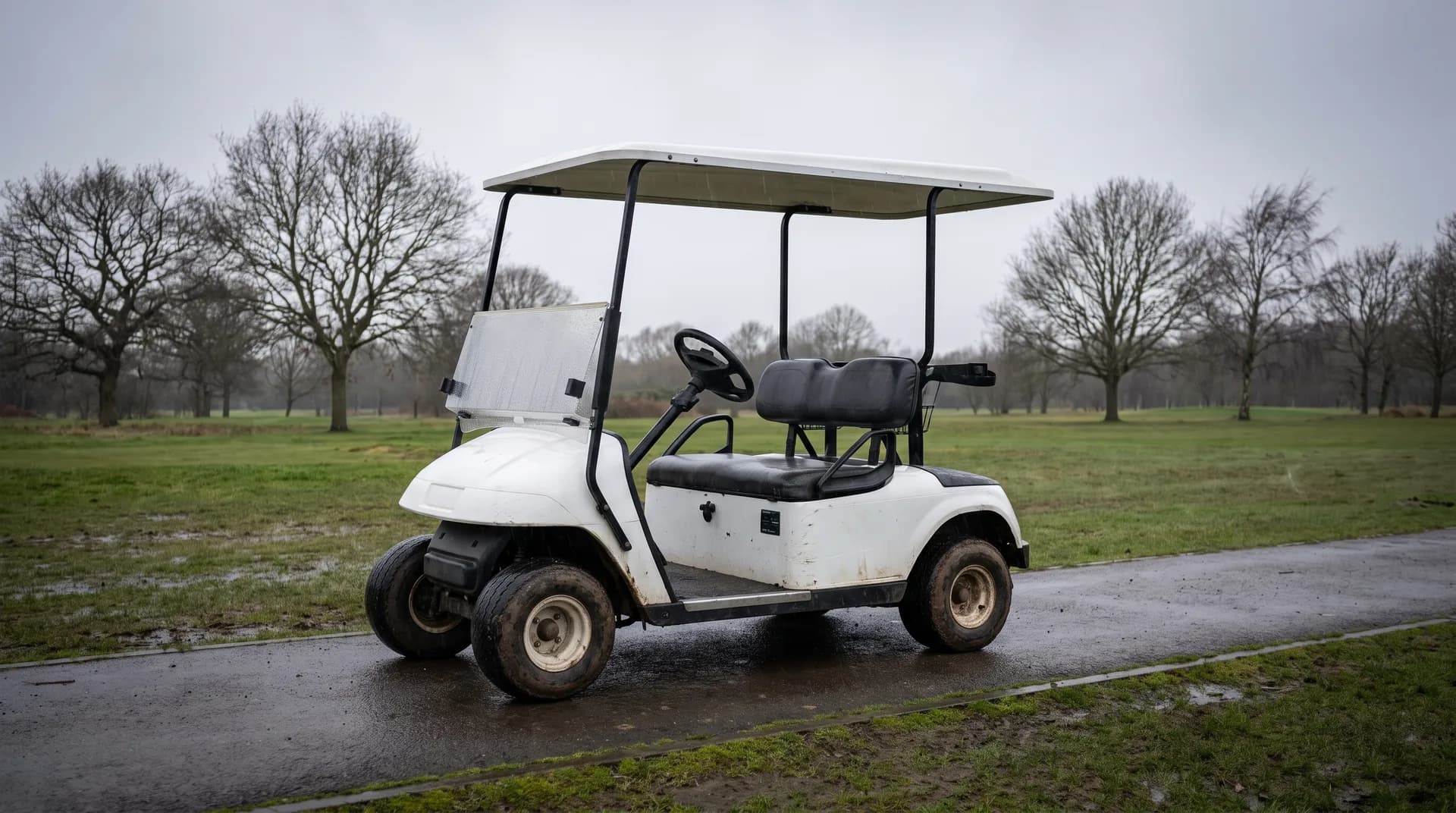
The catch is in that phrase 'the right machine'. A lithium pack transforms a structurally sound, decent-quality buggy you plan to keep. Bolted into a tired 15-year-old fleet cast-off with a weak motor and a flaky controller, it fixes precisely none of what's actually wrong. Below we cover what a conversion involves, what it really costs, the compatibility traps, and a straight answer to the convert-or-replace question.
- Typical UK parts cost is £900 to £1,800 for a drop-in lithium pack, plus fitting. Budget for a new lithium-specific charger as well; it is not optional.
- Gains are real: 40 to 100kg less weight, zero watering, faster charges, steadier voltage that makes the buggy feel punchier, and 2,000 to 5,000 charge cycles versus 500 to 1,000 for lead-acid.
- Watch the catches: BMS compatibility with older controllers, fuel gauges that misread lithium, and possible warranty implications.
- A new battery won't cure a tired motor or controller. Fix the diagnosis before you spend on the pack.
- Rule of thumb: convert a sound buggy you'll keep three or more years; put the money toward replacement on anything older and rougher.
What does a lithium conversion actually involve?
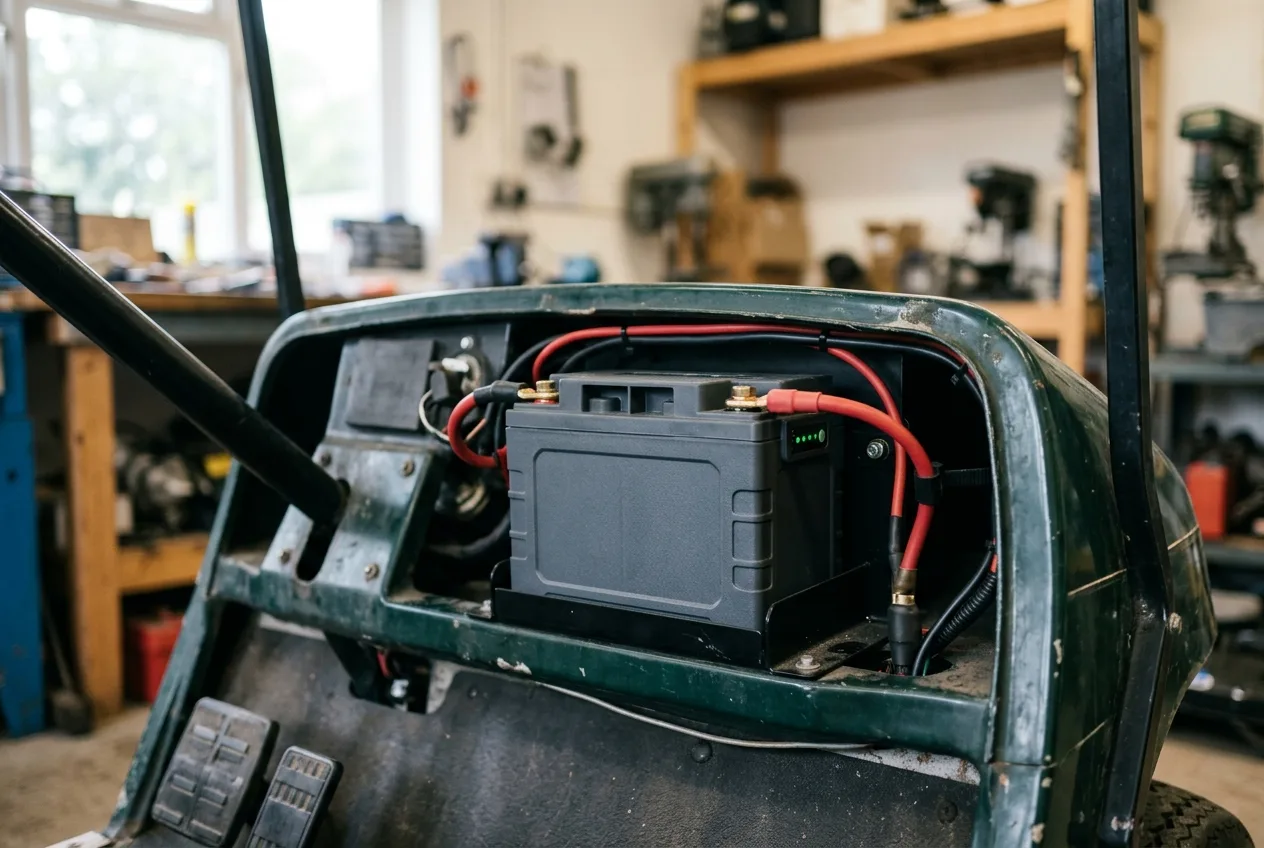
Less than people fear, on a compatible buggy. Modern conversion kits are drop-in lithium packs (usually lithium iron phosphate, known as LiFePO4) sized to sit in the existing battery tray and connect to the existing cables. Out come four, six or eight lead-acid batteries; in goes one lithium unit, or a small set, with a built-in battery management system, the BMS, which is the electronic guardian that stops the pack being overcharged, over-discharged or run outside its safe temperature range.
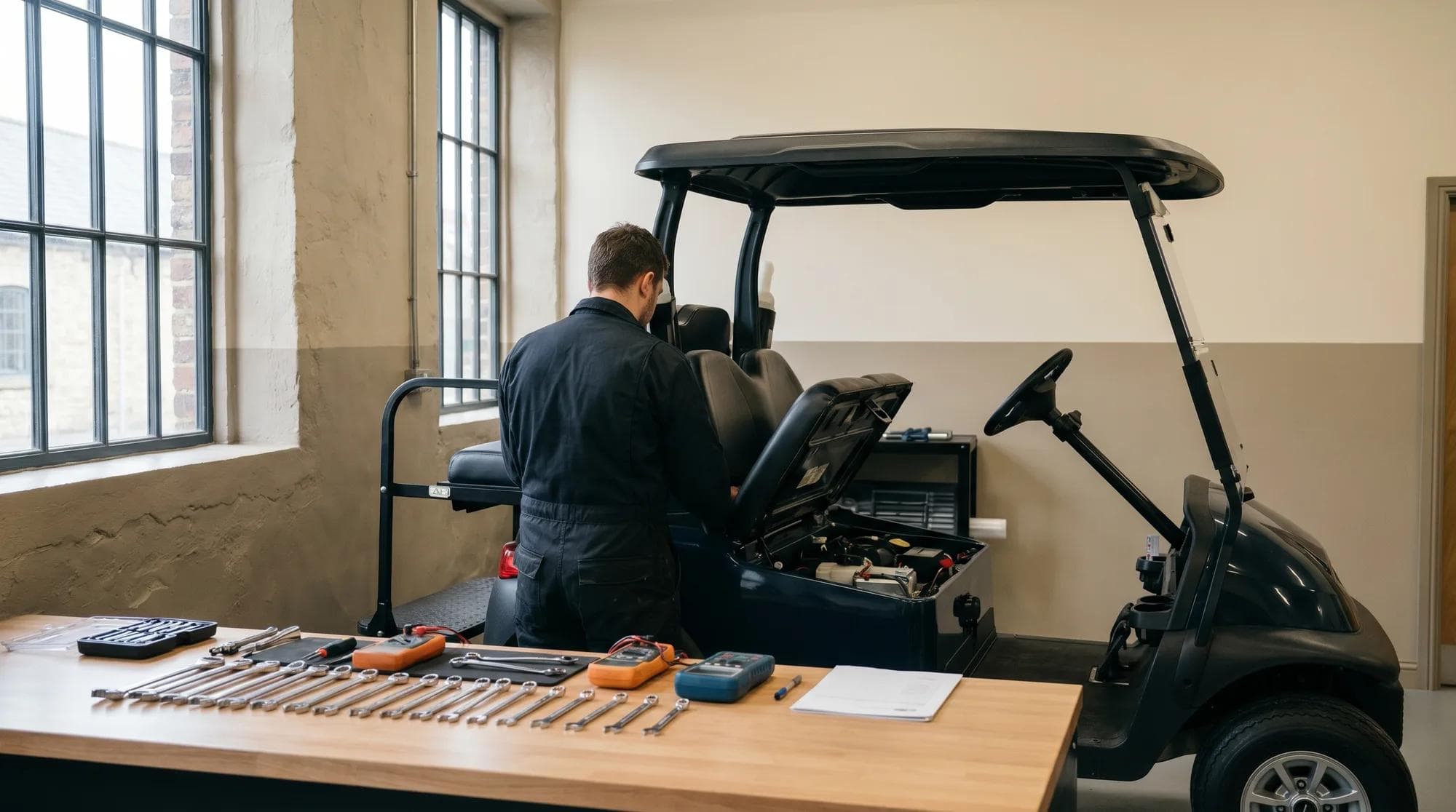
Alongside the pack you'll fit a lithium-specific charger. The old lead-acid charger uses a charge profile that lithium cells must not be fed, so it gets retired on day one. Many installs also add a small voltage meter or gauge adapter, because the buggy's original fuel gauge was calibrated for lead-acid behaviour and will lie to you otherwise. A competent installer does the whole job in a few hours.
What do you gain?
Quite a lot, and it's noticeable from the first drive. The weight saving alone is 40 to 100kg depending on how much lead comes out, which the buggy repays in hills climbed and range gained. Voltage stays steadier across the discharge too. Lead-acid sags as it empties, which is why an old buggy feels flat by the back nine. Lithium holds its voltage, so the buggy feels punchier for longer, though note that's restored performance, not a higher top speed; the controller still sets that.
Then there's the maintenance you stop doing. No watering cells, no terminal corrosion, no equalisation charges. Charging drops from overnight to a few hours. And the cycle life is the headline: 2,000 to 5,000 cycles against 500 to 1,000 for lead-acid, which for most owners means the pack outlives the buggy. The full technical comparison is in our guide to lithium versus lead-acid range and lifespan.
The catches nobody mentions in the advert
Four of them, and they're all manageable if you know in advance. First, BMS compatibility. Some older controllers and regenerative braking systems push charge back into the battery in ways that can trip a lithium BMS, shutting the buggy down mid-slope. Good kit suppliers publish compatibility lists; check yours before ordering, not after. Second, the charger, already mentioned, but worth repeating because people try to skip it. Third, the gauge problem: your battery meter will read wrongly until it's replaced or recalibrated, and a misread gauge is how people strand themselves. Fourth, warranty and insurance. A conversion may affect any remaining vehicle warranty, and it's worth telling your insurer, a point our golf buggy insurance guide covers in more detail.
One more honest warning that belongs here: a new battery cannot fix a worn buggy. If the motor bearings grumble, the controller cuts out when warm, or the front end wanders, those faults will be exactly as present after the conversion, just with £1,500 less in your pocket. Diagnose first. Our guide to common golf buggy faults helps you tell a battery problem from everything else that mimics one.
Stick, convert or replace? The honest maths
The decision, laid out below. Figures are typical UK numbers and rough guides; your quotes will vary with capacity and labour.
- Upfront cost
- £600-1,500 fitted
- What you get
- 3-5 more years of the buggy you know, same weight, same watering routine
- Makes sense when
- Budget is tight, or you plan to sell within a couple of years
- Upfront cost
- £900-1,800 parts plus fitting, charger included in good kits
- What you get
- Lighter, punchier, maintenance-free pack with 2,000-5,000 cycles
- Makes sense when
- The buggy is sound, decent quality, and you'll keep it 3+ years
- Upfront cost
- Varies widely by model and spec
- What you get
- New motor, controller, brakes and bodywork as well as the battery, plus a warranty
- Makes sense when
- The buggy is old, rough or unreliable beyond the battery
| Upfront cost | What you get | Makes sense when | |
|---|---|---|---|
| New lead-acid pack | £600-1,500 fitted | 3-5 more years of the buggy you know, same weight, same watering routine | Budget is tight, or you plan to sell within a couple of years |
| Lithium conversion | £900-1,800 parts plus fitting, charger included in good kits | Lighter, punchier, maintenance-free pack with 2,000-5,000 cycles | The buggy is sound, decent quality, and you'll keep it 3+ years |
| Replace the buggy | Varies widely by model and spec | New motor, controller, brakes and bodywork as well as the battery, plus a warranty | The buggy is old, rough or unreliable beyond the battery |
The crossover point is easier to feel than to calculate. Add up what the buggy would fetch on the used market today. If the conversion costs more than the whole machine is worth, and on an old fleet cast-off it usually does, you're overcapitalising. Spend the money on the next buggy instead. If the buggy is worth two or three times the conversion cost and you like it, convert without hesitation.
Will lithium make the buggy faster or go further?
Further, yes, in most real installs. Like-for-like capacity goes further because lithium delivers more of its rated energy and weighs less, and many owners size up while they're at it. Faster, not exactly. Top speed is set by the controller and motor, not the battery. What changes is how the speed holds up: no more sagging to a crawl on the twelfth hill of the day. Most owners describe it as the buggy feeling new again, which is accurate, because voltage sag was most of what felt old.
Frequently asked questions
Can I put lithium batteries in my old golf buggy?+
Usually, yes. Drop-in LiFePO4 kits exist for most common buggies. The exceptions are machines with older controllers or regen braking that clash with the pack's BMS, so check the kit maker's compatibility list for your model first.
How much does a lithium conversion cost in the UK?+
Typically £900 to £1,800 in parts depending on capacity, plus fitting. Good kits include the matching charger; if yours doesn't, budget extra for one, because the old lead-acid charger can't be reused.
Do I need a new charger for a lithium conversion?+
Yes, always. Lithium cells need a different charge profile, and feeding them from a lead-acid charger risks overcharging and, with poor-quality packs, fire. Treat the charger as part of the conversion cost, not an optional extra.
Is a lithium conversion worth it on an old buggy?+
Only if the rest of the machine is sound. On a quality buggy you'll keep three or more years, it's excellent value. On a tired 15-year-old fleet cast-off, the money is better put toward a replacement vehicle.
Will lithium make my buggy faster or extend its range?+
Range improves, often noticeably, thanks to lower weight and steadier voltage. Top speed doesn't change, since the controller sets that, but the buggy stops slowing down as the charge drops, so it feels quicker for longer.
Be unsentimental about it: get the buggy inspected, price the conversion properly with the charger and fitting included, and compare that number to the machine's market value. Sound buggy, three-plus years of ownership ahead: convert, and enjoy what feels like a new vehicle. Anything less: stop spending on the old one. Modern lithium buggies have moved on a long way, and the gap between a converted veteran and a new machine is bigger than a battery.
Weighing conversion against replacement?
Tell us what you're running now and what it needs to do. We'll give you a straight answer on whether a new lithium-powered Hawke makes better sense, with a tailored quote and a 3-year warranty.
Related solutions
Ready to explore what we build?
See the vehicles and the setting this applies to, or get a tailored quote built around your site.

Ready to find the right buggy?
Tell us how and where it will work and we will specify a vehicle and a tailored quote built around you. Every build comes with a 3-year warranty and a 24-hour priority call-out.
Our guides are written and reviewed by the Hawke Electric Vehicles team, the people who specify, build, deliver and support the vehicles. We focus on honest, practical advice and flag where a figure depends on the build rather than guessing.
More guides by Hawke