If your site's problem is narrow paths, tight gateways and buildings the van cannot reach, the answer is a compact electric utility vehicle chosen on four things: overall width, turning circle, tire footprint and noise. Get those right and one machine replaces the wheelbarrow relays, the van parked as close as it can get, and the trolley pushed the last two hundred metres. Get them wrong by ten centimetres and the vehicle spends its life parked. This guide sets out what makes a vehicle genuinely path-friendly, which settings demand it, and how to measure a tight site before you commit to anything.
- Width is the gatekeeper: for garden paths, courtyards and service routes you are shopping at roughly 1.1 to 1.3 metres wide, sometimes narrower.
- Turning circle matters as much as width, because tight sites are corners, not corridors.
- Turf tires and modest ground pressure protect lawns, gravel paths and historic surfaces.
- Electric drive is near-silent, which is what makes working around visitors, mourners and residents acceptable.
- Walk the route with a tape measure before you shortlist: pinch points, cambers, gradients and any lift or archway on the way.
Why tight sites defeat vans and full-size machines
A van is around two metres wide with mirrors and needs a metalled surface; a full-size UTV is not far behind and chews soft ground. So on a tight site the real transport system becomes people: wheelbarrow runs from the nearest parking spot, sack trucks through courtyards, a van shuttling to a gate and hand-carrying from there. That labour is invisible on any spreadsheet but enormous in practice, and it is the first thing a genuinely narrow utility vehicle removes. The vehicle that fits the path does the whole journey, door to door, and the job that took two people half a morning becomes one person and twenty minutes.
What makes a utility vehicle path-friendly
Four attributes, in order. Width first: for most garden paths, courtyard arches and service routes you are shopping at roughly 1.1 to 1.3 metres overall, and every centimetre under your pinch point is margin you will be grateful for in the wet. Turning circle second: tight sites are corners, gateways at right angles to walls, and three-point turns in yards, so a short wheelbase and good steering lock matter as much as width; check the swept path turning into your tightest gate, not just the straight-line fit. Tires third: low-pressure turf tires spread the load so the vehicle can cross a lawn or a gravel path without rutting it, which is what makes routes possible that no van would ever be allowed on. Quiet running fourth: electric drive is near-silent at walking pace, so the vehicle can work through a visitor day without becoming part of the experience. A burden carrier takes the same logic further still where loads are heavy but paths are hard-surfaced.
Narrow utility vehicles by setting
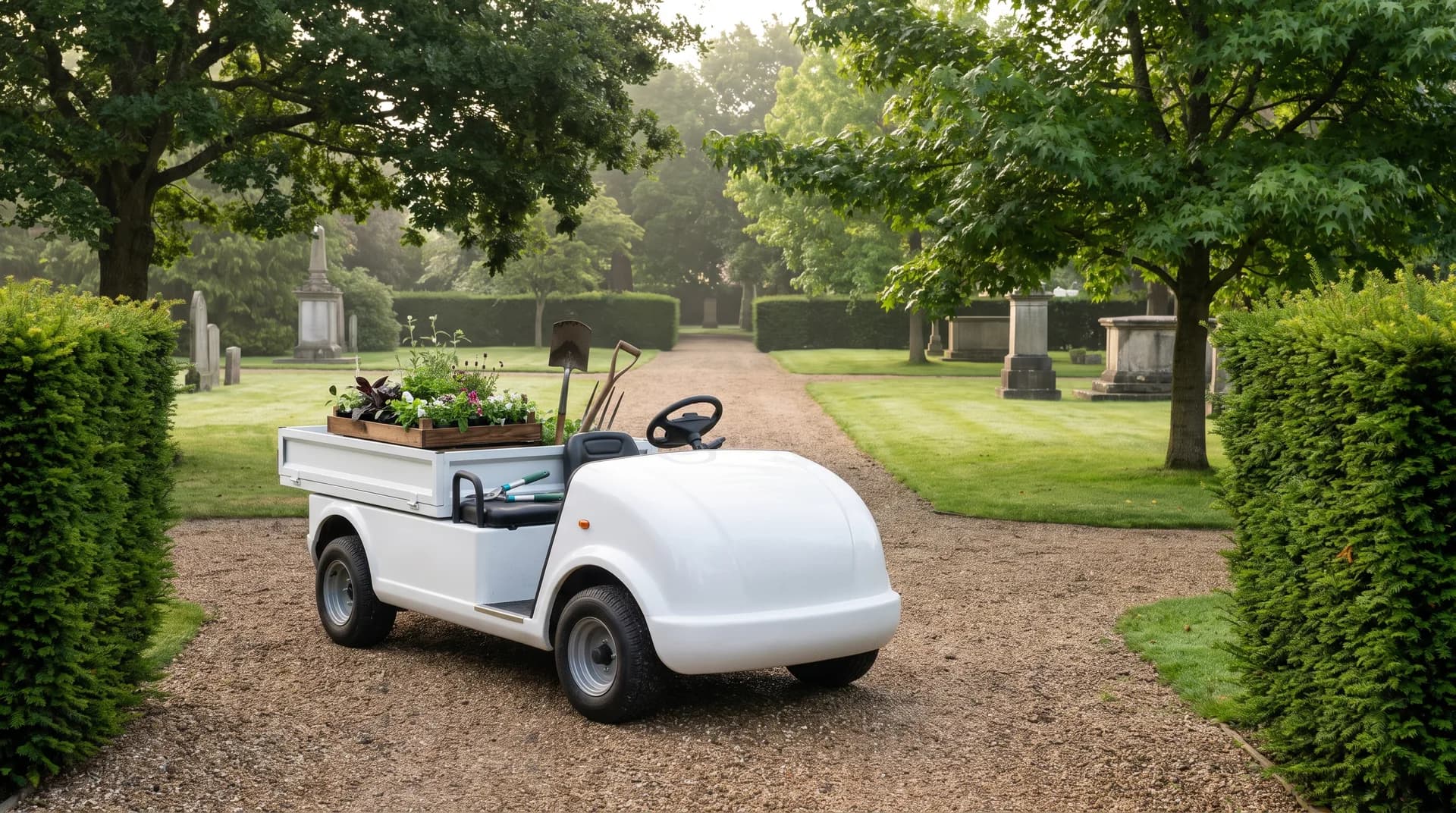
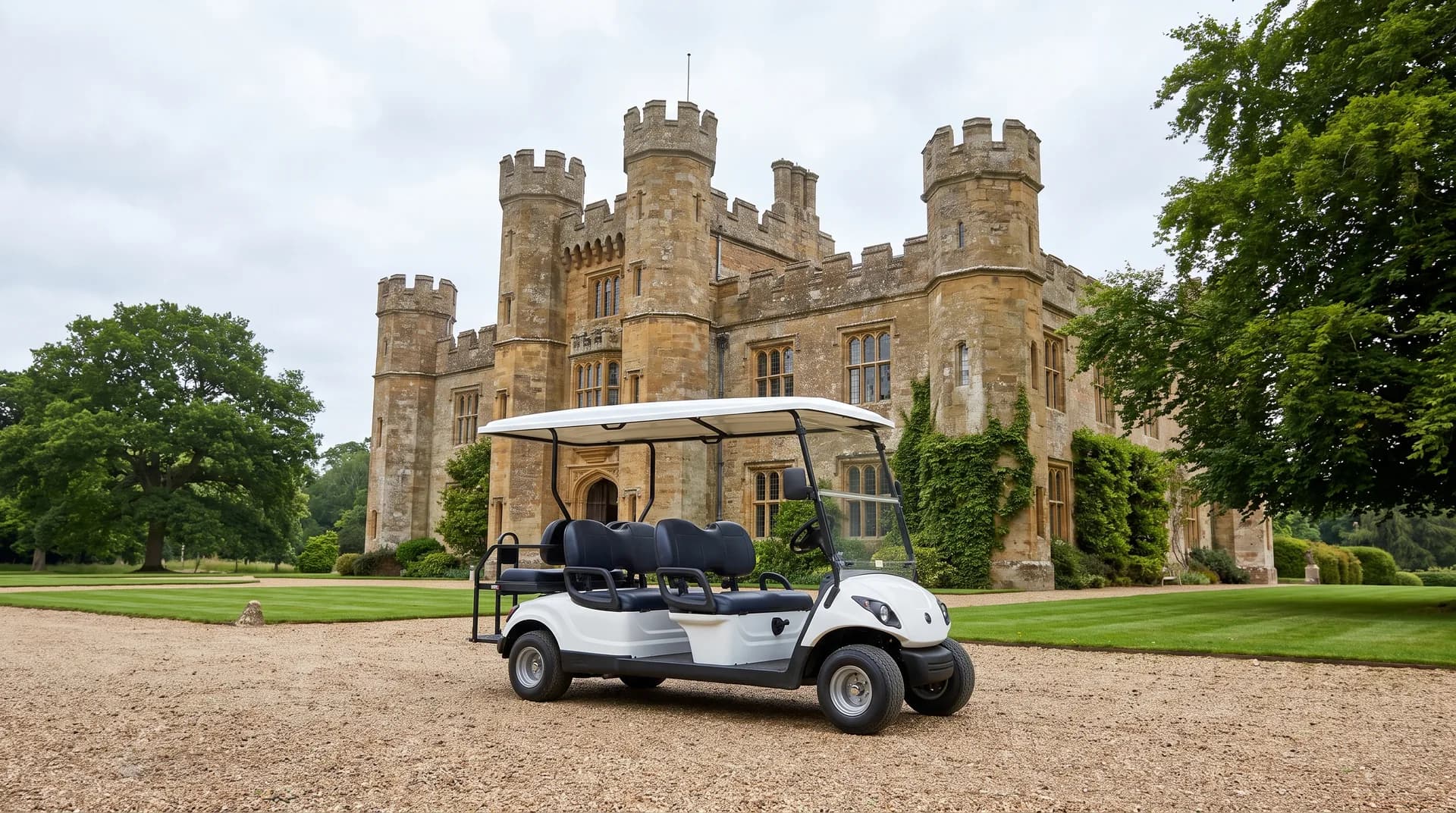
Historic sites and walled gardens are the classic case: listed archways, gravel walks and lawns that must not rut, worked through opening hours. Our guide to electric golf carts for castles and palaces covers that world in detail. Cemeteries and crematoria are the most demanding of all, narrow paths between memorials, absolute quiet during services, and grounds work that must pause and resume respectfully; there is a dedicated guide to electric vehicles for cemeteries and crematoria. Hotels, colleges and hospitals add indoor legs: service lifts and corridors put a hard ceiling on width and height, and a vehicle that can creep at walking pace with good sightlines earns its place. And private estates simply combine all of it, which is why the compact end of the utility range is specified the way it is.
The jobs a compact site vehicle replaces
Count the barrow-miles on your site honestly. Green waste from borders to the compost yard. Tools and materials to the far end of the grounds. Bins from courtyard to collection point. Deliveries from the gate the lorry can reach to the door it cannot. Water, feed, linen, luggage, staging, whatever your version is, most of it currently moves in many small human-powered trips or one awkward van shuttle plus hand-carrying. A compact utility vehicle with a 250 to 500 kg payload collapses those relays into single trips, and because it is electric it does so without fumes in courtyards or noise past windows. Where loads are heavy but the routes are hard-surfaced and pedestrian-paced, a dedicated electric burden carrier is the even narrower alternative worth pricing alongside. The running cost is small, pennies of electricity per mile and little to service, and the labour saved is usually the larger number by far.
Measure the site before you shortlist
Walk the worst route with a tape measure and note the single tightest gap, including hinges, latches and kerbs; the tightest corner, measured as a turn, not a straight; any height limit under arches, branches or door frames; the steepest gradient; and the softest surface the vehicle must cross in winter. Then shop against those five numbers, insisting on the vehicle's overall width with mirrors, its turning circle and its ground pressure in writing. If a supplier will demonstrate on your site, better still: ten minutes on your own paths answers questions no datasheet can. Buy the machine that clears your pinch point with real margin, because sites grow planting, scaffolding and new obstacles, and a vehicle bought to the centimetre has no future.
Frequently asked questions
How narrow can a utility vehicle be?+
The narrowest practical work vehicles run at roughly 1.1 to 1.3 metres overall, and pedestrian-controlled burden carriers narrower still. Below that, powered barrows and trolleys take over. Always compare the vehicle's width with mirrors against your tightest measured gap, not the opening's nominal size.
Will a compact utility vehicle damage lawns and gravel paths?+
On turf tires at low pressure, a light electric vehicle spreads its weight well and can work routinely on lawns and gravel that a van would destroy. Avoid tight turns on wet fine turf, and no surface will show the traffic much.
Are electric utility vehicles quiet enough for cemeteries and visitor sites?+
Yes, and that is a major reason they are chosen. Electric drive at walking pace is close to silent, so grounds work can continue near services and visitors without intrusion. Diesel machines cannot make the same claim.
What payload do tight-site vehicles carry?+
Typically 250 to 500 kg in the genuinely narrow classes, which covers green waste, tools, bins, linen and most courtyard logistics. If you regularly need more than that through a narrow gap, two trips, or a narrower pedestrian carrier working with a larger yard vehicle, usually beats one oversized machine.
Can these vehicles work indoors?+
Compact electric machines under two metres tall with no exhaust can work through service corridors, undercrofts and some lifts, subject to width, height and floor loading. Measure the full indoor route, including the lift door and car, before specifying.
Solve your tightest route
Tell us your pinch-point measurements and what has to move along the path, and we will match a machine that genuinely fits, then price it.
Related solutions
Ready to explore what we build?
See the vehicles and the setting this applies to, or get a tailored quote built around your site.

Ready to find the right golf cart?
Tell us how and where it will work and we will specify a vehicle and a tailored quote built around you. Every build comes with a 3-year warranty and a 24-hour priority call-out.
Our guides are written and reviewed by the Hawke Electric Vehicles team, the people who specify, build, deliver and support the vehicles. We focus on honest, practical advice and flag where a figure depends on the build rather than guessing.
More guides by Hawke