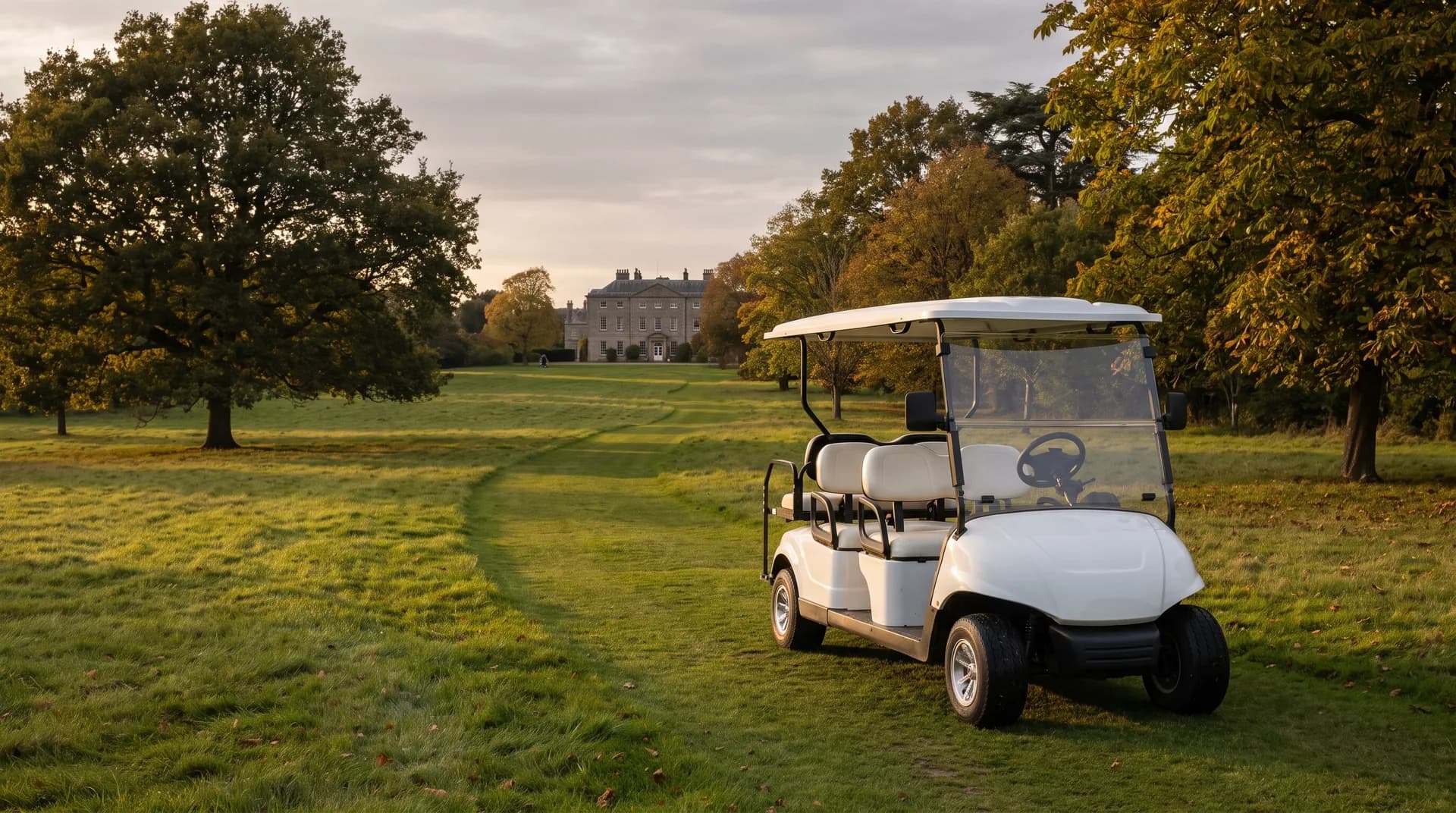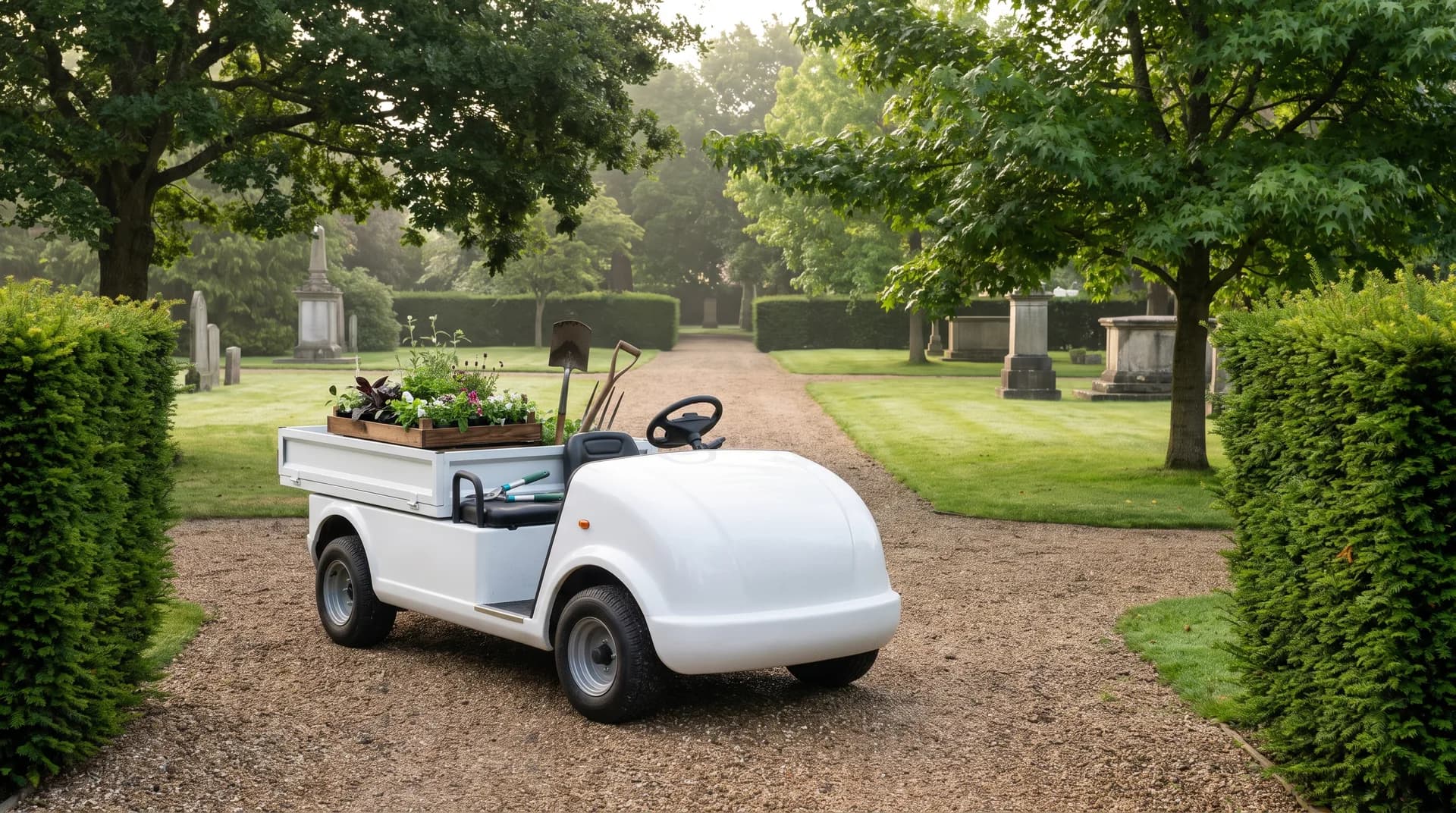
There is no working environment where quiet matters more than a cemetery or crematorium. The grounds must be kept, graves prepared and tended, hedges cut, paths cleared, waste moved, but every hour of that work happens somewhere close to a funeral, a burial or a person standing quietly at a graveside. A diesel vehicle grinding along a path intrudes on all of it. An electric utility vehicle does the same work in near silence and without fumes, which is why memorial grounds are among the clearest cases for electric there is. This guide covers choosing vehicles for this most considerate of settings.
- Near-silent running lets grounds work continue near services without intrusion.
- No exhaust fumes drifting across mourners, memorials or chapel entrances.
- Carries the real work: tools, spoil, planting, waste and materials.
- Turf tires and matched weight protect lawns and memorial areas.
- Can also support less mobile visitors across large grounds, with dignity.
Working respectfully, all day
A cemetery grounds team cannot pause every time a cortege arrives; the work and the mourning share the same acres all day. Near-silent vehicles resolve that tension: a team can move tools, spoil and cuttings along a path within sight of a service without the noise reaching it, and can simply stop and stand respectfully as a cortege passes rather than being caught mid-rattle. No exhaust matters too; fumes have no place drifting across a graveside or a chapel entrance. This is the same quiet-first thinking as our quiet estates guide, applied where it counts most.
The grounds work itself
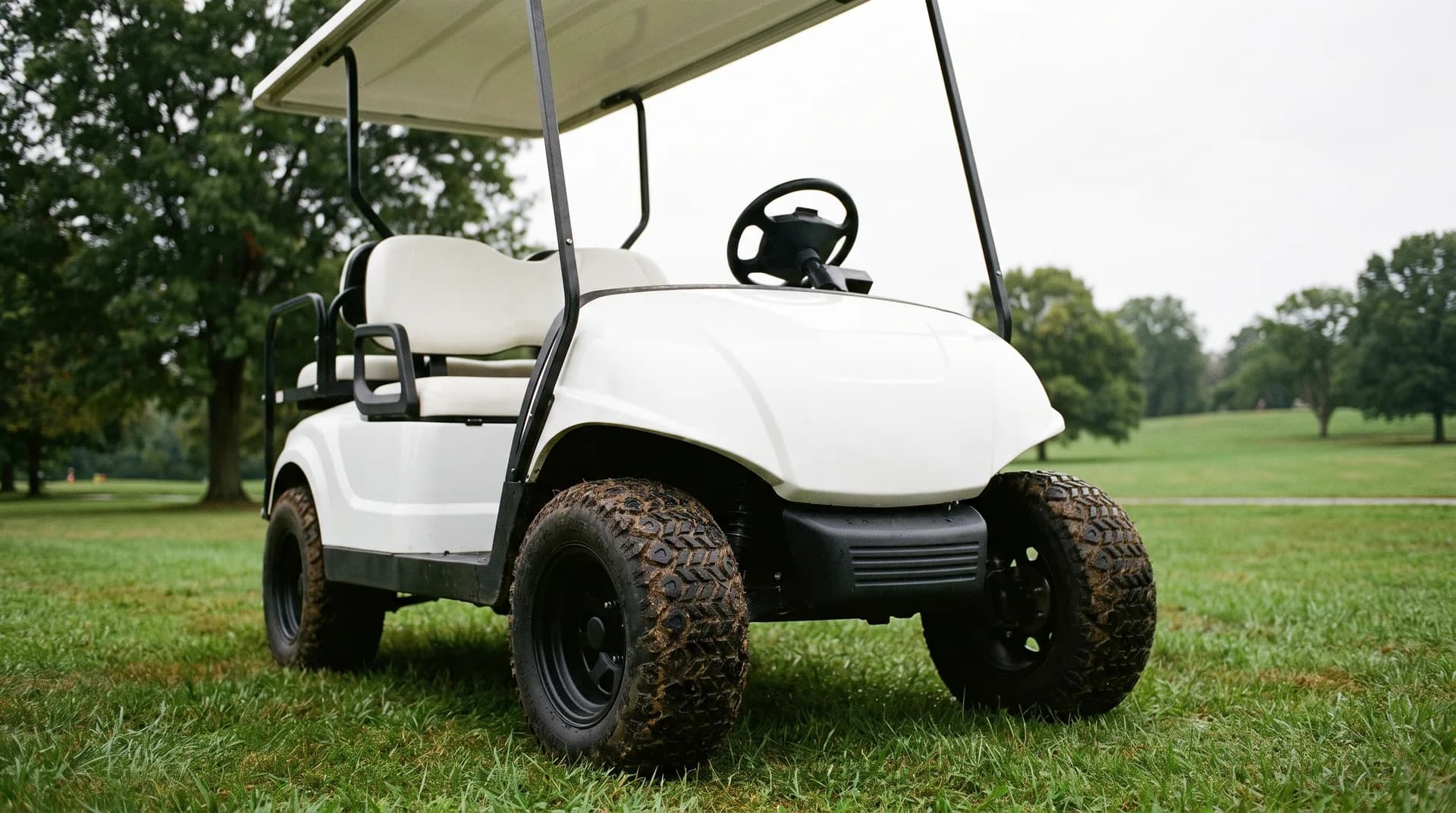
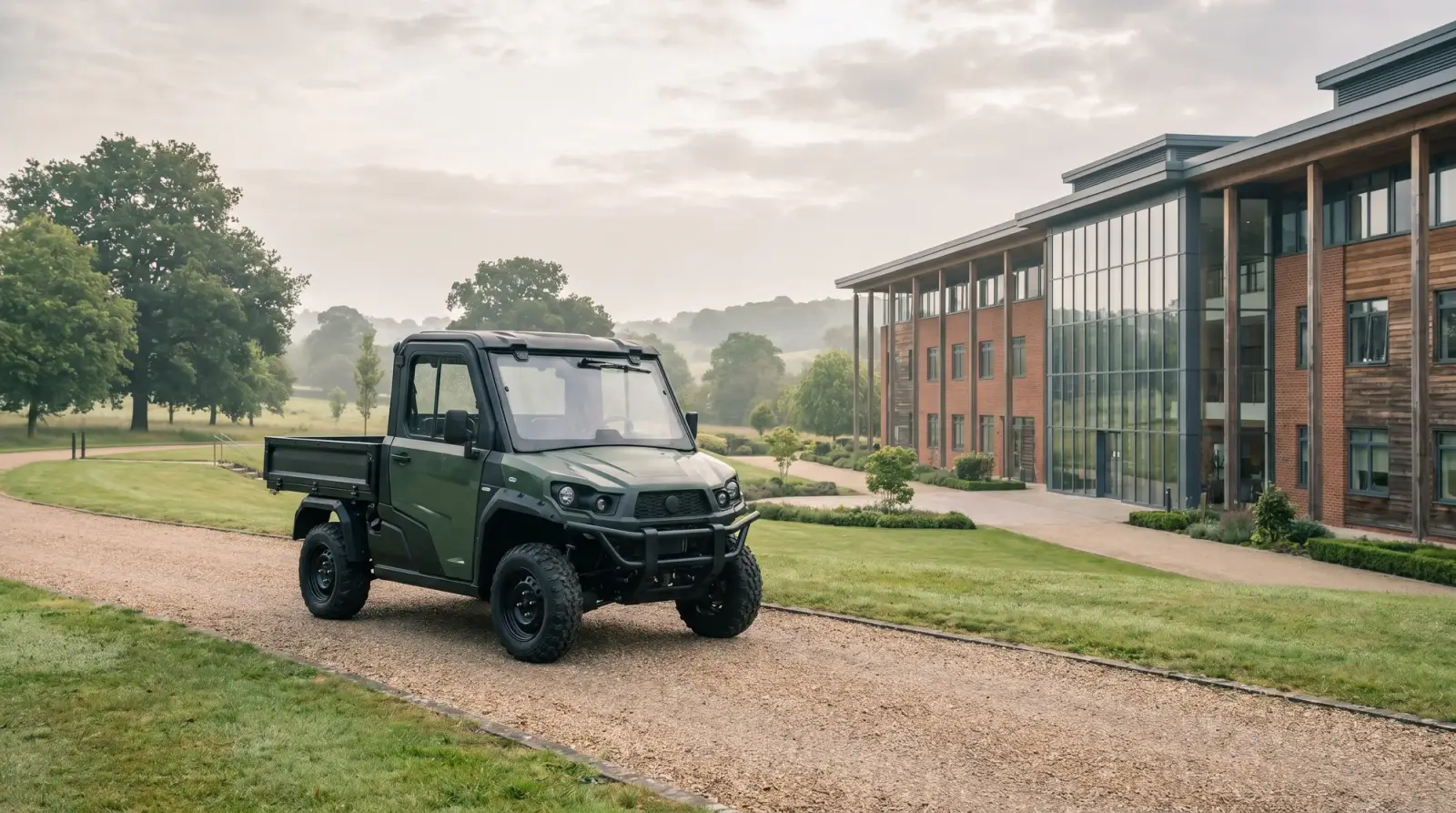
The work is proper grounds work: mowing support and clippings away, hedge cuttings and leaf clearance by the trailer-load, planting and topsoil in, tools and materials to the far sections, waste bins to the gate. A compact utility vehicle with a tipping bed handles all of it, on turf tires that protect the lawns and memorial areas the public judges the grounds by, as our grounds and turf keeping work sets out. Narrow paths and gateways are common in older cemeteries, so compact dimensions are often part of the specification.
Supporting visitors too
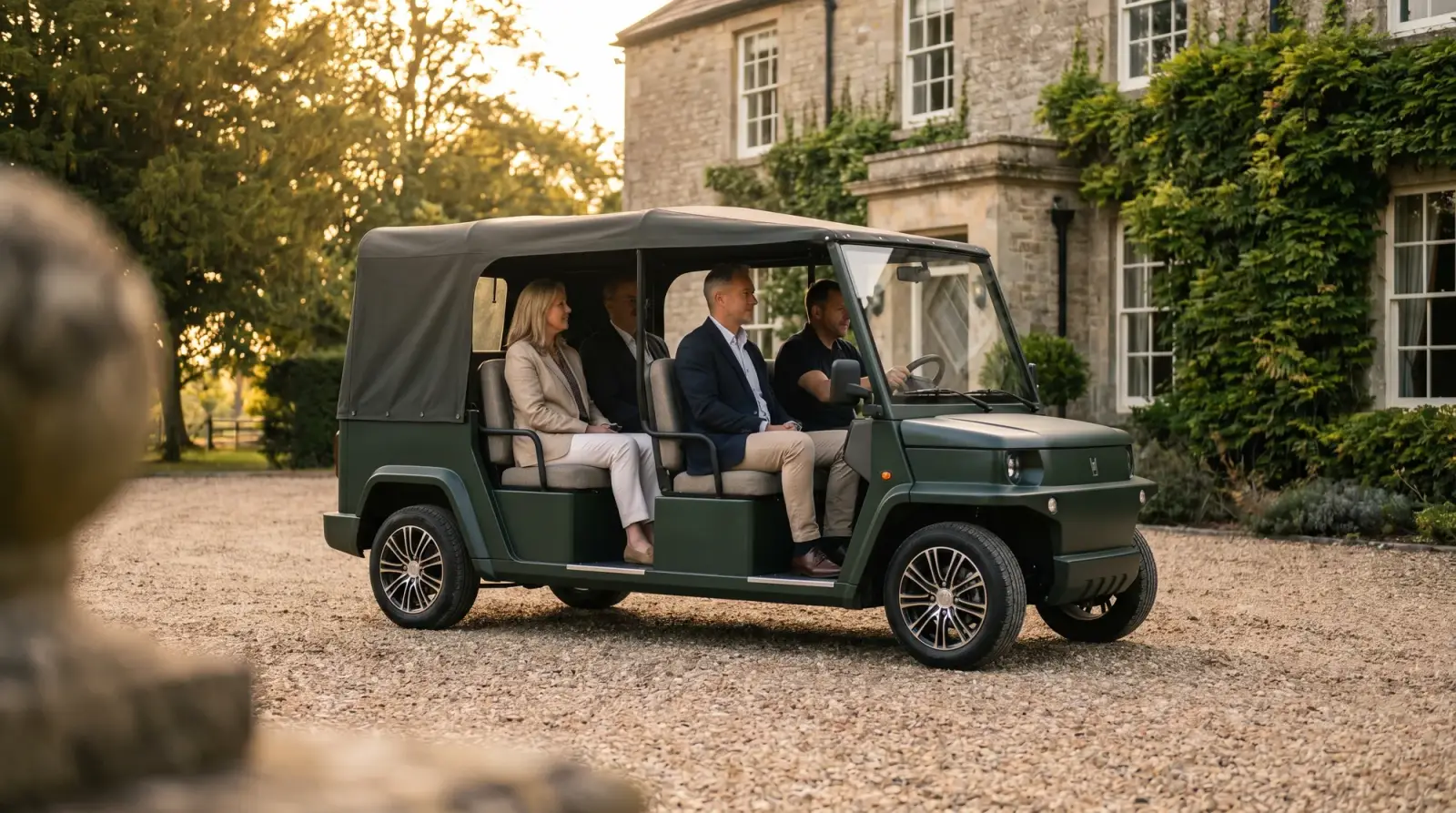
Large memorial grounds can be a long walk for elderly visitors or anyone unsteady on their feet, and some sites quietly offer a lift to a distant grave as part of their care. A passenger cart, or a wheelchair-accessible configuration as in our passenger mobility work, lets staff or volunteers offer that with dignity. It is a small service that visitors remember, and the same quiet vehicle that keeps the grounds can provide it.
Frequently asked questions
Why are electric vehicles suited to cemeteries?+
Because the work always happens near mourning. Near-silent running lets grounds maintenance continue close to services and gravesides without intrusion, and there are no exhaust fumes drifting across memorials, mourners or chapel entrances.
What work can they do?+
The full grounds round: clippings, hedge cuttings and leaves away, planting and topsoil in, tools to the far sections, waste to the gate, with a tipping bed for loose loads and towing within a rated capacity. Compact dimensions suit older paths and gateways.
Will they mark the lawns?+
Not specified correctly. Turf tires and matched loaded weight spread the load so lawns and memorial areas are protected, which is exactly what a memorial ground is judged on.
Can they help visitors get to a grave?+
Yes. A passenger cart, or a wheelchair-accessible configuration, lets staff or volunteers offer less mobile visitors a dignified lift across large grounds, a small service that means a great deal.
Do they suit both council and private grounds?+
Yes. Councils run them across cemetery portfolios as part of their fleets, and private cemeteries and crematoria specify them for the same reasons: quiet, clean, low-cost operation in a sensitive setting.
Specify vehicles for your grounds
Tell us your grounds, your paths and the work your team does, and we will specify quiet, respectful vehicles and prepare a considered quote.
Ready to find the right golf cart?
Tell us how and where it will work and we will specify a vehicle and a tailored quote built around you. Every build comes with a 3-year warranty and a 24-hour priority call-out.
Our guides are written and reviewed by the Hawke Electric Vehicles team, the people who specify, build, deliver and support the vehicles. We focus on honest, practical advice and flag where a figure depends on the build rather than guessing.
More guides by Hawke