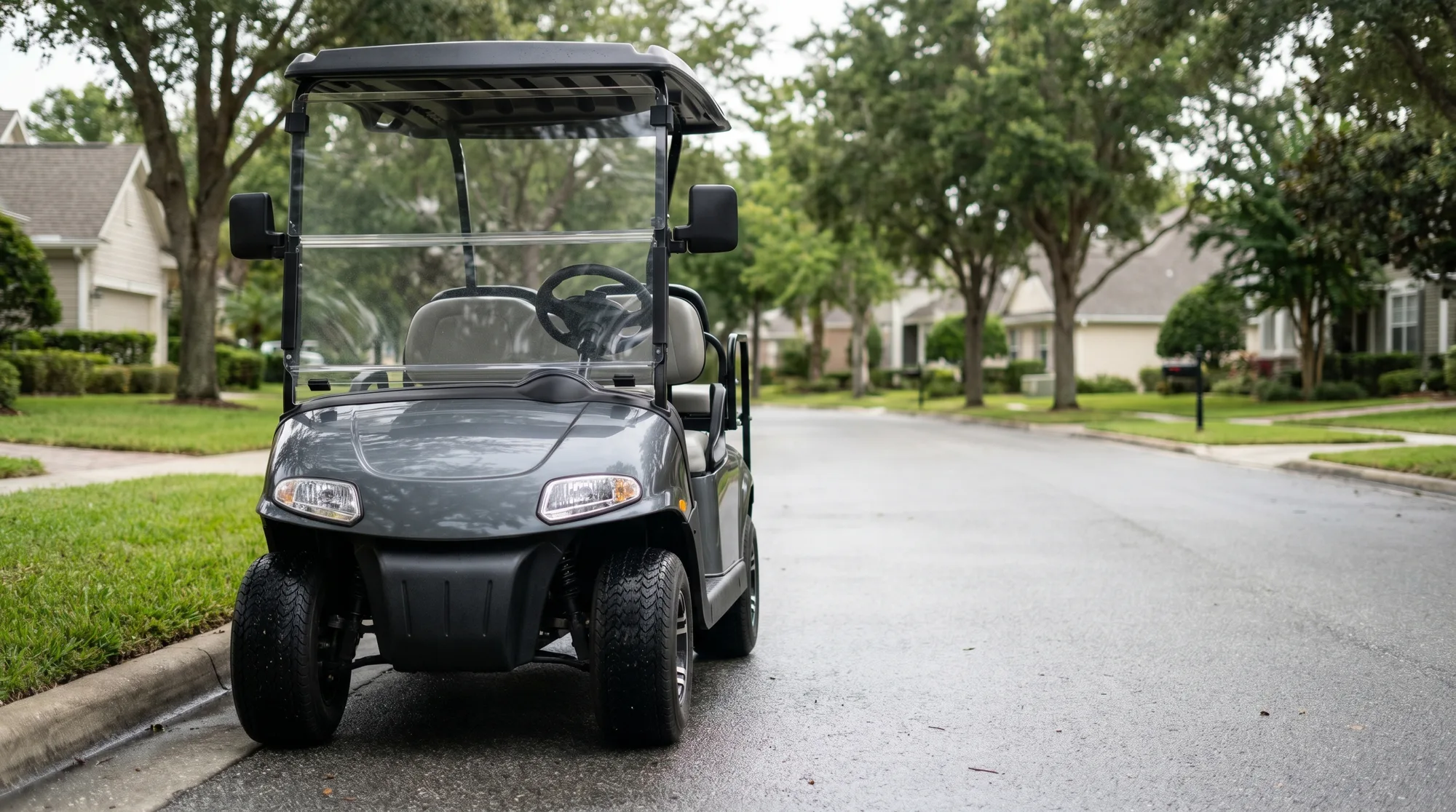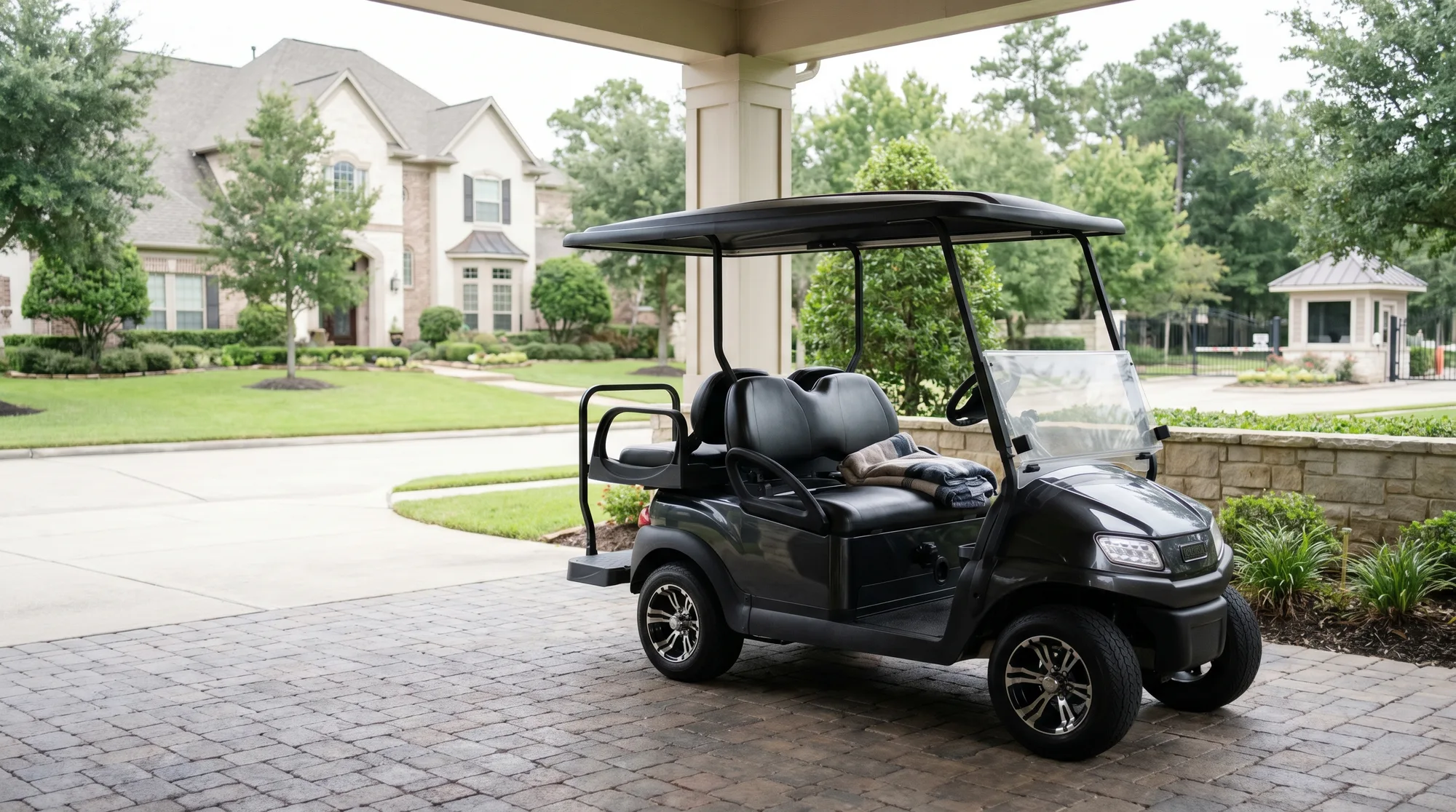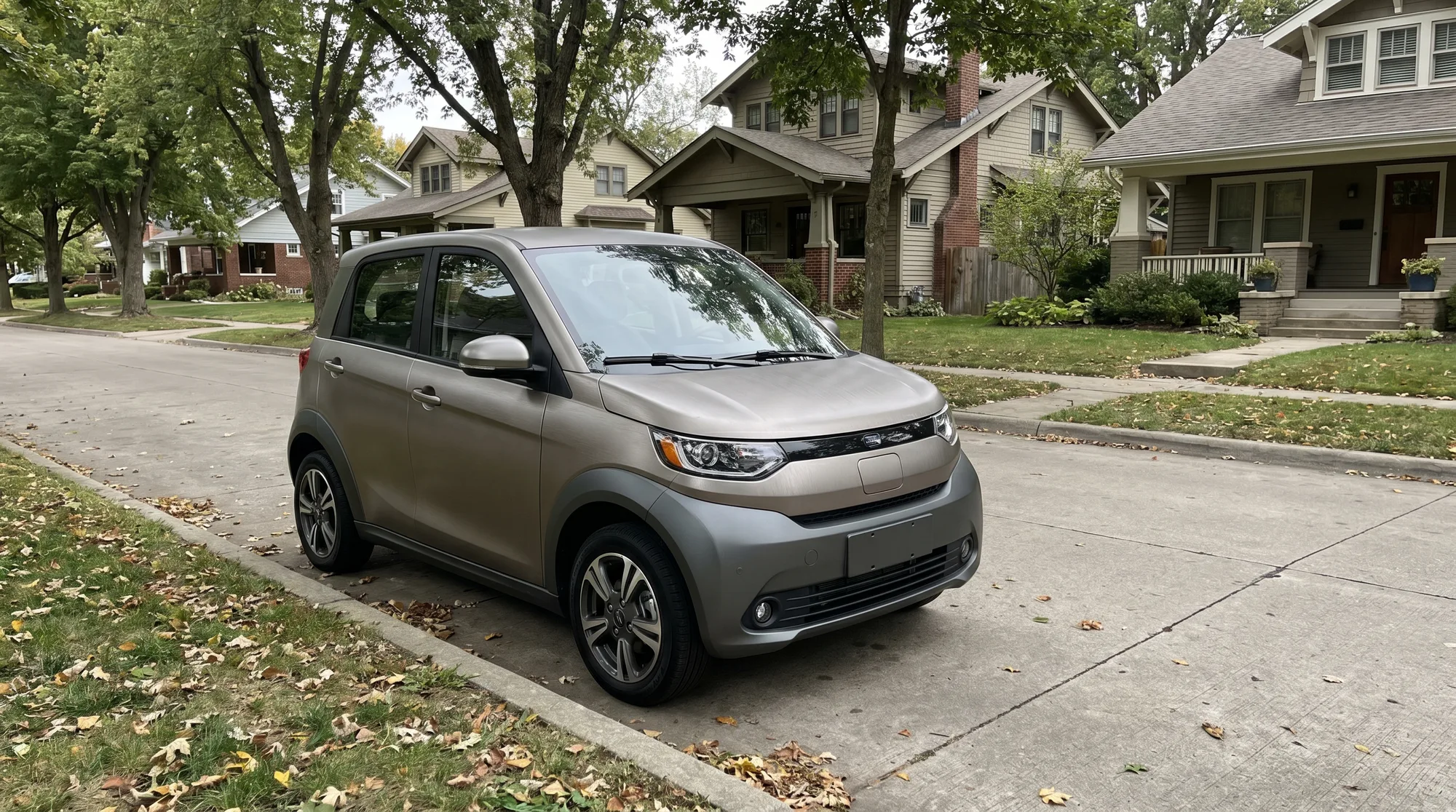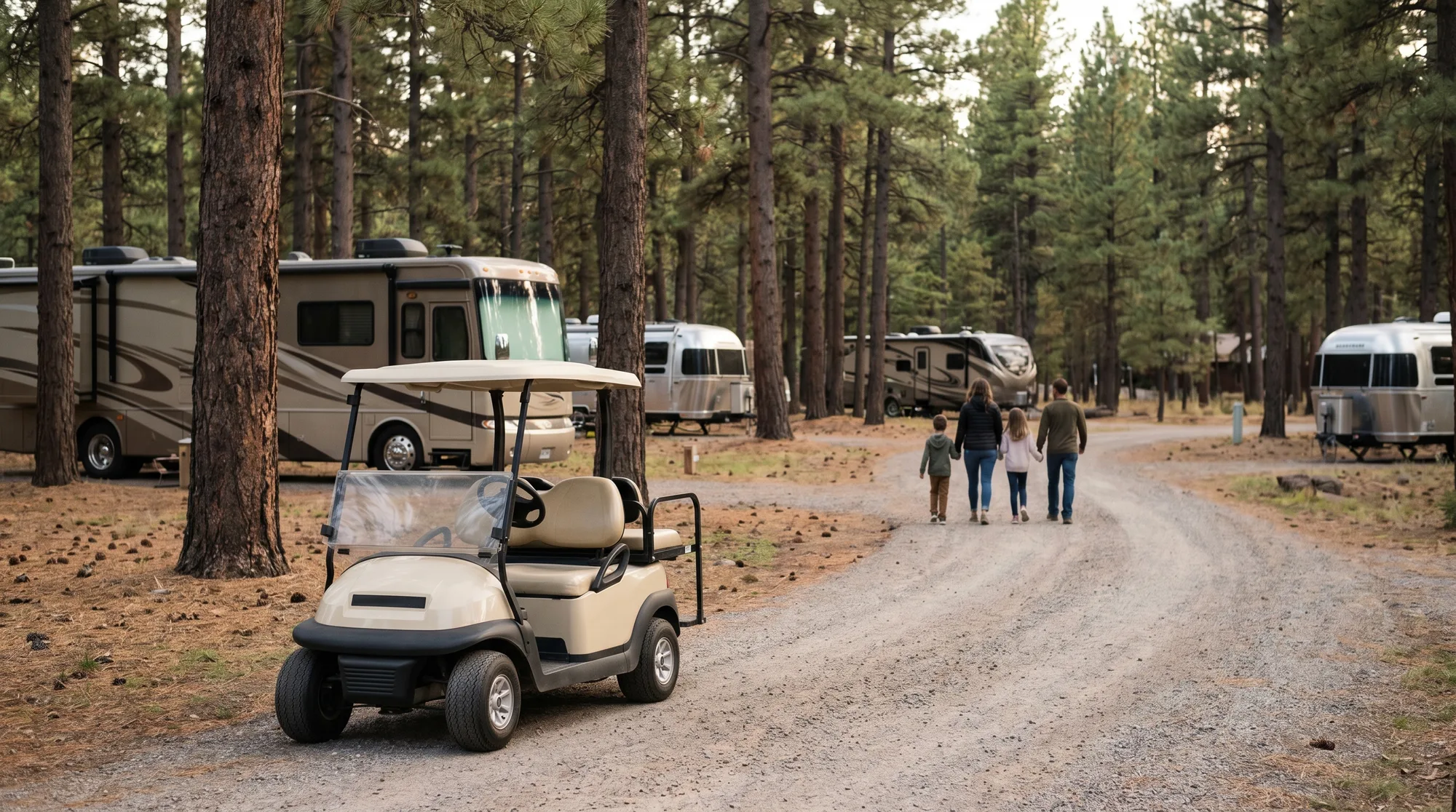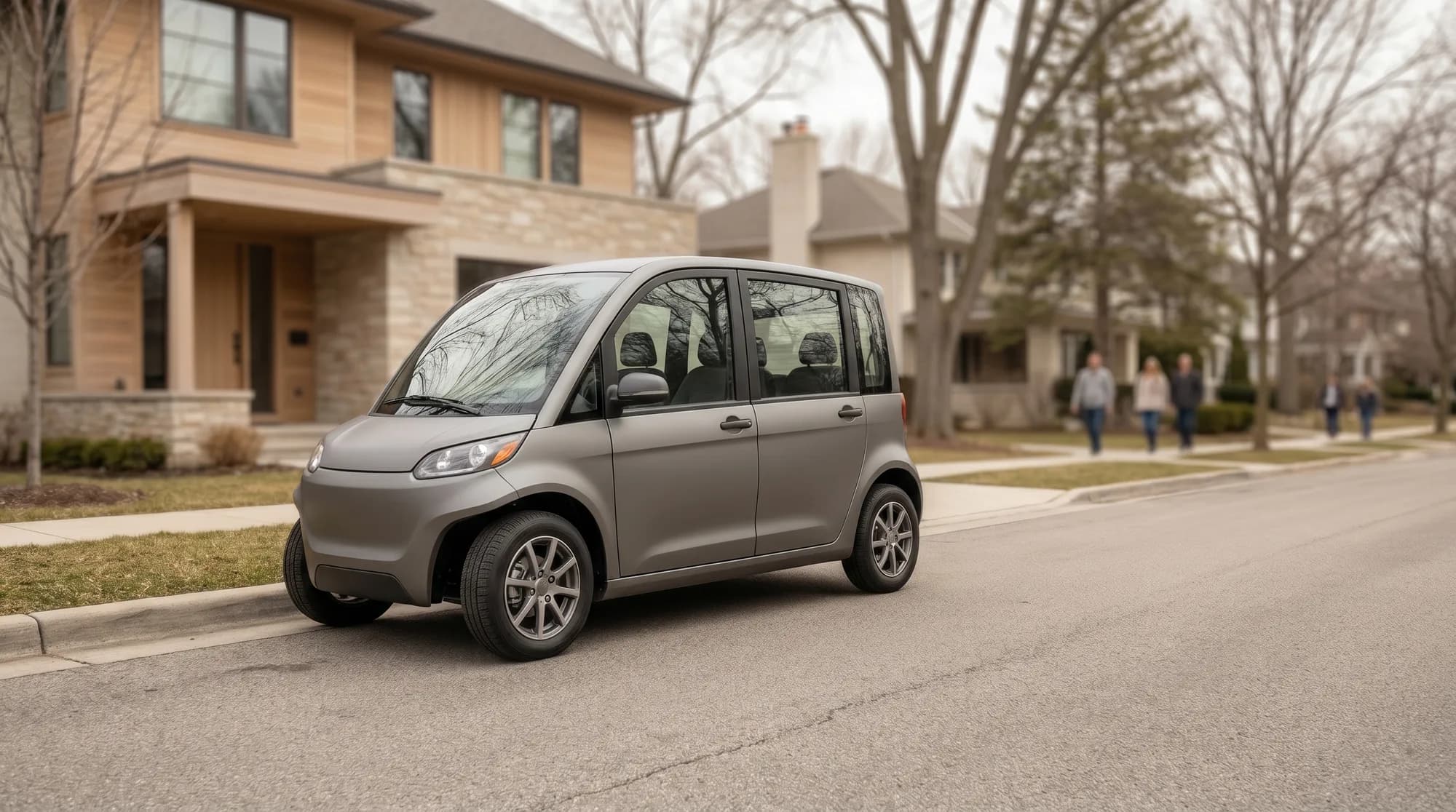
Registration is where the difference between a golf cart and an LSV becomes paperwork. A plain golf cart driven on private property usually needs nothing. The same-looking vehicle, if it is an LSV you intend to drive on the road, needs a title, a registration, a plate, insurance and, in most states, a licensed driver behind the wheel. Knowing which bucket you fall into before you visit the DMV saves a wasted trip.
First, work out what you have
The registration question has no general answer because it depends on the vehicle and the use. An LSV that meets the federal FMVSS 500 standard is a road vehicle and is registered like one. A standard golf cart is not, and in most states cannot be titled as a road vehicle at all, though some areas offer a separate cart permit for local street use. If you are unsure which you have, LSV vs NEV vs golf cart and golf cart vs LSV will settle it.
- Typical requirement
- Usually no registration
- Typical requirement
- Sometimes a cart permit or decal
- Typical requirement
- Title, registration, plate, insurance, license
| Typical requirement | |
|---|---|
| Golf cart on private property | Usually no registration |
| Golf cart on local streets (where allowed) | Sometimes a cart permit or decal |
| LSV / NEV on public roads | Title, registration, plate, insurance, license |
What you need to register an LSV
If your vehicle is an LSV bound for the road, gather the paperwork before you go. The exact list varies by state, but most DMVs ask for a consistent core set of documents and a vehicle that can actually be inspected.
- Proof of ownership (manufacturer's certificate of origin for new, or the prior title for used)
- A bill of sale
- The vehicle's 17-character VIN
- Government-issued photo ID and proof of residency
- Proof of insurance meeting your state's minimum
- Any required safety or VIN inspection
- The registration and titling fees
The registration process, step by step
- 01
Confirm the class
Make sure the vehicle is an LSV with a VIN, or check whether your area uses a separate cart permit instead.
- 02
Insure it first
Arrange insurance, since most states want proof of cover at registration. See the insurance guide for what to ask for.
- 03
Gather documents
Pull together proof of ownership, the bill of sale, the VIN, your ID and proof of residency.
- 04
Complete any inspection
If your state requires a safety or VIN inspection, book and pass it before your DMV visit.
- 05
File at the DMV
Submit the paperwork, pay the title and registration fees, and collect your plate and registration.
- 06
Renew on schedule
Note the renewal cycle and keep insurance active to stay road-legal.
Fees and what to expect
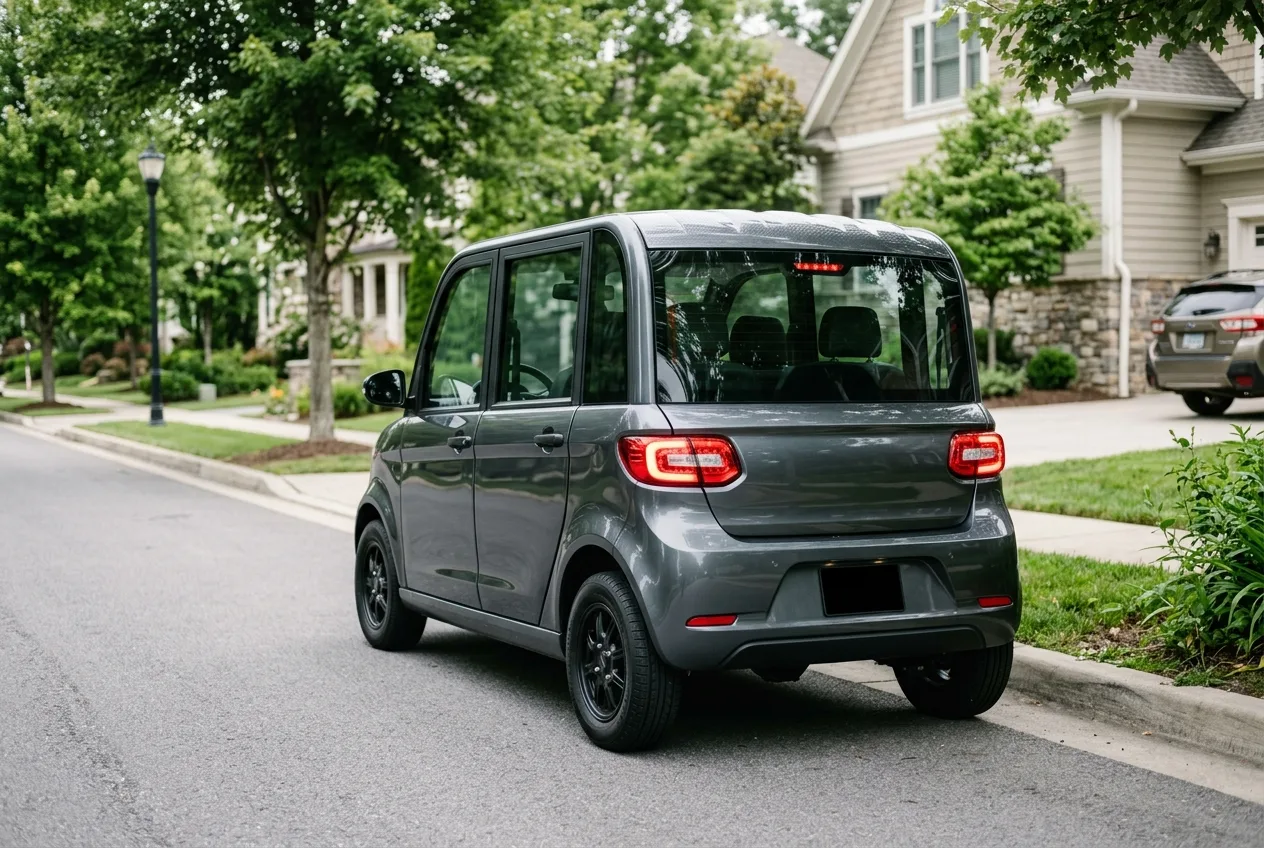
Titling and registration fees for an LSV are modest compared with a car, but they exist, and they vary by state. Expect a one-time titling fee, an annual or biennial registration fee, possibly a plate fee, and any inspection cost. Insurance is a separate ongoing cost; the golf cart insurance guide explains what cover to buy. Budget for these as part of total ownership, alongside the purchase price covered in how much does a golf cart cost.
Common pitfalls
Two issues send people back to the DMV. The first is buying a cart that cannot be registered as an LSV, because it lacks a VIN or cannot reach 20-25 mph, then discovering it at the counter. Avoid this by confirming the class before you buy; see how to make a golf cart street legal. The second is arriving without proof of insurance, which most states require up front. Sort cover first and the rest is routine.
Buy a vehicle that registers without drama
We will quote a street-legal LSV built to the standard, with a VIN and the equipment your DMV expects to see.
Frequently asked questions
Do I have to register a golf cart?+
It depends. A plain golf cart on private property usually needs no registration. An LSV driven on public roads must be titled and registered in most states. Some areas also run a separate cart permit for local street use.
What documents do I need to register an LSV?+
Typically proof of ownership, a bill of sale, the VIN, photo ID and proof of residency, proof of insurance, any required inspection, and the fees. The exact list varies by state, so call your DMV.
Can I title a regular golf cart for the road?+
In most states, no. A standard golf cart does not meet the LSV standard and cannot be titled as a road vehicle, though some communities offer a local cart permit or decal.
How much does registration cost?+
Fees are modest but vary by state: usually a one-time titling fee, a registration fee, possibly a plate fee, and any inspection cost. Insurance is a separate ongoing expense.
Do I need insurance to register an LSV?+
In most states, yes. Proof of insurance meeting the state minimum is typically required at the time of registration.
Related solutions
Ready to explore what we build?
See the vehicles and the setting this applies to, or get a tailored quote built around your site.

Ready to find the right golf cart?
Tell us how and where it will work and we will specify a vehicle and a tailored quote built around you. Every build comes with a 3-year warranty and a 24-hour priority call-out.