Few corners of the small-vehicle world generate as much confusion as the three letters LSV, the three letters NEV, and the two words golf cart. Listings mix them up, salespeople use them loosely, and buyers end up unsure what they actually own. The good news is that the underlying picture is simpler than the jargon suggests. Get the definitions straight and the right choice for you becomes obvious.
- Golf cart is the broad term for a low-speed personal vehicle, typically capped around 15-19 mph.
- LSV (Low-Speed Vehicle) is a federal class under FMVSS 500: 20-25 mph, full safety equipment, road-legal in most states.
- NEV (Neighborhood Electric Vehicle) is, in practice, an electric LSV; the terms overlap heavily.
- Only LSV/NEV vehicles are registrable and road-legal in most states; plain golf carts are not.
- Pick by where you will drive, then by power source and seats.
Golf cart: the broad term
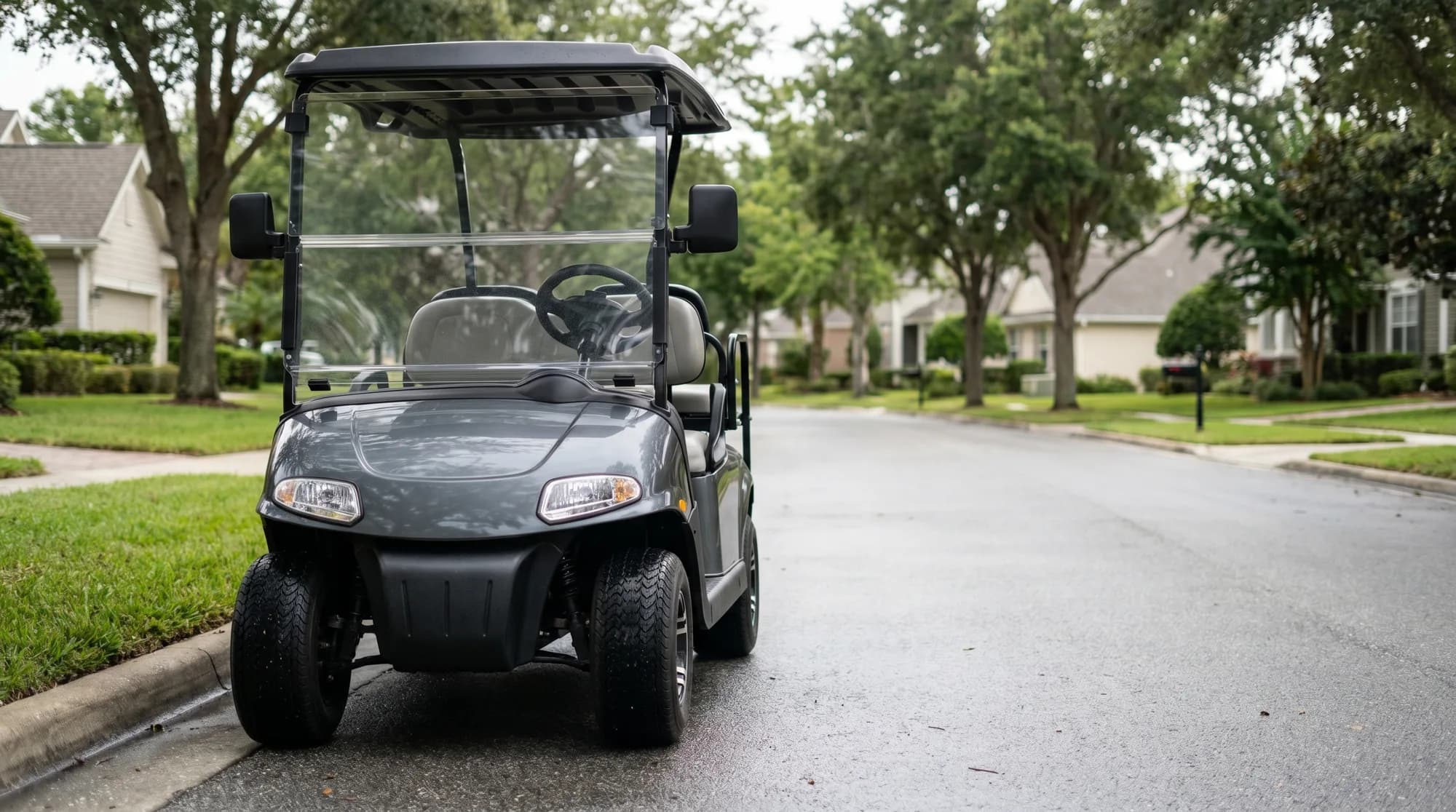
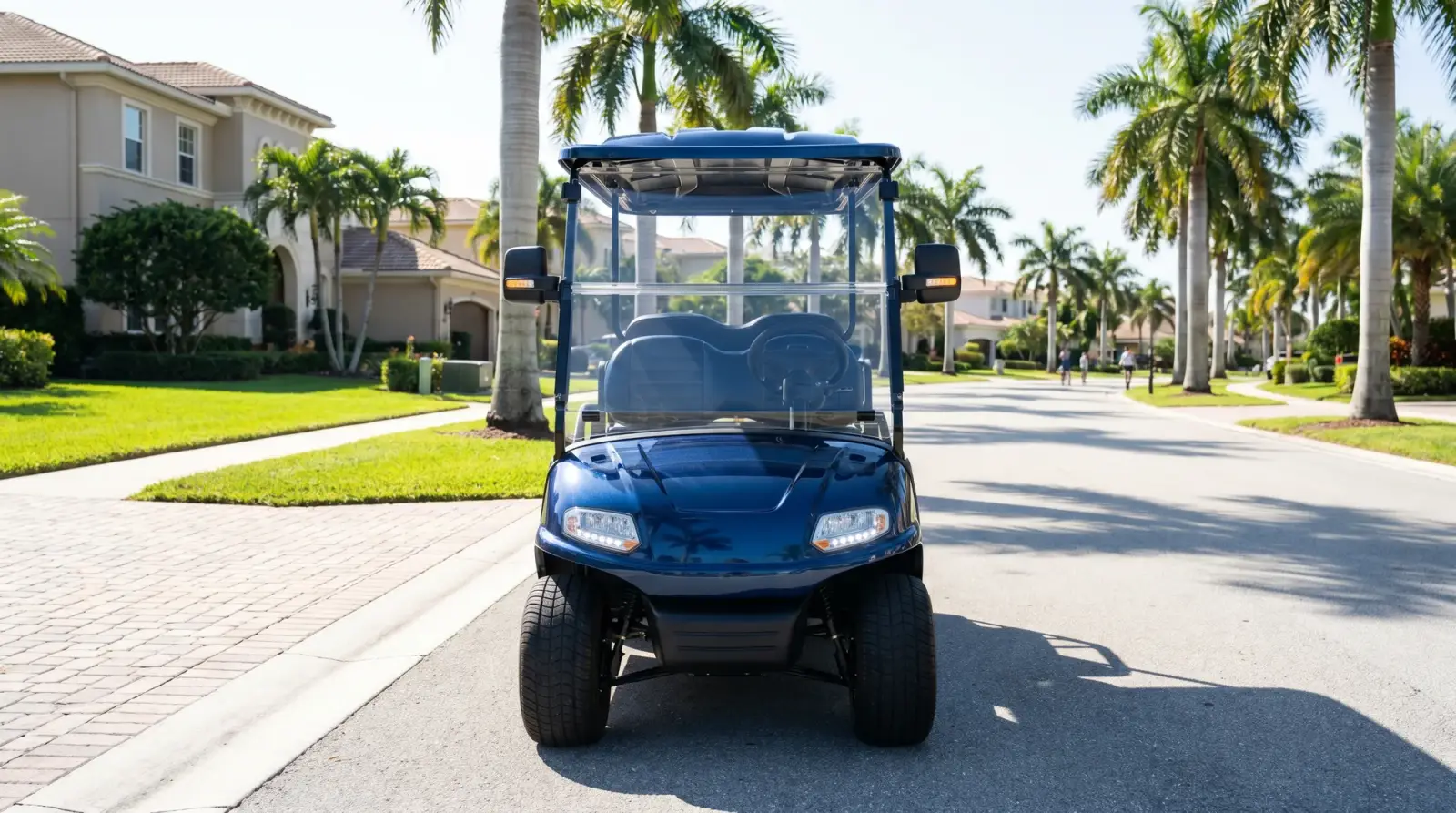
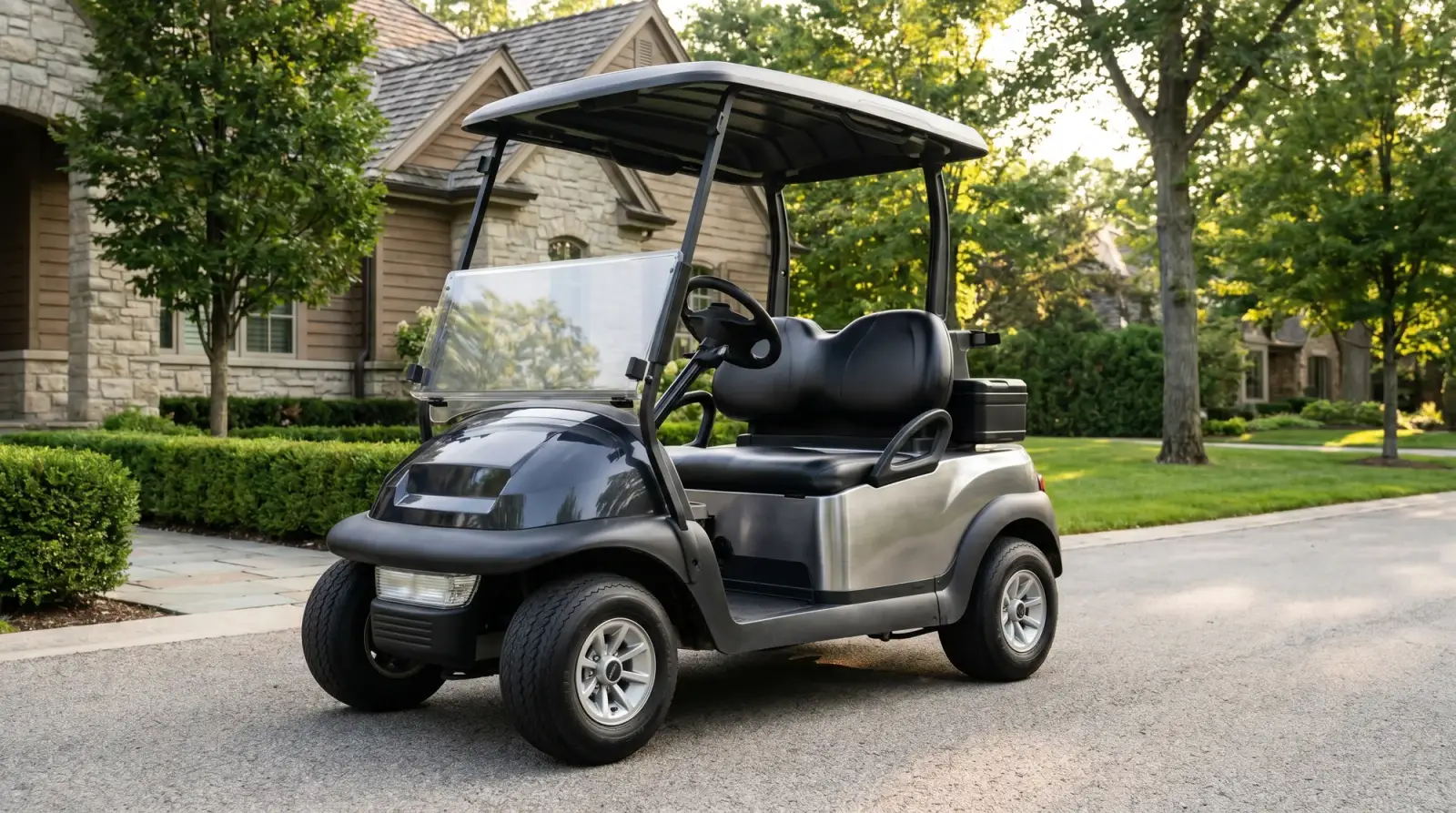
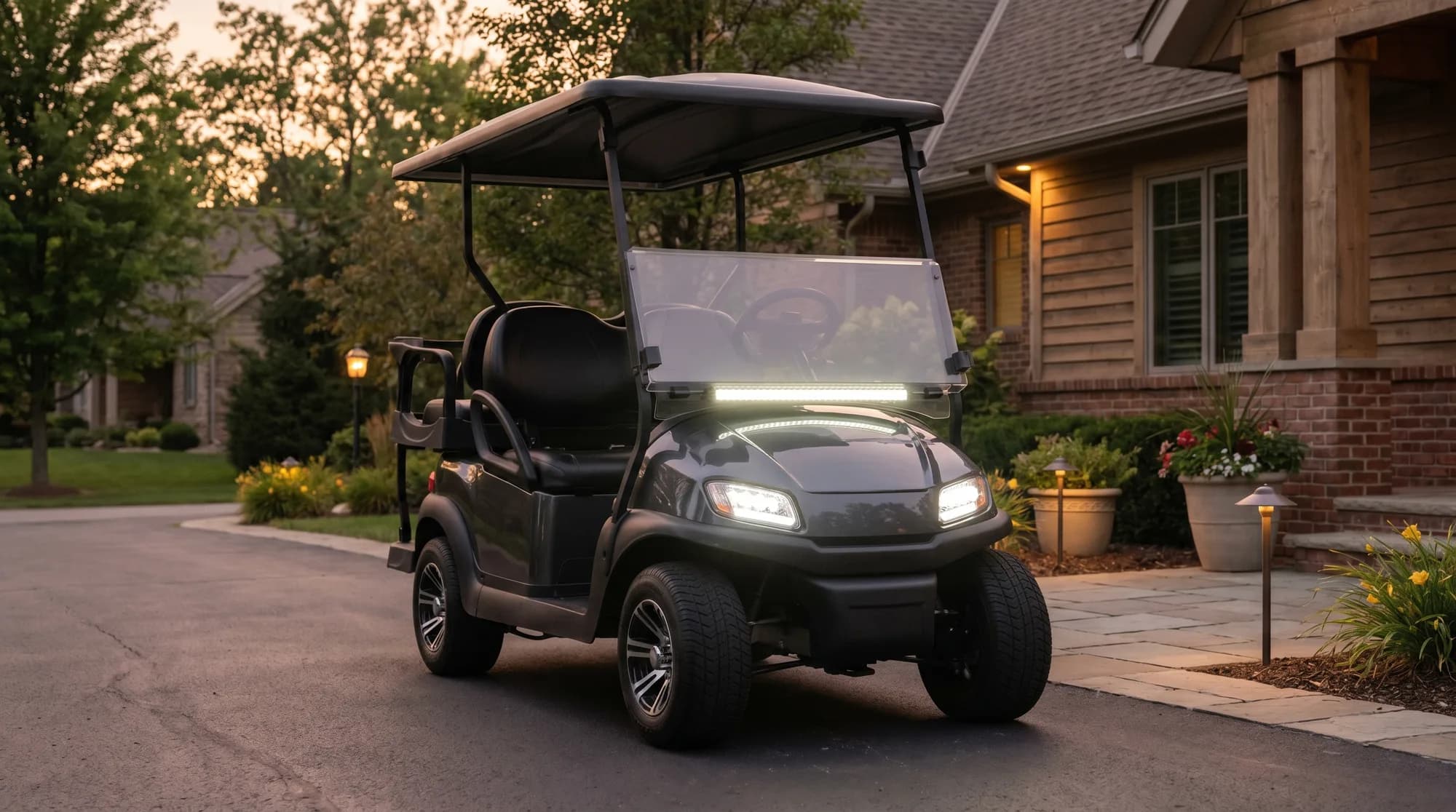
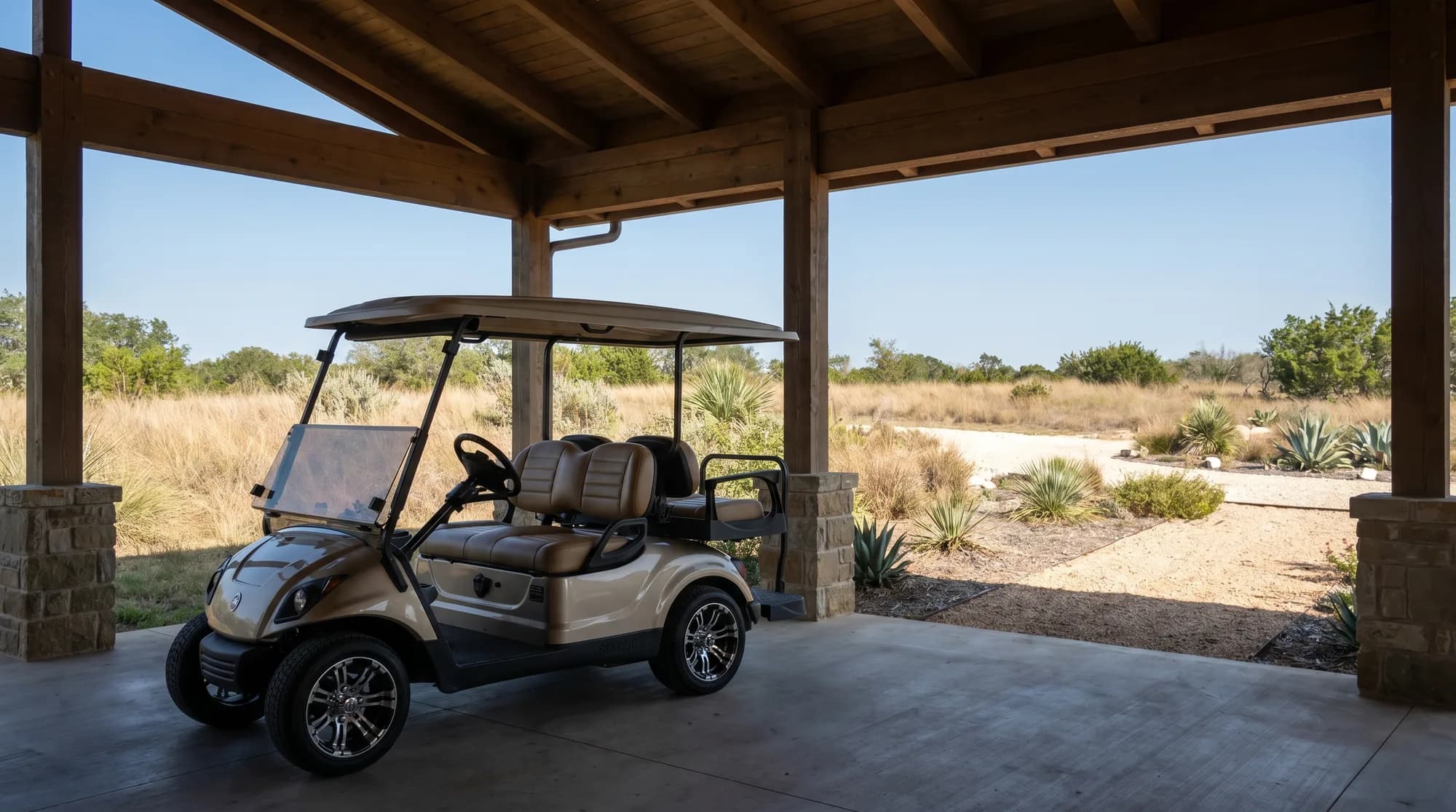
Golf cart is the umbrella label, and the loosest of the three. Strictly, it means a low-speed vehicle designed for golf courses and short trips, generally limited to around 15 to 19 mph, without the federally required road equipment. People use golf cart for almost any small four-wheeler, which is exactly where the confusion starts. Legally, a plain golf cart can usually only be driven on public roads where a local ordinance allows, and cannot be registered as a road vehicle in most states.
LSV: the federal class
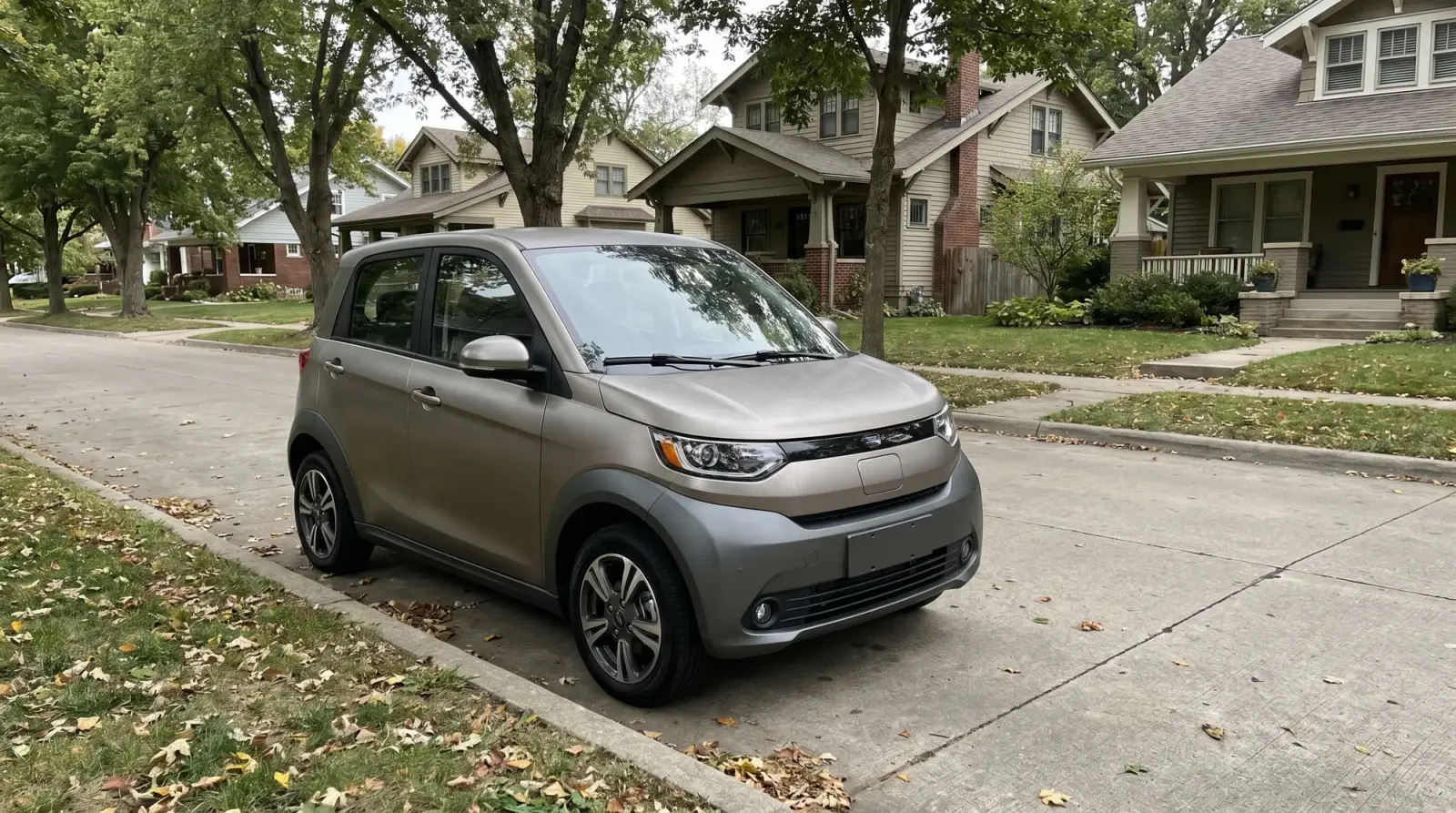
LSV stands for Low-Speed Vehicle, and unlike golf cart it has a precise federal meaning. Under Federal Motor Vehicle Safety Standard 500, an LSV does 20 to 25 mph, has a gross vehicle weight rating under 3,000 pounds, and carries the full safety package: headlights, turn signals, brake and tail lights, reflectors, mirrors, a windshield, a parking brake, seat belts, a horn and a VIN. Because it meets that standard, an LSV is registrable, plateable and insurable, and road-legal in most states on streets posted at 35 mph or below.
NEV: usually an LSV by another name
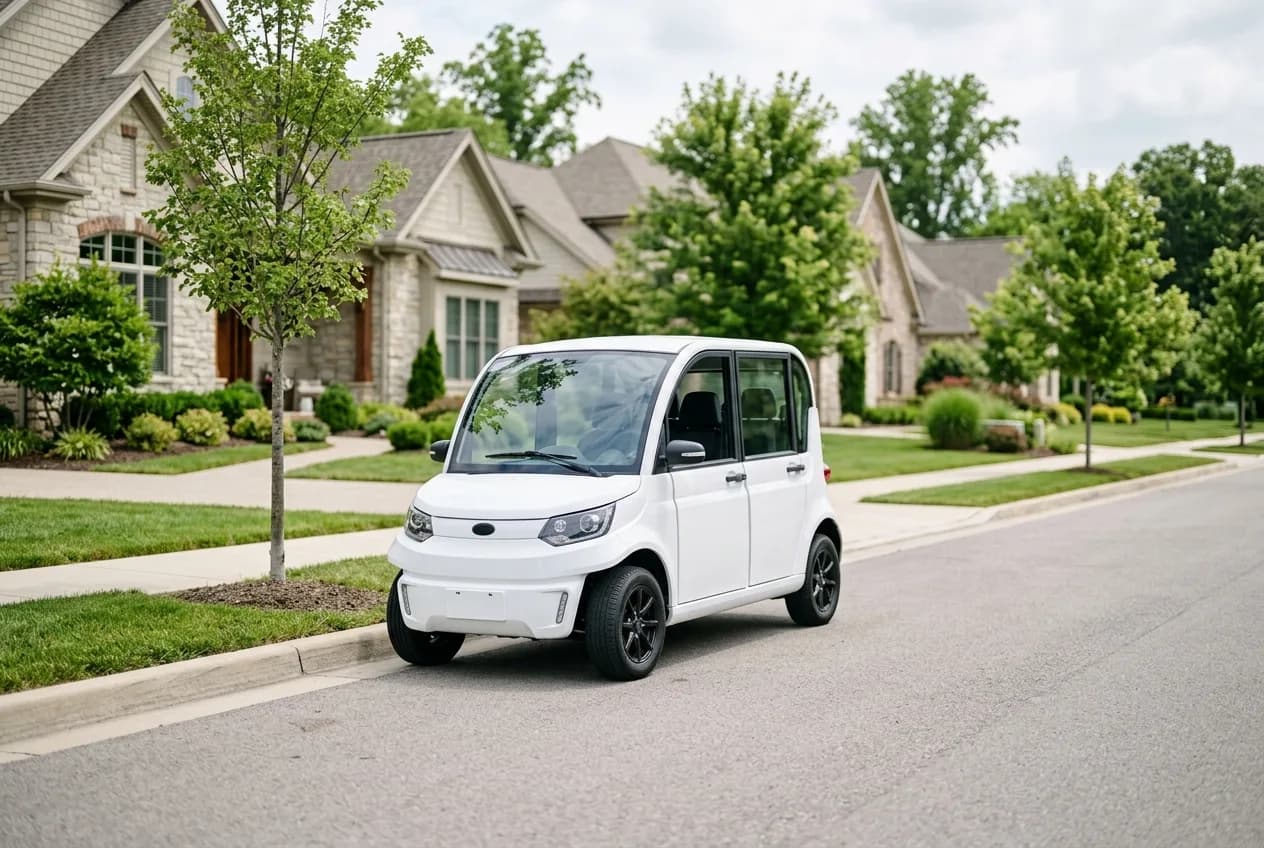
NEV stands for Neighborhood Electric Vehicle, and here is the part that ends most of the confusion: a NEV is, in practice, an electric LSV. The term emphasizes the use case, an electric vehicle for getting around a neighborhood, rather than defining a separate legal category. Some states use NEV in their statutes, others use LSV, and a few use both, but functionally they describe the same kind of road-legal, low-speed, electric vehicle. If a NEV meets FMVSS 500, it is an LSV.
- Golf cart
- Broad term
- LSV
- Federal class
- NEV
- Electric LSV (use-case term)
- Golf cart
- ~15-19 mph
- LSV
- 20-25 mph
- NEV
- 20-25 mph
- Golf cart
- Electric or gas
- LSV
- Electric or gas
- NEV
- Electric
- Golf cart
- No
- LSV
- Yes
- NEV
- Yes
- Golf cart
- Only where allowed
- LSV
- Most roads 35 mph or below
- NEV
- Most roads 35 mph or below
- Golf cart
- Usually not eligible
- LSV
- Required in most states
- NEV
- Required in most states
| Golf cart | LSV | NEV | |
|---|---|---|---|
| What it is | Broad term | Federal class | Electric LSV (use-case term) |
| Top speed | ~15-19 mph | 20-25 mph | 20-25 mph |
| Power | Electric or gas | Electric or gas | Electric |
| FMVSS 500 | No | Yes | Yes |
| Road-legal | Only where allowed | Most roads 35 mph or below | Most roads 35 mph or below |
| Registration | Usually not eligible | Required in most states | Required in most states |
How to choose between them
The decision tree is short. If your driving stays on a golf course, private property or a community that allows carts, a plain golf cart is the cheapest fit. If you want to use public roads, you need an LSV/NEV, registered and insured. Then choose the power source: electric suits nearly everyone now, with NEV simply being the electric road-legal option. For the deeper electric versus gas case, see electric vs gas golf carts, and to weigh standard cart against road-legal vehicle see golf cart vs LSV.
Getting one on the road
Once you have settled on an LSV or NEV, the next steps are practical: how to make a golf cart street legal if you are upgrading, registering and titling a golf cart or LSV for the DMV process, and golf cart insurance for cover. The broader framework lives in street-legal golf carts and LSV rules.
Cut through the jargon
Tell us where you want to drive and we will point you to the right class and a real price, LSV, NEV or standard cart.
Frequently asked questions
Is a NEV the same as an LSV?+
Functionally, yes. A NEV (Neighborhood Electric Vehicle) is essentially an electric LSV. The term highlights the use case, but if a NEV meets the federal FMVSS 500 standard it qualifies as an LSV.
Can a golf cart be a NEV?+
Only if it meets the LSV standard: 20-25 mph, the full safety equipment list and a VIN. A standard sub-20 mph golf cart is not a NEV.
Which can I legally drive on the road?+
LSVs and NEVs are road-legal in most states on streets posted at 35 mph or below, once registered and insured. Plain golf carts may only use roads where a local ordinance allows.
Are NEVs always electric?+
Yes, by name. NEV stands for Neighborhood Electric Vehicle. LSV is the broader term that can include gas-powered versions, though most LSVs sold today are electric.
Does my state use LSV or NEV?+
It varies. Some states use LSV in their statutes, some use NEV, some use both. The practical test is the same FMVSS 500 standard, so confirm the wording with your local DMV.
Related solutions
Ready to explore what we build?
See the vehicles and the setting this applies to, or get a tailored quote built around your site.

Ready to find the right golf cart?
Tell us how and where it will work and we will specify a vehicle and a tailored quote built around you. Every build comes with a 3-year warranty and a 24-hour priority call-out.
Our guides are written and reviewed by the Hawke Electric Vehicles team, the people who specify, build, deliver and support the vehicles. We focus on honest, practical advice and flag where a figure depends on the build rather than guessing.
More guides by Hawke