A household waste recycling center is a compact site doing a relentless volume of short moves. Materials migrate all day: overflow from public bays to bulk containers, reusable items to the shop or store, contamination pulled from the wrong skip, bins and cages to the compactor, and staff back and forth across a site shared with a constant stream of public cars. The vehicle for that work does not need speed or road range; it needs constant availability, a useful bed, controlled manners around the public and, critically on sites with covered bays and enclosed transfer areas, no exhaust. That is the electric utility vehicle's home ground. This guide covers how HWRCs and materials sites use them, the tow-and-tip workflows that do the heavy lifting, and the safety specification a public site should insist on.
- HWRC work is short, constant, stop-start moves, the duty cycle electric drive handles best.
- No exhaust means the vehicle can work covered bays, enclosed transfer areas and stores legally and comfortably.
- Beacons, controlled speed and quiet running make it a manageable presence among the visiting public.
- A tipping bed and light towing cover most bay-to-bulk and bin-to-compactor workflows.
- Puncture-resistant tires are close to mandatory on ground where nails and glass are the product.
What a recycling center vehicle actually does all day
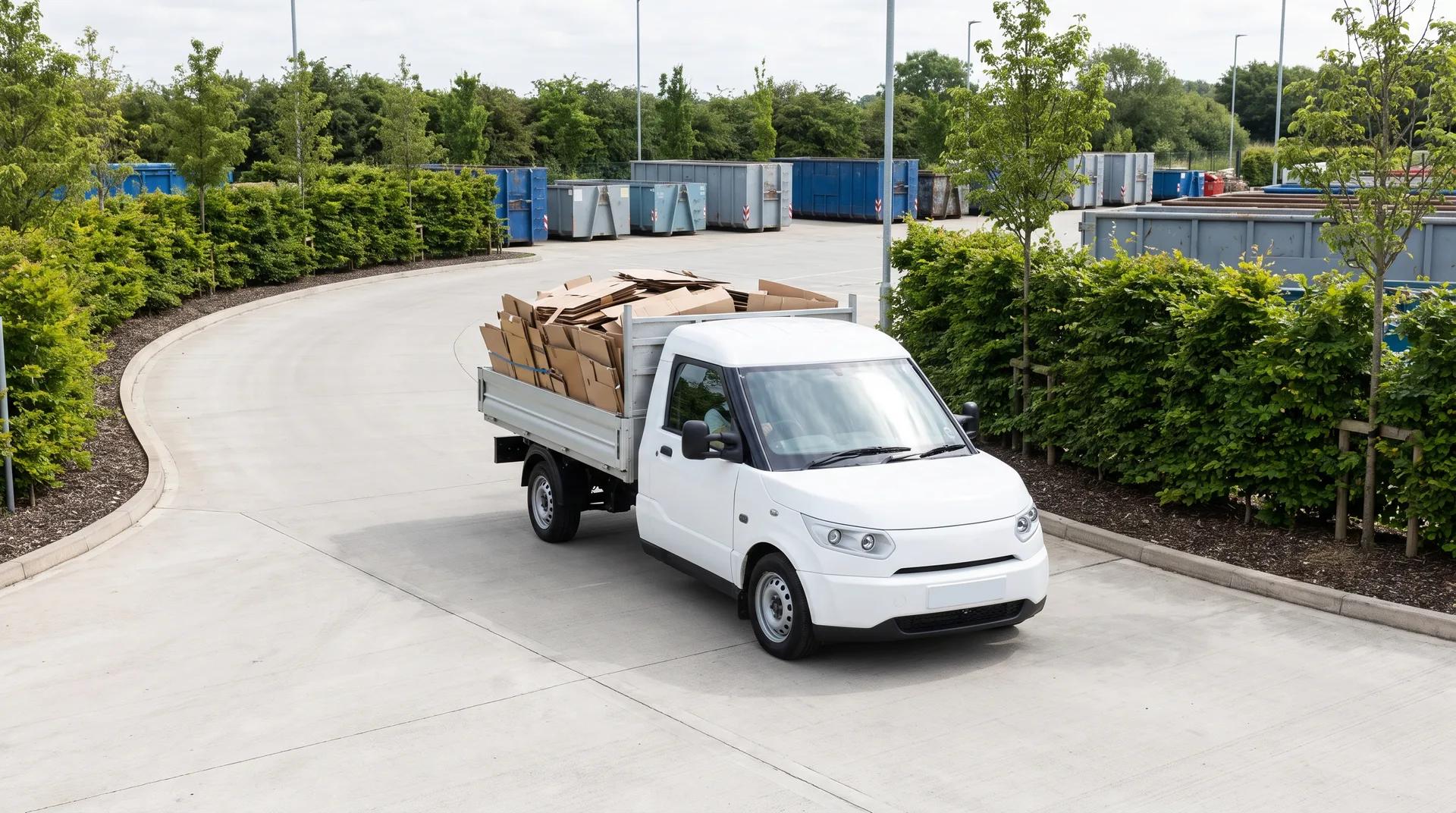
Watch a busy HWRC for an hour and the pattern is clear: nothing moves far, everything moves often. Staff consolidate overflowing public bays into bulk containers, ferry pulled contamination to the right stream, move reuse-shop stock under cover, run bins and cages to the compactor or baler, shift sweepings and spillage, and carry tools, PPE stock and new signage around the site. Between tasks, the vehicle is the site team's transport on a yard too busy with public cars to cross casually on foot. This is classic burden-carrier territory, short hops, frequent stops, loads in the low hundreds of kilograms, and the duty cycle rewards electric drive specifically: no fuel burned idling between moves, full torque from standstill for the fiftieth pull-away of the morning, and no engine note adding to a site that is already reversing alarms and clattering skips. For the wider vehicle category this belongs to, see our guide to what a burden carrier is.
Fumes, noise and the public: why electric fits a recycling center
Two features of an HWRC push the drivetrain decision harder than most sites. The first is enclosed and covered space. Reuse stores, covered bays, WEEE and hazardous-materials areas and transfer buildings are exactly where a gas or diesel machine causes an exhaust-fume problem, and workplace exposure rules make running combustion plant indoors a managed headache. An electric vehicle simply drives in, works and leaves, no fumes, no exposure assessment, no propping doors for ventilation. The second is the public. An HWRC is one of the few industrial sites where untrained visitors, including children in car seats and distracted adults carrying awkward loads, share the traffic routes all day. A quiet vehicle that moves at controlled speed, conspicuous by beacon rather than engine roar, is an easier thing to manage safely among pedestrians than anything that smells and sounds like plant. The running-cost case comes along free, and our electric versus gas comparison sets that side out in full.
- What the site needs
- Frequent short runs with mixed loads
- How the vehicle covers it
- Load bed sized to the site's typical move, tipping bed for loose material
- What the site needs
- Regular runs to compactor and baler
- How the vehicle covers it
- Light towing of wheeled bins and cage trailers
- What the site needs
- No exhaust emissions indoors
- How the vehicle covers it
- Electric drive works stores and transfer areas freely
- What the site needs
- Visible, predictable, controlled movement
- How the vehicle covers it
- Beacons, speed limiting, quiet running, good sightlines
- What the site needs
- Nails, glass and sharp scrap underfoot
- How the vehicle covers it
- Puncture-resistant or solid tires specified from new
| What the site needs | How the vehicle covers it | |
|---|---|---|
| Bay-to-bulk materials moves | Frequent short runs with mixed loads | Load bed sized to the site's typical move, tipping bed for loose material |
| Bin and cage movement | Regular runs to compactor and baler | Light towing of wheeled bins and cage trailers |
| Covered and enclosed areas | No exhaust emissions indoors | Electric drive works stores and transfer areas freely |
| Public on site | Visible, predictable, controlled movement | Beacons, speed limiting, quiet running, good sightlines |
| Debris-strewn ground | Nails, glass and sharp scrap underfoot | Puncture-resistant or solid tires specified from new |
Tow-and-tip workflows and the right body
The body choice follows the material. A flat or dropside bed suits mixed general moves, reuse stock and equipment. A tipping bed transforms the loose-material side of the job, sweepings, green-waste overflow, spillage cleared from bays, because it turns every unload from a shovelling job into a lever pull; our tipper guide covers that decision in depth. Towing completes the workflow: a utility vehicle rated for light towing moves wheeled bins, cage trailers and a small flat trailer around the site, which lets one vehicle serve the compactor run and the bay rounds without reloading. Specify the hitch and the typical trailer weight from the start. Then armour the vehicle for the ground: this is the one site type where puncture-resistant or solid tires should be treated as standard rather than an option, because the surface debris that ends a pneumatic tire's day is, on a recycling center, literally the stock in trade. Our utility vehicle range is specified body-first to match workflows like these.
Safety specification for a public waste site
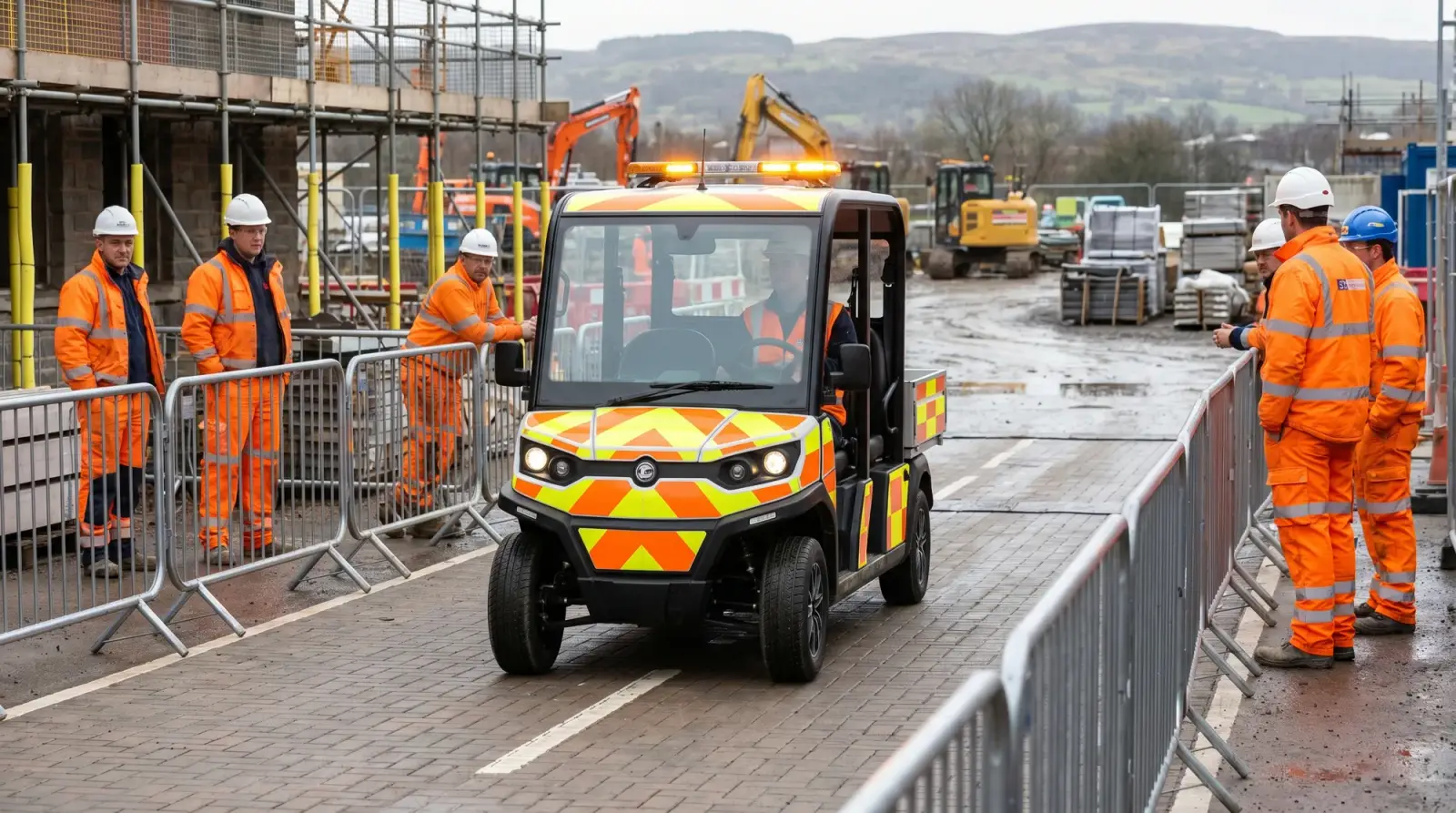
A vehicle working among the public earns its place by being visible, predictable and slow. Specify flashing beacons and reversing alarms as a baseline, high-visibility livery if the site's fleet standard calls for it, and use speed limiting to hold the vehicle to walking-pace-appropriate limits in public areas, an electric drivetrain makes a governed top speed simple and tamper-resistant. Site rules do the rest: segregated routes where the layout allows, agreed crossing points, loads secured and sheeted where wind-blown litter is a risk, and daily checks folded into the site's existing workplace-transport regime, which our workplace transport safety guide covers in detail. Operator training is short, no gears, no clutch, familiar car-like controls, which matters on sites with rotating agency staff. Councils and operators procuring for multiple HWRCs can standardise one specification across sites, with the body, tires and livery repeated fleet-wide, and quote-based pricing means the specification conversation and the price arrive together.
Frequently asked questions
Why use an electric vehicle on a recycling center?+
The duty cycle is short, constant, stop-start moves, which electric drive handles efficiently with no idling cost. Just as importantly, no exhaust means the vehicle can work covered bays, stores and enclosed transfer areas without a fume problem, and quiet running is easier to manage safely among the visiting public.
Can it work indoors and in covered bays?+
Yes. Zero exhaust emissions make electric vehicles suitable for enclosed and covered areas where running gas or diesel plant would create a workplace exposure issue. That is one of the strongest practical arguments for electric on waste sites.
What loads and towing should we specify for?+
Most HWRC moves are in the low hundreds of kilograms: consolidated materials, bins, reuse stock and equipment. Specify the bed for your typical move, a tipper if loose material features daily, and a towing rating that covers your bin and cage trailers. Describe the workflows and we will size it.
What about punctures from nails and glass?+
Specify puncture-resistant or solid tires from new. On a recycling center the debris that destroys pneumatic tires is part of the everyday surface, and tire specification is the difference between a reliable site vehicle and one that lives on a jack.
What safety equipment should a public waste site require?+
Beacons, reversing alarms, speed limiting appropriate to public areas and high-visibility livery as the baseline, supported by segregated routes and daily checks under the site's workplace-transport arrangements. All of it can be specified on the vehicle from new.
Specify a vehicle for your site
Tell us your bays, your bins, your covered areas and your public traffic, and we will specify a vehicle, body, tires, beacons and all, priced to your site.
Related solutions
Ready to explore what we build?
See the vehicles and the setting this applies to, or get a tailored quote built around your site.

Ready to find the right golf cart?
Tell us how and where it will work and we will specify a vehicle and a tailored quote built around you. Every build comes with a 3-year warranty and a 24-hour priority call-out.
Our guides are written and reviewed by the Hawke Electric Vehicles team, the people who specify, build, deliver and support the vehicles. We focus on honest, practical advice and flag where a figure depends on the build rather than guessing.
More guides by Hawke