For an estate manager, the right electric fleet is almost never one vehicle type. It is a mix: passenger golf carts to move owners, guests and visitors, and utility vehicles to move feed, tools, timber and grounds equipment, specified against your terrain and seasons, charged from a small number of well-sited points, driven by trained staff, and budgeted on whole-life cost rather than the purchase invoice. Electric suits estates unusually well, quiet around houses, guests and livestock, no fuel store, minimal servicing, but only if the fleet is planned rather than accumulated. This guide works through the five decisions that shape it: fleet mix, terrain, charging, people and money.
- Plan a mixed fleet: passenger golf carts and utility vehicles do different jobs and substitute badly for each other.
- Specify for your worst terrain and worst season, not the driveway in June.
- A few well-sited charging points beat trailing leads from the nearest outbuilding.
- Familiarise every driver and keep records, estate staff turnover makes training a routine, not a one-off.
- Budget whole-life: electricity, servicing and batteries, not just the purchase price.
The estate fleet mix: passenger golf carts and utility vehicles
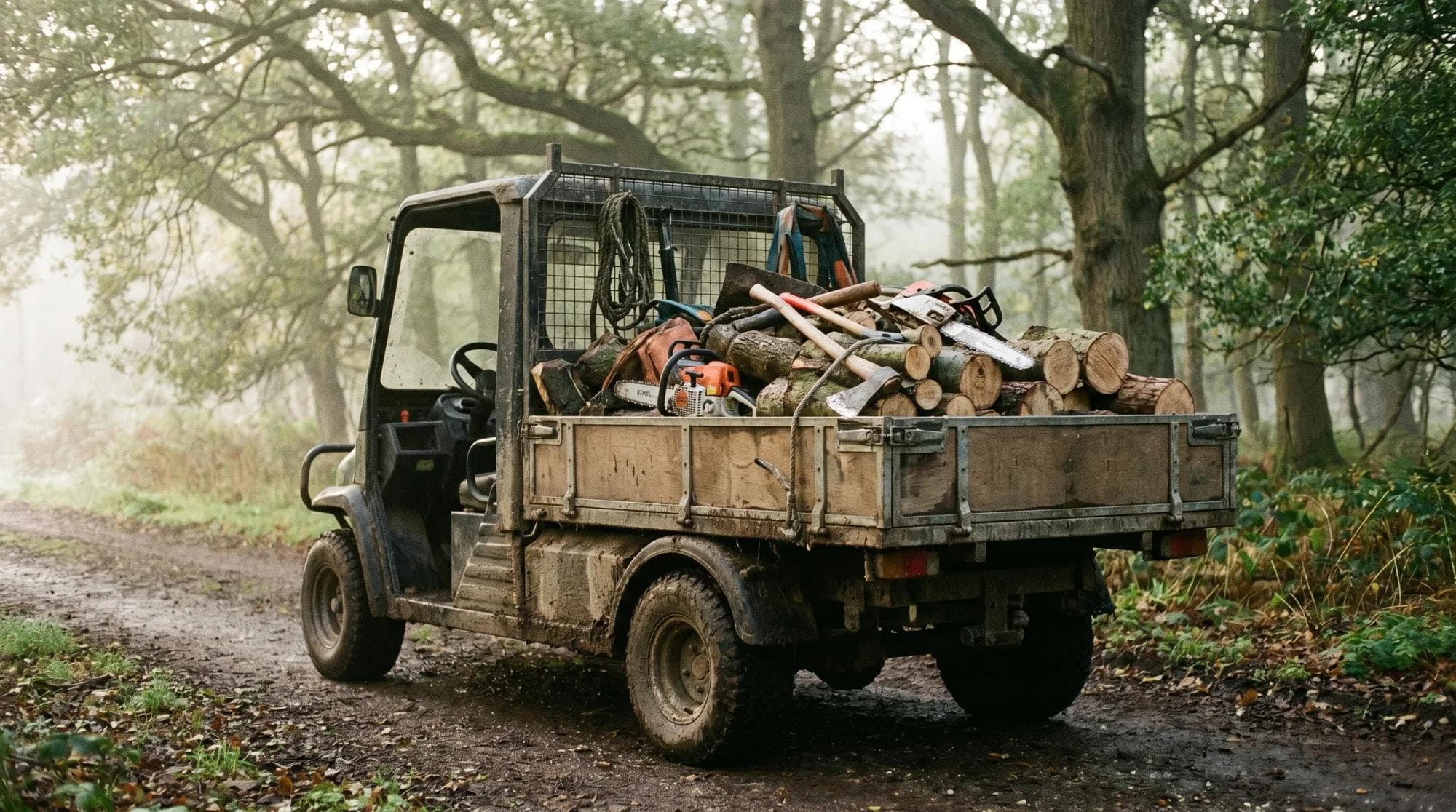
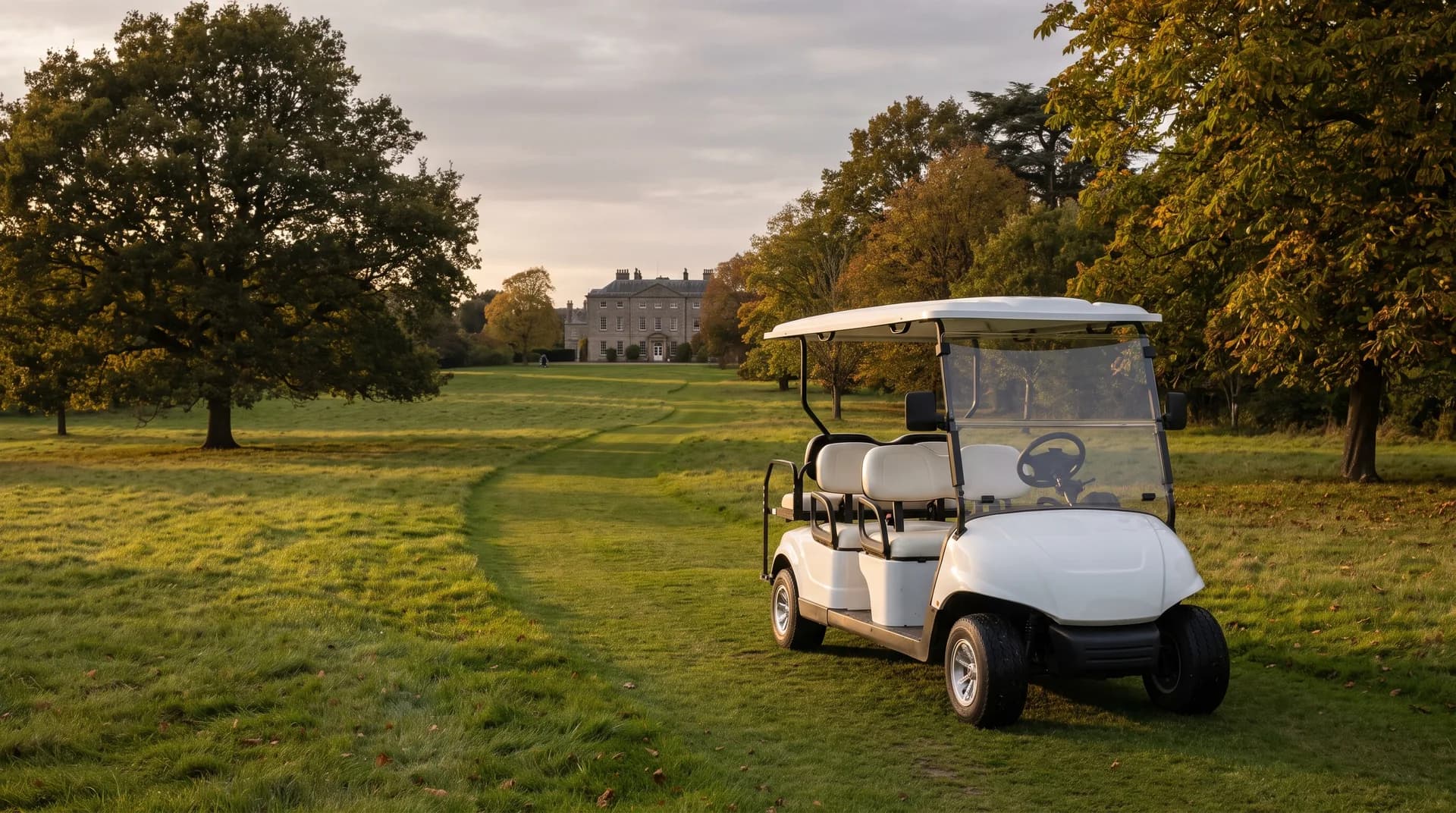
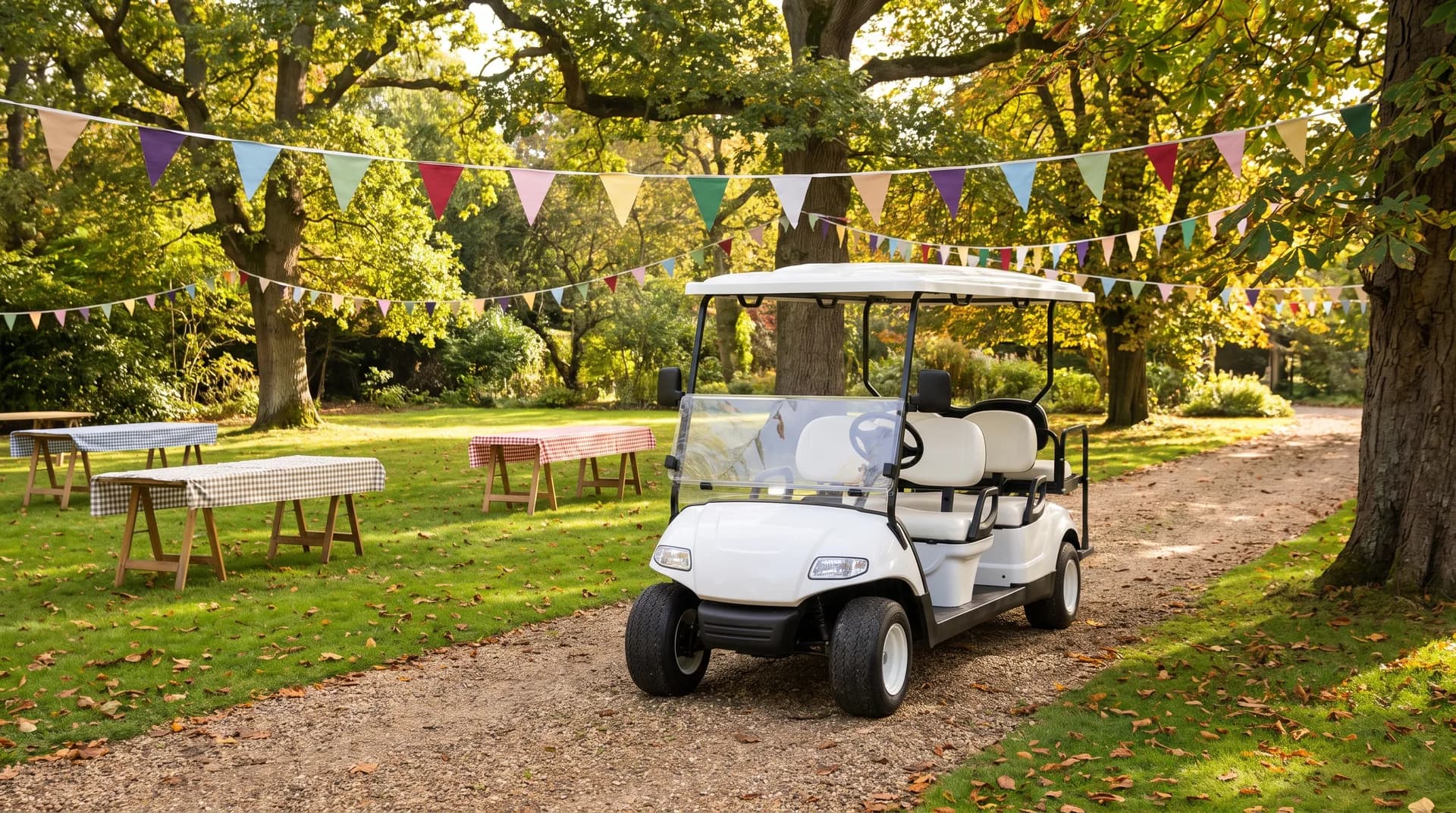
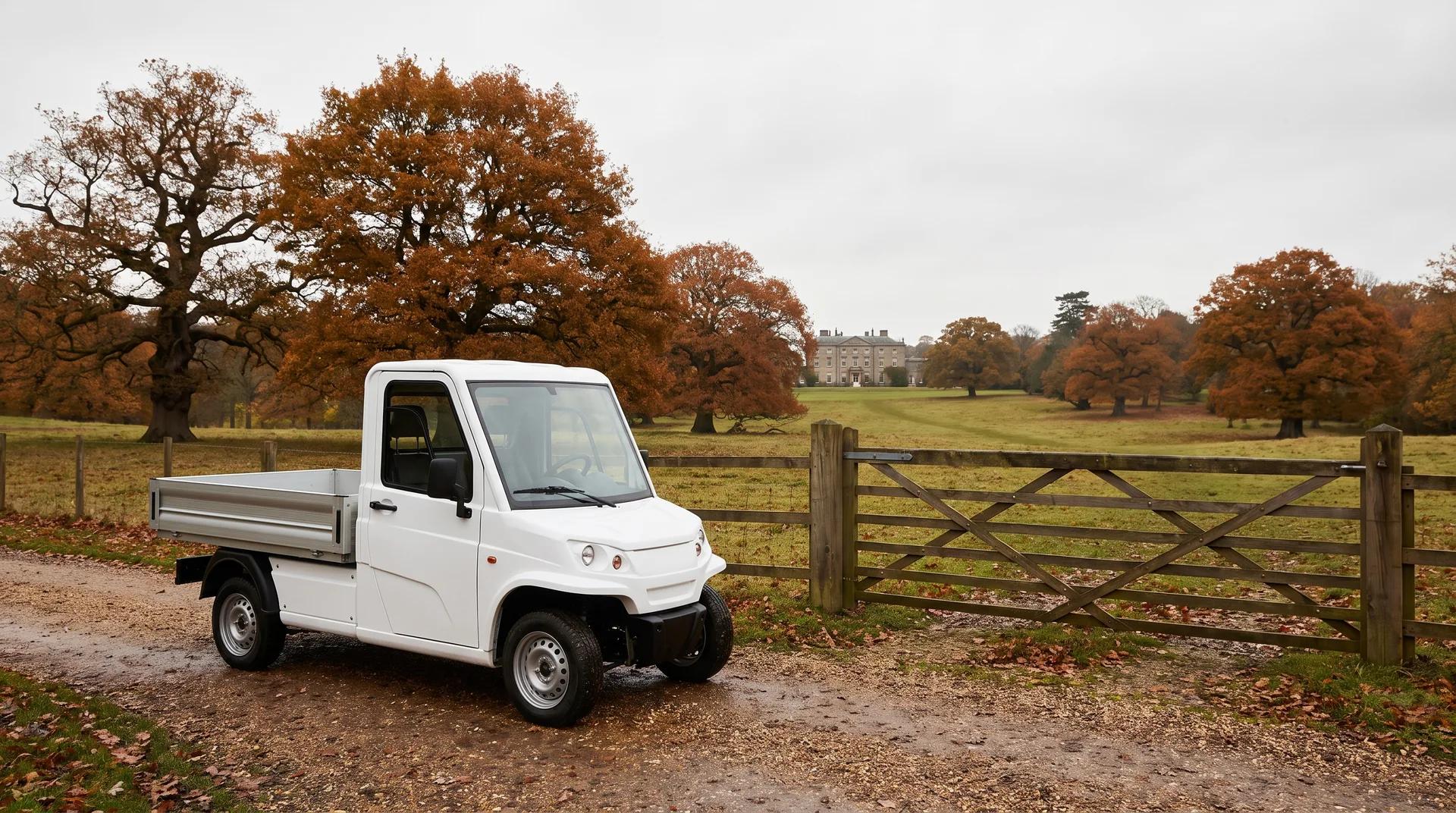
Start by listing the jobs, not the vehicles. Moving people, owners around the grounds, guests to a wedding marquee, visitors on tours, wants passenger golf carts: two-seaters for daily errands, four- to six-seaters where guests move in groups. Moving material, feed runs, fencing, mowing kit, firewood, event furniture, wants utility vehicles with a load bed, and a tipping bed earns its keep anywhere loose material moves. The two roles substitute badly: a passenger cart with sacks on its seats and a pickup ferrying guests both look like a fleet one vehicle short. Most estates land on a small mix, and our guide to choosing a utility vehicle for a country estate works through the workhorse side in detail. One quality deserves weight in both roles: electric vehicles are near-silent, which matters around houses, guests, livestock and shoots alike, as our guide to quiet vehicles for private estates explains.
Terrain and seasons: specifying estate vehicles honestly
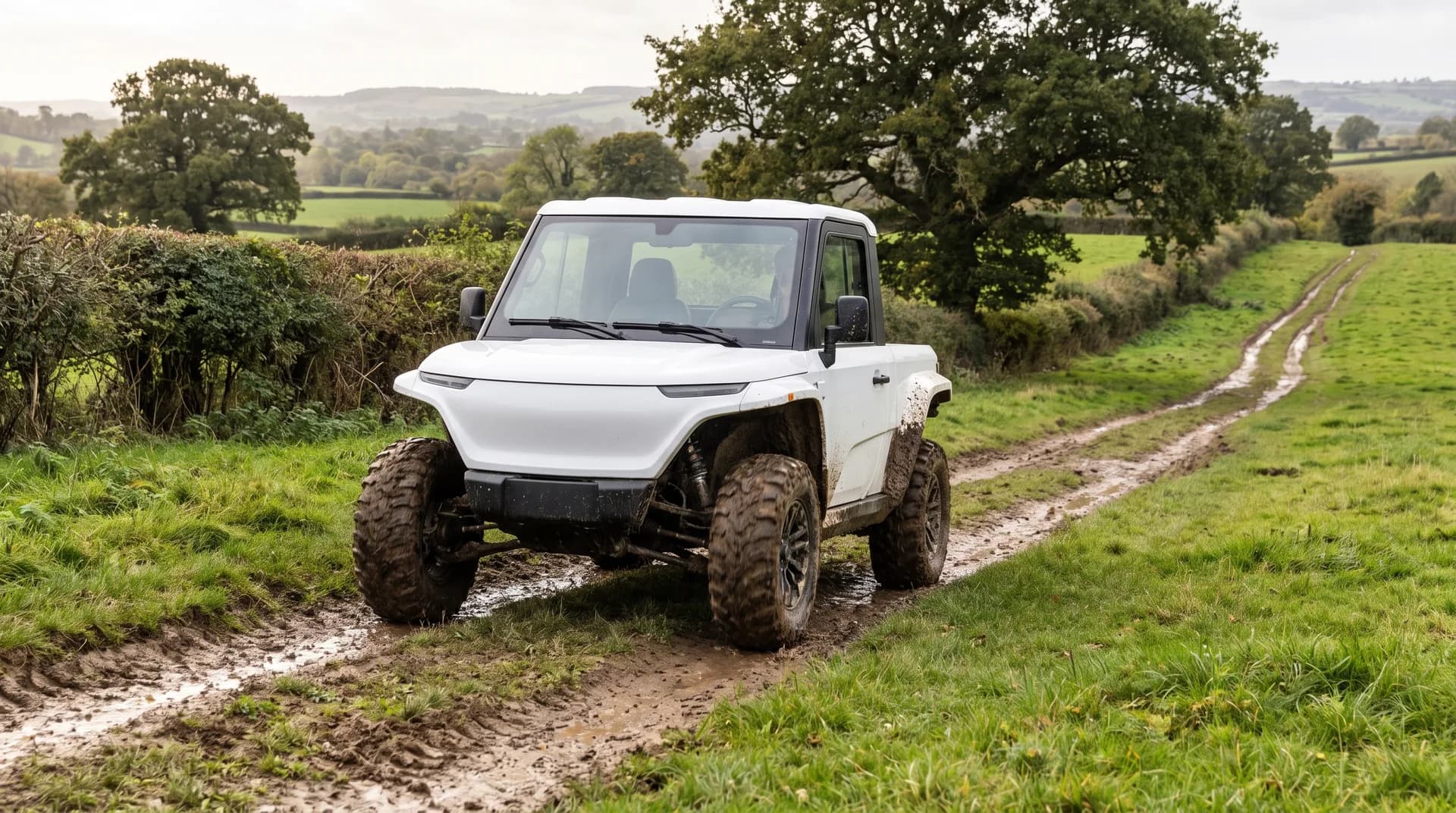
Estates punish optimistic specification. The vehicle that glides across the south lawn in June must also climb the wet grass bank in November with a full bed, so specify for your worst ground in your worst month. That means checking gradeability against your steepest working slope laden, choosing all-terrain tires where routes leave the tarmac, and valuing ground clearance on rutted tracks. Winter shortens battery range, cold packs deliver less, days are shorter and loads are often heavier, so size battery capacity with a margin beyond the summer duty cycle. Think about routes as well as vehicles: gate widths, bridge weight limits and the narrowest path a vehicle must pass set hard dimensional limits before any brochure is opened. Our guide to utility vehicles for estate terrain goes deeper on ground and drivetrain choices.
Charging infrastructure on an estate
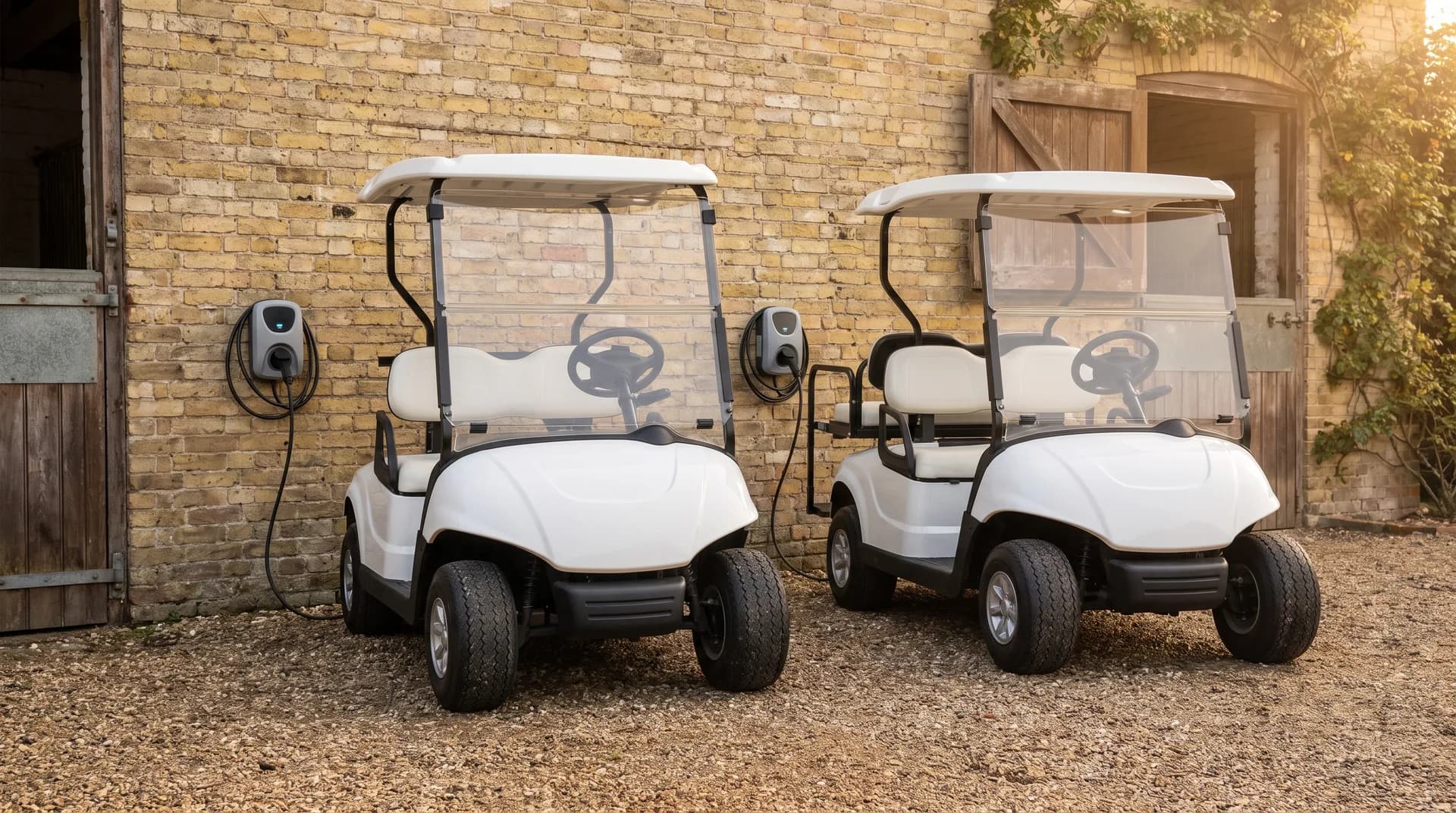
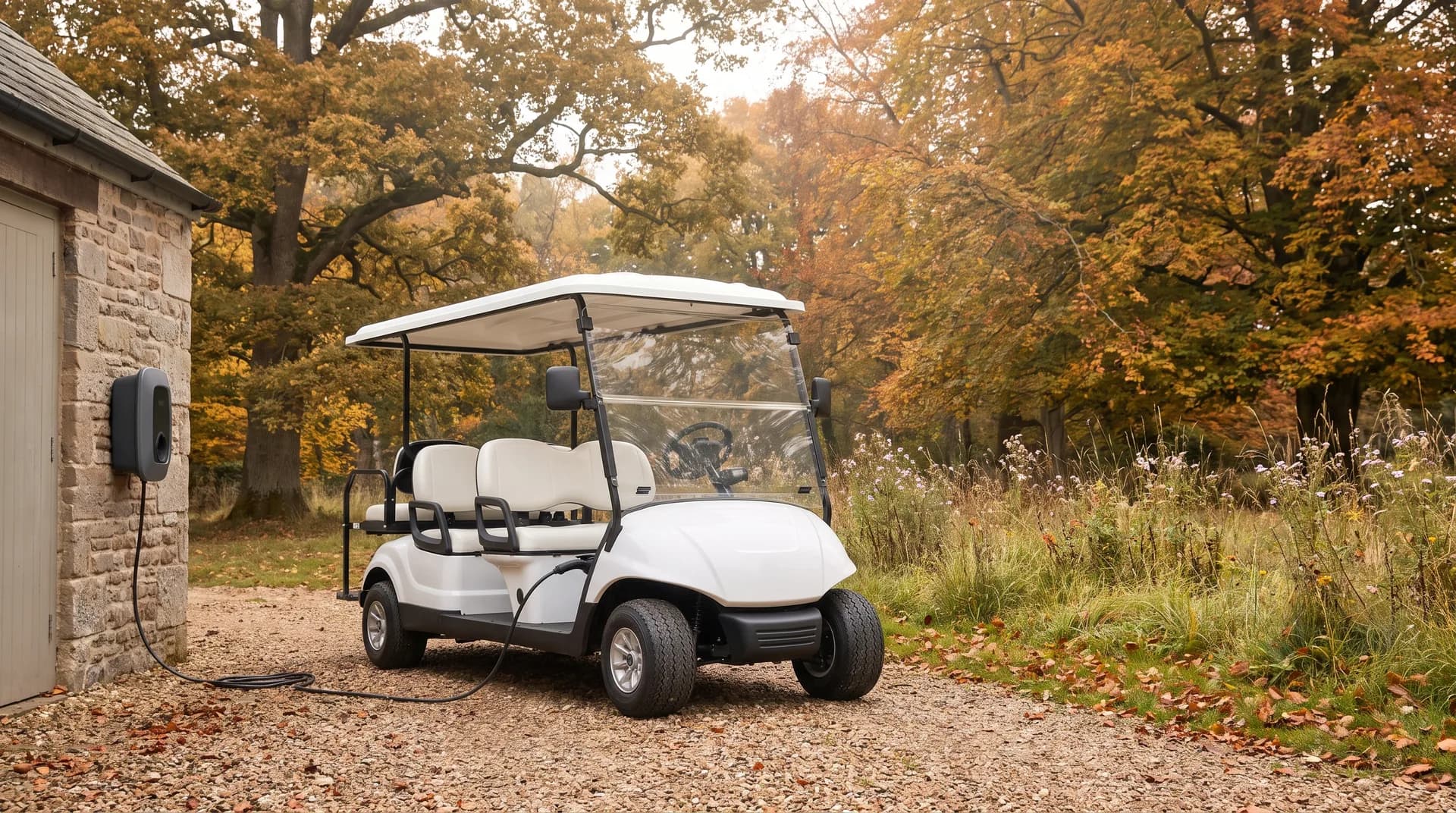
Estates have distance, and distance is where charging plans fail. A fleet that lives in one yard can charge from a bank of standard sockets on a simple overnight rota. A fleet dispersed across a large estate needs more thought: a small number of fixed charging points at the places vehicles naturally rest, the main yard, the stable block, an outbuilding near the far beat, beats trailing leads and beats vehicles limping home on their last miles. Get an electrician to confirm the supply at each point can carry the chargers you will plug in simultaneously, and put charging under cover where possible, chargers and British weather are poor companions. Most golf carts and utility vehicles charge from a standard 13-amp supply overnight, so the infrastructure cost is usually modest wiring rather than anything exotic. Our guide to charging electric golf carts on a large estate covers layouts, rotas and supply questions in detail.
Staffing, training and looking after the fleet
An estate fleet is driven by gardeners, keepers, housekeepers and seasonal staff, which makes training a routine rather than a one-off. Familiarise every driver on controls, limits and where each vehicle may go, keep a simple record, and repeat for each season's new faces. Establish a two-minute daily check, tires, brakes, battery state, new damage, and a named charging responsibility per yard. Servicing is where electric earns its keep: there is little to do, but the little matters, so book a professional service annually, or six-monthly for hard-worked machines, and time one visit for spring recommissioning. Mobile servicing suits estates particularly well, the engineer comes to the yard rather than vehicles travelling out on a trailer.
Budgeting whole-life, not purchase price
Budget an estate fleet on whole-life cost: purchase, electricity, servicing, tires and an eventual battery pack, minus resale. Electricity per mile is a fraction of fuel, and an electric drivetrain needs far less servicing than gas or diesel, so a dearer purchase often runs cheaper across a decade. Lithium packs strengthen that case on any vehicle worked daily, through longer life and more usable capacity. As a guide to entry points, our two-seat S2 starts at £11,500, the S2 Pickup with a load bed at £15,900, and passenger machines run through the S4 at £14,900 and S6 at £18,900 to the eight-seat S8 at £23,500, with every vehicle carrying a 3-year warranty and a 24-hour priority call-out line behind it. You can compare the working side of the range on our electric utility vehicles page. Buying the fleet in one specification conversation, rather than vehicle by vehicle over years, usually secures better pricing and a tidier, easier-to-maintain fleet.
Frequently asked questions
What vehicles does a typical estate fleet need?+
Most estates need a mix: one or two passenger golf carts for owners, guests and visitors, and one or more utility vehicles with load beds for grounds work. List the jobs first, people-moving and material-moving substitute badly, then size each side of the fleet against them.
Will electric golf carts cope with estate terrain?+
Yes, if specified honestly: check gradeability laden against your steepest working slope, fit all-terrain tires for off-tarmac routes, and value ground clearance on rutted tracks. Specify for your worst ground in your worst season, with battery margin for winter.
What charging infrastructure does an estate need?+
Usually less than feared. Most machines charge overnight from a standard 13-amp supply, so the plan is a small number of covered charging points where vehicles naturally rest, with the supply at each point confirmed by an electrician for the chargers it will carry simultaneously.
How should an estate budget for an electric fleet?+
On whole-life cost: purchase, electricity, servicing, tires and an eventual battery replacement, minus resale value. Electricity and servicing sit well below fuel and engine maintenance, which is why a dearer electric purchase often runs cheaper over a decade of estate work.
Should estate vehicles be bought together or one at a time?+
Together where possible. Specifying the fleet in one conversation usually secures better pricing, matched chargers and a common parts and servicing arrangement, and avoids the accumulated mixed bag of ageing vehicles that makes estate fleets expensive to keep running.
Plan your estate fleet with us
Tell us about your ground, your jobs and your buildings, and we will specify a mixed fleet, passenger and utility, with charging and servicing thought through.
Related solutions
Ready to explore what we build?
See the vehicles and the setting this applies to, or get a tailored quote built around your site.

Ready to find the right golf cart?
Tell us how and where it will work and we will specify a vehicle and a tailored quote built around you. Every build comes with a 3-year warranty and a 24-hour priority call-out.
Our guides are written and reviewed by the Hawke Electric Vehicles team, the people who specify, build, deliver and support the vehicles. We focus on honest, practical advice and flag where a figure depends on the build rather than guessing.
More guides by Hawke