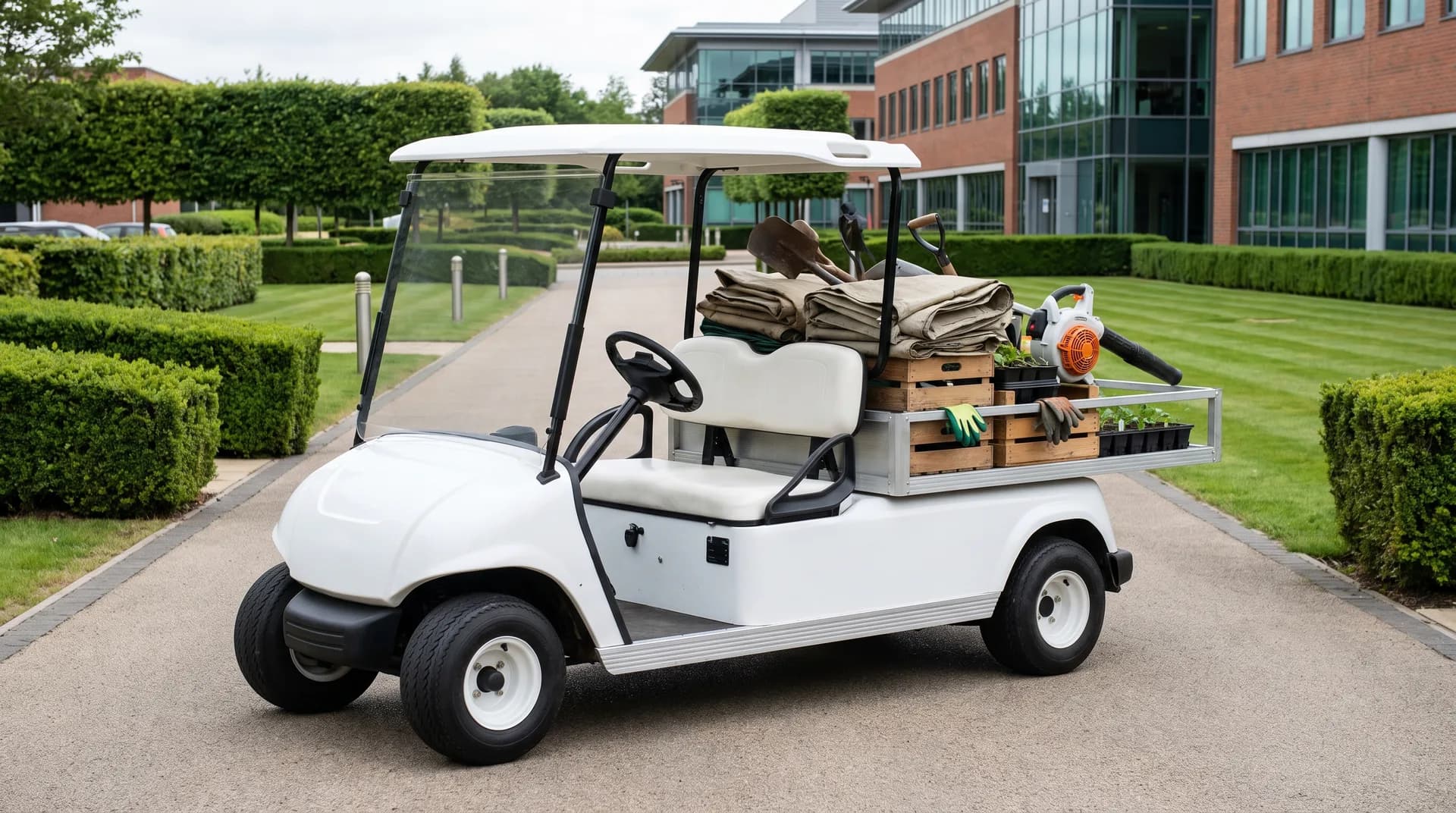
An electric tipper cart is a compact battery-powered work vehicle with a load bed that tips to empty itself. That one feature changes the economics of every loose load on a site: green waste, wood chip, sand, gravel, muck and spoil all leave the bed in seconds instead of being shovelled out by hand. Tippers sit alongside fixed-bed pickups and burden carriers in the utility family, cost more than the equivalent fixed bed, and earn that premium only when your work actually involves tipping. This guide sets out how the tipping mechanism options differ, what the payload classes mean in practice, which jobs a tipper genuinely suits, and when you should save the money and buy a pickup instead.
- A tipper pays for itself on loose loads: green waste, aggregates, muck and spoil that would otherwise be shovelled out.
- Manual tip is simpler and cheaper; electric or hydraulic tip matters once loads are heavy or frequent.
- Payload class is the first decision: compact tippers carry a few hundred kilograms, larger platforms around a metric ton.
- If most of your loads are boxed, bagged or palletised, a fixed bed does the job for less.
- Rated payload includes the load only: check bed dimensions and tipping clearance against where you work.
What an electric tipper does that a fixed bed cannot
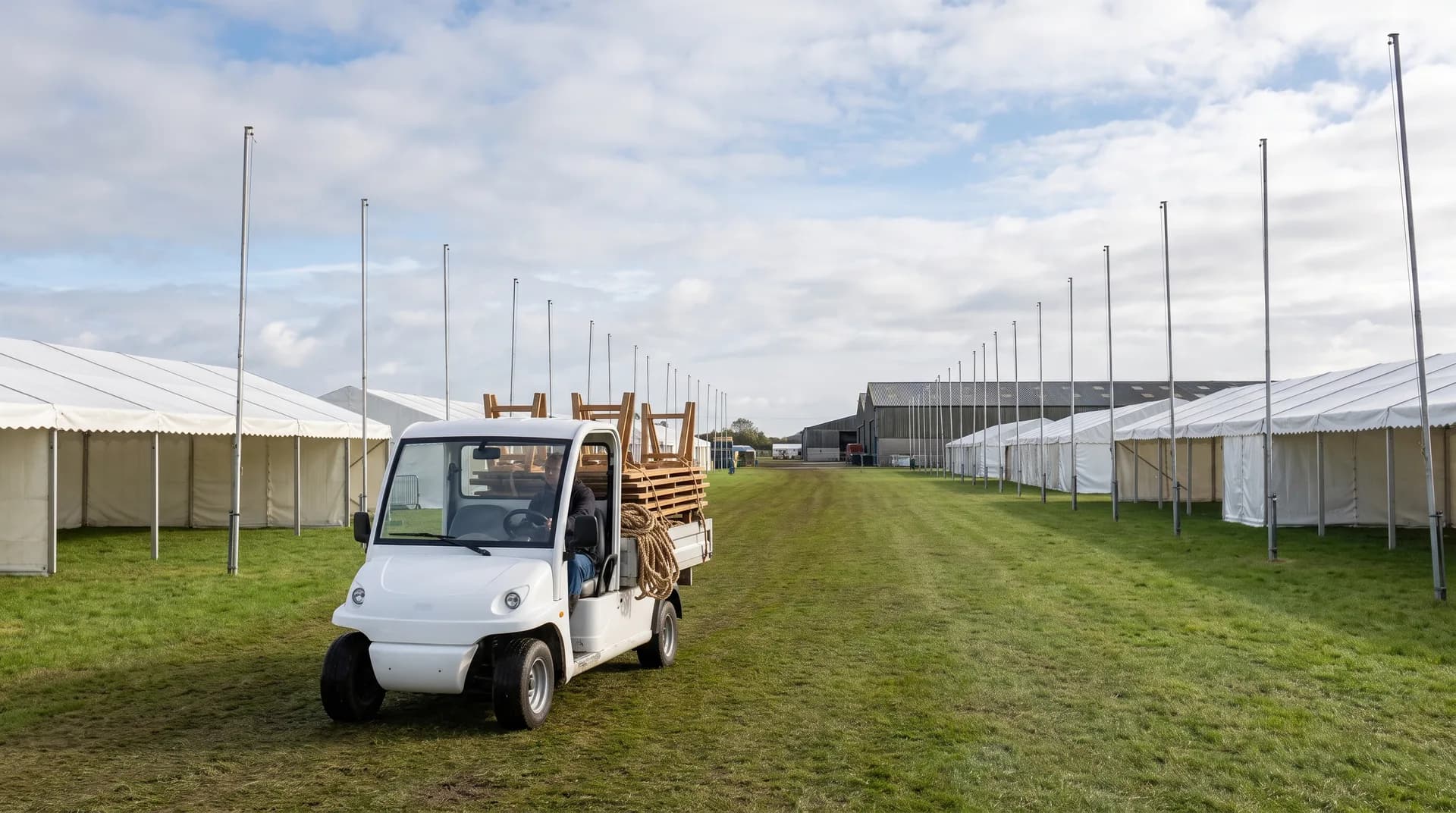
The difference shows at the unloading end. A fixed-bed pickup carries anything, but everything loose that goes in must be forked or shovelled out again, and on a grounds team doing a dozen waste runs a day that is a real labour cost and a real strain. A tipping bed raises at the front and empties over the tailboard in one motion, straight onto the heap, into the trailer or over the edge of the skip. Teams that switch report the same thing: jobs that used to be planned around the unloading, muck-outs, leaf clearance, border renovations, hedge cutting, simply stop being planned around it. Because the drivetrain is electric, all of this happens quietly and without exhaust, which is why tippers turn up in walled gardens, animal enclosures and courtyards where a diesel dumper would be unwelcome. For a grounding in the wider family these vehicles belong to, our guide to what a utility vehicle is starts from first principles.
Manual vs electric tip
Small tippers empty in one of two ways. A manual tip uses the operator's effort, sometimes gas-strut assisted, to pivot the bed: it is simple, light, cheap and has almost nothing to go wrong, and for modest loads emptied a few times a day it is all most buyers need. An electric or hydraulic tip raises the bed at the press of a switch, which becomes worth paying for as loads get heavier and more frequent: a bed carrying a few hundred kilograms of wet soil is not something anyone should be heaving over center by hand several times an hour. The honest rule is to match the mechanism to the heaviest load you tip regularly, not the average. If your heavy tipping is occasional, manual with assistance is fine; if it is daily, powered tipping is a working-condition decision as much as a convenience.
- Tipping bed
- Empties in seconds
- Fixed bed
- Shovelled or forked out by hand
- Tipping bed
- Carries them, tip unused
- Fixed bed
- Ideal, often with better bed space
- Tipping bed
- Higher for the mechanism
- Fixed bed
- Lower for the same platform
- Tipping bed
- Pivot and tip mechanism to maintain
- Fixed bed
- Nothing extra to maintain
- Tipping bed
- Grounds, estates, stables, landscapers
- Fixed bed
- Deliveries, tools, general site running
| Tipping bed | Fixed bed | |
|---|---|---|
| Loose loads (waste, aggregates, muck) | Empties in seconds | Shovelled or forked out by hand |
| Boxed and palletised loads | Carries them, tip unused | Ideal, often with better bed space |
| Purchase cost | Higher for the mechanism | Lower for the same platform |
| Complexity | Pivot and tip mechanism to maintain | Nothing extra to maintain |
| Best owner | Grounds, estates, stables, landscapers | Deliveries, tools, general site running |
Electric tipper payload classes and platforms
Tippers follow the same size logic as the rest of the utility range. Compact machines carry a few hundred kilograms through narrow gates and along garden paths, and suit walled gardens, cemeteries and sites where the route matters more than the volume. Mid-size platforms carry roughly half a metric ton to a metric ton and are the general-purpose grounds workhorses. The payload figure is the load the bed may carry, so weigh your real loads honestly, wet green waste and soil are far heavier than they look, and remember that a metric ton of capacity you never use is money spent on the wrong axis. Check bed dimensions against your barrow, bin or grab sizes, and check tipping clearance, the bed needs room to rise, against your sheds and skips. Our guide to utility vehicle sizes and payloads works through the classes in detail, and the electric utility vehicle range shows tipping and fixed-bed builds side by side. As a marker for the platform family, our S2 Pickup starts from £15,900, with tipping-bed builds quoted to specification.
When a tipper is the wrong buy
Buy the fixed bed if your loads are mostly boxed, bagged, palletised or awkward rather than loose: the tipping mechanism adds cost and a maintenance point you would rarely use, and fixed beds often give more usable, flatter bed space for the same money. Buy the tipper when loose material moves on your site week in, week out. Plenty of operations run one of each, a pickup for the general running and a tipper dedicated to waste and materials, and if you are unsure which way your work leans, a season of hire before purchase settles it with evidence rather than guesswork.
Frequently asked questions
What is an electric tipper cart?+
A compact battery-electric work vehicle whose load bed tips to empty itself, used for loose loads such as green waste, aggregates, muck and spoil. It works quietly and without exhaust, so it suits gardens, courtyards, stables and enclosed sites.
Should I choose manual or electric tip?+
Match the mechanism to the heaviest load you tip regularly. Manual tip, often gas-strut assisted, suits modest loads emptied a few times a day. Electric or hydraulic tip is worth it once heavy tipping is frequent, both for speed and for the operator's back.
How much can a small electric tipper carry?+
Compact machines carry a few hundred kilograms; larger platforms carry roughly half a metric ton to a metric ton. Weigh your real loads, wet soil and green waste are heavier than they look, and buy the class your work actually needs.
How much does an electric tipper cost in the UK?+
Tipping-bed builds are quoted to specification because payload, battery and mechanism all move the figure. As a marker for the platform family, our S2 Pickup starts from £15,900, with the tipping bed priced as part of a tailored quote.
Is a tipper better than a fixed-bed pickup?+
Only if loose loads are a regular part of your work. For boxed, bagged or palletised loads a fixed bed does the same carrying for less money and with nothing extra to maintain. Many sites run one of each.
Specify your tipper
Tell us what the vehicle has to carry, tip and climb, and we will specify the right platform and mechanism and price it properly.

Ready to find the right golf cart?
Tell us how and where it will work and we will specify a vehicle and a tailored quote built around you. Every build comes with a 3-year warranty and a 24-hour priority call-out.
Our guides are written and reviewed by the Hawke Electric Vehicles team, the people who specify, build, deliver and support the vehicles. We focus on honest, practical advice and flag where a figure depends on the build rather than guessing.
More guides by Hawke