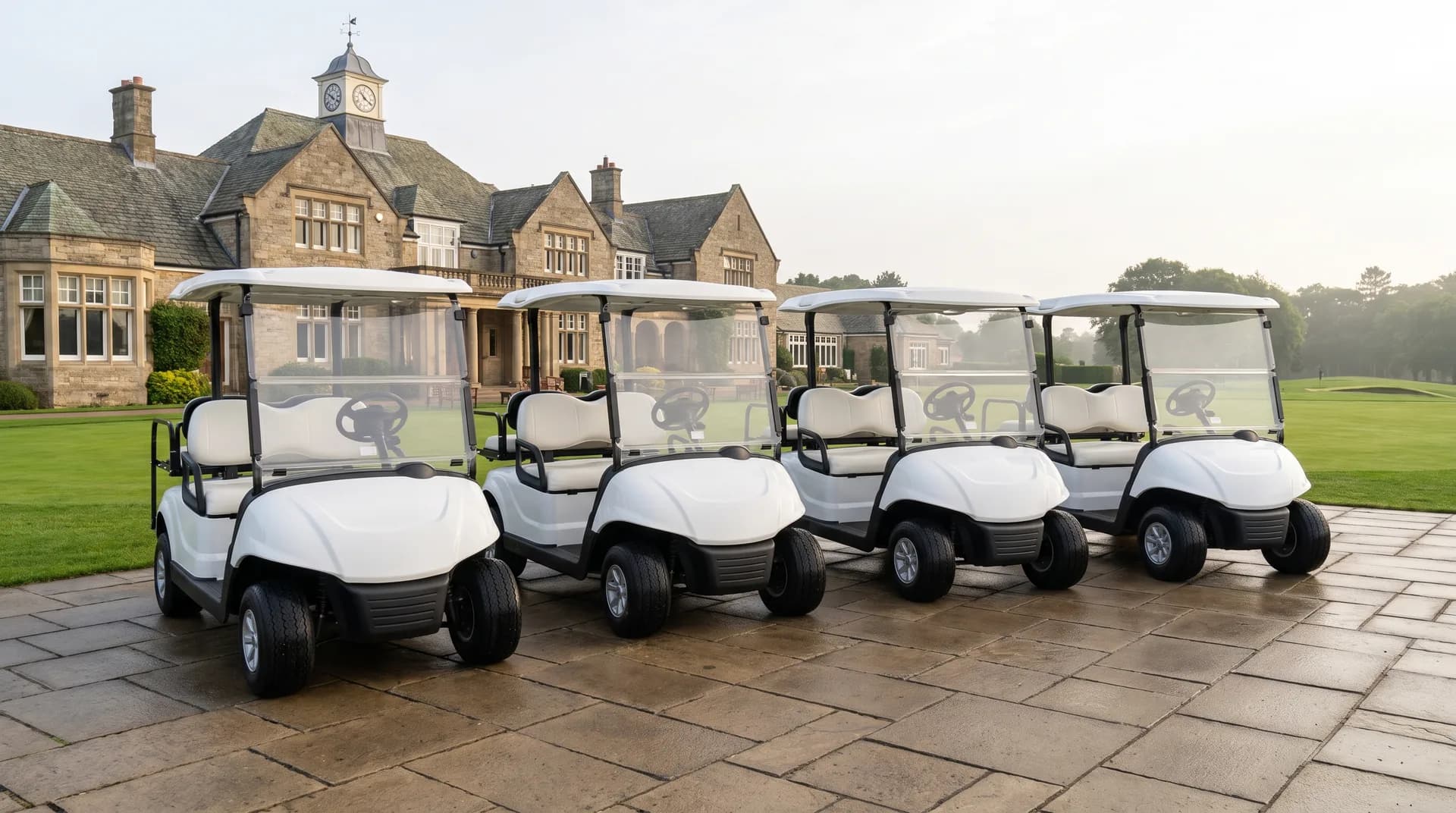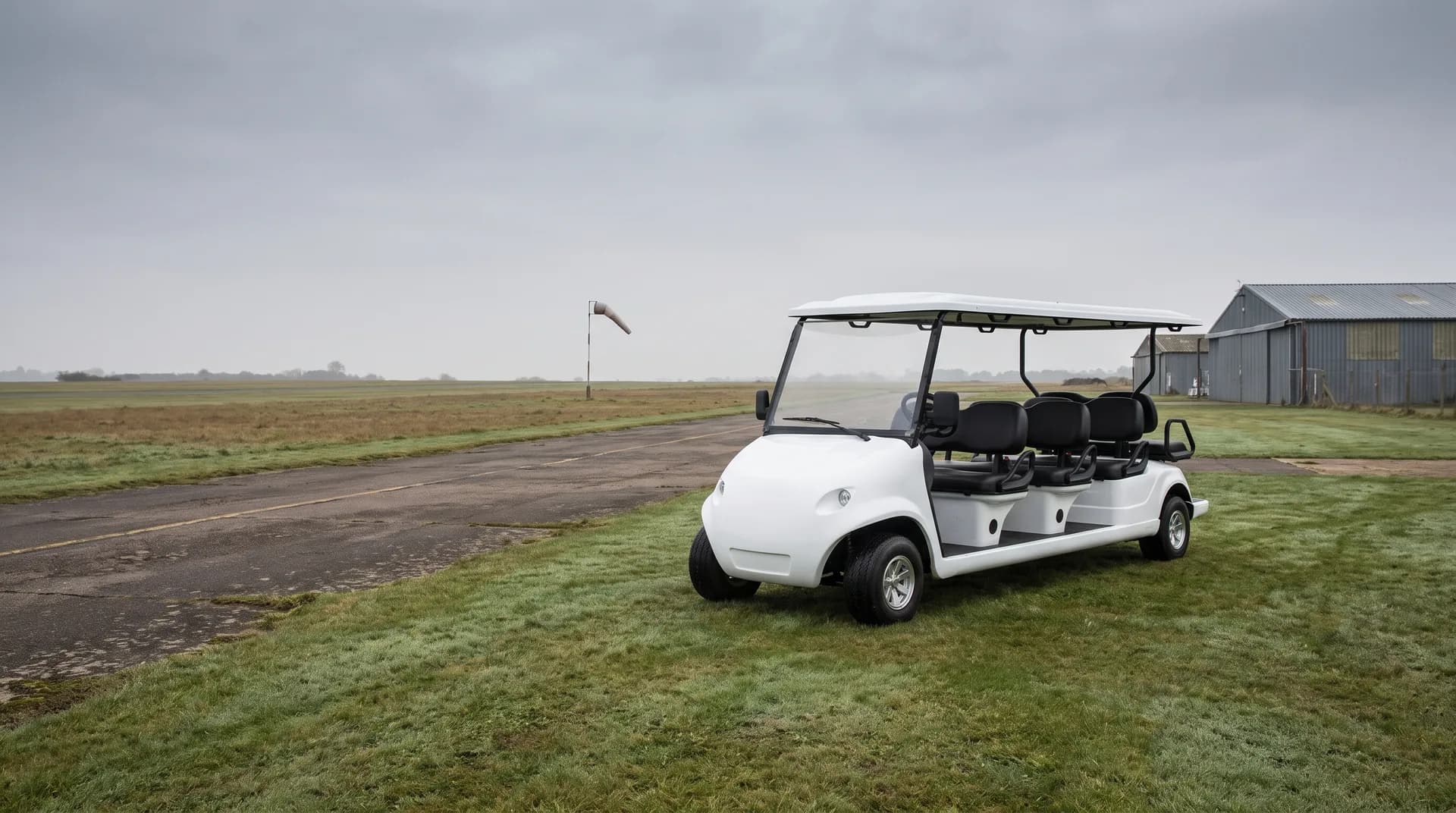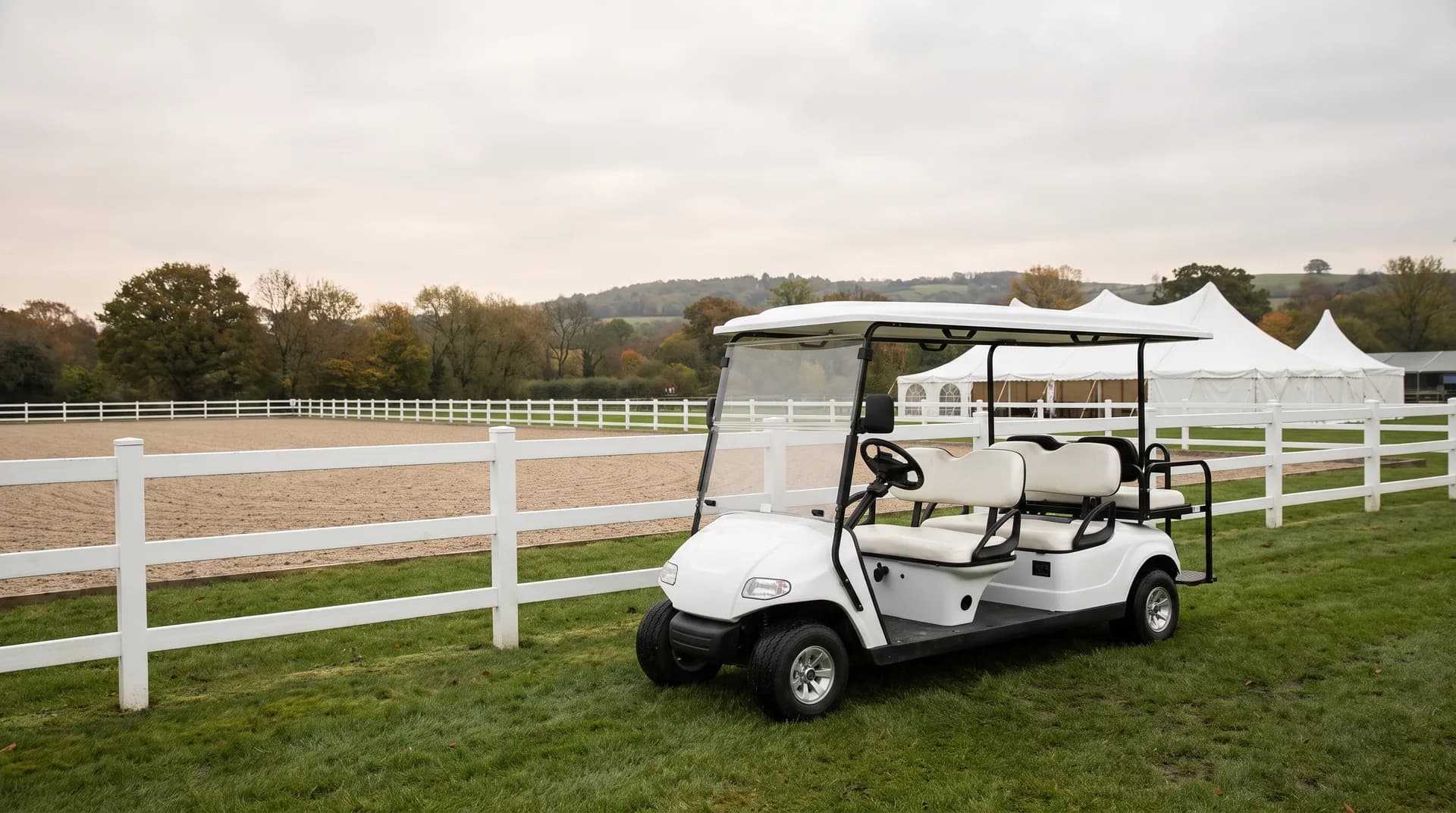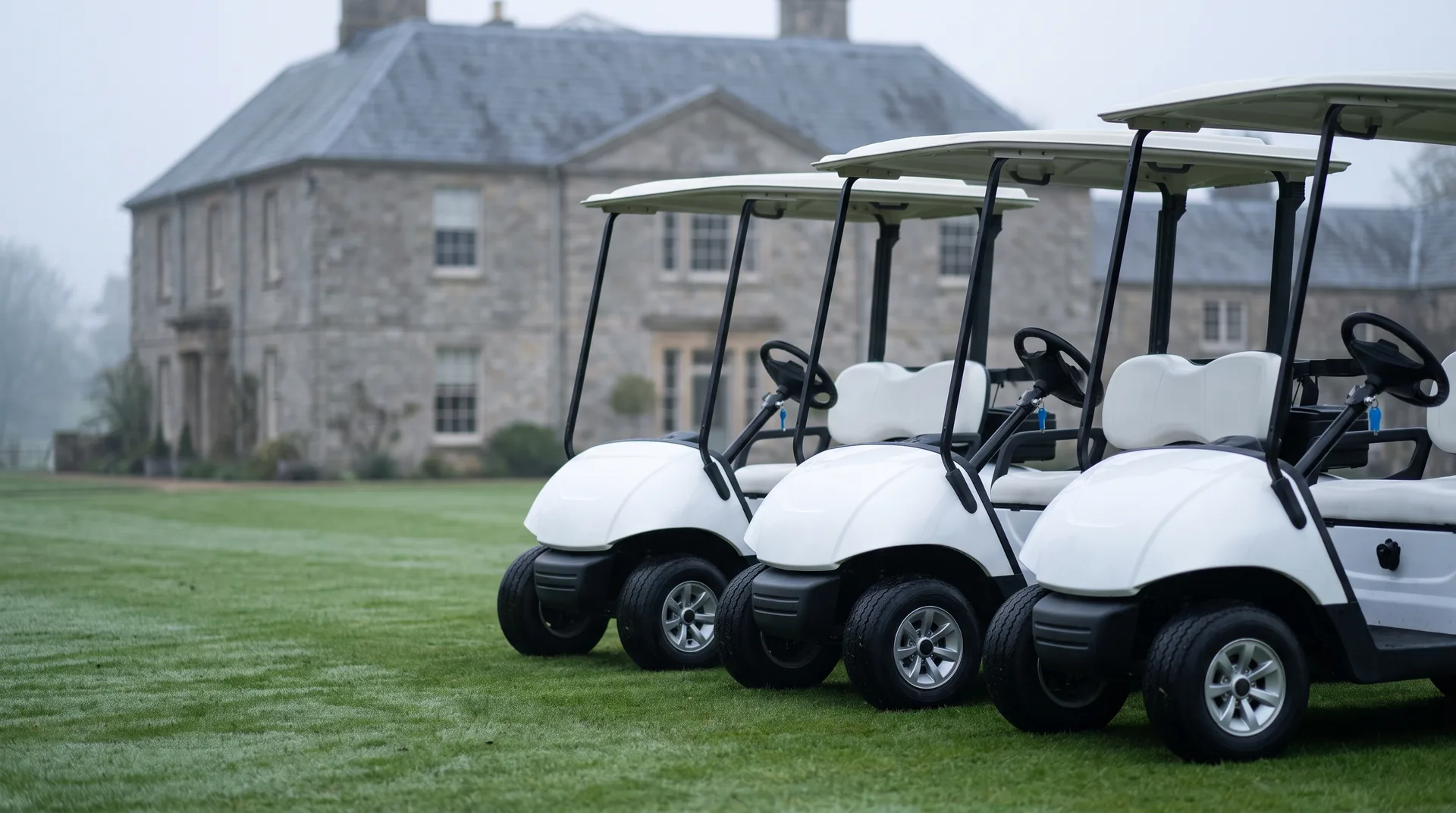
A golf cart fleet handover done properly has six parts: a structured commissioning day when the vehicles arrive, driver familiarisation for everyone who will hold a key, a charging rota that matches the fleet to its sockets, a daily-check culture established from day one, key control so you always know who is driving what, and a simple incident-reporting route that staff will actually use. Most fleet problems that surface in month six, flat batteries, kerbed wheels, an unreported knock that becomes a claim, trace back to a handover that skipped one of these. This guide sets out what to do in the first week so the fleet largely runs itself afterwards.
- Commissioning day is more than delivery: every vehicle checked, charged and signed for before it works.
- Familiarise every driver, golf carts are simple, which is exactly why untrained staff have accidents in them.
- A written charging rota prevents the classic failure: everyone assumed someone else plugged them in.
- Daily checks take two minutes per vehicle and catch faults while they are cheap.
- Key control and easy incident reporting turn 'someone hit something' into a managed event.
Commissioning day: the start of the fleet handover
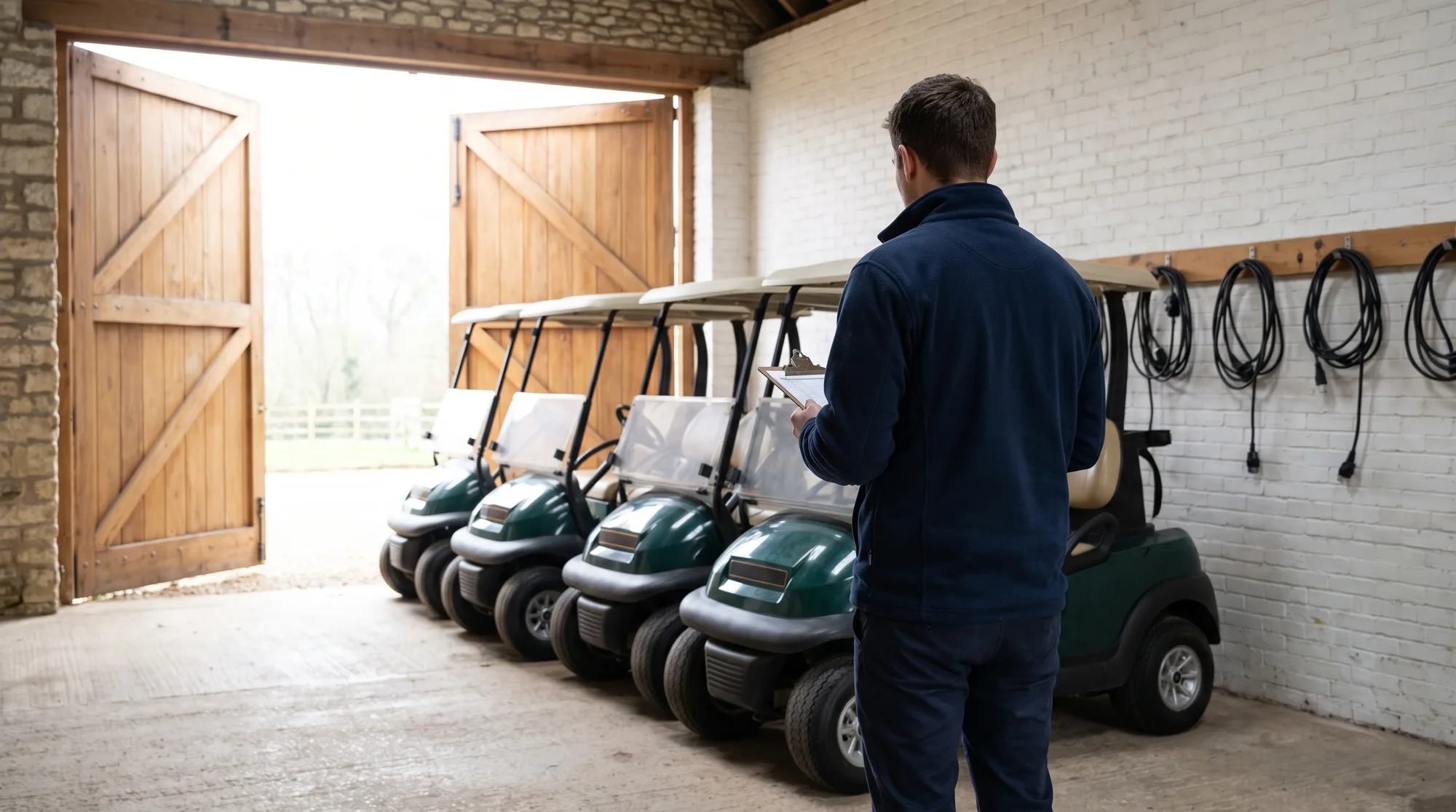
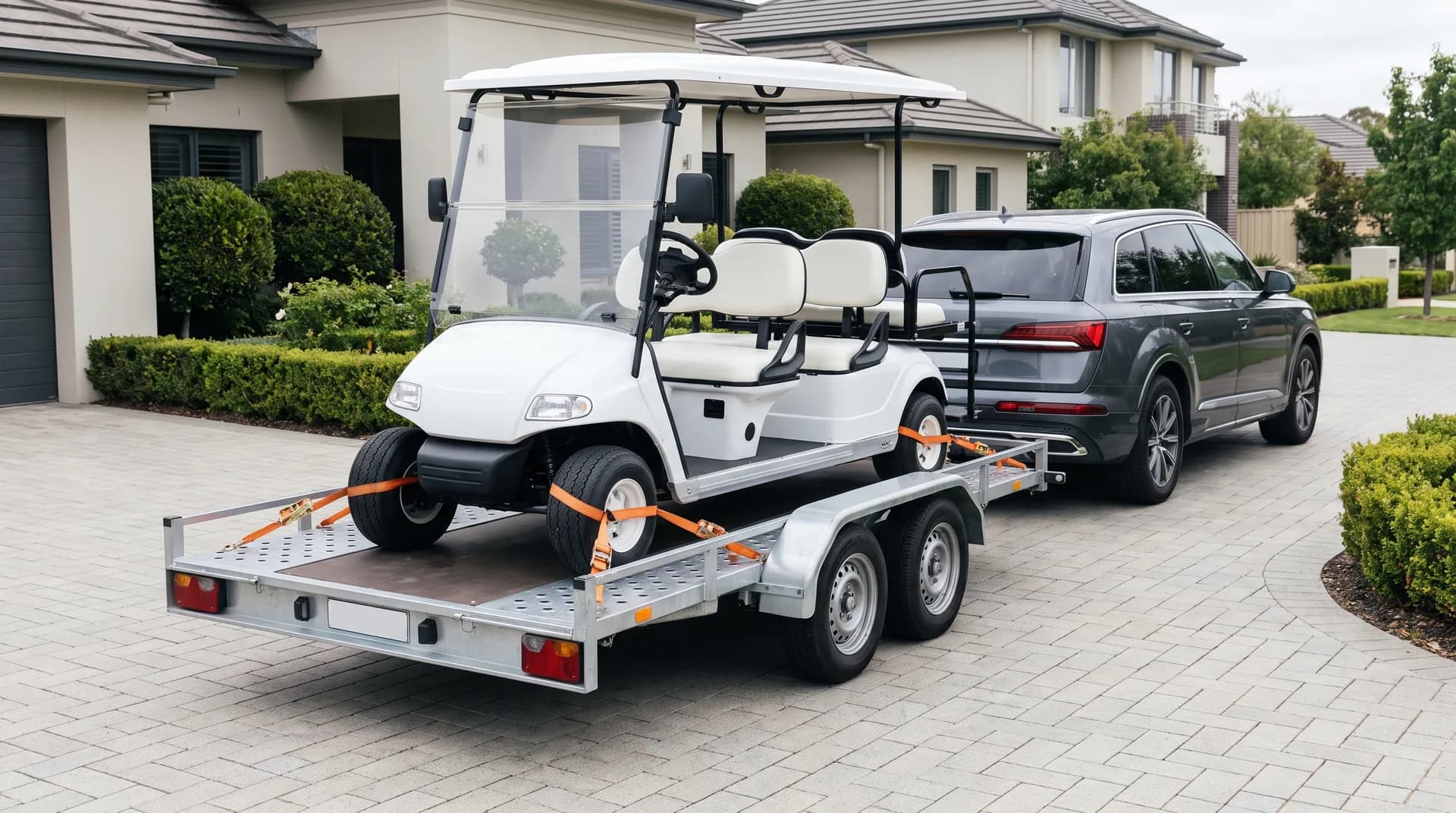
Handover starts when the transporter arrives, and the worst thing you can do is wave the driver off and let staff swarm the new vehicles. Walk each machine off with the supplier: check it against the order, inspect for transit damage, confirm chargers, keys and documents are all present, and record chassis or serial numbers against your asset list. Then charge every vehicle fully before its first shift, packs are rarely delivered at full charge, and a first day that ends in a flat battery sets exactly the wrong tone. Agree with the supplier who is doing what during commissioning: a good handover includes a walkthrough of controls, charging and basic care with your senior staff present, not just a signature on a delivery note. Our guide to delivery and commissioning covers this stage in more detail, and if you are still sizing the fleet itself, the range spans two-seat golf carts to eight-seat people movers and load-bed utility vehicles.
Staff training: familiarisation for every driver
Golf Carts are easy to drive, and that is precisely the risk: staff assume no instruction is needed, and most fleet incidents involve someone who was never shown the vehicle. Familiarisation does not need to be elaborate. A structured half-hour per group covers the controls, forward and reverse selection, the parking brake and why it is used on every stop, load and passenger limits, where the vehicle may and may not be driven on your site, speed around pedestrians, and how to plug in and read the charger. Have each driver actually drive: pull away, stop, reverse, park on a slope. Keep a simple record of who has been familiarised and when, both for refreshers and because, for workplace vehicles, training records are part of your duties under PUWER, which our fleet compliance guide explains. Repeat the exercise for seasonal staff every year, and make it clear that an unfamiliarised colleague borrowing a key is a breach, not a favour.
Charging rotas, daily checks and the routines that stick
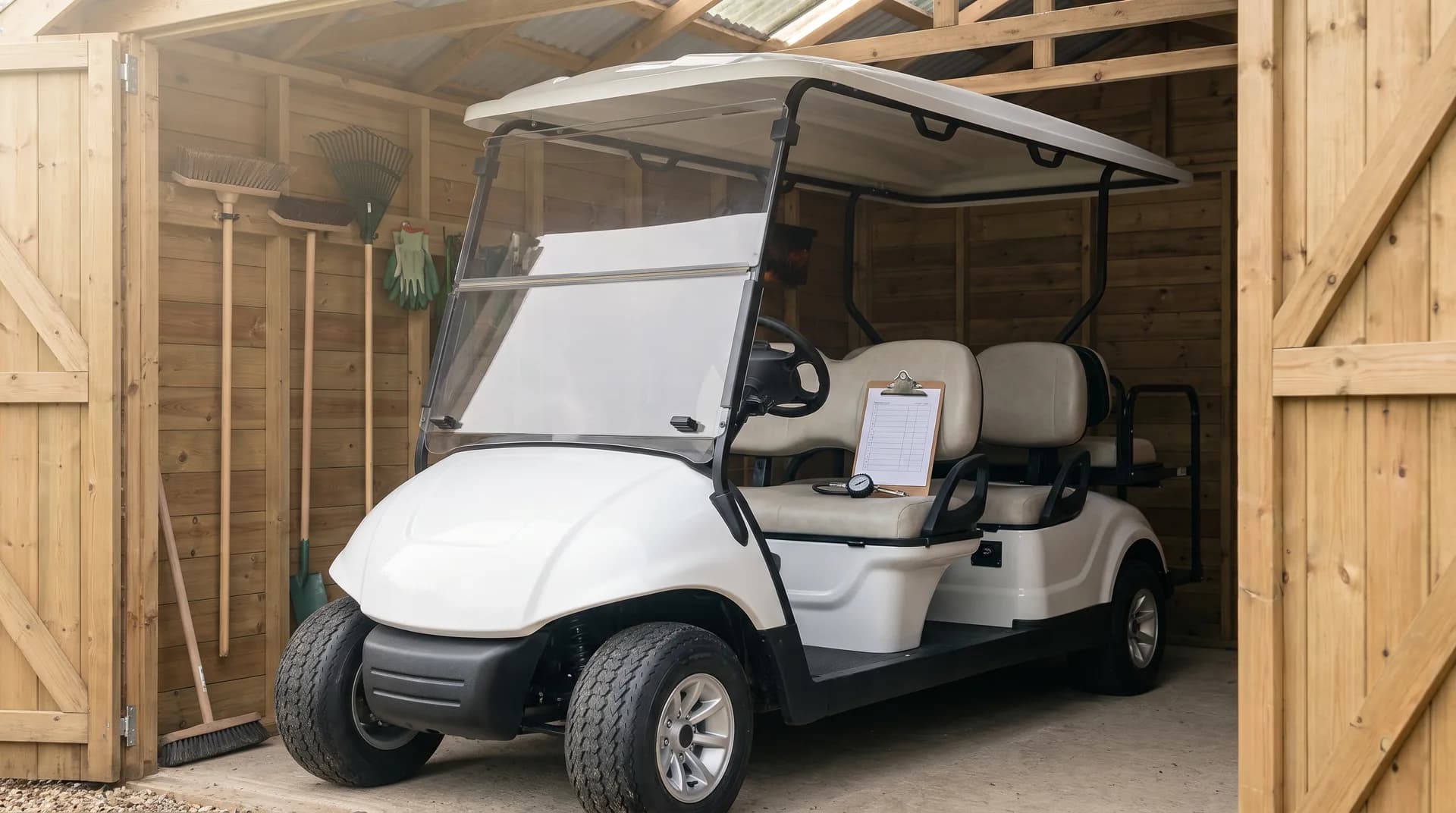
Charging fails as a shared assumption and works as a named responsibility. Write a rota that says which vehicles charge where, when, and who plugs them in and checks the chargers have started, and match it to your electrical capacity, if six machines share four sockets, the rota staggers them rather than leaving it to chance. Overnight charging after the day's work suits most operations. Alongside it, establish the daily check from day one: two minutes per vehicle before first use, covering tires, brakes, steering, battery state and any new damage, using something like our daily inspection checklist on a clipboard or a phone. The habit matters more than the paperwork; a fleet that checks daily catches the loose terminal and the soft tire while they are trivial. Fold the routine into your wider running of the fleet, which our fleet management guide covers end to end.
Key control and incident reporting
Key control is the difference between a fleet and a free-for-all. Keep keys on a board or in a cabinet with a signing-out record, issue them to familiarised drivers only, and collect them at end of shift, a missing cart at 7 am is a much smaller mystery when the board says who had it. Incident reporting completes the loop. Staff will only report knocks, kerb strikes and near-misses if reporting is quick and blame-light, so give them a one-minute route, a form or a message to a named person, and make the message clear: report everything, because an unreported knock becomes an undiagnosed steering fault, and an unreported near-miss repeats until it is a claim. Review reports monthly, fix patterns rather than people, and feed anything mechanical straight into the maintenance diary.
- Owner
- Manager + supplier
- Done when
- Every vehicle checked, charged, on the asset list
- Owner
- Supervisor
- Done when
- Every driver trained and recorded
- Owner
- Named per shift
- Done when
- Written rota matched to sockets
- Owner
- Each driver
- Done when
- Two-minute check before first use, logged
- Owner
- Duty manager
- Done when
- Signing-out board in use
- Owner
- All staff
- Done when
- One-minute route known to everyone
| Element | Owner | Done when |
|---|---|---|
| Commissioning | Manager + supplier | Every vehicle checked, charged, on the asset list |
| Familiarisation | Supervisor | Every driver trained and recorded |
| Charging rota | Named per shift | Written rota matched to sockets |
| Daily checks | Each driver | Two-minute check before first use, logged |
| Key control | Duty manager | Signing-out board in use |
| Incident reporting | All staff | One-minute route known to everyone |
Frequently asked questions
Do staff need a licence to drive a golf cart at work?+
Not on private sites, but employers still have a duty to ensure staff are trained and competent on any workplace vehicle. Documented familiarisation, controls, limits, site rules and a supervised drive, is the practical standard, with records kept and refreshed for seasonal staff.
How long does cart driver familiarisation take?+
A structured half-hour per small group is usually enough for a standard cart: controls, parking brake, limits, site rules, charging, plus each driver completing a short supervised drive including reversing and parking on a slope. Record who attended and repeat for new starters.
What should a cart charging rota include?+
Which vehicles charge at which points and when, who physically plugs in and confirms each charger has started, and how the rota staggers vehicles if sockets are fewer than machines. Overnight charging after the last shift suits most operations best.
What goes in a daily cart check?+
Tires, brakes, steering, battery state of charge, lights and beeper where fitted, and a look over for new damage, about two minutes per vehicle before first use, logged. It catches faults while they are cheap and is part of sensible workplace-equipment practice.
Does the supplier help with handover and training?+
A good one does. Commissioning should include a walkthrough of controls, charging and care with your senior staff, and support afterwards matters just as much: every new Hawke fleet carries a 3-year warranty with a 24-hour priority call-out line behind it.
Planning a new cart fleet?
We deliver, commission and hand over fleets with your staff walked through the vehicles, and support them afterwards. Tell us about your site and we will quote.
Related solutions
Ready to explore what we build?
See the vehicles and the setting this applies to, or get a tailored quote built around your site.

Ready to find the right golf cart?
Tell us how and where it will work and we will specify a vehicle and a tailored quote built around you. Every build comes with a 3-year warranty and a 24-hour priority call-out.
Our guides are written and reviewed by the Hawke Electric Vehicles team, the people who specify, build, deliver and support the vehicles. We focus on honest, practical advice and flag where a figure depends on the build rather than guessing.
More guides by Hawke