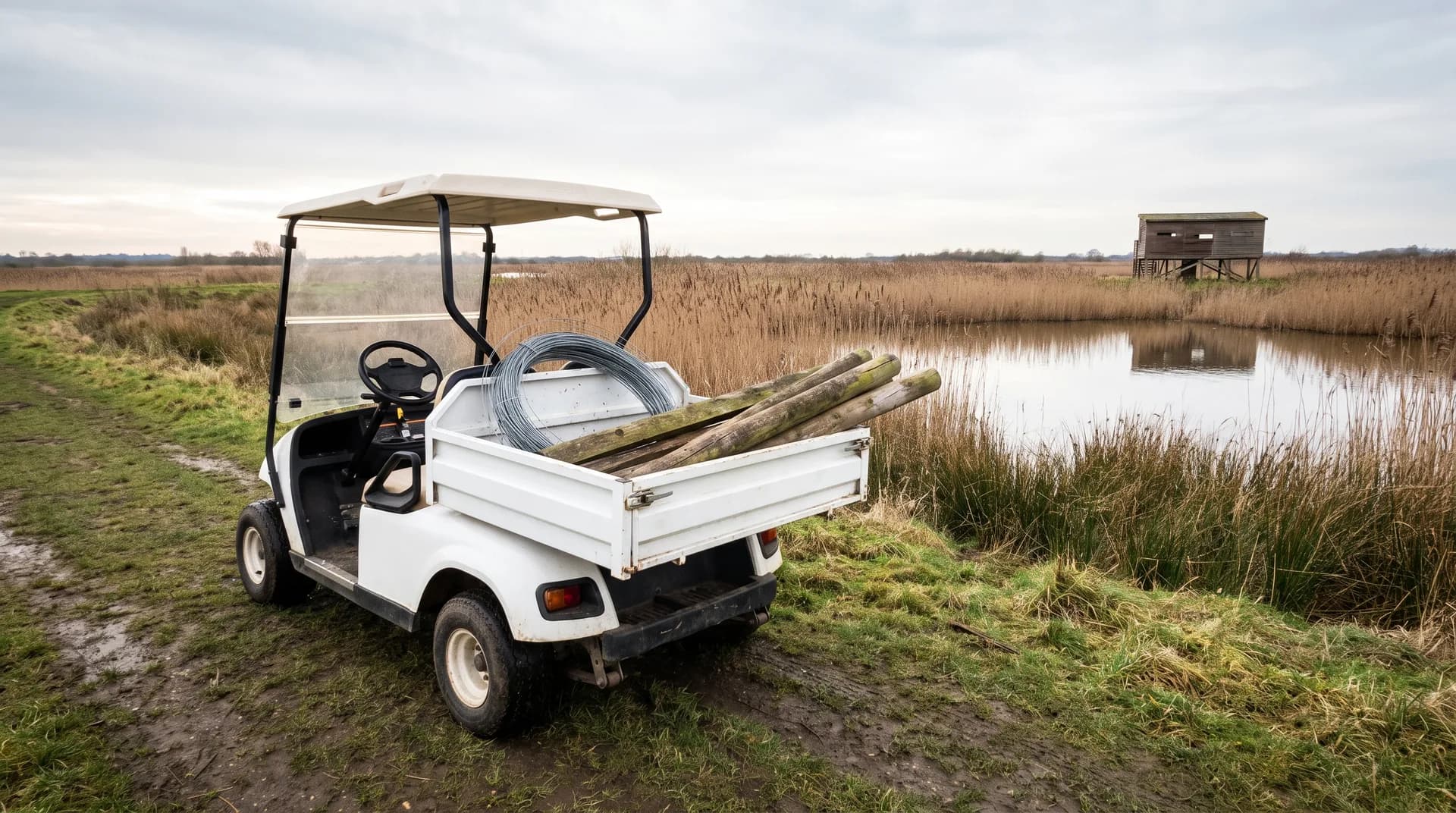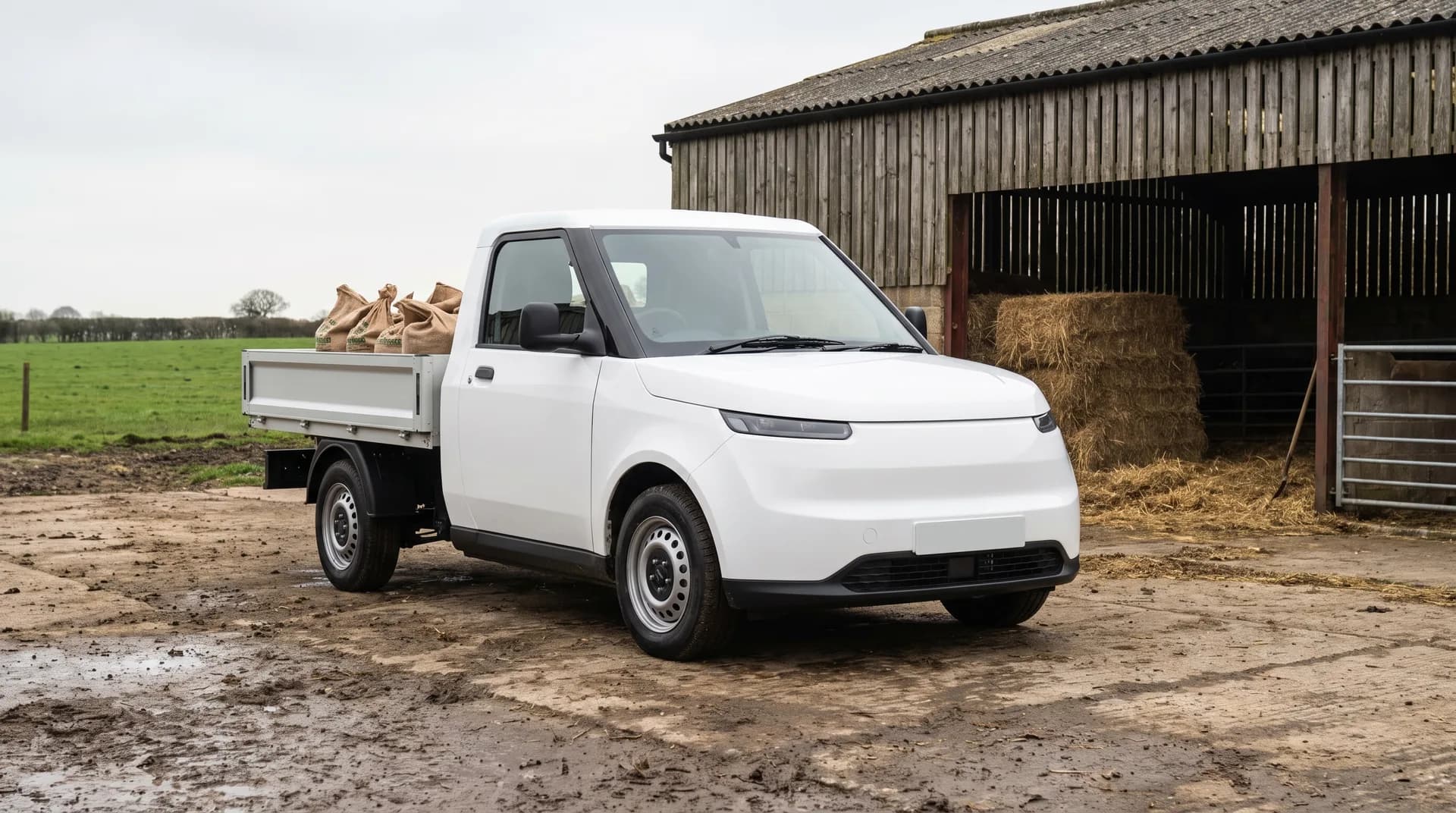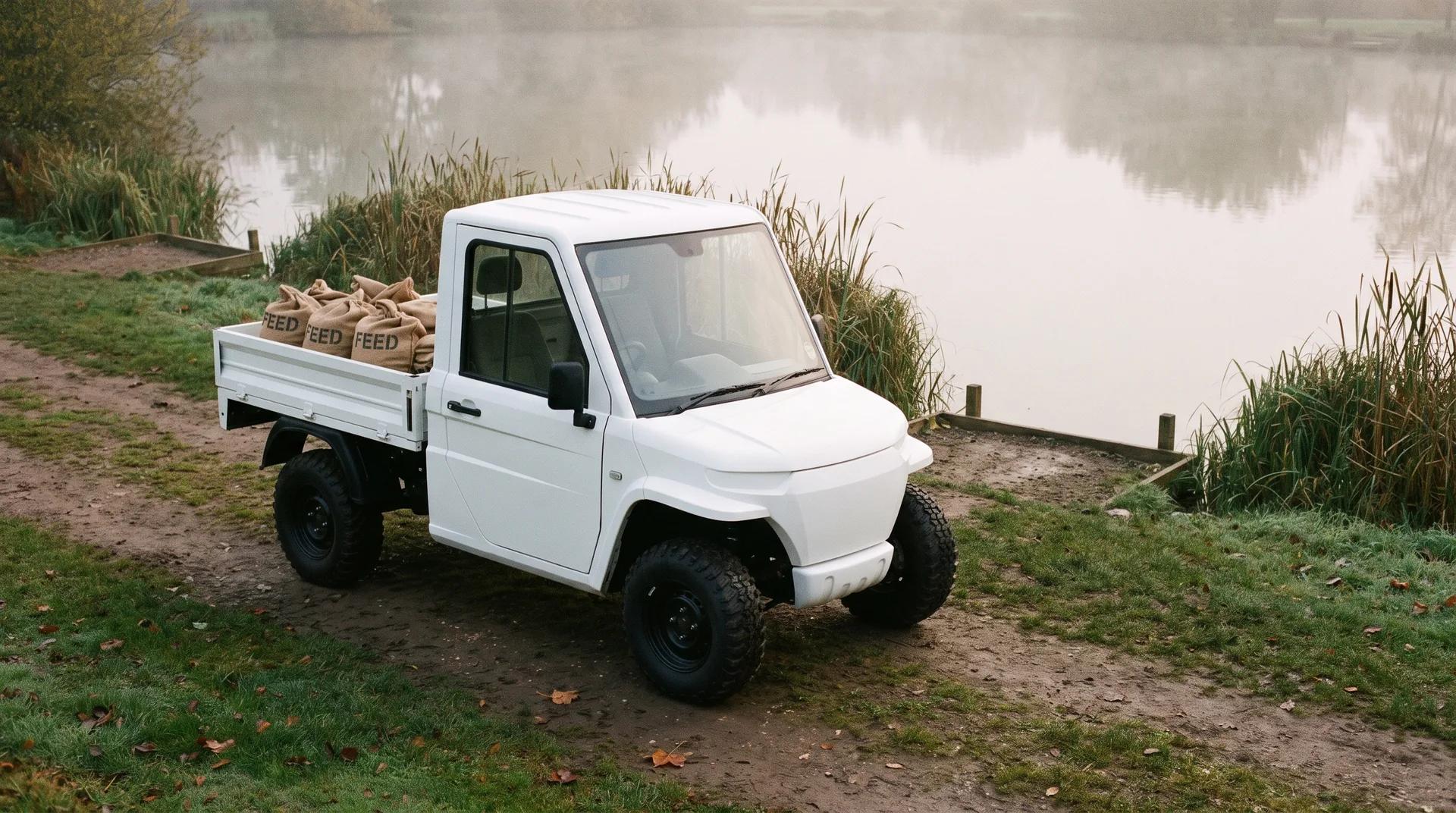
An electric utility vehicle suits a fishery for three reasons that matter every single day on the bank. It carries the loads a lake site generates, feed sacks, tackle, tools, gravel and the endless bits of swim maintenance, without anyone barrowing them a peg at a time. It does so on soft bankside ground that a heavier vehicle would churn into ruts by November. And it is quiet, which on a water where people have paid to sit in peace, and where wildfowl nest a rod length from the path, is not a nicety but part of the product you sell. This guide sets out how commercial fisheries, syndicate waters and angling lake complexes use these vehicles, and what to specify for wet British banksides.
- A fishery utility cart replaces barrowing: feed runs, tackle drops, swim materials and waste all move in one load bed.
- Low ground pressure and turf tires protect soft banksides that a van or pickup would rut.
- Near-silent running suits a paying-angler environment and disturbs wildlife far less than an engine.
- Bailiff rounds by vehicle cover more water more often, day and night, than rounds on foot.
- Charging is simple: an overnight charge from the lodge or workshop supply covers a typical working day.
What fishery vehicles actually do all day
The workload on an angling lake site is small loads, moved often, over ground that punishes anything heavy. Feed runs to margins and feeding spots. Bait, tackle and gas bottles out to anglers on long-stay swims. Chainsaw, strimmer and hand tools out to whichever swim is being rebuilt this week, then the spoil and old boards back again. Gravel, path chippings and sleepers for peg repairs. Bins emptied, logs delivered to lodges on complexes that let accommodation, and disabled or elderly visitors run to far pegs with their kit. A compact electric utility vehicle with a load bed handles all of it in a fraction of the time the same jobs take with a wheelbarrow, and without starting an engine beside someone watching a motionless float.
Soft banksides: why ground pressure decides the specification
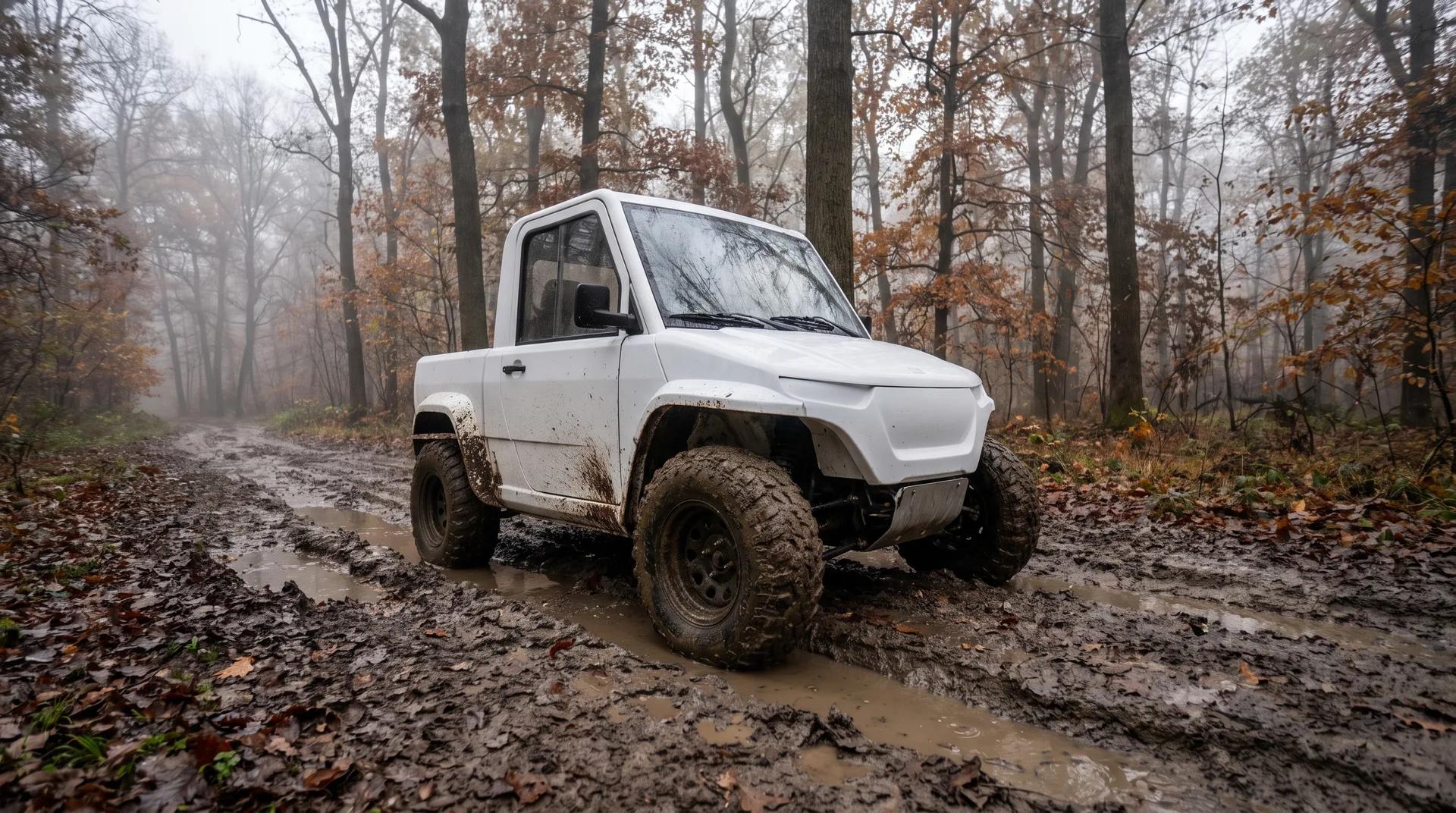
The defining constraint on a fishery is the ground. Lake margins are soft by nature, wetter still from autumn to spring, and the access track is often mown grass rather than stone. A conventional van or pickup rutting the bank is how fisheries end up with churned pegs and closed swims. An electric utility vehicle is light by comparison and spreads its weight, and specified with wide turf tires it exerts low ground pressure, so it can work the same margins week in, week out. Our guide on whether golf carts damage grass covers the principle; on a fishery it is the difference between a vehicle you can use in February and one parked up until May. If your banks are steep or genuinely boggy in places, say so at specification, tire choice and drive configuration are decided by your worst ground, not your best.
Quiet running, bailiff rounds and the angler experience
Anglers pay for peace, and a gas engine working the far bank undoes it. Electric drive is near silent at fishery speeds, so feed runs and maintenance can happen through the day without complaints, and wildlife along the margins, wildfowl, otters on some waters, nesting birds in spring, is disturbed far less. The same quietness changes bailiffing. A bailiff in a vehicle covers the whole water several times a day rather than once, arrives at the far pegs without announcing themselves ten minutes in advance, and can run night patrols on well-lit routes without waking a lake full of bivvies. Fisheries that have moved rounds from foot to vehicle tend to find the round happens more often, which is the point of it. The thinking mirrors what we set out for nature reserves, where quiet, low-impact site vehicles do the estate work without degrading the environment they serve.
Choosing a fishery utility cart: size, bed and battery
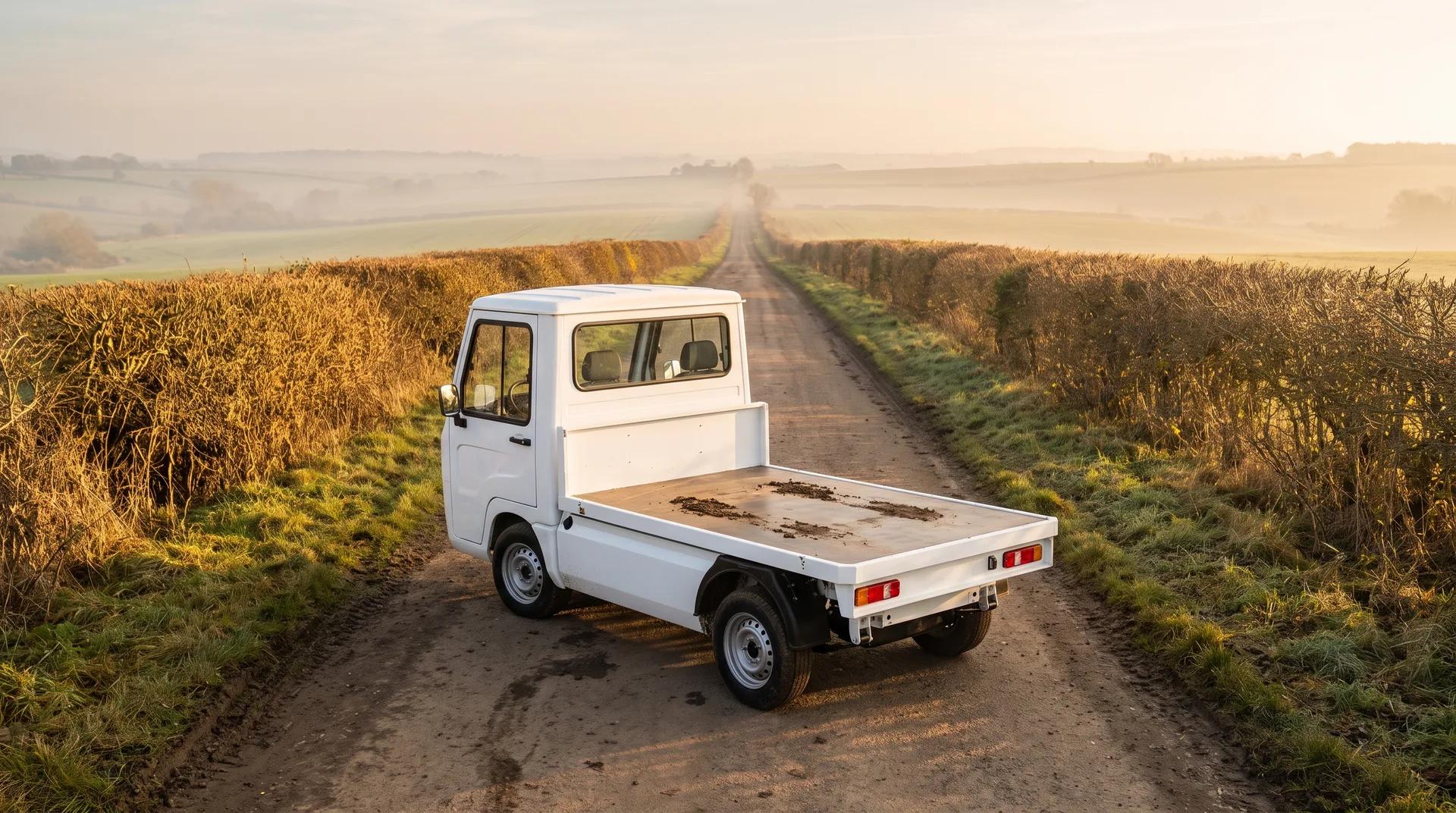
Most fisheries are well served by a compact utility vehicle: two seats, a load bed rated around half a metric ton, turf tires, and lithium power for a full working day on an overnight charge. Our S2 Pickup, from £15,900, is that shape of vehicle; larger complexes with lodges and cafes sometimes add a passenger model for moving visitors, and our narrow-paths guide is worth reading if your pegs are tight or your bridges are narrow, because overall width decides which routes a vehicle can actually use. Lithium batteries suit fishery duty cycles, lots of short runs with idle time between, and charge from a standard supply at the lodge or workshop. A tipping bed earns its keep if you move gravel and spoil regularly. Weather protection matters more than buyers expect: this is a vehicle that works in January.
- Wheelbarrow / on foot
- No damage, but slow
- Van or pickup
- Ruts margins when wet
- Electric utility vehicle
- Low ground pressure on turf tires
- Wheelbarrow / on foot
- Silent
- Van or pickup
- Engine noise on every run
- Electric utility vehicle
- Near silent
- Wheelbarrow / on foot
- One barrow load
- Van or pickup
- Large
- Electric utility vehicle
- Load bed, typically around half a metric ton
- Wheelbarrow / on foot
- Slow, few per day
- Van or pickup
- Intrusive on the bank
- Electric utility vehicle
- Frequent, quiet, day and night
- Wheelbarrow / on foot
- Staff time
- Van or pickup
- Fuel and servicing
- Electric utility vehicle
- Pence per mile in electricity
| Wheelbarrow / on foot | Van or pickup | Electric utility vehicle | |
|---|---|---|---|
| Soft bankside ground | No damage, but slow | Ruts margins when wet | Low ground pressure on turf tires |
| Noise beside anglers | Silent | Engine noise on every run | Near silent |
| Load per trip | One barrow load | Large | Load bed, typically around half a metric ton |
| Bailiff rounds | Slow, few per day | Intrusive on the bank | Frequent, quiet, day and night |
| Running cost | Staff time | Fuel and servicing | Pence per mile in electricity |
Owning one: charging, storage and the winter
Running an electric site vehicle on a fishery is straightforward. Charging is an overnight plug-in wherever the vehicle sleeps, and a typical day of feed runs and maintenance sits comfortably inside a charge. Store it under cover, a barn or container is fine, and if the water winds down over winter, follow proper winter storage practice so the battery comes back healthy in spring. Servicing is light compared with anything gas or diesel, there is no fuel to store on site, and nothing to spill a rod length from the water, which some operators will recognise as a real advantage near a stocked lake. Browse the utility range to see the load beds and configurations, and tell us about your banks when you enquire.
Frequently asked questions
Will an electric utility vehicle cope with muddy banksides?+
Specified correctly, yes. These are light vehicles compared with a van, and on wide turf tires they exert low ground pressure, so they work soft margins that heavier vehicles would rut. Describe your worst ground when you enquire, because tires and drive configuration are chosen for it.
How quiet are they in practice?+
Near silent at the speeds a fishery uses. Tire noise on gravel is usually the loudest thing about them, which is why they suit paying-angler environments and disturb bankside wildlife far less than an engine.
What size vehicle does a typical fishery need?+
Most waters are well served by a compact two-seat utility vehicle with a half-metric ton load bed. Larger complexes with lodges sometimes add a passenger model for visitors. If pegs or bridges are tight, check overall width before anything else.
Where does it charge on a lake site?+
From a standard supply wherever the vehicle is stored, typically the lodge, workshop or a barn. An overnight charge covers a normal working day of feed runs, maintenance and bailiff rounds.
Can bailiffs use it at night?+
Yes, night rounds are one of the common uses, with lights specified for the routes you patrol. A quiet vehicle covers the water without waking anglers, though how and where you patrol is for each fishery to decide.
Specify a vehicle for your water
Tell us about your banks, your pegs and what the vehicle has to carry, and we will specify and price a fishery vehicle for the ground it will actually work on.
Related solutions
Ready to explore what we build?
See the vehicles and the setting this applies to, or get a tailored quote built around your site.

Ready to find the right golf cart?
Tell us how and where it will work and we will specify a vehicle and a tailored quote built around you. Every build comes with a 3-year warranty and a 24-hour priority call-out.
Our guides are written and reviewed by the Hawke Electric Vehicles team, the people who specify, build, deliver and support the vehicles. We focus on honest, practical advice and flag where a figure depends on the build rather than guessing.
More guides by Hawke