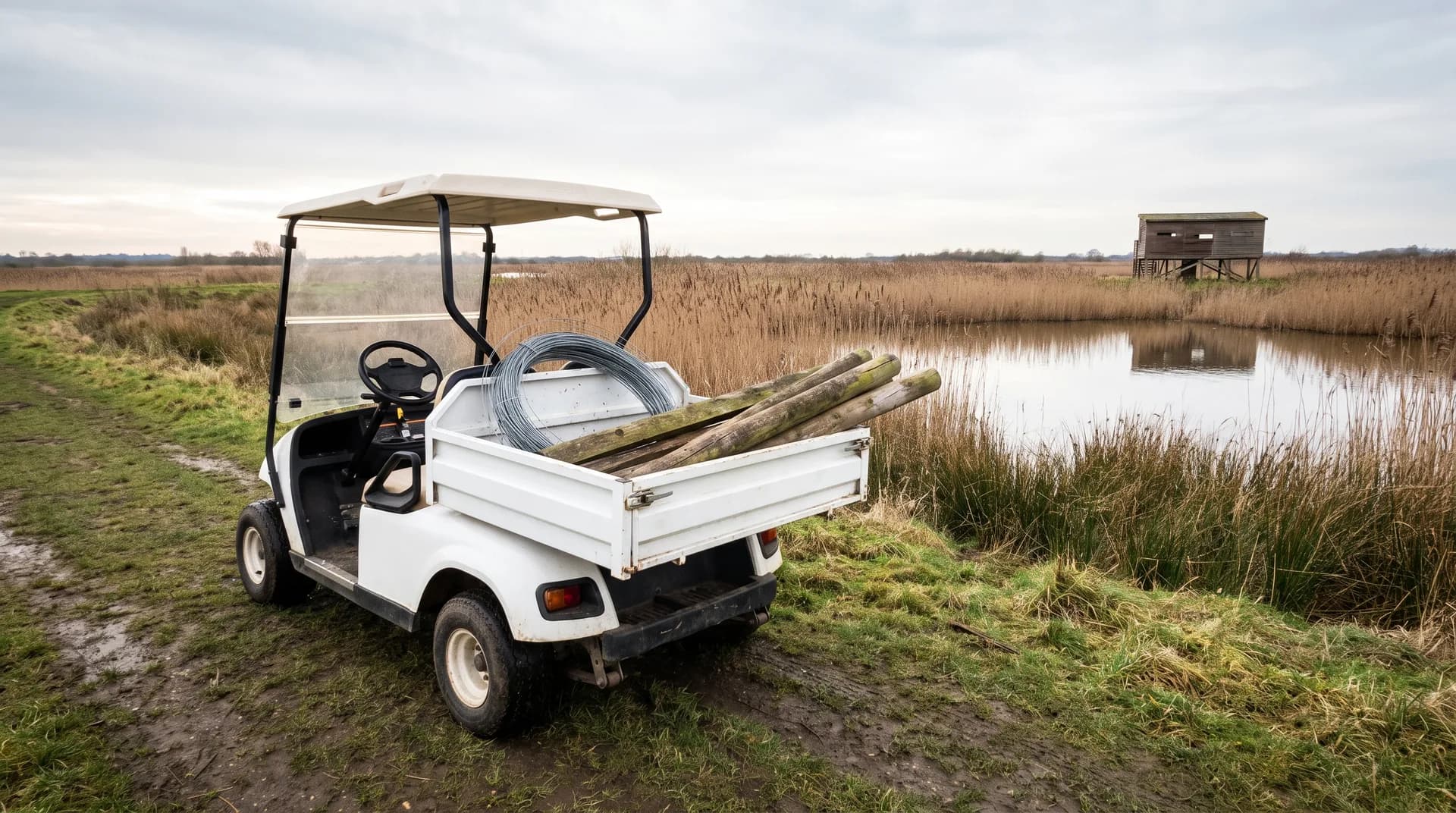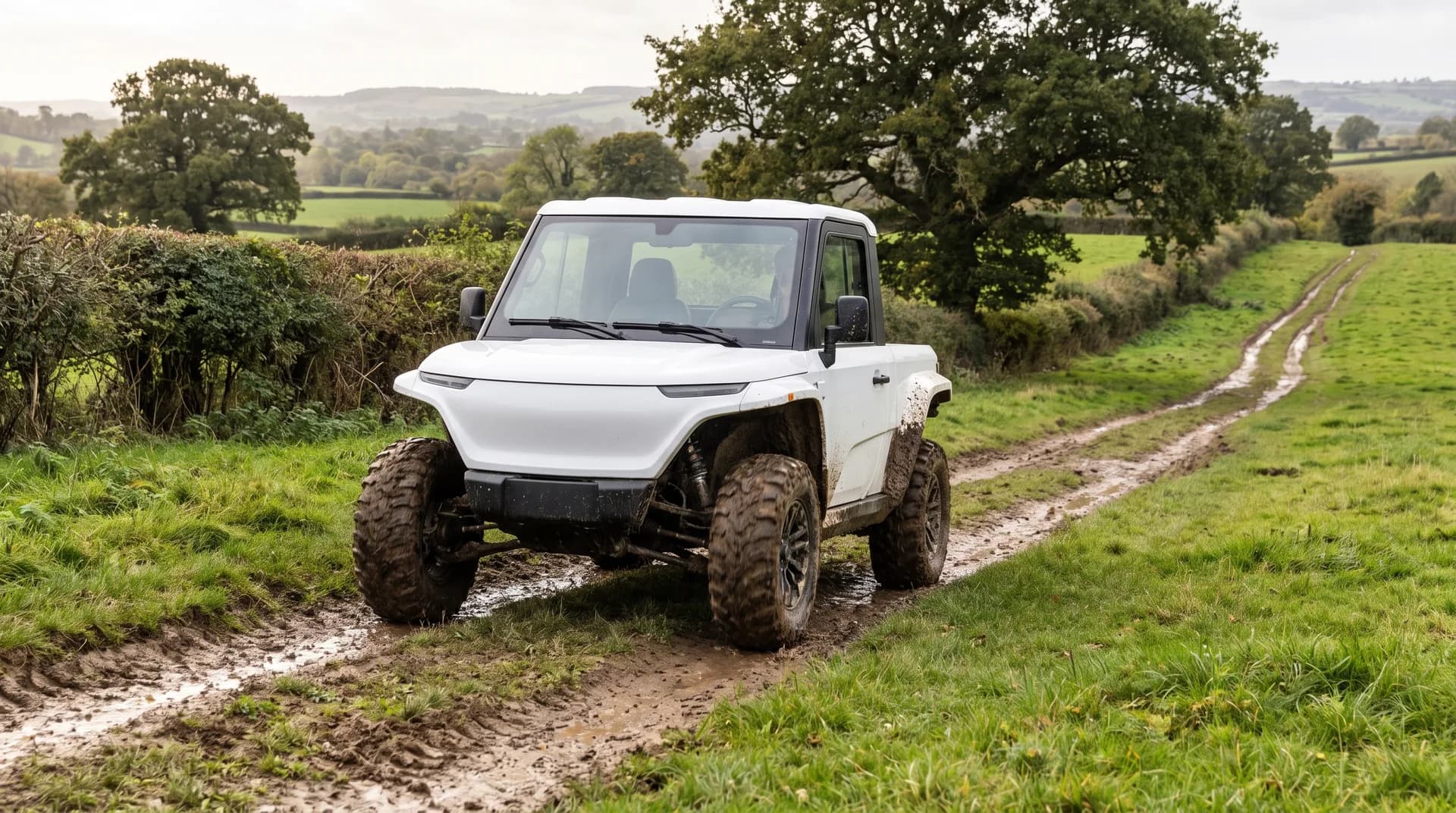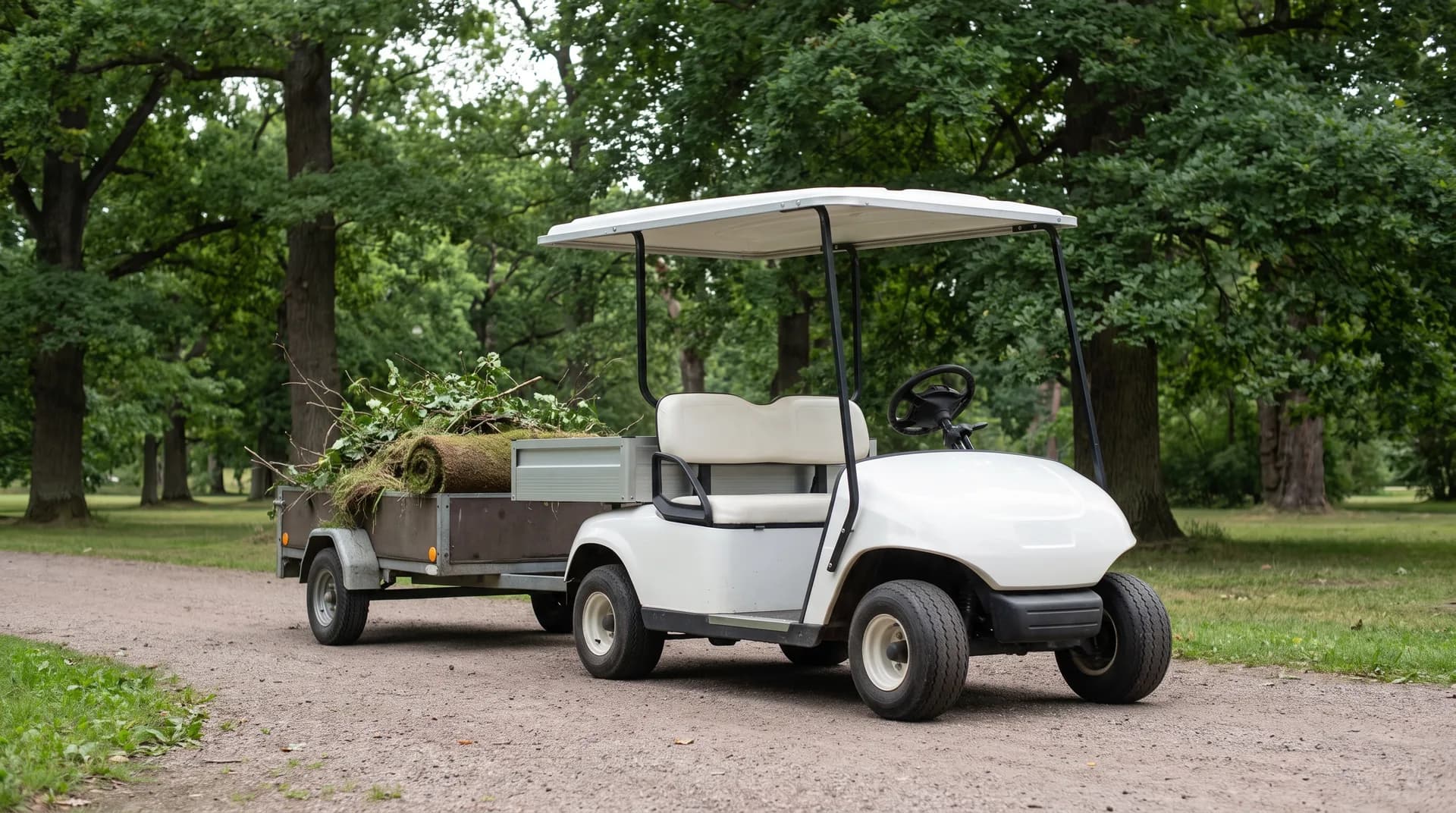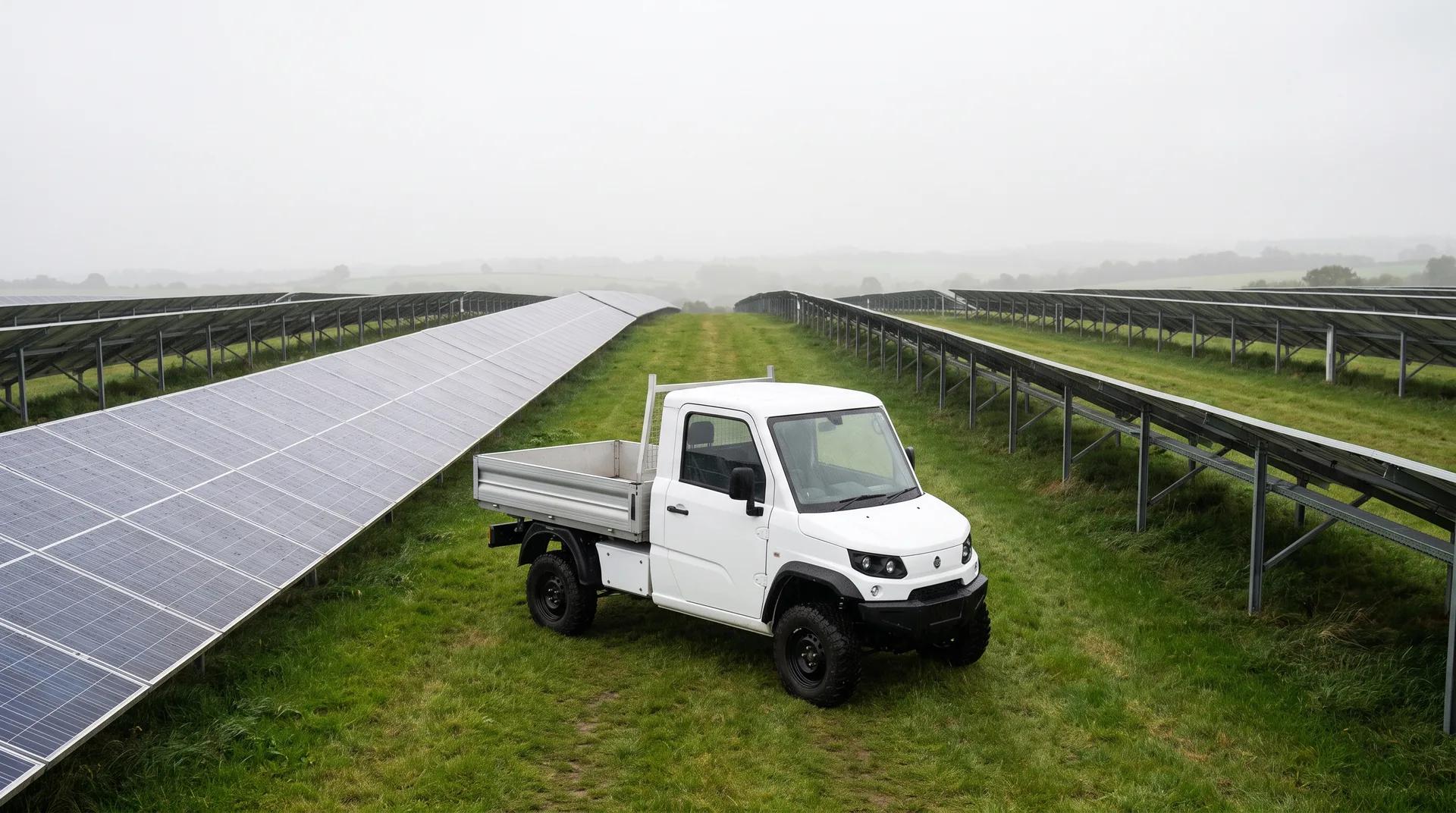
A utility-scale solar farm is a deceptive amount of ground. Row after row of panels, kilometres of cable runs and perimeter fencing, inverter stations spaced across the site, and between them grass tracks that an O&M technician has to cover several times a day carrying tools, test equipment and spares. Walking it wastes skilled hours; a road van cannot follow the rows; a diesel quad or pickup brings noise, exhaust and fuel logistics to a site whose entire purpose is clean generation. An electric utility vehicle fits the job and the ethos at the same time: it covers the rows and the perimeter quietly, carries the toolkit in the bed, tows a light trailer for panel or module moves, and, in a neat piece of circularity, charges from the very electricity the site exists to produce. This guide covers what solar O&M actually asks of a vehicle and how to specify for it.
- Panel rows, inverter rounds and perimeter checks add up to serious daily mileage best covered on wheels.
- A load bed carries tools, test kit, spares and washing equipment to the row, not the gate.
- Zero exhaust and low noise suit generation sites, neighbours and planning conditions alike.
- Rough grass tracks and gateways call for all-terrain tires and honest ground-clearance thinking.
- The vehicle charges from the site's own supply, and opportunity charging between rounds keeps it ready.
What solar farm O&M asks of a vehicle
The working day on a solar site is a pattern of long, thin journeys. Inverter and substation checks mean a circuit of the whole array; module inspections and thermography mean driving the rows themselves; fence and CCTV checks mean the full perimeter; and every fault ticket means getting a technician, a toolbox and possibly a replacement component to a specific row quickly. Add seasonal work, panel washing with its water and kit, vegetation management around the arrays, and the picture is a vehicle that does modest speeds but real daily distances, on grass and unmade track, stopping constantly. That duty suits an electric utility vehicle well: torque from standstill, no idling cost while the technician works, no exhaust drifting over the panels, and running costs in electricity the site generates. It is the same working profile, long quiet patrols over sensitive ground, that suits nature reserve utility vehicles, with rows of glass in place of habitats.
Specifying a solar site utility vehicle
Start with the bed. O&M work travels with its equipment, so the load area needs to take a technician's full working set: tool chests, test instruments, spare modules or components, washing kit in season, all secured against the bounce of a grass track. A pickup-style bed suits most teams, and our S2 Pickup, from £15,900, is the shape most solar enquiries start from; sites moving heavier or bulkier loads step up the utility range to larger payloads or a tipping bed for vegetation work. Ground matters next: solar farms are usually former agricultural land, so specify all-terrain tires for grass tracks, rutted gateways and wet winter rows, and think honestly about clearance on the roughest access route. Two seats carry a working pair; weather protection earns its keep on an exposed site in January. And if the site tows, water bowsers for washing, small plant, a spares trailer, say so at specification, because towing changes the battery sums, as our towing guide sets out.
Charging where electricity is the product
The circularity is obvious enough that every solar operator smiles at it once: the maintenance vehicle runs on the site's own product. Practically, it is also the easiest charging case in the industry. A solar farm has robust electrical infrastructure by definition, and adding an ordinary charging point at the O&M building or substation compound is a minor works item rather than a project. The vehicle charges overnight from the grid connection like any other load, and tops up between rounds whenever it is parked, so range planning on even a large site becomes a non-issue. Sites with battery storage or private-wire arrangements can fold the vehicle into whatever energy accounting they already run; sites without simply see a small, predictable load. Either way there is no fuel to order, store or bund, which removes a spill risk and a line of admin from a site that is usually unmanned half the time.
Quiet, clean and easier to defend
Solar farms live under planning conditions and next to rural neighbours, and the operations side is expected to match the generation side's credentials. An electric utility vehicle helps on every front. It is quiet, so early rounds and weekend call-outs do not carry across the fields to the nearest houses. It has no exhaust, so there is nothing to argue about on air quality and nothing sooty settling on panel glass. It needs no fuel deliveries down a rural access lane. And when the operator reports to its investors and its community liaison group, the maintenance fleet is part of the sustainability story rather than a footnoted exception to it. None of this replaces the operational case, the vehicle earns its place on workload alone, but on a site whose licence to operate rests on being clean and unobtrusive, it is the fit that requires no explaining.
Frequently asked questions
What vehicle is best for solar farm maintenance?+
A compact electric utility vehicle with a load bed, all-terrain tires and two seats covers most O&M duties: inverter rounds, row inspections, perimeter checks and fault response with tools aboard. Sites with heavier loads or vegetation work specify larger payloads or a tipper.
Can an electric utility vehicle handle solar farm ground?+
Yes, specified properly. Solar sites are mostly grass tracks and former farmland, so all-terrain tires and sensible ground clearance matter, and persistently wet or sloping sites should discuss drivetrain options at specification.
How does charging work on a solar site?+
From the site's own electrical infrastructure: an ordinary charge point at the O&M building or compound, charging overnight and topping up between rounds. There is no fuel to store, and the vehicle effectively runs on the site's product.
Can it tow washing or spares trailers?+
Light towing, water bowsers, spares and small plant trailers, is well within scope if specified for. State the trailer weight and frequency when you enquire so the battery and drivetrain are sized for it.
Does one vehicle cover a large site?+
Often, because opportunity charging between rounds keeps it topped up through the day. Very large or split sites, or teams running simultaneous planned and reactive work, tend to run one vehicle per crew. Describe the site and we will advise honestly.
Specify a vehicle for your site
Tell us the acreage, the tracks, the toolkit and the towing, and we will specify an O&M vehicle that runs on what you generate.
Related solutions
Ready to explore what we build?
See the vehicles and the setting this applies to, or get a tailored quote built around your site.
Ready to find the right golf cart?
Tell us how and where it will work and we will specify a vehicle and a tailored quote built around you. Every build comes with a 3-year warranty and a 24-hour priority call-out.
Our guides are written and reviewed by the Hawke Electric Vehicles team, the people who specify, build, deliver and support the vehicles. We focus on honest, practical advice and flag where a figure depends on the build rather than guessing.
More guides by Hawke