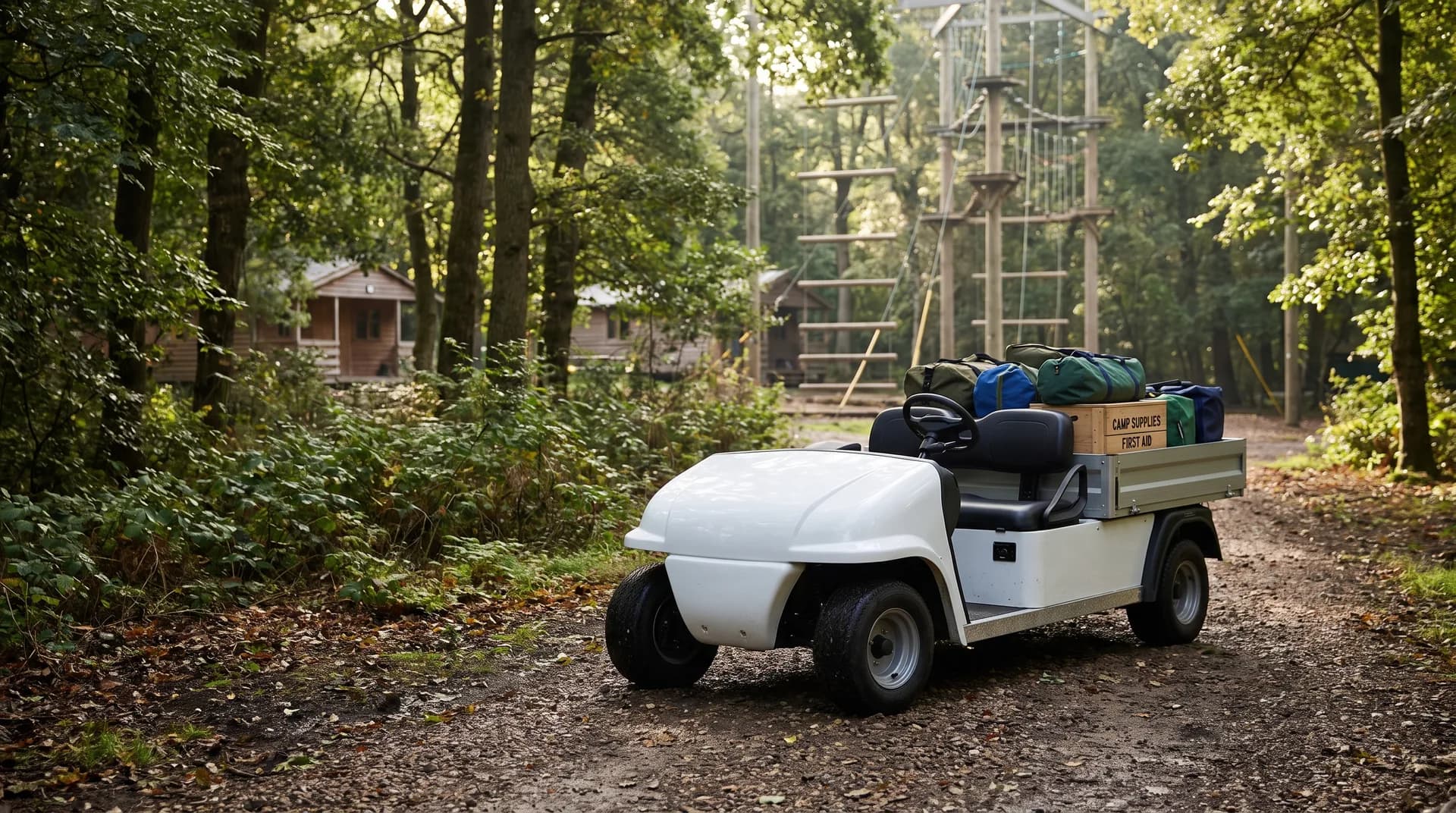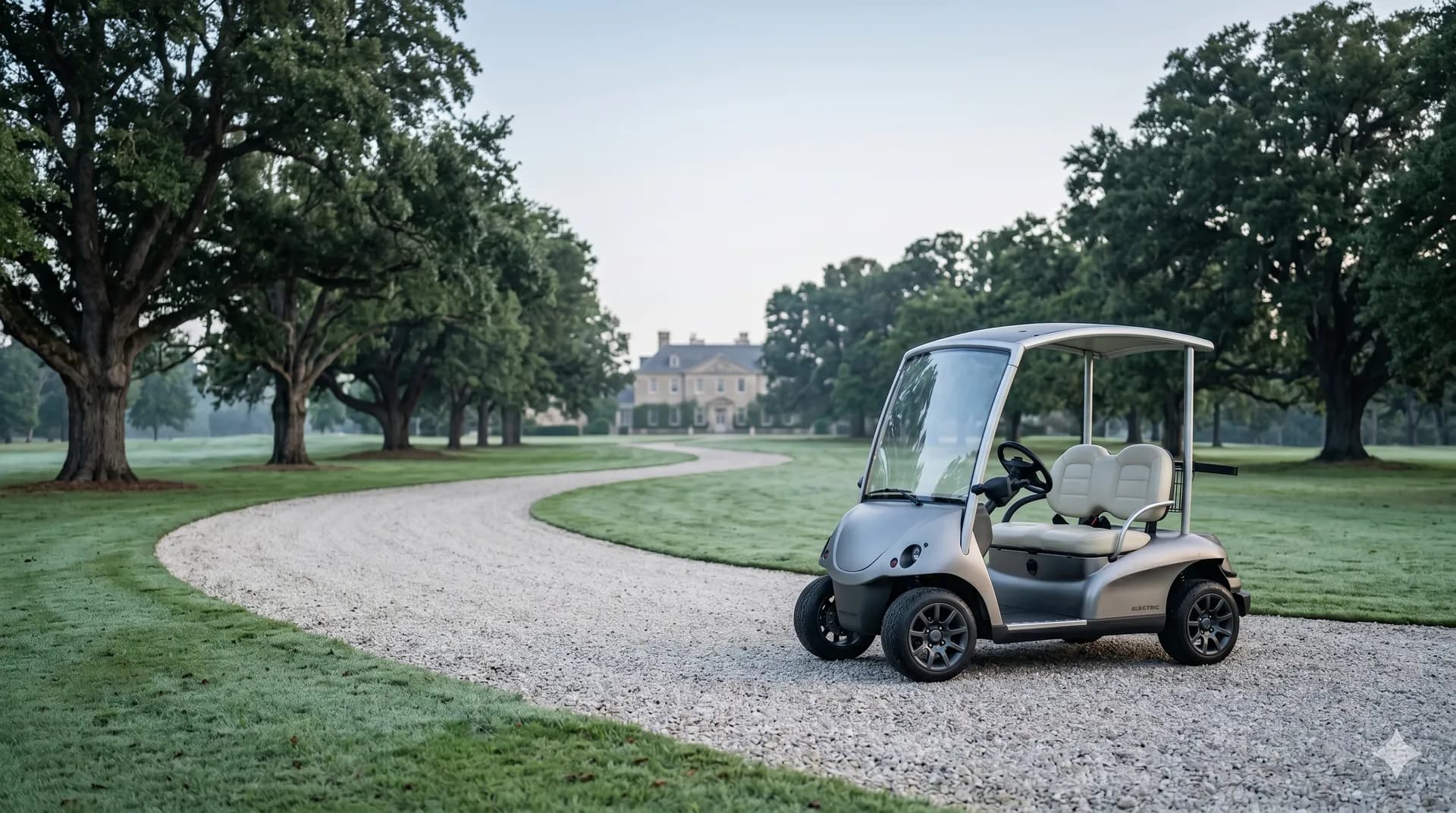
It is one of the most asked questions in American farm forums and one of the least answered in British search: will a golf cart cope with farm and yard work? The temptation is obvious, because ex-golf-course golf carts come up cheap and a farm always needs a runabout. The honest answer is that a golf-spec cart copes with some yard work, fails predictably at the rest, and that the difference between golf spec and utility spec is exactly the difference between the jobs it survives and the jobs that kill it. This guide draws that line clearly.
- An ex-golf cart genuinely handles light carrying, stock checks and yard runs on firm, level ground.
- Mud, overloading, towing beyond spec and wet electrics are what break them.
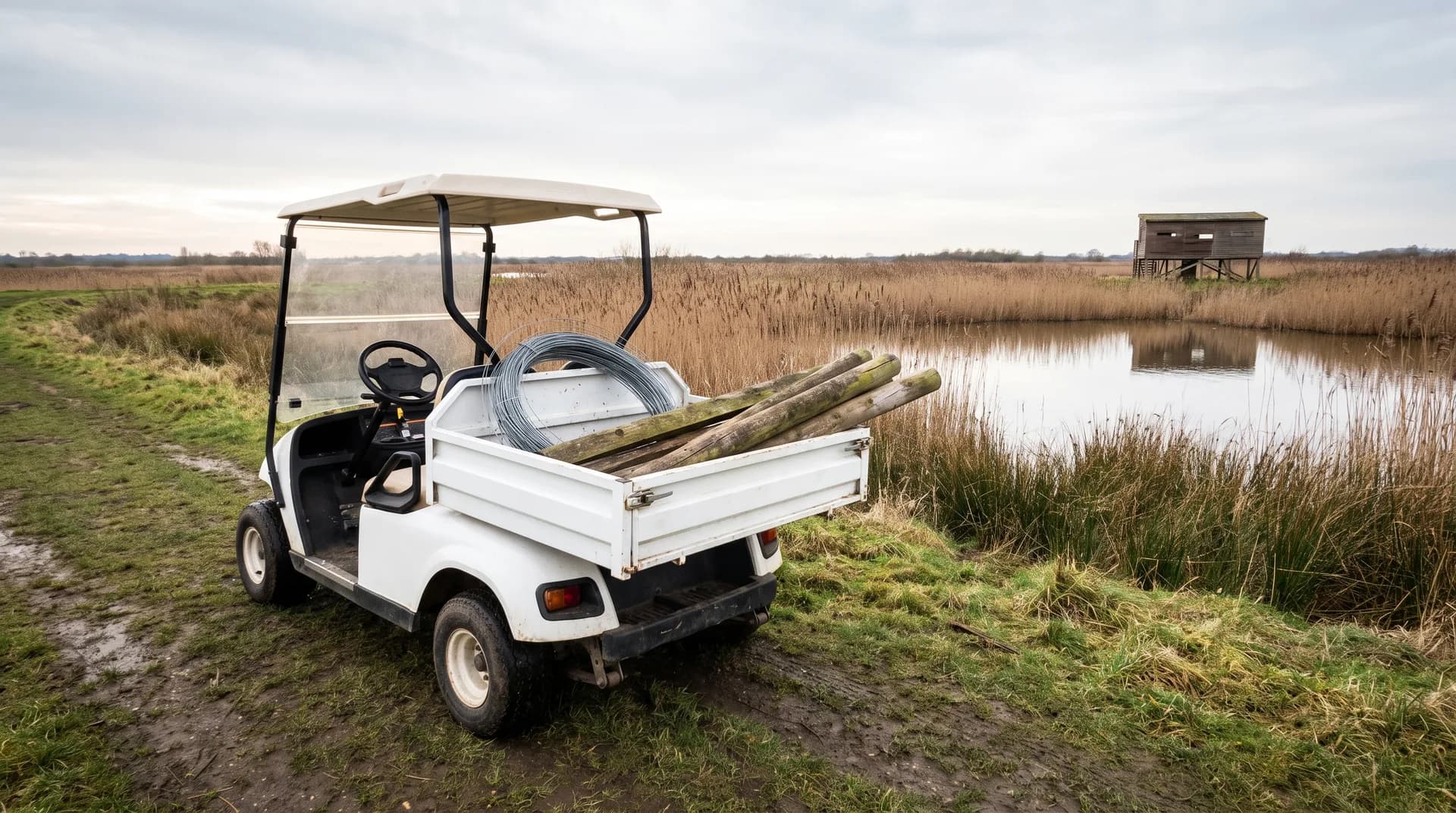
- Golf spec means turf tires, low clearance and a payload designed for two golfers and bags.
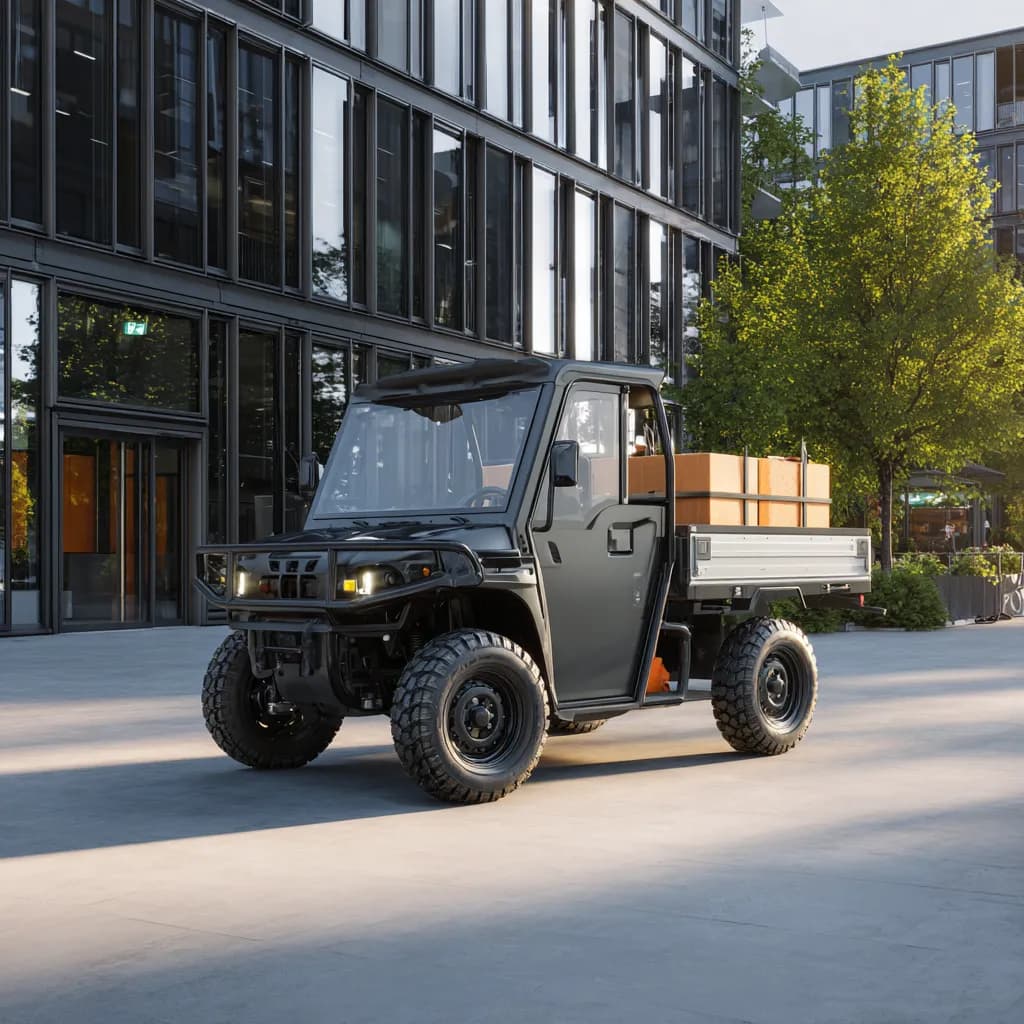
- Utility spec means proper tires, clearance, load bed, payload and sealed components.
- Electric golf carts of either spec are quiet around stock and far less stealable than quads.
What an ex-golf cart genuinely does
Credit where due: on firm, reasonably level ground, a sound ex-golf cart is a useful yard tool. It will run you down the track to check stock, carry a couple of feed bags, fencing tools or a toolbox, ferry people between yard and gate, and do the short-hop jobs that otherwise eat your day on foot. It is quiet around livestock, cheap to run, and simple to drive for anyone. If your holding is small, your ground is firm and your loads are light, it can earn its keep, and our farms guide covers that kind of light duty in more detail.
What breaks them
The failures are predictable because a golf cart is engineered for a mown course. Mud and soft ground bog its turf tires and strain the drivetrain. Loads beyond a couple of golfers and bags sag the suspension and overwork the motor, and towing anything substantial cooks controllers and stretches components that were never rated for it. Ruts and stones find its low ground clearance. And the quiet killer is water: golf carts live in dry sheds between rounds, and their electrics are not sealed for pressure-washed yards, flooded gateways and vehicles left out in weather. Any one of these is survivable occasionally; as a daily diet they write the vehicle off.
Golf spec versus utility spec
- Golf-spec cart
- Turf tires for mown grass
- Utility-spec cart
- All-terrain or ribbed tires for tracks and mud
- Golf-spec cart
- Low, for smooth fairways
- Utility-spec cart
- Raised, for ruts, stones and rough ground
- Golf-spec cart
- Two people and golf bags
- Utility-spec cart
- People plus a rated load bed for real cargo
- Golf-spec cart
- Bag well at the rear
- Utility-spec cart
- Pickup bed or tipper body
- Golf-spec cart
- Dry-shed duty
- Utility-spec cart
- Sealed and specified for outdoor working life
- Golf-spec cart
- Not designed for it
- Utility-spec cart
- Rated towing capacity, confirmed at quotation
| Golf-spec cart | Utility-spec cart | |
|---|---|---|
| Tires | Turf tires for mown grass | All-terrain or ribbed tires for tracks and mud |
| Ground clearance | Low, for smooth fairways | Raised, for ruts, stones and rough ground |
| Payload | Two people and golf bags | People plus a rated load bed for real cargo |
| Load area | Bag well at the rear | Pickup bed or tipper body |
| Components | Dry-shed duty | Sealed and specified for outdoor working life |
| Towing | Not designed for it | Rated towing capacity, confirmed at quotation |
When to buy a proper utility cart instead
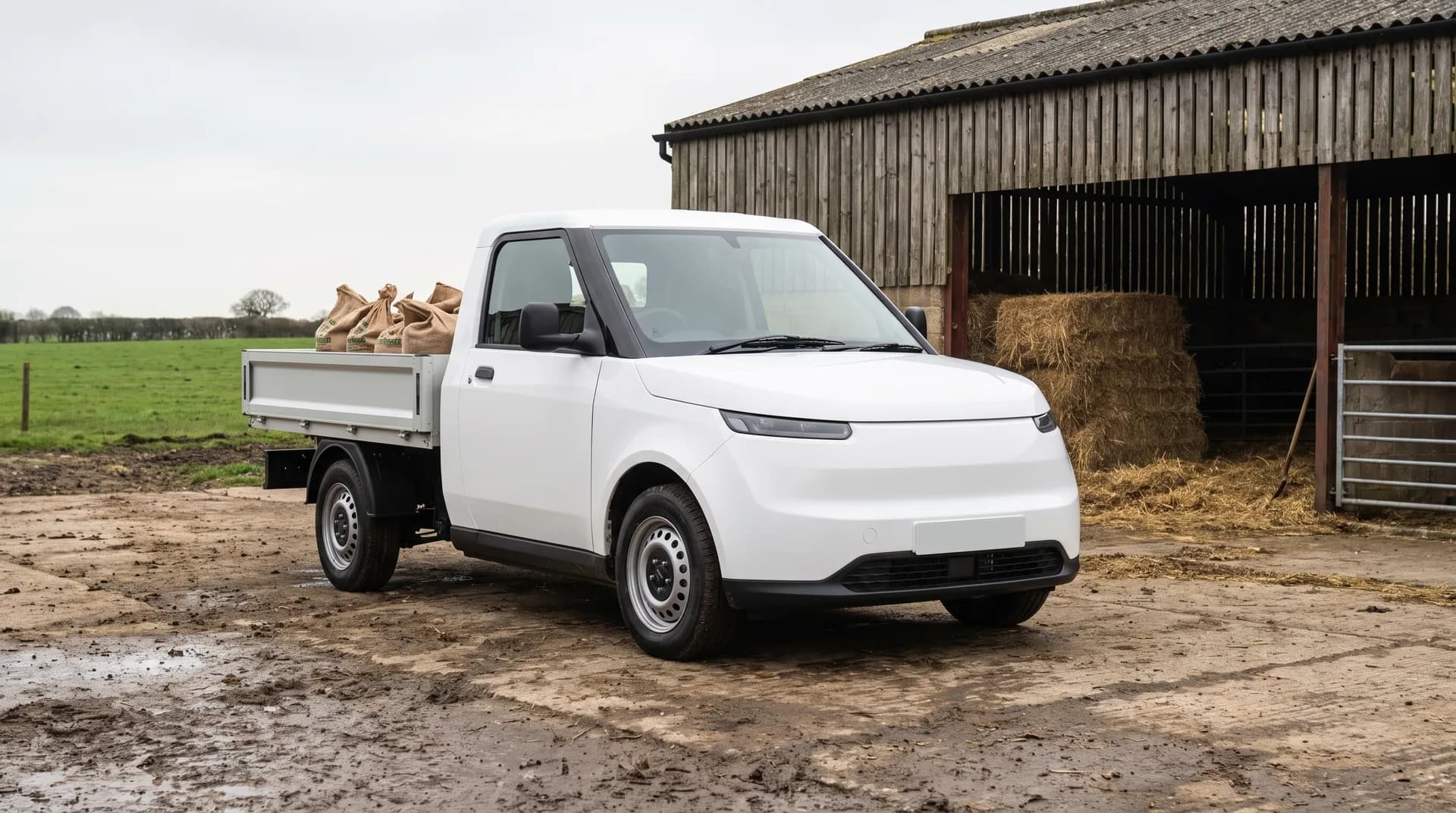
If your week includes mud, slopes, real loads, a trailer, or a vehicle that lives outdoors and gets hosed down, buy utility spec from the start; it is cheaper than replacing a golf cart that was never going to survive. Our utility line is built for exactly this duty: the 1-metric ton-class U1 and U2, the S2 Pickup with its open load bed, the S2 Tipper for muck and spoil, and 4WD options for wet and sloping ground. Payload, towing and range for your specification are confirmed at quotation rather than promised loosely here. Our guide to lasting a full working day covers the battery side of the same decision.
The advantages both share over a quad
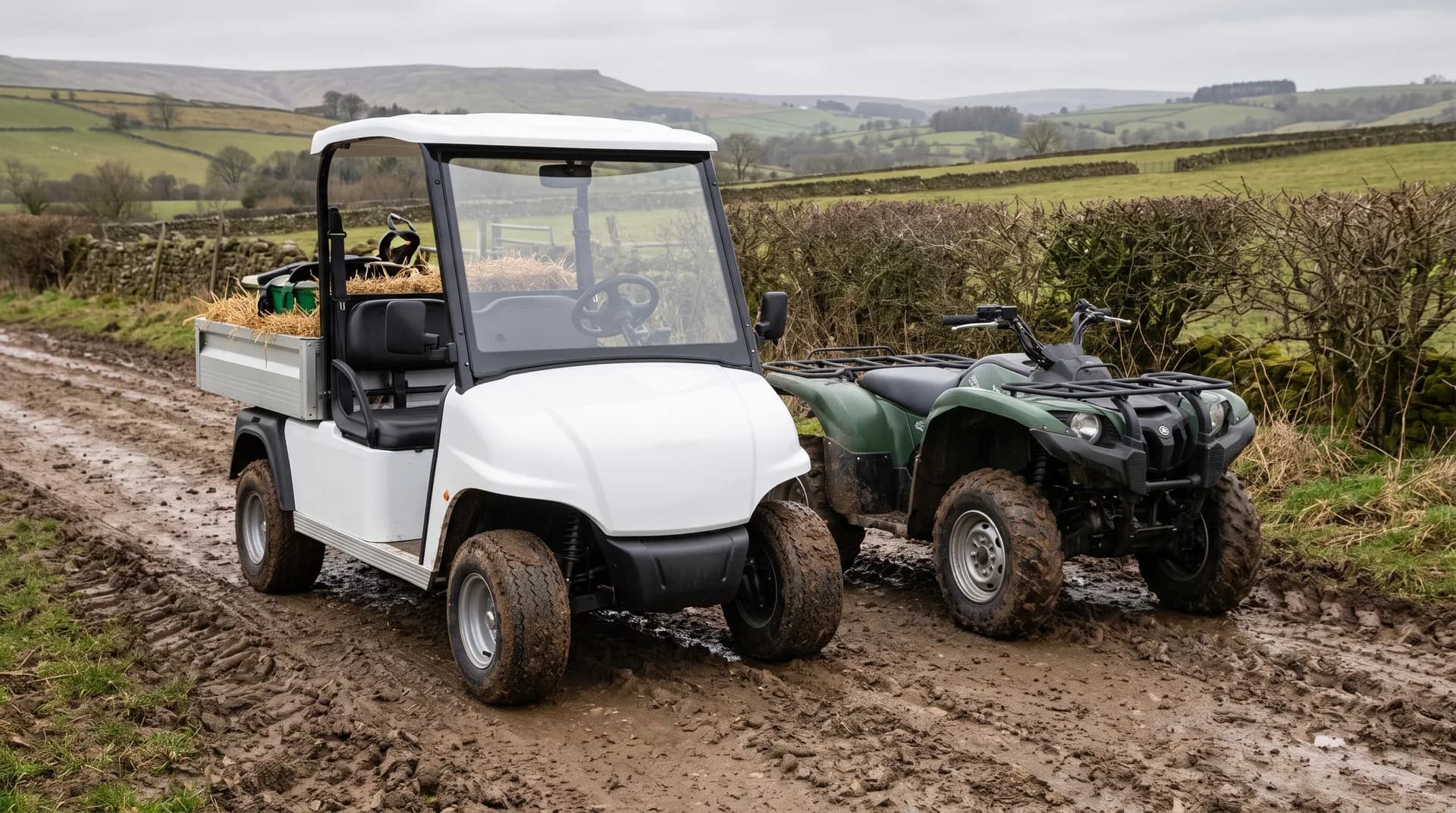
Whichever spec you choose, two advantages hold. Electric golf carts are near silent, which livestock, horses and neighbours notice immediately, and which makes early rounds civilised. And they are a far less attractive theft target than a quad, which farm insurers and police rural-crime teams will tell you is one of the most stolen machines in the countryside. A cart is slower to joyride, harder to sell on and easier to keep secured, and it carries more, more safely, for the everyday work, as our cart versus quad guide sets out in full.
Frequently asked questions
Will a golf cart cope with farm work?+
With light farm work on firm ground, yes: stock checks, light carrying and yard runs. It will not cope with mud, heavy loads, towing beyond its design or a wet outdoor working life, and those are precisely what utility-spec golf carts are built for.
What usually breaks an ex-golf cart on a farm?+
Mud and soft ground, overloading, towing it was never rated for, low ground clearance meeting ruts, and water getting into electrics that were designed for a dry golf shed rather than a pressure-washed yard.
What is the difference between golf spec and utility spec?+
Tires, ground clearance, rated payload, a proper load bed and sealed components. A utility cart is engineered for tracks, weather and cargo; a golf cart is engineered for mown grass and golf bags.
Is a utility cart better than a quad for a farm?+
For carrying loads and people quietly, cheaply and stably, usually yes, and it is a far less attractive theft target. A quad still wins for speed over genuinely rough or steep ground. Many farms run one of each.
What can your utility golf carts carry or tow?+
It depends on the model and specification, so we confirm payload and towing figures for your build at quotation. The U1 and U2 are 1-metric ton-class machines, and the S2 Pickup and S2 Tipper carry real loads in a proper bed.
Buy the right spec first time
Tell us your ground, loads and jobs, and we will tell you honestly whether a light cart does it or utility spec is the answer, then build your quote.
Related solutions
Ready to explore what we build?
See the vehicles and the setting this applies to, or get a tailored quote built around your site.
Ready to find the right golf cart?
Tell us how and where it will work and we will specify a vehicle and a tailored quote built around you. Every build comes with a 3-year warranty and a 24-hour priority call-out.
Our guides are written and reviewed by the Hawke Electric Vehicles team, the people who specify, build, deliver and support the vehicles. We focus on honest, practical advice and flag where a figure depends on the build rather than guessing.
More guides by Hawke