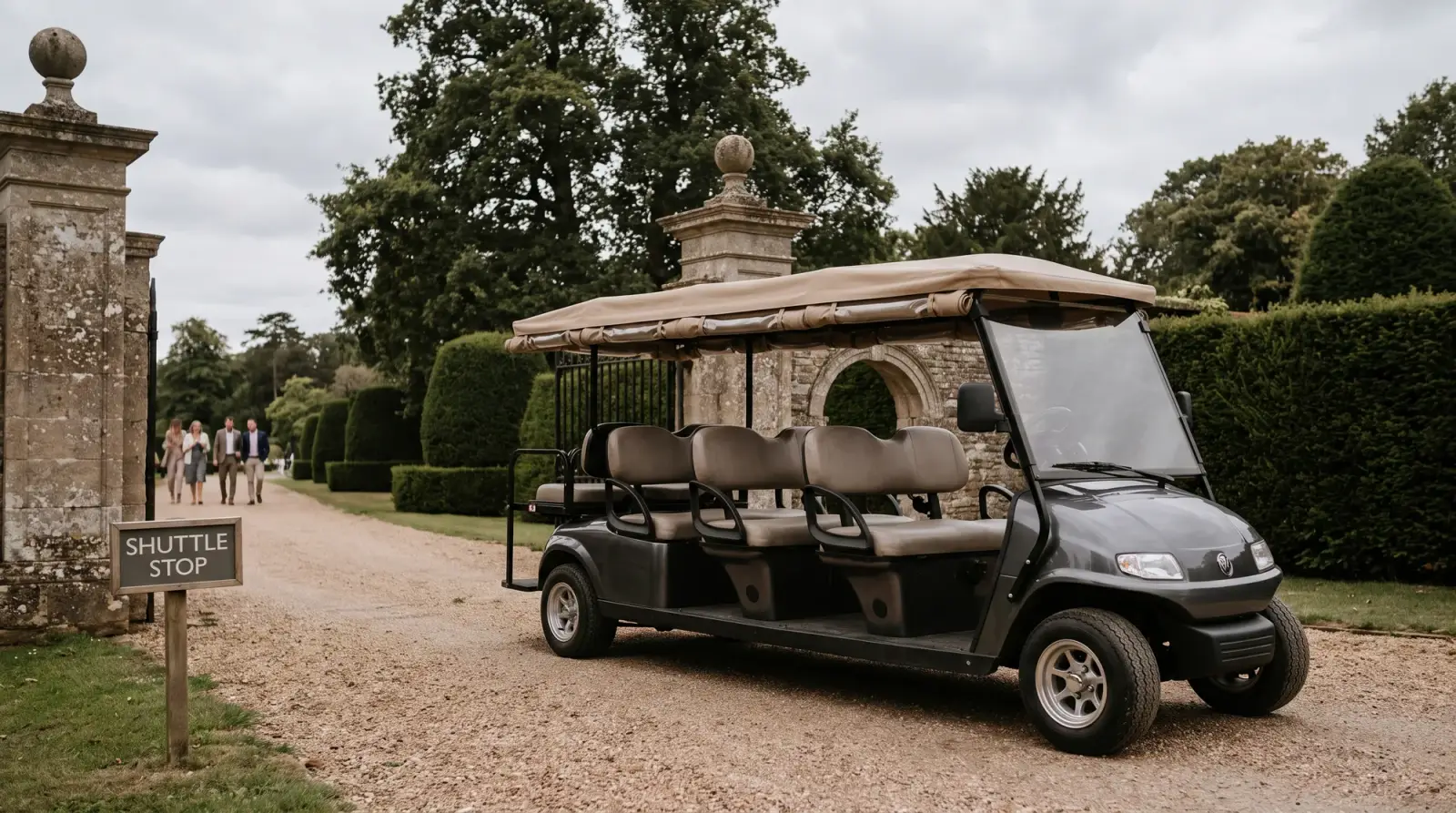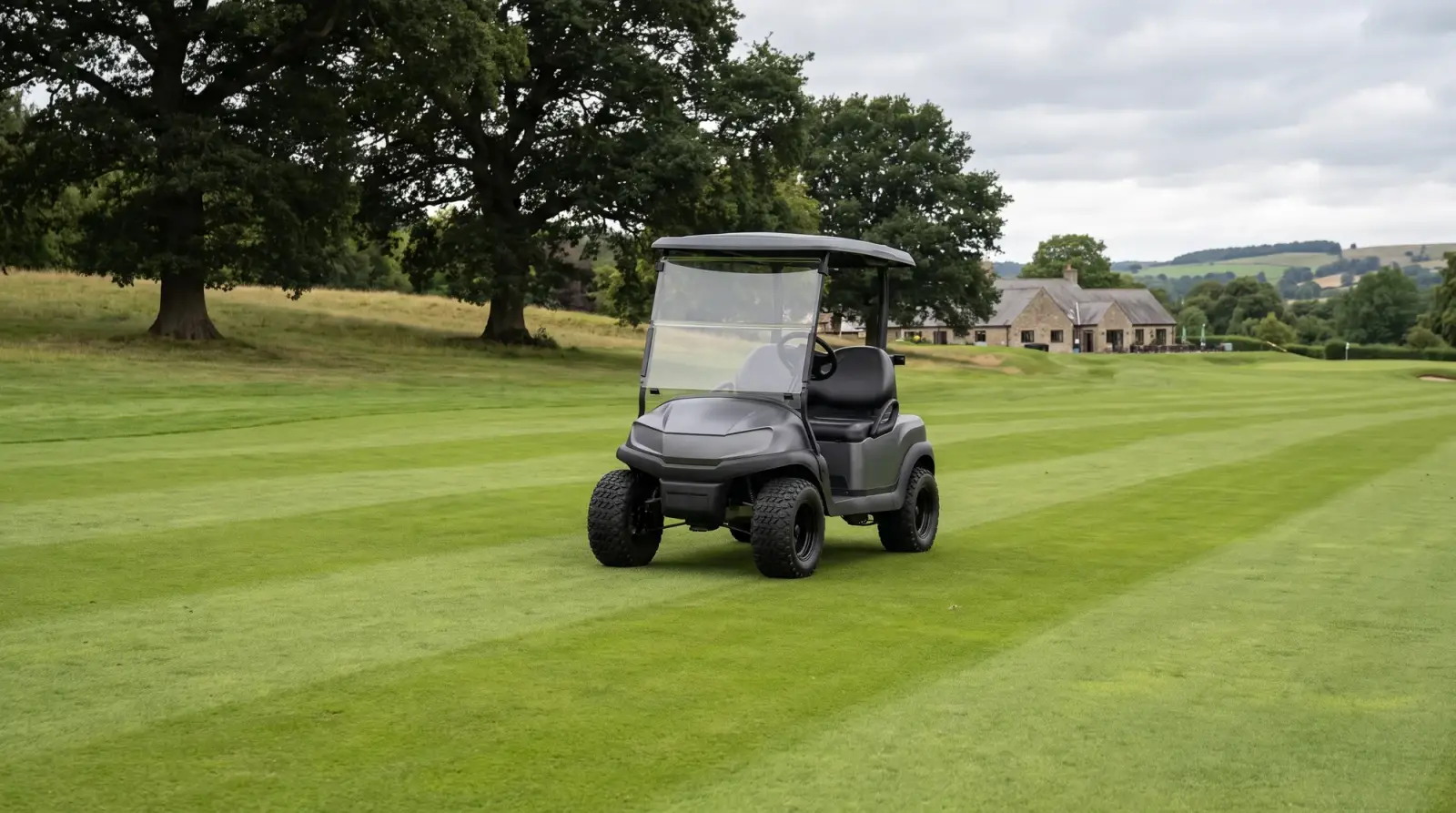
Yes, golf carts can damage grass, but the vehicle itself is rarely the villain. What actually wrecks turf is weight per wheel, ground conditions and driver behaviour, and on all three counts a modern electric cart scores far better than most people assume. A 450kg cart spreads its load across four wide tires, so as a rough guide it presses on the ground with less force per square centimetre than a walking golfer's heel does mid-stride.
That surprises greenkeepers' committee members every time. It doesn't mean you can drive anywhere in any weather, though. Turf damage is real, it's expensive to repair, and it follows predictable patterns. Once you understand the four ways golf carts actually hurt grass, protecting a lawn, fairway or estate becomes mostly a matter of habit.
- A typical 450kg cart carries roughly 110 to 120kg per wheel, spread over a wide tire contact patch, so its ground pressure is lower than a person's heel strike.
- The four real damage mechanisms are shear from tight turns on wet turf, compaction from repeated identical routes, rutting on saturated ground and frost bruising.
- Turf tires run at low pressures (often 8 to 12 psi), varied routes and the 90-degree cart rule prevent most damage.
- Wet autumn ground and frosty mornings are when golf carts genuinely harm grass; dry summer turf shrugs them off.
- Electric golf carts drip no fuel or oil, so they avoid the chemical scorch marks gas machines can leave on fine turf.
How heavy is a golf cart per wheel?
Start with the numbers, because they're reassuring. A two-seat electric cart typically weighs 400 to 500kg with batteries. Add two adults and clubs and you might reach 650kg. Divide that across four wheels and each corner carries roughly 160kg at worst.
Now look at the contact patch. A turf tire at low pressure flattens against the ground and spreads that load over a large area, often several hundred square centimetres per tire. The result is ground pressure in the region of 0.3 to 0.5kg per square centimetre. Compare that with a 85kg golfer walking: each heel strike concentrates most of their body weight onto a patch smaller than a playing card, which works out at several times the pressure a cart tire applies. Golf courses have known this for decades, which is why well-managed cart traffic on dry fairways leaves no visible trace while a busy walking line to a tee can wear bare.
Lithium batteries help too. Swapping a lead-acid pack for lithium typically removes 80 to 120kg from the vehicle, which drops the load on every wheel. If turf care is a priority, a lighter lithium build with proper turf tires is the kindest spec you can buy. Our guide to lithium versus lead-acid batteries covers the weight difference in detail.
So how do golf carts actually damage grass?
Four ways, and only one of them involves the cart's weight directly.
Shear from tight turns
This is the big one. Turn sharply on wet turf and the inside wheels scrub sideways, tearing the grass plant away from its roots. You've seen the result: crescent-shaped scars near greens and tees. It's a driving problem, not a vehicle problem, and it's why courses enforce wide, gentle turns.
Compaction from repeated routes
Grass tolerates occasional traffic well. What it can't tolerate is the same wheel line every day. Repeated passes squeeze the air out of the soil, roots suffocate, and you get those pale, thin ribbons of grass along popular cart lines. The fix costs nothing: vary the route.
Rutting on saturated ground
When soil is waterlogged it has almost no bearing strength. Even a light vehicle sinks, and once a wheel cuts through the turf surface you're left with ruts that need physical repair. No tire or driving technique fixes this. If the ground squelches underfoot, the cart stays in the shed.
Frost bruising
Frozen grass blades are brittle. Drive or even walk on frosted turf and the leaf cells rupture, leaving blackened tire prints that show up days later and last for weeks. Greenkeepers delay play on frosty mornings for exactly this reason, and golf carts should wait too.
- Damage risk
- Low. Healthy, firm ground carries cart traffic with no visible wear.
- Sensible practice
- Normal use. Vary routes, keep turns wide, stay off greens and surrounds.
- Damage risk
- Moderate to high. Shear on turns and rutting where soil is soft.
- Sensible practice
- 90-degree cart rule, golf carts on paths near greens, no tight turns, consider path-only days after heavy rain.
- Damage risk
- Severe. Ruts cut through the surface and need physical repair.
- Sensible practice
- No cart access. This is what course-closed and path-only signs are for.
- Damage risk
- High. Bruised, blackened blades plus root damage during thaw.
- Sensible practice
- Delay until the frost lifts fully, usually late morning. Freeze-thaw days are worse than hard frost.
| Damage risk | Sensible practice | |
|---|---|---|
| Dry summer turf | Low. Healthy, firm ground carries cart traffic with no visible wear. | Normal use. Vary routes, keep turns wide, stay off greens and surrounds. |
| Wet autumn ground | Moderate to high. Shear on turns and rutting where soil is soft. | 90-degree cart rule, golf carts on paths near greens, no tight turns, consider path-only days after heavy rain. |
| Saturated or waterlogged | Severe. Ruts cut through the surface and need physical repair. | No cart access. This is what course-closed and path-only signs are for. |
| Frost or freeze-thaw | High. Bruised, blackened blades plus root damage during thaw. | Delay until the frost lifts fully, usually late morning. Freeze-thaw days are worse than hard frost. |
What actually protects the grass?
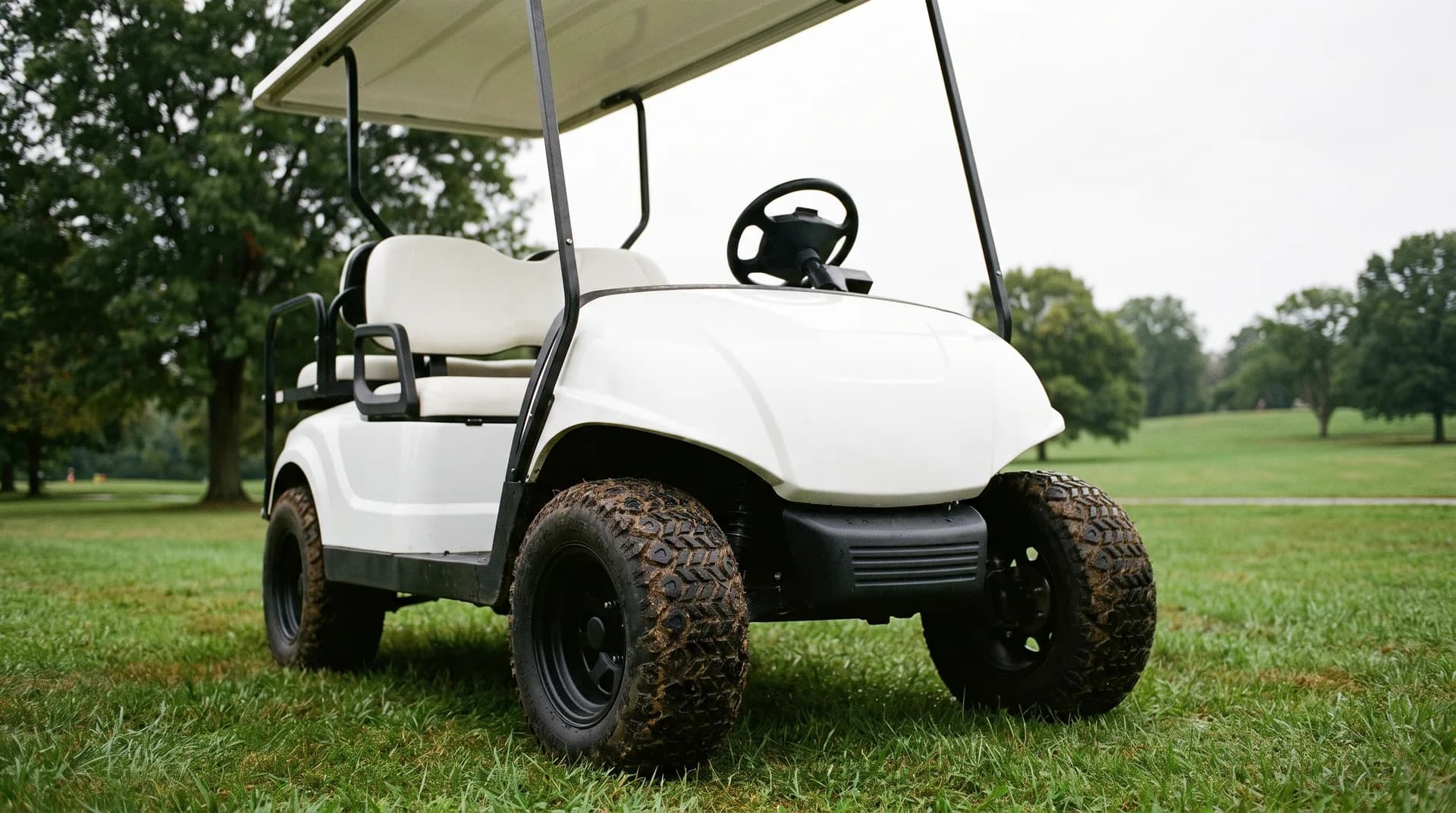
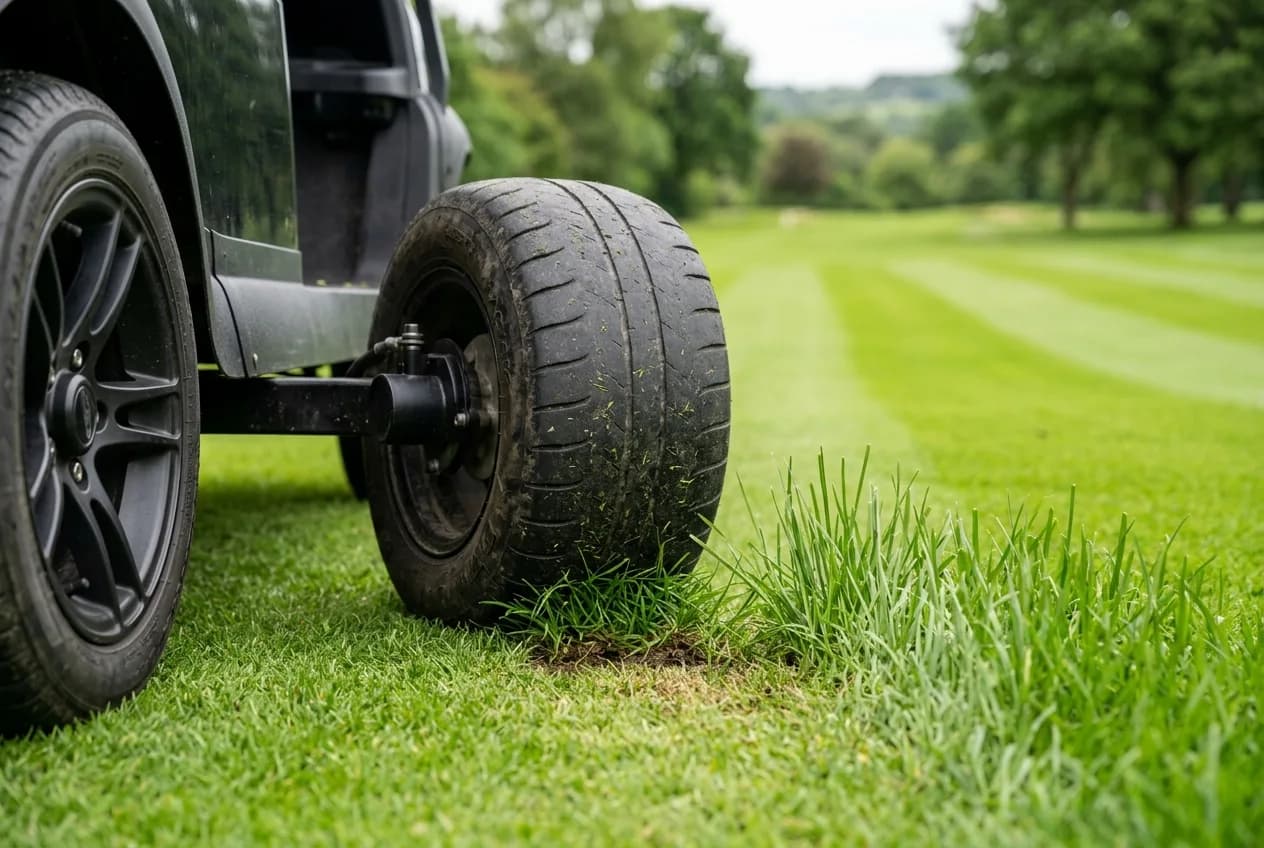
Tires first. Proper turf tires have a shallow, rounded tread that grips without digging, and they're designed to run soft, often 8 to 12 psi. Overinflating them is the most common mistake we see: a hard tire shrinks the contact patch and concentrates the load, undoing the cart's natural advantage. Check pressures monthly. Our guide to electric golf cart tires explains the tread types and pressures properly.
Then it's route discipline. The 90-degree rule (stay on the path until you're level with your ball, cross the fairway at a right angle, then return the same way) exists because it minimises the distance driven on grass and spreads what traffic remains. Varying entry and exit points stops compaction ribbons forming. And a four-wheel cart spreads load better than an older three-wheel design, which puts a third of the vehicle's weight through a single front tire and scrubs it on every turn.
Are electric golf carts kinder to turf than gas?
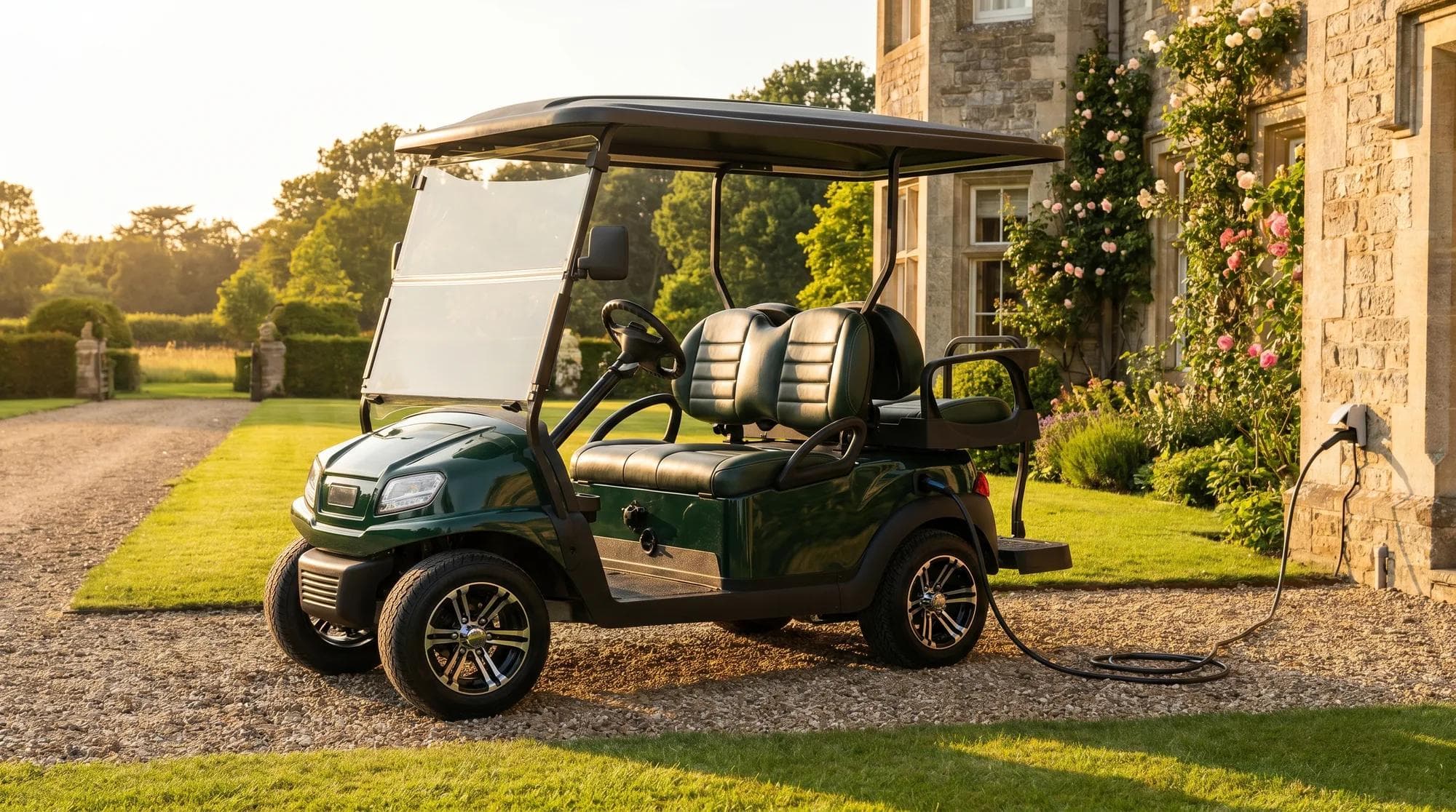
On weight, they're broadly similar once batteries are fitted, and a lithium electric cart is often lighter than its gas equivalent. The clear win is chemical. Gas machines drip fuel and oil, and a single spill scorches fine turf badly enough to leave a dead patch that needs returfing. Electric golf carts carry no fuel, no engine oil and no hot exhaust that can singe dry grass in summer. For greens surrounds, formal lawns and event sites, that alone settles the argument.
There's a quieter benefit too. Electric drivetrains deliver torque smoothly from a standstill, so there's no clutch-snatch wheelspin on damp grass, which is a classic cause of scuffed launch marks with gas golf carts. Clubs running mixed fleets notice the difference on their first wet autumn, which is one reason golf clubs moving to electric fleets rarely move back.
Frequently asked questions
Do golf carts ruin grass?+
Not when used sensibly. On dry, firm turf a cart's ground pressure is lower than a walking person's heel. Damage happens in specific conditions: tight turns on wet grass, repeated identical routes, saturated ground and frost. Manage those and golf carts leave no lasting mark.
How heavy is a golf cart per wheel?+
A typical 450kg electric cart carries roughly 110 to 120kg per wheel unladen, rising to around 160kg per wheel with two adults aboard. Spread over a soft turf tire's large contact patch, that's gentler on the ground than most foot traffic.
Can you drive a cart on wet grass?+
On damp grass, yes, with wide turns and varied routes. On saturated, squelching ground, no. Waterlogged soil has almost no bearing strength, so even light vehicles cut ruts that need physical repair. If water pools in your footprints, park the cart.
What tires protect lawns best?+
Dedicated turf tires with a shallow, rounded tread, run at the maker's low recommended pressure, usually 8 to 12 psi. Soft tires spread the load; overinflated ones concentrate it. Avoid aggressive knobbly treads on fine grass, they're designed to dig.
Do electric golf carts damage turf less than gas ones?+
Weight is similar, but electric golf carts drip no fuel or oil (a single gas spill can kill a patch of fine turf), have no hot exhaust and pull away smoothly without wheelspin. For greens surrounds and formal lawns they're the safer choice.
Don't let turf worry put you off a cart; just spec and run it properly. Choose a four-wheel electric model, ideally lithium for the lighter build, insist on turf tires and keep them soft, and make ground-condition calls daily rather than seasonally. Do that and your grass will show less wear from the cart than from the people walking beside it.
Looking for a turf-friendly electric cart?
Every Hawke model can be specified with turf tires and a lightweight lithium pack, backed by a 3-year warranty. Browse the range and see which build suits your ground.
Related solutions
Ready to explore what we build?
See the vehicles and the setting this applies to, or get a tailored quote built around your site.
Ready to find the right golf cart?
Tell us how and where it will work and we will specify a vehicle and a tailored quote built around you. Every build comes with a 3-year warranty and a 24-hour priority call-out.
Our guides are written and reviewed by the Hawke Electric Vehicles team, the people who specify, build, deliver and support the vehicles. We focus on honest, practical advice and flag where a figure depends on the build rather than guessing.
More guides by Hawke