A nature reserve exists for one reason: so that what lives there is left in peace. Yet reserves are worked landscapes, wardens cut rides, repair hides and boardwalks, haul fencing and survey kit, and manage habitat year-round, and every working trip risks the very disturbance the reserve exists to prevent. That tension is why electric utility vehicles fit conservation work so naturally: near-silent among the wildlife, fume-free in the habitat, and gentle on ground that may be the rarest thing on site. This is a warden's guide, a different brief from the visitor operations of our zoos and wildlife parks page.
- Near-silent working means management happens without flushing the wildlife.
- Low ground pressure protects wet meadows, heath and fragile habitat.
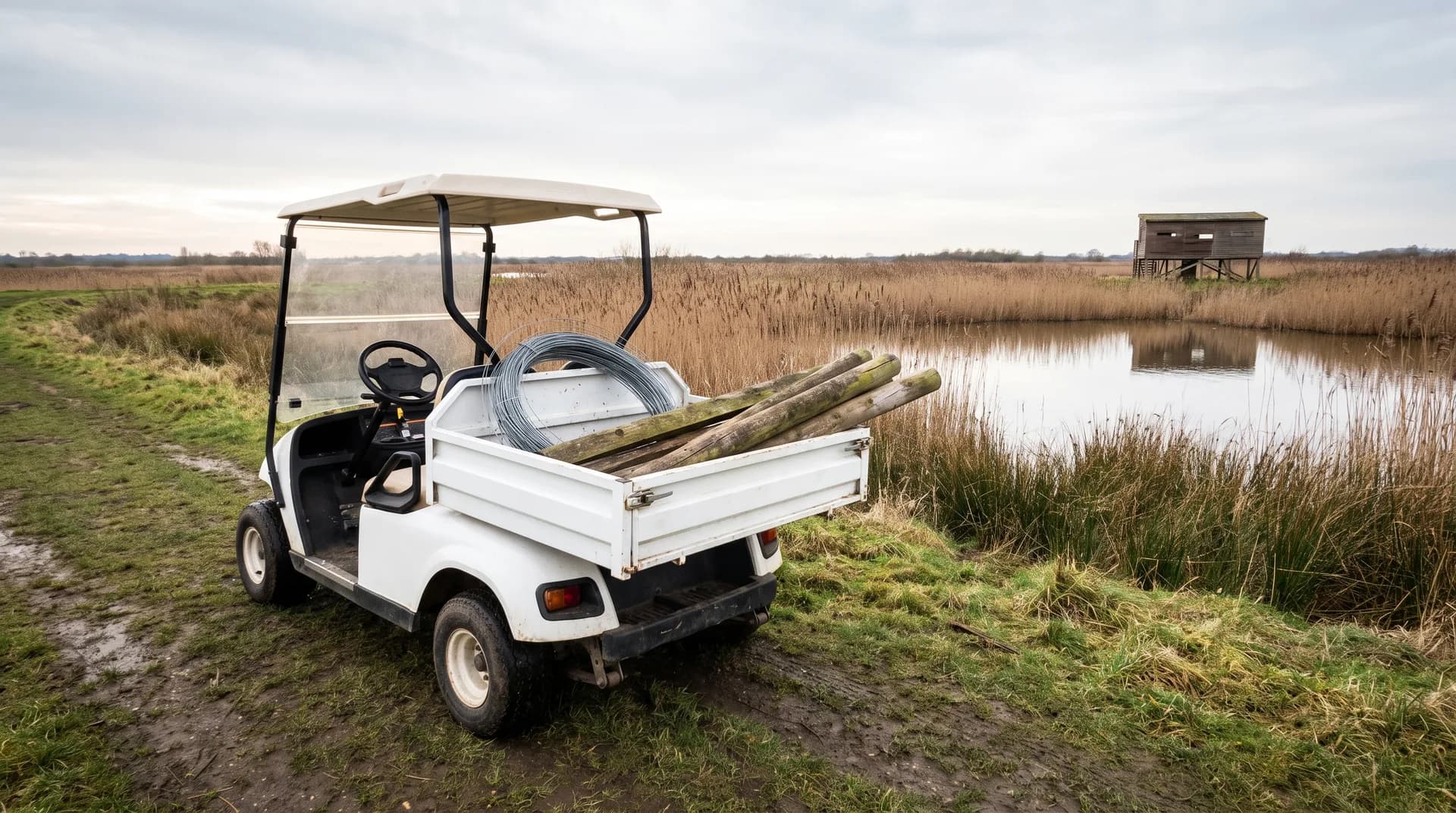
- Hauls the warden's real loads: fencing, tools, hide timber, survey kit.
- No fuel or oil carried through a protected habitat.
- Helps less mobile visitors reach hides on permitted routes, with dignity.
Working without disturbing
Disturbance is the currency a reserve cannot spend: a diesel run past a breeding scrape or through a wintering-wader field costs exactly what the reserve exists to protect. An electric vehicle moves a warden and a load at a fraction of the noise, which changes what work is possible and when, jobs near sensitive areas stop being scheduled around an engine. The same silence that serves a stalker on our shooting estates here serves the opposite purpose: not getting close to wildlife, but working beside it unnoticed.
Fragile ground, honest footprint
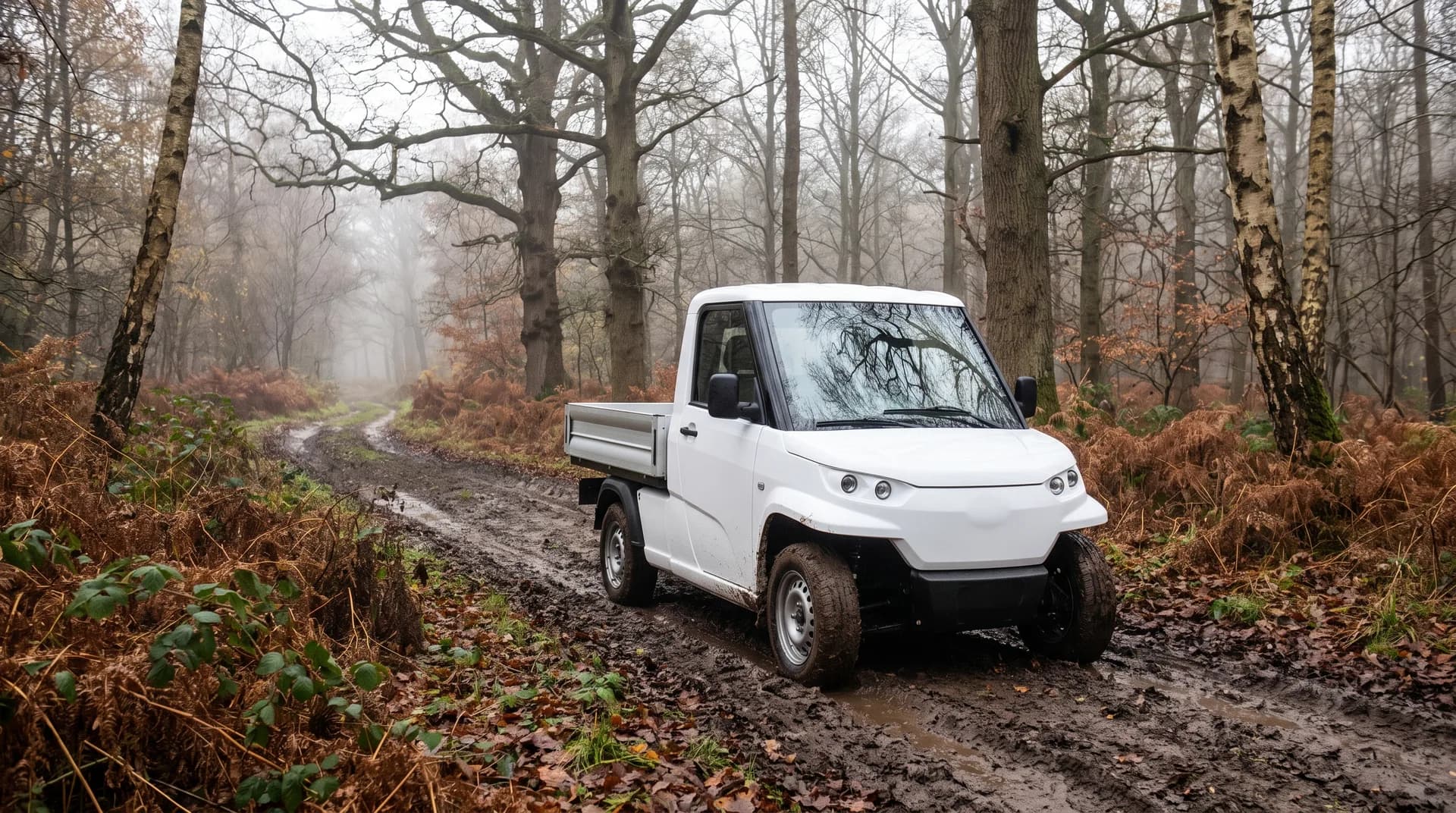
Reserve ground is often the point of the reserve: wet grassland, heath, dune, moss. A vehicle that ruts it has damaged the asset, so ground pressure is specification number one: wide, low-pressure tires, modest loaded weight, and routes agreed the way wardens already plan them, the same tire-and-weight discipline as our tires guide. And because an electric drivetrain carries no fuel tank or oil sump, a puncture or a mishap in the middle of a SSSI spills nothing, a quiet advantage conservation teams appreciate the first time they think about it.
The warden's rounds, and the visitors too
The load list is real conservation work: fence posts and wire to the far compartment, timber for hide and boardwalk repairs, brush-cutting kit and fuel-free tools, survey equipment, and the endless bags of cut material a habitat plan generates. A utility bed on the right tires carries all of it. The same vehicle, driven on permitted routes, also solves a genuine access problem: reserves want to be visited, and a quiet lift to a distant hide keeps the reserve open to members and visitors who cannot manage the walk, dignity our accessibility work is built around.
Frequently asked questions
Why use an electric vehicle on a nature reserve?+
Because the reserve's purpose is non-disturbance, and electric working is near silent: habitat management happens without flushing the wildlife it protects. Low ground pressure protects fragile habitat, and there is no fuel or oil to spill in a protected site.
Will it damage sensitive ground?+
Specified properly, it is among the gentlest ways to move a load across a reserve: wide low-pressure tires, modest weight, and routes planned the way wardens already work. We specify to the habitat, honestly.
What do wardens actually carry?+
Fencing, tools, hide and boardwalk timber, survey kit and endless cut material from habitat work. A utility bed on the right tires does the round quietly, and towing within rating pulls the small trailers reserves already own.
Can it help visitors access the reserve?+
Yes, on permitted routes: a quiet lift to a distant hide keeps the reserve genuinely open to less mobile visitors and members, with a wheelchair-accessible option where the reserve wants one.
Does it suit Wildlife Trust and charity budgets?+
Running costs are pennies against a diesel, servicing is light, and the vehicle works for years, which suits charitable budgets. We quote honestly, and the quiet-working case usually makes itself on the first site visit.
Specify for your reserve
Tell us your habitats, your rounds and your access routes, and we will specify a vehicle that works beside wildlife without disturbing it, and prepare a grounded quote.
Related solutions
Ready to explore what we build?
See the vehicles and the setting this applies to, or get a tailored quote built around your site.
Ready to find the right golf cart?
Tell us how and where it will work and we will specify a vehicle and a tailored quote built around you. Every build comes with a 3-year warranty and a 24-hour priority call-out.
Our guides are written and reviewed by the Hawke Electric Vehicles team, the people who specify, build, deliver and support the vehicles. We focus on honest, practical advice and flag where a figure depends on the build rather than guessing.
More guides by Hawke