It's the question that sits behind every quote: spend the money, or not? An electric cart isn't cheap to buy, and nobody should pretend otherwise. So this is an honest look at whether one's worth it, who it suits, who it doesn't, and what the real cost looks like once you stop staring at the sticker price. We sell electric, so take the bias as read. But the case has to stand on its own, and for most buyers it does.
Are electric golf carts worth it? The short answer
For most people who'll actually use one regularly, yes. The day-to-day experience is better in nearly every way that matters: near-silent, no fumes, instant torque, and almost nothing to service. The running costs are low and steady. The catch is the up-front cost, which is higher than a basic gas machine or a tired second-hand one. Whether it's worth it comes down to how much you'll use it and how much the quiet, clean, premium feel is worth to you. Use it often and the maths usually lands in electric's favour over the years. Use it twice a year and the answer is genuinely closer.
The sticker price is the easy bit to judge. The honest verdict only appears once you add up the years.
Who an electric cart is worth it for
If any of these sound like you, an electric cart tends to repay itself comfortably:
- Regular or daily users. Estates, resorts, golf clubs and resort parks running a cart most days gain most from the low running costs and light servicing. The more it works, the faster it pays back.
- Anyone who values quiet and clean. Move guests at dawn, run near rooms late at night, or work the grounds without an engine drone. On a property where calm is part of the experience, that's worth real money.
- Owners who hate downtime. Fewer parts means fewer breakdowns. A cart that's working isn't sitting in a workshop.
- People who want it to feel right. A premium electric cart looks and drives the part. For a private drive or a guest-facing fleet, the impression it leaves counts.
Who it might not be worth it for
We'd rather be straight than sell you something you won't use. An electric cart is harder to justify if you'll use it only a handful of times a year, since you never rack up enough running-cost savings to offset the spend. It's also the wrong call if you genuinely need to work very long days a long way from any power, with no practical way to charge. That's the one job gas still does better. And if budget is tight and the cart is a nice-to-have rather than a working tool, a good used option may make more sense than a new build. For most buyers, though, none of these apply.
The real benefits, weighed against the cost
Here's the honest balance sheet. The benefits are real and the trade-off is real too.
- Pros
- Near-silent, runs anywhere any time
- Cons
- None worth listing
- Pros
- Zero fumes, no gas to store
- Cons
- None
- Pros
- Low and steady, cheap per use
- Cons
- Needs charging where it's kept
- Pros
- Very light, few parts to fail
- Cons
- Battery replacement in time
- Pros
- Instant torque, premium and refined
- Cons
- None
- Pros
- Built to order, specified for you
- Cons
- Higher to buy than a basic gas or used cart
- Pros
- Overnight charge covers a normal day
- Cons
- Gas still wins with no power at all
| Pros | Cons | |
|---|---|---|
| Noise | Near-silent, runs anywhere any time | None worth listing |
| Emissions and smell | Zero fumes, no gas to store | None |
| Running cost | Low and steady, cheap per use | Needs charging where it's kept |
| Maintenance | Very light, few parts to fail | Battery replacement in time |
| Driving feel | Instant torque, premium and refined | None |
| Up-front cost | Built to order, specified for you | Higher to buy than a basic gas or used cart |
| Long days off-grid | Overnight charge covers a normal day | Gas still wins with no power at all |
Read down that table and the pattern is clear. Almost every column favours electric. The two genuine catches are the price to buy and the need for power where the cart sleeps, plus a battery that you'll replace once over a long life. Everything else points one way.
Why the up-front cost is the wrong number to fixate on
The purchase price is real, and it's higher than a cheap gas machine. Our from-prices start at £11,500 for a two passenger (the Wye), £14,900 for a four passenger (the Avon) and rise from there for larger and bespoke builds. That's the figure people anchor on, and it's the wrong one to judge worth by on its own. A cart isn't a one-off purchase you forget about. It's a vehicle you run for years, and the cost of running it adds up quietly in the background the whole time.
Electricity per use is a fraction of gas and far steadier than fuel at the pump. Servicing is light because there's no oil, no filters, no spark plugs and no exhaust to keep alive. There's no fuel to buy, carry or store. And a cart that rarely breaks down isn't costing you downtime. Stack those savings up across the years a cart works and they usually outweigh the gap in purchase price. For the full breakdown, with energy figures, servicing, parts and a worked example, our electric vs gas running-cost guide is the proper page to read before you decide.
The premium feel, and whether it's worth paying for
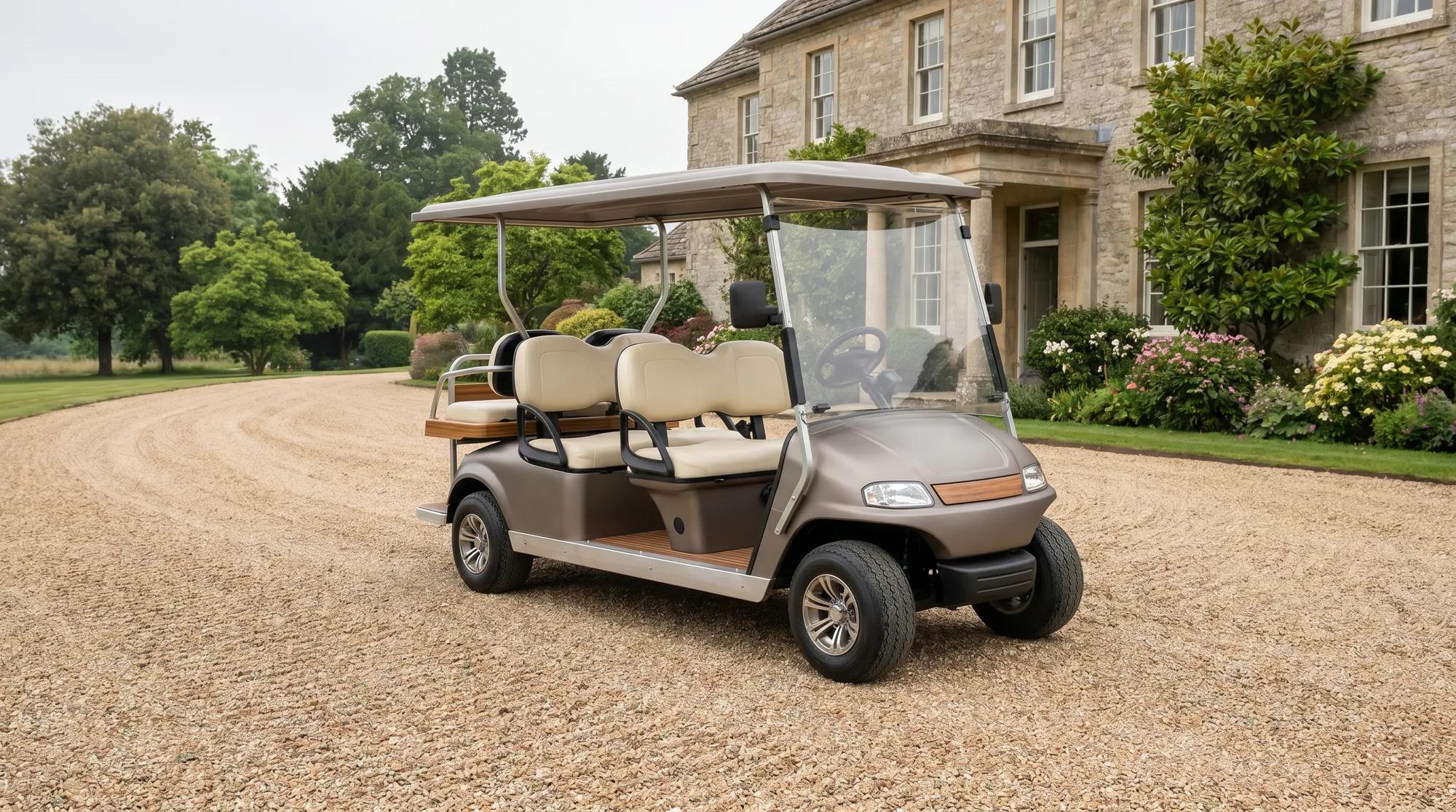
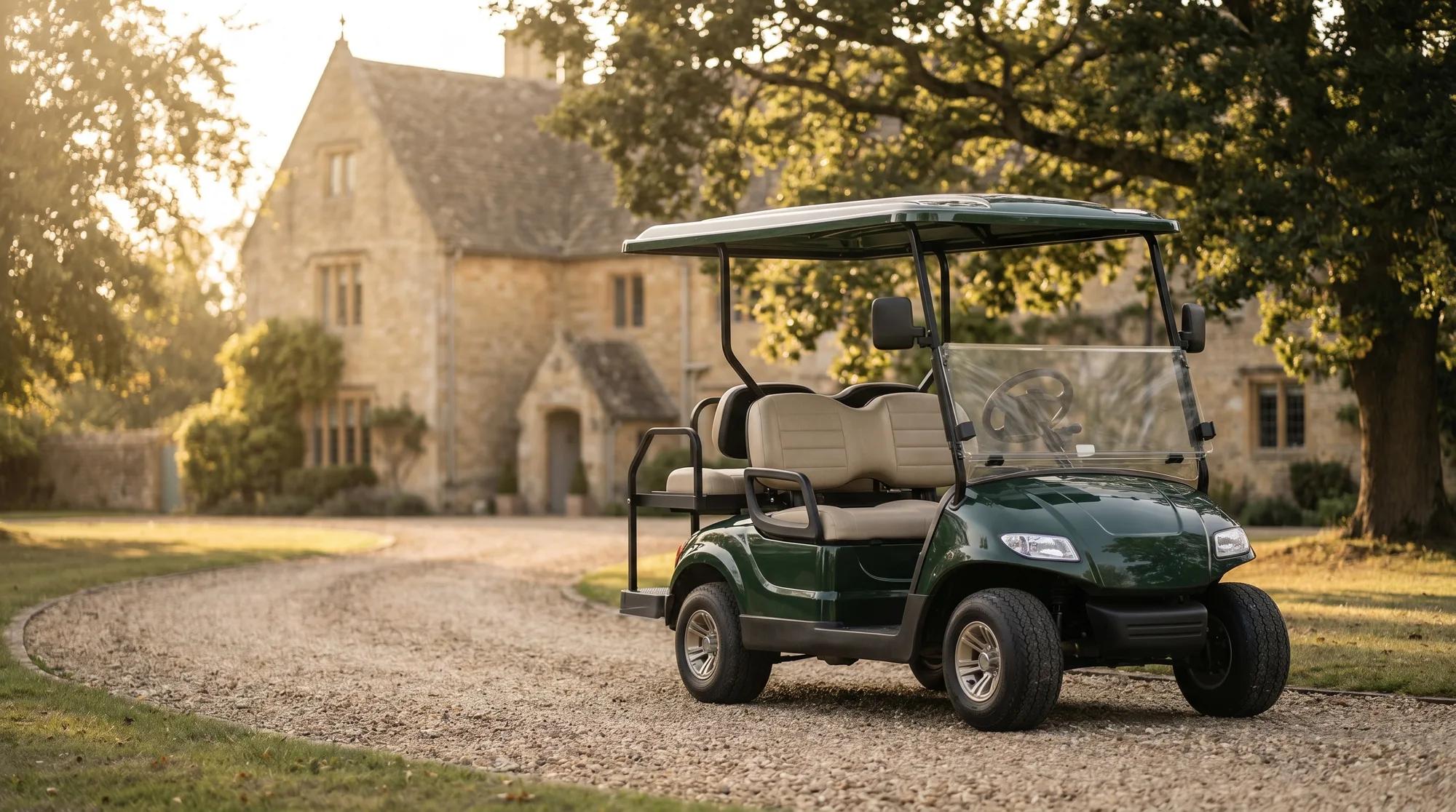
Some of the value isn't on a spreadsheet, and we won't pretend it is. A well-built electric cart is a calm, refined thing to drive and to be driven in. It pulls away smoothly, it doesn't shout, and it suits a country house drive or a guest-facing fleet in a way a clattering gas machine never will. If the cart is part of how your property feels, or part of the impression you give guests, that quiet quality is worth paying for. If it's purely a workhorse hauling kit across a yard and nobody's watching, it matters less. Only you can price that part. Be honest about which camp you're in.
Used often, electric is usually the cheaper choice over the years, and the nicer one every single day.
The honest verdict
Are electric golf carts worth it? For the great majority of buyers, yes. If you'll use one regularly, the low running costs and light servicing tend to repay the higher up-front price over the years, and you get a quieter, cleaner, more refined vehicle the entire time you own it. The case is weaker, and we'll say so plainly, if you'll use it only occasionally, or you genuinely need very long days far from any power. For everyone else, the move is straightforward. While you're weighing it up, the electric golf cart buyers' guide walks through seats, specs and budget, and you can compare models and from-prices across our range.
Find out if it's worth it for you
Tell us how and where you'll use a cart and we'll specify the right one, with a tailored quote and the honest total-cost picture, not just a sticker price. Or compare models and from-prices across the range.
Frequently asked questions
Are electric golf carts worth the money?+
For most people who'll use one regularly, yes. The low running costs, light servicing and lack of downtime usually outweigh the higher purchase price over the years, and you get a quieter, cleaner, more refined vehicle throughout. For very light, occasional use the sums are closer, so be honest about how often you'll use it.
Are electric golf carts cheaper to run than gas?+
Yes. Electricity per use is a fraction of gas and far steadier, servicing is much lighter with no oil, filters, plugs or exhaust, and there's no fuel to buy or store. For regular use those savings typically outweigh any difference in purchase price. Our running-cost guide sets out the figures.
What's the main downside of an electric golf cart?+
The two genuine catches are the up-front cost, which is higher than a basic gas or used cart, and the need for power where the cart is kept, since it charges rather than refuels. You'll also replace the battery once over a long life. For most owners an overnight charge covers a normal day comfortably.
How long do electric golf carts last?+
A well-built electric cart is a long-term vehicle, which is part of why the total cost stacks up well. The battery is the main wear item and is replaced once over the cart's life rather than continually. Our guide on how long golf cart batteries last covers what to expect and how to look after one.
Is it worth buying new or used?+
If you'll use it regularly and want it specified to your needs with a full warranty, a new build is usually worth it. If budget is tight and the cart is a nice-to-have, a good used option can make sense. The right answer depends on use, budget and how much the condition and spec matter to you.
Related solutions
Ready to explore what we build?
See the vehicles and the setting this applies to, or get a tailored quote built around your site.
Ready to find the right golf cart?
Tell us how and where it will work and we will specify a vehicle and a tailored quote built around you. Every build comes with a 3-year warranty and a 24-hour priority call-out.