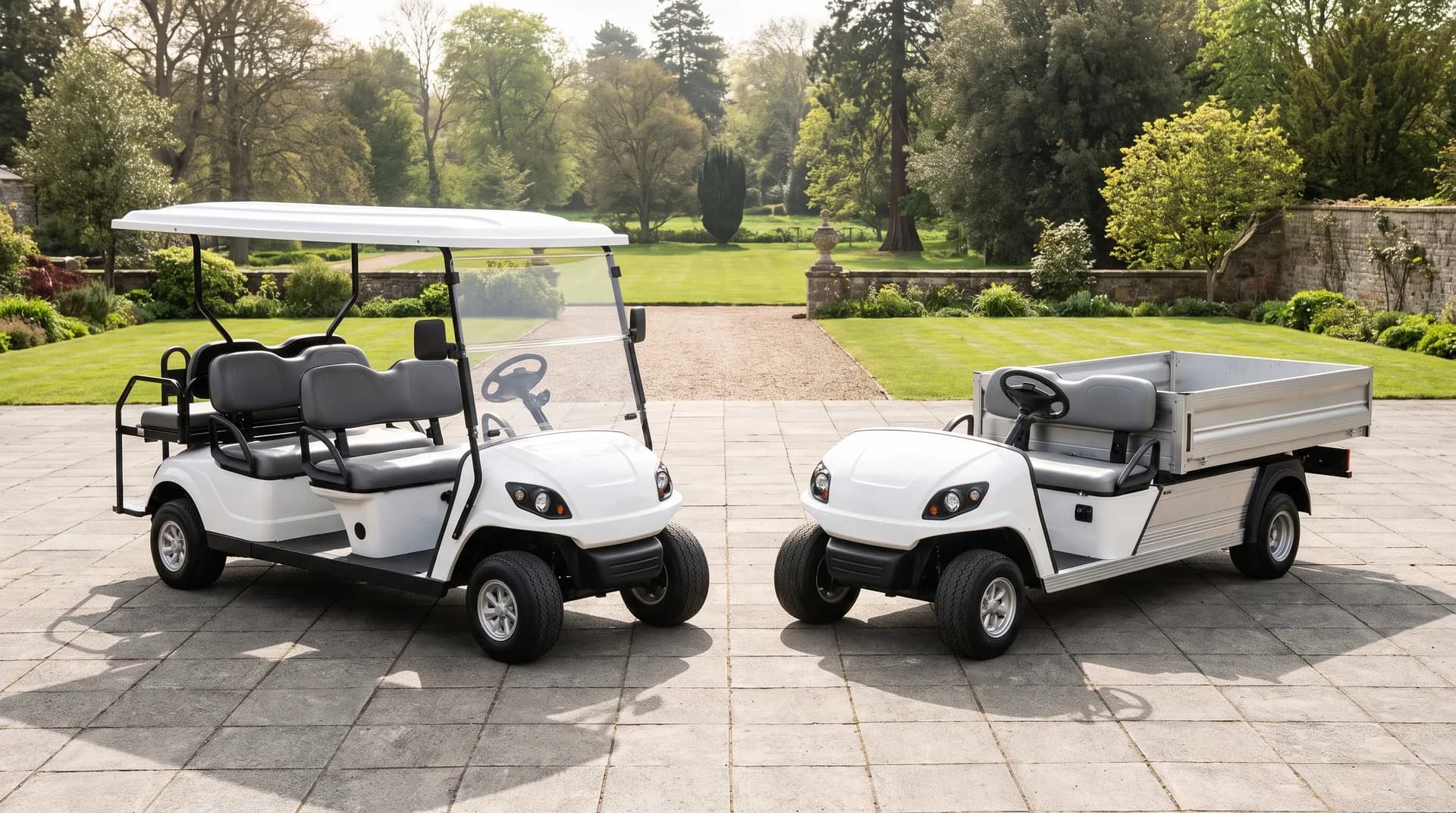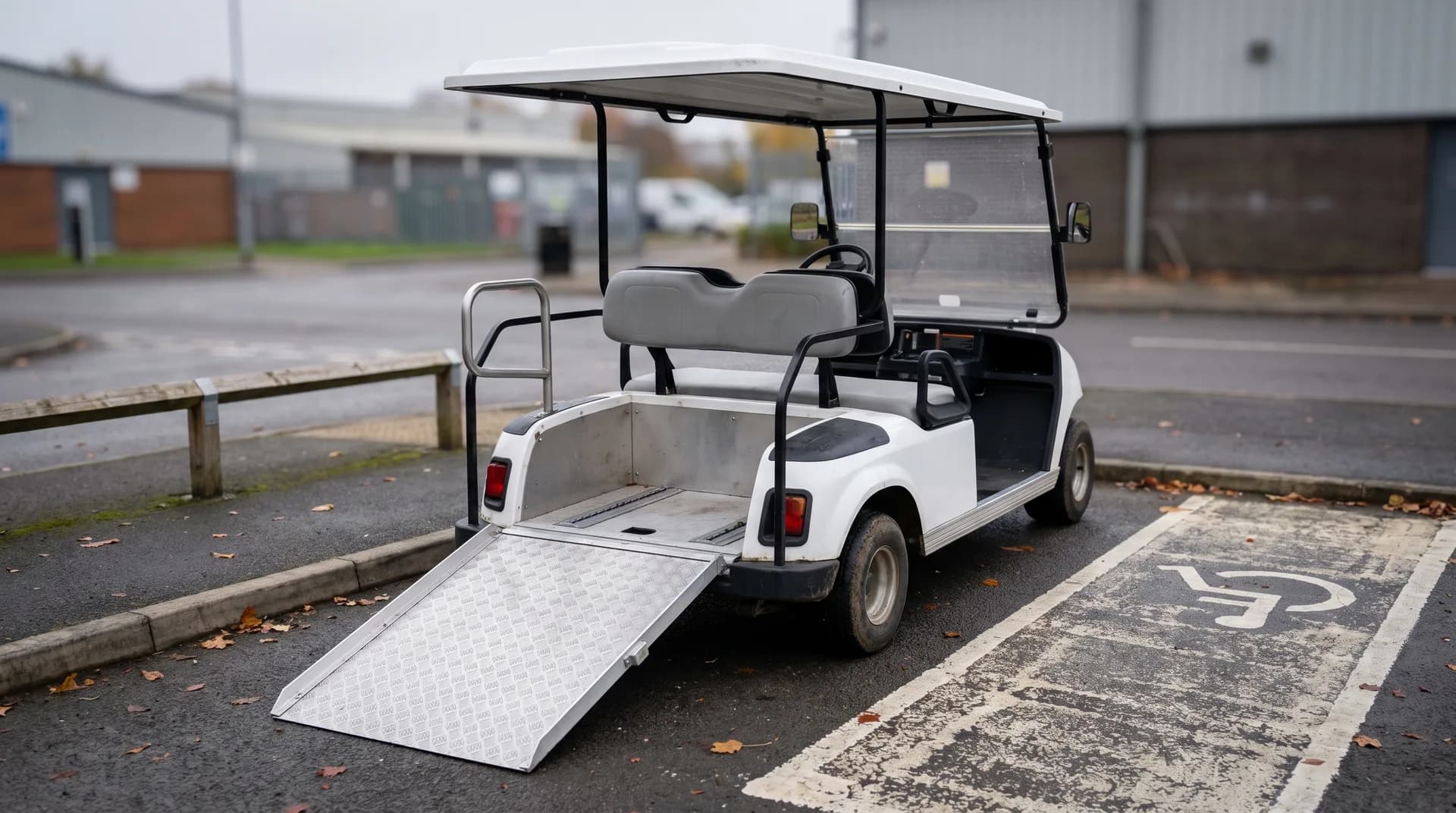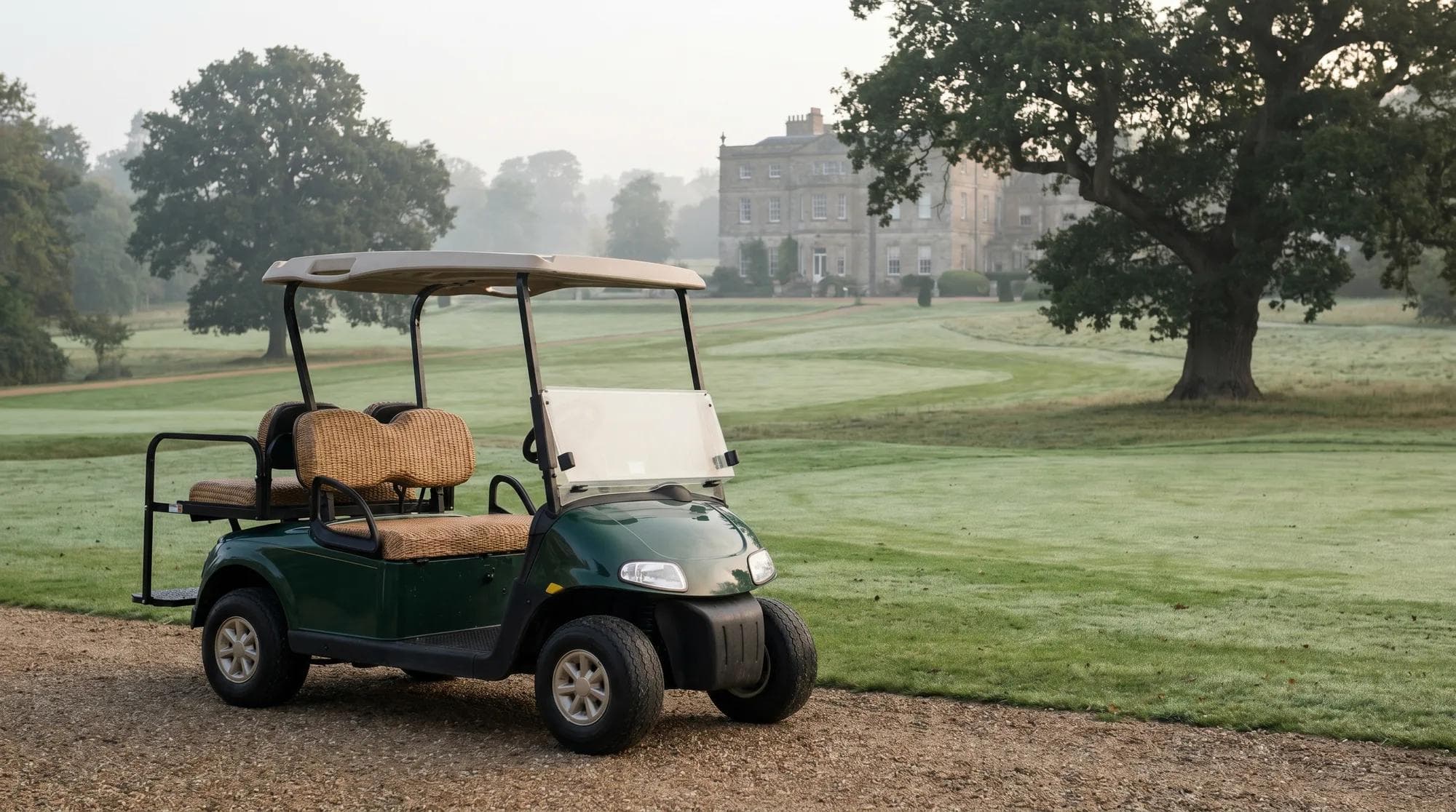
Gas golf carts have been around for decades, so it's a fair question to ask whether they still make sense. For most people moving folk or kit across private land, the honest answer is no. We sell electric, so take the bias as read, but the case stands up on its own once you compare the two side by side. This guide does exactly that, dimension by dimension: noise, maintenance, emissions, performance, refuelling against charging, the smell, suitability and cost. We'll keep the money short here and point you to the deep dive, because the running-cost story deserves its own page.
Electric vs gas golf cart: the short answer
Electric is quieter, cleaner, cheaper to run and far simpler to maintain. It starts at the turn of a key, makes almost no noise, produces no fumes and has very little to service. Gas has one genuine advantage left, which is that you can refuel in two minutes anywhere you can carry a can, so for very long days a long way from any power it can still earn its place. For nearly everything else, an estate, a golf course, a resort, a resort park, a private drive, electric is the better tool and the nicer one to be around.
Electric wins on noise, fumes, maintenance and cost. Gas's only real edge is refuelling far from power.
How they compare, dimension by dimension
Here is the head-to-head in one place. The detail behind each row follows below.
- Electric
- Near-silent
- Gas
- Loud engine drone
- Electric
- None
- Gas
- Exhaust fumes
- Electric
- None
- Gas
- Gas and exhaust
- Electric
- Light, few parts
- Gas
- Oil, filters, plugs, exhaust
- Electric
- Instant torque from a standstill
- Gas
- Builds with revs
- Electric
- Charge overnight or top up
- Gas
- Refuel in minutes from a can
- Electric
- Lower, steadier
- Gas
- Higher, volatile
- Electric
- Almost all private-land use
- Gas
- Long remote days with no power
| Electric | Gas | |
|---|---|---|
| Noise | Near-silent | Loud engine drone |
| Local emissions | None | Exhaust fumes |
| Smell | None | Gas and exhaust |
| Maintenance | Light, few parts | Oil, filters, plugs, exhaust |
| Performance | Instant torque from a standstill | Builds with revs |
| Refuel or recharge | Charge overnight or top up | Refuel in minutes from a can |
| Running cost | Lower, steadier | Higher, volatile |
| Best suited to | Almost all private-land use | Long remote days with no power |
Noise: near-silent against an engine drone
This is the difference you notice first. An electric cart hums quietly and that's about it. A gas one carries an engine drone wherever it goes, which sounds fine on a building site and out of place on a refined estate or a quiet golf course. The practical upside of silence is real, not just pleasant. You can run early in the morning and late at night near rooms and homes without a single complaint, hold a normal conversation while you drive, and move guests without the engine talking over them. On a property where calm is part of the experience, a gas engine works against you every minute it runs.

Maintenance: light against an engine to keep alive
An electric drivetrain has very few moving parts, so there's simply less to go wrong and less to service. No oil changes, no filters, no spark plugs, no exhaust, no fuel system. The wear items you do deal with are familiar and straightforward: tires, brakes, and the battery in time. A gas cart needs all the engine upkeep a small car does, on top of those same wear items, and every one of those services is a cost and a chance for something to fail. Fewer parts also means fewer breakdowns, and downtime is the cost owners most often underestimate. A vehicle in the workshop isn't earning or serving anyone.
Emissions, fumes and smell
Electric produces no local emissions and no smell. Gas produces both, and the smell matters more than people expect. Exhaust fumes are unpleasant near guests, unacceptable indoors or in enclosed spaces, and a problem anywhere air quality is part of what you're selling. There's the gas itself too, which has to be bought, carried, stored safely and accounted for, and which leaves its smell on hands, clothing and the store. Zero emissions also position a fleet well for tightening rules and rising guest expectations around clean, quiet operation. Quiet and clean simply feels more in keeping with a premium setting.
Performance and torque
There's a myth that gas must be the stronger performer. In a cart it usually isn't, at least not where it counts. An electric motor delivers its full torque from a standstill, so it pulls away cleanly, climbs a slope without fuss and tows steadily without needing to be revved. A gas engine builds power as the revs rise, which can feel hesitant from a stop and noisier under load. For the typical cart job, carrying people and kit across mixed ground at modest speed, instant, quiet torque is exactly what you want. Gas's wider rev range matters far more on a fast vehicle than on one cruising a resort path.
Refuelling against charging
This is where gas keeps its one honest advantage. Refuelling takes a couple of minutes from a can, and you can carry fuel anywhere, so a gas cart can keep going through a very long day with no fixed infrastructure at all. An electric cart needs charging, which is best done overnight so it starts each day full, with top-up charging in the lulls for vehicles in constant service. Lithium suits that rhythm well, tolerating partial charges between jobs without harm, and for the vast majority of uses an overnight charge covers a normal day comfortably. The question is simply whether you can get power to where the cart sleeps. Almost everyone can.
Running cost, in brief
Electricity per use is a fraction of gas, and far steadier than fuel at the pump, so the energy line alone usually favours electric. Add the lighter servicing, the absence of fuel to buy and store, and less downtime, and the gap widens the harder the vehicle works. Over the years that typically outweighs any difference in purchase price. We've kept this short on purpose. For the full breakdown, the energy figures, servicing, parts, downtime and a worked example over the years, read our electric vs gas running-cost guide, which is the proper money page for this question.
Which suits your use?
Match the vehicle to the job and the answer is usually obvious. A resort moving guests from early until late wants silent, clean transfers near rooms. A golf club running a fleet across the course every day gains most from the lower energy and servicing bills at scale. An estate working the grounds at dawn can do so without waking guests or disturbing wildlife. Anywhere a vehicle runs indoors, near people or for long hours, electric wins on cost and on how the place feels to be in. The gas edge case is narrow and specific: very long days, a long way from any power, with no practical way to charge. If that's genuinely you, say so, but it's rarer than it sounds.
For almost all private-land use, electric is the better tool. Gas's case is now the exception, not the rule.
The honest verdict
For most private-land use, electric is the clear winner: quieter, cleaner, simpler to maintain and cheaper to run, with instant torque that suits the job. Gas holds a single genuine advantage, fast refuelling far from power, which matters only for very long, remote days with no charging. If that's not your situation, and for the great majority it isn't, the move to electric is straightforward. While you're deciding, our lithium vs lead-acid guide covers the battery choice that sets your range and long-term cost, and the electric golf cart buyers' guide walks through seats, specs and budget. You can also compare models and from-prices across our range.
Find the right electric cart for your use
Tell us how and where you'll use a cart and we'll specify the right one and a tailored quote built around you. Or compare models and from-prices across the range.
Frequently asked questions
Are electric golf carts better than gas?+
For almost all private-land use, yes. Electric is near-silent, produces no fumes, needs far less servicing and costs less to run, with instant torque that suits carrying people and kit. Gas's only real advantage is fast refuelling far from any power, which matters for very long, remote days without charging.
Is a gas golf cart faster or more powerful?+
Not usually where it counts. An electric motor gives full torque from a standstill, so it pulls away and climbs cleanly without being revved. Gas builds power with the revs, which can feel hesitant from a stop. For typical cart work, instant electric torque is the better fit.
Do electric golf carts cost less to run than gas?+
Yes. Electricity per use is a fraction of gas and far steadier, servicing is lighter with fewer parts, and there's no fuel to buy or store. For regular use the savings usually outweigh any purchase-price difference. Our running-cost guide sets out the figures and a worked example.
What's the main downside of an electric cart versus gas?+
It needs charging rather than a two-minute refuel, so you need power where the cart is kept. An overnight charge covers a normal day for almost everyone, with top-ups in the lulls for heavy use. Only very long, remote days with no charging favour gas.
Are gas golf carts noisy?+
Yes, compared with electric. A gas engine carries a constant drone, which is out of place on a quiet estate, golf course or resort and rules out early, late or indoor running near guests. Electric is near-silent, so it can run almost anywhere without complaint.
Related solutions
Ready to explore what we build?
See the vehicles and the setting this applies to, or get a tailored quote built around your site.
Ready to find the right golf cart?
Tell us how and where it will work and we will specify a vehicle and a tailored quote built around you. Every build comes with a 3-year warranty and a 24-hour priority call-out.
Our guides are written and reviewed by the Hawke Electric Vehicles team, the people who specify, build, deliver and support the vehicles. We focus on honest, practical advice and flag where a figure depends on the build rather than guessing.
More guides by Hawke