An enclosure turns a fair-weather golf cart into a year-round one. It keeps rain, wind and cold out, extends the season at both ends, and on a cold morning it is the difference between using the cart and leaving it parked. But enclosures vary enormously, from a cheap zip-on cover that flaps and fogs to a tailored hard-door system that feels like part of the cart. This guide explains the main types, how fit works, the materials and details that decide whether an enclosure lasts, and roughly what to budget. It sits alongside our wider look at accessories worth the money.
Soft enclosures versus hard doors
Almost every enclosure falls into one of two families, and choosing the right family is most of the decision.
Soft enclosures
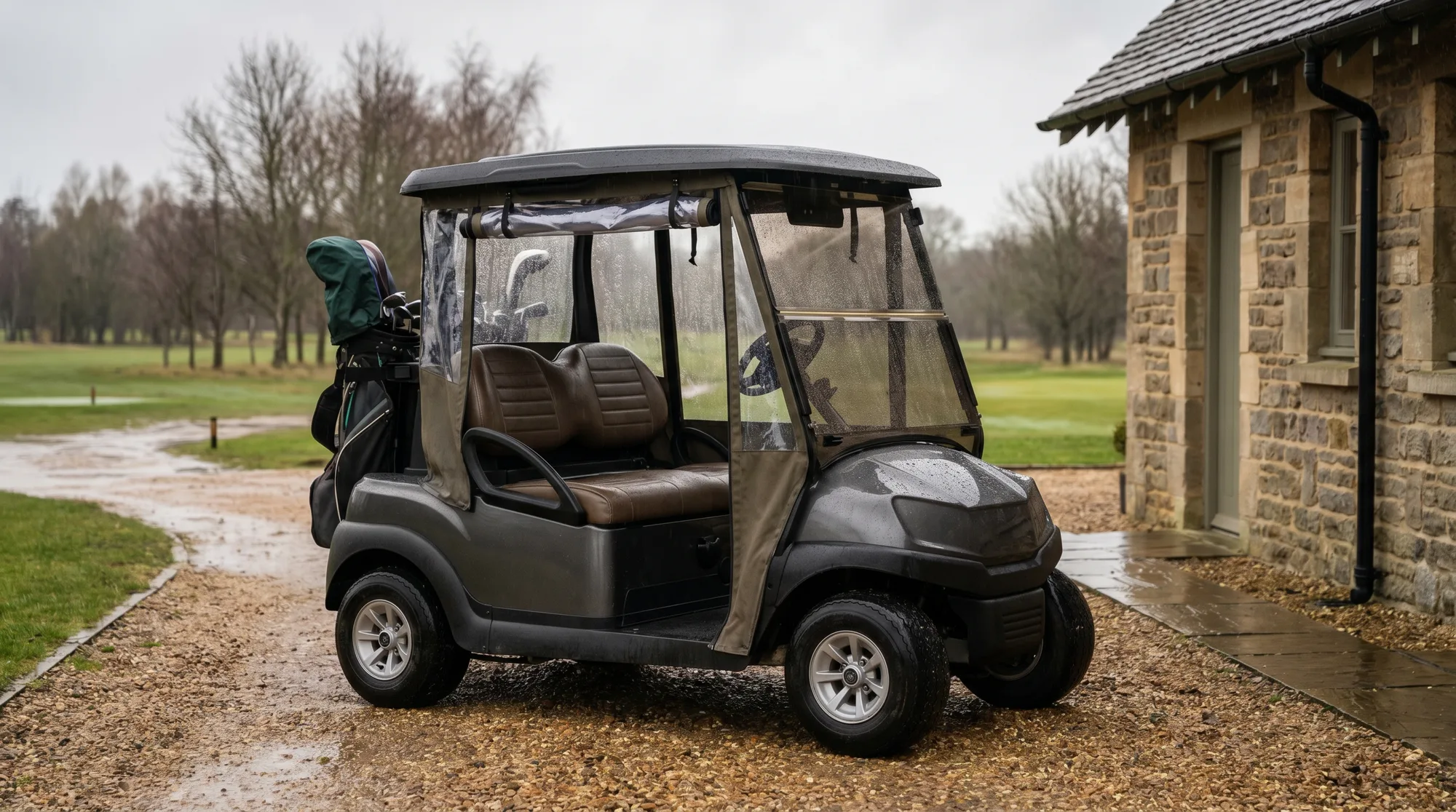
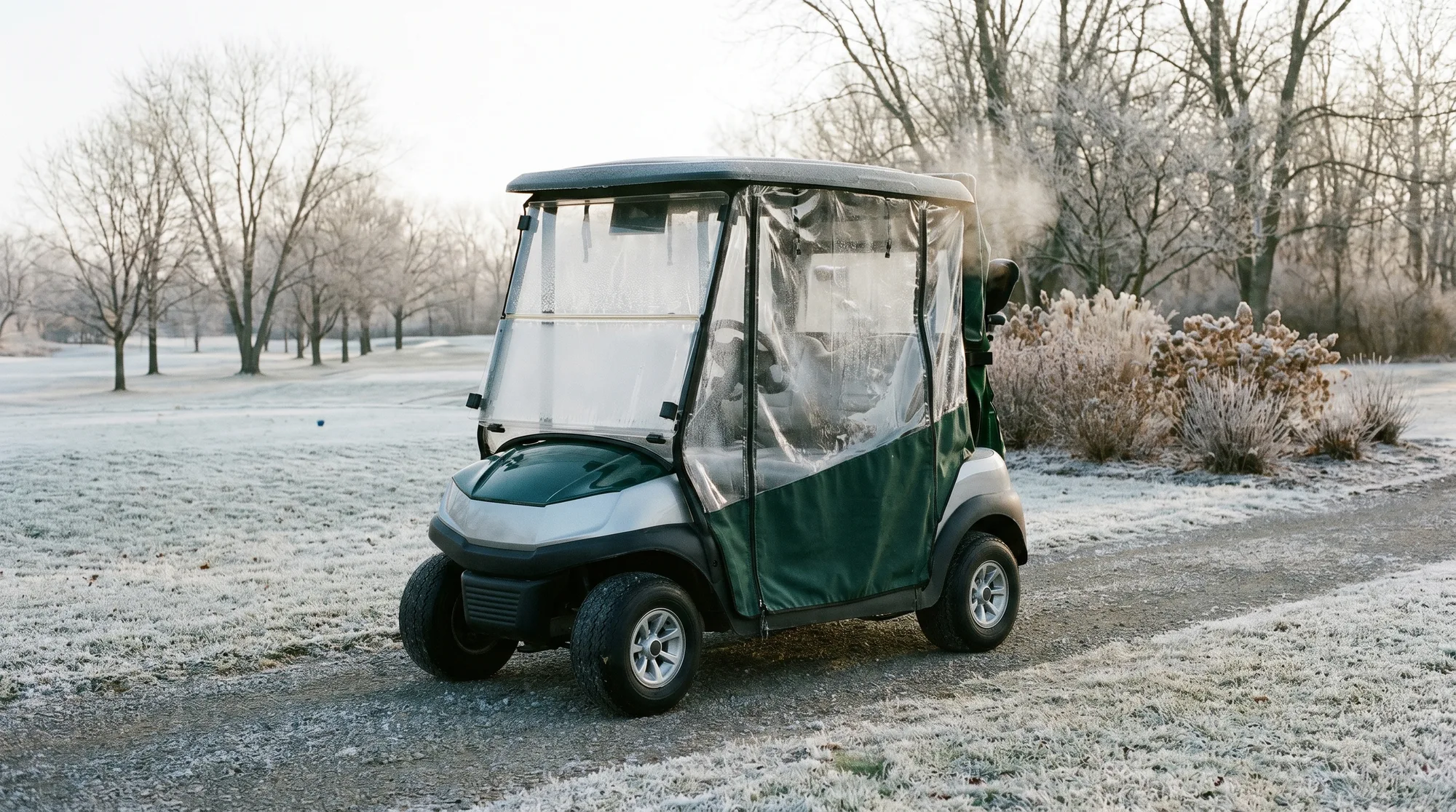
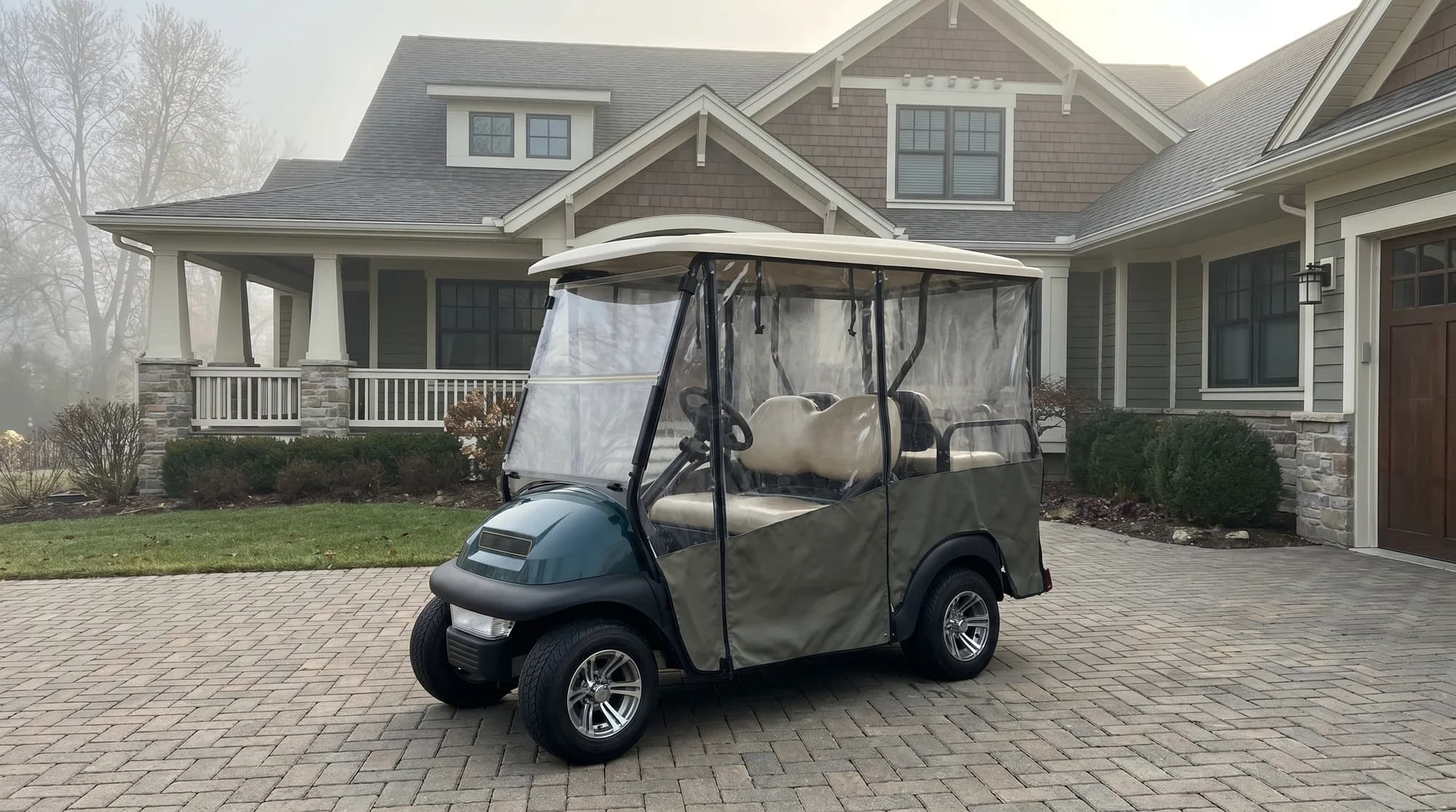
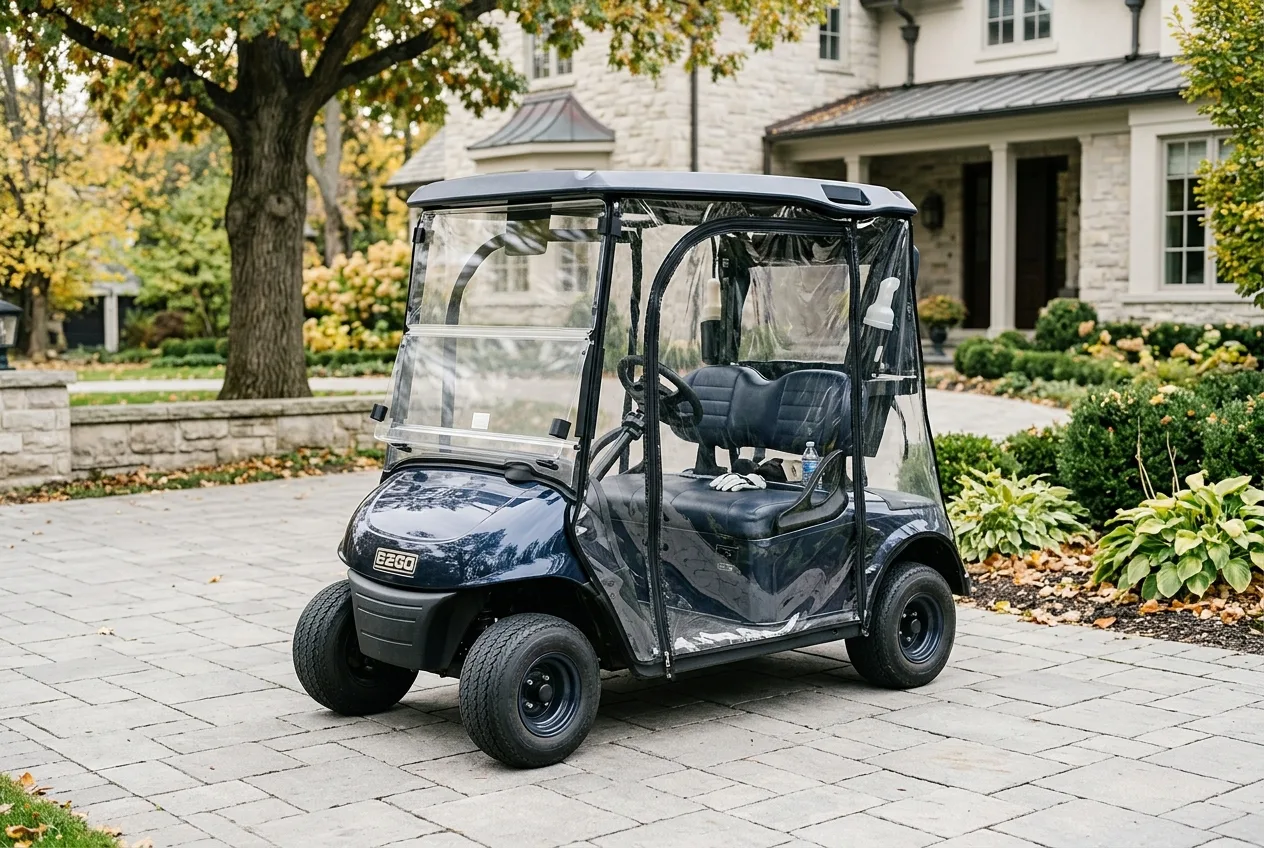
A soft enclosure is a fabric or vinyl cover with clear window panels that zips or fastens around the cart, attaching to the roof, struts and body. It is affordable, light, and easy to fit and remove for the season. The trade-offs are that cheaper ones flap at speed, the clear panels can fog or yellow over time, and the fit is rarely as tight as a hard system. For many owners who only need cold and wet protection in winter, a good soft enclosure is plenty.
Hard doors and hybrid systems
Hard-door enclosures use rigid doors, often with sliding or roll-down windows, sometimes combined with a fixed windshield and rear panel. They feel solid, seal better, last longer and look far more finished, at a meaningfully higher price. Many are model-specific. If you use the cart year-round or in genuinely cold or wet country, hard doors are the long-term answer.
- Soft enclosure
- Lower
- Hard doors
- Higher
- Soft enclosure
- Good if quality
- Hard doors
- Best
- Soft enclosure
- Seasons, can yellow
- Hard doors
- Years
- Soft enclosure
- Can flap
- Hard doors
- Solid, integrated
- Soft enclosure
- Occasional cold/wet use
- Hard doors
- Year-round use
| Soft enclosure | Hard doors | |
|---|---|---|
| Cost | Lower | Higher |
| Weather seal | Good if quality | Best |
| Durability | Seasons, can yellow | Years |
| Fit and feel | Can flap | Solid, integrated |
| Best for | Occasional cold/wet use | Year-round use |
Getting the fit right
The most common enclosure regret is a poor fit, and it is almost always avoidable. An enclosure has to match three things: your cart make and model, the number of seats including any rear seat or cargo bed, and your roof. A two-passenger enclosure will not cover a four-passenger cart, and a cover cut for a short roof will not seal to a long one.
- 01
Confirm make, model and year
Enclosures are often model-specific. Have your cart's make, model and year ready before you shop.
- 02
Count the seating and length
Match the enclosure to two, four or six passengers, and to any extended rear seat or cargo bed, so it covers the whole cabin.
- 03
Check the roof
Confirm the enclosure suits your roof type and length. The roof is the main anchor point, so a mismatch leaks and flaps.
- 04
Plan attachment points
Look at how it fastens, to struts, the roof lip and the body, and confirm your cart has compatible points.
Materials and the details that last
Two enclosures can look identical online and behave completely differently after a year outdoors. The difference is in the materials and the small details.
- Window panels: marine-grade clear vinyl resists yellowing and cracking far better than thin film. This is the part that decides how it ages.
- Fabric: a heavier, UV-stable, water-resistant fabric outlasts thin polyester and holds its shape.
- Zippers and fasteners: rust-resistant zippers and strong straps are what fail first on cheap covers.
- Seams: bound or welded seams shed water; raw stitched seams wick it in.
- Storage: a way to roll up or stow panels in mild weather keeps them from creasing and cracking.
Ventilation and visibility
A fully sealed cabin with bodies inside it fogs the windows fast, which is both annoying and unsafe. The better enclosures address this with roll-up doors or window panels, small vents, or zip openings that let you crack the cabin without removing it. Keeping the clear panels clean and uncracked also matters for visibility; a yellowed, crazed front panel is a real hazard, which is another reason the window material is worth paying for.
Fitting, storage and care
Soft enclosures are usually owner-fitted in an afternoon; hard-door systems can need more work and sometimes professional fitting. Whichever you choose, care extends its life: clean the clear panels with a product made for vinyl, never a harsh solvent, store soft enclosures rolled rather than folded to avoid permanent creases, and dry them before storage to prevent mildew. For broader cold and hot weather kit that pairs with an enclosure, see our hot and cold climate accessories guide, and for off-season protection the covers and storage guide.
So which should you buy?
If you only need to beat the occasional cold snap or rain shower, a good-quality soft enclosure with marine-grade windows is the sensible buy. If the cart works year-round or lives somewhere genuinely cold and wet, invest in hard doors for the seal, durability and finish. Either way, buy to your exact cart, prioritize the window material, and make sure it can ventilate. If you want help matching an enclosure or a year-round build to your climate, tell us where you are and we will advise with honest numbers.
Build a year-round cart for your climate
Tell us your cart and climate, and we will spec an enclosure and comfort package with an honest price.
Frequently asked questions
Are soft or hard golf cart enclosures better?+
Soft enclosures are cheaper, lighter and easy to fit for seasonal use. Hard doors seal better, last longer and feel integrated, at a higher price. Choose soft for occasional cold and wet, hard for year-round use.
Will a universal enclosure fit my cart?+
Only if it matches your seat count and roof. A loose universal cover flaps and leaks. Buy to your specific make, model and year wherever possible, and measure if unsure.
How much does a golf cart enclosure cost?+
Roughly from one hundred dollars for a basic soft cover, two hundred to five hundred for a quality soft enclosure, and upward of five hundred for tailored hard-door systems. Prices vary by cart and quality.
Why do my enclosure windows fog up?+
A fully sealed cabin with people inside traps moisture. Choose an enclosure with roll-up panels or vents, and crack it slightly in mild weather to keep the clear panels clear.
How do I make an enclosure last?+
Buy marine-grade vinyl windows, clean panels with a vinyl-safe product, store soft enclosures rolled and dry to avoid creases and mildew, and look for rust-resistant zippers and bound seams.
Related solutions
Ready to explore what we build?
See the vehicles and the setting this applies to, or get a tailored quote built around your site.
Ready to find the right buggy?
Tell us how and where it will work and we will specify a vehicle and a tailored quote built around you. Every build comes with a 3-year warranty and a 24-hour priority call-out.