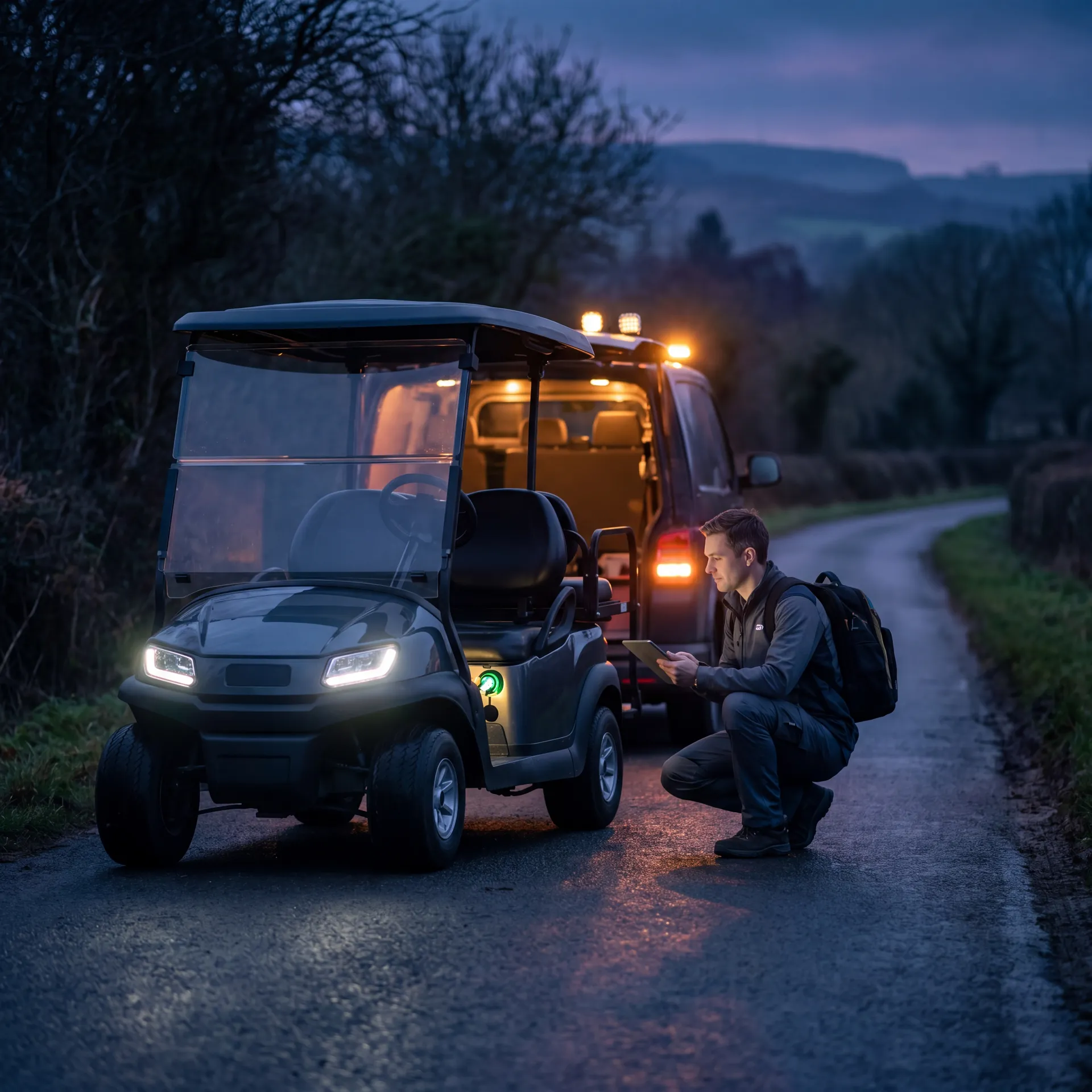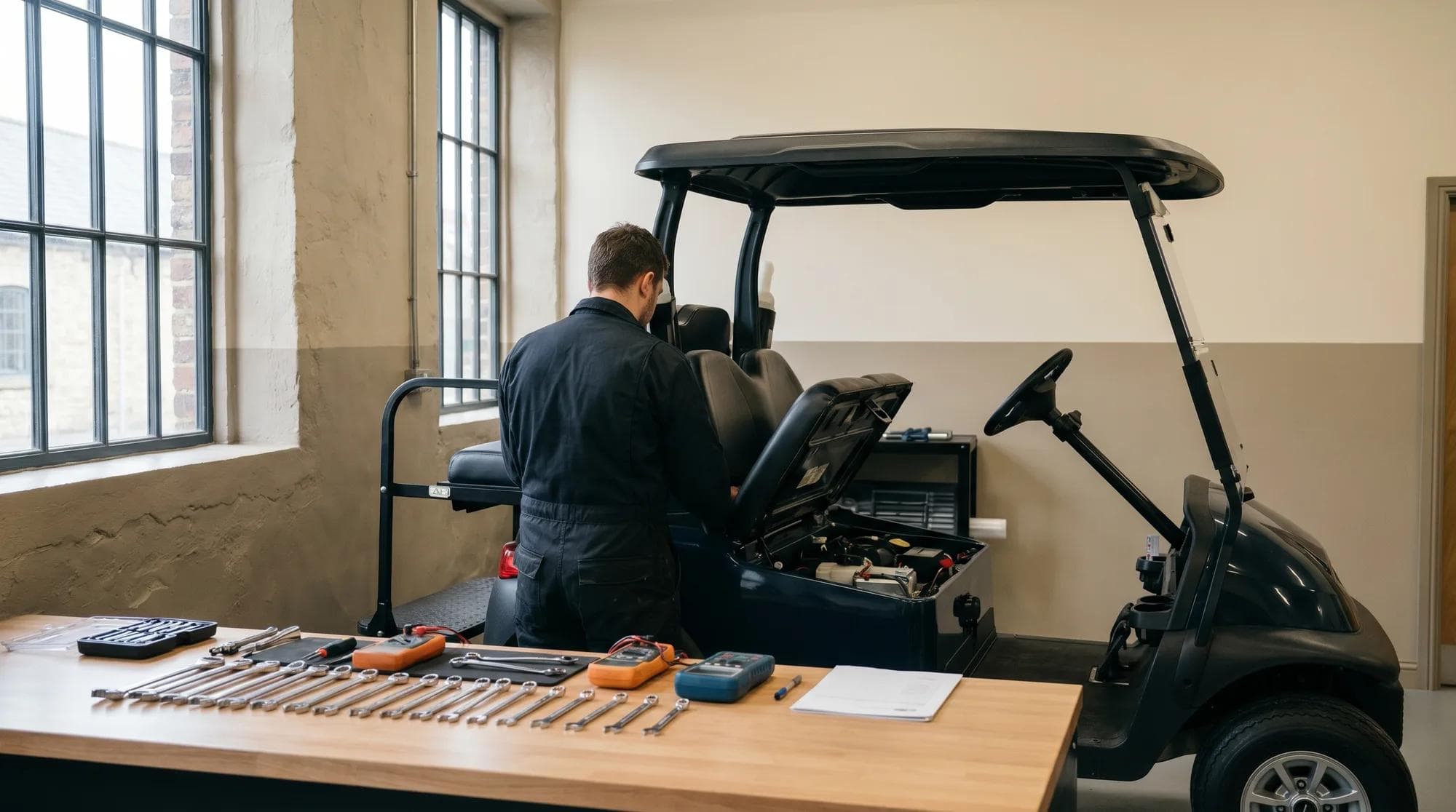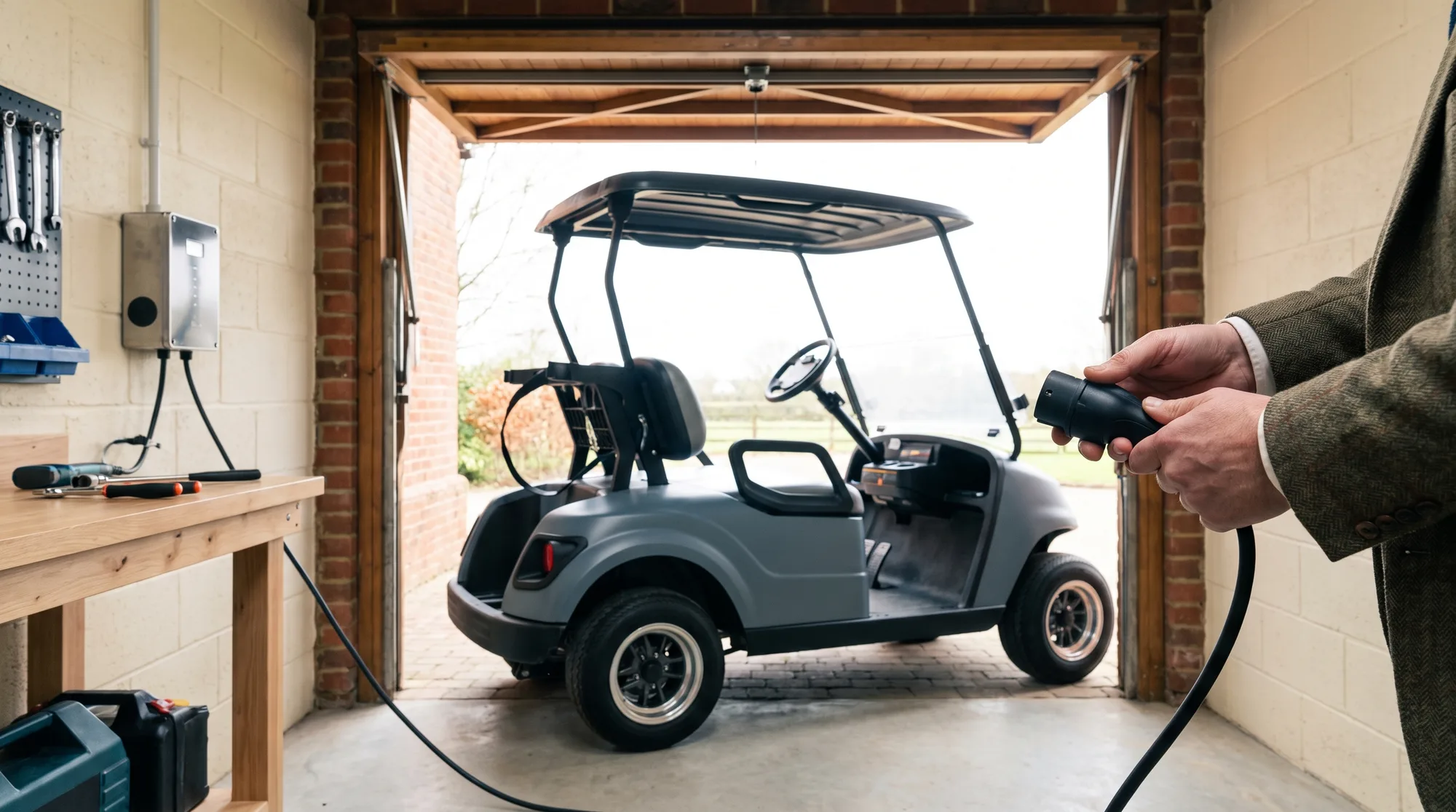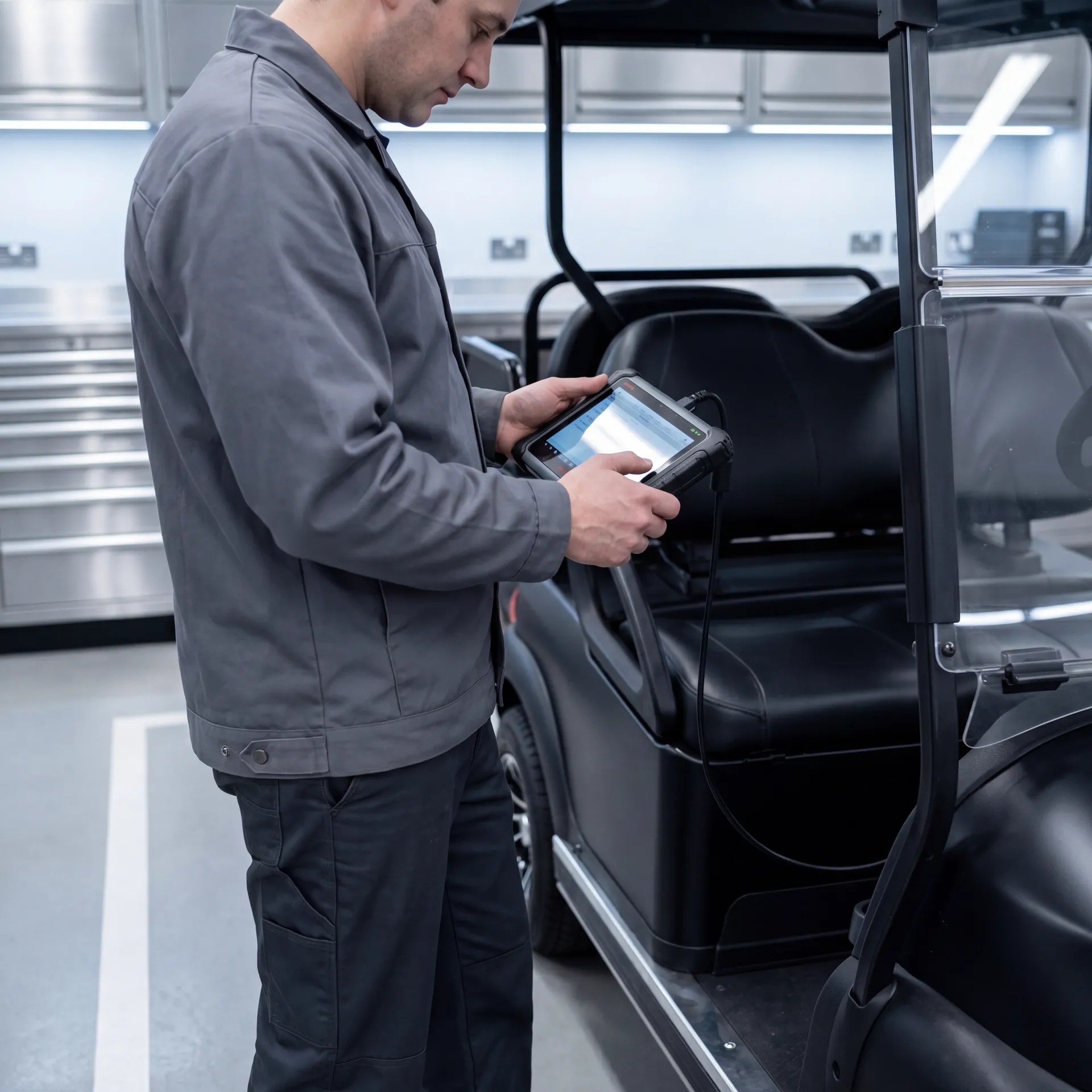
An electric buggy is a simple electrical system: a battery, a controller, a motor and the wiring and fuses that join and protect them. That simplicity means most electrical symptoms, dim lights, blown fuses, a hot motor, a controller cutting back, trace to a short list of causes: low or failing batteries, a poor connection making resistance and heat, or a component being asked to work beyond itself. This guide covers what an owner can safely check and where the hard line sits, and it starts with the one rule that outranks every diagnostic step. The advice applies to any electric buggy, or golf cart in American parlance.
- Smoke or burning smells mean stop, switch off, keep clear and call; never drive on.
- Dim or flickering lights usually mean a low pack or a corroded connection.
- A fuse that blows repeatedly is protecting you from a real fault; never fit a bigger one.
- Hot motors and controllers usually mean hard work, load or a dragging brake, and protection cutback is deliberate.
- Owners check and observe; high-current repairs belong to an engineer.
Lights dim, flickering or not working
Lights are a low-power accessory, so when they misbehave the cause is usually upstream. Lights that are dim everywhere point to a low or ageing pack: charge fully and compare. Lights that flicker over bumps point to a loose connection or earth somewhere in the loom, the same family of fault that causes cutting out while driving. One light out on its own is most likely its bulb or fuse. Check the accessory fuse if you can reach it without disturbing wiring, but leave loom repairs alone; chafed insulation needs proper repair, not tape.
It keeps blowing fuses
A fuse is a deliberate weak point that sacrifices itself to protect the wiring and you. One blown fuse, replaced once with the identical rating, can be bad luck. A fuse that blows again is a message: somewhere a wire is chafed through, a component is drawing too much current, or moisture has bridged a connection. The one thing never to do is fit a bigger fuse or bypass it, because the next weakest point in the circuit is then the wiring itself, and wiring fails as heat and smoke. The same applies to a main breaker that keeps tripping: reset it once, and if it trips again, stop and book an engineer.
The motor is getting hot
Motors run warm in normal use, and hot after hills, heavy loads or towing; that alone is not a fault. What deserves attention is a change: a motor too hot to hold a hand near after ordinary work, a hot smell, or heat arriving with a loss of power. Common causes are honest overwork, under-inflated tyres adding rolling drag, a brake dragging and loading the motor constantly, or a tired pack forcing more current for the same work. Check tyre pressures and feel for a hot wheel hub after a gentle drive, which betrays a dragging brake, then have anything beyond that inspected. A motor that smokes has already crossed the stop-now line above.
The controller is overheating or cutting back
The controller meters power between pack and motor, and it protects itself by reducing power when it runs hot, so a buggy that turns sluggish on a long climb and recovers after a few minutes' rest is showing deliberate protection, not damage. Frequent cutback on ordinary work, though, means something is loading the system: the same suspects as a hot motor, or a controller connection building resistance. Controllers live behind high-current connections and stored energy, so beyond keeping their vents and surroundings clear of debris, they are strictly an engineer's territory; never open or probe one.
Where the owner's job ends
The safe owner's toolkit here is observation: which lights, which fuse, how hot, when, and a photo or video for the engineer. Replacing a like-for-like accessory fuse once and checking tyre pressures are fair game. Everything else on this page, looms, motors, controllers, repeat fuse-blowing, anything that has been hot enough to smell, involves currents that can burn and faults that escalate, and it needs a professional. That is not caution for its own sake; electrical faults are the ones that turn a repair bill into a rebuild. Our guide to common golf buggy faults covers the wider diagnosis order.
Frequently asked questions
Why does my golf buggy keep blowing fuses?+
A repeatedly blowing fuse means a real fault: chafed wiring, a failing component drawing too much current, or moisture in a connection. Replace a fuse once with the identical rating; if it blows again, book an engineer. Never fit a bigger fuse.
Why are my buggy's lights dim or flickering?+
Dim everywhere usually means a low or ageing battery; flickering over bumps points to a loose connection or earth; one light out is likely its bulb or fuse. Charge fully first, then have persistent flickering traced.
Is it normal for the motor to get hot?+
Warm is normal, and hot after hills or heavy loads is common. A motor too hot to hold a hand near after ordinary work, a hot smell, or heat with power loss needs checking; tyre pressures and a dragging brake are common culprits.
Why does my buggy lose power on long climbs?+
Controllers and motors deliberately reduce power when hot to protect themselves, and recover after a few minutes. If cutback happens on work the buggy used to manage easily, have it inspected.
My buggy smoked briefly but seems fine now. Can I use it?+
No. Anything that has smoked or smelt of burning has damaged insulation or a component, and the fault will return, possibly as fire. Keep it out of use, do not recharge it and have it inspected first.
Electrical fault on your buggy?
From repeat fuse-blowing to hot motors, our engineers trace electrical faults safely. Book a visit, with 24-hour priority call-out on service plans.
Related solutions
Ready to explore what we build?
See the vehicles and the setting this applies to, or get a tailored quote built around your site.
Ready to find the right buggy?
Tell us how and where it will work and we will specify a vehicle and a tailored quote built around you. Every build comes with a 3-year warranty and a 24-hour priority call-out.
Our guides are written and reviewed by the Hawke Electric Vehicles team, the people who specify, build, deliver and support the vehicles. We focus on honest, practical advice and flag where a figure depends on the build rather than guessing.
More guides by Hawke