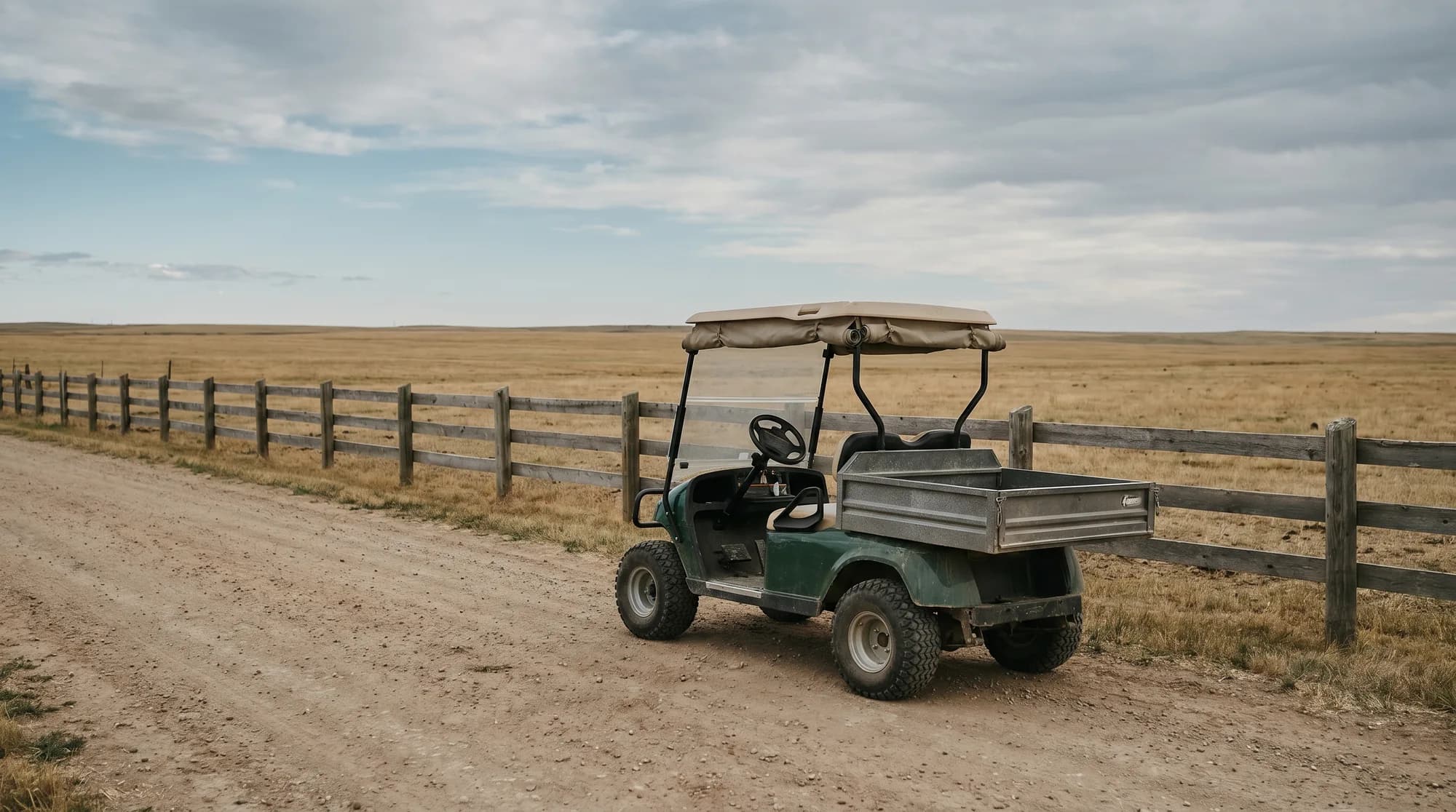
On a working farm or ranch, a utility cart is one of the hardest-earning vehicles on the property. It hauls feed and tools, tows trailers, carries crew across acreage, checks fence lines and runs the daily chores that a full-size truck is too big and too thirsty for. But a course cart and a working utility cart are different animals. The farm version has to carry real payload, tackle mud, ruts and slopes, survive abuse and run reliably miles from the nearest charger or fuel can. This guide is written for that working buyer, covering payload and towing, terrain, the electric-versus-gas decision, durability, charging and the genuine return against the alternatives.
Payload, cargo and towing come first
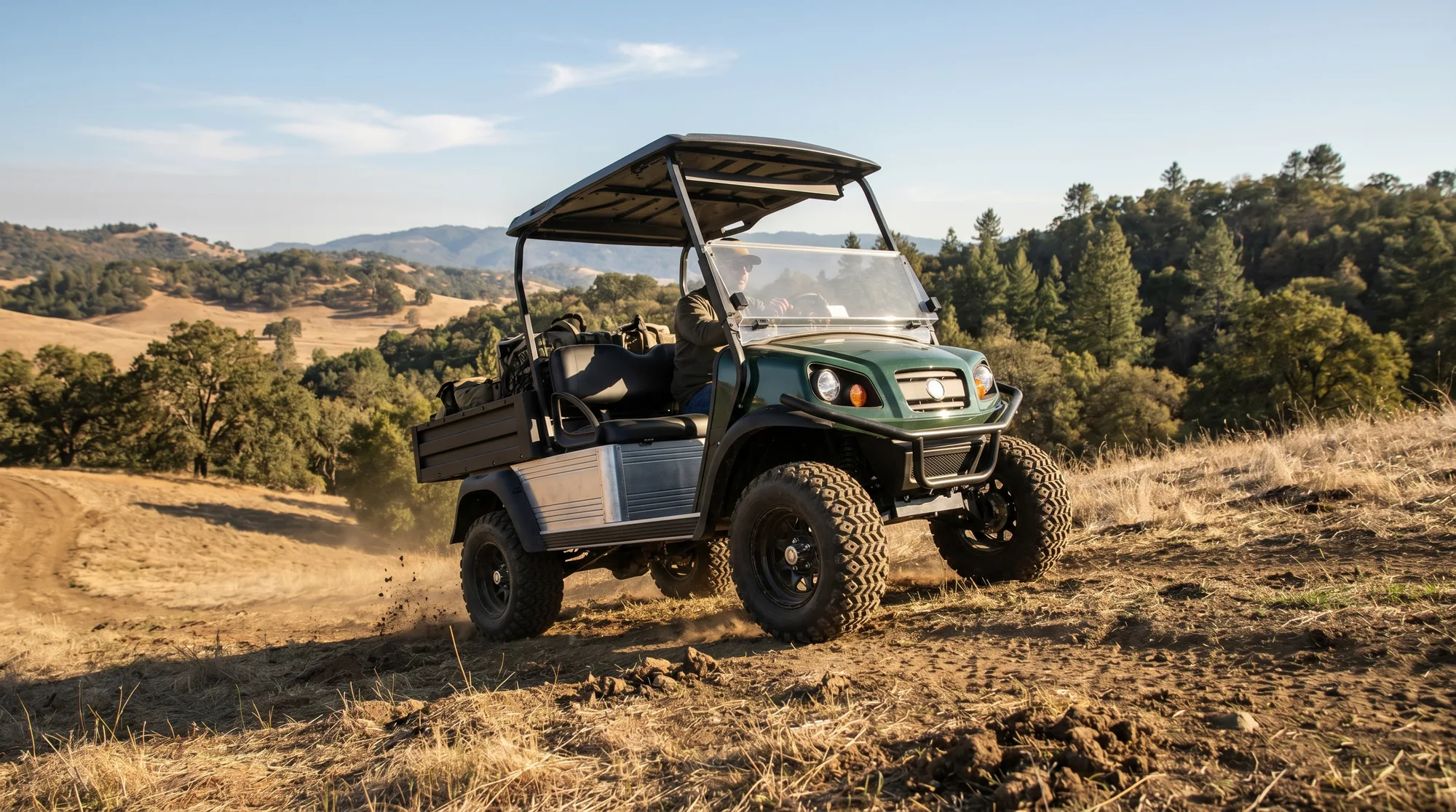
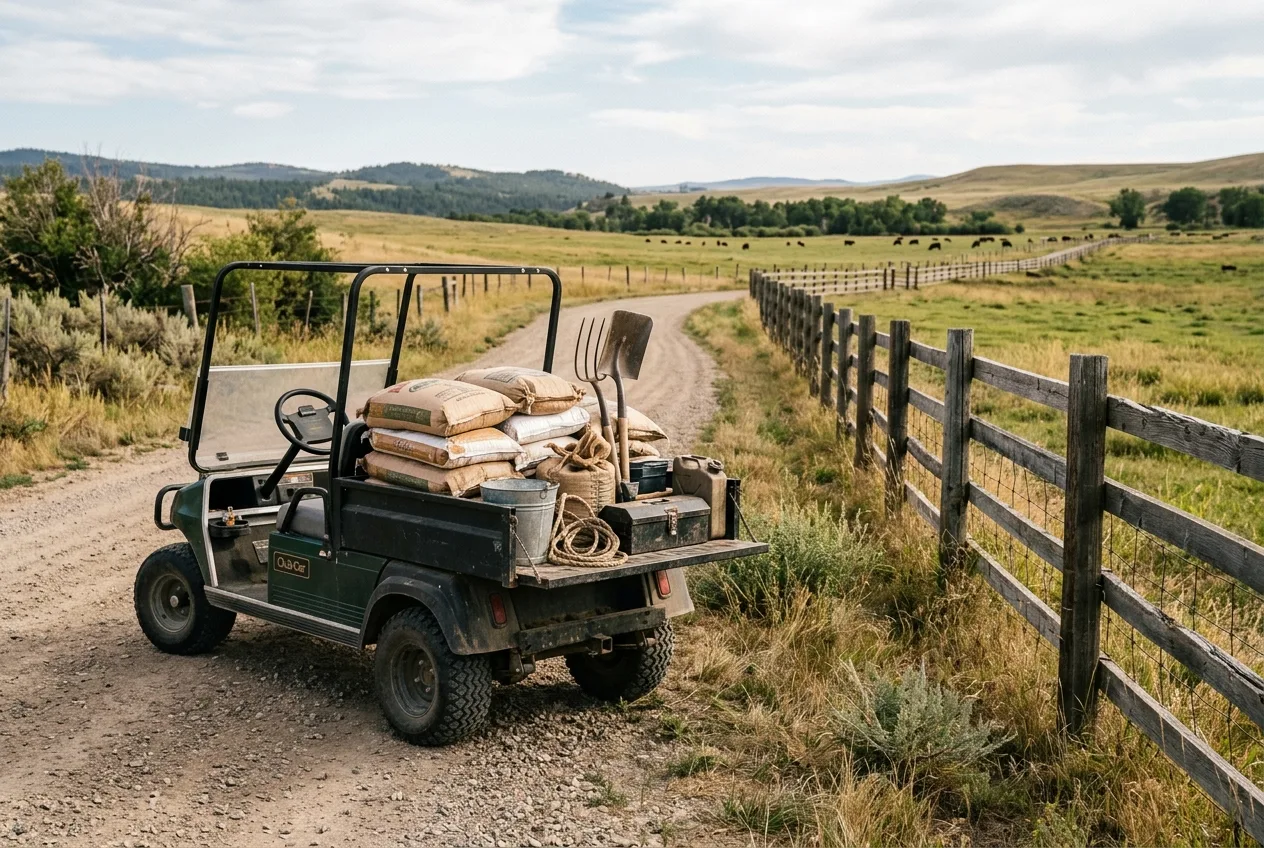
The defining question for a farm or ranch cart is what it has to carry and pull. A utility cart with a proper cargo bed is the baseline: feed sacks, fence posts, tools, water, supplies. Look hard at the rated payload and bed size, because an underspecced cart that is always overloaded will wear out fast and handle badly. Towing capacity matters just as much if you pull small trailers, sprayers or implements; confirm the rated towing figure rather than assuming. A tilting or dump bed is worth a great deal for loading and unloading heavy or bulk loads quickly.
Get this right and the cart replaces a surprising amount of truck work. For the broader sizing logic and how seating versus cargo trades off, our hills and off-road guide and the wider maintenance and repair basics help you spec something that lasts under load.
Terrain, torque and clearance
Farm and ranch ground is unforgiving: mud, ruts, rocks, wet grass, steep tracks and the occasional creek crossing. A standard low-clearance cart on turf tires will bog down and beat itself to pieces. What you want is torque to pull a load uphill, ground clearance to ride over ruts and rocks, and aggressive tires that grip and self-clean in mud. A lift kit is often worthwhile here, not for looks but for clearance and tire size; our lift kits explained and tires and wheels guides cover the practical choices. Four-wheel or all-wheel drive options exist for the toughest properties, at a price.
Electric or gas for the farm?
This is the decision that divides farm buyers, and both answers are valid depending on the property. Electric carts are quiet, which matters around livestock and at dawn, produce no fumes for barn and enclosed use, and cost very little per hour to run with minimal maintenance. Gas carts offer long range and instant refueling, which suits large acreage far from power and crews who cannot wait for a charge. Many operations run electric for daily close-in chores and keep gas for the far paddocks, or are moving to electric as battery range and charging improve.
- Electric
- Very low per hour
- Gas
- Higher, fuel dependent
- Electric
- Limited by pack, recharge
- Gas
- Long range, instant refuel
- Electric
- Quiet, clean, barn-safe
- Gas
- Loud, fumes outdoors only
- Electric
- Minimal, no engine service
- Gas
- Engine, oil, filters
- Electric
- Close-in daily chores, livestock
- Gas
- Large remote acreage
| Electric | Gas | |
|---|---|---|
| Running cost | Very low per hour | Higher, fuel dependent |
| Range / refuel | Limited by pack, recharge | Long range, instant refuel |
| Noise and fumes | Quiet, clean, barn-safe | Loud, fumes outdoors only |
| Maintenance | Minimal, no engine service | Engine, oil, filters |
| Best for | Close-in daily chores, livestock | Large remote acreage |
Durability and serviceability
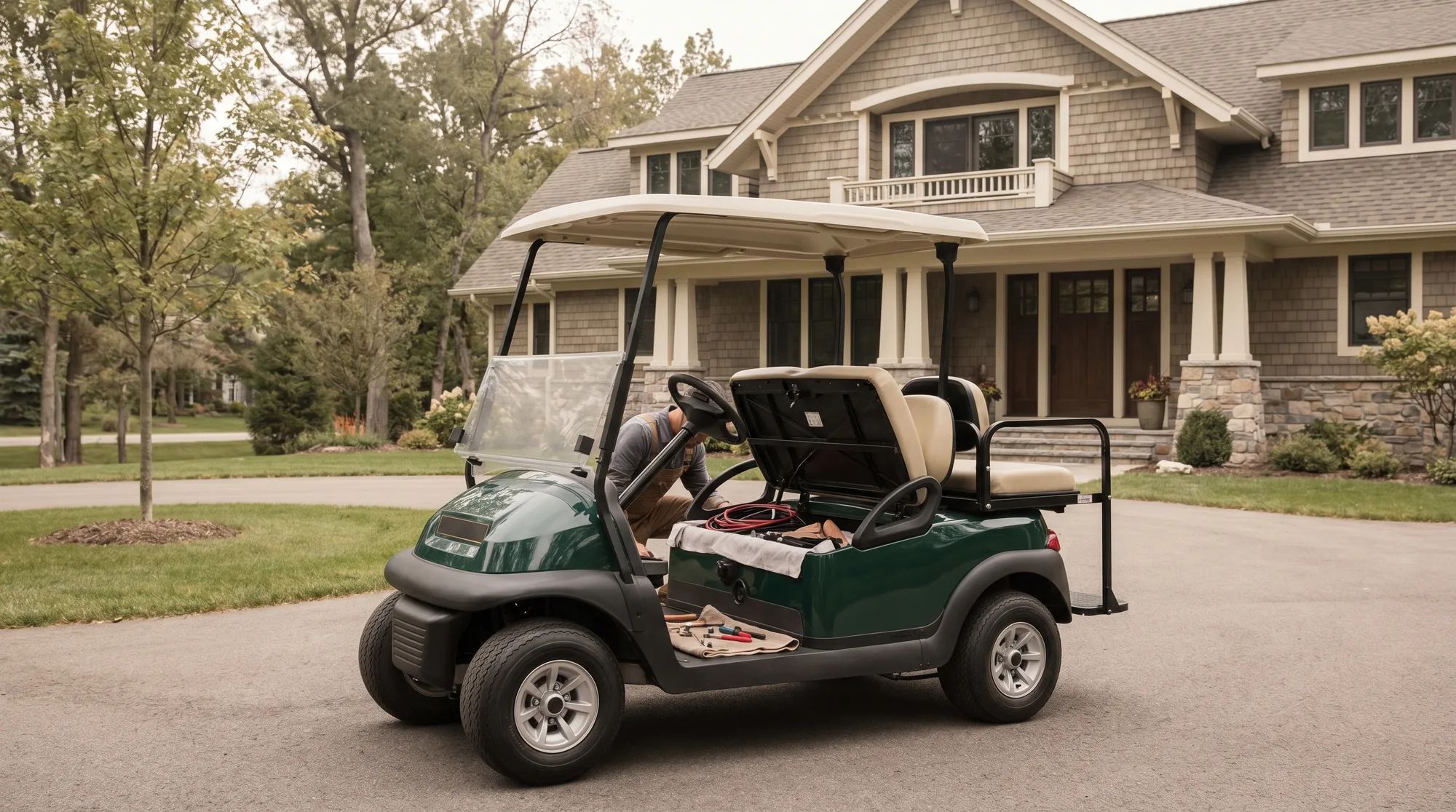
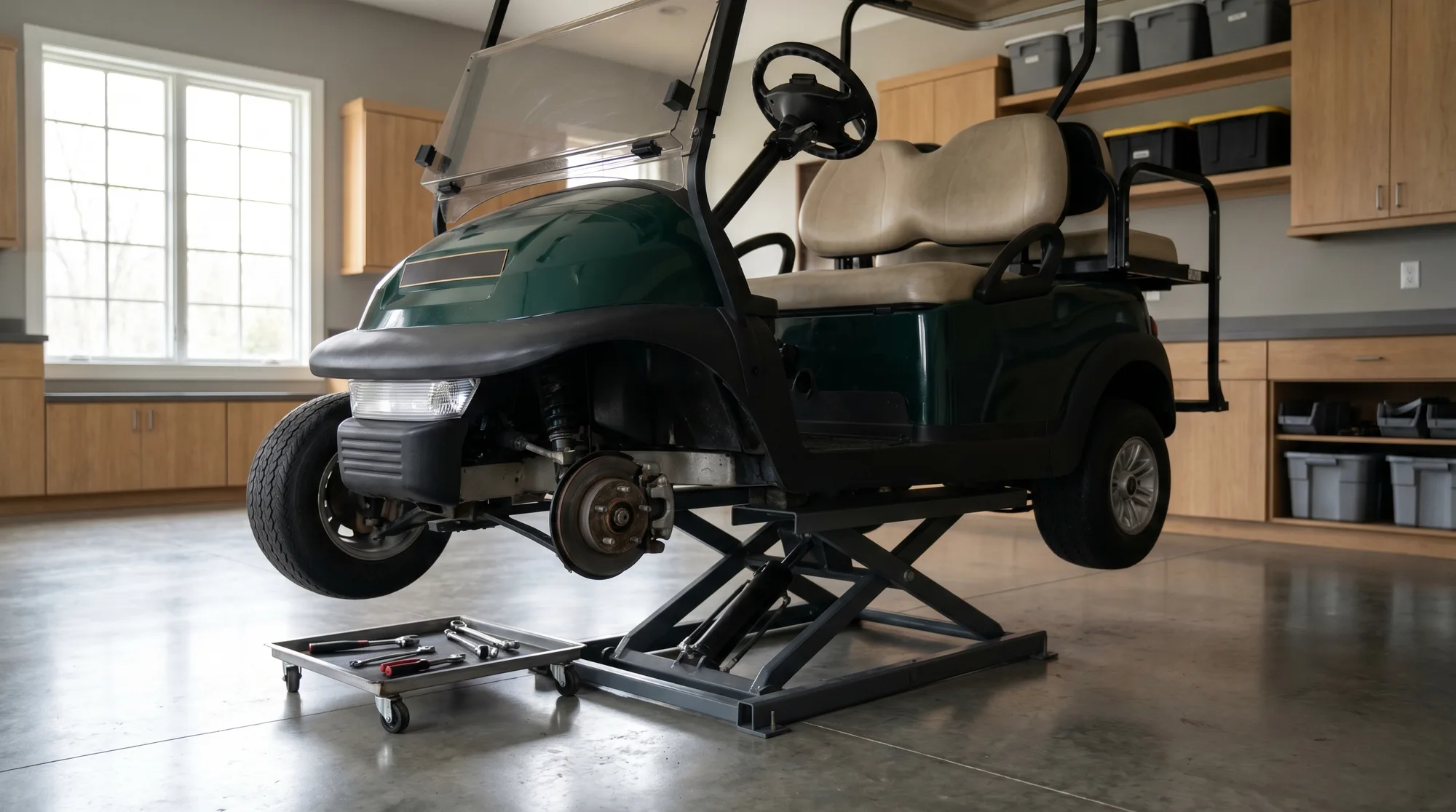
A farm cart gets worked hard and serviced rarely, so build quality and ease of repair matter more than any feature list. Look for a strong frame and bed, sealed and protected electrics that survive dust, mud and washdowns, quality suspension that takes the pounding, and a design you or a local mechanic can actually service. Parts availability is a real factor when a broken cart means a chore does not get done; a well-supported, common platform beats an exotic one that strands you waiting for parts.
- A robust frame and cargo bed rated honestly for your real loads.
- Sealed, protected electrical connections that survive dust, mud and a hose-down.
- Suspension and tires matched to your roughest regular ground, not your smoothest.
- Simple, serviceable mechanicals and good parts availability locally.
- Weather protection so it works in rain, heat and cold across the seasons.
Charging and fueling logistics
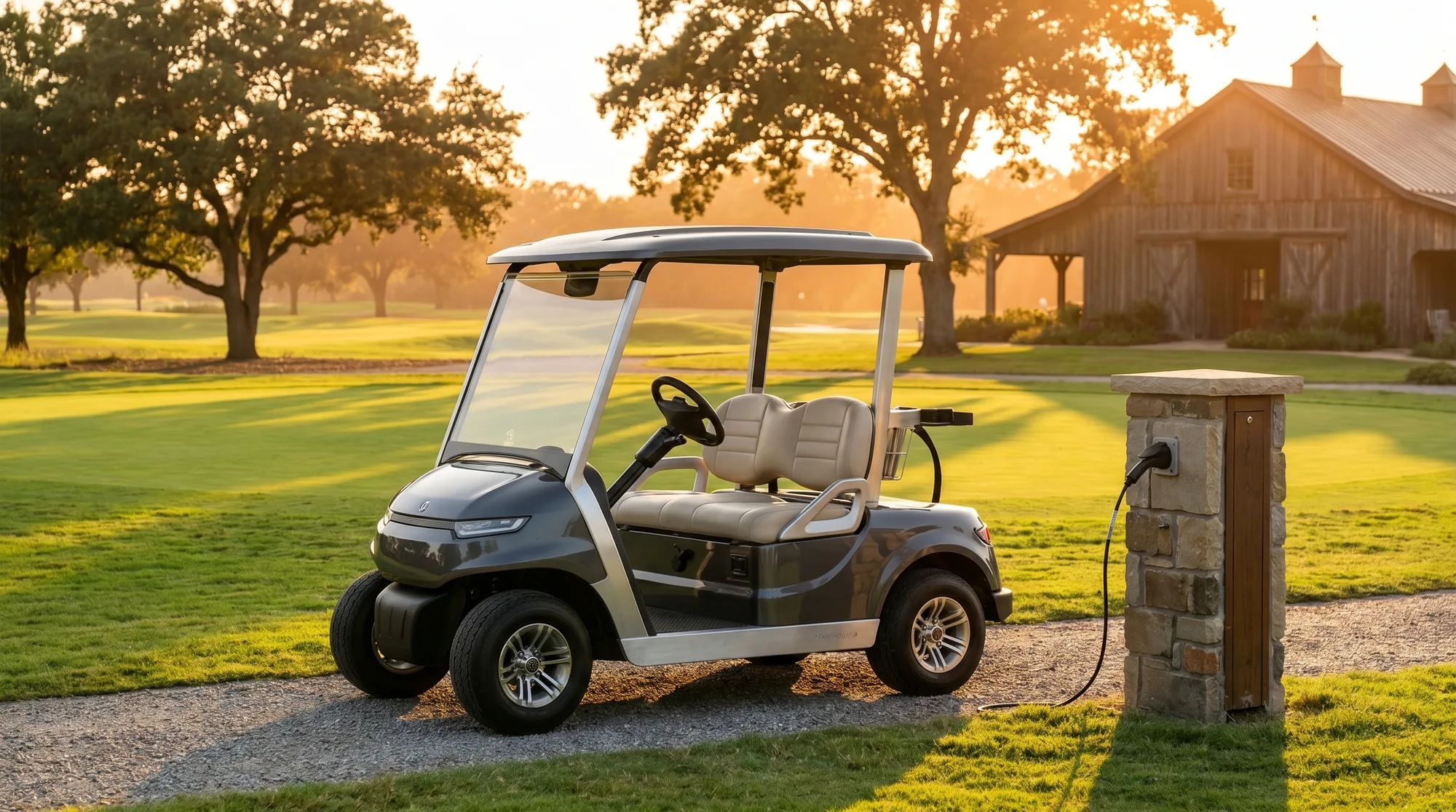
How far the cart roams from base decides your energy plan. For an electric cart, you need a charging point where the cart sleeps, enough range for a full working day, and possibly a second charger or a spare pack if the cart runs long shifts far out. Lithium is compelling on a farm: it charges faster, supports opportunity charging, handles deep daily cycling and needs no watering, which is one less chore in a barn. Our lithium versus lead-acid and home charging guides cover the trade-offs. In summer heat, mind the pack; our hot-weather care guide applies directly to a hard-worked farm cart.
The ROI against a truck or UTV
The financial case is strong for the right jobs. A utility cart costs far less to buy and run than a full-size truck or a high-end UTV, uses almost no fuel if electric, and is gentler on pasture and barn floors. It will not replace a truck for highway hauling or the heaviest implements, but for the daily round of feeding, fencing, hauling and crew transport it does the work at a fraction of the cost per hour. Indicative pricing for a capable utility cart varies widely with payload, drive type and battery, so the honest figure comes from a quote against your real tasks, not a generic sticker.
The cart earns its keep on the chores the truck is too big for and the UTV is too expensive for. On most properties that is most of the work.
So what should a farm buyer do?
Spec payload and towing first, then terrain capability, then decide electric or gas by how far and how quiet you need it. Prioritize durability, serviceability and parts support over features, and plan charging or fueling around your longest regular run. We work with farm and ranch buyers to match a utility cart to the real tasks and terrain, with honest pricing rather than a one-size-fits-all number.
Spec a working utility cart
Tell us your loads, your terrain and how far you roam, and we will recommend a durable utility build with an honest price.
Frequently asked questions
Is a golf cart strong enough for farm work?+
A purpose-built utility cart is, provided you spec it for the job. Match the rated payload and towing to your real loads, choose torque, ground clearance and aggressive tires for your terrain, and prioritize durability. A course cart on turf tires is not the right tool, but a proper utility cart does serious daily work.
Should I choose electric or gas for a farm cart?+
Electric is quiet, clean and very cheap to run, ideal for close-in daily chores and around livestock and barns. Gas offers long range and instant refueling for large remote acreage. Many farms run electric near base and keep gas for the far paddocks, or move to electric as range improves.
How much can a utility golf cart tow?+
It depends entirely on the model, so confirm the manufacturer's rated towing and payload figures rather than assuming. A capable utility cart can pull small trailers, sprayers and implements, but never exceed the rated limits, especially on slopes where brakes and traction are tested.
Do farm carts need special tires and a lift?+
Often yes. Mud, ruts and slopes call for ground clearance and aggressive, self-cleaning tires, and a lift kit can provide both. After any lift or tire change, recheck the brakes on a loaded incline, since the cart must still stop reliably under load.
Is a utility cart cheaper than a UTV or truck?+
Generally yes, both to buy and to run, especially if electric. It will not replace a truck for highway hauling or the heaviest implements, but for daily feeding, fencing, hauling and crew transport it does the work at a fraction of the cost per hour, making the ROI strong for the right tasks.
Related solutions
Ready to explore what we build?
See the vehicles and the setting this applies to, or get a tailored quote built around your site.
Ready to find the right golf cart?
Tell us how and where it will work and we will specify a vehicle and a tailored quote built around you. Every build comes with a 3-year warranty and a 24-hour priority call-out.