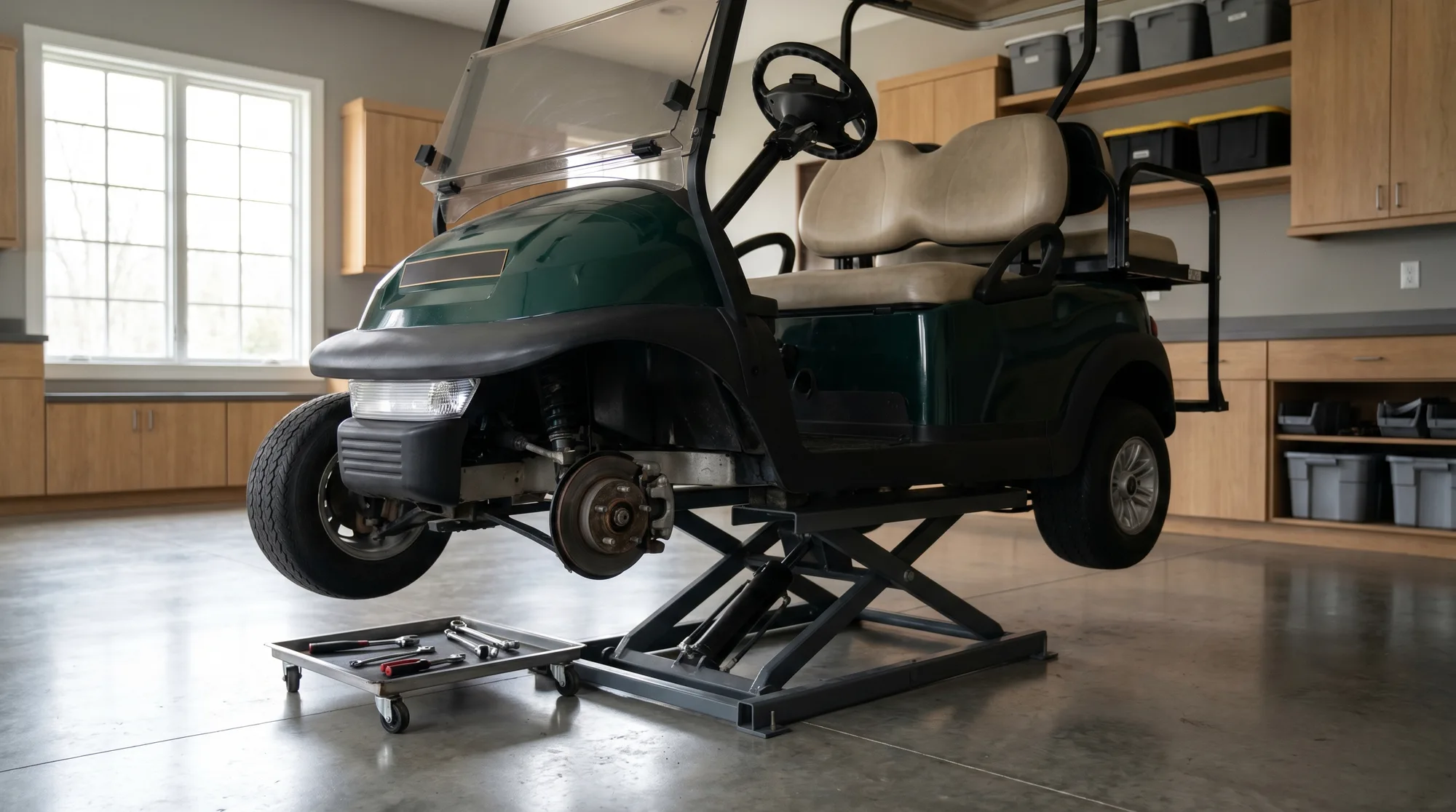
Brakes and suspension are the two systems on a golf cart that nobody thinks about until something goes wrong, and by then it can be a safety problem rather than a maintenance job. A cart is light and slow compared with a car, which lulls owners into ignoring its brakes, but it still carries people, often on slopes, often with children aboard. Looking after the brakes and suspension is not complicated, but it is non-negotiable. This guide covers how these systems work, the warning signs that matter, the simple checks you can do yourself, and the clear line where a fault means stop driving and get it fixed.
- Most carts use mechanical drum brakes; they need periodic adjustment, not just replacement when worn.
- Grinding, pulling, a soft pedal or a cart that will not hold on a slope are stop-now warnings.
- Suspension wear shows as clunks, a harsh ride, uneven tire wear or sloppy steering.
- A lift kit changes geometry and braking behavior, so it raises the importance of regular checks.
- Brakes are a safety system; if in any doubt, have a technician inspect rather than guessing.
How golf cart brakes actually work
Most golf carts use mechanical drum brakes on the rear wheels, operated by a cable or rod linkage from the pedal, with a separate parking or hill brake. Inside each drum, curved shoes press outward against the drum to slow the wheel. They are simple, durable and cheap to service, but they rely on correct adjustment to work properly, and they suffer if the cart sits unused, because the drums and cables can corrode and seize. Some newer and higher-spec carts use disc or hydraulic brakes, which need less frequent adjustment but more careful service when they do.
The key point for an owner is that drum brakes drift out of adjustment as the shoes wear and cables stretch. A cart that needs a long pedal travel before it bites, or that pulls to one side, is usually telling you the brakes need adjusting or balancing, not necessarily replacing.
Brake warning signs you must not ignore
Brakes rarely fail all at once; they warn you first. Learn to read the signs and act on them early, because the cost of attention is small and the cost of ignoring them can be serious.
- A grinding or metallic scraping noise means the shoes are worn to metal; stop driving and service them.
- A soft, spongy or long-travel pedal means worn shoes, stretched cables or a system that needs adjustment.
- The cart pulling to one side under braking means the two sides are out of balance.
- A cart that creeps or rolls on a slope with the parking brake set is a clear danger.
- Brakes that drag, making the cart hard to push or sapping range, point to a seized or maladjusted brake.
Simple brake checks and adjustment
You can do a lot of brake care yourself, and a periodic check is worth building into your routine. The detailed adjustment procedure varies by model, so follow your manual, but the inspection logic is universal.
- 01
Test on a gentle slope
Find a mild incline, set the parking brake and confirm the cart holds firmly without creeping. This is the truest single test.
- 02
Feel the pedal
Press the brake. It should firm up early with a reassuring bite, not sink toward the floor before it does anything.
- 03
Check for even braking
Brake gently while rolling; the cart should slow straight, not pull to one side.
- 04
Inspect and adjust
Check shoes, drums and cables for wear and corrosion, and adjust per your manual so both sides bite evenly. Service seized parts before they damage the drum.
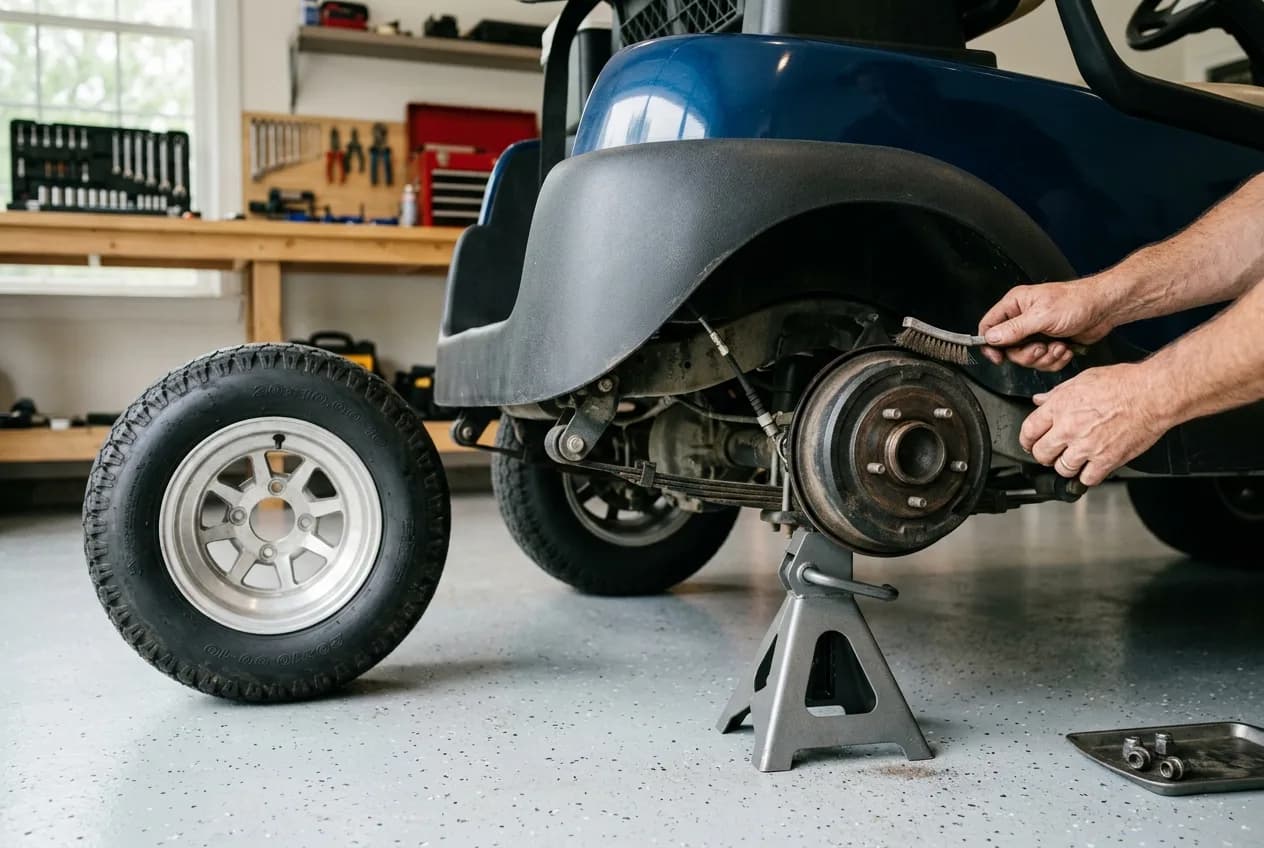
Suspension: the comfort and control system
Suspension on a golf cart is simpler than a car's, typically leaf springs or coil-over shocks front and rear, but it does the same essential jobs: keeping the tires on the ground, soaking up bumps and keeping the steering predictable. Worn suspension does not just make the ride harsh; it lengthens stopping distances and makes the cart wander, which is a safety issue in its own right.
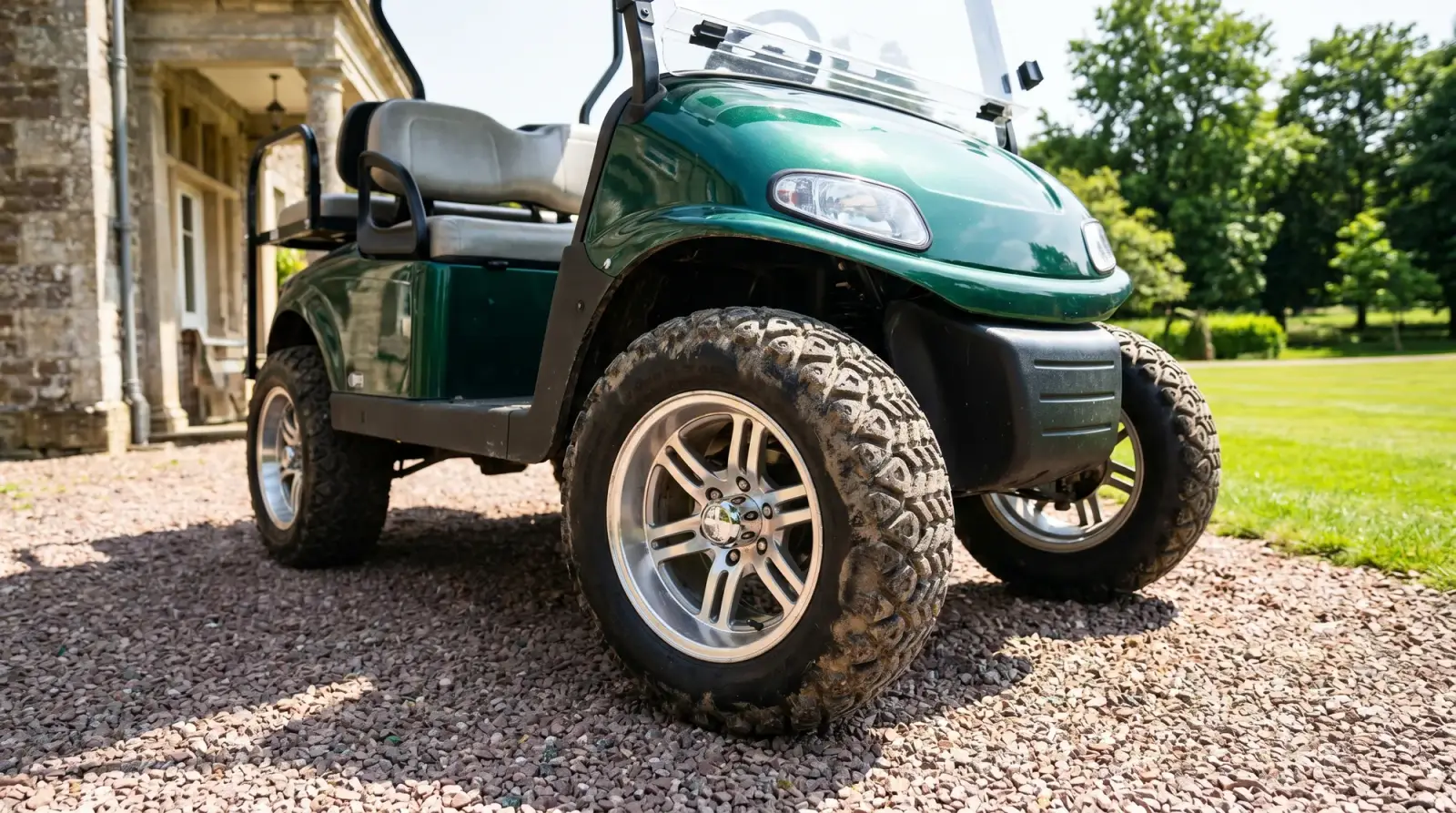
Watch for clunks over bumps, a ride that has become jarring, uneven or cupped tire wear, and steering that feels vague or pulls. Bushings, shock mounts and worn shocks are common culprits. Tires are part of this story too; uneven wear often points at suspension or alignment, and our tires and wheels guide explains what the wear pattern is telling you.
- Symptom
- Brakes, worn to metal
- Likely system and action
- Stop, service now
- Symptom
- Brakes, wear or adjustment
- Likely system and action
- Adjust or replace shoes
- Symptom
- Suspension, bushings or shocks
- Likely system and action
- Inspect and replace worn parts
- Symptom
- Suspension, tired shocks
- Likely system and action
- Replace shocks
- Symptom
- Suspension or alignment
- Likely system and action
- Check geometry and tires
| Symptom | Likely system and action | |
|---|---|---|
| Grinding noise | Brakes, worn to metal | Stop, service now |
| Long, soft pedal | Brakes, wear or adjustment | Adjust or replace shoes |
| Clunk over bumps | Suspension, bushings or shocks | Inspect and replace worn parts |
| Harsh or bouncy ride | Suspension, tired shocks | Replace shocks |
| Uneven tire wear | Suspension or alignment | Check geometry and tires |
Lift kits change the equation
If your cart is lifted, brakes and suspension deserve extra attention. A lift raises the center of gravity, changes the suspension geometry and often pairs with bigger, heavier tires, all of which affect handling and braking. None of that is a reason to avoid a lift, but it does raise the stakes on keeping the systems in good order. Our lift kits explained guide and the hills and off-road guide cover the trade-offs, and brakes matter even more on hills where you rely on them to hold and to slow a heavier, taller cart.
When to call a technician
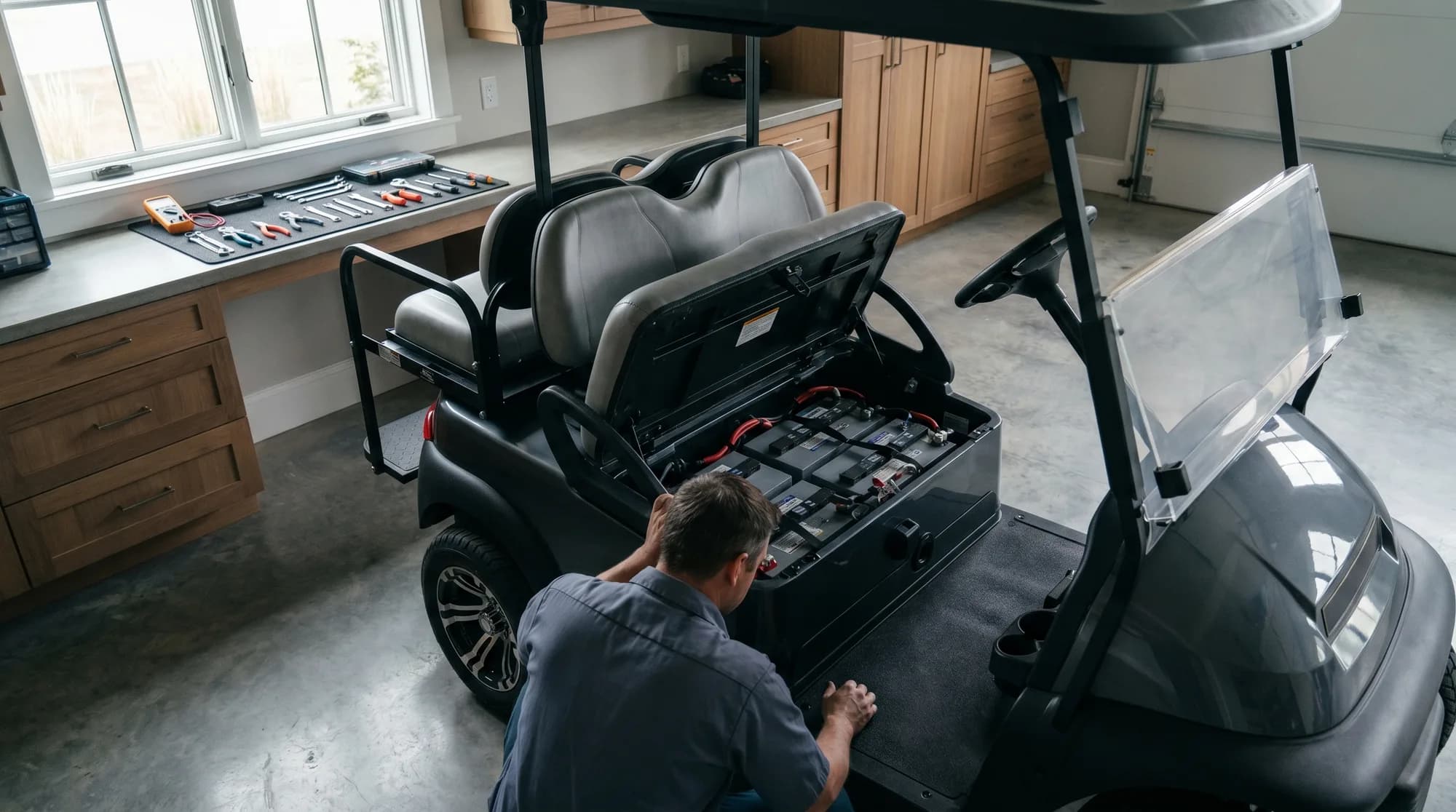
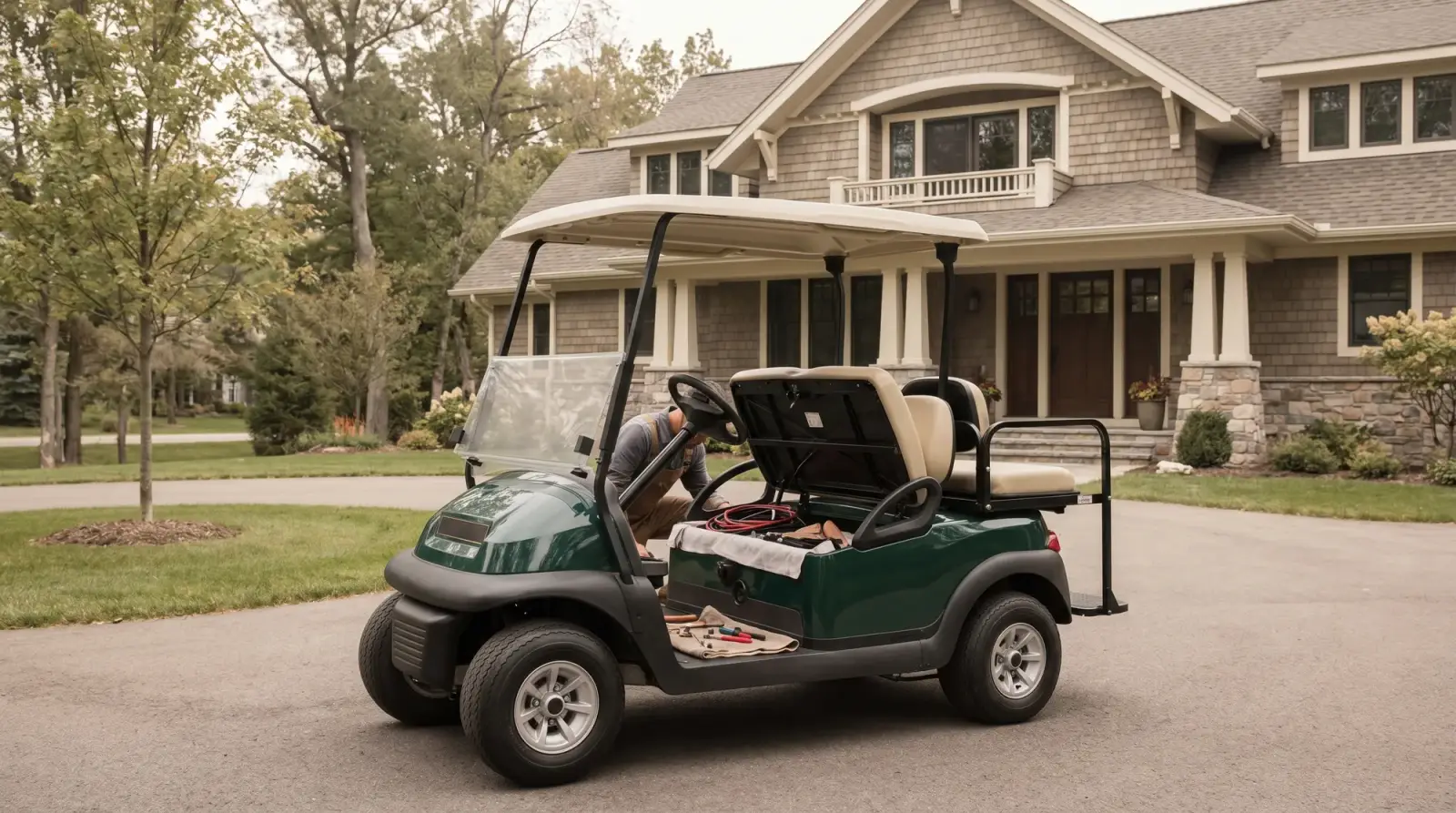
Brakes are the system where it pays to be cautious. If adjustment does not restore a firm pedal, if you find a seized or damaged drum, if hydraulic brakes lose fluid, or if the cart will not hold on a slope after you have adjusted it, hand it to a technician. The same goes for suspension damage you cannot identify. This is part of the wider upkeep covered in our maintenance and repair basics, and it is the part where guessing is least acceptable.
A cart's brakes are easy to ignore because it is light and slow. Then it is on a slope with grandchildren aboard, and easy to ignore becomes the worst decision you ever made.
So what should you do?
Test the slope-hold and the pedal regularly, listen for grinding and clunks, keep the drum brakes adjusted and the suspension parts sound, and never ignore a brake that will not hold or makes metal noise. After any lift or tire change, recheck the brakes. If you would rather start with a cart that is set up safely from day one, we are glad to spec one to your terrain with honest numbers.
Want a cart set up safely from the start?
Tell us your terrain and how you load the cart, and we will recommend a build with brakes and suspension matched to it, at an honest price.
Frequently asked questions
How do I know if my golf cart brakes are worn?+
Listen for grinding or scraping, which means metal on metal, and feel for a soft or long-travel pedal. The clearest test is on a gentle slope: set the parking brake and confirm the cart holds without creeping. Any grinding or failure to hold means service it now.
Do golf cart drum brakes need adjusting?+
Yes. Drum brakes drift out of adjustment as the shoes wear and cables stretch, so they need periodic adjustment, not just replacement. A long pedal or a cart that pulls to one side usually means adjustment is overdue rather than total failure.
What are the signs of worn golf cart suspension?+
Clunks over bumps, a ride that has become harsh or bouncy, uneven or cupped tire wear, and steering that feels vague or wanders. Worn bushings and tired shocks are common causes, and worn suspension can lengthen stopping distances.
Does a lift kit affect braking?+
Yes. A lift raises the center of gravity, changes the geometry and usually adds bigger, heavier tires, all of which increase the work the brakes must do. After any lift or tire upgrade, recheck and readjust the brakes and test the slope-hold carefully.
When is a brake fault too serious to drive on?+
Stop immediately if the brakes grind metal on metal or if the cart will not hold on a slope with the parking brake set. Both mean the cart is not safe to carry people. Take it out of service and have a technician sort it before anyone rides again.
Related solutions
Ready to explore what we build?
See the vehicles and the setting this applies to, or get a tailored quote built around your site.

Ready to find the right golf cart?
Tell us how and where it will work and we will specify a vehicle and a tailored quote built around you. Every build comes with a 3-year warranty and a 24-hour priority call-out.
Our guides are written and reviewed by the Hawke Electric Vehicles team, the people who specify, build, deliver and support the vehicles. We focus on honest, practical advice and flag where a figure depends on the build rather than guessing.
More guides by Hawke