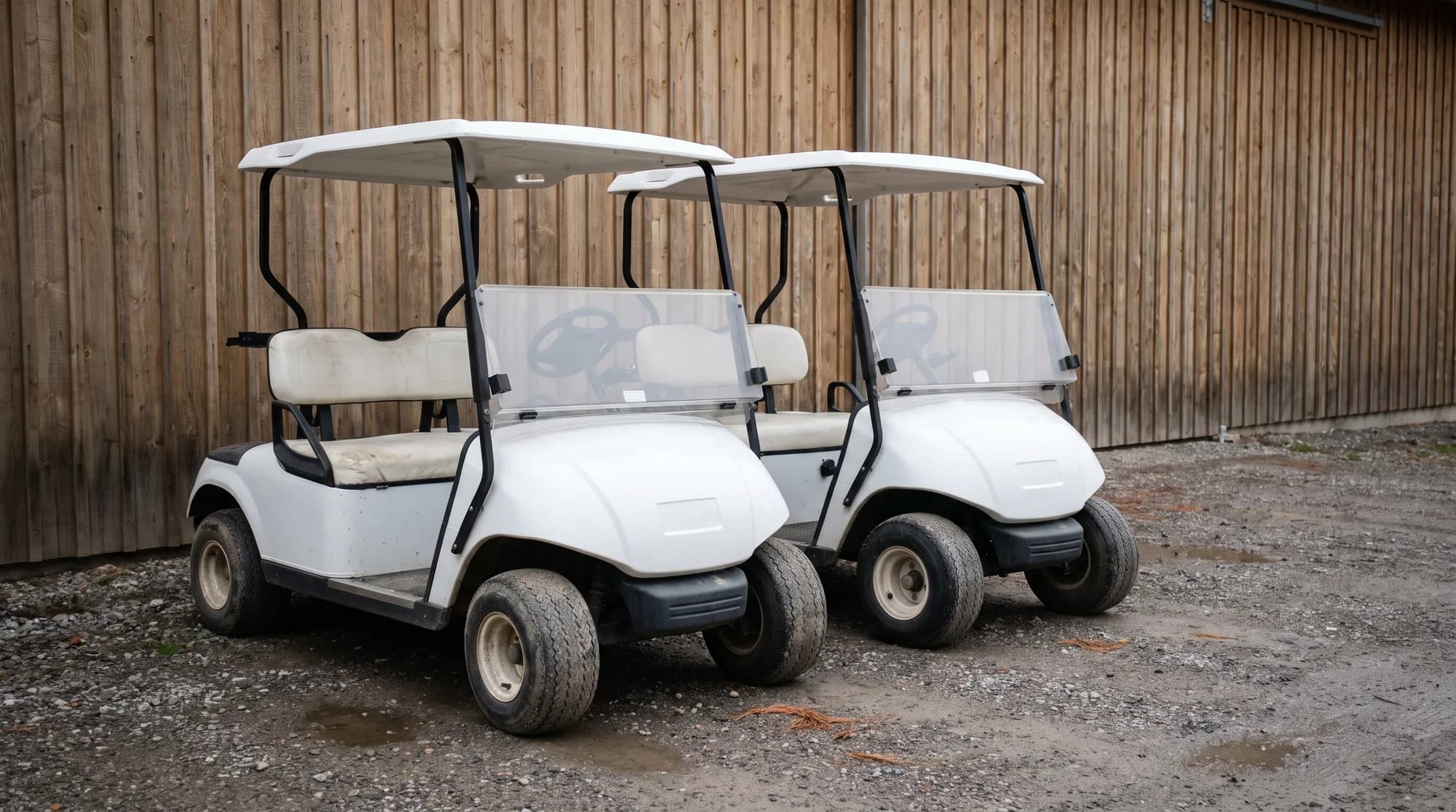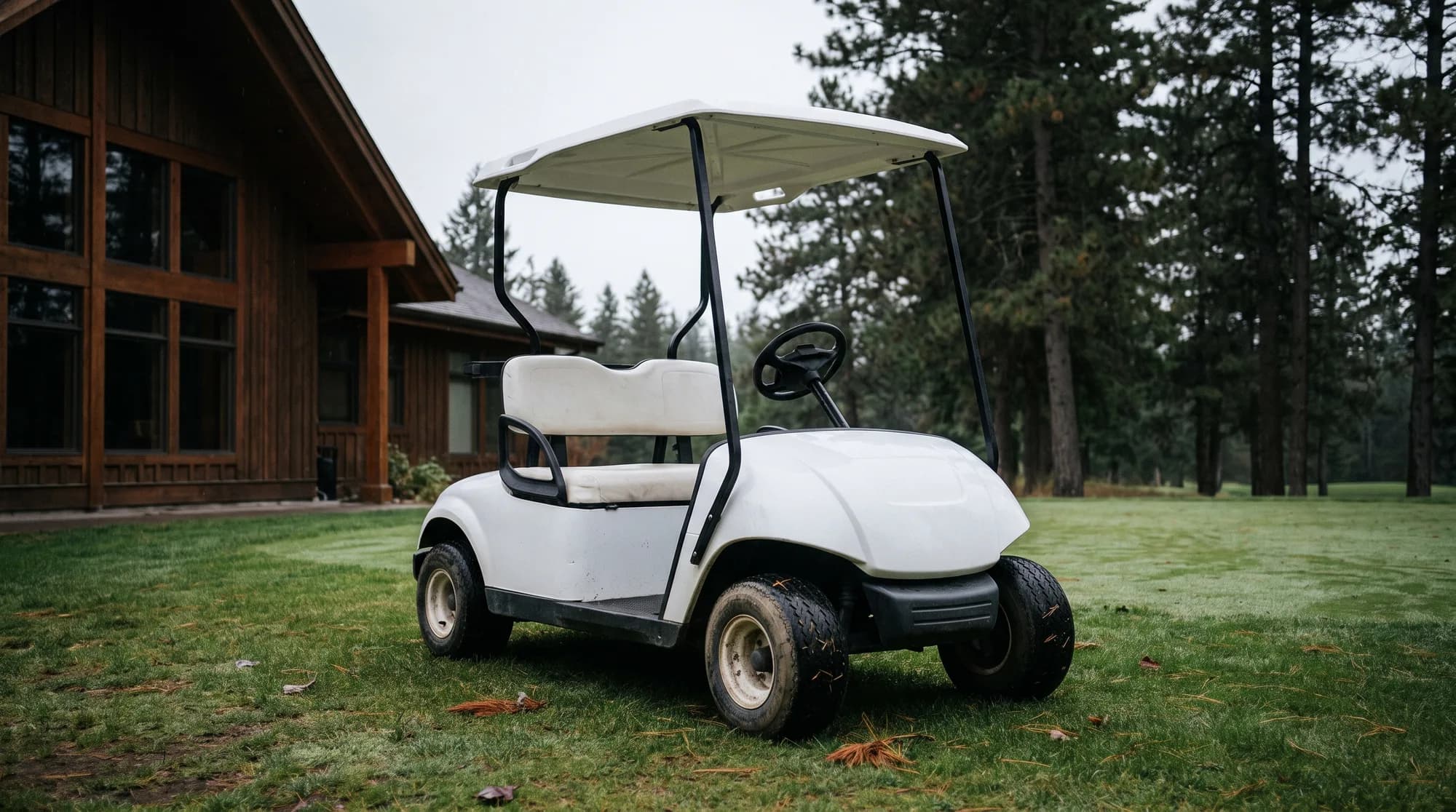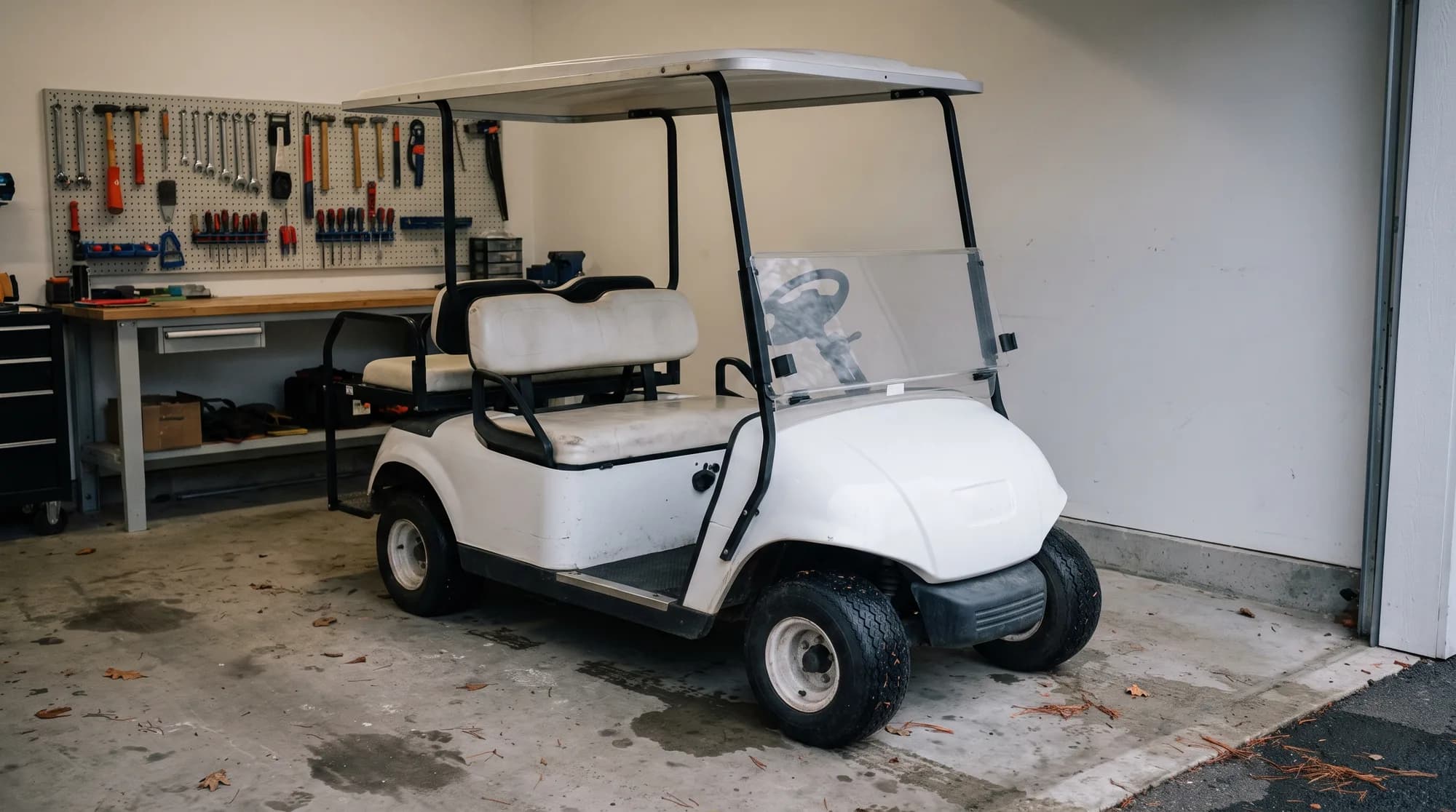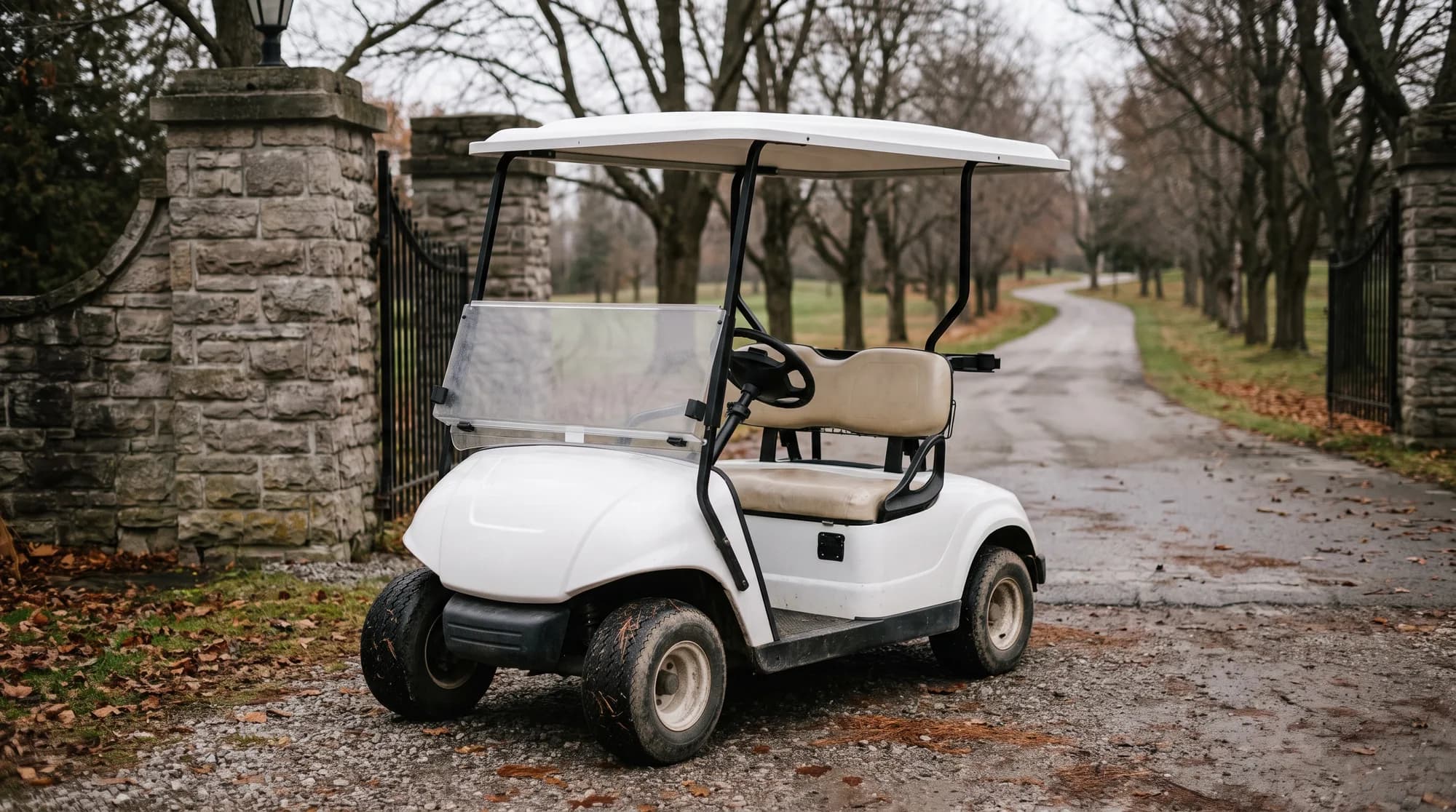
The Canadian used golf cart market is full of genuine bargains and expensive lessons wearing the same paint. The difference between them is almost never visible in a listing photo. It lives in the battery date codes, the underside of the frame, and the story of where the cart spent its winters. This checklist walks a Canadian buyer through the whole inspection, from the questions to ask before you drive anywhere, to the tests that take ten minutes on site, to the red flags that should end the conversation politely.
- The battery pack is half the value of a used electric cart. A tired pack means a CA$1,200 to CA$4,000 bill, so price it into every offer.
- Check battery date codes, rest voltage and, best of all, range on a real test drive. Meters and seller assurances prove nothing.
- In Canada, rust is the second inspection. Carts that lived near salted roads or damp lakefronts can hide serious frame corrosion.
- Ask where the cart wintered. A pack stored flat in an unheated shed may have frozen, and freeze damage is often invisible from outside.
- Water damage to the controller and wiring, from flooding or pressure washing, is the most expensive hidden fault.
- Verify the serial number, ask for purchase paperwork, and be wary of prices well under market. Cart theft is real.
Before you travel: five questions
- How old are the batteries, and is there a receipt? Age in seasons matters more than hours on the meter.
- Where does the cart spend winter, and how is it stored? Heated garage with a maintainer is the right answer. A shed and silence is a warning.
- Why is it being sold? Listen for the answer behind the answer, especially anything that sounds like range complaints.
- Has it ever been in water, flooded, or pressure washed heavily? Controllers and connectors remember.
- Is there any paperwork: original purchase, battery replacement, service records? Sellers with records are usually sellers who maintained.
The battery inspection: where the money is
Open the seat and start with the date codes stamped or stickered on each battery. Lead-acid golf cart packs realistically last four to six Canadian seasons with good care, fewer with bad storage, so a pack in year five is a consumable near the end of its life whatever the seller says. Check that all batteries match in brand and age, because a single newer battery in an old pack signals a failure that was patched rather than fixed. Look for bulged cases, corroded terminals, acid staining on the tray, and dry cells if the caps open. Then measure: a rested 48-volt lead-acid pack should read roughly 50 to 51 volts fully charged. Meaningfully lower after a claimed full charge is a fail. For lithium carts, ask for the app or display showing state of health if the system has one, confirm the charger is the correct matched unit, and ask explicitly whether the pack has ever been charged in below-freezing conditions, since cold charging causes invisible permanent damage. The full chemistry background is in our cold-weather battery guide.
The walk-around: rust, tires, frame
Now get low. Canadian carts that lived near salted roads, coastal air or damp boathouses rust from the bottom up, and bodywork hides it. Look along the frame rails, spring mounts, battery tray and fasteners for flaking rust rather than surface discolouration, and press a screwdriver handle against anything suspicious. A corroded battery tray is common and fixable; a rotten frame rail is a walk-away. Check the tires for cracking sidewalls and uneven wear, which can signal alignment or suspension trouble as much as tire age, and confirm the wheels match. Then work through lights, horn, charger port condition, seat mounts and body damage. Cosmetics are negotiating points, not deal-breakers, but they tell you how the cart was treated.
The test drive: ten minutes that prove everything
- 01
Cold start it yourself
Ask the seller not to drive or warm the cart before you arrive. You want to see how it wakes from rest, exactly as it would on your first cold morning.
- 02
Pull away on a slope if you can
A healthy cart pulls smoothly uphill from a stop. Hesitation, shudder or a big voltage sag on the meter under load points at the pack or a tired solenoid.
- 03
Drive far enough to mean something
Ten to fifteen minutes of continuous driving with some hills is the minimum. A weak pack often looks fine for the first five minutes and collapses after twenty.
- 04
Listen and feel
Whining that rises with speed can be normal gear noise or a dying differential. Clunks over bumps, wandering steering and a cart that pulls under braking all go on the price sheet.
- 05
Watch the charge meter after the drive
A pack that dropped dramatically after a short drive is telling you its real capacity. Ask to plug the charger in and confirm it starts a cycle normally before you leave.
Paperwork, provenance and price
Find the serial number, usually on the frame under the seat or on a chassis plate, and confirm it is present and unmolested. Ask for any bill of sale, and be genuinely wary of prices far below market with a rushed story attached, because golf carts are portable and quietly stolen. On price, the used market in Canada broadly runs from about CA$4,000 to CA$8,000 for older fleet-style carts and CA$8,000 to CA$15,000 for newer, lifted or lithium-equipped machines, with regional swings; our Canadian cost guide breaks the bands down. Whatever the asking price, deduct the full cost of any battery pack within two seasons of the end of its life. That single line item is where most used-cart negotiations are actually decided, and where our new versus used guide can help you sanity-check whether the deal still beats a new build.
- Battery date codes matched, under four seasons old, receipts if claimed newer
- Rested pack voltage correct for a full charge, no bulges, no acid mess
- Winter storage story: where, how charged, ideally a maintainer
- Frame rails, spring mounts and battery tray solid, surface rust only
- Tires matched, no sidewall cracking, even wear
- Controller area and connectors dry, no green corrosion in plugs
- Charger included, correct model, starts a cycle on request
- Fifteen-minute test drive with hills, no sag, no new noises
- Serial number present and legible, paperwork offered without hesitation
- Price adjusted for battery age and every fault found
Or skip the gamble entirely
A cart built to order arrives with a fresh battery, a warranty and no history to investigate. Tell us your budget and we will show you what new actually costs.
Frequently asked questions
What should I look for when buying a used golf cart in Canada?+
Battery age and condition first, then frame rust underneath, water damage to the controller, tire condition and a genuine fifteen-minute test drive. Ask specifically how the cart was stored and charged over winter.
How do I check golf cart batteries before buying?+
Read the date codes on every battery, confirm they match, look for bulges and corrosion, and measure the rested pack voltage after a claimed full charge. Then prove it with a continuous test drive, since voltage alone cannot show lost capacity.
How much should a used golf cart cost in Canada?+
Older fleet-style carts commonly sell for about CA$4,000 to CA$8,000, and newer or lithium-equipped carts for CA$8,000 to CA$15,000, varying by region and spec. Subtract the cost of a battery pack if the current one is near the end of its life.
Is a used lithium golf cart a safer buy than lead-acid?+
Often, because lithium ages more gracefully and shows its state of health digitally on many systems. But confirm the charger is the correct matched unit and ask whether the pack was ever charged below freezing, which causes hidden permanent damage.
What are the biggest red flags on a used golf cart?+
Mismatched or ancient batteries, flaking frame rust, corrosion inside wiring connectors, a seller who will not allow a proper test drive, no serial number or paperwork, and a price far below market with a hurried story.
Related solutions
Ready to explore what we build?
See the vehicles and the setting this applies to, or get a tailored quote built around your site.
Ready to find the right golf cart?
Tell us how and where it will work and we will specify a vehicle and a tailored quote built around you. Every build comes with a 3-year warranty and a 24-hour priority call-out.
Our guides are written and reviewed by the Hawke Electric Vehicles team, the people who specify, build, deliver and support the vehicles. We focus on honest, practical advice and flag where a figure depends on the build rather than guessing.
More guides by Hawke