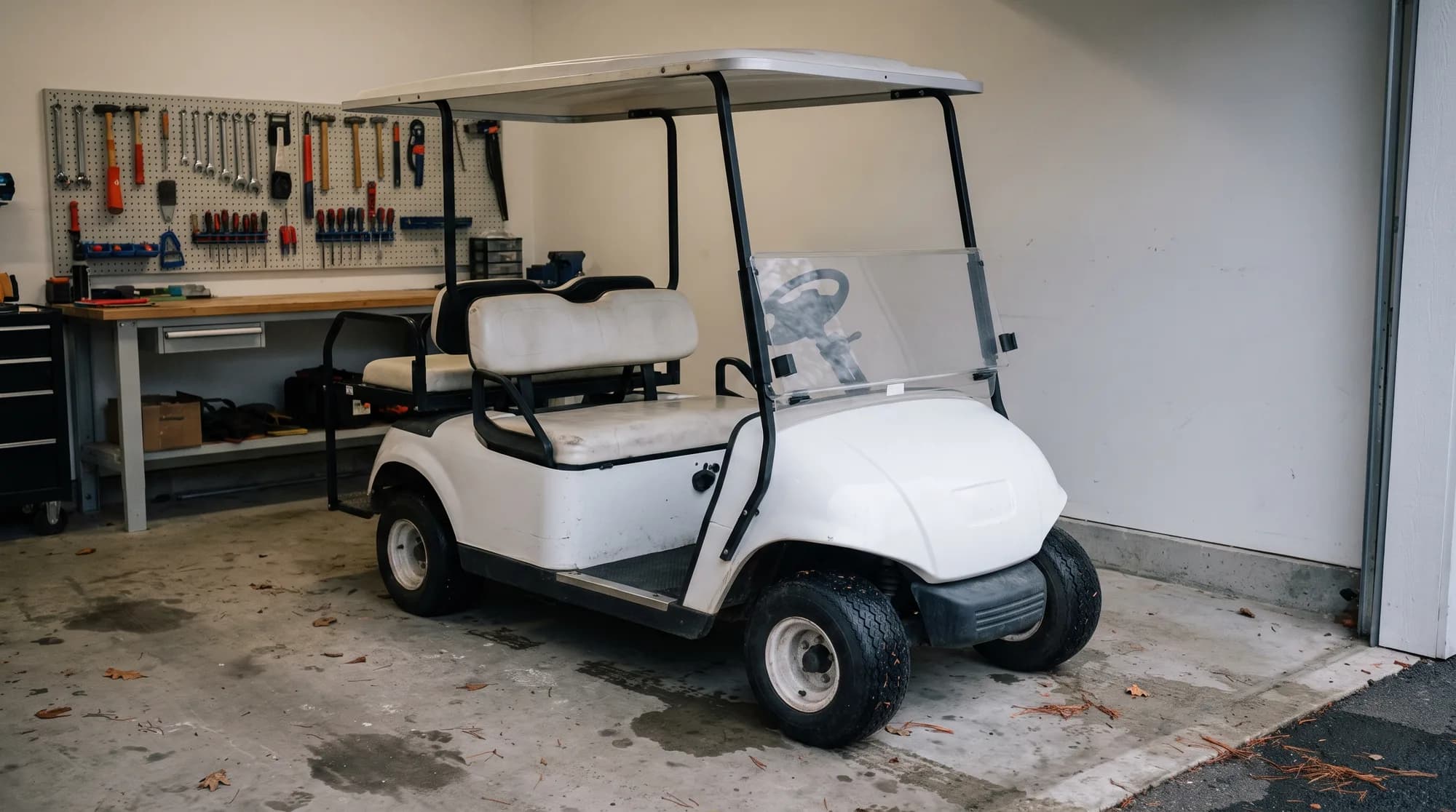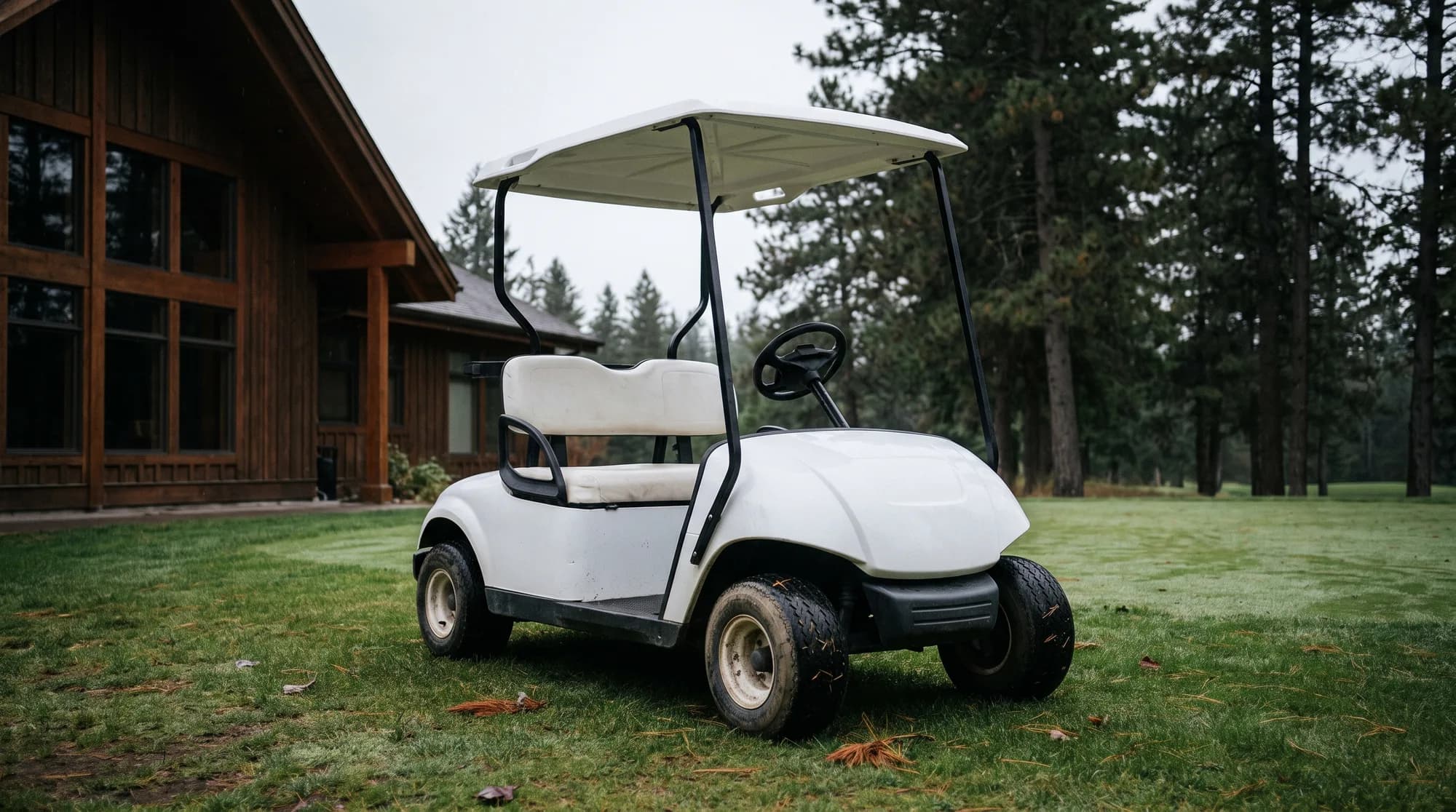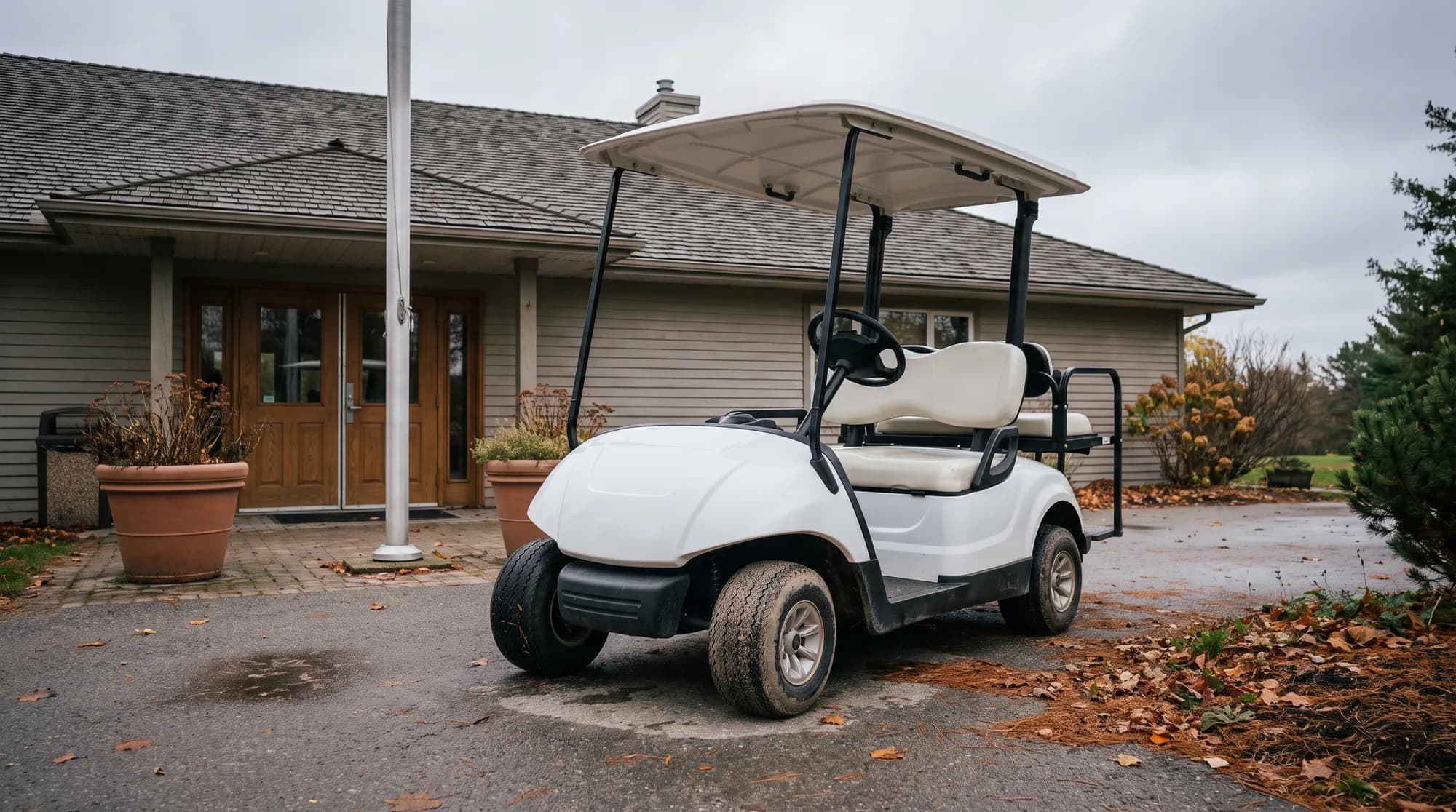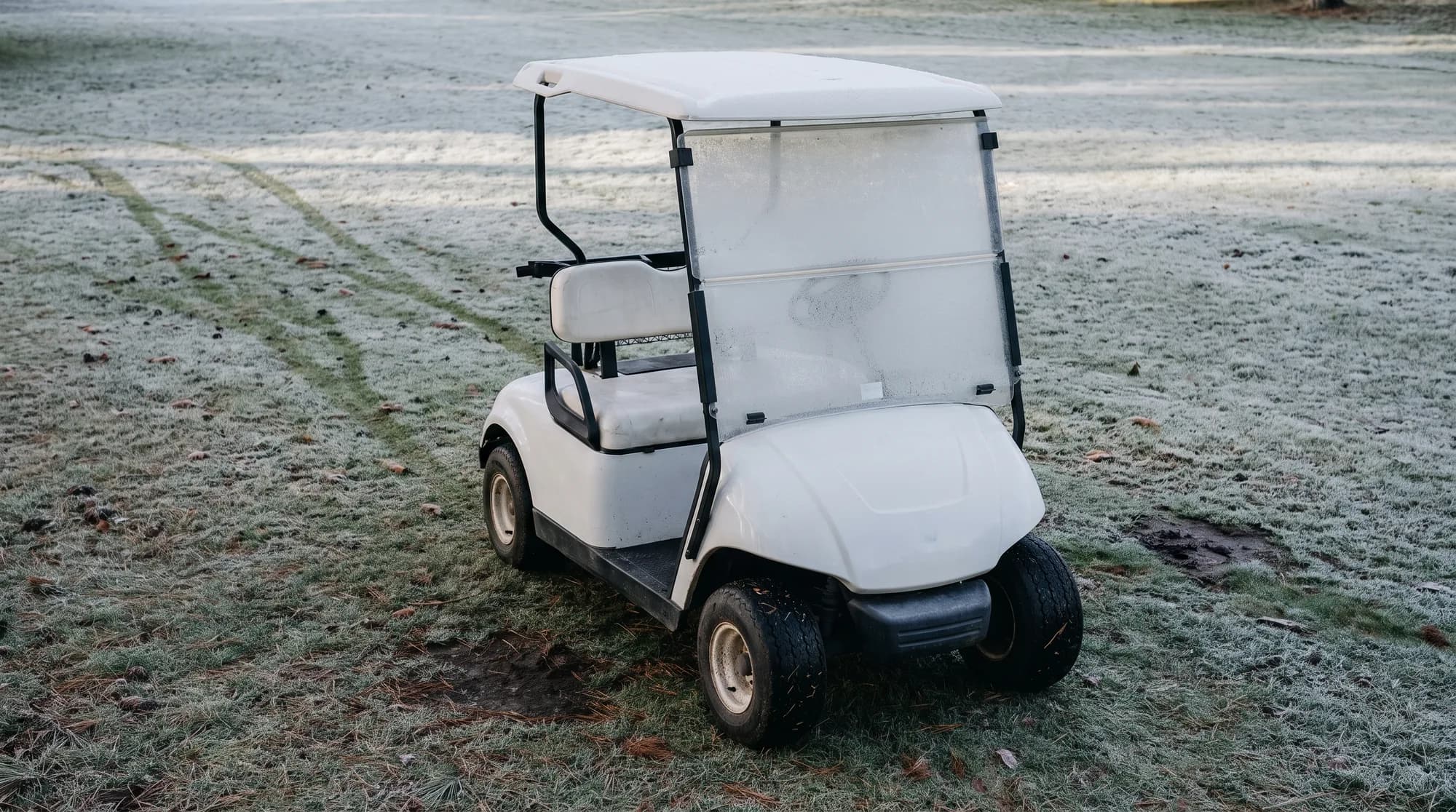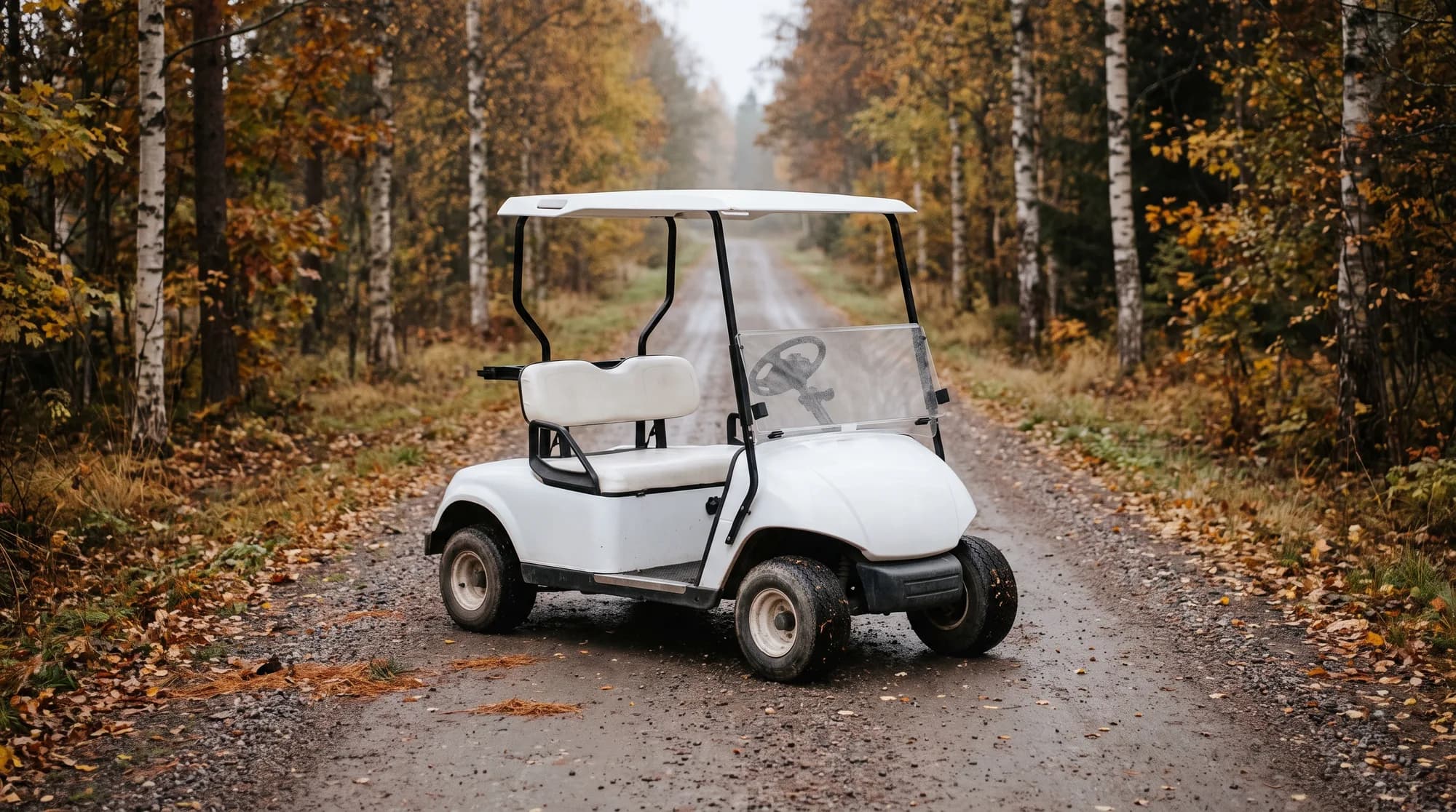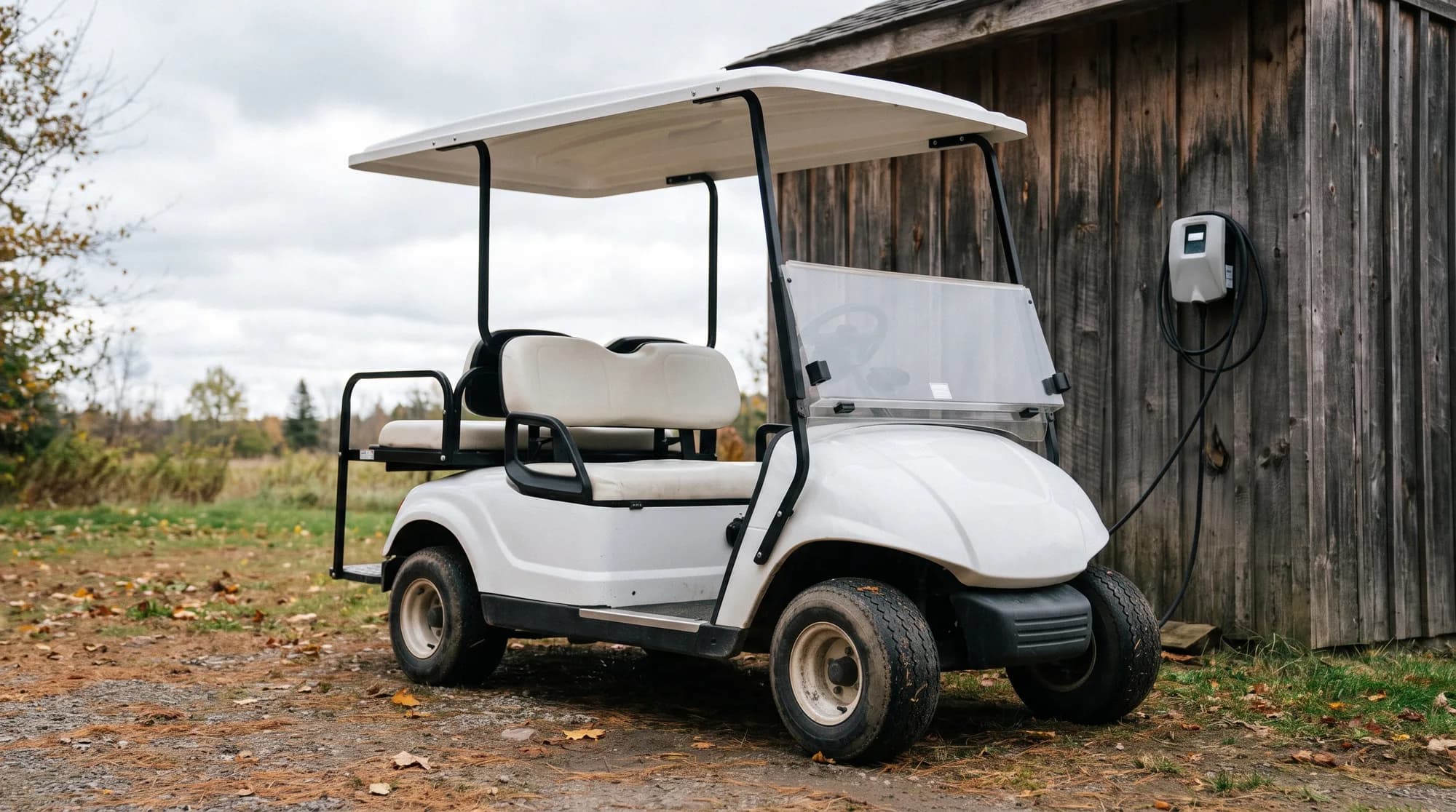
On a Canadian dealer's forecourt, a gas cart and an electric cart of similar size often wear similar prices, which makes the choice look like a coin flip. It is not. The two machines age differently, cost differently, behave differently at minus fifteen, and are welcome in different places. Electric has been winning the argument for most private buyers, and courses across Canada have largely gone electric already, but gas keeps a genuine case for a specific kind of owner. This guide lays out both sides honestly, with the Canadian winter given the weight it deserves.
- Purchase prices overlap, but electric wins clearly on running costs: a full charge costs well under a dollar at typical Canadian hydro rates.
- Gas carts need oil, filters, plugs and carburetor care every season; electric maintenance is mostly tires, brakes and battery checks.
- In deep cold, a gas engine starts and keeps its power, while batteries lose 20% to 40% of range; but gas has its own winter problems, including stale fuel.
- Electric is silent, fume-free and welcome indoors, in barns and at quiet-hours communities; gas is neither quiet nor welcome everywhere.
- For heavy all-day hauling far from a plug, gas still earns its keep. For most Canadian private use, electric is the better ownership deal.
Purchase price: closer than you would expect
New gas and electric carts in Canada mostly sit in the same CA$9,000 to CA$18,000 band, with the electric range stretching higher once lithium packs and premium builds enter. On the used market, gas carts sometimes look cheaper because course fleets dumped them as they electrified. The sticker, in other words, will not make this decision for you. Ownership will.
Running costs: electricity is almost free, fuel is not
An electric cart draws a few kilowatt-hours per full charge. At typical Canadian residential electricity rates, that works out to well under a dollar per charge, and even a heavy season of use rarely adds a visible line to the hydro bill. A gas cart burns real fuel at real pump prices, and over a summer of cottage duty the difference adds up to hundreds of dollars. Electric also wastes nothing at idle, which suits the stop-start pattern of property use, while a gas engine drinks whether it is working or waiting.
- Electric
- Usually under CA$100
- Gas
- Commonly several hundred dollars
- Electric
- Tires, brakes, battery checks
- Gas
- Oil, filters, plugs, belts, carb
- Electric
- Range drops 20% to 40%
- Gas
- Starts and pulls, but fuel and oil need care
- Electric
- Silent, none
- Gas
- Loud, exhaust fumes
- Electric
- Battery care is the whole job
- Gas
- Fuel stabiliser, oil change, battery too
- Electric
- Strengthening, lithium especially
- Gas
- Softening as fleets electrify
| Electric | Gas | |
|---|---|---|
| Energy cost per season | Usually under CA$100 | Commonly several hundred dollars |
| Routine maintenance | Tires, brakes, battery checks | Oil, filters, plugs, belts, carb |
| Cold-weather behaviour | Range drops 20% to 40% | Starts and pulls, but fuel and oil need care |
| Noise and fumes | Silent, none | Loud, exhaust fumes |
| Winter layup | Battery care is the whole job | Fuel stabiliser, oil change, battery too |
| Resale trend | Strengthening, lithium especially | Softening as fleets electrify |
Maintenance: one machine has an engine, one does not
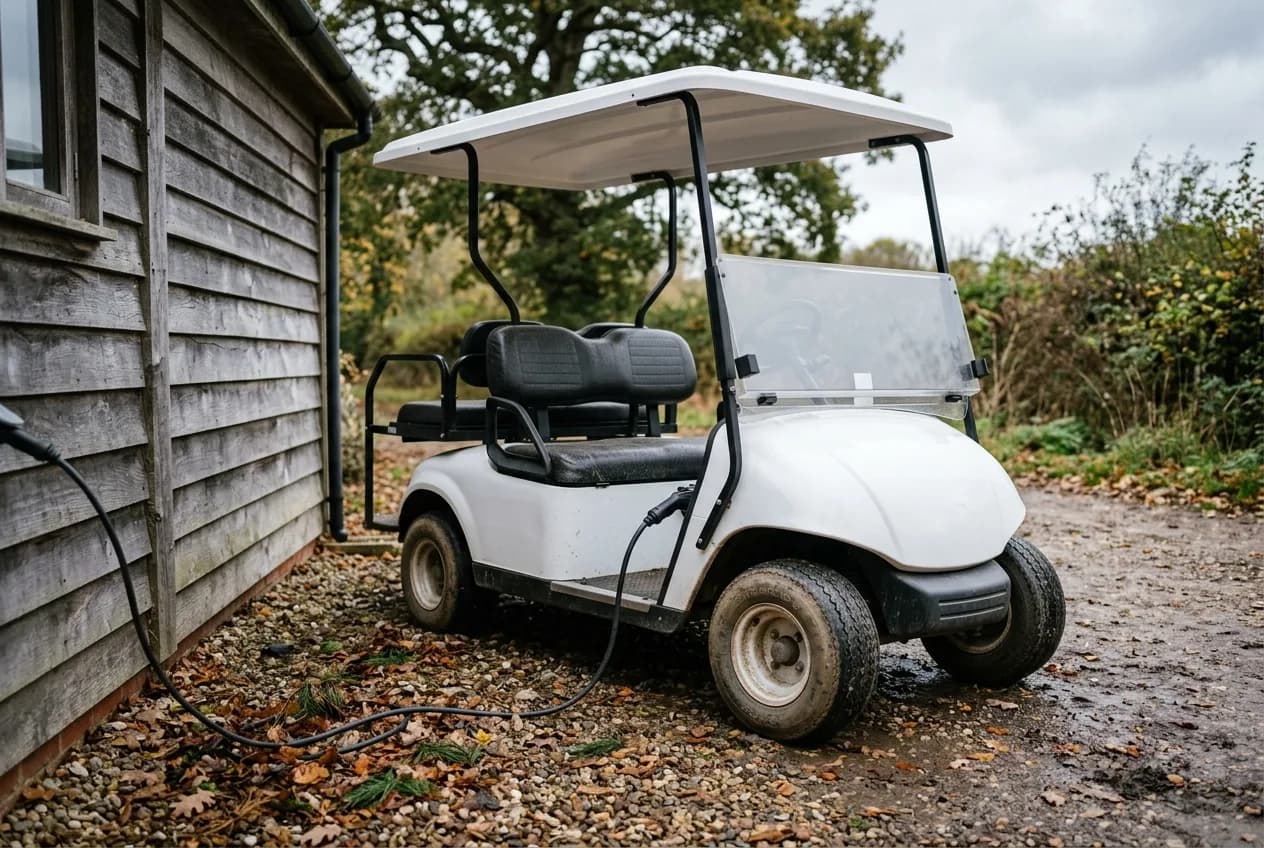
There is also the matter of where the energy comes from. Every Canadian property with a cart already has an outlet; not every property wants jerry cans. Storing gasoline at a cottage or in a residential garage brings its own rules, smells and shelf-life problems, since modern fuel degrades within months and drags a carburetor down with it. Electricity does not go stale in the wall.
A gas cart is a small combustion vehicle, with everything that implies: oil changes, air and fuel filters, spark plugs, drive belts and a carburetor that will sulk if fuel sits in it over winter. None of it is difficult, but all of it is recurring, and skipped seasons show up as hard starting and lost power. An electric cart deletes nearly all of that. Its maintenance list is tires, brakes, steering and battery care, and for lead-acid packs, watering and terminal cleaning. Over five years the maintenance gap is one of the largest real differences between the two.
The winter question, answered honestly
Gas advocates in Canada usually rest their case on winter, and the point is real: a healthy gas engine starts at minus twenty and delivers full power, while any battery loses a meaningful slice of its range in deep cold, and most lithium packs should not be charged below freezing without heating. If you genuinely work a cart through a Canadian winter, hauling feed, plowing a lane, running a rural property daily, gas remains a defensible choice. But the winter argument cuts both ways. Gas carts suffer stale fuel, gummed carburetors and cold-thickened oil after storage, and they cannot be run in an enclosed barn or garage without ventilation. For the majority of owners whose cart sleeps from November to April, winter is not actually an argument for gas; it is an argument for storing whichever cart you own properly.
The five-year sum, roughly
Put rough Canadian numbers on five years and the shapes emerge. An electric cart's running ledger is small: perhaps CA$100 in electricity across the whole period, routine consumables like tires and brake service, and for lead-acid owners, one battery replacement somewhere in the window at CA$1,200 to CA$2,500. Lithium owners typically face no battery bill in the first five years at all. A gas cart's ledger runs the other way: several hundred dollars of fuel each season, an annual service with oil and filters whether you do it yourself or pay for it, and the occasional carburetor sulk after a careless winter. Neither machine is expensive by vehicle standards, but over five years a gas cart commonly costs one to three thousand dollars more to keep running than an equivalent electric one, before you price your own time spent maintaining it. The gap widens, not narrows, the longer you own them.
Resale and the direction of travel
The market is moving one way. Canadian golf courses have overwhelmingly electrified their fleets, private communities favour quiet carts, and lithium technology keeps improving. That shows in resale: clean electric carts, especially lithium ones, are holding value well, while gas carts increasingly sell on price. Buying gas today is not wrong, but it is buying into a shrinking pool of future buyers, and that belongs in the maths.
So which should you buy?
Choose electric if your cart works seasons rather than winters, lives anywhere near people, sleeps in a building, or simply needs to be cheap and undemanding to run; that describes most Canadian private buyers. Choose gas only if you need all-day heavy work far from a plug, or true deep-winter daily duty, and you are willing to pay for it in fuel, maintenance and noise. If you are on the electric side of that line, the remaining decision is chemistry, and for Canada the lithium case is strong.
Frequently asked questions
Are electric golf carts cheaper to run than gas in Canada?+
Yes, decisively. A full charge costs well under a dollar at typical Canadian electricity rates, while a season of gas can run to several hundred dollars, and electric carts need far less routine maintenance.
Do electric golf carts work in Canadian winters?+
They work, with caveats. Expect 20% to 40% less range in deep cold, and note that most lithium packs should not be charged below freezing unless heated. For seasonal use with proper winter storage, electric is entirely at home in Canada.
Why do golf courses use electric carts?+
Lower running costs, minimal maintenance, no fuel handling and silence. Canadian courses have overwhelmingly electrified, which is also why the used market carries a steady supply of ex-fleet electric carts.
Is a gas golf cart better for towing and hills?+
Not inherently. Modern electric carts deliver strong torque from a standstill and climb well when correctly specified. Gas keeps an edge only for all-day heavy work far from charging, where refuelling beats recharging.
Which holds its value better?+
Electric, on current Canadian trends, and lithium-equipped carts in particular. Gas carts increasingly compete on price as private communities and buyers follow the courses toward electric.
See what the electric route really costs
We build electric carts to order for Canadian conditions. Tell us the job and we will quote a specification and a real price, with the winter thought through.
Related solutions
Ready to explore what we build?
See the vehicles and the setting this applies to, or get a tailored quote built around your site.
Ready to find the right golf cart?
Tell us how and where it will work and we will specify a vehicle and a tailored quote built around you. Every build comes with a 3-year warranty and a 24-hour priority call-out.
Our guides are written and reviewed by the Hawke Electric Vehicles team, the people who specify, build, deliver and support the vehicles. We focus on honest, practical advice and flag where a figure depends on the build rather than guessing.
More guides by Hawke