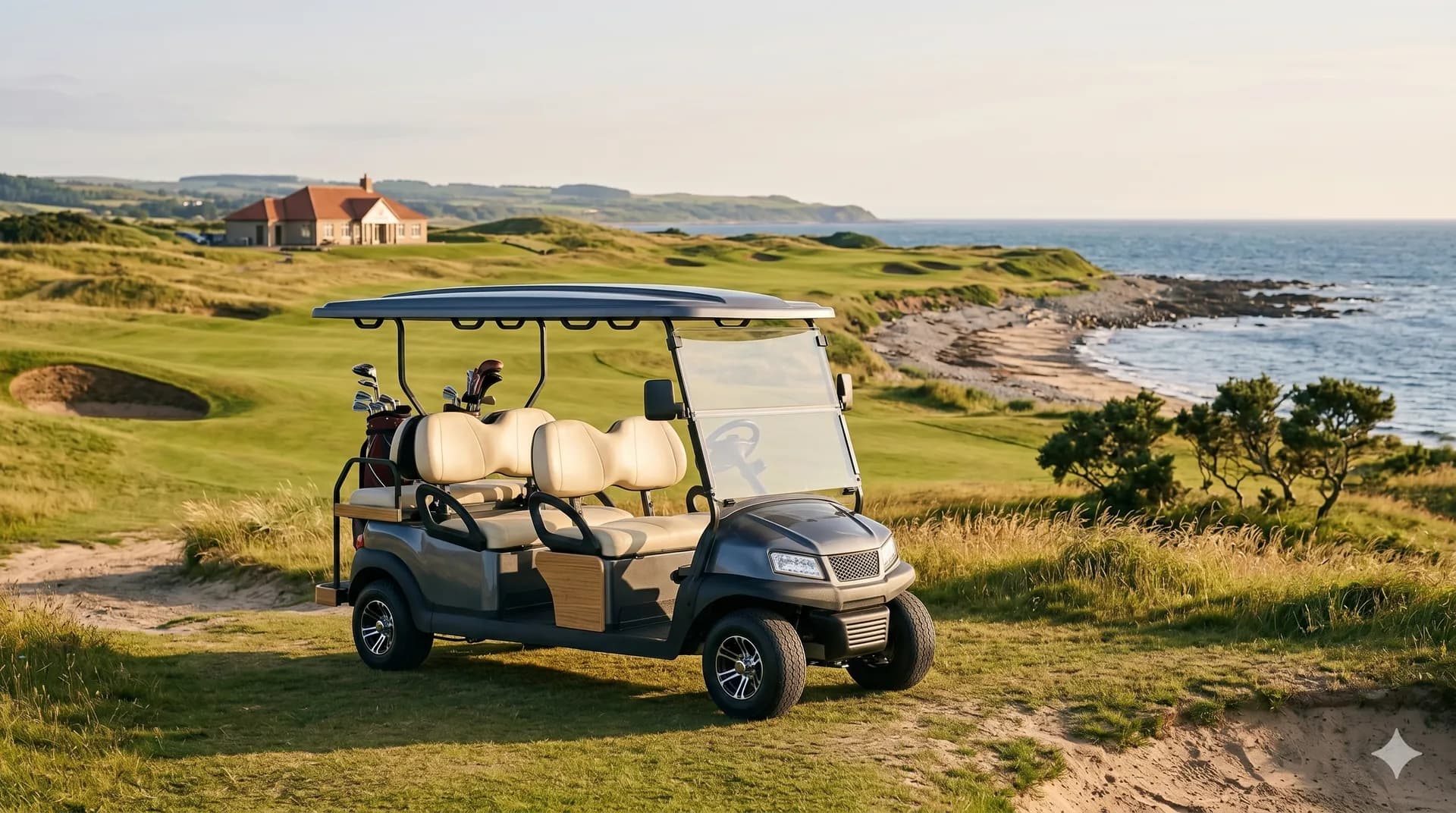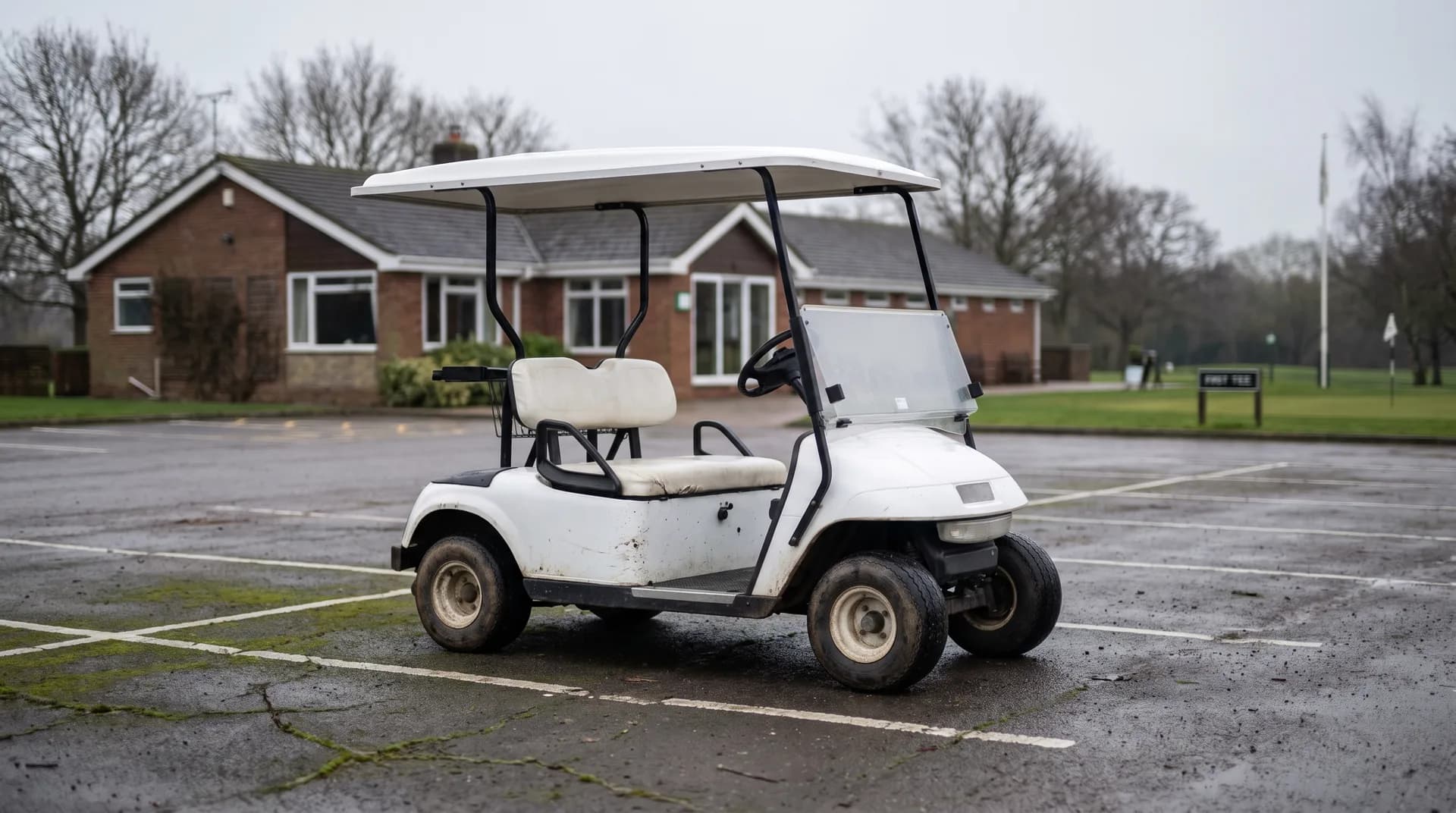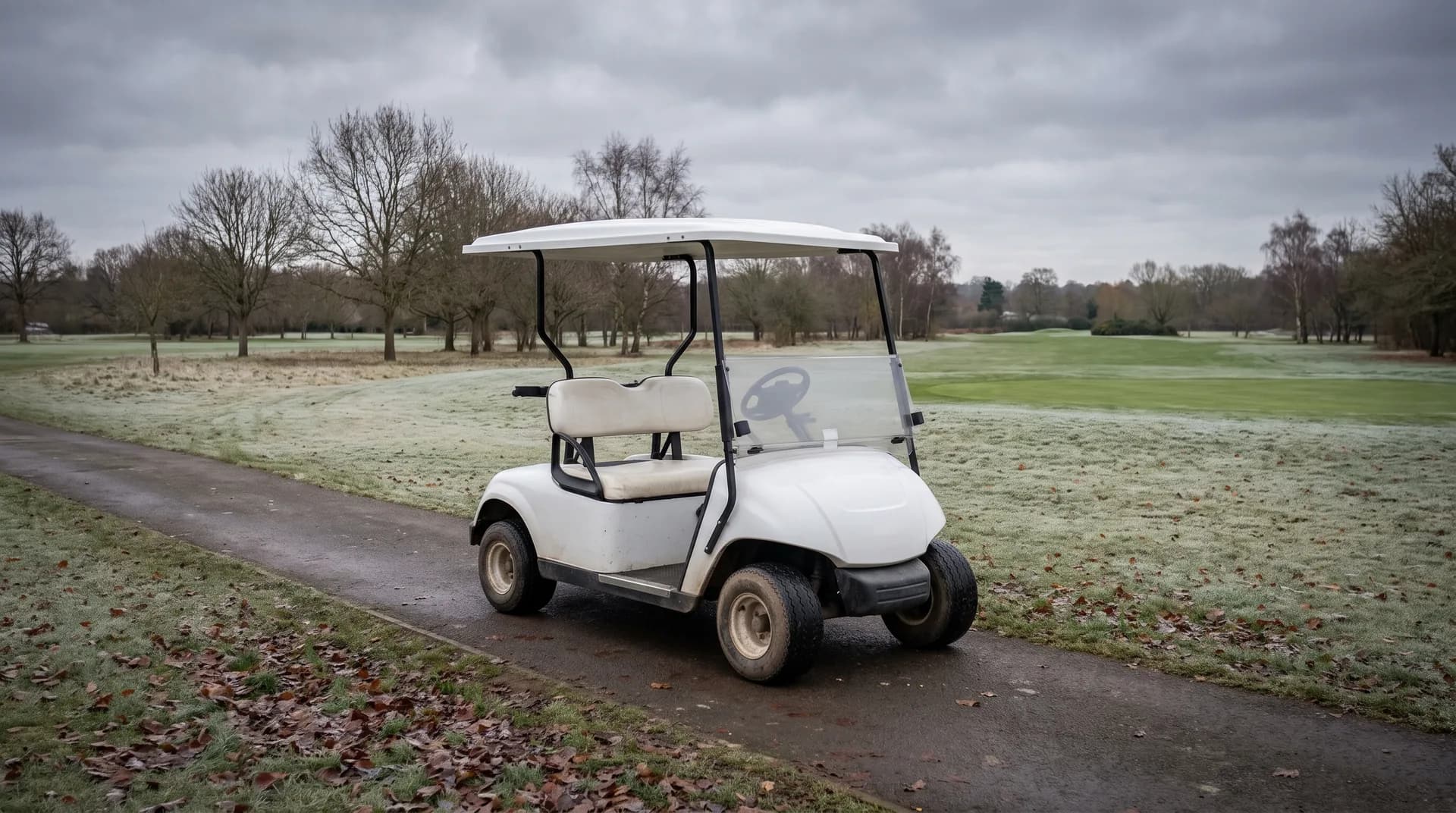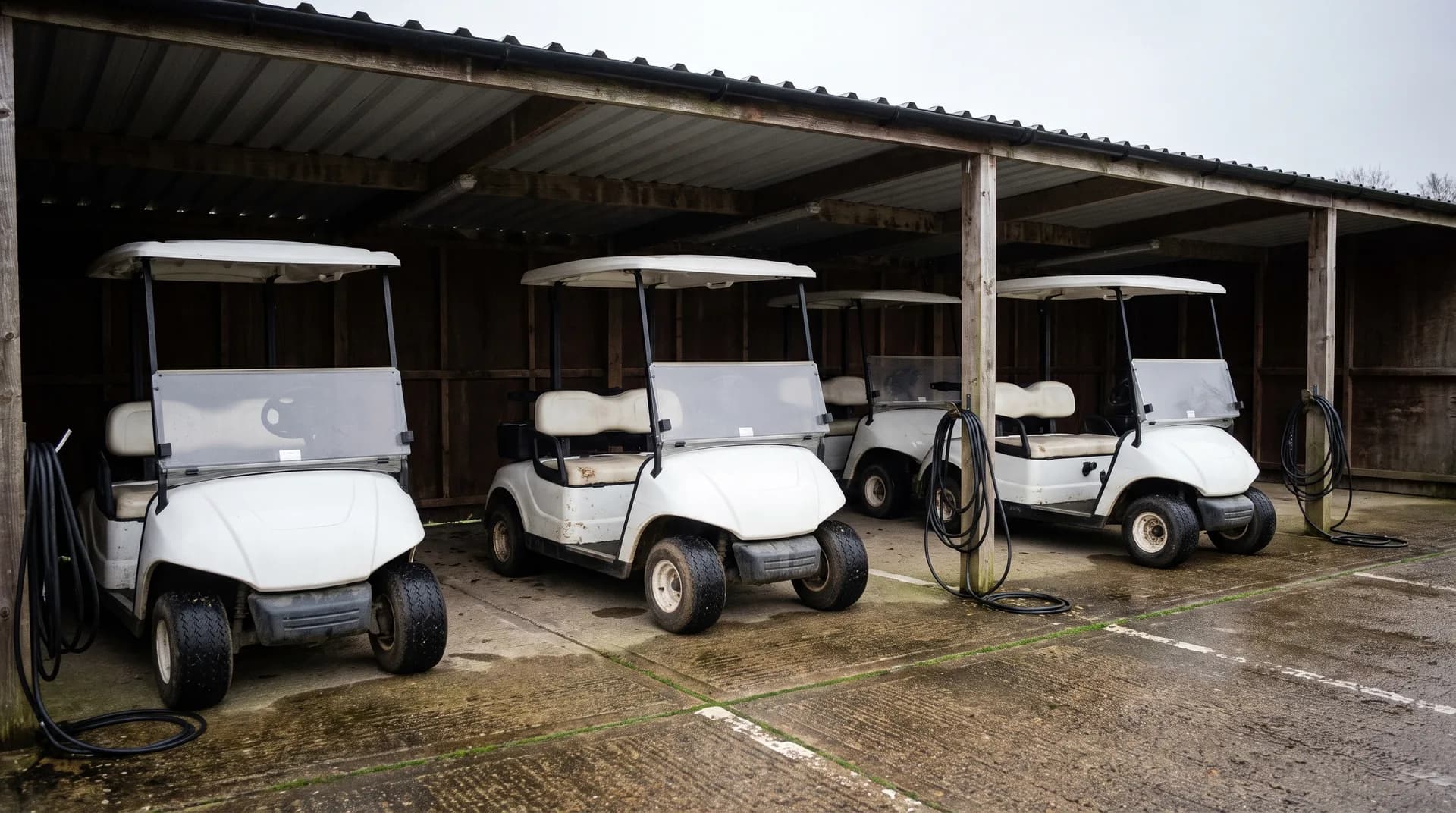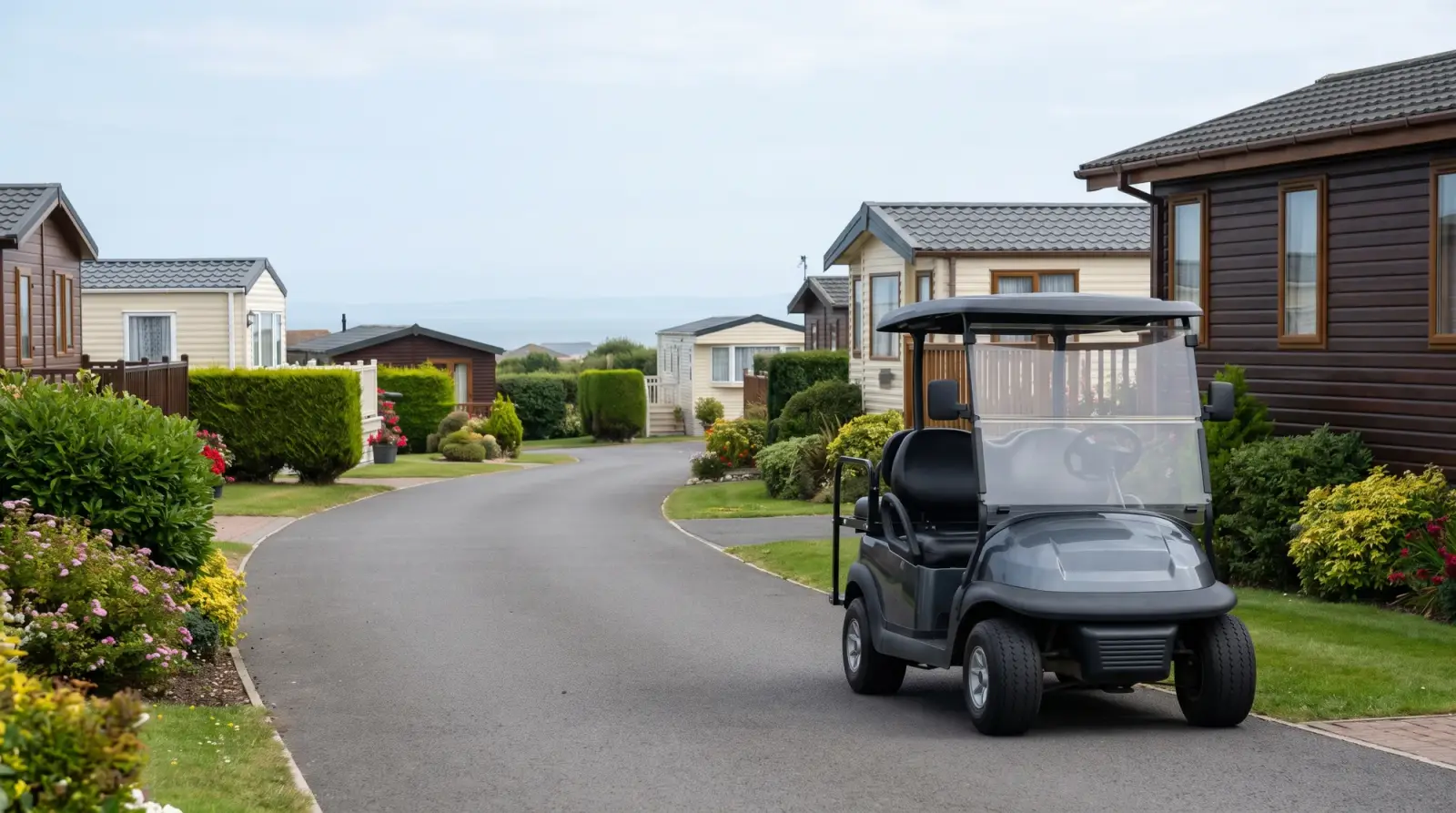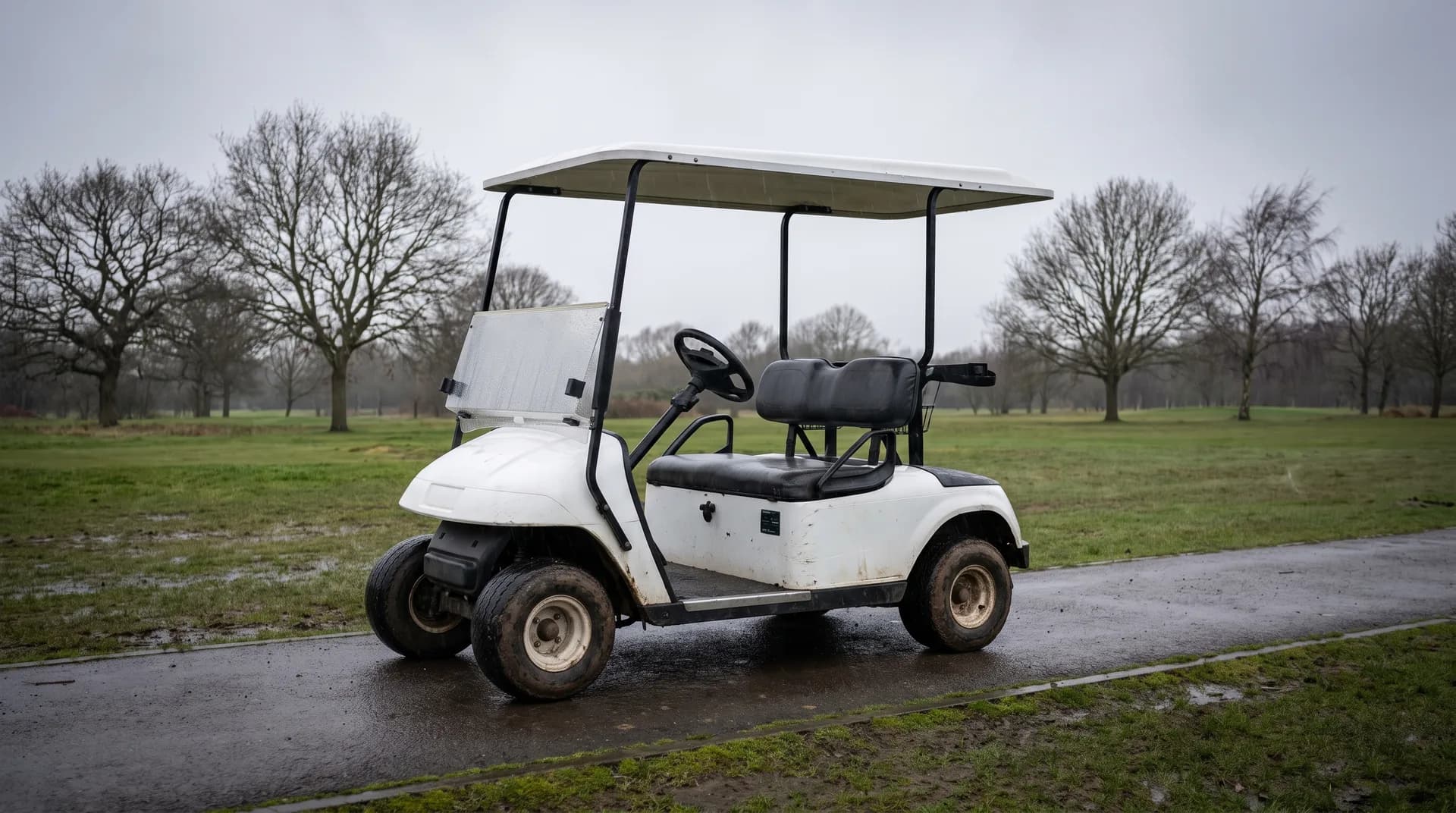
When a club puts the course on path only or suspends golf carts altogether, the decision is about ground pressure and turf recovery rather than about vehicles in the abstract. That distinction matters, because a lighter vehicle carrying one person does not load the ground the way a four-passenger carrying four people and two bags does. Some clubs recognise that in their policy, and permit single-rider vehicles when they permit nothing else. It is not universal, but it is common enough to be worth asking about.
- Club restrictions are about ground pressure, so a lighter vehicle is a genuinely different case.
- Some clubs permit single-rider vehicles on days when standard golf carts are suspended.
- The category covers several different vehicle types that clubs treat differently.
- Policy is set club by club, so ask specifically rather than assuming.
- If you play several courses, expect the answer to differ at each.
Why weight and footprint matter
Turf damage from vehicles comes down to how much load is applied over how much contact area, how many times, and how wet or frozen the ground is when it happens. A standard cart fully loaded is a substantially heavier proposition than a single-rider vehicle carrying one person and a bag, and the difference shows up in compaction and rutting on soft ground. Greenkeepers know this precisely, which is why some clubs write policy that distinguishes between vehicle types rather than treating everything with wheels identically. Where a club has not made that distinction, it is often because nobody has raised it rather than because it has been considered and rejected.
The vehicles clubs are actually distinguishing between
- What it is
- Conventional golf cart, fleet or private
- Typical club treatment
- Subject to the main restriction policy
- What it is
- Compact one-person seated vehicle
- Typical club treatment
- Sometimes permitted when standard golf carts are not
- What it is
- Trolley-derived vehicle the player rides
- Typical club treatment
- Often treated as a lighter case again
- What it is
- Player stands rather than sits
- Typical club treatment
- Varies widely; some clubs prohibit outright
- What it is
- Carries the bag, player walks
- Typical club treatment
- Almost always permitted
| What it is | Typical club treatment | |
|---|---|---|
| Standard 2 or 4-seat cart | Conventional golf cart, fleet or private | Subject to the main restriction policy |
| Single-rider cart | Compact one-person seated vehicle | Sometimes permitted when standard golf carts are not |
| Ride-on golf trolley | Trolley-derived vehicle the player rides | Often treated as a lighter case again |
| Stand-on vehicle | Player stands rather than sits | Varies widely; some clubs prohibit outright |
| Powered trolley | Carries the bag, player walks | Almost always permitted |
These are genuinely different vehicles with different weights, footprints and handling, and lumping them together is where confusion starts. Our comparison of single-seaters, ride-on trolleys and compact golf carts sets out how they differ in practice, which is worth reading before you approach a club, because being precise about what you are proposing makes it far easier for them to give you a clear answer.
What to ask, and how to ask it
Approach it as a specific question about a specific vehicle rather than a general one about single-riders. Clubs find it much easier to say yes to a defined proposal than to an open category, because their concern is what happens on their turf on a wet February morning. Tell them the vehicle type and weight, that it carries one person, and ask whether it would be treated differently from a standard cart on path-only and suspended days. If the club has never considered it, ask who would decide and whether the course manager could look at the vehicle.
- Whether the club distinguishes single-rider vehicles from standard golf carts at all
- Which restriction levels the distinction applies to, if any
- Whether the arrangement is recorded or decided each morning
- What the club requires for a privately owned vehicle, including insurance evidence
- Where it may be stored and whether charging is available
- Whether the same answer applies in competitions and to visitors
If your club says no
Some clubs will decline, and the reasons are usually practical rather than obstructive: limited storage, an insurance position they do not want to vary, or a policy they apply uniformly to avoid arguments about where the line sits. If access on restricted days is important to you, it is worth asking what the decision rests on and whether it would be reviewed, and worth knowing that clubs differ enormously. Where a cart is needed in order to play at all rather than for convenience, the club's exemption arrangements are the right route, and our guide to club cart exemption schemes covers how those usually work.
Frequently asked questions
Are single-rider golf carts allowed when others are suspended?+
At some UK clubs, yes, because a lighter vehicle carrying one person loads soft ground differently from a fully laden four-passenger. It is not universal, and policy is set club by club, so ask about your specific vehicle rather than assuming.
Why do clubs treat single-rider vehicles differently?+
Because restrictions are about ground pressure and turf recovery rather than vehicles as a category. Less weight over a given contact area causes less compaction and rutting, and greenkeepers are well aware of the difference.
What counts as a single-rider cart?+
Broadly, a compact one-person seated vehicle, though clubs also distinguish ride-on trolleys and stand-on vehicles, which differ again in weight and footprint. Being precise about which you mean makes it much easier to get a clear answer.
Do I still need permission for a single-rider vehicle?+
For a privately owned vehicle, almost certainly yes, and clubs typically want written permission and evidence of insurance regardless of the vehicle type. Storage and charging usually need agreeing separately.
Will the answer be the same at every club?+
No, and it often is not. Arrangements vary widely between clubs, and visitor policies are frequently stricter than member policies, so check at each course you play rather than assuming it transfers.
Want to know what would suit your course?
Tell us about the ground, how you play and what your club allows, and we will tell you honestly what fits, including when a powered trolley or hire would serve you better than buying.
Ready to find the right golf cart?
Tell us how and where it will work and we will specify a vehicle and a tailored quote built around you. Every build comes with a 3-year warranty and a 24-hour priority call-out.
Our guides are written and reviewed by the Hawke Electric Vehicles team, the people who specify, build, deliver and support the vehicles. We focus on honest, practical advice and flag where a figure depends on the build rather than guessing.
More guides by Hawke