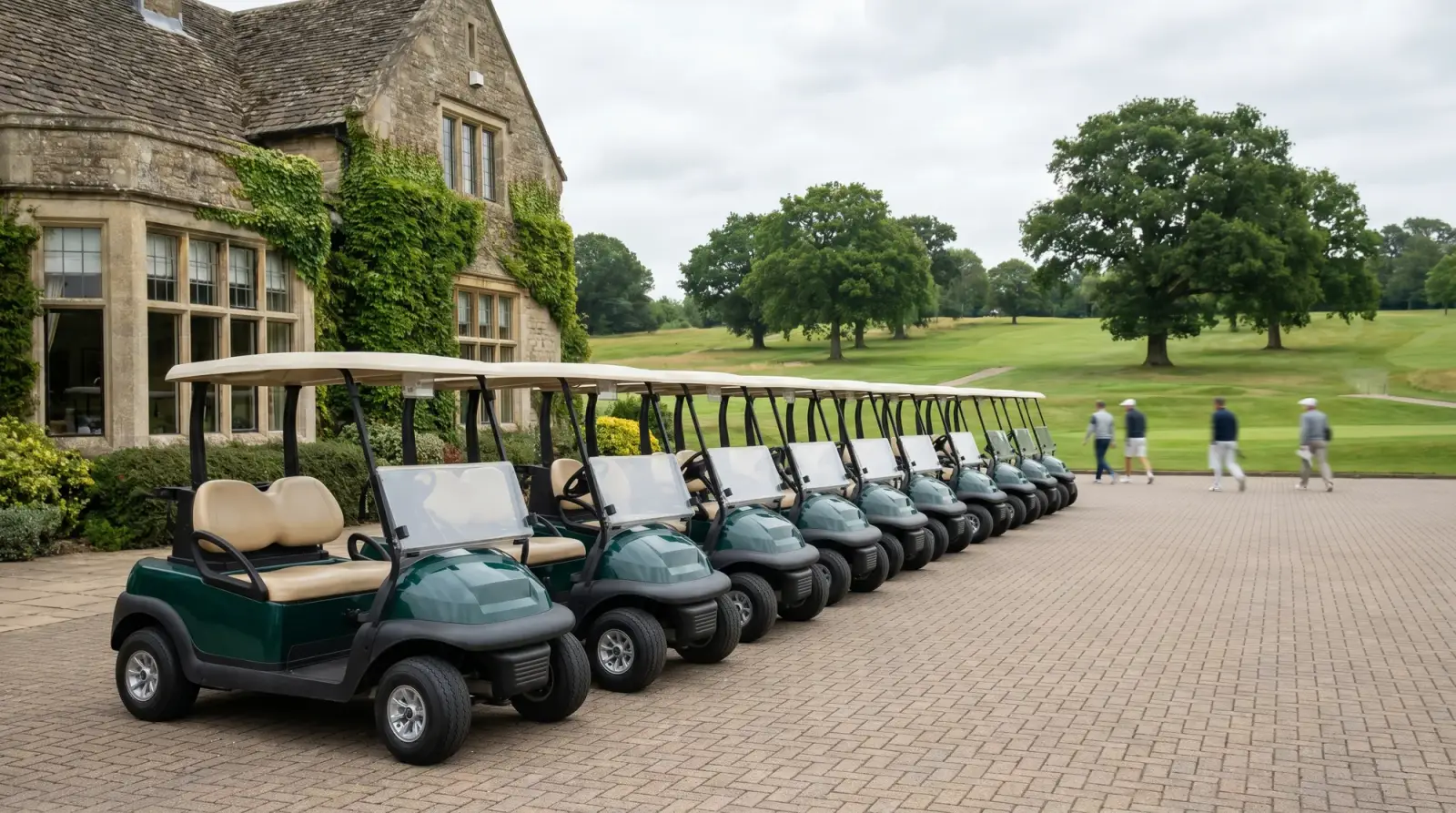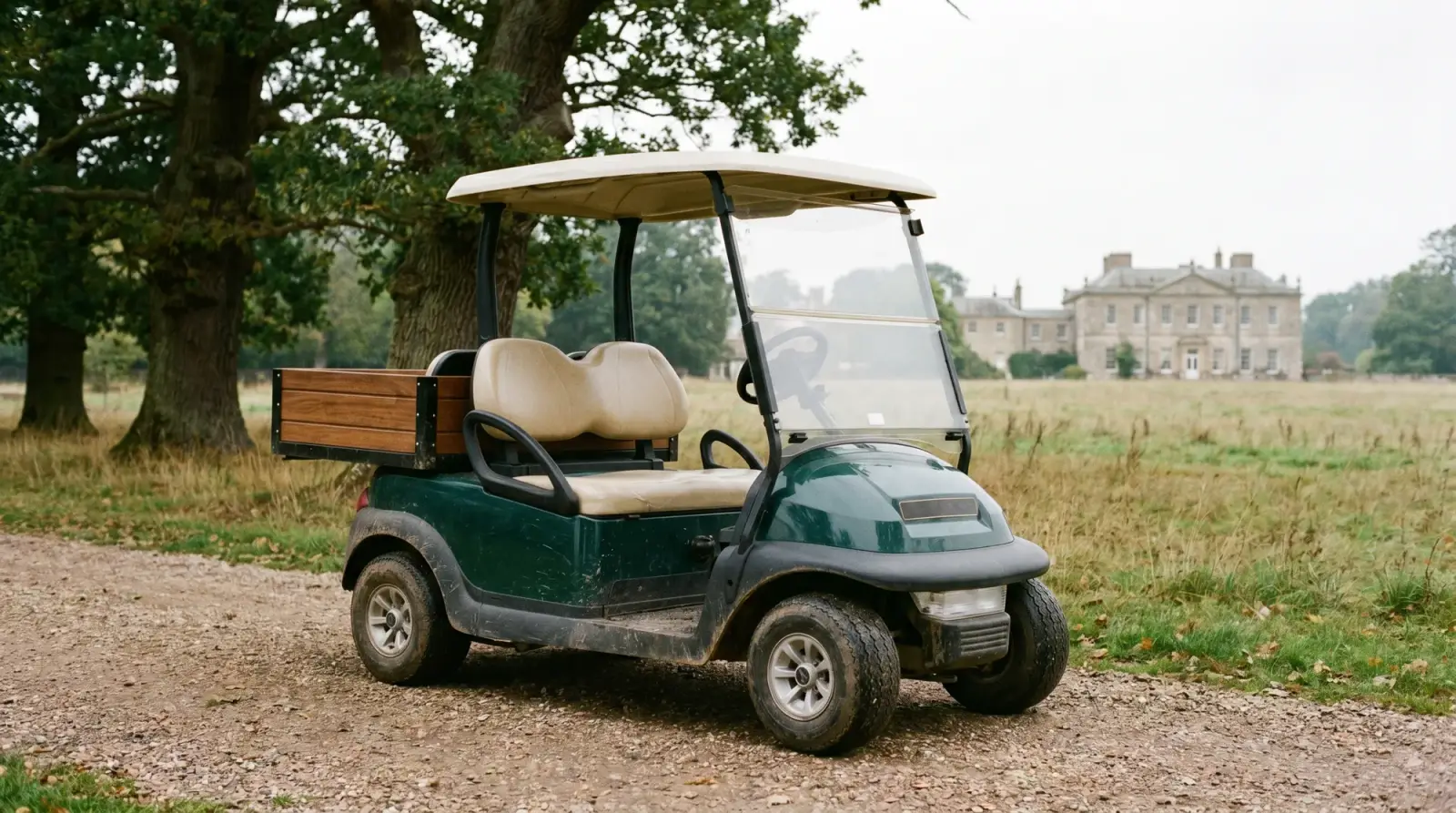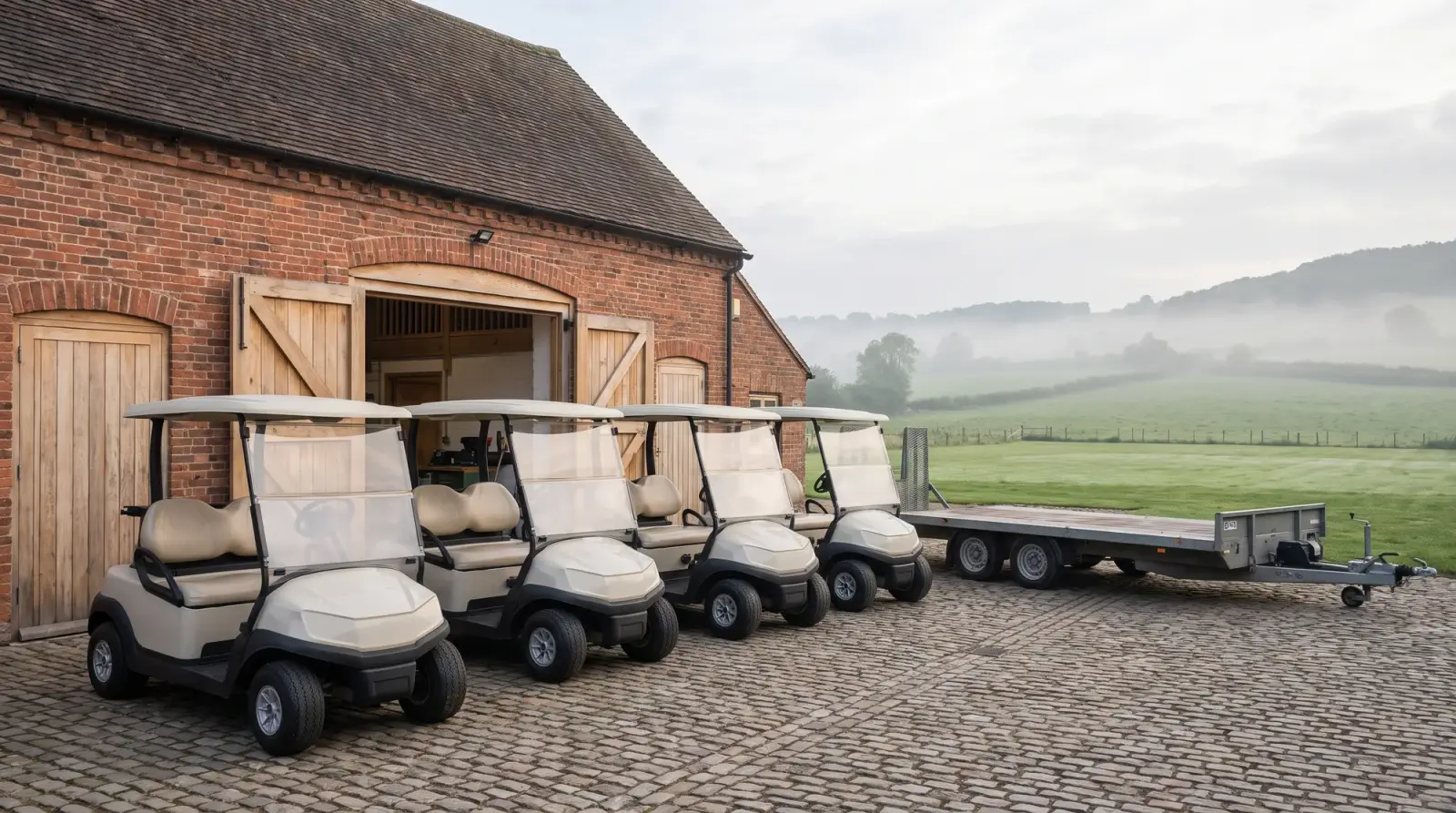
Starting a golf cart hire business in the UK comes down to three big decisions: the fleet, the insurance and the customers you'll chase first. The fleet is by far the largest cost line, and a workable starter operation of ten golf carts plus a trailer, tow vehicle and secure charging base typically needs somewhere in the tens of thousands of pounds before the first invoice goes out.
The opportunity is real, though. Festivals, weddings, county shows and film sets pay day rates well above what golf clubs pay, demand peaks reliably from May to September, and plenty of regions still have thin coverage. It's also a business where the boring things (charged batteries, clean golf carts, turning up on time) beat clever marketing. The startup maths come first, then the legal essentials and a realistic launch sequence.
- Fleet acquisition is the dominant startup cost. New golf carts cost several times what tidy used stock does, and finance or lease can spread either.
- Event hire (festivals, weddings, shows, film and TV) pays day rates far above golf-club hire, and that's where most new operators should start.
- Non-negotiables: public liability plus hire-fleet insurance, written hire agreements with damage terms, a maintenance regime with daily checks, and PAT-tested chargers.
- Margins live and die on utilisation. A cart earning three days a week May to September performs very differently from one earning three days a month.
- Established players dominate the big festival contracts, so new entrants win on niches: accessible shuttles, branded fleets, last-minute local cover.
What does a hire fleet actually cost?
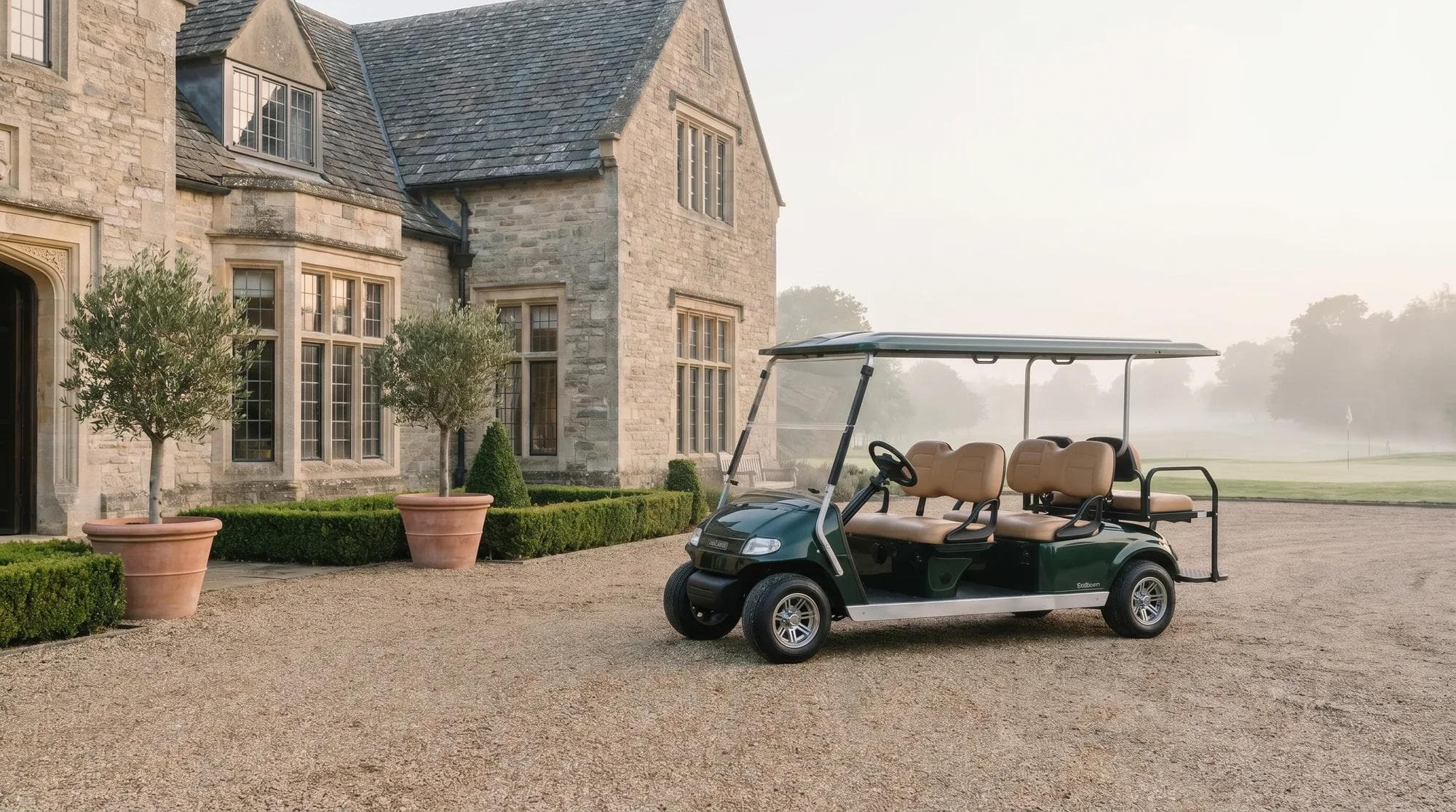
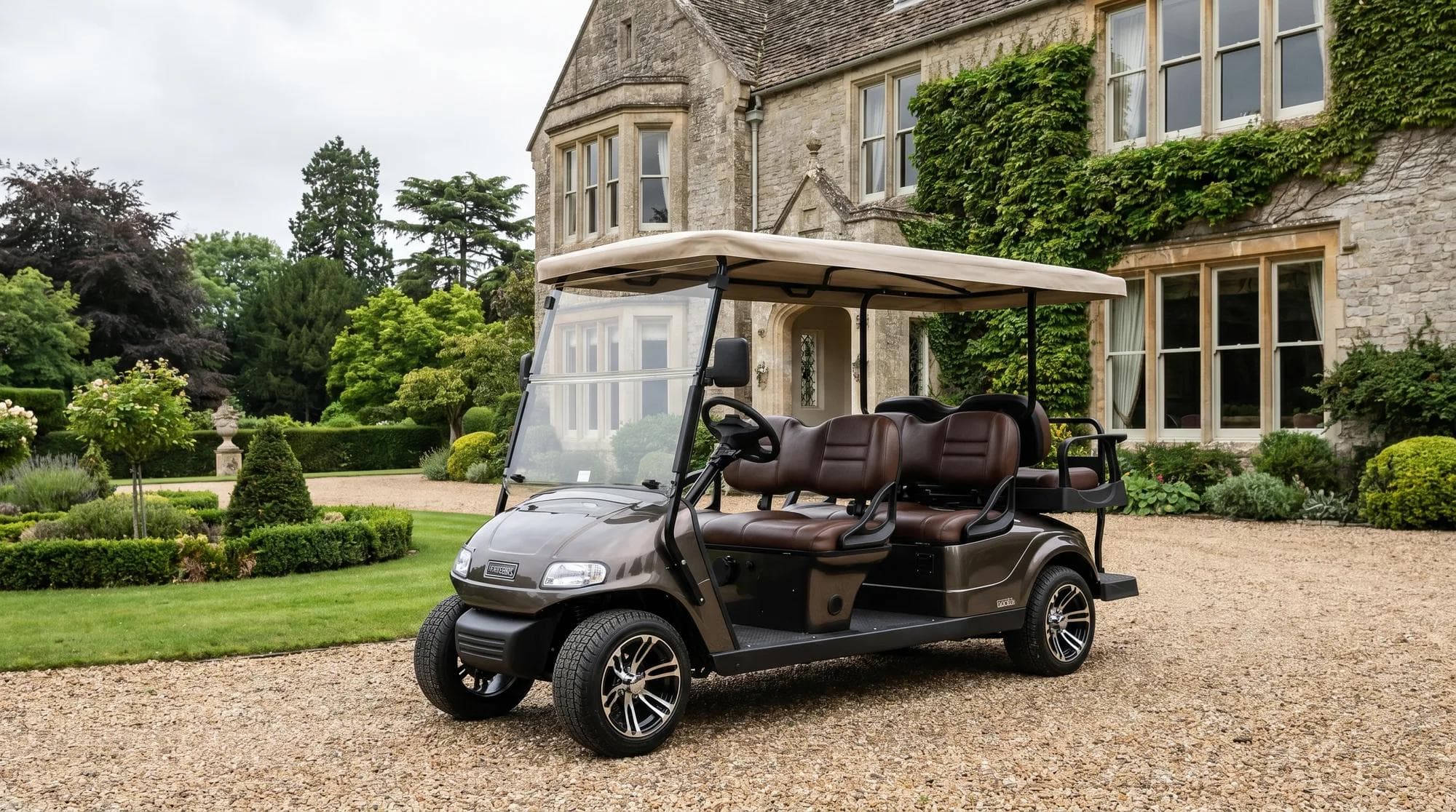
Everything else in this business is rounding error next to the fleet. Your first fork in the road is new versus used. New golf carts bring warranties, lithium batteries, predictable reliability and the smart appearance event clients pay for, at a price of several thousand pounds and up per vehicle depending on spec. Used stock, often ex-golf-course fleet, can cost a fraction of that, but budget honestly for battery replacement (the usual weak point in ex-fleet golf carts), cosmetic refurbishment and more workshop hours. Our guide to what to check when buying used applies double when you're buying ten at once.
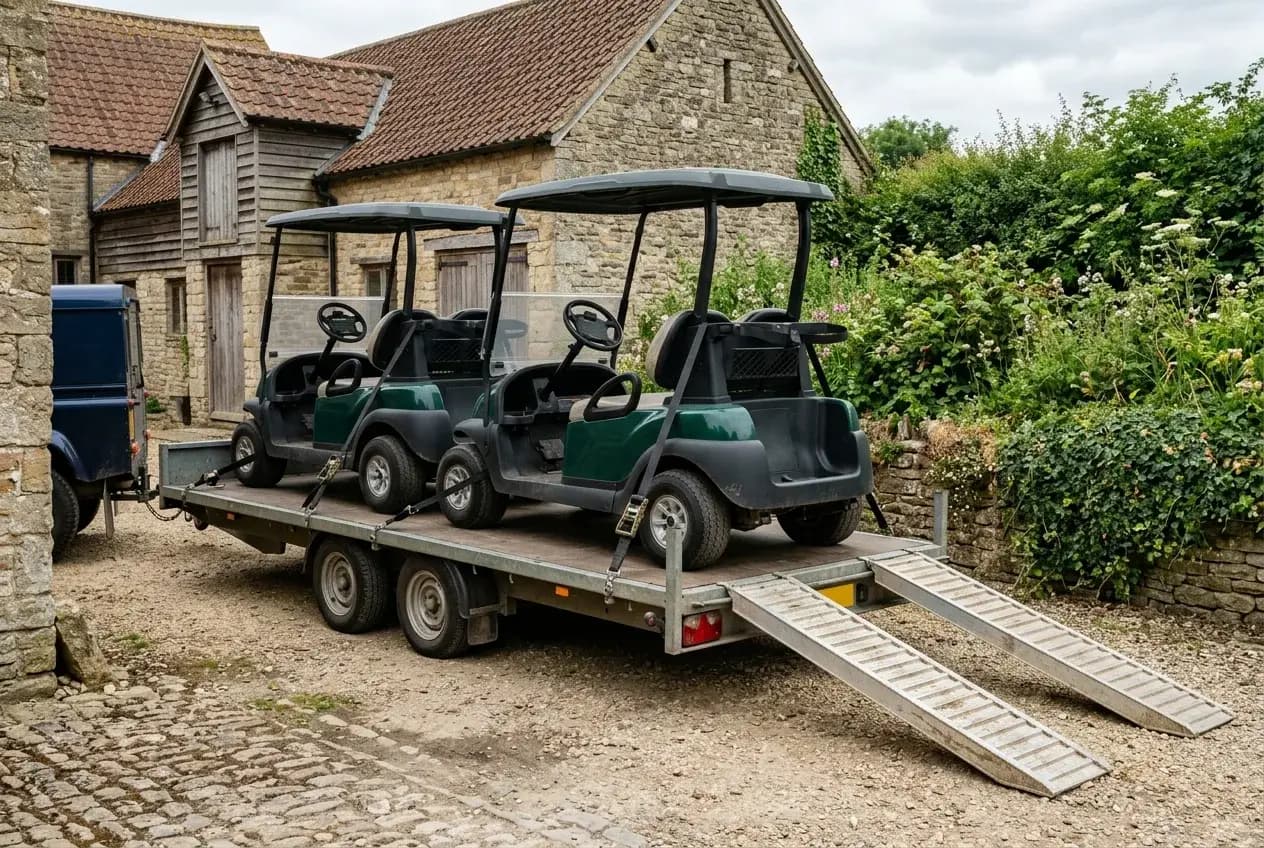
Most new operators don't pay cash anyway. Hire purchase and lease deals spread the fleet cost against the revenue it earns, which matters enormously in a seasonal business where cash arrives between May and September and the finance payments arrive every month. We've covered the structures in our golf cart finance and leasing guide. Beyond the golf carts themselves, budget for a braked trailer or two, a tow vehicle that can legally pull them loaded, and premises: secure, dry storage with enough electrical capacity to charge the whole fleet overnight.
Where does the revenue come from?
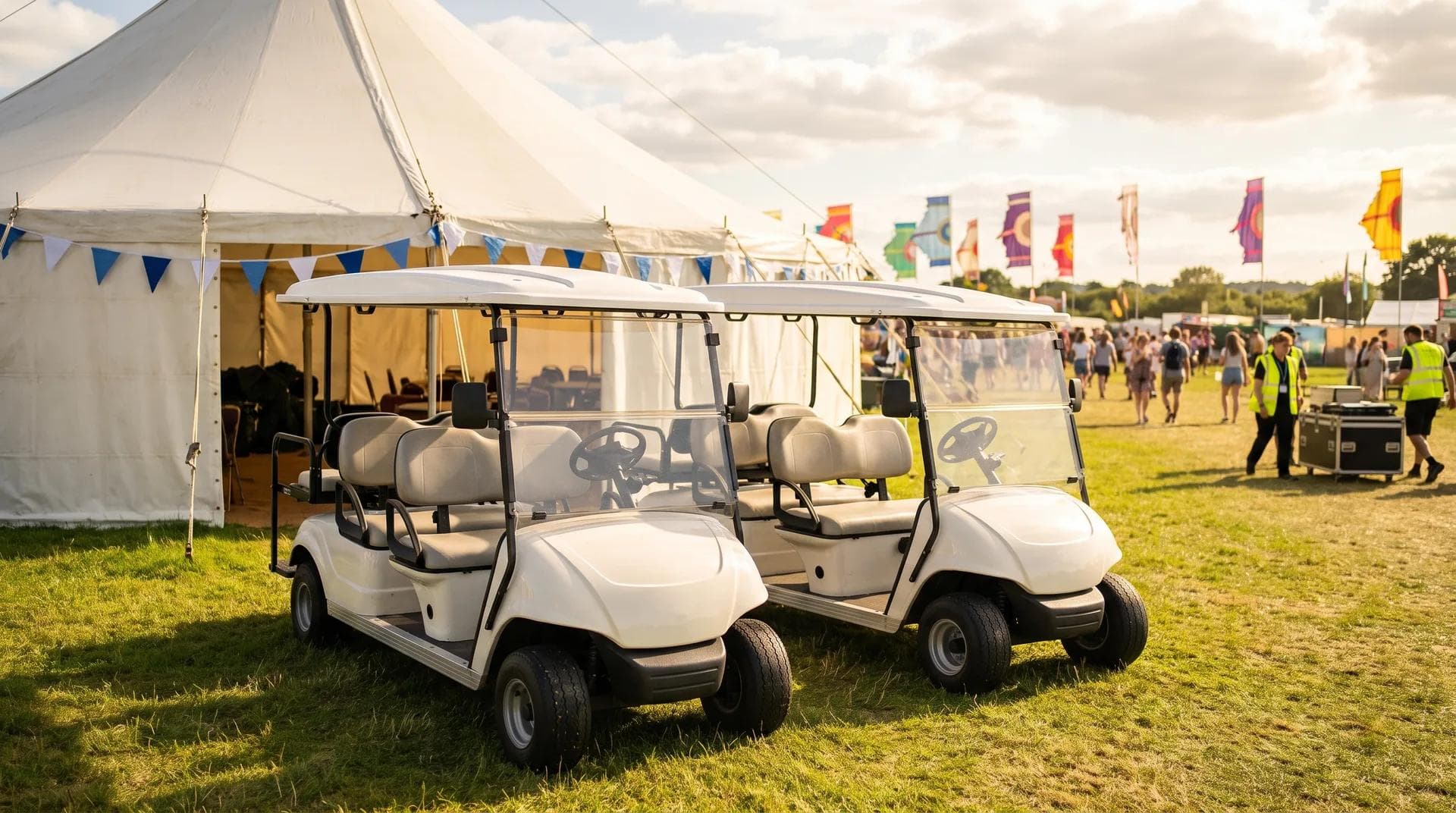
Events, mostly. A cart that earns a modest weekly rate parked at a golf club can earn the same money in a day or two at a festival, wedding venue or agricultural show, and multi-day events hire whole fleets at a time. Production companies hiring for film and TV shoots pay well and book long. The trade-off is logistics: event work means delivering, collecting, briefing site crews and being on call, where golf club work means dropping golf carts in March and collecting them in October. The rates in our event cart hire cost guide show what end customers typically pay, which is the ceiling your pricing lives under.
Seasonality is the shape of the whole business. May to September is the harvest; October to April is servicing, refurbishment and whatever winter work you can find (Christmas markets, stadium maintenance contracts, indoor arenas). Price the summer to carry the year.
The essentials you can't skip
Insurance first. You need public liability cover (event organizers commonly ask for £5m) plus a hire-fleet policy covering the golf carts themselves in transit, on site and in customers' hands. Tell the insurer exactly how the golf carts will be used; a policy written for golf course use won't respond to a festival claim, and a broker who knows low-speed vehicles will save you both money and arguments.
Then paperwork and process. Every hire needs a written agreement covering damage liability, driver requirements (full licence, minimum age), prohibited use and deposit terms. Every cart needs a maintenance log and a daily pre-hire check: brakes, steering, tires, batteries, seatbelts where fitted. Chargers are portable electrical equipment, so they need periodic inspection and testing (PAT) with records kept, and event organizers will ask to see the certificates alongside your risk assessments and method statements. None of this is difficult. All of it wins contracts, because organizers hire the operator whose paperwork arrives before they ask.
A realistic launch sequence
- 01
Validate local demand before buying anything
Ring venues, festivals, wedding barns and estate managers within an hour's drive. Ask who they currently hire from, what frustrates them and what they'd pay. Ten honest conversations beat any business plan template.
- 02
Arrange insurance and draft your hire agreement
Get public liability and hire-fleet quotes early, because the premium shapes your pricing. Have a solicitor cast an eye over your hire agreement's damage and liability terms once, then reuse it for years.
- 03
Buy a small, honest fleet
Start with six to ten golf carts rather than thirty. Mix two and four seaters, favour lithium if budget allows (faster charging between events, less winter care) and keep one cart as a spare, because swap-out cover is a selling point from day one.
- 04
Sort logistics and base
Trailer, tow vehicle, secure storage with overnight charging capacity, and a maintenance corner with the basics. Confirm your electrical supply can actually charge the full fleet at once before you sign the lease.
- 05
Build the paperwork pack
Risk assessments, method statements, PAT records, insurance certificates and maintenance logs in one folder you can send any organizer within the hour. This pack is your sales brochure for corporate work.
- 06
Launch on niches, not headline festivals
The giant festivals have incumbent suppliers. Win the wedding venues, county shows, sports clubs and accessibility shuttle contracts first, deliver flawlessly, and let the bigger contracts find you through site managers who move jobs.
Is it actually profitable?
It can be, and the variable that decides it is utilisation. The costs of a hire fleet are mostly fixed (finance, insurance, storage, your time), so each additional hire day is high-margin once those are covered. An operator whose golf carts earn two to three days a week through the summer, with winter servicing income on top, has a solid small business. An operator whose fleet sits in a barn between occasional weddings has an expensive hobby. Be realistic about competition too: established national players exist, and they'll always win on fleet depth. New entrants beat them on speed, locality and niches, such as accessible shuttle fleets for events (an underserved market), golf carts wrapped in sponsor branding, and same-week cover when the big firms are fully booked.
Frequently asked questions
How much does a golf cart fleet cost?+
It depends heavily on new versus used and on spec. Tidy used ex-fleet golf carts cost a fraction of new lithium models, but need battery and refurbishment budget. For a ten-cart starter fleet with trailer and tow vehicle, plan in the tens of thousands of pounds, financed or leased in most cases.
What insurance does a cart hire business need?+
Public liability (event organizers commonly require £5m) plus a hire-fleet policy covering the vehicles in transit, on site and in hirers' hands. Declare the actual use honestly; golf-only policies won't respond to event claims.
Is golf cart hire profitable in the UK?+
With decent utilisation, yes. Event day rates are strong and costs are mostly fixed, so golf carts earning two to three days a week through the summer generate healthy margins. Poor utilisation, not pricing, is what kills most operators.
Do hire golf carts need to be road legal?+
No, and standard golf carts aren't road legal in the UK. Fleets move between sites by trailer and operate on private land: venues, showgrounds, estates and courses. Never drive them on public roads between sites.
What maintenance obligations does an operator have?+
Hire golf carts are work equipment, so they must be maintained, inspected and safe: a documented maintenance log per vehicle, daily pre-hire checks, prompt defect repair and PAT-tested chargers. Records are what protect you if anything goes wrong.
If you're serious, start smaller than your ambition, buy better golf carts than the cheapest available, and treat the paperwork pack as a sales asset rather than a chore. The operators who last in this market are the ones whose golf carts always start, whose certificates are always current and who answer the phone in March when an organizer's usual supplier has let them down.
Building a hire fleet?
Hawke supplies new electric cart fleets to UK hire operators, with bespoke colors and livery, a 3-year warranty and 24-hour call-out support. Tell us your plans and we'll quote fleet pricing.
Related solutions
Ready to explore what we build?
See the vehicles and the setting this applies to, or get a tailored quote built around your site.

Ready to find the right golf cart?
Tell us how and where it will work and we will specify a vehicle and a tailored quote built around you. Every build comes with a 3-year warranty and a 24-hour priority call-out.
Our guides are written and reviewed by the Hawke Electric Vehicles team, the people who specify, build, deliver and support the vehicles. We focus on honest, practical advice and flag where a figure depends on the build rather than guessing.
More guides by Hawke