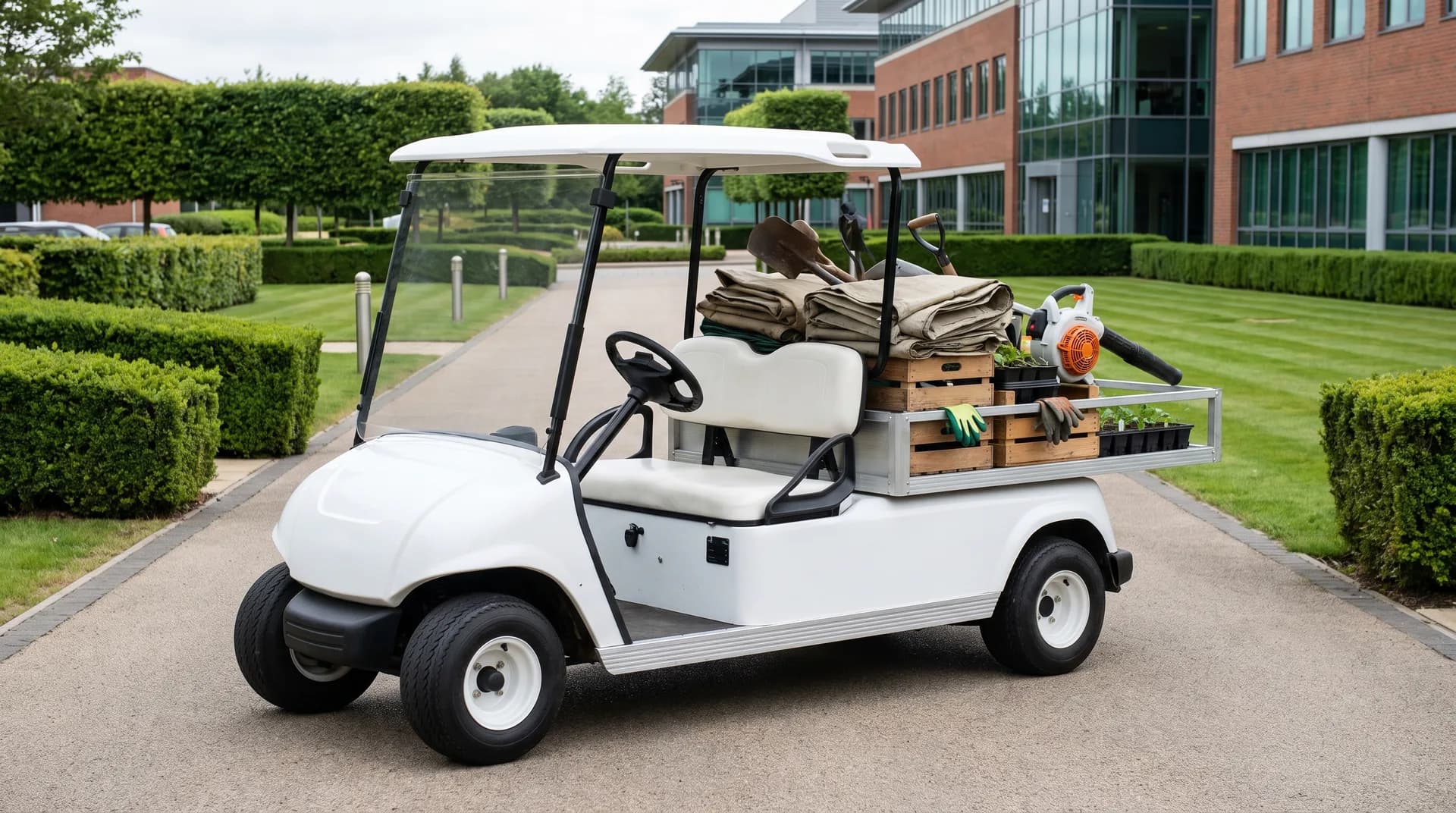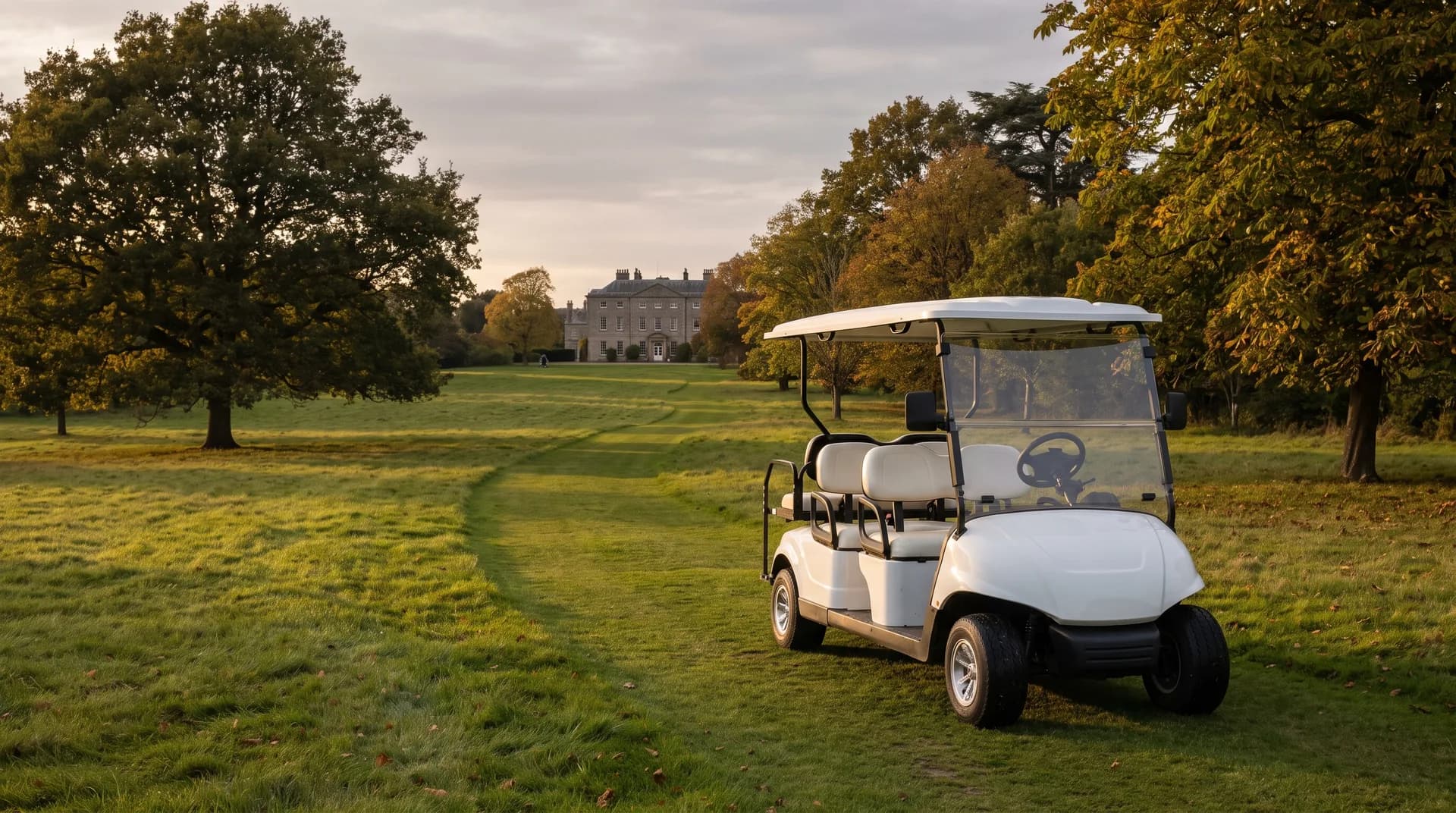
Electric golf carts are genuinely quiet: the drivetrain itself is close to silent, and in normal use the sound you hear is tires on the surface, a soft hum under acceleration and not much else. Two people sitting side by side can talk at normal conversational volume at full speed, which is the most honest way to describe the level, quieter than the conversation it carries. That is not a marketing flourish, it is a consequence of the machine: an electric motor has no combustion, no exhaust and no idle, so the loudest thing on a well-maintained cart is usually its contact with the ground. This guide covers what that quietness is like in practice, why it has become a buying reason in its own right for venues, estates and film work, and how the gas comparison falls out.
- The electric drivetrain is near silent: tire and surface noise dominate, with a soft motor hum under load.
- Conversation-level is the honest description, passengers talk normally at full speed, and a stationary cart makes effectively no noise at all.
- Quietness is a working advantage: early-morning grounds work, filming, weddings, wildlife settings and noise-sensitive neighbours all benefit.
- The contrast with gas is stark, a combustion engine idles, revs and carries across a site in a way electric simply does not.
- A noisy electric cart is telling you something: new whines, grinding or squeals are fault symptoms worth diagnosing, not character.
Electric cart noise levels in practice
Describing sound in words is safer than inventing numbers, so here is the practical picture. At a standstill an electric cart makes effectively no noise: there is no idle, so a parked or paused cart is silent in a way no combustion vehicle can be. Pulling away, there is a soft electrical hum that rises briefly under load, on a climb or under hard acceleration, and fades at cruising speed. From there, what you hear depends on the ground: tires on tarmac are a quiet hiss, gravel crunches, and grass is quietest of all. Wind noise only enters the picture at the top of a cart's modest speed range. Inside the vehicle, passengers talk at normal volume; outside it, a cart passing at a few metres registers as a presence rather than an event, and is soon inaudible. The flip side of that discretion is worth naming: pedestrians often do not hear a cart coming, which is why careful drivers treat quietness as a reason for more caution around people, not less.
Why low noise matters: venues, filming, wildlife and neighbours
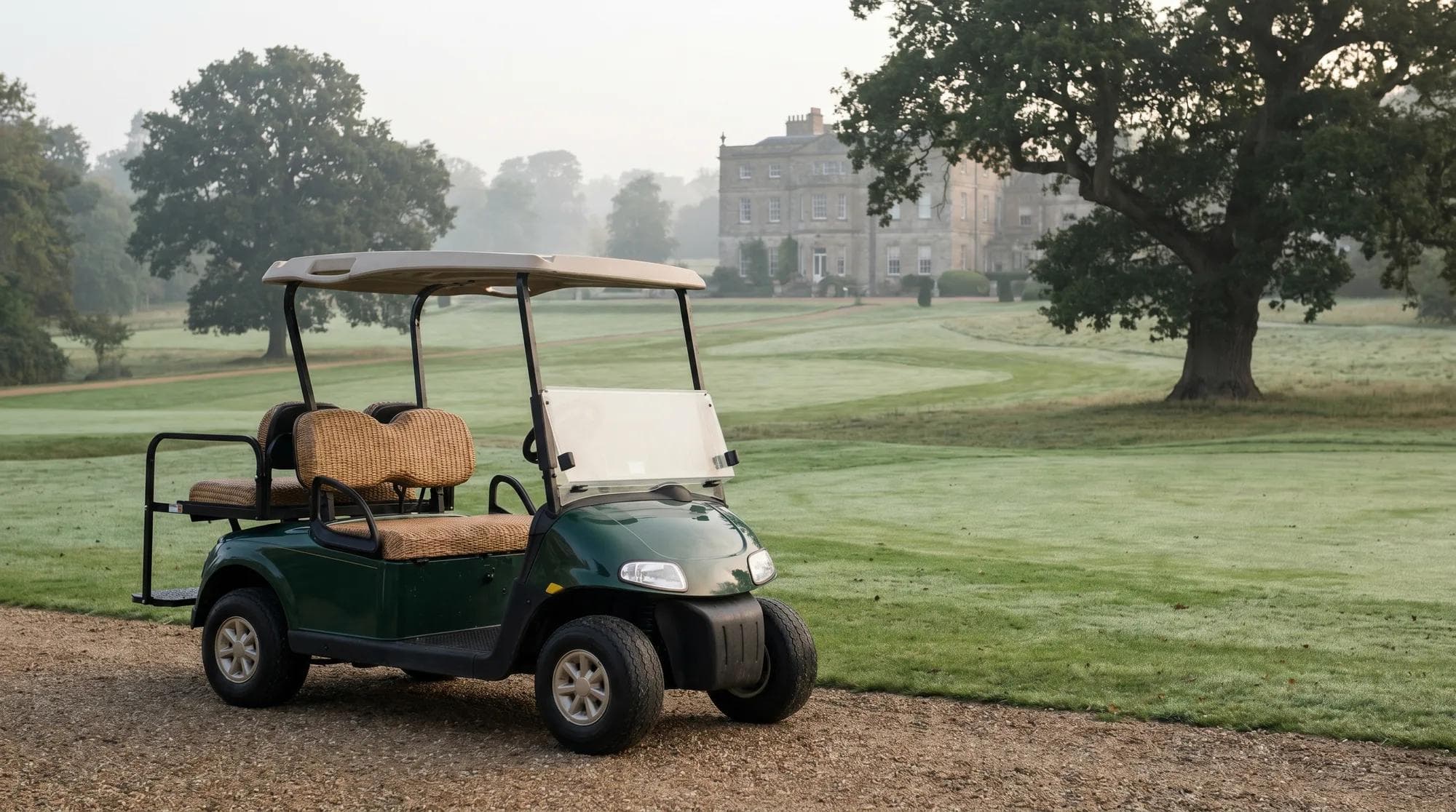
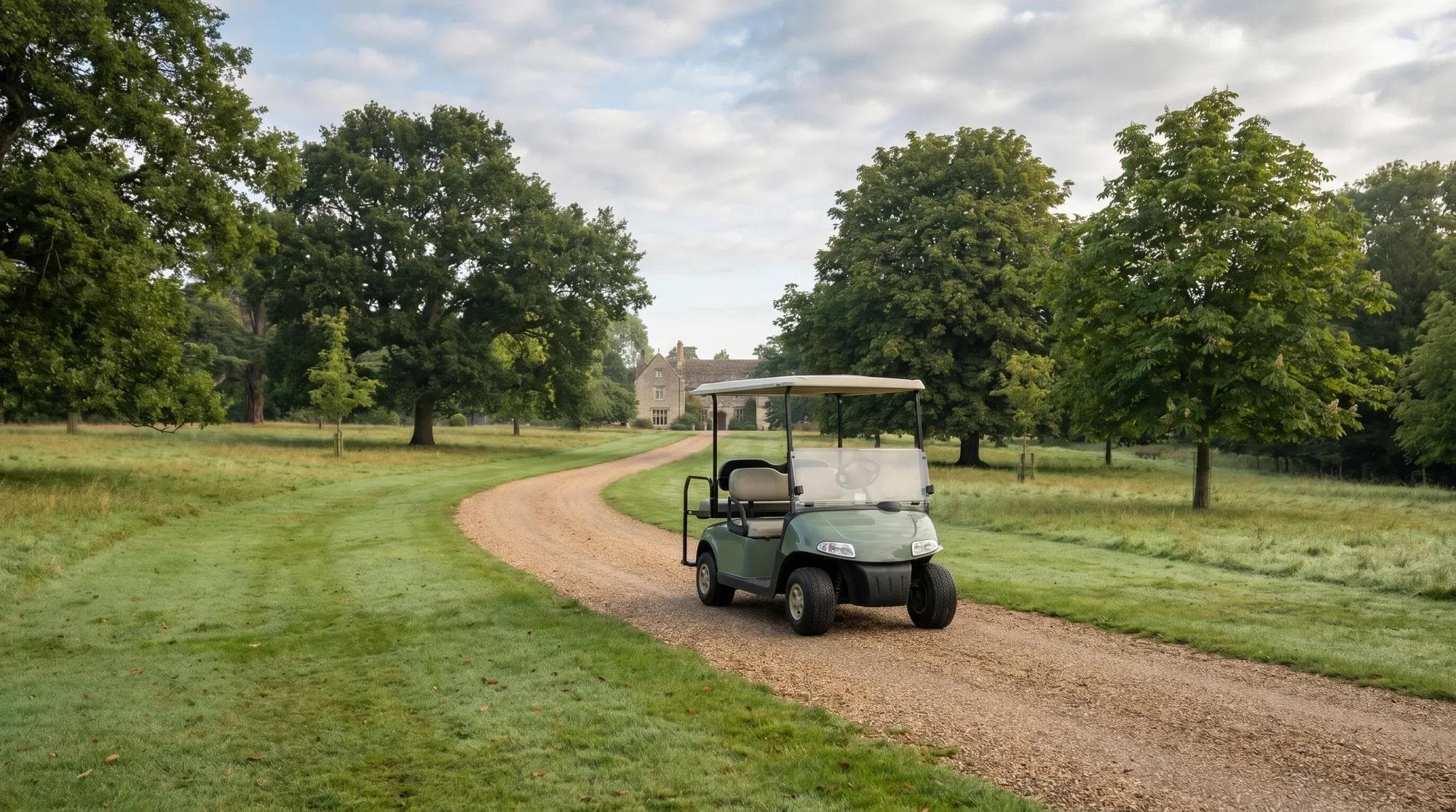
Quietness started as a nice-to-have and has become a specification requirement for many buyers. Hotels, wedding venues and hospitality estates want guests moved without an engine note intruding on a terrace or a ceremony. Film and TV productions use electric golf carts precisely because they can operate near a live set without being picked up by sound recording. Nature reserves, golf courses at dawn and estates with livestock or wildlife benefit from vehicles that do not announce themselves. And for anyone operating near houses, grounds teams starting at first light, resort parks with sleeping guests, contractors in residential settings, electric working is the difference between complaints and nobody noticing, our guide to quiet vehicles for private estates explores that side. Venues and sites set their own rules on noise and operating hours, so quiet vehicles also simply widen the window in which you are welcome to work.
- Electric cart
- Silent, no idle
- Gas cart
- Audible idle whenever running
- Electric cart
- Tire noise and a soft hum
- Gas cart
- Engine note rises and falls with revs
- Electric cart
- Generally unnoticed
- Gas cart
- Carries, often the first complaint
- Electric cart
- Workable close to sound-sensitive activity
- Gas cart
- Usually has to be kept away
- Electric cart
- Normal volume
- Gas cart
- Raised voices at speed
| Electric cart | Gas cart | |
|---|---|---|
| Stationary | Silent, no idle | Audible idle whenever running |
| Moving | Tire noise and a soft hum | Engine note rises and falls with revs |
| Early-morning use near buildings | Generally unnoticed | Carries, often the first complaint |
| Filming and ceremonies | Workable close to sound-sensitive activity | Usually has to be kept away |
| Conversation on board | Normal volume | Raised voices at speed |
Electric cart noise vs gas: the contrast
The comparison with gas is not close. A combustion cart has an engine that idles when stationary, revs under load and carries its note across open ground; a fleet of them is audible as a fleet. Electric removes the engine entirely, so the remaining sounds, tires, a hum, the occasional squeak of suspension over a kerb, are the kind that disappear into a site's background within metres. That is one strand of a broader case, running cost and servicing are others, which our electric versus gas guide works through in full. It is also self-reinforcing at fleet scale: one quiet vehicle is pleasant, but a whole fleet of quiet vehicles changes the feel of a site, which is why resorts and attractions that switch rarely switch back.
If your cart is noisy, that is a symptom
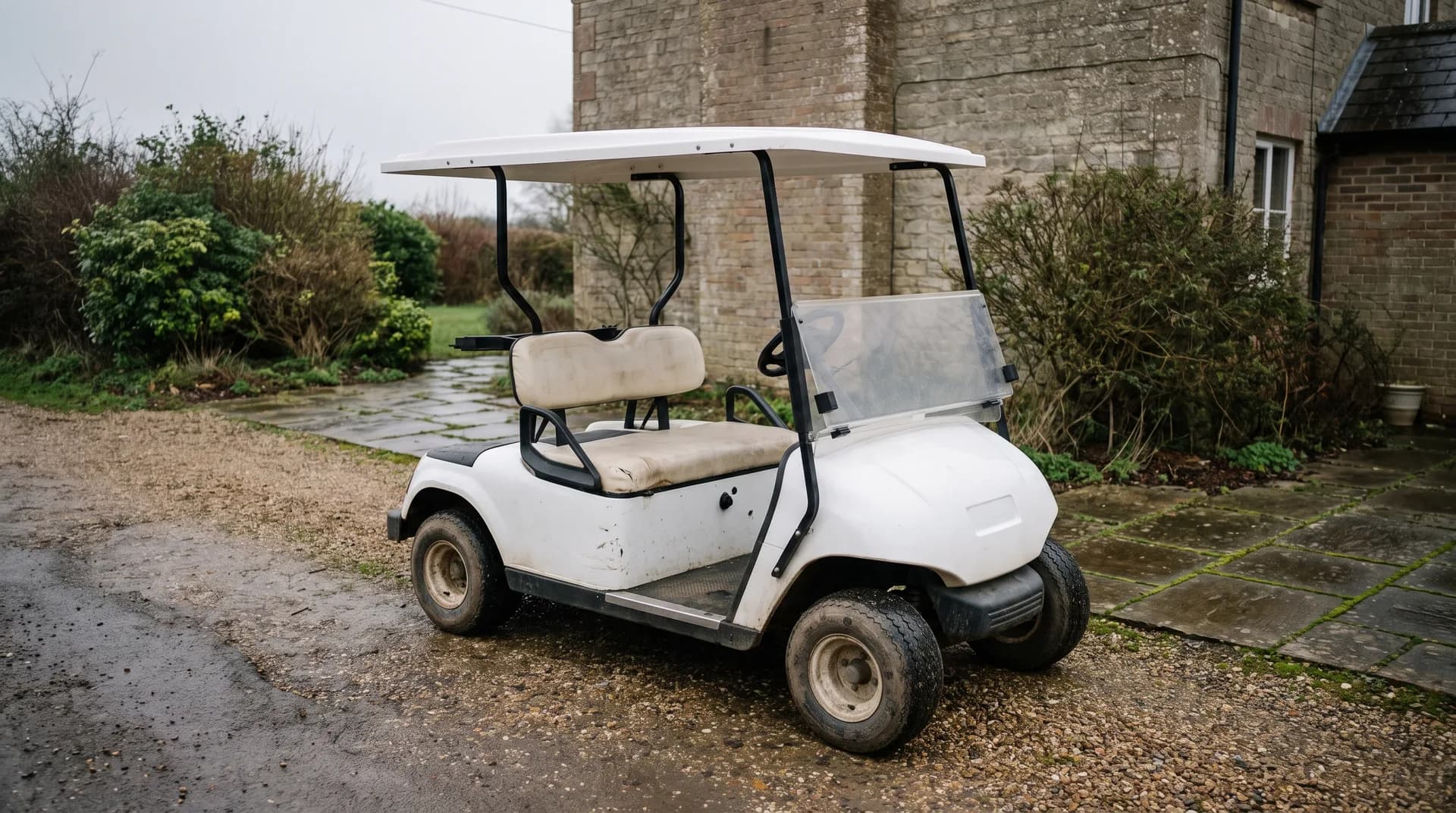
Because a healthy electric cart is so quiet, noise is diagnostic. A whine that has grown louder over months, a grinding or clicking from a wheel, squealing brakes, or a clunk over bumps are not the character of an ageing machine, they are early warnings from bearings, brakes, suspension or the drivetrain, and they are far cheaper to address early than after something lets go. Our troubleshooting guide to cart noises and steering symptoms walks through what each sound tends to mean and what to check. The rule of thumb is simple: if you can hear your electric cart over its tires, something wants attention. For buyers, the same logic applies in reverse when viewing a used machine, drive it somewhere quiet and listen, and when choosing new, any model in our range starts from the correct baseline: near silence.
Frequently asked questions
Are electric golf carts quiet?+
Yes, genuinely. The drivetrain is close to silent, so tire noise on the surface is usually the loudest component, with a soft hum under acceleration. Passengers talk at normal volume at full speed, and a stationary cart makes effectively no noise because there is no idle.
How loud is an electric cart compared with gas?+
There is no real contest. A gas cart idles audibly, revs under load and carries across a site; an electric cart removes the engine entirely, leaving sounds that fade into the background within metres. Fleets amplify the difference.
Why does cart noise matter to venues?+
Because guests, ceremonies, filming, wildlife and neighbours all notice engines. Quiet vehicles let staff work early near accommodation, operate close to sound-sensitive activity and stay within the noise expectations venues set for themselves.
Are quiet golf carts a risk to pedestrians?+
Quietness means people may not hear you coming, so good practice is to treat it as a reason for extra care: walking pace near people, eye contact, and a polite horn or word where needed. It is a manageable trade for the benefits.
My electric cart has become noisy. Is that normal?+
No, and it is useful information. New whines, grinding, clicks or squeals typically point to bearings, brakes, suspension or drivetrain wear, and they are cheapest to fix early. A healthy electric cart should never be much louder than its tires.
Hear the difference for yourself
Tell us where the vehicle will work and we will recommend the right model, every one of them starts from near silence, and price it to your specification.
Ready to find the right golf cart?
Tell us how and where it will work and we will specify a vehicle and a tailored quote built around you. Every build comes with a 3-year warranty and a 24-hour priority call-out.
Our guides are written and reviewed by the Hawke Electric Vehicles team, the people who specify, build, deliver and support the vehicles. We focus on honest, practical advice and flag where a figure depends on the build rather than guessing.
More guides by Hawke