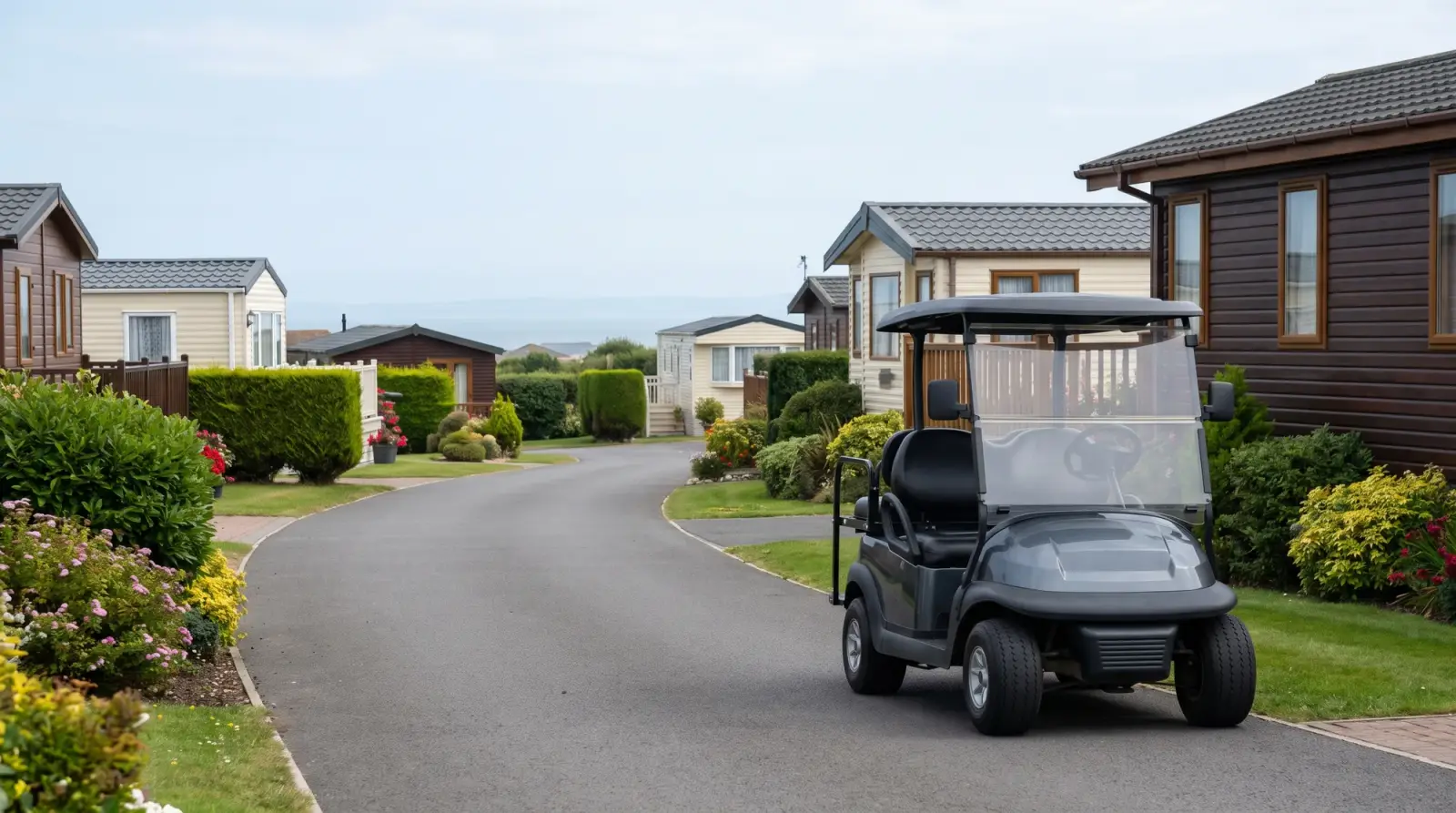
You can only take your own golf cart to a resort park if the park operator allows it, and plenty don't. A resort park is private land, so the decision sits entirely with the business that runs it, not with road traffic law, and policies vary from an outright ban to a formal permit scheme with insurance checks and speed limits.
The idea itself is booming. Static caravan and lodge owners have watched American resort communities where every pitch has its own cart, and more UK owners ask the question every season. Some parks have leaned in and built sensible rules around it. Others have banned personal golf carts after one too many near-misses on a busy August afternoon. Before you spend a penny on a cart, the first phone call is to reception, not a dealer.
- resort parks are private land, so each operator sets its own cart policy. There's no national rule that says yes or no.
- Many parks ban private golf carts outright; those that allow them usually require public liability insurance, a speed limit of 5 to 10mph, adult licensed drivers and registration with reception.
- Park roads open to holidaymakers can still count as a 'public place' for some road traffic purposes, which is why operators are cautious.
- Always get the park's permission in writing before buying a cart, and ask about charging rules for electric models.
- For parks, a permit scheme with clear routes and quiet hours works better than an unenforced free-for-all.
Why is it the park's decision?
Because it's their land and their licence. A resort park operates under a site licence from the local council, carries public liability insurance for everything that happens on its roads, and owes a duty of care to every guest walking between the pool and their pitch. A privately owned vehicle they don't control adds risk they have to answer for. Some operators decide the goodwill is worth it. Others look at children on bikes, blind corners between vans and a bar on site, and say no.
There's a legal wrinkle that makes operators extra careful. Park roads are private, but courts have held that land the public can freely access, such as car parks and event sites, can count as a 'public place' for certain Road Traffic Act purposes, including drink-driving and insurance offences. A resort park open to paying guests sits uncomfortably close to that line. It's the same doctrine we cover in our guide to whether golf carts are road legal in the UK, and it's why a sensible park treats cart rules seriously rather than turning a blind eye.
What do parks that allow golf carts usually require?
Policies differ park to park, but the same conditions come up again and again. Expect some or all of these before your cart is allowed through the barrier.
- Proof of public liability insurance covering the cart, often £1m to £5m, renewed annually and lodged with the park office.
- A site speed limit of 5 to 10mph, matching the park's general traffic rules.
- Drivers must be adults holding a full driving licence; no children driving, ever.
- The cart registered with reception, sometimes with a permit sticker displayed.
- Electric charging only via a compliant hook-up or approved outdoor socket, not a cable trailed across a path.
- Golf Carts parked on your own pitch, not blocking roads or emergency access.
Insurance is the one that catches people out. Standard home insurance won't cover a motorised vehicle used around a park, so you'll need a specific golf cart policy. They're inexpensive, typically well under £200 a year, and our golf cart insurance guide explains exactly what to ask for.
- What it means for owners
- No private golf carts at all; mobility scooters usually excepted. Sometimes the park runs its own shuttle instead.
- How common
- The most common stance, especially on large family parks with heavy foot traffic.
- What it means for owners
- Golf Carts allowed with proof of insurance, registration at reception, speed limits and adult drivers. Permits can be withdrawn for misuse.
- How common
- Growing steadily, particularly on quieter owner-only and lodge parks.
- What it means for owners
- No personal golf carts, but the park hires golf carts to guests or owners, keeping control of maintenance and insurance.
- How common
- Common on larger resorts and parks with golf courses attached.
| What it means for owners | How common | |
|---|---|---|
| Outright ban | No private golf carts at all; mobility scooters usually excepted. Sometimes the park runs its own shuttle instead. | The most common stance, especially on large family parks with heavy foot traffic. |
| Permit scheme | Golf Carts allowed with proof of insurance, registration at reception, speed limits and adult drivers. Permits can be withdrawn for misuse. | Growing steadily, particularly on quieter owner-only and lodge parks. |
| Hire-only | No personal golf carts, but the park hires golf carts to guests or owners, keeping control of maintenance and insurance. | Common on larger resorts and parks with golf courses attached. |
Buying a cart for park life: ask first, buy second
It sounds obvious, but every season people buy a cart, tow it to the park and get turned away at the gate. Get the park's policy in writing before you order anything. Ask specifically: is a private cart permitted, what insurance do you require, what are the speed and driver rules, where can I charge it, and does the policy survive a change of park ownership? That last one matters, because park groups buy each other regularly and policies get harmonised, usually downwards.
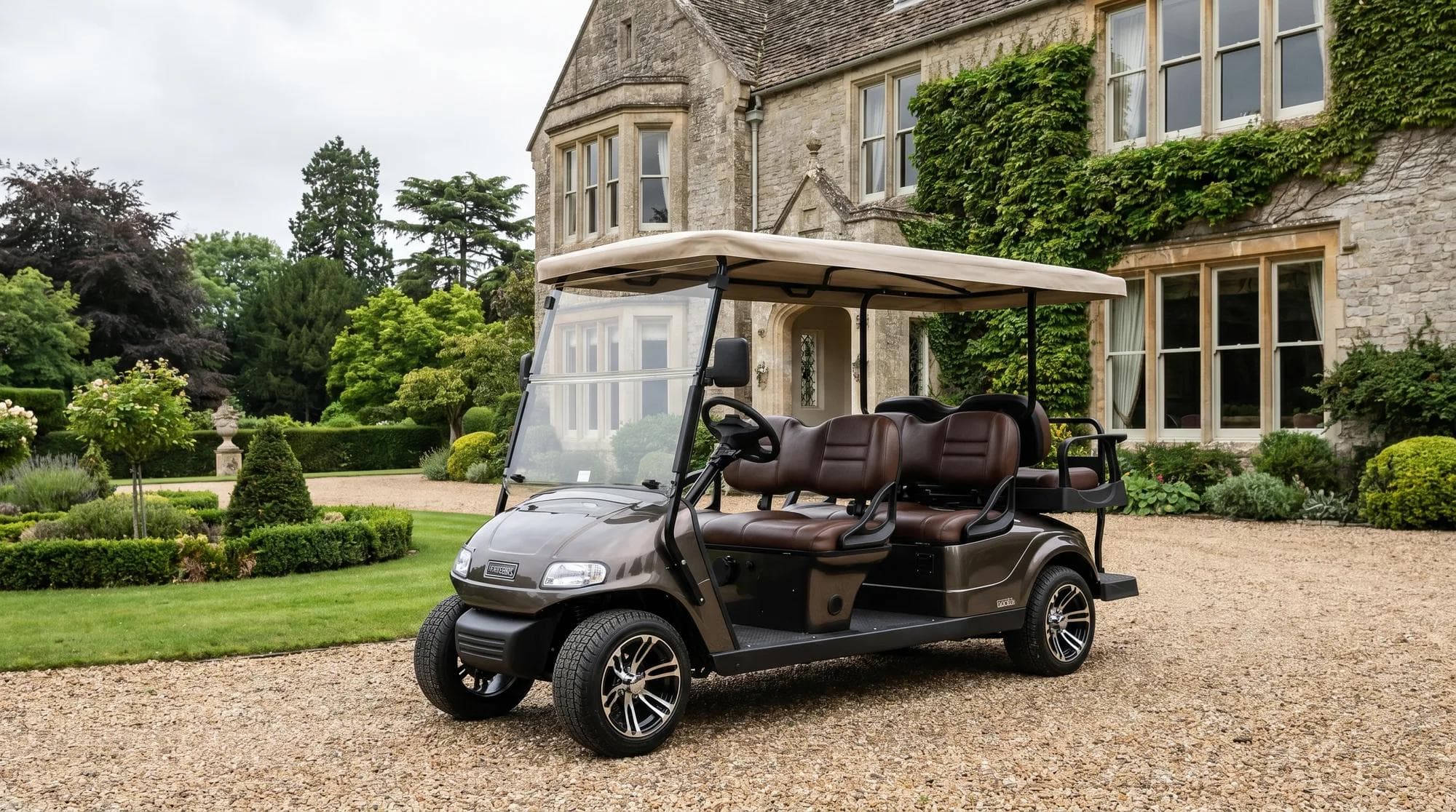
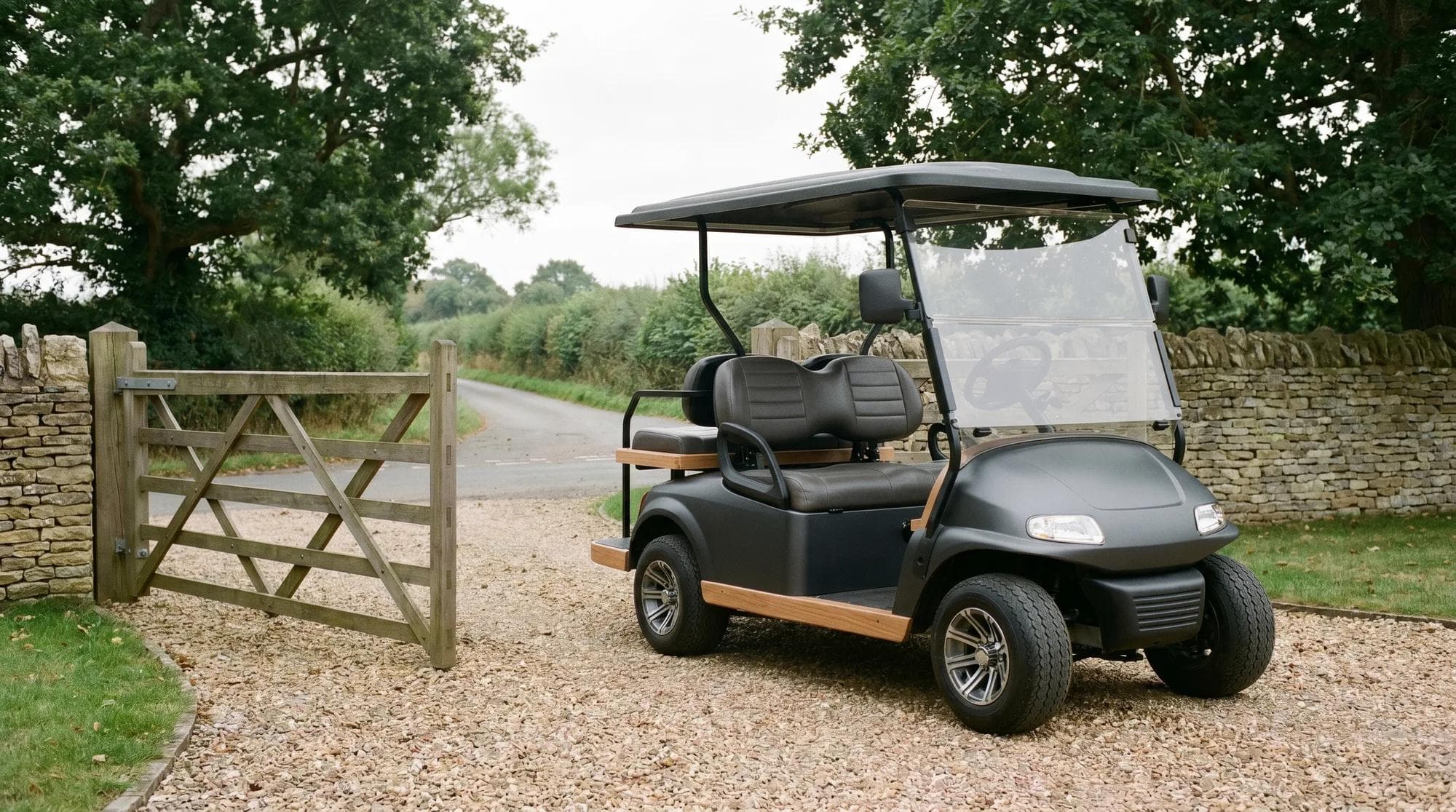
If you get a yes, spec the cart for the job. Parks reward quiet, tidy and slow: an electric model with a governed top speed, lights for evening returns from the clubhouse, and weather protection for British summers. A compact two-passenger fits beside a static van far better than a stretched six-passenger, though lodge owners with visiting grandchildren often go for four seats. Nearly-new is worth a look too if the cart will only do a few hundred gentle miles a year; our guide to buying a used golf cart covers what to check.
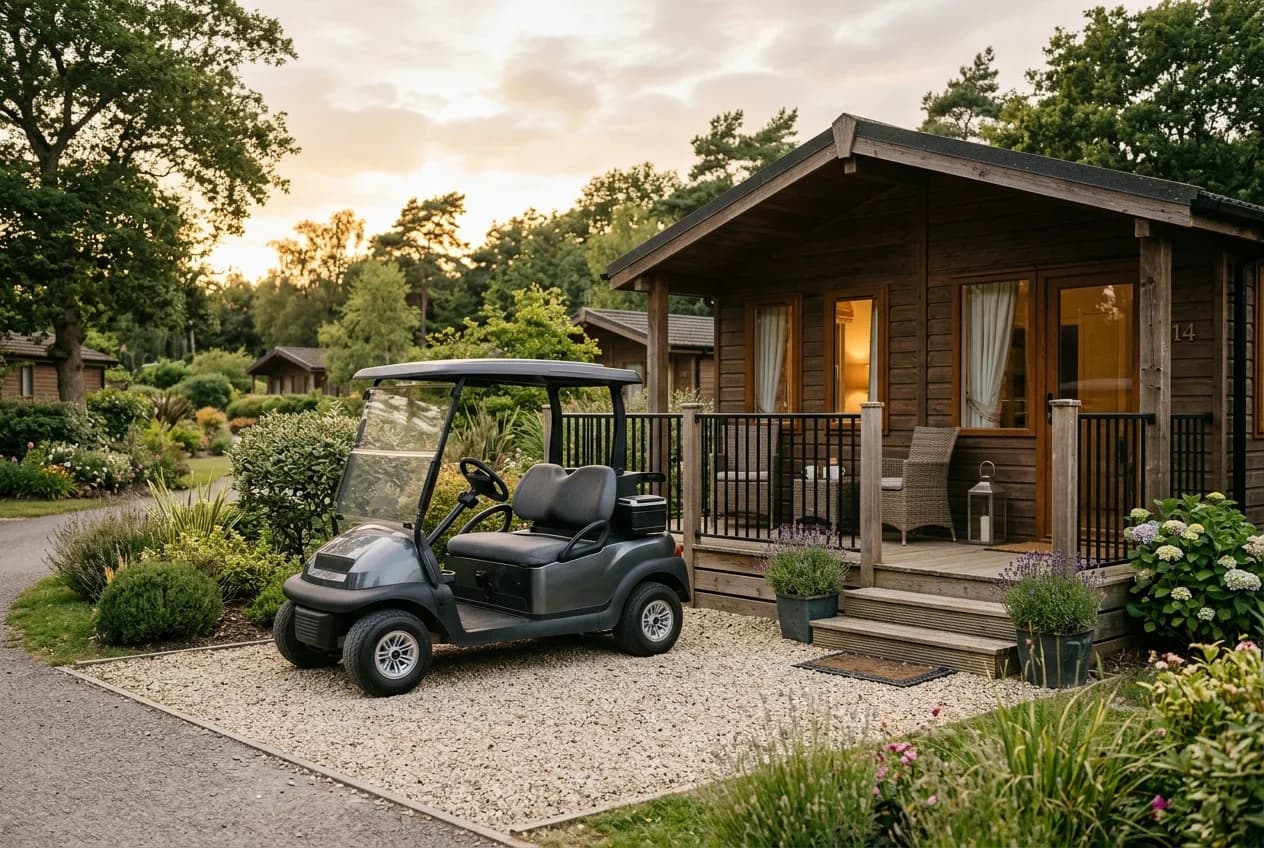
For park operators: how to allow golf carts without the headaches
If you run a park and owners keep asking, a blanket ban isn't the only answer. The parks that make this work treat golf carts like any other managed amenity. A written permit scheme does most of the heavy lifting: proof of liability insurance on file, a signed rules acknowledgement, a numbered permit sticker, and the clear right to withdraw the permit for speeding or drink-driving.
Then manage the traffic, not just the paperwork. Designate cart routes that avoid the busiest pedestrian pinch points, set quiet hours (no cart movement after 10pm works well), require lights after dusk and cap speeds at walking-pace zones near play areas. Some operators go further and run a small hire fleet instead, which keeps maintenance, charging and insurance in-house and turns a risk into a revenue line. It also means guests without their own cart aren't left out.
Is this trend actually growing?
Yes, and steadily. Lodge and static owners increasingly treat their pitch as a second home, and a cart turns a ten-minute walk to the shower block, shop or lakeside into a two-minute glide. It's a particular boon for owners with limited mobility who don't want a mobility scooter. Park operators are noticing that a well-run cart policy has become a selling point when pitches change hands, in the same way a boat mooring or a fishing peg is. The direction of travel is clear, but it's park by park, and it always will be.
Frequently asked questions
Do resort parks allow private golf carts?+
Some do, many don't. It's entirely the operator's decision because the park is private land. Parks that allow them usually run a permit scheme with insurance, speed and driver-age conditions. Always confirm in writing before buying.
Do you need insurance to use a cart on a resort park?+
Almost every park that permits golf carts requires proof of public liability insurance, typically £1m or more. Standard home insurance won't cover it, so you'll need a specific golf cart policy, which usually costs well under £200 a year.
What age do you have to be to drive a cart on a park?+
Most parks require drivers to be adults with a full driving licence, and children driving is the fastest way to get a permit withdrawn. A few parks allow supervised 17-year-olds with a provisional licence, but don't assume it.
Are resort park roads private?+
Yes, they're private roads, but because the public can access the park, they may still count as a 'public place' for some Road Traffic Act purposes, such as drink-driving offences. That legal grey area is a big part of why parks set formal rules.
Can a park ban golf carts completely?+
Yes. As the landowner, an operator can ban private golf carts outright, and many do, particularly large family parks. The ban will usually be written into your pitch licence agreement, so read it before you buy a cart.
Get written permission from your park first, arrange proper liability insurance, then buy a quiet electric cart specced for slow, tidy park life rather than the golf course. If your park says no, ask whether they'd consider a permit scheme or a hire fleet, because plenty of operators are warming up to both.
Found a cart-friendly park?
Hawke builds compact, quiet electric golf carts ideal for resort park life, with bespoke colors, weather kits and a 3-year warranty. Park operators can also talk to us about hire fleets.
Related solutions
Ready to explore what we build?
See the vehicles and the setting this applies to, or get a tailored quote built around your site.
Ready to find the right golf cart?
Tell us how and where it will work and we will specify a vehicle and a tailored quote built around you. Every build comes with a 3-year warranty and a 24-hour priority call-out.
Our guides are written and reviewed by the Hawke Electric Vehicles team, the people who specify, build, deliver and support the vehicles. We focus on honest, practical advice and flag where a figure depends on the build rather than guessing.
More guides by Hawke