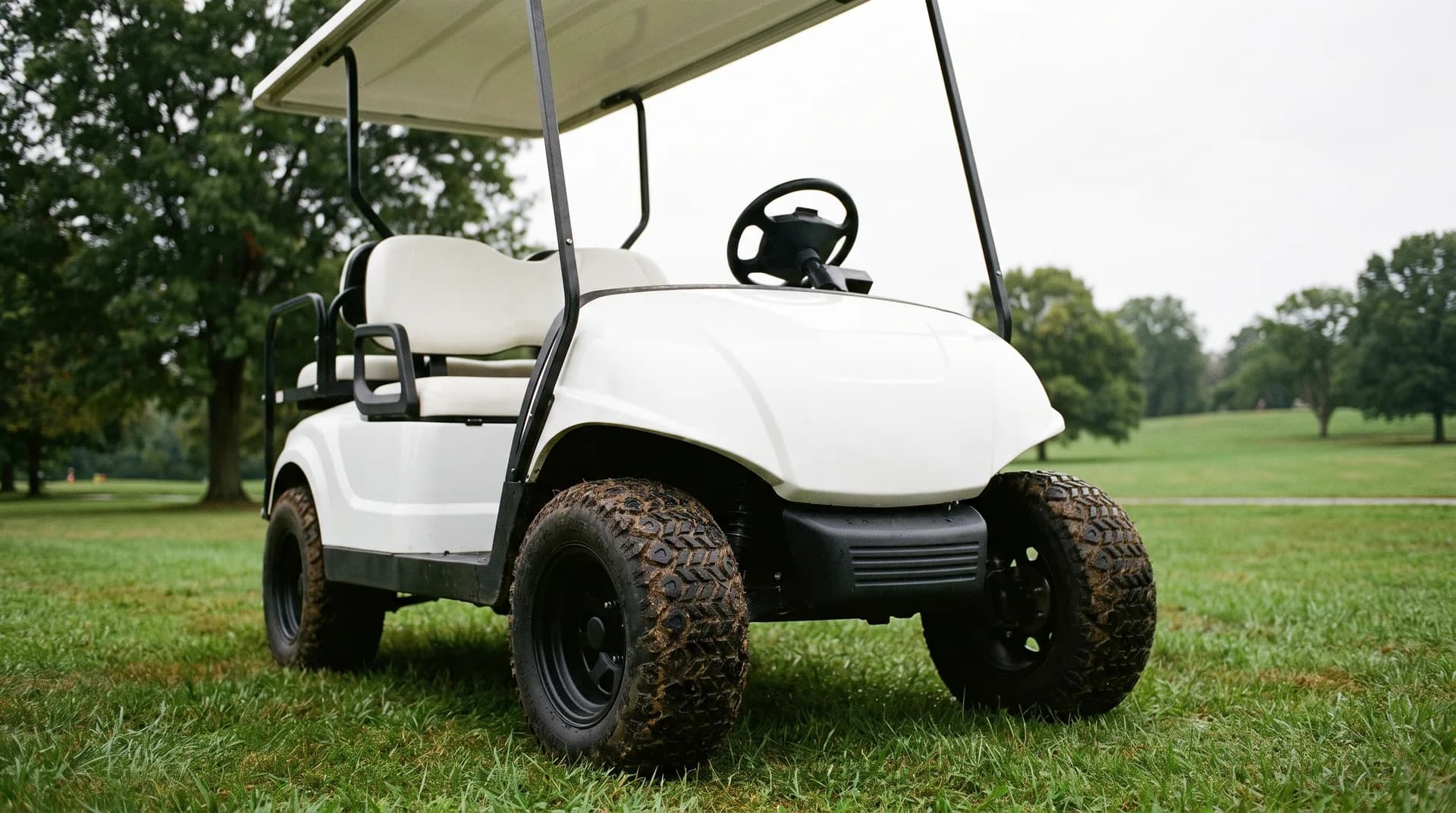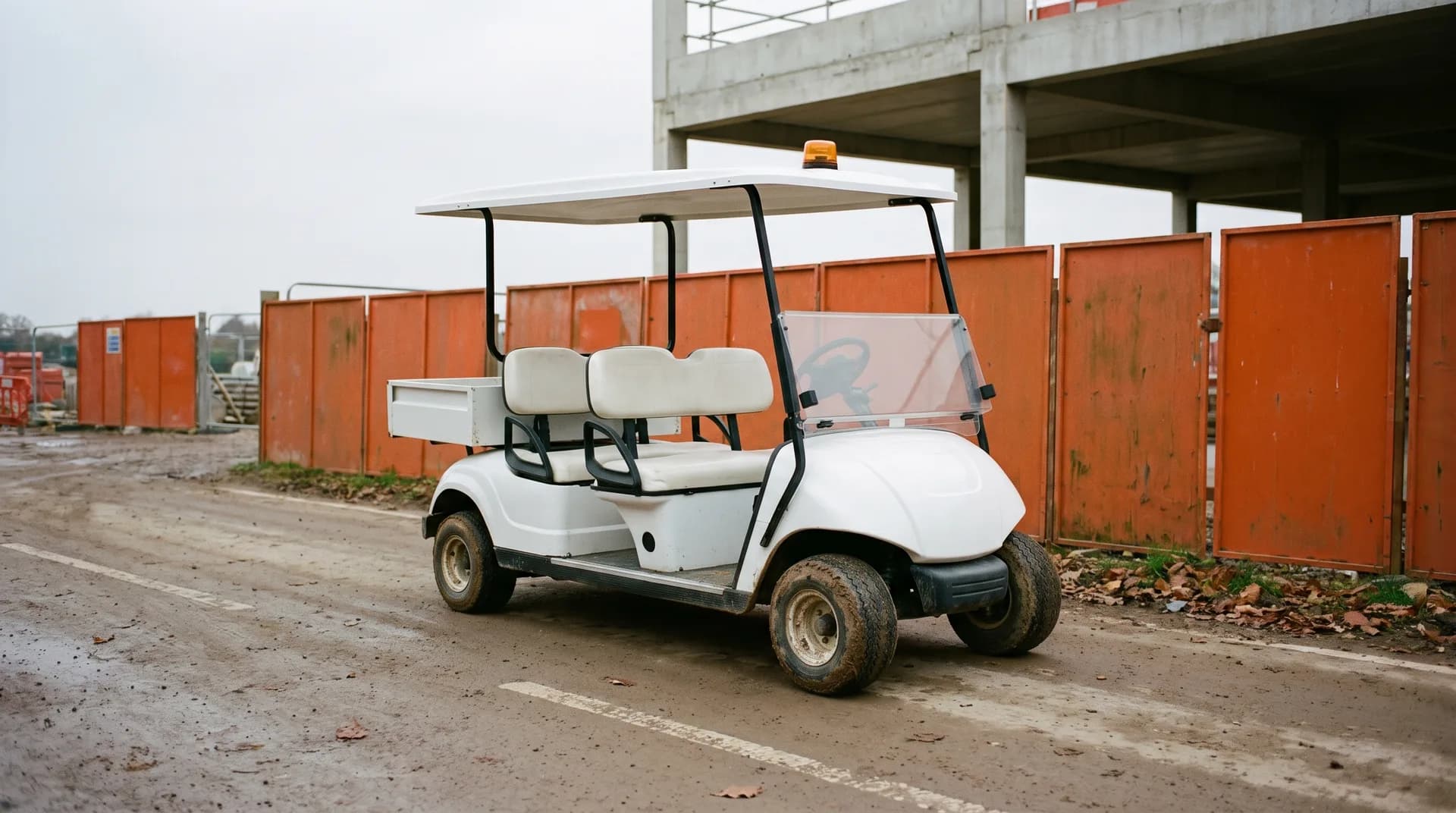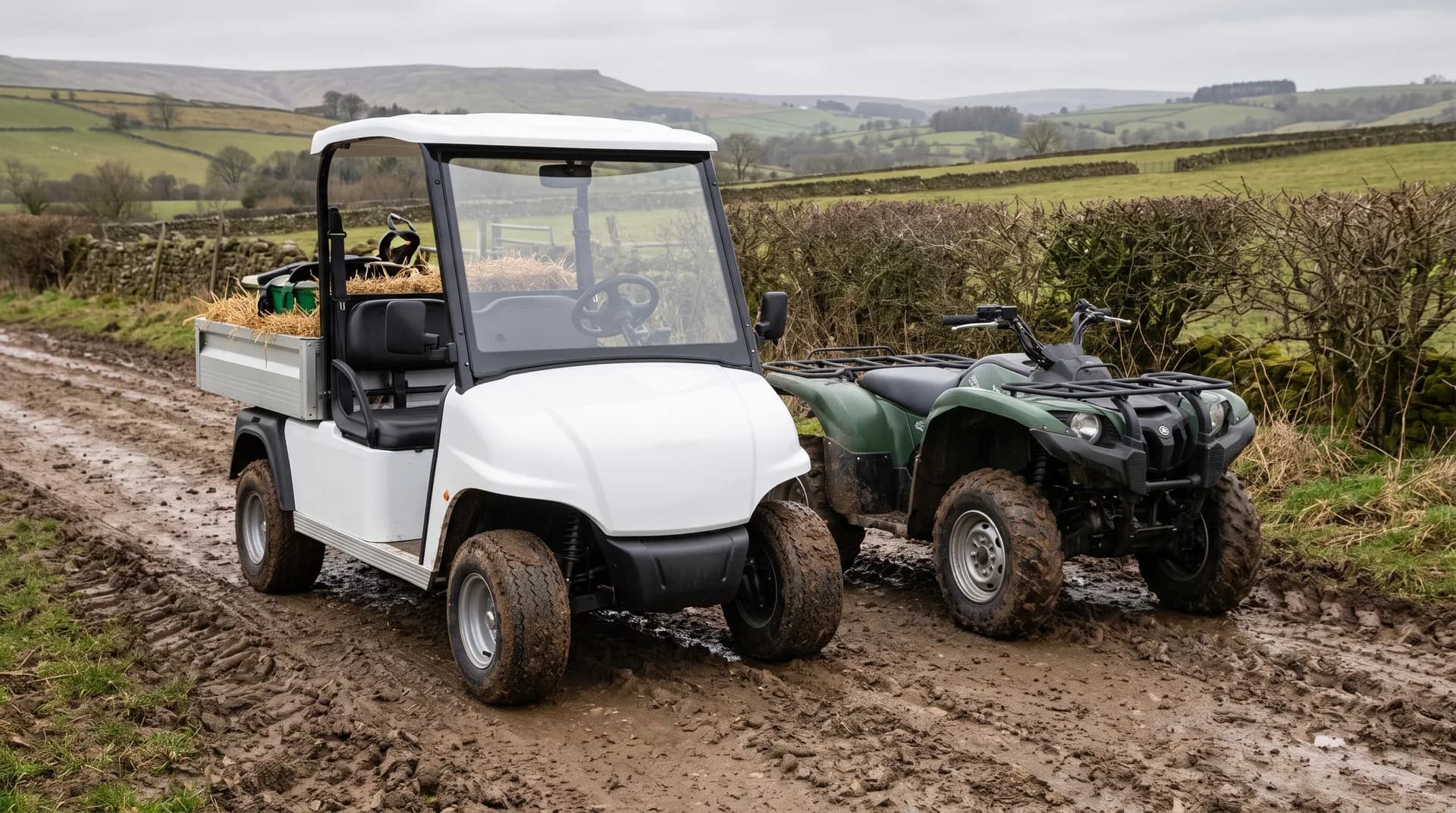
An off-road golf cart is a standard cart platform reworked for rough ground: a lifted suspension for extra clearance, all-terrain tires with a proper tread block, uprated springs and dampers, and on some models selectable four-wheel drive. The result copes with estate tracks, fields, woodland rides and rutted farm lanes that would ground or spin a course cart. The trade-offs are real, though: it rides more firmly on tarmac, an aggressive tread can mark fine turf, and beyond a certain point of payload and towing you are better served by a purpose-built utility vehicle. This guide sets out what actually changes, where each configuration earns its keep, and how to decide between a lifted cart and a UTV.
- The off-road package is four things: ground clearance, all-terrain tires, uprated suspension and, on some models, 4WD.
- It suits estates, smallholdings, glamping sites, shoots and any site where paths give way to grass and mud.
- On tarmac and fine turf the same tires and lift work against you, so match the build to where it will spend its life.
- Heavy carrying and towing is utility vehicle territory, not lifted-cart territory.
- Sanctioned starting points: the S4 from £14,900 and the S2 Pickup from £15,900, specified to your ground.
What makes an off-road golf cart different
Start with clearance. A lift kit raises the chassis so sills and diffs clear ruts, roots and the crown of a rough track, which is the single biggest difference between getting home and getting stuck. Tires come next: all-terrain rubber with open tread blocks bites into grass, mud and gravel where a smooth turf tire spins, and our tire guide explains the patterns in detail. Suspension is uprated to control the extra travel and the loads that rough ground feeds into the chassis, and on some models you can add selectable four-wheel drive, which earns its money on wet slopes, loose climbs and towing on grass. Electric drive suits this work well: full torque from a standstill makes slow, controlled progress over obstacles easier than juggling a gas clutch or belt.
Jobs and terrain an off-road golf cart handles
The natural home is the mixed private site: country estates with grass, gravel and woodland in the same mile, smallholdings, glamping and campsite fields, shoots, paddocks and event fields in a wet autumn. Used this way a lifted cart is a personal transport and light-carry tool, taking people, tools and feed where a car cannot go and a tractor is overkill. It will handle genuine slopes and poor ground within sensible limits, and if your ground is mostly wet hills our guide to golf carts for hills and wet weather covers the stability side. What it is not is a load hauler: for daily muck runs, feed sacks by the dozen and towing implements, read our honest assessment of whether a golf cart copes with farm and yard work before you specify.
The trade-offs on tarmac and turf
Every off-road change costs something somewhere. All-terrain tread that grips in mud can scuff and mark a manicured lawn or a golf green, which is why greenkeepers run turf tires, so a cart that must cross fine turf and rough ground needs a considered tire choice rather than the most aggressive option. A lifted chassis rides more firmly and carries its weight higher, so it asks for more care on cambers at speed than a standard-height machine. And on smooth tarmac the off-road package simply is not needed: if ninety per cent of the vehicle's life is paths and car parks, a standard cart rides better, and the money is better spent elsewhere. The rule is to specify for the ground the vehicle will actually spend its hours on, not the worst hundred metres of it.
- Standard cart
- Paths, tarmac, fine turf
- Off-road golf cart
- Tracks, fields, woodland, mud
- Electric utility vehicle
- Rough ground plus heavy work
- Standard cart
- Most comfortable
- Off-road golf cart
- Firmer, taller stance
- Electric utility vehicle
- Work-vehicle firm
- Standard cart
- Light
- Off-road golf cart
- Light to moderate
- Electric utility vehicle
- Payload and towing rated for work
- Standard cart
- Golf, hotels, campuses
- Off-road golf cart
- Estates, smallholdings, shoots
- Electric utility vehicle
- Farms, grounds teams, contractors
- Standard cart
- S2 from £11,500
- Off-road golf cart
- S4 from £14,900, S2 Pickup from £15,900
- Electric utility vehicle
- Quoted to specification
| Standard cart | Off-road golf cart | Electric utility vehicle | |
|---|---|---|---|
| Ground it suits | Paths, tarmac, fine turf | Tracks, fields, woodland, mud | Rough ground plus heavy work |
| Ride on tarmac | Most comfortable | Firmer, taller stance | Work-vehicle firm |
| Carrying and towing | Light | Light to moderate | Payload and towing rated for work |
| Typical buyer | Golf, hotels, campuses | Estates, smallholdings, shoots | Farms, grounds teams, contractors |
| Sanctioned from-price | S2 from £11,500 | S4 from £14,900, S2 Pickup from £15,900 | Quoted to specification |
When a utility vehicle is the better tool
If the honest job description reads carry half a metric ton, tow a trailer and do it every day, stop lifting a golf cart and buy the right machine. A purpose-built electric utility vehicle has the payload rating, the load bed, the tow hitch and the chassis for daily work, and it costs less than forcing a passenger platform to pretend. The dividing line is simple: people first with occasional kit, choose the off-road cart; loads first with people along for the ride, choose the UTV. You can browse our off-road configurations in the off-road range and the work-first machines under electric utility vehicles, and a short conversation about your ground usually settles the choice quickly.
Frequently asked questions
What is an off-road golf cart?+
A cart specified for rough ground: lifted suspension for clearance, all-terrain tires, uprated springs and dampers, and on some models selectable 4WD. It handles tracks, fields and mud that would stop a standard course cart.
Do I need 4WD on a golf cart?+
Only if your ground demands it: wet slopes, loose climbs and towing on grass are where 4WD earns its cost. On mostly firm, level ground a two-wheel-drive machine with the right tires is usually enough.
Will all-terrain tires damage grass?+
Aggressive tread can mark fine turf, which is why golf courses run smooth turf tires. If the vehicle must cross lawns or greens as well as rough ground, choose an intermediate tread rather than the most aggressive option.
How much does an off-road golf cart cost in the UK?+
Our sanctioned starting points are the S4 from £14,900 and the S2 Pickup from £15,900, with the final figure set by tires, lift, drive and any load bed or weather protection. Every build is quoted to specification.
When should I buy a utility vehicle instead?+
When loads lead the job description. If the vehicle must carry serious payload or tow daily, a purpose-built electric UTV does it properly, and a lifted golf cart does not. People first, cart; loads first, UTV.
Spec a cart for your ground
Describe the terrain, the slopes and what the vehicle must carry, and we will specify tires, lift and drive to match, then price it properly.
Related solutions
Ready to explore what we build?
See the vehicles and the setting this applies to, or get a tailored quote built around your site.
Ready to find the right golf cart?
Tell us how and where it will work and we will specify a vehicle and a tailored quote built around you. Every build comes with a 3-year warranty and a 24-hour priority call-out.
Our guides are written and reviewed by the Hawke Electric Vehicles team, the people who specify, build, deliver and support the vehicles. We focus on honest, practical advice and flag where a figure depends on the build rather than guessing.
More guides by Hawke