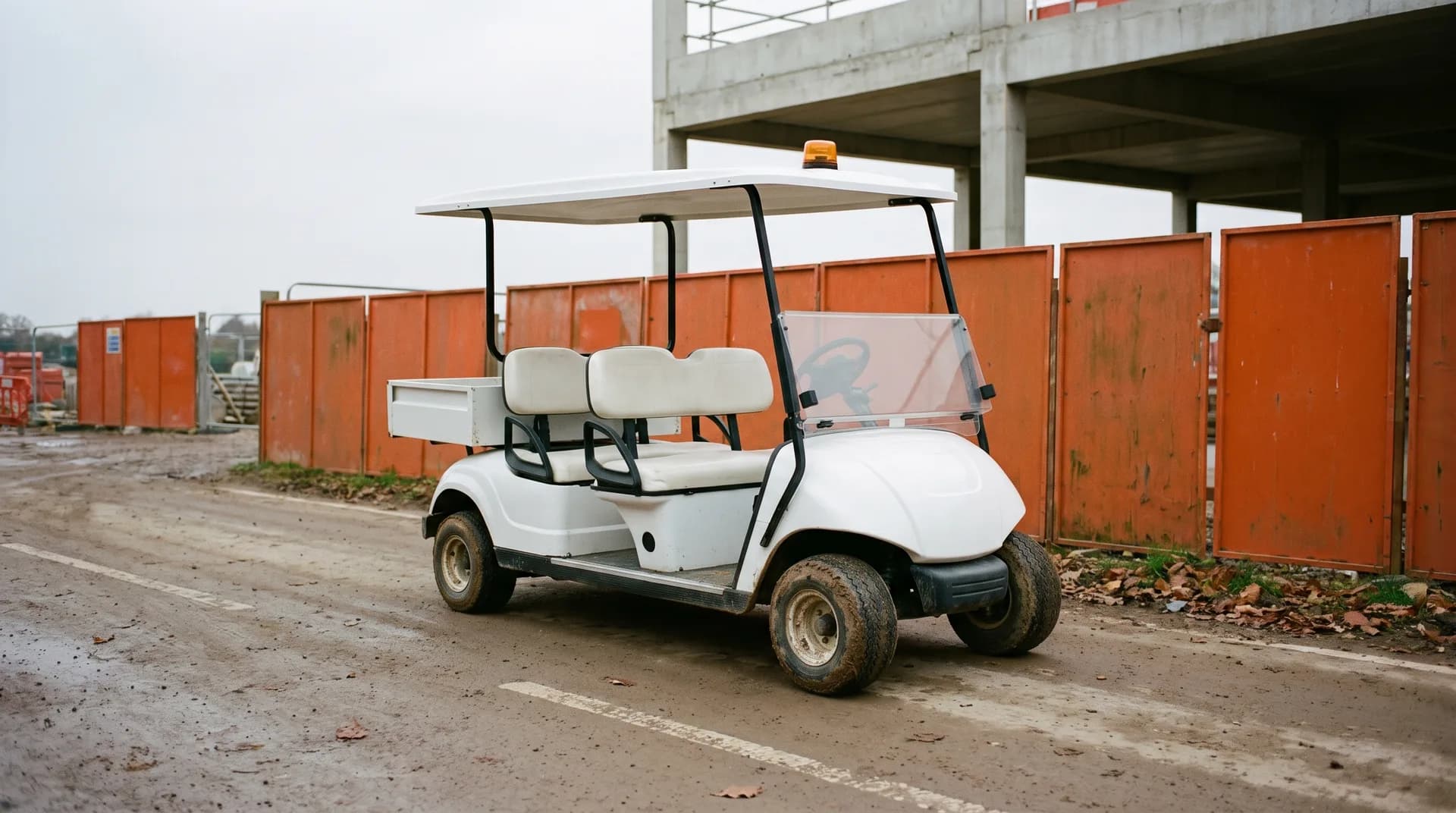
On a large construction site, walking is the hidden cost nobody puts in the programme, and it is the reason construction site cart hire keeps appearing on project budgets. Operatives cross from the welfare compound to the works, back for materials, out to a far corner for an inspection, and each trip is ten or fifteen minutes of paid time producing nothing. Multiply that across a workforce and a programme and it is a serious number, which is why site transport has quietly become standard on major projects. Hired electric golf carts and utility vehicles are increasingly the answer, because they are cheap to run, quiet, produce no exhaust in enclosed areas, and can be hired for exactly the phase that needs them. This guide covers what they do on site, how to specify them, and the construction-specific rules that shape the hire.
- The business case is recovered walking time, and on a large site it is usually decisive on its own.
- Specify by job: personnel movement and materials handling are different vehicles.
- Electric matters in tunnels, basements, car parks and any enclosed or partly enclosed area.
- Site rules govern everything: segregation, banksmen, speed, permits, PPE and driver authorisation.
- Hire by project phase; the fleet a groundworks phase needs is not the one a fit-out phase needs.
Construction site cart hire: the three jobs
Personnel movement is the first and largest: operatives, supervisors, engineers, inspectors and visitors crossing a site that may be measured in hectares. It is the job with the clearest business case, because it converts directly into recovered labour hours. Materials and tools movement is the second: the small, constant flow of consumables, tools, fixings, PPE and equipment that is too small for a telehandler and too heavy to carry, and which otherwise gets moved by someone making a special trip. Site management and inspection is the third: engineers, safety advisers, clients and consultants who need to reach a specific location quickly and repeatedly, often with equipment. Each wants a different vehicle, and the classic error is buying seats when what the site actually needed was a load bed, as our guide to staff transport on large sites explains.
- What it does
- Operatives and supervisors to the works
- What to specify
- Seats, weather protection, robust finish, lights
- What it does
- The constant small-load traffic
- What to specify
- Load bed or cargo box, payload headroom, tie-down points
- What it does
- Engineers, safety, clients, consultants
- What to specify
- Agile, always available, presentable for client visits
- What it does
- Basements, car parks, tunnels, fit-out
- What to specify
- Electric, non-marking tires, compact width
| What it does | What to specify | |
|---|---|---|
| Personnel movement | Operatives and supervisors to the works | Seats, weather protection, robust finish, lights |
| Tools and consumables | The constant small-load traffic | Load bed or cargo box, payload headroom, tie-down points |
| Management and inspection | Engineers, safety, clients, consultants | Agile, always available, presentable for client visits |
| Enclosed areas | Basements, car parks, tunnels, fit-out | Electric, non-marking tires, compact width |
Why electric, specifically
Three practical reasons that carry weight on a construction site. Emissions in enclosed spaces is the strongest: basements, car parks, tunnels, partially completed buildings and fit-out areas have limited ventilation, and combustion exhaust in those environments is a health and safety problem before it is an environmental one. Electric removes it entirely. Noise is the second, and it matters both for communication on site and for neighbours, particularly on urban projects operating under planning conditions that restrict noise. Running cost is the third, and while it is rarely the deciding factor it is a genuine saving over a long programme. Add growing client and framework requirements around site emissions and carbon reporting, and electric site transport has moved from a differentiator to an expectation on many major projects.
Site rules and how they shape the hire
A construction site has a more developed vehicle regime than almost any event, and the hire has to fit inside it rather than the other way round. Expect requirements on vehicle and pedestrian segregation, with defined routes and crossing points; banksmen for reversing; a site speed limit; permits to operate; authorisation and often specific training for drivers; PPE requirements including seat belts where fitted; daily pre-use checks recorded; and inclusion in the site's traffic management plan. Some sites require beacons, reflective markings or specific lighting as a condition of use. None of this is a barrier, but it does mean the specification must be agreed with the principal contractor before the hire is booked, and that the vehicles arrive with the documentation the site will ask for. Get the site's plant and vehicle requirements early and send them to your supplier with the enquiry.
Charging on an active site
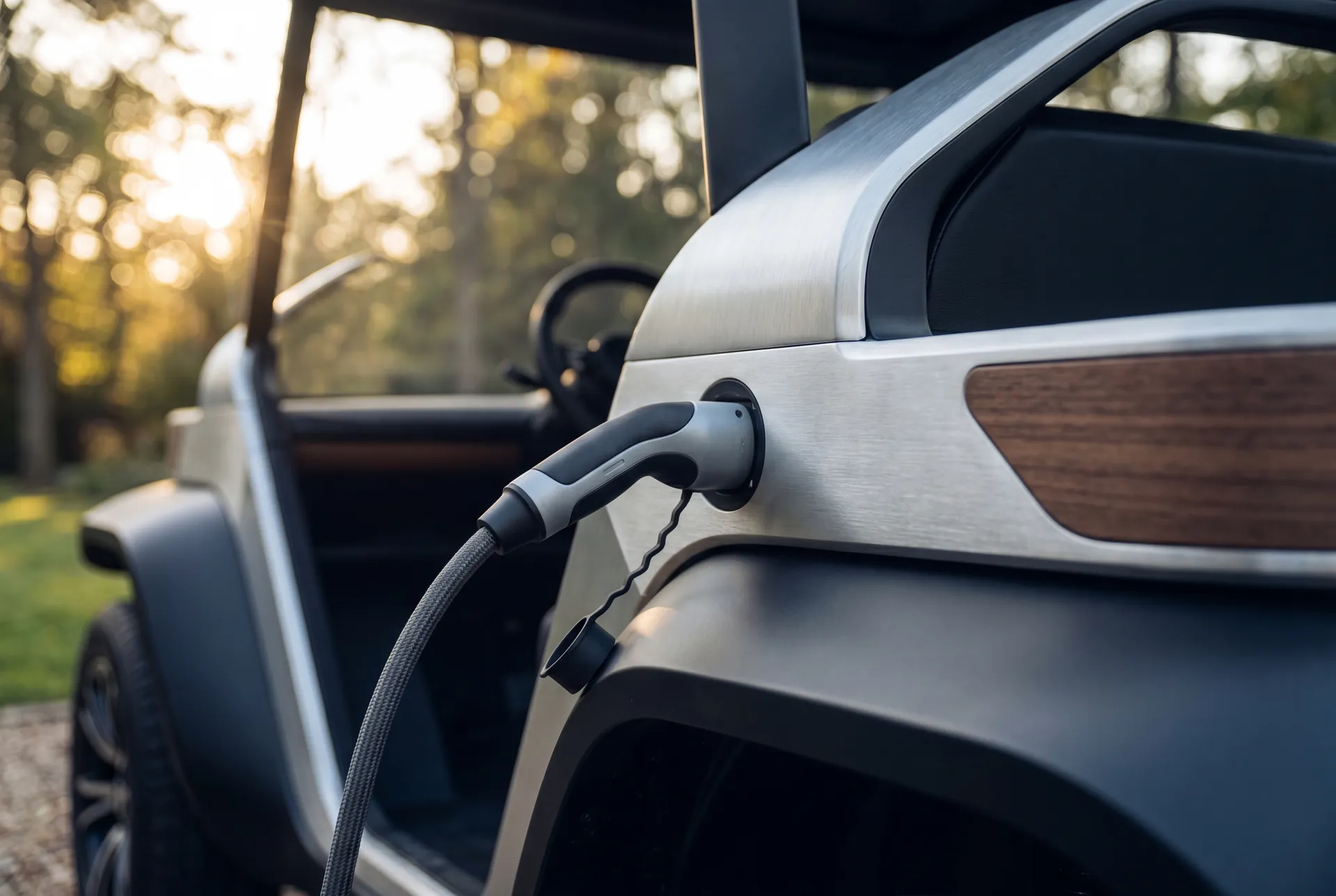
This needs a plan, because a construction site is not a car park with sockets. Decide where vehicles charge, usually in or beside the welfare compound where power is established and secure; confirm the supply rating is adequate for the number of vehicles; route cabling so it is not a trip hazard or sitting in standing water; and make charging a named person's responsibility at shift end rather than a shared assumption. On a site running long shifts or double shifts, charging discipline is what determines whether the fleet performs, and it is the single most common reason an electric site fleet disappoints. Ask your supplier what a full charge takes and what a realistic duty cycle looks like for your shift pattern, and specify battery capacity accordingly rather than to the minimum.
Hire by phase, not by project
Construction projects change shape, and the fleet should change with them. Enabling works and groundworks need robust, all-terrain vehicles that will cope with mud and rough ground. The main build phase needs a mix of personnel movement and materials handling across the largest area the project will occupy. Fit-out needs compact, quiet, non-marking vehicles that can work inside a finished building without damaging it. And handover and commissioning needs presentable vehicles, because clients are on site. Hiring by phase rather than taking one fleet for the whole programme means you pay for what the phase actually needs, and it is one of the strongest arguments for hiring over buying on a fixed-duration project. Tell us the phase, the site size and the enclosed areas involved, and we will specify accordingly in a hire quote.
Frequently asked questions
Can you hire electric golf carts for a construction site?+
Yes, and site transport hire is increasingly standard on large projects. Vehicles are specified for the phase and the environment, from all-terrain machines for groundworks to compact, non-marking, quiet vehicles for fit-out inside a finished building.
Why use electric vehicles on a construction site?+
Chiefly because there is no exhaust in enclosed areas such as basements, car parks, tunnels and partially completed buildings, where ventilation is limited. Lower noise matters for on-site communication and for urban projects under planning noise conditions, and running costs are lower over a long programme.
What site rules apply to golf carts on construction sites?+
The site's own vehicle regime governs: segregation from pedestrians, defined routes and crossings, banksmen for reversing, speed limits, permits, driver authorisation and training, PPE, recorded pre-use checks, and inclusion in the traffic management plan. Agree the specification with the principal contractor before booking.
How do you charge golf carts on an active construction site?+
Usually in or beside the welfare compound where power is established and secure. Confirm the supply rating is adequate for the fleet, route cabling away from foot traffic and standing water, and make charging a named person's responsibility at shift end rather than a shared assumption.
Should we hire site vehicles for the whole project?+
Usually not. Different phases need genuinely different vehicles, from all-terrain machines during groundworks to compact non-marking ones during fit-out. Hiring by phase means paying for what the phase needs, which is one of the strongest arguments for hiring over buying on a fixed-duration project.
Moving people across a large site?
Tell us the phase, the site size and any enclosed areas, and we will specify a fleet that meets your site rules and your programme.
Related solutions
Ready to explore what we build?
See the vehicles and the setting this applies to, or get a tailored quote built around your site.

Ready to find the right golf cart?
Tell us how and where it will work and we will specify a vehicle and a tailored quote built around you. Every build comes with a 3-year warranty and a 24-hour priority call-out.
Our guides are written and reviewed by the Hawke Electric Vehicles team, the people who specify, build, deliver and support the vehicles. We focus on honest, practical advice and flag where a figure depends on the build rather than guessing.
More guides by Hawke