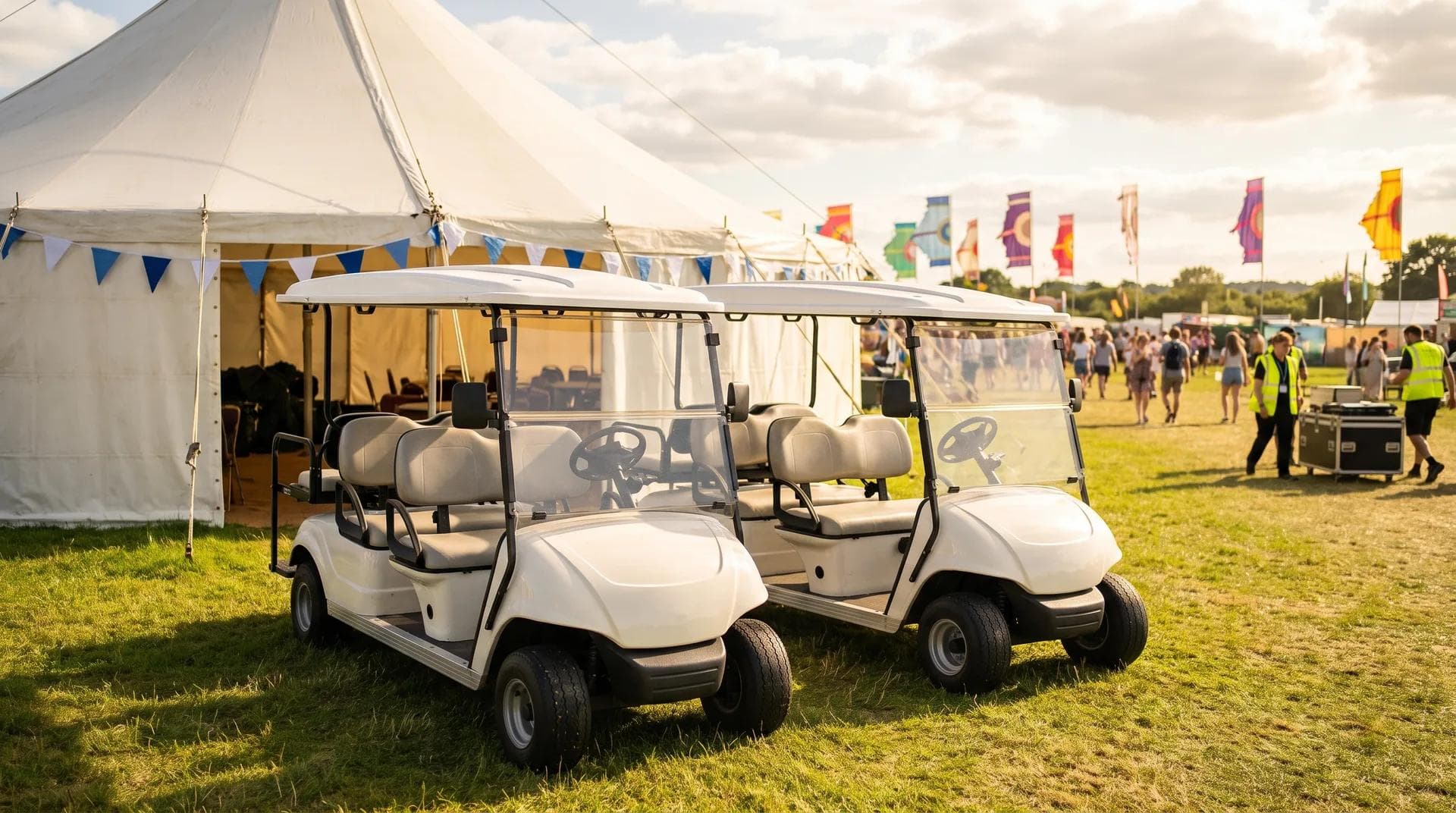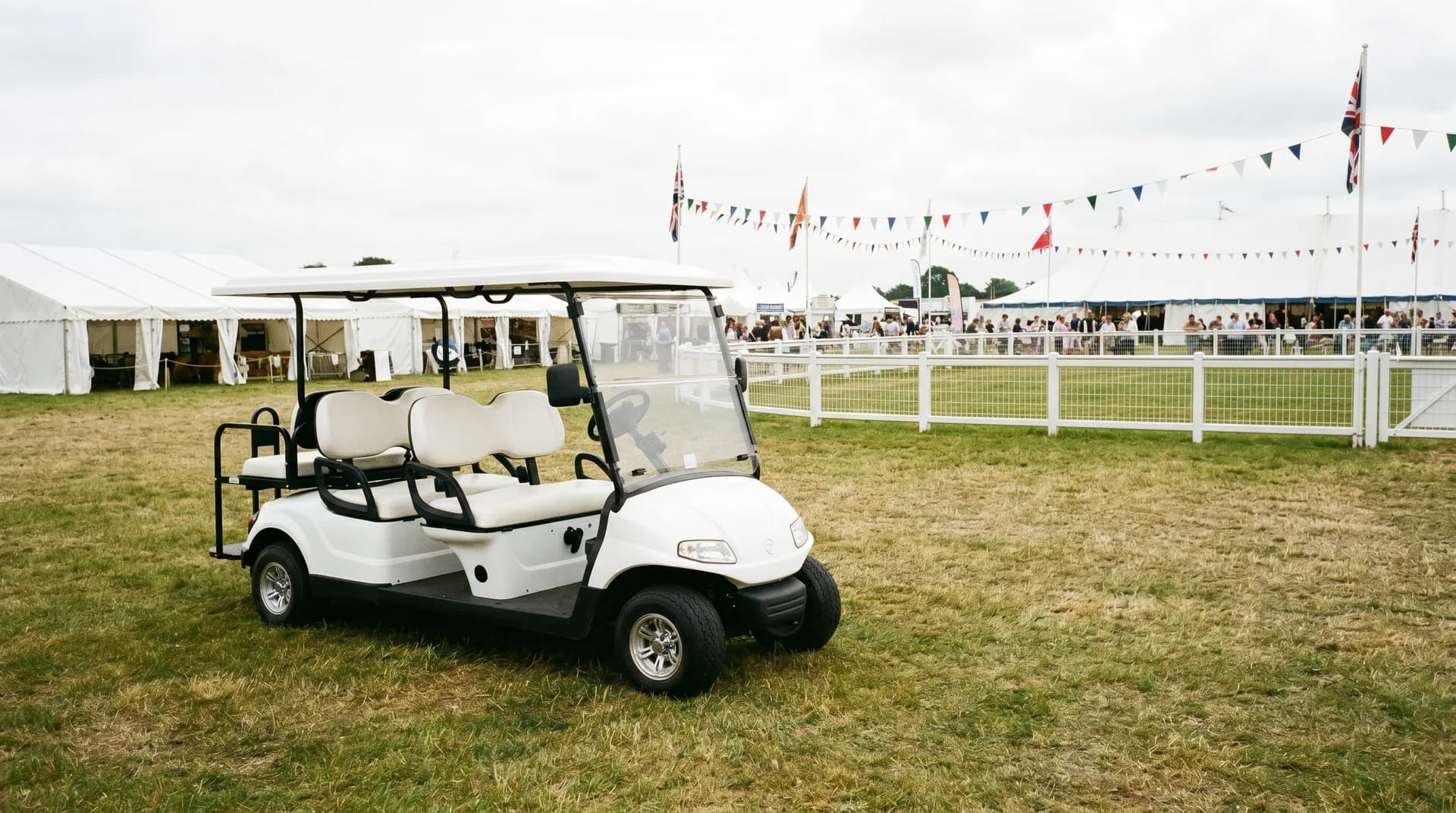
Festival cart hire cost is set by four things: how many vehicles you take, how many days you hold them for including build and break, the split between passenger golf carts and utility vehicles, and what the site itself is like underfoot. There is no list price because no two sites and no two production schedules match: rates vary with vehicle size, dates, season and distance, and the event calculator gives an instant indication for your dates. What follows is the festival-specific version of the story, the general drivers are covered in our event cart hire cost guide, because a festival differs from a one-day event in ways that show up directly on the quote.
- Fleet size is the biggest single driver, and festivals routinely under-order then scramble mid-build.
- You pay for the full tenancy, build days and break days included, not just the show weekend.
- The passenger versus utility mix matters: crew shuttles and kit-movers are different vehicles.
- Ground conditions drive specification: wet grass and rutted trackway call for the right tires and drive.
- Booking the whole fleet for the whole tenancy in one order is the efficient way to buy it.
What drives festival cart hire cost
Start with the shape of the job. A festival is not a day of vehicle use, it is a tenancy: a build period when the site goes up, show days when the public are in, and a break period when it all comes down. Vehicles are typically on site for that whole window, so the quote is built on vehicle-days, the number of vehicles multiplied by the days you hold them, and then adjusted for specification, delivery distance and season. That is why two festivals with the same audience size can receive quite different quotes: a ten-day tenancy on a remote site with heavy utility needs is simply a bigger job than a four-day tenancy in easy reach with a couple of crew shuttles. Working out the vehicle count honestly is the foundation, and our guide on how many golf carts your event needs gives you a method rather than a guess.
Festival cart hire cost: build and break days count too
The commonest budgeting mistake is pricing the show days and forgetting the weeks either side. In practice the build is when utility vehicles work hardest, hauling fencing, staging, cabling and water around a site that has no roads yet, and the break is a compressed version of the same job in reverse. Passenger golf carts earn their keep across show days moving crew, artists, medics and accessibility teams, then keep working through the break. So when you compare quotes, compare tenancies: a figure that looks lean may cover show days only, leaving you to negotiate build and break as expensive extras. It is almost always better to book the full window at the outset, state your build, show and break dates explicitly, and let the quote reflect the real job.
Passenger golf carts, utility vehicles, and getting the mix right
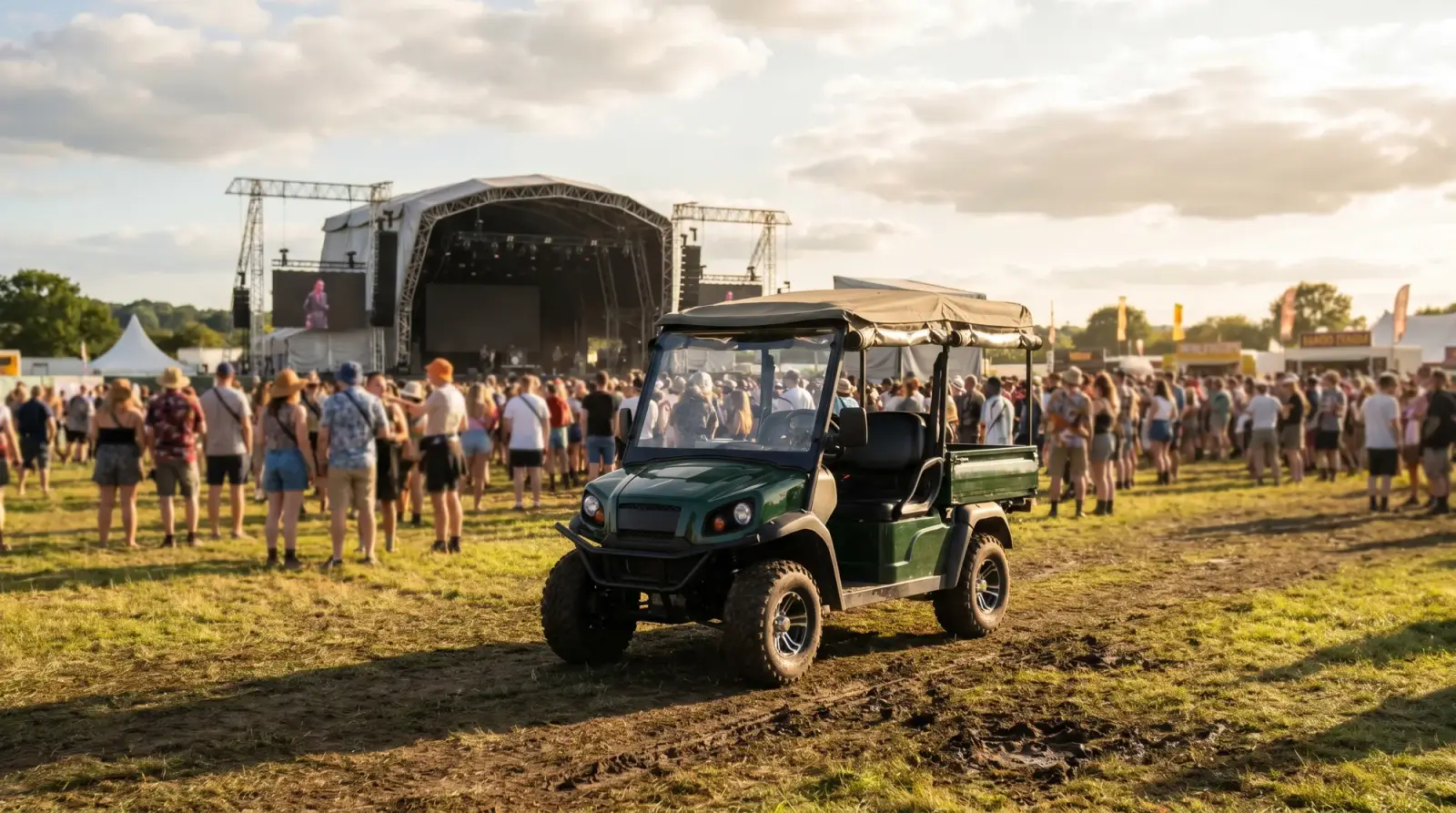
A festival fleet is two fleets in one. Passenger golf carts, two to six seats and more, move people: site managers, artist liaison, security, medics and guests who cannot cross a large site on foot. Utility vehicles, with load beds and towing capacity, move everything else: kit, stock, waste, water and the thousand small hauls that keep a site running. They are not interchangeable, a six-passenger makes a poor kit-hauler and a load bed is no way to move an artist, and the mix you choose moves the price because the vehicles differ in size and specification. Most sites end up somewhere near an even split, weighted towards utility during build and break and towards passenger across show days. Site conditions then shape specification: a dry showground is undemanding, while a wet greenfield site with temporary trackway wants grass tires, good ground clearance and batteries specified for long days, and charging needs planning too, which our guide on powering event golf carts on site covers in detail.
- Passenger golf carts
- Moving crew, artists, medics and guests
- Utility vehicles
- Hauling kit, stock, waste and water
- Passenger golf carts
- Show days
- Utility vehicles
- Build and break
- Passenger golf carts
- Seats, canopies, accessibility
- Utility vehicles
- Load bed, towing, ground clearance
- Passenger golf carts
- Scales with seats and count
- Utility vehicles
- Scales with payload and count
| Passenger golf carts | Utility vehicles | |
|---|---|---|
| Main job | Moving crew, artists, medics and guests | Hauling kit, stock, waste and water |
| Busiest phase | Show days | Build and break |
| Key specification | Seats, canopies, accessibility | Load bed, towing, ground clearance |
| Effect on the quote | Scales with seats and count | Scales with payload and count |
How to get a festival quote you can actually budget on
Give the hirer the real picture in one go: site location, build, show and break dates, expected vehicle count and mix, ground conditions, and where power will come from. A quote built on that is a number you can put in a budget line and defend. Order early, festival season concentrates demand into a few months, and a fleet booked well ahead is easier to secure than one assembled in August, and keep one order for the whole fleet rather than topping up piecemeal, because mid-build additions are the expensive way to hire. The festival cart hire page covers the fleet, and the event calculator will give you an instant indication while the budget is still a spreadsheet.
Frequently asked questions
How much does festival cart hire cost?+
It depends on fleet size, the full tenancy length including build and break, the passenger versus utility mix, specification for your ground and delivery distance. Rates vary with vehicle size, dates, season and distance; the event calculator gives an instant indication.
Do we pay for build and break days?+
Yes, vehicles on site are on hire, and build and break are when utility vehicles work hardest. Budget the whole tenancy from the start rather than treating the extra days as an afterthought.
What mix of golf carts and utility vehicles do festivals take?+
Most sites run a mix weighted towards utility vehicles during build and break and passenger golf carts across show days. The right split follows from your site plan: count the hauling jobs and the people-moving jobs separately.
Will golf carts cope with a wet greenfield site?+
Properly specified, yes. Grass tires, ground clearance and batteries sized for long days are the difference between a fleet that works in the rain and one that gets parked. Tell the hirer about your ground honestly.
How do we charge golf carts on a festival site?+
From site power, planned like any other load. Overnight charging from standard supplies covers most fleets; the key is allocating charging points near the compound early in the power plan.
Build a festival fleet quote
Send us your site, tenancy dates and a first guess at the fleet, and we will come back with a mix and a number that survive contact with the build.
Related solutions
Ready to explore what we build?
See the vehicles and the setting this applies to, or get a tailored quote built around your site.

Ready to find the right golf cart?
Tell us how and where it will work and we will specify a vehicle and a tailored quote built around you. Every build comes with a 3-year warranty and a 24-hour priority call-out.
Our guides are written and reviewed by the Hawke Electric Vehicles team, the people who specify, build, deliver and support the vehicles. We focus on honest, practical advice and flag where a figure depends on the build rather than guessing.
More guides by Hawke