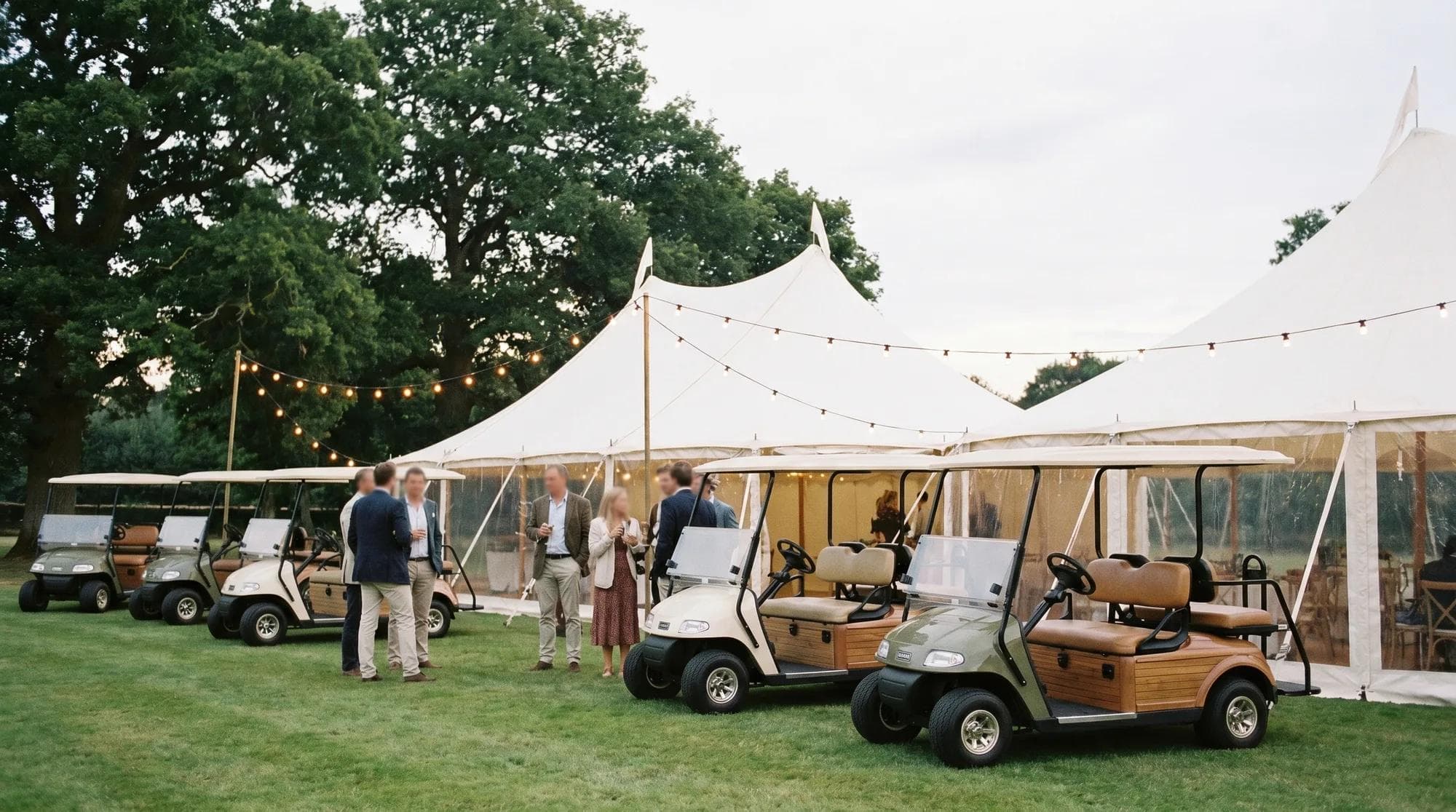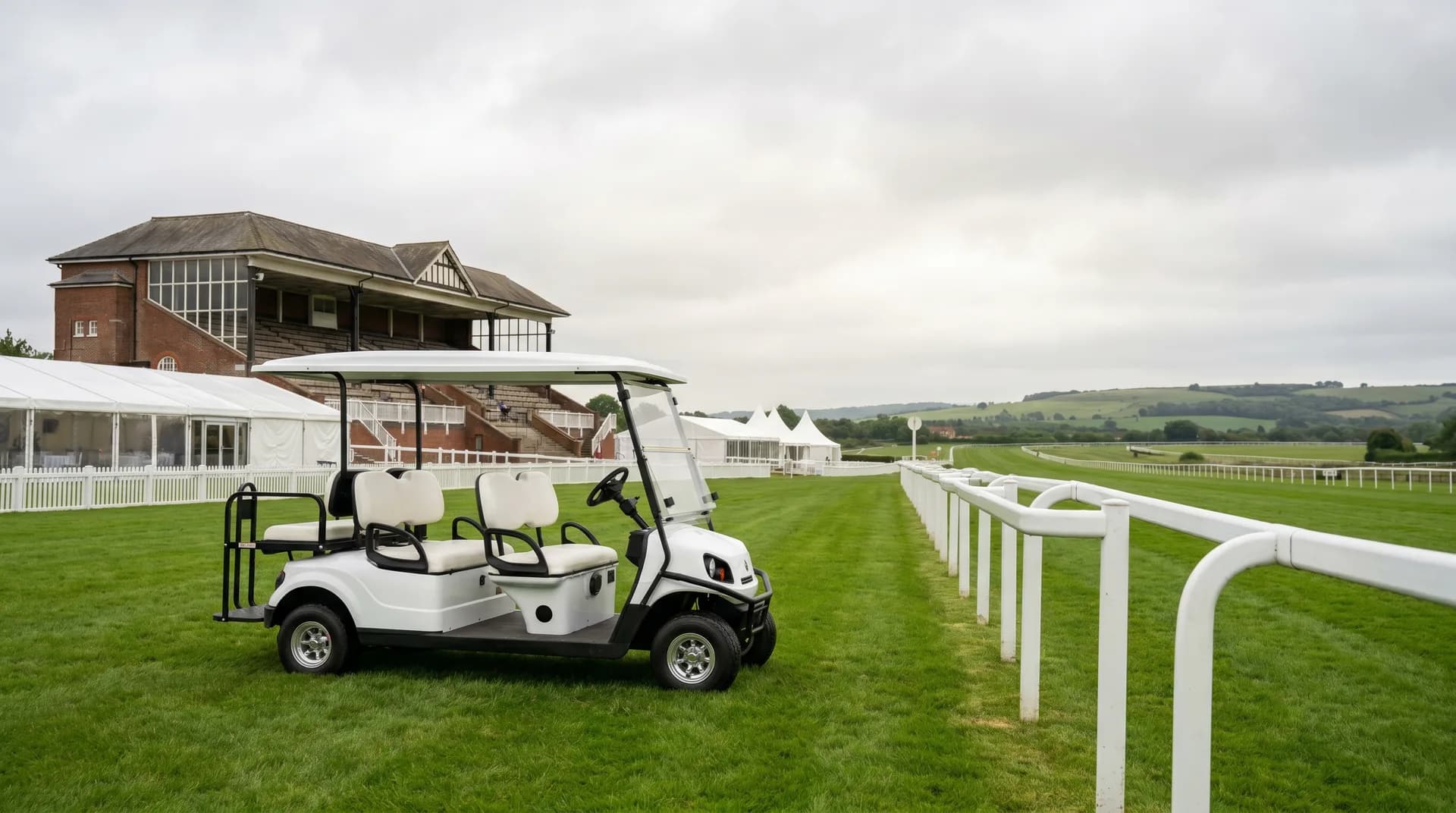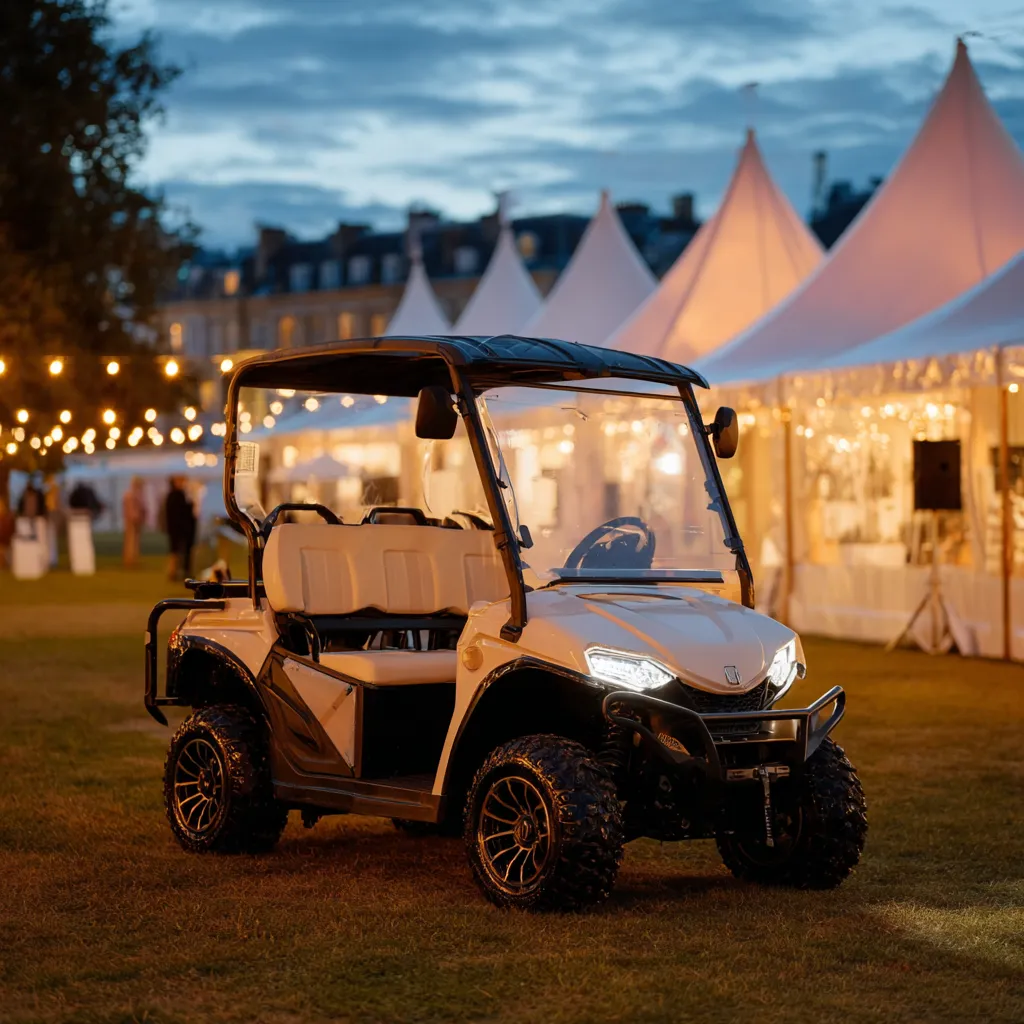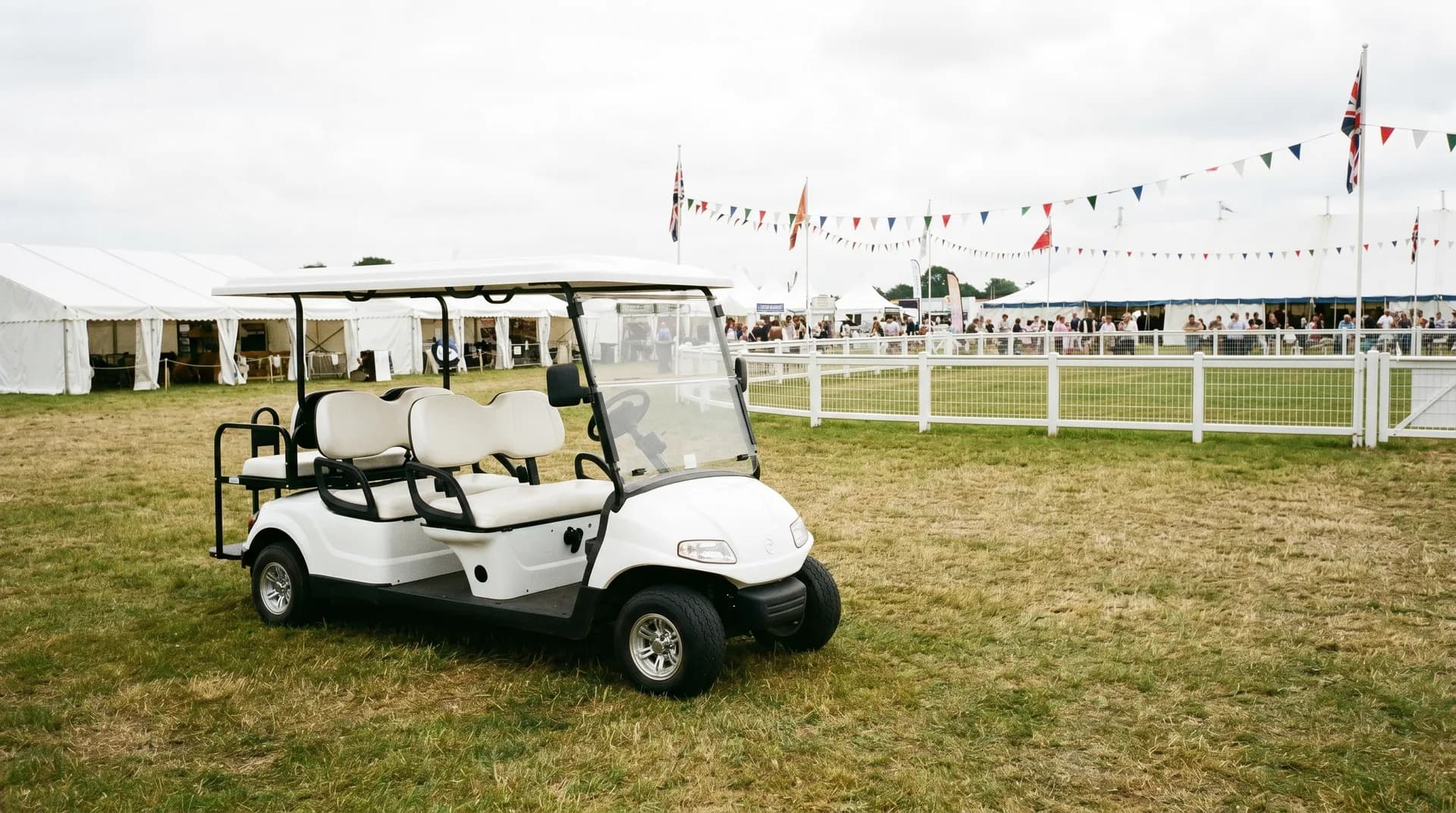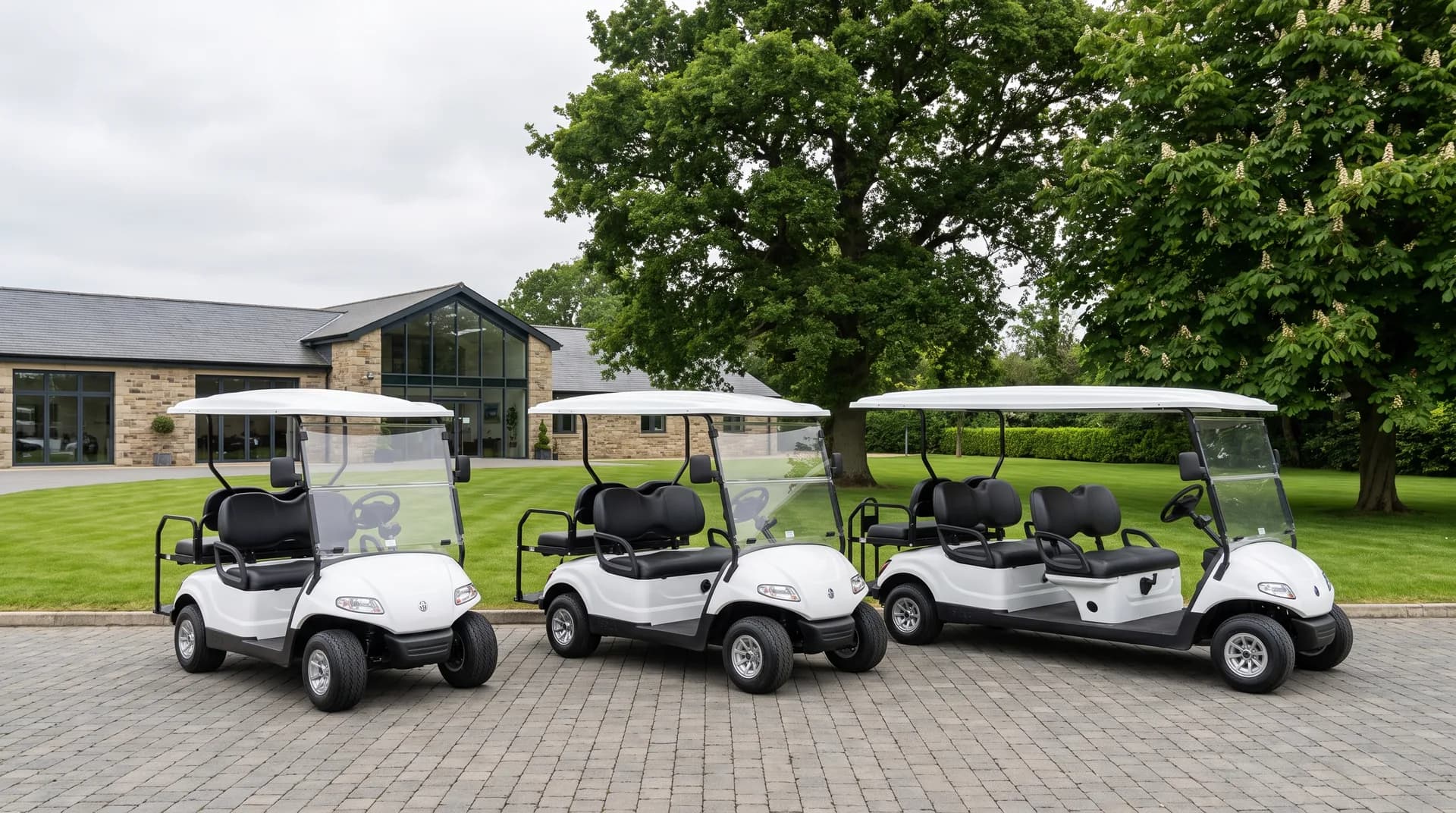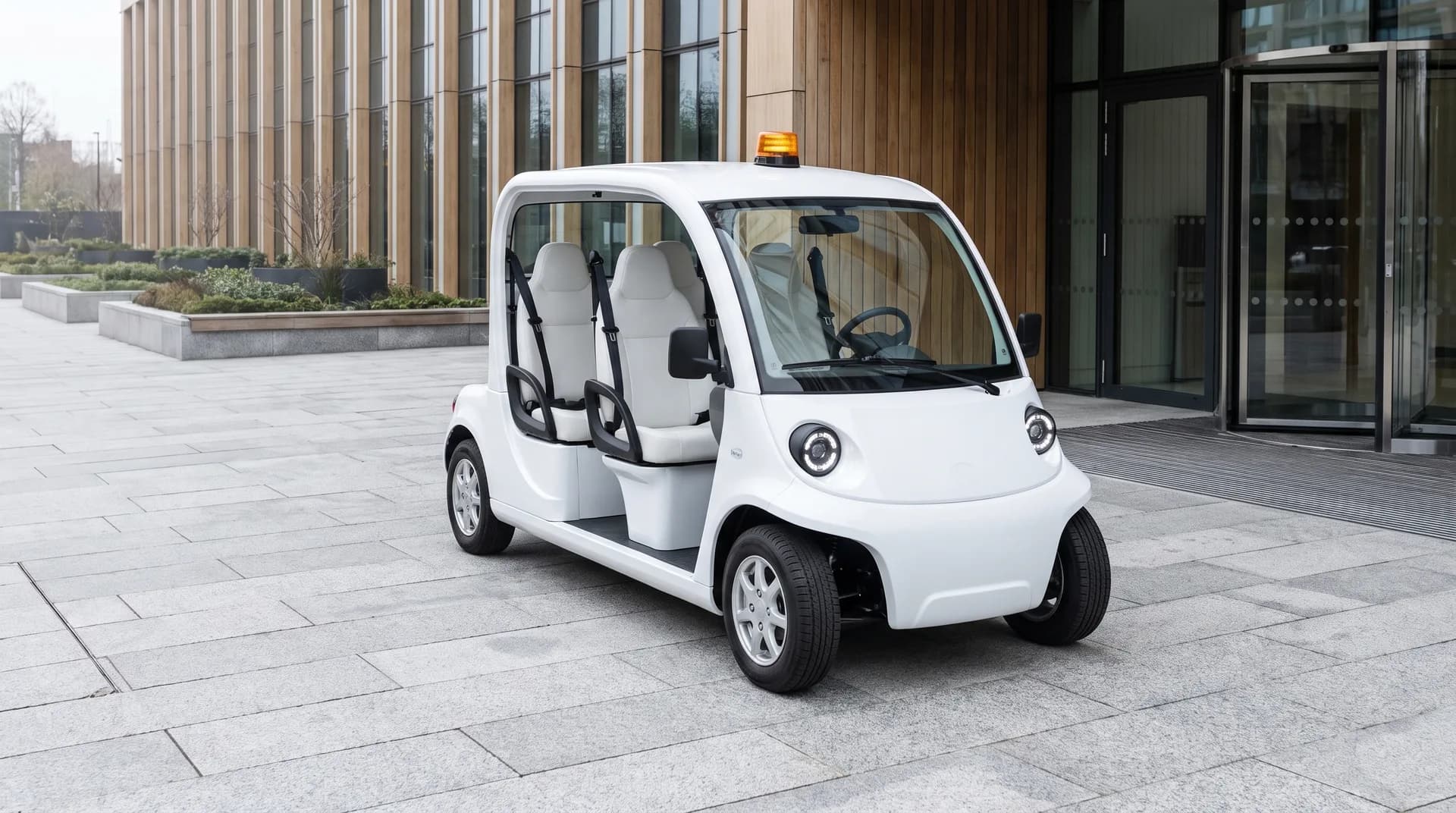
At a fireworks or bonfire event, electric golf carts do the jobs that legs and vans cannot: moving marshals and first aiders quickly across a dark, crowd-dense site, running cordon and perimeter checks before and during the display, and shifting kit, barriers and signage in the tight window between gates opening and the first shell going up. They are quiet, which matters near residential streets and anywhere animals are close, and they produce no exhaust among crowds. Because the whole event often lives and dies in one evening, hiring a small fleet for the week of the show almost always makes more sense than owning vehicles that would work one night a year. Here is how organizers use them well.
- Marshal and first-aid mobility is the core job: a cart crosses a large site in minutes, in the dark, without pushing through crowds.
- Cordon and perimeter checks before the display are faster and better logged from a vehicle.
- Specify working lights and brief drivers for dark-site, crowd-dense driving.
- Quiet electric drive suits residential surroundings and sites with animals nearby.
- One-night events are exactly what short-term hire exists for.
What golf carts do at fireworks and bonfire events
Walk a typical display site and the distances explain everything. The firing area and its exclusion zone sit at one end, the crowd line and concessions at another, car parking fields beyond that, and a control point somewhere in between. On foot those legs eat your stewards' evening; in a two-seat cart a safety officer can check the cordon line, get back to control and still be at the gate for opening. First aid is the same story: a casualty at the far crowd barrier needs a trained responder and a kit bag there in minutes, and a cart carries both, plus a calm ride back to the first aid post for anyone who needs it. Event managers also lean on a runner vehicle all evening for radios, batteries, signage, lost children point supplies and the hundred small moves nobody plans for. Our general guide to hiring electric golf carts for events covers the wider picture.
Working in the dark: lights, speed and crowd discipline
A bonfire event runs almost entirely after dark, so the vehicle specification and the driver briefing both matter more than at a summer fete. Ask your hire supplier for vehicles with working head and tail lights, and add hi-vis to anything moving near the public. Then set rules: walking pace anywhere near crowds, no vehicle movements through the crowd mass during the display itself, agreed routes along the back of the crowd line, and one person in charge of who drives. Hired golf carts are simple to drive, but they are still vehicles among pedestrians in the dark, and our guide on who can drive a hire cart sets out sensible age and competence rules to write into your event plan. It is worth saying plainly that golf carts serve the safety operation around a display; anything inside the firing area and exclusion zone belongs to your display operator and their own procedures.
Quiet vehicles, animals and neighbours
Fireworks events already carry a noise burden, and many are held on showgrounds, farms and parks with houses, stables or livestock within earshot. Electric golf carts add nothing to it. There is no engine note across the car park field at 10pm while you clear the site, no exhaust drifting over the crowd line, and no fuel cans stored on a site whose entire risk assessment is about fire. For venues that host animals, from farm parks to rugby clubs backing onto paddocks, the quiet drivetrain is often the reason organizers specify electric rather than anything gas.
- Safety officer / marshal
- 2 seat cart with lights
- First aid
- 2 to 4 seat cart
- Site crew
- Utility cart with load bed
- Safety officer / marshal
- Cordon and perimeter checks
- First aid
- Position kit at posts
- Site crew
- Barriers, signage, generator runs
- Safety officer / marshal
- Crowd line and gate cover
- First aid
- Rapid response across site
- Site crew
- Runner for control point
- Safety officer / marshal
- Egress and car park cover
- First aid
- Sweep of the site
- Site crew
- Teardown and litter runs
| Safety officer / marshal | First aid | Site crew | |
|---|---|---|---|
| Vehicle | 2 seat cart with lights | 2 to 4 seat cart | Utility cart with load bed |
| Before gates | Cordon and perimeter checks | Position kit at posts | Barriers, signage, generator runs |
| During the event | Crowd line and gate cover | Rapid response across site | Runner for control point |
| After the display | Egress and car park cover | Sweep of the site | Teardown and litter runs |
Why hire fits fireworks and bonfire events
The maths of a one-nighter is simple: the site needs vehicles for perhaps three or four days, from build through show night to teardown, and then not again for a year. Hiring means the fleet arrives charged, works the week and leaves, with no storage, maintenance or insurance carried through the other eleven months. Charging is rarely a problem on a short hire, since most vehicles will do the event on their overnight charge, but if your site is a bare field it is worth reading our note on powering event golf carts on site and telling the supplier what power you have. Pricing is quoted to the job, and short hires are priced as such. See what is available on our cart hire page, and describe the site when you enquire: ground conditions, distances and crowd size all shape the right fleet.
Frequently asked questions
Why do fireworks events use golf carts instead of vans?+
Once the public are on site, vans are too big and too blind to move safely among crowds in the dark. A cart is small, slow, quiet and open, so marshals and first aiders keep moving all evening without pushing vehicles through the crowd mass.
Can golf carts operate near the firing area?+
The firing area and exclusion zone belong to your display operator and their procedures. Golf Carts work the rest of the site: cordon lines, crowd areas, gates, car parks and back-of-house routes, under the event's own traffic rules.
Do hired golf carts come with lights for night events?+
Ask for them when you book. Vehicles specified for night operation carry working head and tail lights, and organizers usually add hi-vis marking and agree driving rules for dark, crowd-dense conditions.
Is one night too short a hire to be worthwhile?+
No. Short event hires are normal: the fleet is delivered for the build, works show night and leaves after teardown. That is almost always better value than owning vehicles that would work one night a year.
Who is allowed to drive a hired cart at an event?+
Set rules in your event plan: named adult drivers, a briefing on routes and speeds, and no unauthorised use. Our guide on who can drive a hire cart covers sensible age and competence requirements.
Sort show-night transport early
Tell us the site, the crowd size and the dates and we will quote a small fleet for build, show night and teardown, delivered and collected around your schedule.
Related solutions
Ready to explore what we build?
See the vehicles and the setting this applies to, or get a tailored quote built around your site.
Ready to find the right golf cart?
Tell us how and where it will work and we will specify a vehicle and a tailored quote built around you. Every build comes with a 3-year warranty and a 24-hour priority call-out.
Our guides are written and reviewed by the Hawke Electric Vehicles team, the people who specify, build, deliver and support the vehicles. We focus on honest, practical advice and flag where a figure depends on the build rather than guessing.
More guides by Hawke