Every summer, Canadians spot a cheap golf cart listing across the border, do the currency conversion, and wonder whether importing it is worth the paperwork. Sometimes it is. The good news is that a standard golf cart is generally treated very differently from a car at the border, and much of the machinery that makes car imports painful does not usually apply. The bad news is that the exchange rate, taxes, freight and warranty realities quietly eat much of the saving, and one wrong assumption about what you are importing can turn a bargain into a problem. Here is how the process actually works in 2026, and how to decide whether it is worth your while. One honest note up front: border rules and tariff measures have shifted repeatedly in recent years, so treat this as a map, and confirm the current position with the Canada Border Services Agency or a customs broker before you hand over money.
- A standard golf cart, not built for road use, is generally not a regulated vehicle under Canada's Motor Vehicle Safety Act, so the RIV import program that governs cars does not usually apply.
- Low-speed vehicles (20 to 25 mph, road-oriented) are a different, federally regulated class with much stricter import rules; know which one you are buying.
- Expect 5% GST at the border on the value plus any duty; US-origin carts with proof of origin generally enter duty-free under CUSMA.
- Non-US-origin carts may attract duty, and tariff surtaxes have come and gone since 2025, so verify the current rate before committing.
- Freight, brokerage, the exchange rate and a void or awkward warranty often erase the apparent saving; run the full landed cost first.
First question: is it a golf cart or a low-speed vehicle?
This single distinction decides your entire import experience. A conventional golf cart, designed for courses and private property rather than public roads, generally falls outside the definition of a regulated vehicle under the Motor Vehicle Safety Act. That means the Registrar of Imported Vehicles program, the compliance inspections and the modification requirements that make car imports tedious do not usually apply. A low-speed vehicle is different: it is a federally defined class of road-oriented vehicle capable of 20 to 25 mph, it is regulated, and importing one means meeting Canadian safety standards and following the full regulated-vehicle process, which not every US-market model can satisfy. Sellers use the terms loosely, so do not rely on the listing. Check the manufacturer's label and documentation, and if there is any doubt about how your specific machine is classified, ask Transport Canada or a customs broker before you buy, not at the border.
What you will pay at the border
Three amounts matter. First, GST: 5% of the Canadian-dollar value of the cart, collected at the border, with provincial sales tax typically handled separately depending on your province's rules. Second, duty: if the cart was manufactured in the United States or Mexico and you have proof of origin, it generally enters duty-free under CUSMA; a cart merely bought in the US but manufactured elsewhere may not qualify, and duty at the applicable tariff rate would be charged on top. Third, the wildcard: since 2025, Canada and the US have exchanged tariff measures that have applied surtaxes to some categories of US goods at various times. Whether any surtax touches your cart depends on the rules in force the week you cross, so have your broker or the CBSA confirm the current position rather than assuming the trade-agreement rate.
The import process, step by step
- 01
Confirm what you are buying
Verify the cart's classification, its manufacturer and country of origin, and get a proper bill of sale. If the seller holds any title or registration document for it, get that too.
- 02
Price the landed cost
Convert the price to Canadian dollars, then add freight, insurance in transit, brokerage if you use one, GST, any duty or surtax, and provincial tax. Compare that number, not the sticker, against Canadian listings.
- 03
Check the US export side
The US has its own export formalities for vehicles and for goods above certain values, and lithium batteries bring shipping documentation requirements of their own. A broker or the carrier will tell you exactly what your shipment needs.
- 04
Declare it at the border
Bring the bill of sale and origin documentation and declare the cart to the CBSA. For a non-regulated golf cart this is usually a straightforward commercial importation with GST and any duty paid at the crossing.
- 05
Sort the domestic side
Depending on your province, you may owe provincial sales tax on arrival or at first registration if the cart will be used in any permitted on-road scheme. Keep every receipt; insurers will also want the paperwork.
The costs people forget
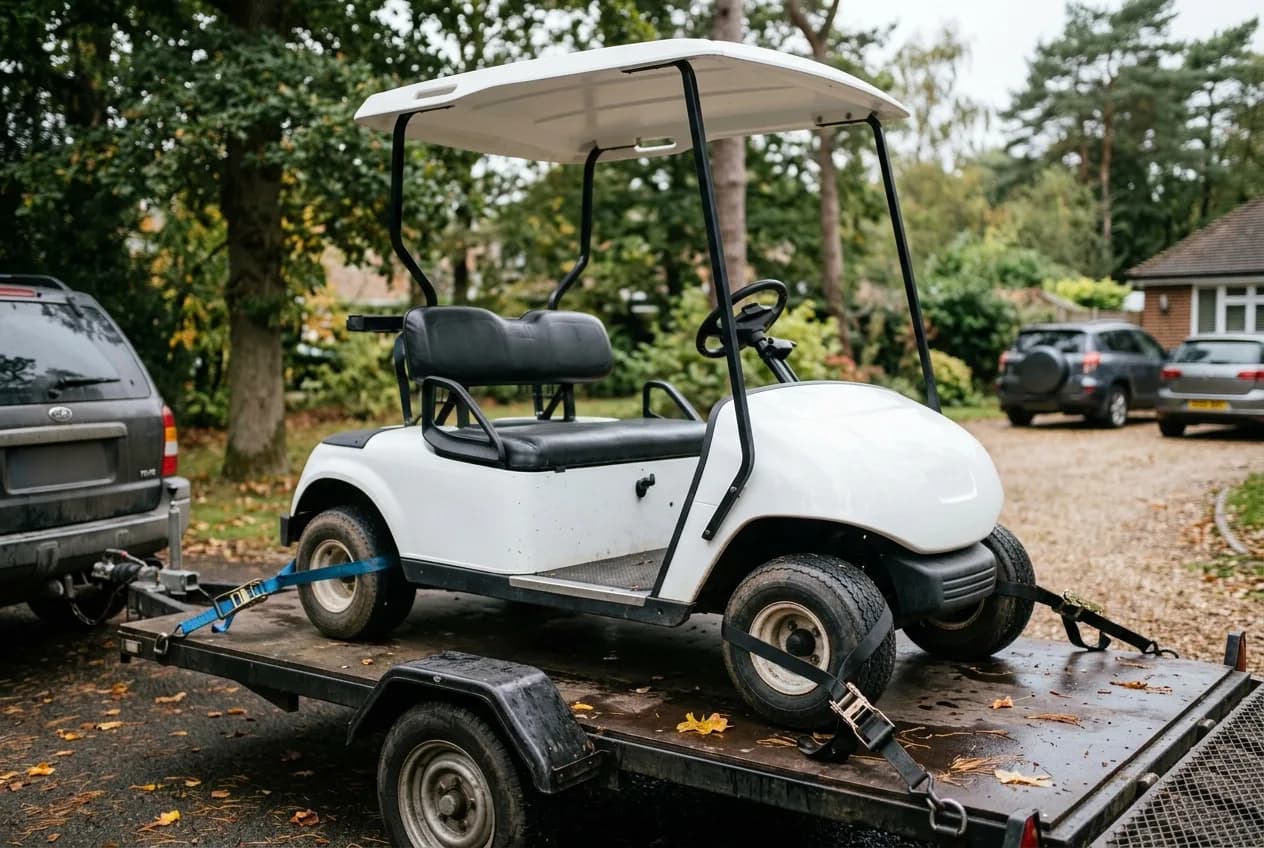
- Freight: professional cart transport across the border commonly runs several hundred to well over a thousand Canadian dollars depending on distance.
- Brokerage fees if you use a customs broker, which for a first-time importer is usually money well spent.
- The exchange rate: a US price that looks like a saving can stop being one once converted and taxed.
- Warranty: many manufacturers do not honour warranties across the border, so you may own an orphan the day it arrives.
- Charger compatibility is rarely an issue on 120-volt chargers, but confirm before you ship rather than after.
- Lithium battery shipping: packs are dangerous goods in transit and carriers may require specific documentation and handling.
Is importing actually worth it?
Run the full sum and the answer is often closer than the listing suggested. A US$7,000 cart is not a CA$7,000 cart: after conversion, GST, freight and brokerage it can land within a few hundred dollars of a comparable Canadian-market machine that comes with a local warranty and a dealer who answers the phone. Imports make the most sense for unusual specifications you cannot source domestically, or genuine below-market private deals where you have inspected the cart yourself. For a standard machine at a standard price, buying a cart specified and warrantied for Canada, built to order for your property and your winters, is usually the calmer route, and it is the one we would price for you honestly.
Frequently asked questions
Do golf carts go through the RIV program?+
Generally no. A standard golf cart not designed for road use is usually not a regulated vehicle under the Motor Vehicle Safety Act, so the RIV process for cars does not normally apply. Low-speed vehicles are regulated and do go through the full process. Confirm your specific machine's status before importing.
How much is duty on a golf cart from the US?+
If the cart was manufactured in the US or Mexico and you can prove origin, it generally enters duty-free under CUSMA, leaving 5% GST on the value. Carts manufactured elsewhere may attract duty, and surtax measures have varied since 2025, so verify the current rate with the CBSA or a broker.
Can I drive my imported golf cart on Canadian roads?+
Importing a cart does not make it road-legal. On-road use depends entirely on your province and municipality, and most ordinary golf carts are not road vehicles by default anywhere in Canada.
Do I need a customs broker to import a golf cart?+
Not legally, but for a first import a broker is usually worth the fee. They confirm classification and origin, calculate duty and tax correctly, and prevent the expensive surprises that come from guessing.
Will the manufacturer's warranty follow the cart to Canada?+
Often not. Many warranties are limited to the country of purchase or to the selling dealer's market. Ask the manufacturer in writing before you buy, and price the cart accordingly if the answer is no.
Skip the border maths entirely
Before you wire money across the border, see what a cart built to order for Canada costs delivered, taxed and warrantied. We will quote the full landed figure.
Related solutions
Ready to explore what we build?
See the vehicles and the setting this applies to, or get a tailored quote built around your site.
Ready to find the right golf cart?
Tell us how and where it will work and we will specify a vehicle and a tailored quote built around you. Every build comes with a 3-year warranty and a 24-hour priority call-out.
Our guides are written and reviewed by the Hawke Electric Vehicles team, the people who specify, build, deliver and support the vehicles. We focus on honest, practical advice and flag where a figure depends on the build rather than guessing.
More guides by Hawke