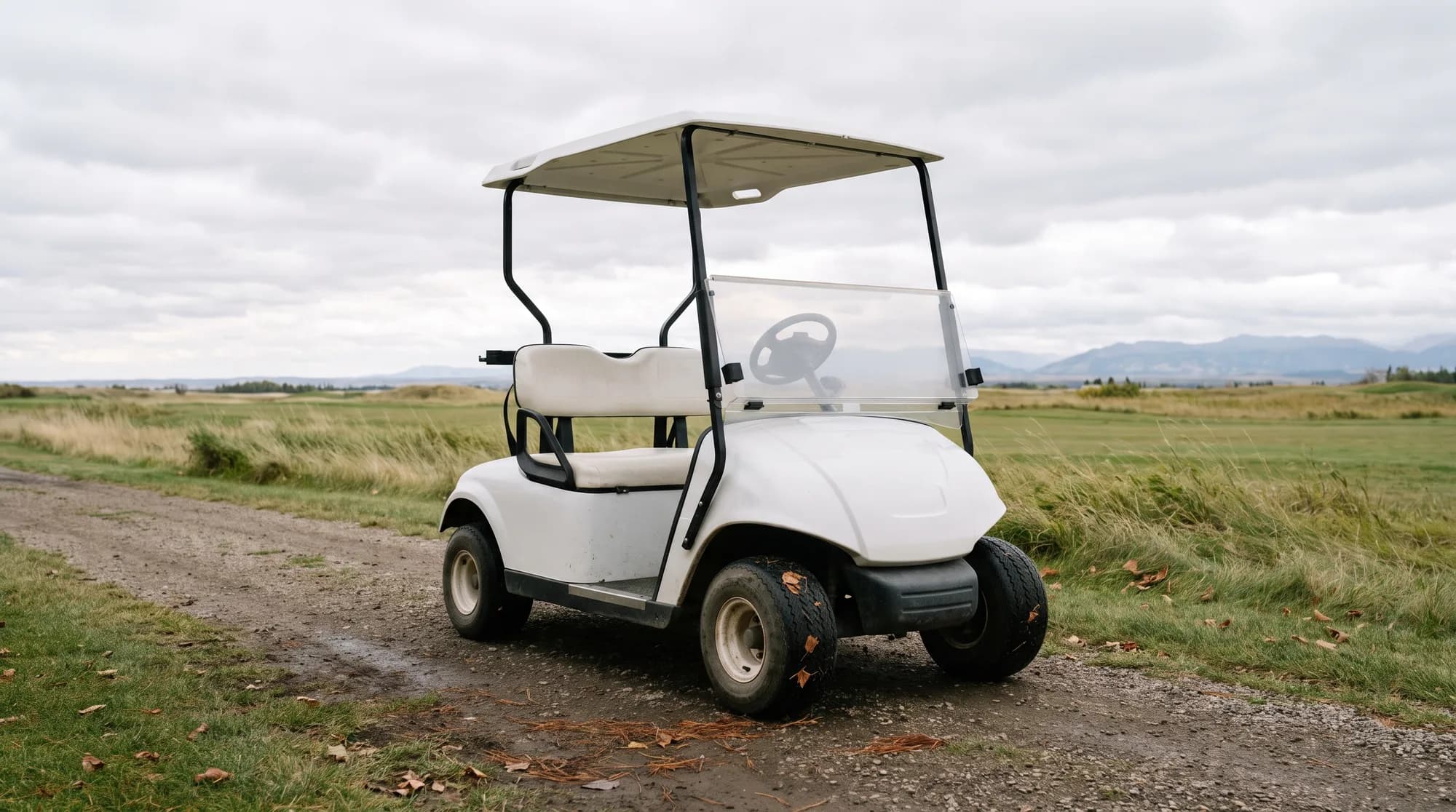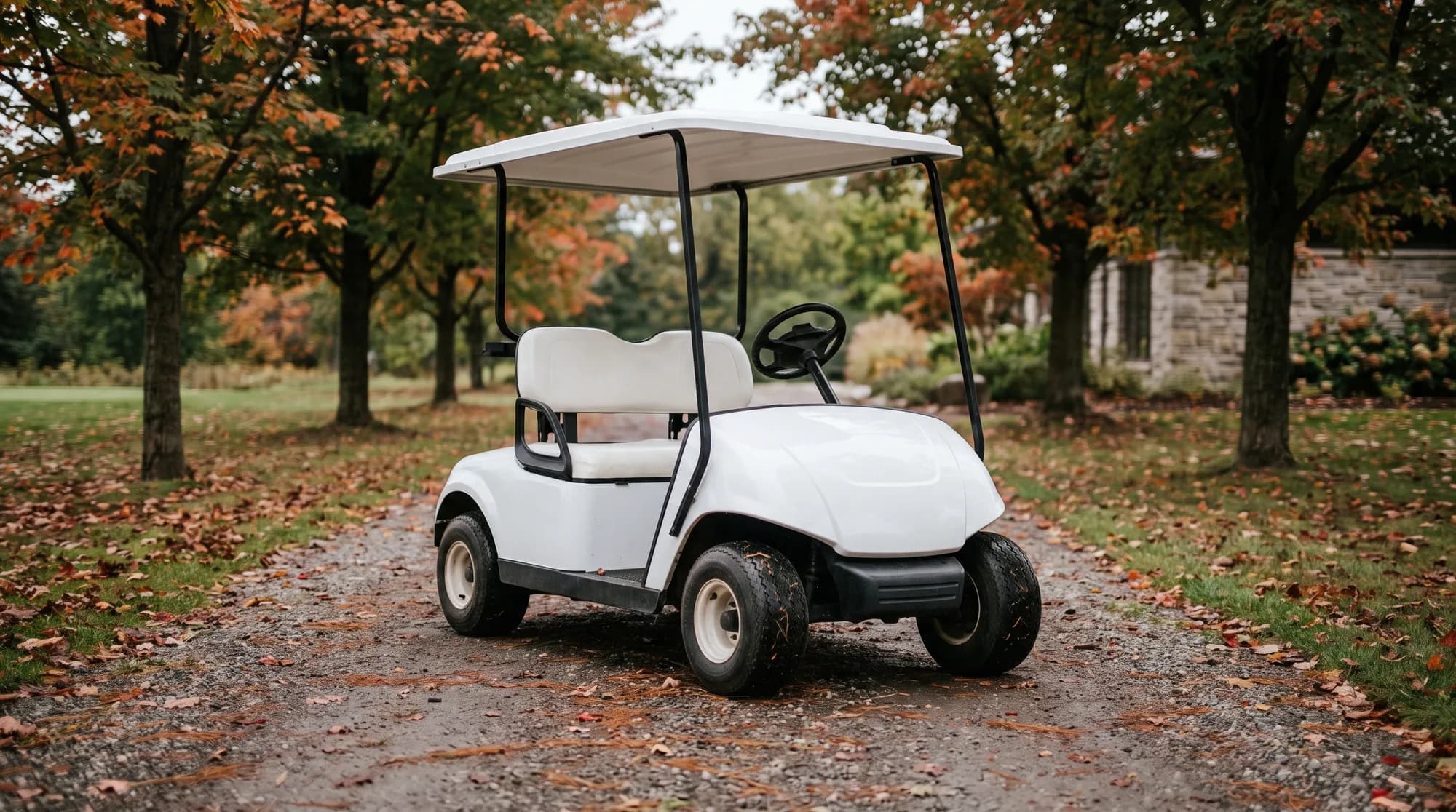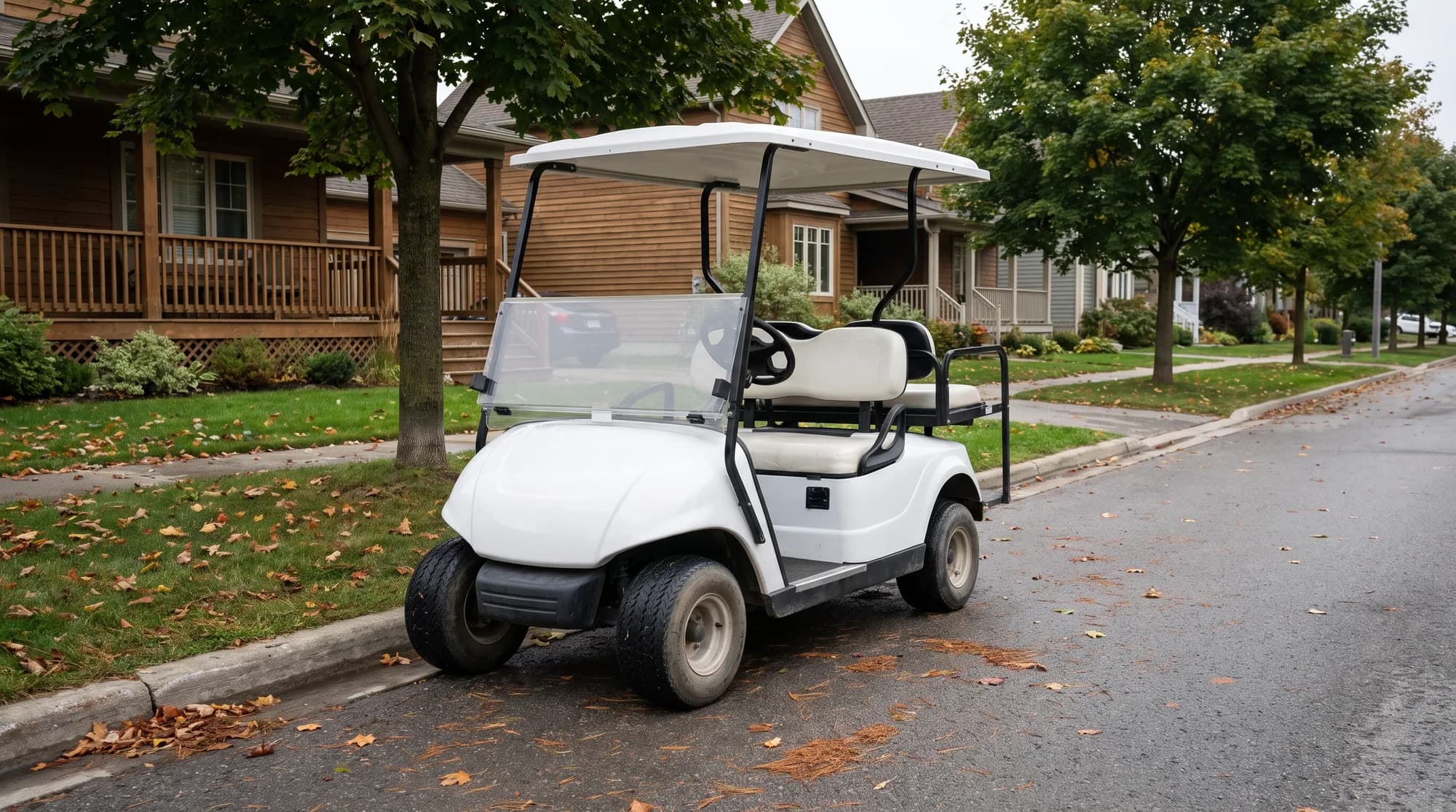
Type this question into a search engine and you will find confident answers in both directions, usually written for the United States. The Canadian reality is layered. Federally, Transport Canada does not certify golf carts as road vehicles at all. Provincially, each province decides what may use its roads, and several now run pilots or bylaw frameworks that open specific local streets to carts. Municipally, a bylaw is almost always the final switch that turns road access on. So the honest answer in 2026 is: not by default, anywhere in Canada, but yes in a growing list of specific communities, under specific conditions. Here is the map.
- No golf cart is street legal across Canada by default; road access exists only where a province and municipality have specifically allowed it.
- Ontario runs a ten-year pilot in a handful of communities such as Pelee Island and Huron-Kinloss, requiring a full-class licence and roads posted at 31 mph or less.
- Alberta launched a five-year pilot in 2024: approved municipalities can open designated roads, with operators as young as 14 and no licence required provincially.
- Saskatchewan lets municipalities pass bylaws (with SGI approval) permitting carts, with a Class 7 learner licence or higher and CA$200,000 minimum liability insurance.
- BC and Quebec have no general golf cart road access; their street-legal route is the separate low-speed vehicle (LSV) category, plus BC's small Chase programme.
- Private property use is legal everywhere in Canada, which is where most carts actually run.
Why there is no national answer
Transport Canada writes the safety standards a vehicle must meet to be sold and driven as a road vehicle, and golf carts are deliberately outside that system: they are built as off-road turf equipment, without the crash protection, lighting and restraint systems road certification demands. What Transport Canada does define is the low-speed vehicle, a four-wheeled, fully electric class with a top speed between 32 and 25 mph and genuine road equipment. Provinces then choose whether and where LSVs and, separately, golf carts may use public roads. That two-layer structure is why your cousin in one province legally drives his cart to the marina while the same trip would earn you a ticket in yours.
The 2026 map, province by province
- Road access for golf carts
- Pilot communities only (O. Reg. 407/21)
- Key conditions
- Full-class licence, roads 31 mph or less, April to November
- Road access for golf carts
- Approved pilot municipalities (since 2024)
- Key conditions
- Age 14+, no licence provincially, daytime only, bylaw roads
- Road access for golf carts
- Municipal bylaw route with SGI approval (since 2023)
- Key conditions
- Class 7+ licence, CA$200,000 liability insurance
- Road access for golf carts
- No general access; Chase programme; NZEVs on low-speed roads
- Key conditions
- Permit, licence and insurance in Chase; ICBC registration for NZEVs
- Road access for golf carts
- No golf cart access; registered LSVs only
- Key conditions
- SAAQ-registered compliant LSV models, roads 31 mph or less
- Road access for golf carts
- Generally no; local exceptions and rules vary
- Key conditions
- Check the provincial highway act and your municipality
| Road access for golf carts | Key conditions | |
|---|---|---|
| Ontario | Pilot communities only (O. Reg. 407/21) | Full-class licence, roads 31 mph or less, April to November |
| Alberta | Approved pilot municipalities (since 2024) | Age 14+, no licence provincially, daytime only, bylaw roads |
| Saskatchewan | Municipal bylaw route with SGI approval (since 2023) | Class 7+ licence, CA$200,000 liability insurance |
| British Columbia | No general access; Chase programme; NZEVs on low-speed roads | Permit, licence and insurance in Chase; ICBC registration for NZEVs |
| Quebec | No golf cart access; registered LSVs only | SAAQ-registered compliant LSV models, roads 31 mph or less |
| Other provinces | Generally no; local exceptions and rules vary | Check the provincial highway act and your municipality |
Three things stand out from that table. First, the momentum: Saskatchewan opened its bylaw route in 2023 and Alberta followed with a pilot in 2024, so the trend across the prairies is toward carefully gated access. Second, the pattern: every framework caps carts to roads posted at 31 mph or less, keeps them off provincial highways, and leans on municipal bylaws for the fine print. Third, the outliers: BC and Quebec have chosen to channel street-legal demand into the certified LSV category instead of opening roads to ordinary carts.
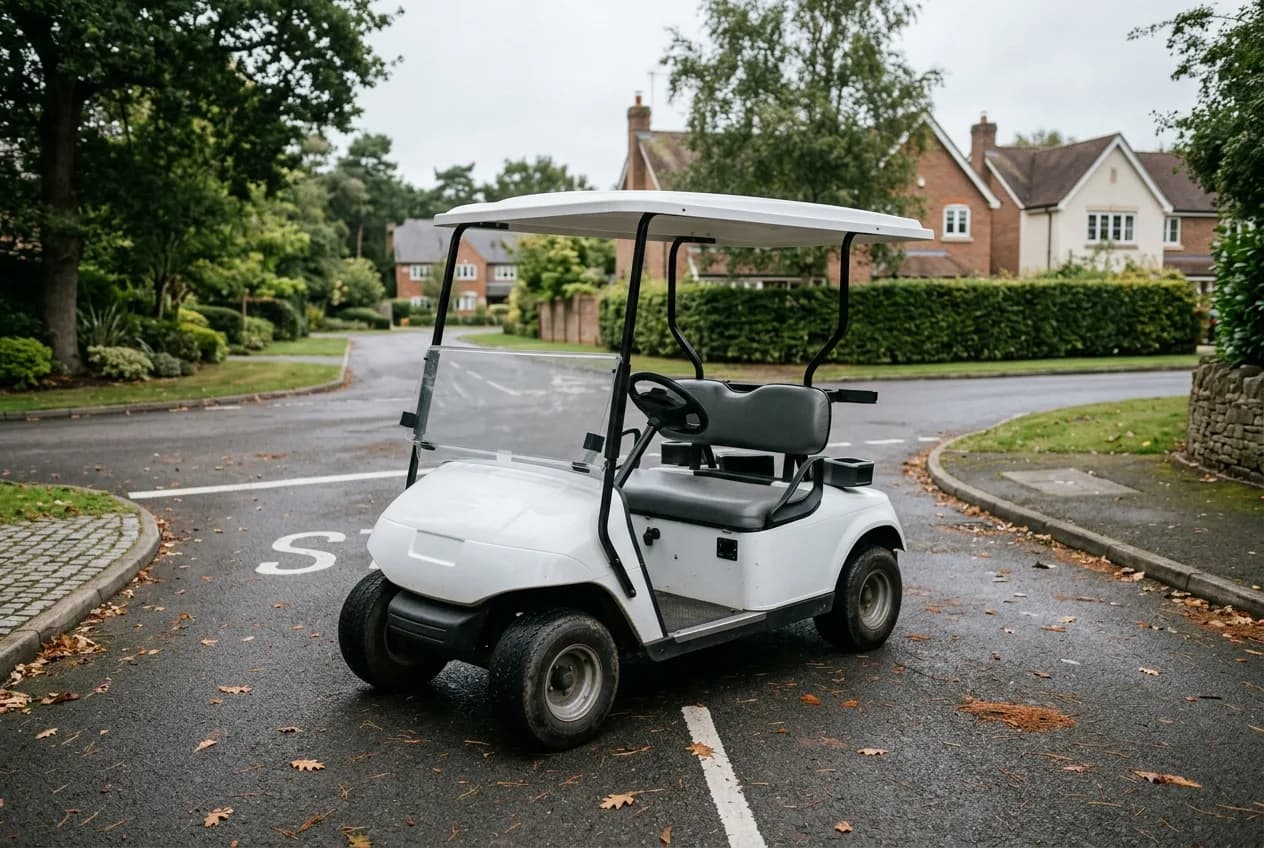
The three questions that decide your situation
- 01
Does your province have a framework?
Ontario, Alberta and Saskatchewan currently have golf-cart-specific routes. BC has the Chase programme and the NZEV category. Quebec has the LSV category only. Elsewhere, assume no until your province says otherwise.
- 02
Has your municipality switched it on?
In every framework, a municipal bylaw is what actually opens the road. No bylaw, no access, even in a province with a pilot. The bylaw also tells you the local extras: permits, fees, equipment checks, route maps.
- 03
Do you and the cart qualify?
Licence class, minimum age, insurance, cart condition and speed capability all vary by province. Ontario wants a full-class licence; Saskatchewan accepts a learner permit; Alberta requires neither but sets age 14 as the floor.
Where carts are always legal
Everywhere in Canada, private property remains open ground: golf courses, farms, acreages, campgrounds, resorts and private cottage-road networks. No licence, registration or provincial insurance requirement applies on genuinely private land, which is why the overwhelming majority of Canadian carts never touch a public road and never need to. The two caveats that follow you onto private land: the property owner's own rules, and Criminal Code impaired driving law, which applies to motor vehicles wherever they are driven.
If you genuinely need street-legal transport
Be honest about the requirement. If your streets are inside a pilot community, a quality cart plus the local permit is the simple answer. If they are not, the certified low-speed vehicle is the legitimate national route: it is a real registered vehicle, insurable and road-equipped, at the price of federal certification and a 25 mph ceiling. What does not work is dressing a golf cart up with lights and mirrors and hoping: certification is about how the vehicle was built and approved, not what has been bolted on. For most buyers the right move is to match the vehicle to where it will really drive, and in Canada that is usually private ground for the cart and the family car for the road.
What to watch through 2026 and 2027
The Canadian map is not static, and two clocks are ticking. The provincial pilots all carry reporting duties and end dates: Ontario's golf cart pilot runs on a ten-year term from 2021, Alberta's five-year pilot matures toward the end of the decade, and pilot municipalities feed incident data back to their provinces each year. Quiet pilots tend to become permanent frameworks; troubled ones get tightened or shelved. Separately, Ontario's low-speed vehicle pilot was scheduled to run to mid-2027, so the LSV route in that province needs a status check before any purchase decision. If you are planning around road access, verify the framework's current state in the month you buy, not the year you first read about it.
Frequently asked questions
Are golf carts street legal anywhere in Canada?+
Yes, in specific communities under provincial frameworks: Ontario's pilot communities, approved Alberta pilot municipalities, Saskatchewan municipalities with SGI-approved bylaws, and the Village of Chase in BC. Everywhere else, public road use is not permitted.
Can I make my golf cart street legal by adding lights and mirrors?+
No. Street legality in Canada comes from the legal framework where you drive, not from accessories. A cart in a pilot community must meet that programme's equipment rules, but outside such a framework no amount of equipment makes a cart road legal.
What is the difference between a golf cart and a low-speed vehicle?+
An LSV is a federally defined, fully electric road vehicle with a 20 to 25 mph top speed, seat belts, road lighting and a VIN, which provinces can allow on low-speed roads with registration and insurance. A golf cart is off-road turf equipment with no road certification.
Do golf cart road rules apply on private property?+
No provincial licensing or registration rules apply on genuinely private land, and carts are legal there across Canada. Property owners set their own rules, and impaired driving law applies everywhere.
Which provinces are opening up to golf carts?+
The recent movement is on the prairies: Saskatchewan created a municipal bylaw route in 2023 and Alberta launched a five-year pilot in 2024. Ontario's ten-year pilot continues in its named communities. BC and Quebec direct street-legal demand to LSVs instead.
Buy the right cart for where you actually drive
We build to order for Canadian buyers and give straight answers about what is and is not road legal in your province before you spend a dollar.
Related solutions
Ready to explore what we build?
See the vehicles and the setting this applies to, or get a tailored quote built around your site.
Ready to find the right golf cart?
Tell us how and where it will work and we will specify a vehicle and a tailored quote built around you. Every build comes with a 3-year warranty and a 24-hour priority call-out.
Our guides are written and reviewed by the Hawke Electric Vehicles team, the people who specify, build, deliver and support the vehicles. We focus on honest, practical advice and flag where a figure depends on the build rather than guessing.
More guides by Hawke