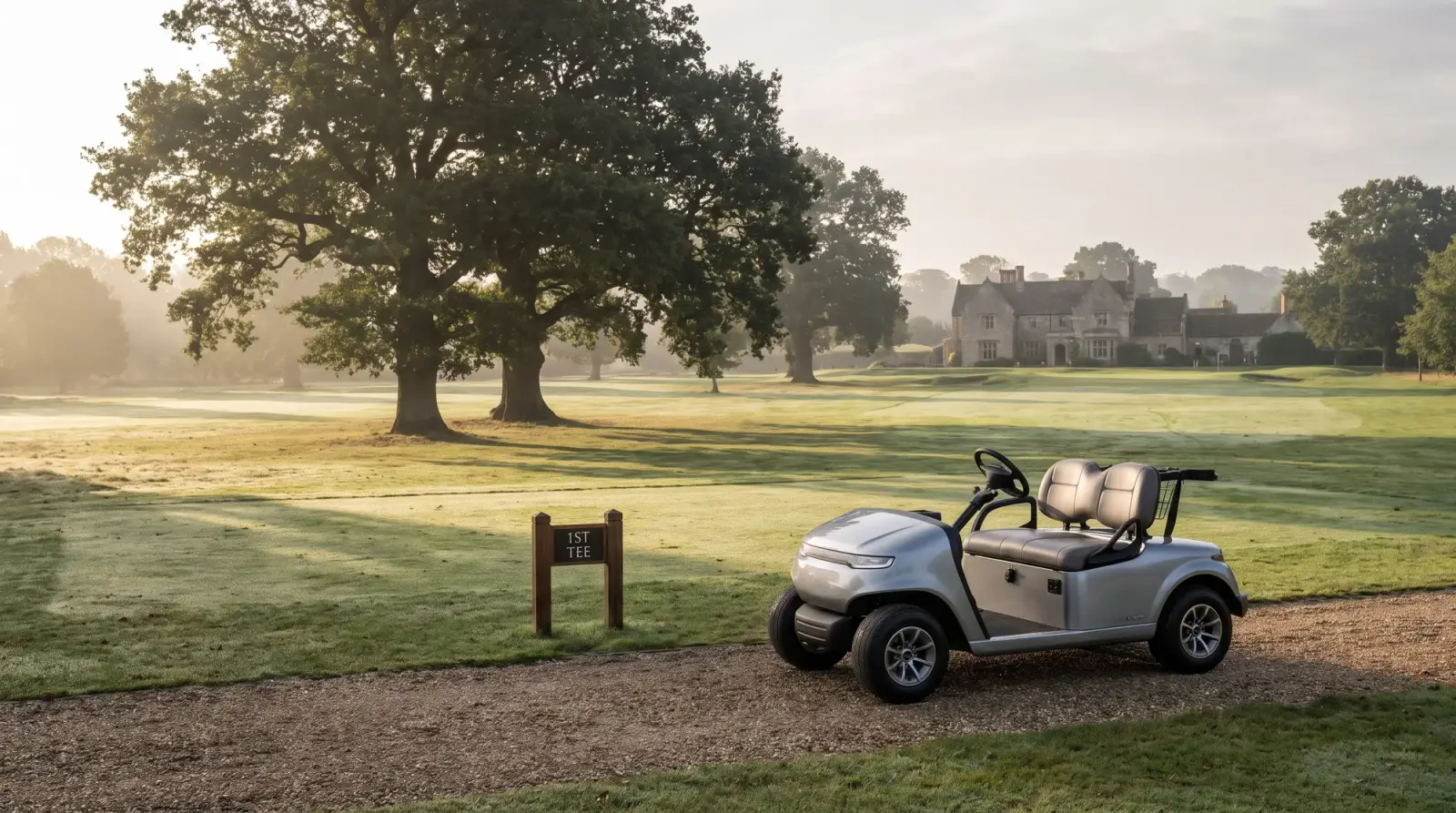
Yes, the Equality Act 2010 applies to golf clubs, and cart access is where it bites hardest. Clubs owe disabled golfers a duty to make reasonable adjustments, and a blanket no-golf carts rule with no exemption route is precisely the kind of policy that can amount to unlawful indirect discrimination.
Much of the written guidance floating around club committees dates from the early 2010s, and while the law hasn't changed since, expectations have. Tribunals, governing bodies and members are all less tolerant of 'we've always done it this way' than they were a decade ago. Here's the current picture, written for committees who want to get it right and for golfers who suspect their club is getting it wrong.
- The Equality Act 2010 covers golf clubs both as service providers (green fees, cart hire) and as members' associations.
- The reasonable-adjustment duty in section 20 means clubs must consider changing policies and providing aids so disabled golfers aren't substantially disadvantaged.
- Blanket cart bans risk being indirect discrimination unless the club can objectively justify them, and permanent blanket bans are hard to justify.
- Clubs can lawfully restrict golf carts on genuine safety and course-condition grounds, provided there's a fair exemption route.
- Charging disabled golfers extra for an adjustment is risky; service providers generally can't pass on the cost of reasonable adjustments.
Does the Equality Act apply to golf clubs?
It applies twice over. When a club takes green fees, hires out golf carts or runs an open competition, it's acting as a service provider, and the Act's service provisions apply. When it deals with its own members, it's an association, and a members' club with 25 or more members is caught by the association provisions too. Private status doesn't provide an escape hatch. 'Members only' changes which part of the Act applies, not whether it applies.
There's one more wrinkle committees often miss: for service providers the reasonable-adjustment duty is anticipatory. A club is expected to think ahead about how disabled visitors will access the course, not merely react when an individual complains. In cart terms, that means having a policy and an exemption route ready before anyone asks.
What is a reasonable adjustment?
Section 20 of the Act sets out the duty. Where a provision, criterion or practice puts disabled people at a substantial disadvantage compared with others, the club must take reasonable steps to remove that disadvantage. For golf, the practice might be 'no golf carts in competitions' or 'no golf carts November to March'. The reasonable steps might be permitting a golfer's own cart, providing a hire cart, or allowing cart use along defined routes when the course is otherwise closed to them.
Reasonable is doing real work in that sentence. A small nine-hole club with two employees isn't expected to buy a fleet of adapted vehicles. Cost, practicability, resources and safety all feed into what's reasonable for a particular club. But permitting a member to use their own cart costs the club almost nothing, which is exactly why refusing to do so is hard to defend.
Is a blanket cart ban indirect discrimination?
It can be. Indirect discrimination happens when a rule applies to everyone but puts disabled people at a particular disadvantage, and the club can't show the rule is a proportionate means of achieving a legitimate aim. A no-golf carts rule applies equally to all members on paper. On the ground, an able-bodied member shrugs and walks, while a member with severe arthritis simply can't play. That's the disadvantage.
Protecting the course and keeping people safe are legitimate aims; nobody sensible disputes that. The battle is proportionality. If a club could protect the turf with a traffic-light system, designated routes or a winter mat rule, then a total year-round ban goes further than needed and the justification collapses. A permanent blanket ban with no exemption route is the highest-risk position a club can hold, and it's also the easiest to fix.
When can clubs restrict golf carts legitimately?
Plenty of restrictions are fine. A course with severe slopes can bar golf carts from specific holes on genuine safety grounds. A club can suspend all cart use when fairways are waterlogged or frosted, because a cart sliding on a frozen bank is dangerous whoever's driving it. Those calls sit with the greenkeeper, and the agronomy behind them is covered in our guide to winter cart bans.
What separates a lawful restriction from a risky one is process. Is the decision made on actual conditions rather than a fixed calendar? Is there an exemption route for medical-certificate holders, even a limited one along defined paths? Is the reasoning recorded? A club that can answer yes to those three questions is in a strong position. One that answers 'the ban runs November to March because it always has' is not.
- Risk level
- High
- Why
- Hard to justify as proportionate when routes, traffic-light days and exemptions exist as alternatives
- Risk level
- Low
- Why
- Condition-led, applies fairly, and shows the club considered adjustments
- Risk level
- High
- Why
- Looks like passing on the cost of a reasonable adjustment, which service providers generally can't do
- Risk level
- Generally low
- Why
- Everyone pays the same for the same service; many clubs still discount for exemption holders
- Risk level
- Low
- Why
- Proportionate, provided the evidence bar is a simple GP or physio letter rather than a consultant's report
| Risk level | Why | |
|---|---|---|
| Permanent blanket ban, no exemptions | High | Hard to justify as proportionate when routes, traffic-light days and exemptions exist as alternatives |
| Weather-based closure for everyone, with a medical exemption route | Low | Condition-led, applies fairly, and shows the club considered adjustments |
| Extra cart charge only for disabled golfers | High | Looks like passing on the cost of a reasonable adjustment, which service providers generally can't do |
| Standard hire fee charged to all users | Generally low | Everyone pays the same for the same service; many clubs still discount for exemption holders |
| Requiring reasonable medical evidence | Low | Proportionate, provided the evidence bar is a simple GP or physio letter rather than a consultant's report |
Can clubs charge disabled golfers for cart hire?
This one needs care. If cart hire is a service the club offers everyone at £25 a round, charging a disabled golfer the same £25 is generally fine. The risk arrives when the charge is attached to the adjustment itself: a fee for processing medical exemptions, or a cart surcharge that only exemption holders pay in competitions where nobody else may use one. Service providers can't ordinarily pass the cost of a reasonable adjustment on to the disabled person. Many clubs sidestep the whole question by discounting or waiving hire fees for medical-certificate holders, which is cheap goodwill and excellent optics.

What should a club do in practice?
Three moves cover most of the risk. First, adopt a written cart policy with a clear medical exemption route, and publish it where members and visitors can find it. Second, make weather restrictions condition-based and recorded, with a defined answer for exemption holders on marginal days. Third, review the evidence you demand: a GP or physio letter is proportionate, a consultant's report is not. We've written a full guide to drafting a club cart policy, including a contents checklist you can hand straight to the greens committee.
It's also worth saying that the fleet itself has changed the equation. Modern electric golf carts are lighter than the lead-acid machines the old bans were written around, and models designed for golf club fleets spread their weight far better. The agronomy argument for a total ban is weaker than it was in 2012, and committees should update their assumptions along with their policies.
Committees shouldn't wait for a complaint. An afternoon spent writing an exemption route into your cart policy costs nothing and removes the single biggest legal exposure most clubs carry. For golfers: put your evidence in, ask for decisions in writing, and escalate calmly. The law is on the side of a fair process.
Frequently asked questions
Do golf clubs have to provide golf carts for disabled golfers?+
Not automatically. The duty is to make reasonable adjustments, and what's reasonable depends on the club's size and resources. Permitting a golfer to use their own cart will almost always be reasonable. Buying and maintaining a hire fleet may or may not be, though many clubs do so anyway because hire income covers it.
Is banning golf carts indirect discrimination?+
A ban can be indirectly discriminatory if it disadvantages disabled golfers and the club can't objectively justify it. Temporary, condition-based restrictions with an exemption route are usually defensible. Permanent blanket bans with no exemptions are the highest-risk version.
Can clubs charge disabled golfers for cart hire?+
Charging the same standard hire fee everyone pays is generally fine. Charging extra because someone is disabled, or charging for the exemption process itself, is risky because service providers generally can't pass on the cost of reasonable adjustments. Many clubs discount instead.
What counts as a reasonable adjustment at a golf club?+
Examples include allowing private cart use, offering a hire cart, permitting golf carts along defined routes on restricted days, moving a competition start to daylight hours, or adjusting tee bookings. Cost, practicability and safety all shape what's reasonable for a given club.
Can a club ban golf carts on wet days for everyone?+
Usually yes, if the decision reflects genuine conditions and safety rather than a fixed calendar. Best practice is to record the reason and to consider limited path-only access for medical exemption holders before defaulting to a full closure.
Building an accessible cart fleet?
Hawke supplies golf clubs across the UK with modern, turf-friendly electric golf carts, including easy-access configurations, backed by a 3-year warranty and 24-hour call-out.
Related solutions
Ready to explore what we build?
See the vehicles and the setting this applies to, or get a tailored quote built around your site.

Ready to find the right golf cart?
Tell us how and where it will work and we will specify a vehicle and a tailored quote built around you. Every build comes with a 3-year warranty and a 24-hour priority call-out.
Our guides are written and reviewed by the Hawke Electric Vehicles team, the people who specify, build, deliver and support the vehicles. We focus on honest, practical advice and flag where a figure depends on the build rather than guessing.
More guides by Hawke