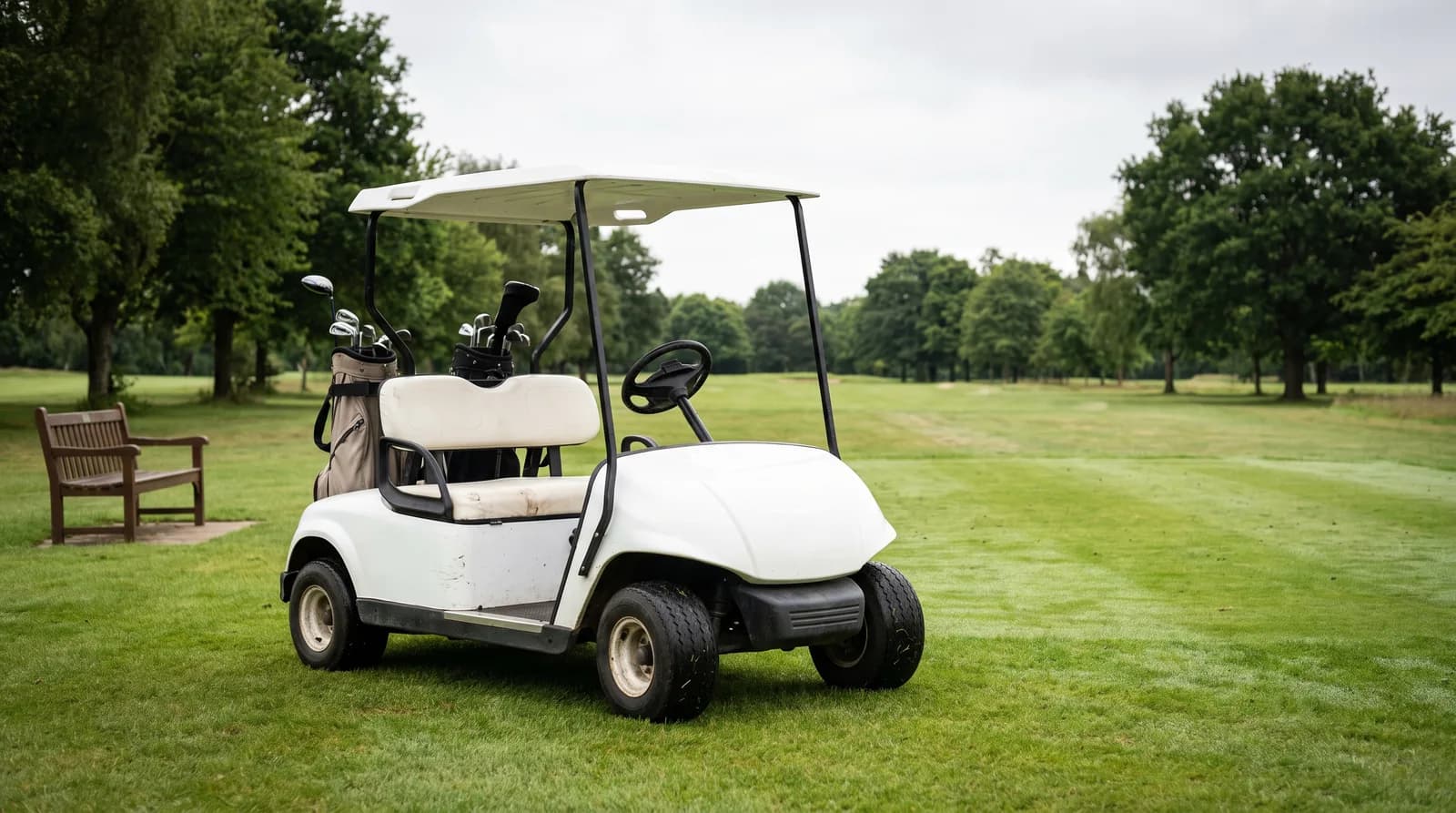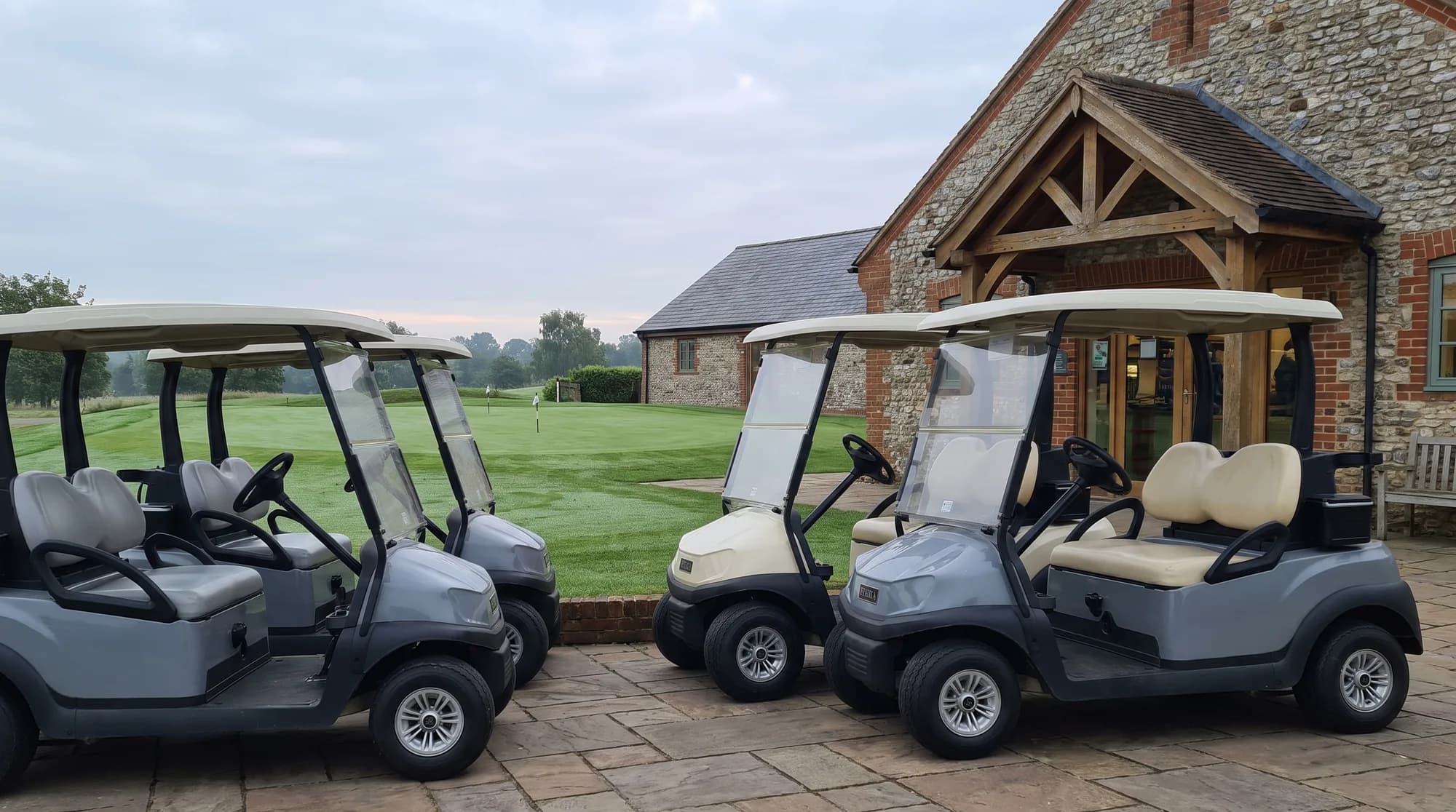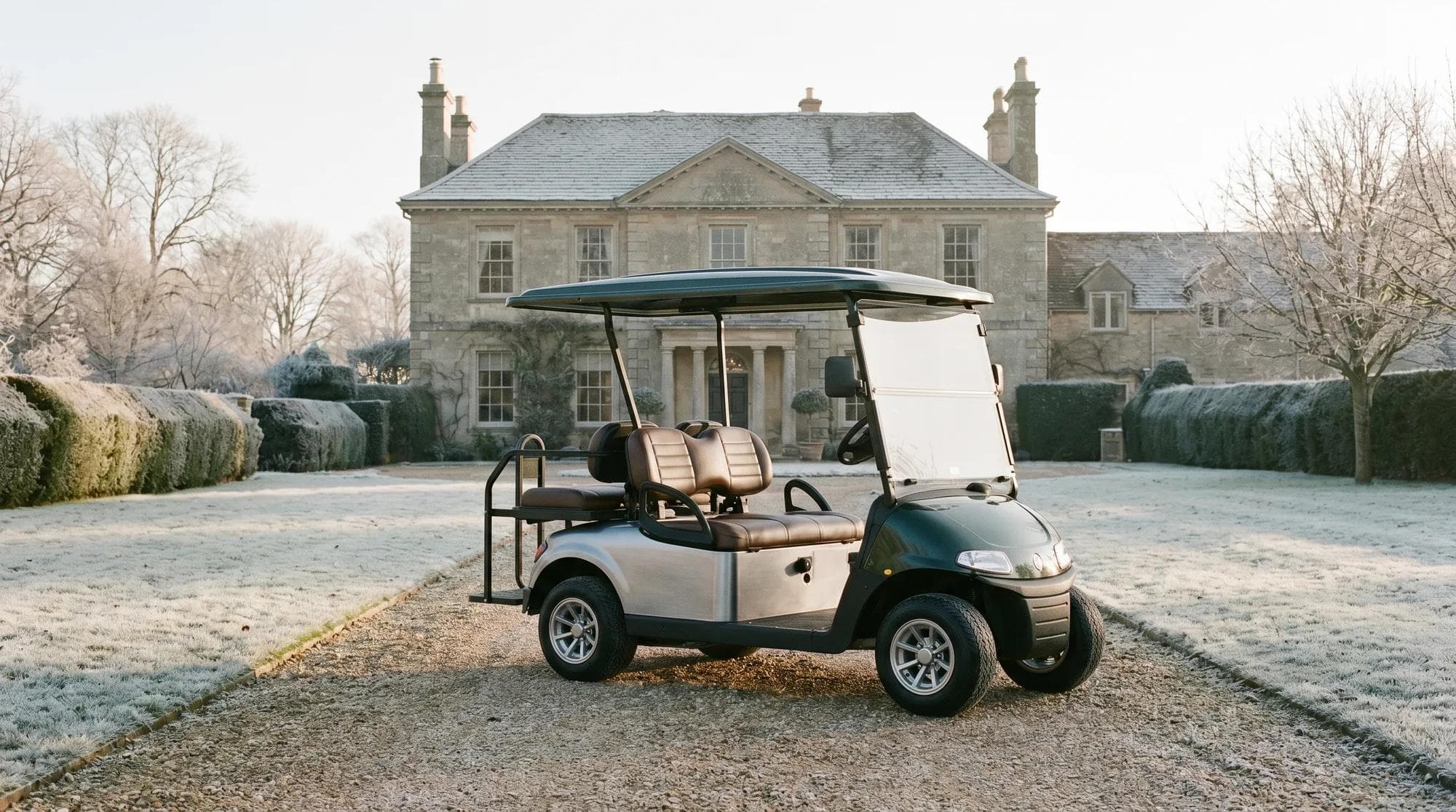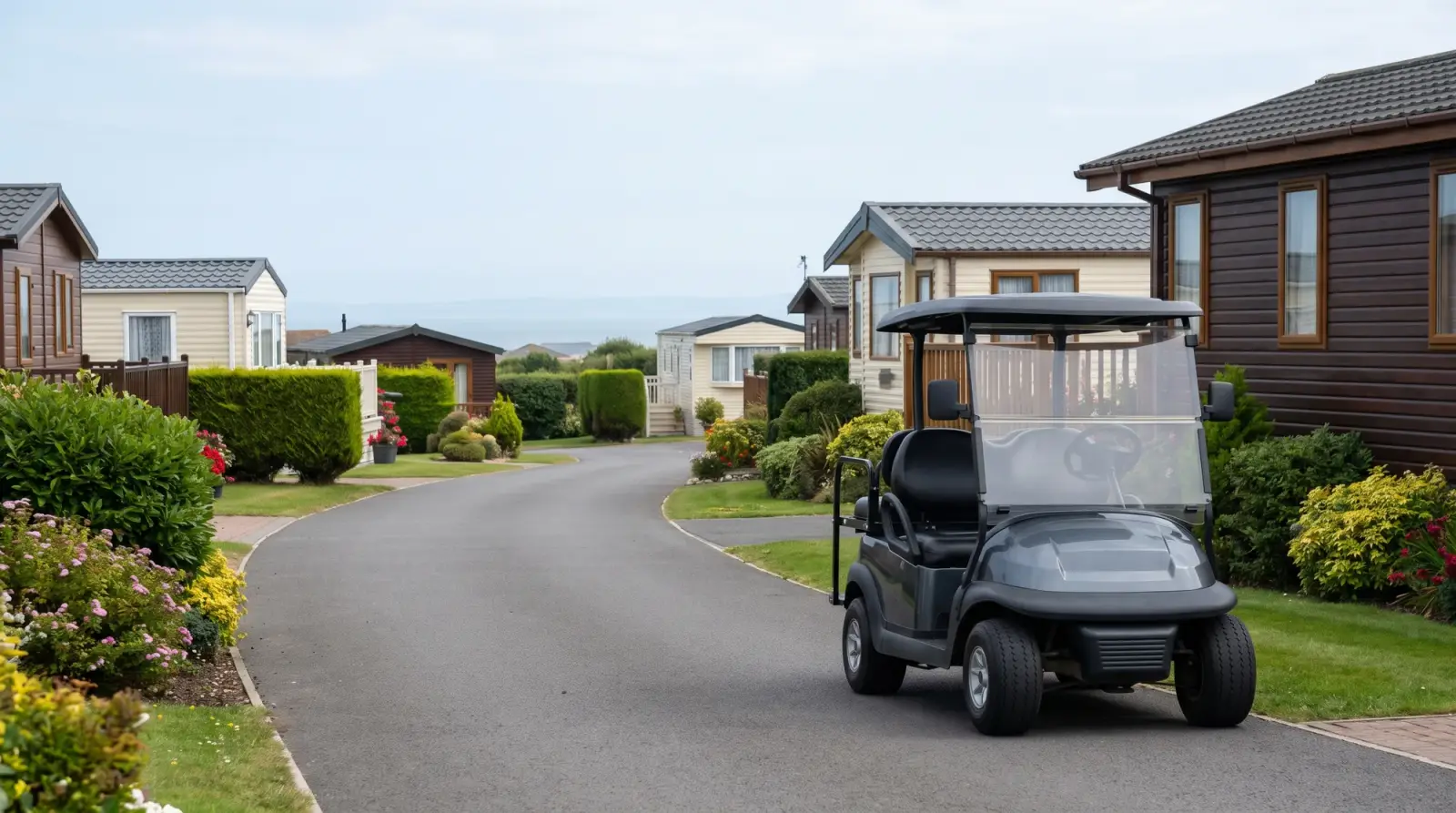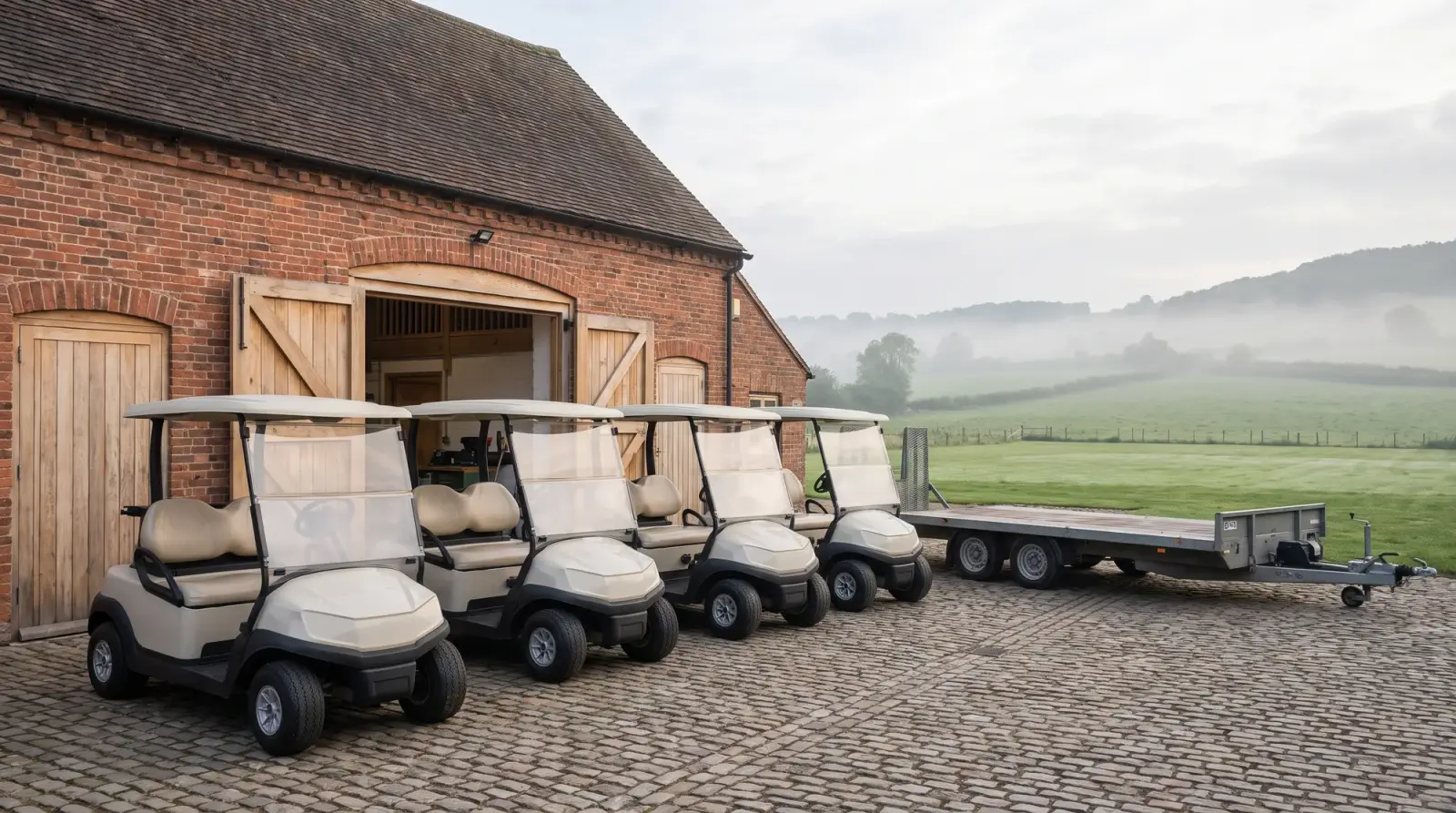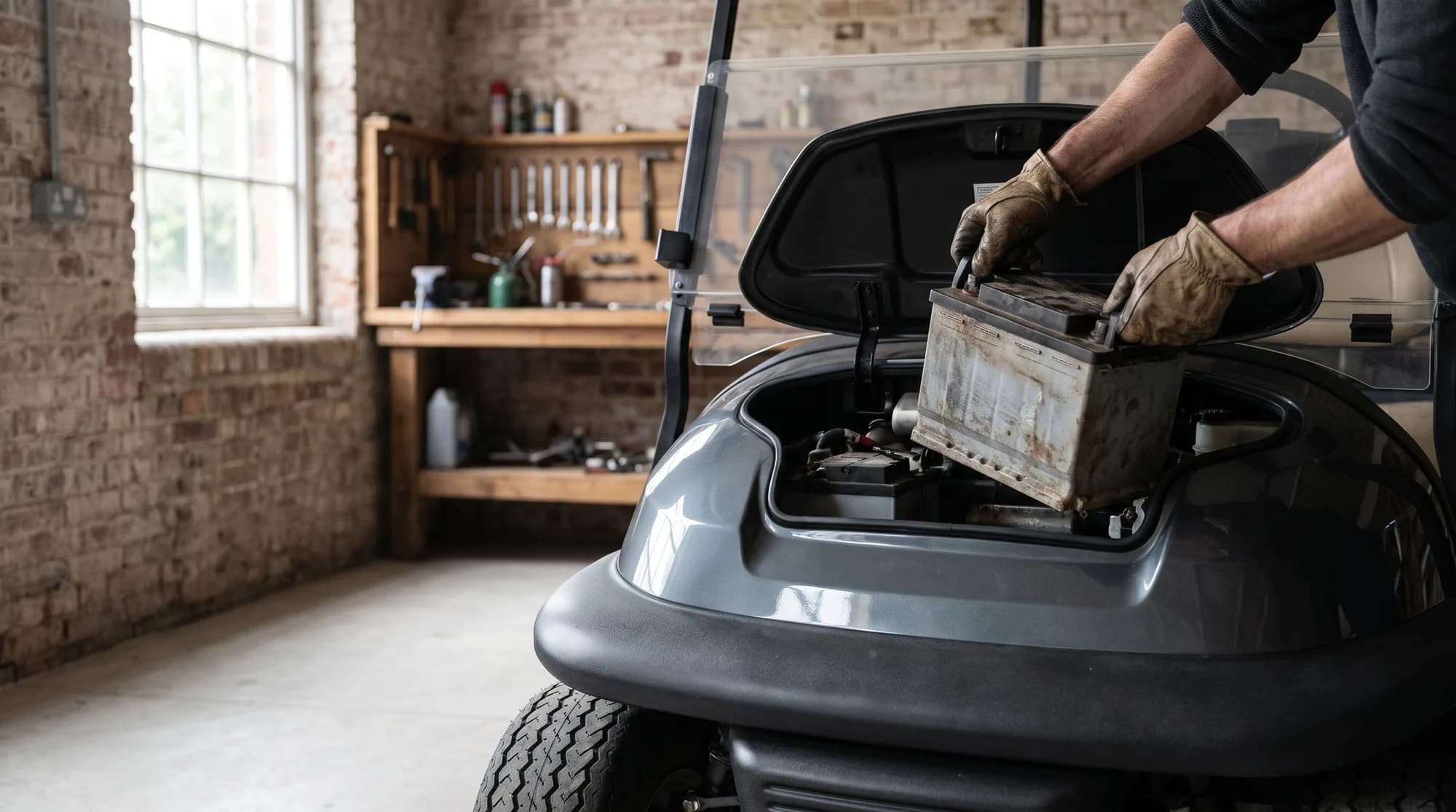
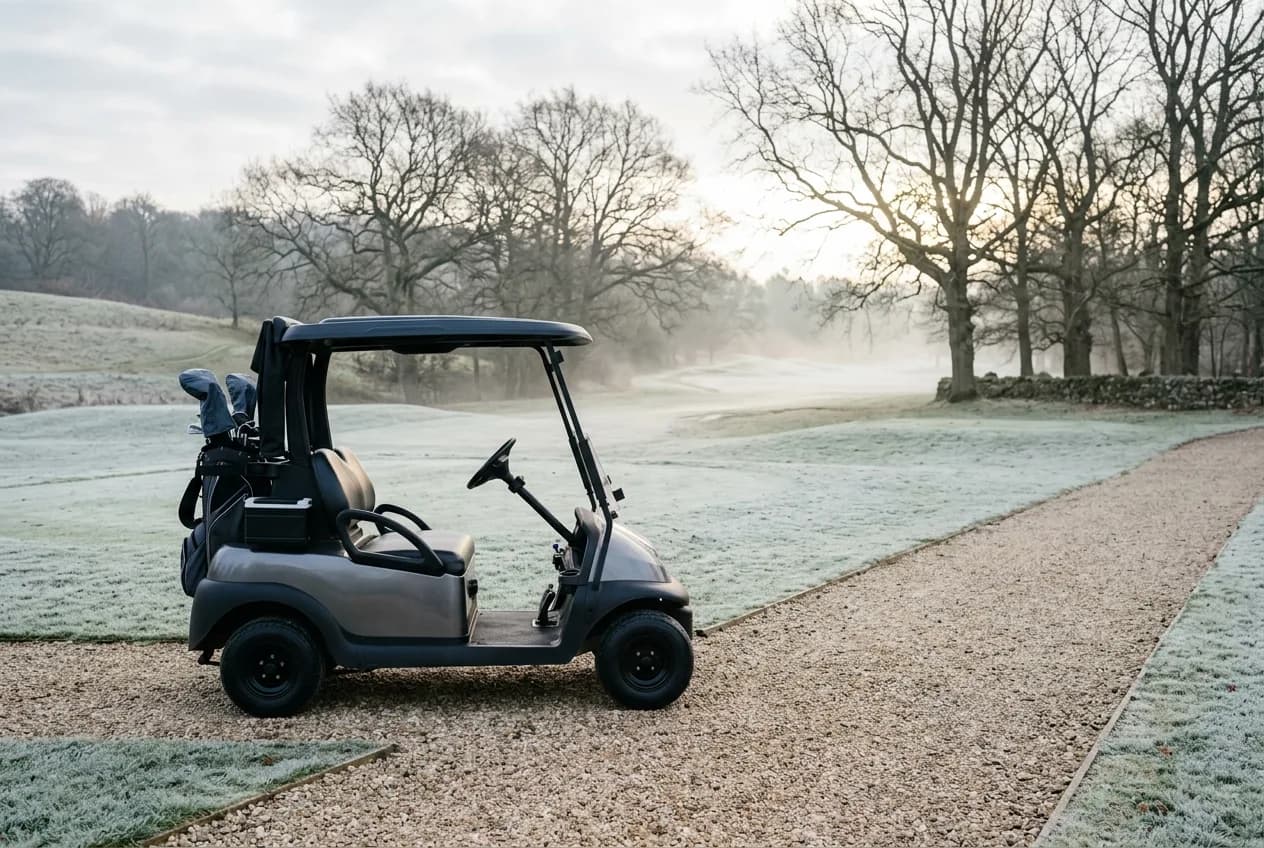
Golf clubs ban golf carts in winter because saturated turf compacts and ruts under a vehicle weighing a third of a metric ton, and the damage done in January is still visible in May. It's not the greenkeeper being awkward; it's agronomy, and the greenkeepers are right about it.
That's cold comfort if a cart is the only way you can play, and from November to March many UK courses go weeks at a time with the fleet locked away. The good news is that a straight ban isn't the only option. Traffic-light systems, defined routes and smarter cart specs all exist precisely because clubs have learned to balance turf protection against keeping members on the course. First the damage, then the compromises that actually work.
- Winter bans typically run November to March and exist to prevent compaction, rutting and frost damage on saturated turf.
- A cart concentrates 300kg or more through four small contact patches; a trolley carries perhaps 20kg, which is why the two are treated differently.
- Traffic-light systems (green, amber, red days) are the standard compromise, decided daily on actual conditions.
- Medical exemption holders often keep amber-day access along defined routes rather than losing the course entirely.
- Cart spec genuinely matters: lighter lithium models, turf tires and four-wheel layouts spread load and widen the playable window.
What does a cart actually do to wet turf?
Three things, and each outlasts the winter. The first is compaction. Waterlogged soil has almost no resistance to pressure, so each pass squeezes the air out of the soil structure. Roots need those air pockets to breathe and drain; once they're crushed, grass weakens, water sits on the surface, and the fairway gets wetter and softer in a feedback loop that can take a full growing season to reverse.
The second is rutting. Driven wheels on soft ground shear the turf as they turn and climb, leaving muddy channels that scar walk-off points, path ends and the low spots where everyone funnels. The third is frost damage. Frozen grass blades are brittle, and traffic ruptures the plant cells, leaving brown tracks across the course that show every route the cart took. Worse still is a thawing surface over a frozen root zone, when the top layer slides against the icy layer beneath and tears roots apart. That's why a sunny morning after a hard frost is often the most damaging time of all to drive.
Why are golf carts banned when trolleys are allowed?
Simple arithmetic. An electric trolley with a loaded bag weighs perhaps 20kg spread across wide wheels, and it's pushed, so the wheels roll without driving force. A cart weighs 300kg to 450kg before you add two golfers and their kit, call it half a metric ton moving, and all of it presses through four relatively small tire contact patches. The drive wheels also apply torque to the ground, which is what tears saturated turf rather than just pressing it. A trolley on a wet fairway leaves a faint line. A cart can leave a rut you could plant potatoes in.
Some clubs allow trolleys with winter wheels while banning golf carts outright, and on the raw numbers that's a defensible line to draw. Where members are right to grumble is when the ban runs on a fixed calendar regardless of conditions. A dry, mild February week does far less harm than a sodden October one, and the better-run clubs judge the day, not the month.
How does the traffic-light system work?
It's the compromise most UK clubs have landed on. Each morning the greenkeeper assesses the course and declares the day green, amber or red. Green means golf carts anywhere sensible. Amber means restricted use, typically paths and defined routes only, and at many clubs amber access is reserved for golfers with a medical exemption. Red means no golf carts at all, usually after heavy rain or during frost. The status goes out on the club's website, app or a flag by the pro shop, and the decision is the greenkeeper's alone.
It works because it's honest in both directions. Members can see the system responds to real conditions rather than a calendar, and the greens staff keep the power to shut things down when the course genuinely can't take traffic. If your club still runs a blanket November-to-March ban, proposing a traffic-light trial is the single most constructive thing a cart user can bring to the AGM.
- Turf protection
- Strong but blunt; protects turf even on dry weeks
- Fairness to cart users
- Poor; cart-dependent golfers lose months of golf regardless of conditions
- Admin effort
- Minimal; one decision a year
- Turf protection
- Strong; matches use to actual daily conditions
- Fairness to cart users
- Good; play continues whenever the course can take it, exemption holders keep amber access
- Admin effort
- Daily call by greens staff plus clear communication
- Turf protection
- Very strong on fairways; concentrates wear on built paths
- Fairness to cart users
- Good where paths reach most holes; frustrating where coverage is patchy
- Admin effort
- High upfront cost, low ongoing effort
| Turf protection | Fairness to cart users | Admin effort | |
|---|---|---|---|
| Blanket seasonal ban (Nov to Mar) | Strong but blunt; protects turf even on dry weeks | Poor; cart-dependent golfers lose months of golf regardless of conditions | Minimal; one decision a year |
| Traffic-light system (green/amber/red) | Strong; matches use to actual daily conditions | Good; play continues whenever the course can take it, exemption holders keep amber access | Daily call by greens staff plus clear communication |
| Designated cart paths and routes | Very strong on fairways; concentrates wear on built paths | Good where paths reach most holes; frustrating where coverage is patchy | High upfront cost, low ongoing effort |
Do winter bans apply to medical exemption holders?
Often not fully, and this is where policy quality shows. Many clubs give golfers holding a medical exemption certificate continued access on amber days, restricted to paths and marked routes, with red days off limits to everyone. That balance protects the course while respecting the club's duties under the Equality Act, which we cover in detail in our Equality Act guide for clubs. A red-day closure that applies to every golfer on genuine safety grounds is generally lawful; a season-long ban that ignores medical evidence is much shakier ground.
Does cart spec actually make a difference?
More than most committees realise. Weight is the headline: a modern lithium-powered cart can run 80kg to 150kg lighter than the lead-acid equivalent, because the battery pack alone drops by that much. Lighter machine, less pressure, smaller ruts. If your club's fleet is a decade old, the maths behind its winter policy is a decade old too. Our comparison of lithium and lead-acid batteries covers the weight gap alongside range and lifespan.
Tires matter almost as much. Wide, low-pressure turf tires spread load over a bigger contact patch and grip without tearing, where a worn or over-inflated tire digs in. There's a full explainer in our golf cart tires guide. Four-wheel layouts also spread weight more evenly than old three-wheel designs, which concentrated load on a single front contact point. None of this makes a cart harmless on a waterlogged fairway, but it can be the difference between a green day and an amber one at the margins, and over a winter those margins add up to a lot of golf.
If your cart is parked up for the ban anyway, use the downtime well: our guide to storing a golf cart over winter covers batteries, tires and damp, and it'll save you a flat pack and cracked sidewalls come March.
Greenkeepers aren't the enemy here, and the courses that look immaculate in June are the ones that were protected in January. But blanket calendar bans belong to the lead-acid era. If you're cart-dependent, ask your club for a traffic-light system with defined amber routes for exemption holders. If you're on the greens committee, a lighter modern fleet makes that policy far easier to say yes to.
Frequently asked questions
Can a golf club legally ban golf carts in winter?+
Generally yes, when the ban reflects genuine course conditions and safety. Clubs should still consider medical exemption holders, because the Equality Act requires reasonable adjustments. Condition-based restrictions with an exemption route are far more defensible than fixed calendar bans.
Why are golf carts banned when trolleys are still allowed?+
Weight and torque. A cart puts 300kg to 500kg through four small driven contact patches, while a trolley spreads about 20kg through wide, unpowered wheels. On saturated soil the cart compacts and shears turf in a way a trolley simply can't.
What is the cart traffic-light system?+
A daily rating set by the greenkeeper: green means normal cart use, amber means restricted use on paths and defined routes (often for medical exemption holders only), and red means no golf carts at all. It replaces blanket seasonal bans with condition-based decisions.
Do winter cart bans apply to disabled golfers?+
Red-day safety closures usually apply to everyone. On amber days, many clubs allow medical exemption holders to use golf carts along defined routes. A club that offers no exemption route at all across a whole season risks falling short of its Equality Act duties.
Does frost damage from golf carts really matter?+
Yes. Traffic on frosted grass ruptures the plant's cells and leaves brown tracks that last months, and driving during a thaw tears roots between the soft surface and frozen ground beneath. It's the one winter condition where a total cart stop is unarguably right.
A fleet greenkeepers can say yes to
Hawke's lithium golf carts run lighter than old lead-acid fleets and take turf tires as standard, which keeps more winter days green. Explore the range or read more of our golf club guides.
Related solutions
Ready to explore what we build?
See the vehicles and the setting this applies to, or get a tailored quote built around your site.
Ready to find the right golf cart?
Tell us how and where it will work and we will specify a vehicle and a tailored quote built around you. Every build comes with a 3-year warranty and a 24-hour priority call-out.
Our guides are written and reviewed by the Hawke Electric Vehicles team, the people who specify, build, deliver and support the vehicles. We focus on honest, practical advice and flag where a figure depends on the build rather than guessing.
More guides by Hawke