A cart fleet is one of the few things a club buys that members touch every week and notice the moment it goes wrong. Get it right and it quietly earns money, keeps rounds moving and makes the place feel looked after. Get it wrong and it's a line of dead golf carts on a busy Saturday and a queue of grumbling members. This guide is for club managers and PGA pros planning a fleet: how to size it, how to pay for it, how to brand it, and how to keep it running.
Golf carts for golf clubs: where to start
Start with demand, not with a cart. Look at your busiest realistic day, a society booking, a sunny Saturday, a competition, and count how many golf carts are actually out at once. That peak is what your fleet has to cover, because a cart that isn't there when a member wants it is lost revenue and a poor impression in one go. Average use will tell you how hard each cart works. Peak use tells you how many you need. Plan to the peak, with a little headroom.
How many golf carts does a club fleet need?
There's no single right number, because it depends on your membership, your terrain and how much you hire to visitors and societies. A smaller members' club might run a handful. A busy resort course with a strong society trade and an older membership can run twenty or more. The honest way to size a golf cart fleet is to match the peak demand you measured, then add one or two spare so a service or a flat battery never leaves you short on the day it matters most.
- Typical use
- Light, mostly members
- Fleet size as a starting point
- 4 to 8
- Typical use
- Regular hire and competitions
- Fleet size as a starting point
- 8 to 15
- Typical use
- High, year-round
- Fleet size as a starting point
- 15 to 25+
| Typical use | Fleet size as a starting point | |
|---|---|---|
| Smaller members' club, modest hire | Light, mostly members | 4 to 8 |
| Busy parkland club with society trade | Regular hire and competitions | 8 to 15 |
| Resort course, strong visitor demand | High, year-round | 15 to 25+ |
Treat those as a conversation starter, not a rule. We'd rather size a fleet around your real bookings than a chart. When you enquire, tell us your peak day and your membership profile and we'll work the number through with you.

Lease, buy or hire: which suits a club?
How you pay for the fleet matters as much as the fleet itself, because it shapes your cash flow and how you account for the vehicles. Buying outright gives the lowest long-run cost and full control of specification and branding. Leasing keeps capital free, fixes your monthly cost and makes refreshing the fleet on a cycle simple. Hiring (short-term or seasonal rental) covers a one-off surge or a trial without a long commitment. Most clubs settle on a core owned or leased fleet, topped up with hire when demand spikes.
- Buy
- Highest
- Lease
- Lower, often a deposit
- Hire
- Lowest
- Buy
- Lowest
- Lease
- A little more over time
- Hire
- Highest per cart
- Buy
- The club
- Lease
- The lessor; you use it
- Hire
- The hire firm
- Buy
- Full, bespoke
- Lease
- Full on a longer lease
- Hire
- Limited or none
- Buy
- When you choose to
- Lease
- Easy at end of term
- Hire
- Not your concern
- Buy
- A permanent core fleet
- Lease
- Predictable cost and easy upgrades
- Hire
- Seasonal peaks and trials
| Buy | Lease | Hire | |
|---|---|---|---|
| Up-front cost | Highest | Lower, often a deposit | Lowest |
| Long-run cost | Lowest | A little more over time | Highest per cart |
| Who owns it | The club | The lessor; you use it | The hire firm |
| Branding control | Full, bespoke | Full on a longer lease | Limited or none |
| Fleet refresh | When you choose to | Easy at end of term | Not your concern |
| Best for | A permanent core fleet | Predictable cost and easy upgrades | Seasonal peaks and trials |
Our honest view: if the fleet is a permanent fixture of the club, own or lease it and brand it properly. Use short-term hire to cover the genuine spikes rather than carrying golf carts that sit idle for nine months. For the full breakdown of how each option works and the tax angle, read our guide to golf cart finance and leasing.
Club branding and the member experience
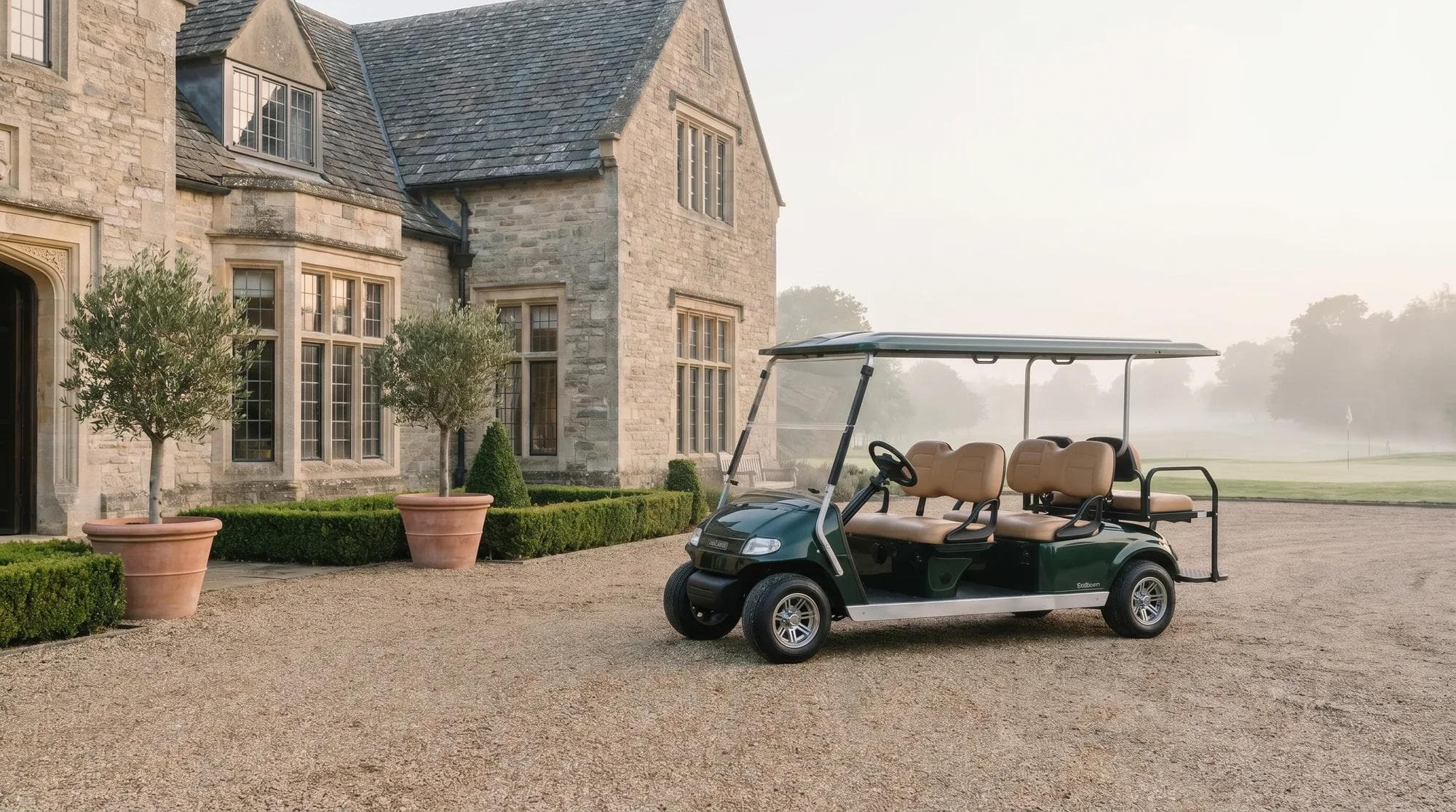
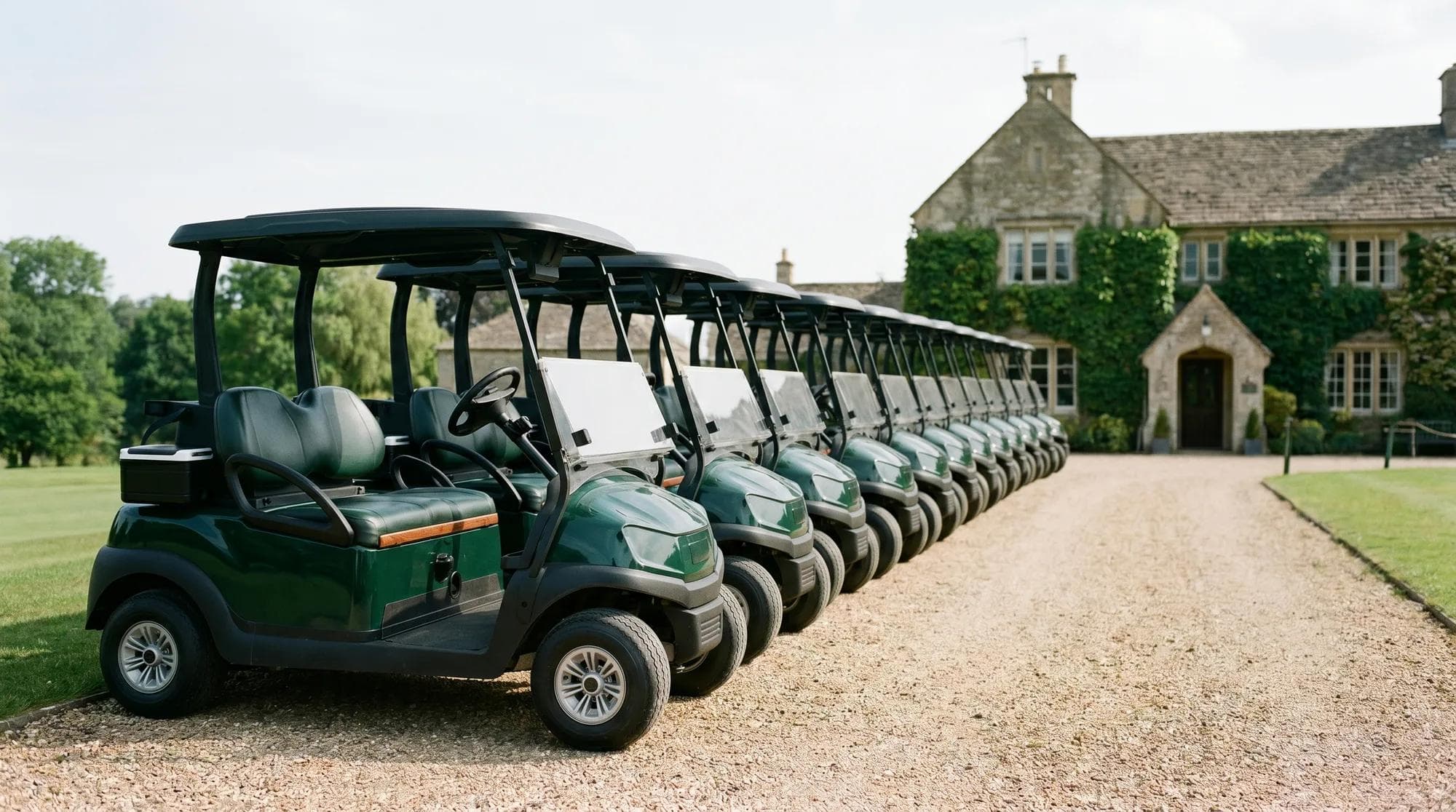
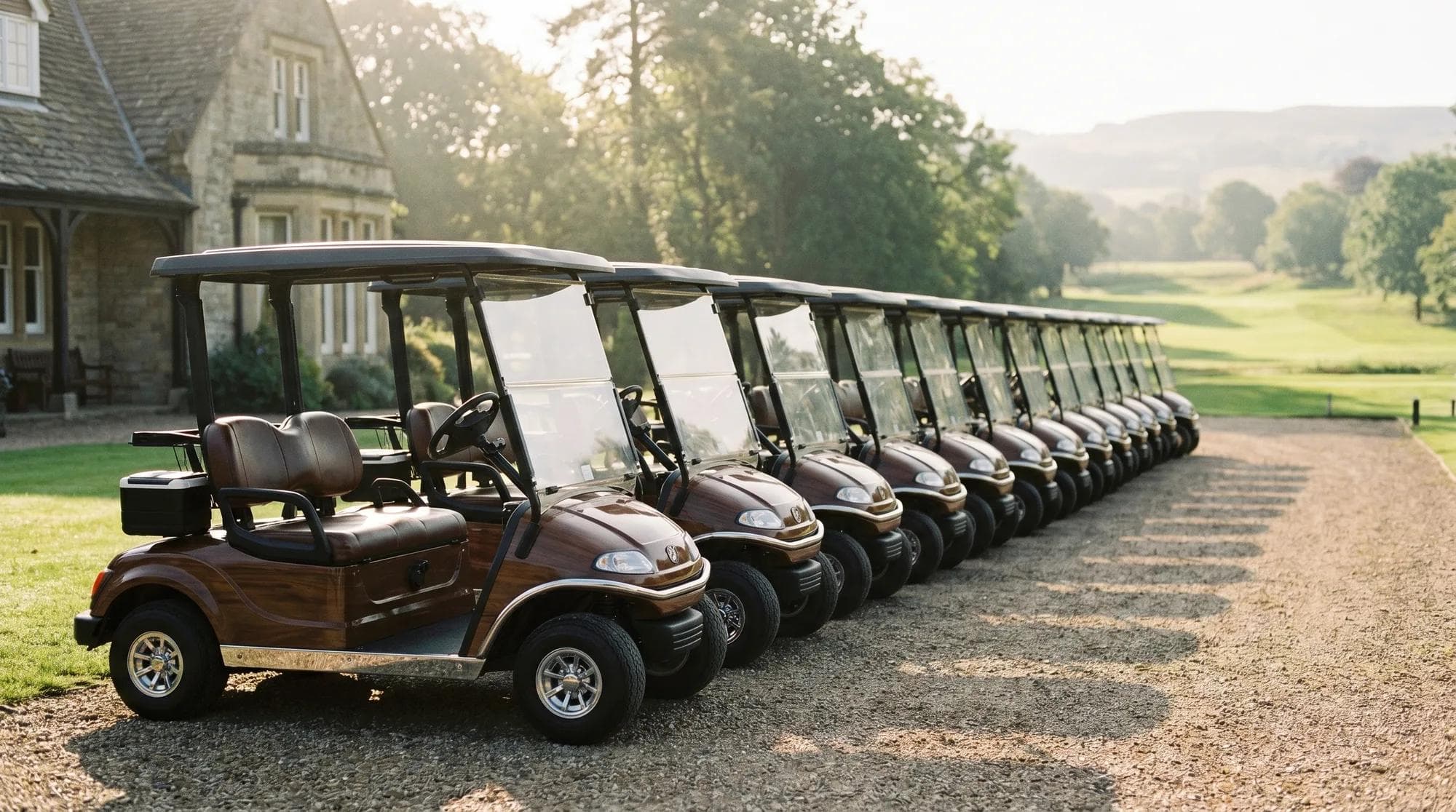
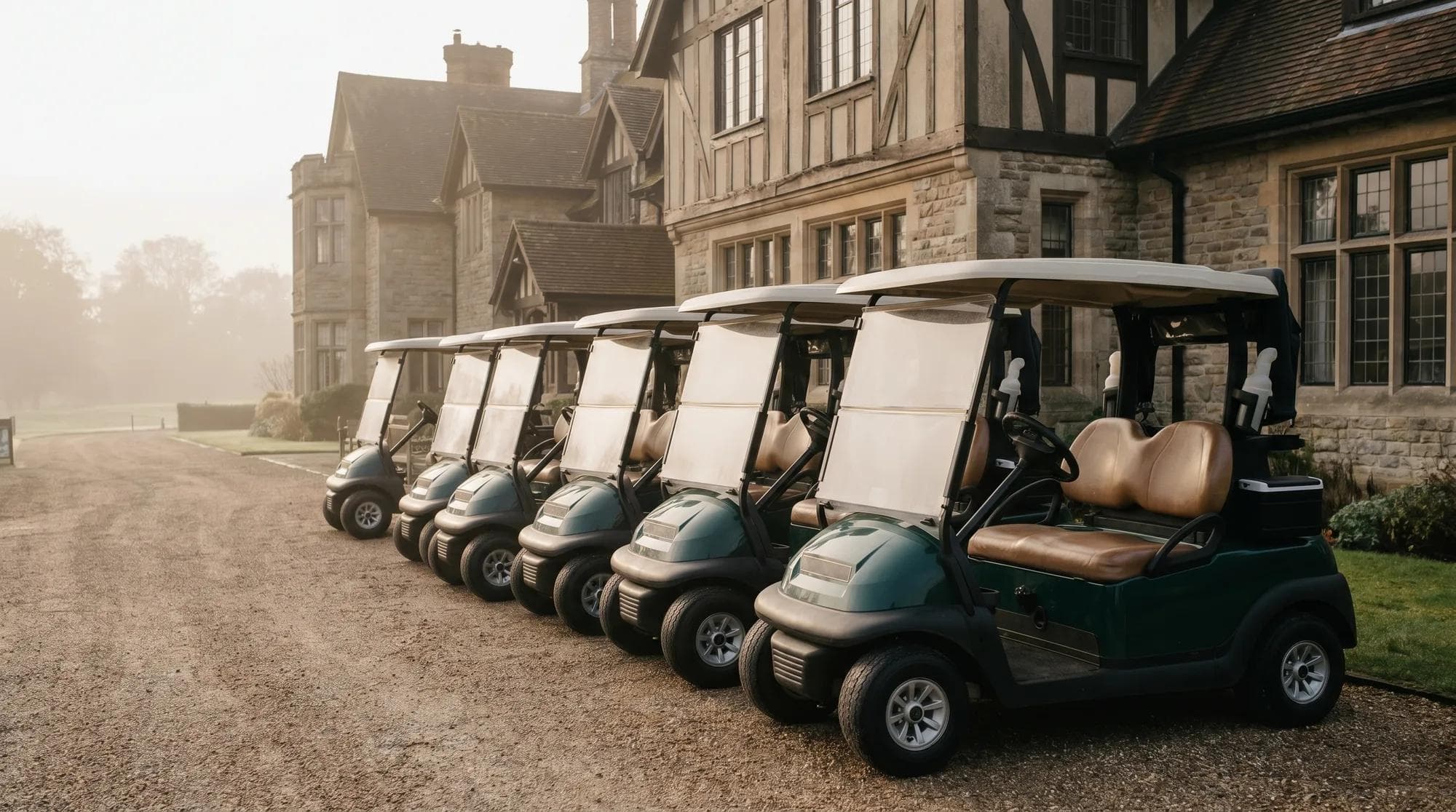
A matched, branded fleet does more than look smart. It tells members and visitors that the club takes pride in the details, and it carries your name across the course and out into every photo taken on the first tee. A row of mismatched, scuffed golf carts says the opposite. Custom livery, your colors, your crest, consistent across every vehicle, is one of the cheapest pieces of brand presence a club can buy, and it works every single day the fleet is out.
A branded fleet is your club crest on wheels, seen on every round and in every photo on the first tee.
Because every cart we build is made to your specification, branding is specified from the start rather than stuck on afterwards. Colors, seat trim, the club crest, sponsor panels if you sell them, all built in. We cover the options in our guide to custom fleet branding for golf carts, and the golf clubs sector page shows how it comes together.
The revenue case for a cart fleet
A fleet isn't just a cost. Cart hire is a direct revenue line, and for many clubs a healthy one, because demand holds up across the seasons and the marginal cost of one more round is small. Beyond the hire fee, golf carts widen who can play your course: older members, those recovering from injury, anyone who'd otherwise walk away. They also keep rounds moving on a long or hilly layout, which lets you fit more groups through on a busy day. And a branded sponsor panel can turn the fleet into an advertising space you sell.
Servicing, warranty and keeping the fleet running
Uptime is where a fleet is won or lost. Members forgive a lot, but they don't forgive a flat fleet on the one day they planned to play. Electric golf carts help here: with no oil, filters, plugs or exhaust, there's far less to service than a gas fleet and far less to go wrong. The battery is the part that matters most over time, so a quality lithium pack and a sensible charging routine keep the whole fleet predictable. For the day-to-day, our golf cart fleet management guide covers charging, rotation and record-keeping.
This is where we differentiate. Several competitors build a strong cart, and we'll say so honestly. What sets us apart for a club is the package around the vehicle: a premium, built-to-order standard, branding done properly, finance and leasing arranged on your quote, and a 3-year warranty backed by a 24-hour priority call-out. When a cart goes down on a Saturday, the speed of the response is what protects your hire revenue and your members' goodwill. That's the part worth buying for.
Winter use and the off-season
British clubs run year-round, and the fleet has to cope with it. A proper roof and screen turn a fair-weather cart into one members will actually use in November. Cold weather trims battery range, so plan for shorter winter range and keep packs charged and stored sensibly rather than left flat in a cold shed. If you scale the fleet down over winter, this is exactly where a lease term or seasonal hire earns its place, letting you carry fewer golf carts through the quiet months without owning vehicles that sit idle.
Plan your club's cart fleet
Tell us your peak day, your membership and how you'd like to pay, and we'll size a branded, built-to-order fleet around your club with a tailored quote, finance or leasing, and 24-hour support behind it.
Frequently asked questions
How many golf carts does a club need?+
Size the fleet to your busiest realistic day, not your average, then add one or two spare to cover servicing and charging. A smaller members' club might run 4 to 8, a busy parkland club 8 to 15, and a resort course with strong visitor demand 15 or more. Track your peak hire requests before you commit.
Is it better to lease or buy golf carts for a club?+
Buying gives the lowest long-run cost and full control of branding, which suits a permanent core fleet. Leasing keeps capital free, fixes your monthly cost and makes fleet refreshes easy. Many clubs own or lease a core fleet and use short-term hire to cover seasonal peaks.
Can a golf cart fleet make money for the club?+
Yes. Hire is a direct revenue line, and golf carts also widen who can play and keep rounds moving on a busy day so you fit more groups through. A branded sponsor panel can add advertising income too. The catch is uptime: revenue only counts when the cart is available to hire.
Can golf carts be branded in club colors?+
Yes. Because every cart is configured to your specification, livery, seat trim, your crest and any sponsor panels are specified from the start rather than added afterwards. A matched, branded fleet lifts the member experience and carries the club's name across the course every day.
Are electric golf carts reliable enough for a club fleet?+
Electric golf carts have far less to service than gas ones, with no oil, filters or exhaust, so there's less to fail. The battery is the part to look after, which a quality lithium pack and a sensible charging routine handle. Every build comes with a 3-year warranty and a 24-hour priority call-out to protect uptime.
Related solutions
Ready to explore what we build?
See the vehicles and the setting this applies to, or get a tailored quote built around your site.
Ready to find the right golf cart?
Tell us how and where it will work and we will specify a vehicle and a tailored quote built around you. Every build comes with a 3-year warranty and a 24-hour priority call-out.
Our guides are written and reviewed by the Hawke Electric Vehicles team, the people who specify, build, deliver and support the vehicles. We focus on honest, practical advice and flag where a figure depends on the build rather than guessing.
More guides by Hawke