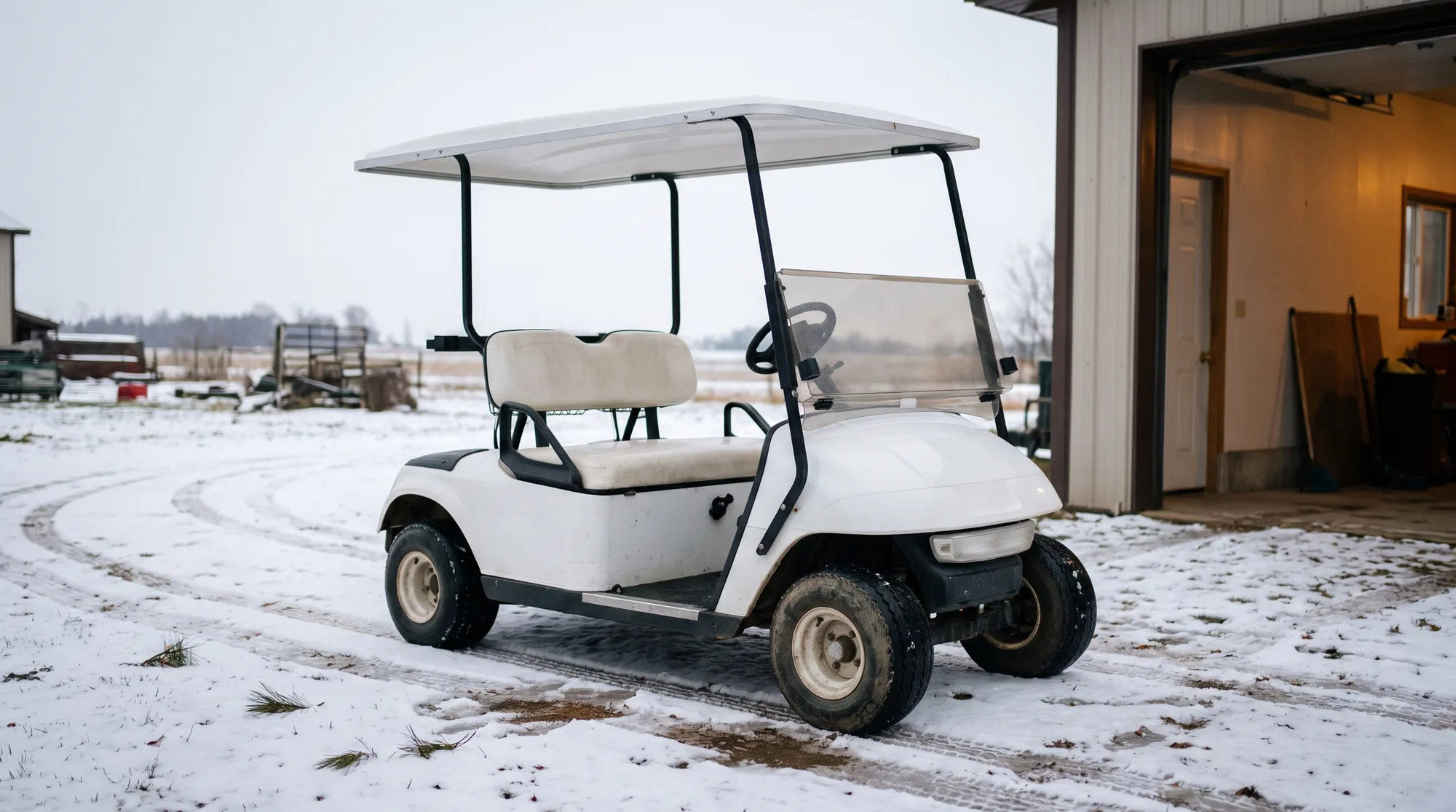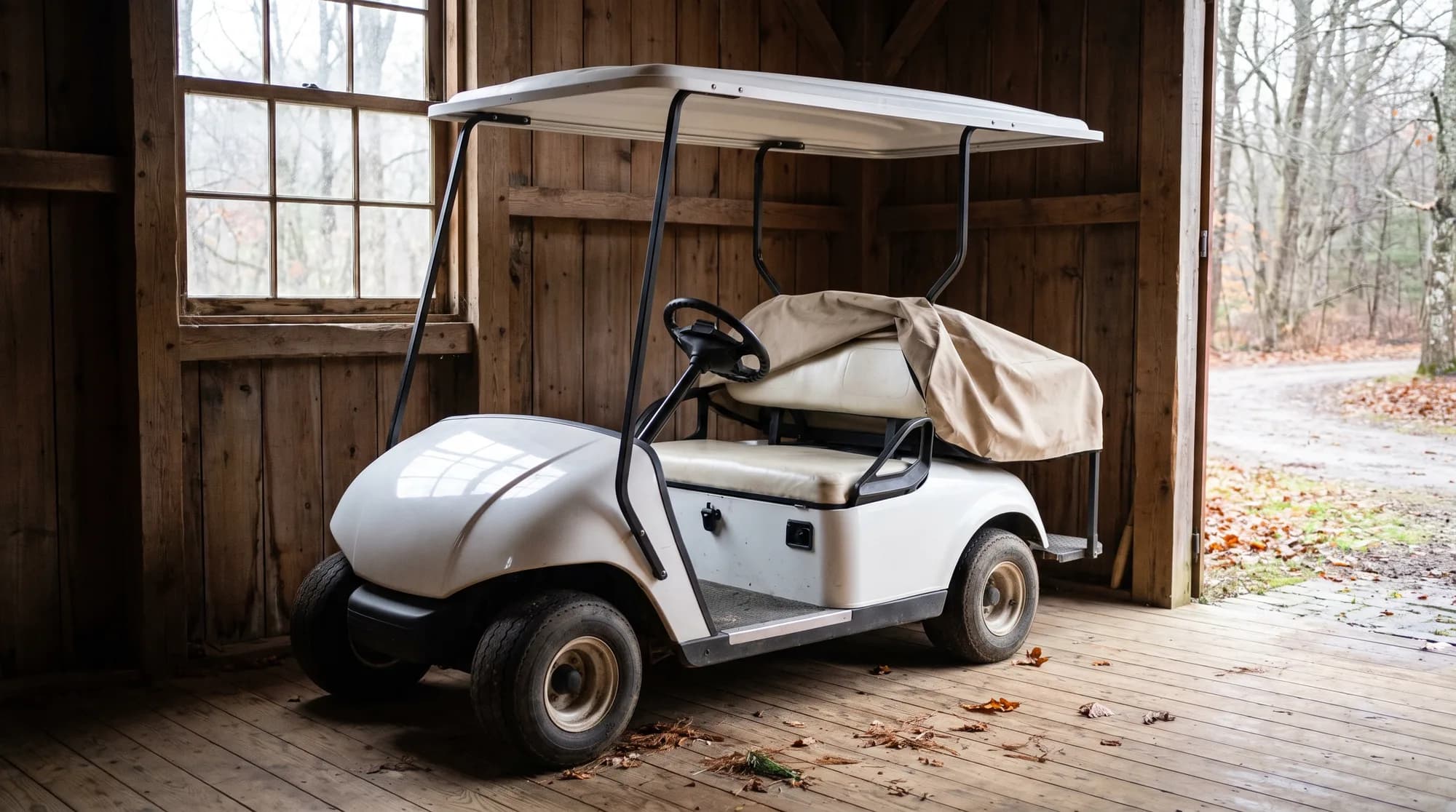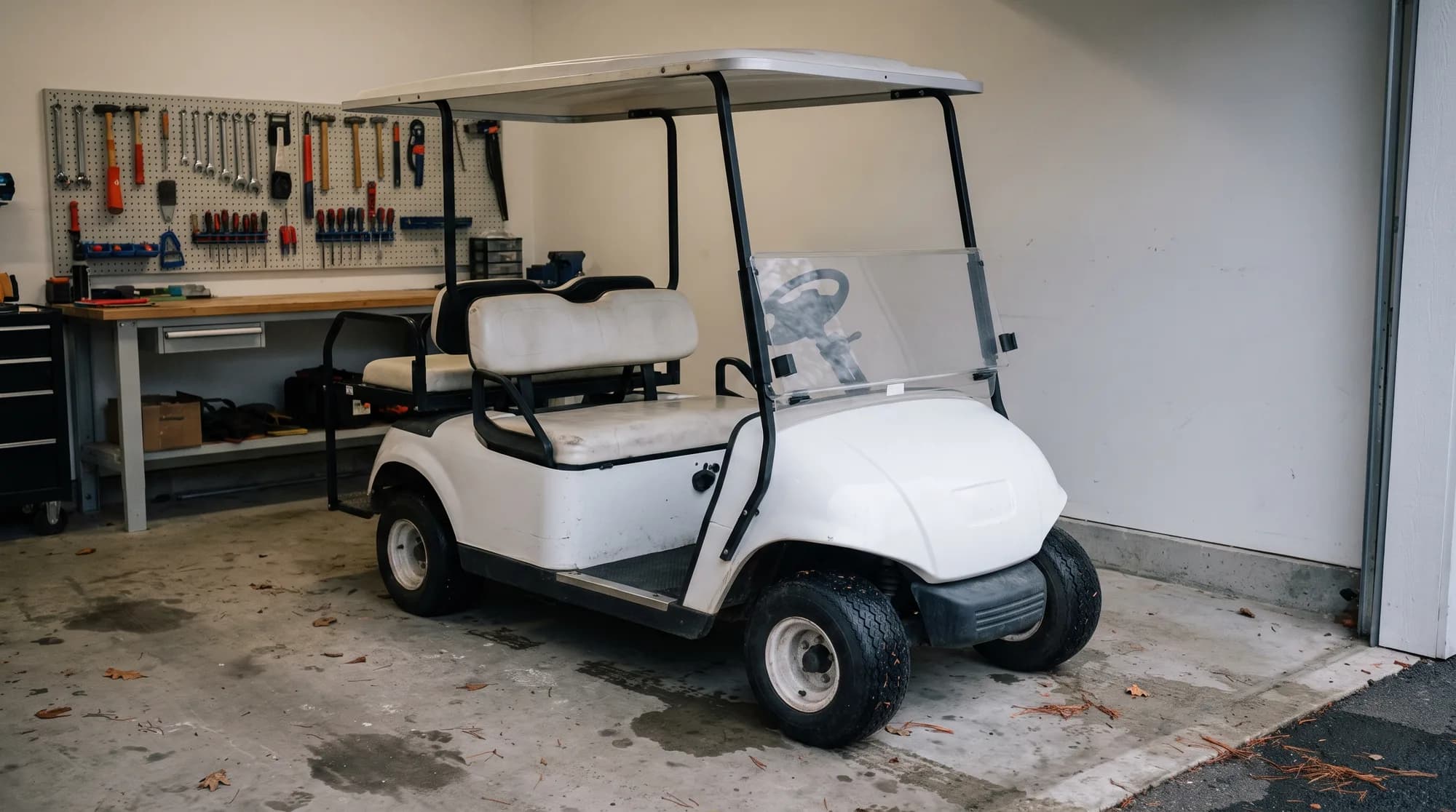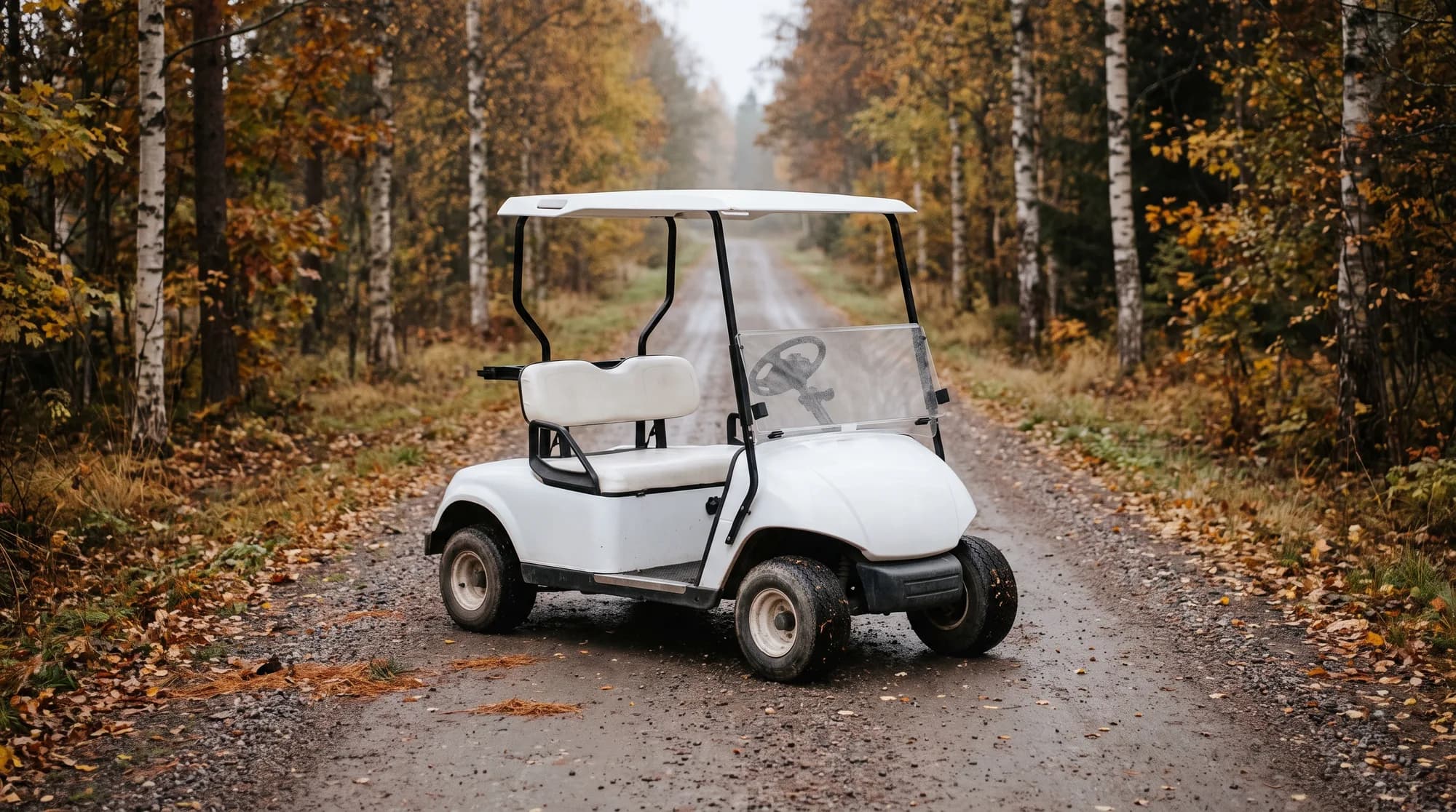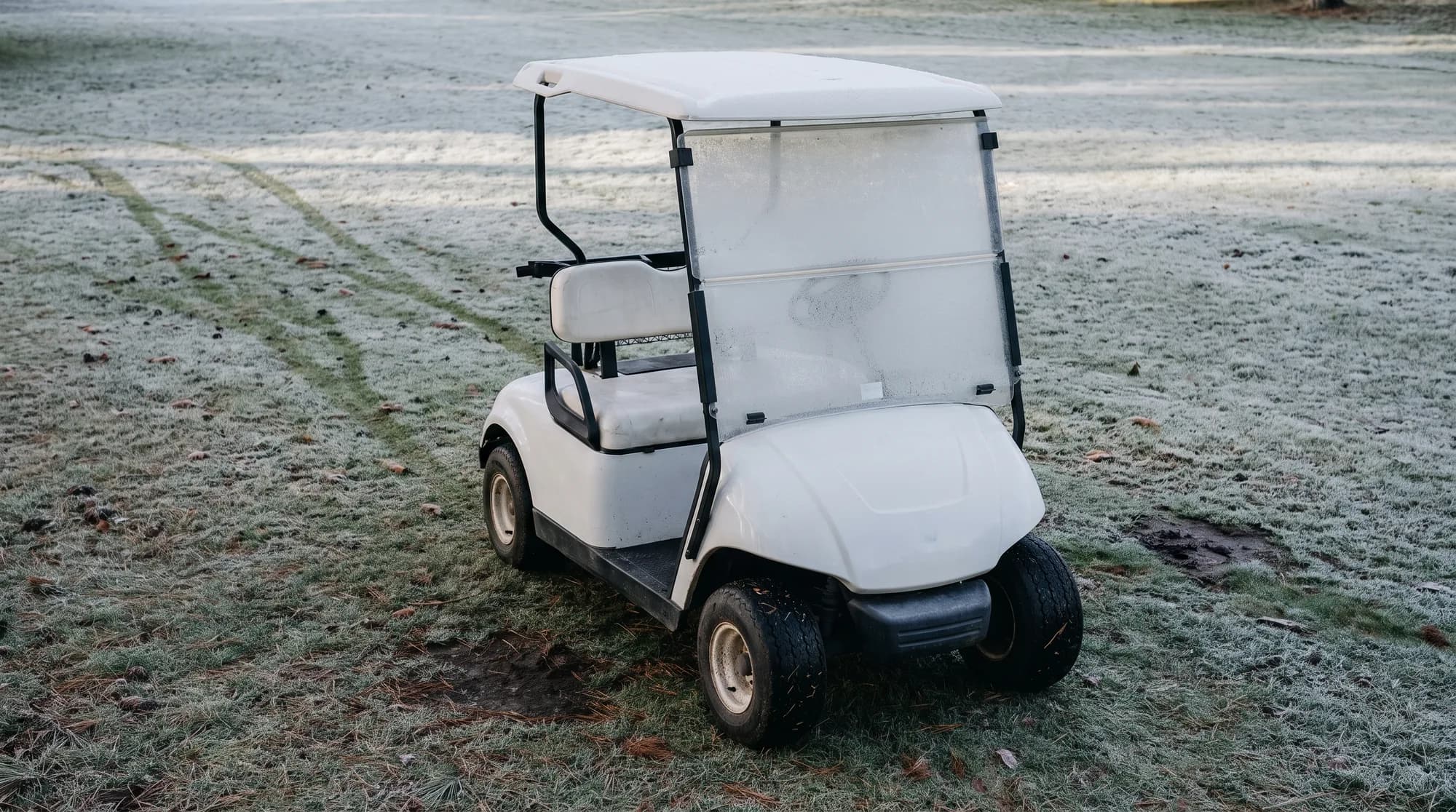
You turn the key on a cold October morning at the cottage, press the pedal, and nothing happens. No movement, maybe a click, maybe total silence. Cold-weather no-starts are the most common golf cart complaint in Canada, and the good news is that the causes are few and mostly cheap. The bad news is that people tend to guess at random, replace parts that were fine, and miss the one check that matters. This guide walks the diagnosis in the order a technician would, for electric carts first, with a gas cart section at the end.
- Cold cuts battery output hard. A lead-acid pack that was marginal in September can be too weak to move the cart at minus 10 degrees Celsius.
- Check the obvious first: tow/run switch position, charger still plugged in, key switch, and the battery disconnect.
- A single click from under the seat usually points to the solenoid or to a pack too weak to hold voltage under load.
- Lithium carts have a different failure mode: the BMS may lock out charging, and sometimes discharging, below its temperature cutoff. That is protection, not a fault.
- Never charge a frozen lead-acid battery. Thaw it indoors first and inspect for damage.
- If the pack is more than four or five seasons old, cold-morning failures are usually the battery telling you its time is up.
Why cold makes weak carts fail
Battery output depends on chemical reactions, and chemical reactions slow as temperature drops. A lead-acid pack at minus 18 degrees Celsius can deliver only around half of its rated capacity, and its voltage sags harder under load. A cart controller has a low-voltage threshold, and when the sagging pack dips below it, the controller cuts power to protect the batteries. So a pack that had just enough margin in warm weather falls off a cliff on the first hard frost. This is why cold does not really cause the failure. It reveals a weakness that was already there, usually age, sulphation from sitting partly discharged, or one bad battery dragging down the set.
The diagnostic order for an electric cart
- 01
Rule out the switches
Check the tow/run switch is on run, the key is fully on, the direction selector is firmly in forward or reverse, and the charger is unplugged. Many carts disable drive while the charge cable is connected, and a switch nudged during winter storage is a classic false alarm.
- 02
Look at the battery meter, then measure
If the state-of-charge meter reads low, charge first and retest. Better, put a multimeter across the full pack. A 48-volt lead-acid pack should read roughly 50 to 51 volts fully charged at rest. Anything in the low 40s is deeply discharged and may not move the cart at all in the cold.
- 03
Listen for the click
Press the pedal with the key on. A single click from the solenoid with no movement means the control side is working but power is not reaching the motor, which points to a weak pack sagging under load, a worn solenoid, or corroded main cables. Total silence points further upstream: key switch, pedal microswitch, fuse or a controller in fault.
- 04
Inspect terminals and cables
Corrosion builds resistance, and cold plus high current exposes it. Look for white or green crust, warm or discoloured terminals, and swollen cable ends. Clean with a baking soda solution, tighten, and coat with terminal protector. This one fix resolves a surprising share of winter no-starts.
- 05
Test each battery, not just the pack
In a six by 8-volt or four by 12-volt pack, one failed battery drags the rest down. Measure each battery individually after a charge. A unit reading well below its siblings, or one that smells of rotten eggs or has a bulged case, is the culprit. Batteries are replaced as a matched set in most cases.
- 06
Only then suspect the electronics
Controllers, motors and pedal sensors do fail, but far less often than batteries and connections. If the pack tests strong, terminals are clean, and the cart still will not respond, it is time for a technician with the diagnostic tool for your controller rather than parts-swapping.
Lithium carts: when refusing to start is the battery doing its job
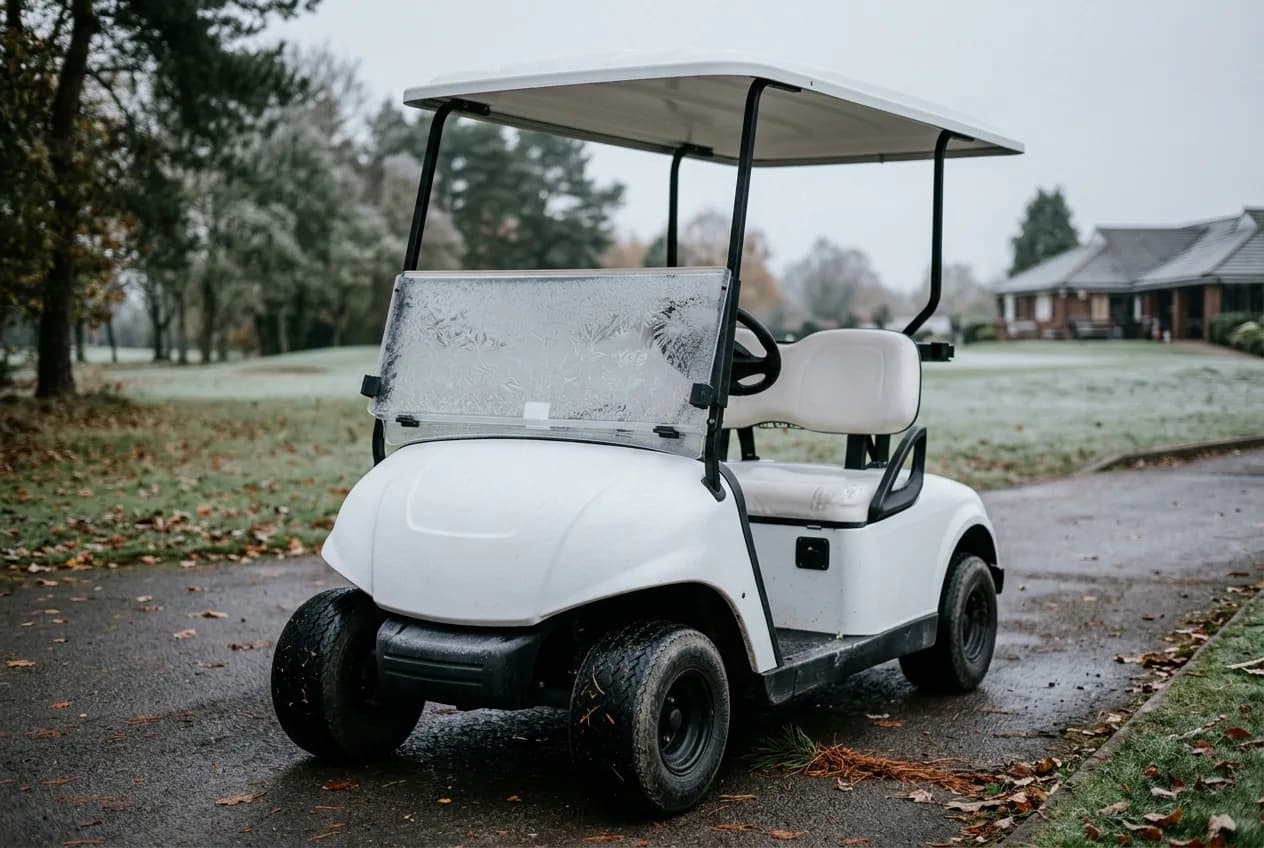
Lithium golf carts fail differently in the cold, and the difference confuses people. A lithium battery must not be charged below 0 degrees Celsius, because charging a frozen cell plates metallic lithium inside it and permanently damages capacity. A properly designed battery management system therefore blocks charging below its cutoff, and some systems also limit or block discharge in extreme cold to protect the cells. So a lithium cart that sat in a minus 20 shed may garbage to charge, or drive with reduced power, until the pack warms up. Nothing is broken. Move the cart somewhere warmer, give the pack several hours, ideally overnight, to warm through, and try again. Some premium packs include self-heating that manages this automatically, which is a feature worth asking about when buying a cart for a cold province. Our guide to golf cart batteries in cold weather covers the chemistry choice in full.
Gas carts: a different checklist
- The starter battery is still the first suspect. It is a lead-acid unit with the same cold-weather weakness as a drive pack, so test and charge it before blaming the engine.
- Stale fuel is the second. Gasoline left over winter without stabilizer degrades, and the fix is fresh fuel and possibly a carburetor clean.
- Cold thickens oil. Use the winter-grade oil the engine manual specifies, since summer-weight oil makes cold cranking noticeably harder.
- Check the choke operates fully. A cold engine with a lazy choke will crank forever and never catch.
- A cart stored in a heated space starts far more willingly. There is no block heater culture for golf carts the way there is for trucks, so warm storage does the same job.
Preventing the next cold no-start
Almost every failure in this guide is preventable with the storage routine covered in our golf cart winter storage guide: store lead-acid fully charged and top it up monthly, keep lithium at partial charge and never charge it frozen, keep terminals clean, and flip the storage switch so nothing drains the pack. If a lead-acid pack is heading into its fifth Canadian winter, plan its replacement on your schedule rather than waiting for the morning it strands you. And if you are choosing a new cart for a cold region, weight the battery decision heavily. It is the single spec that decides how the cart behaves from November to April.
Tired of cold-morning gambles?
We build carts to order with battery systems specified for Canadian conditions. Tell us your winters and we will spec around them.
Frequently asked questions
Why does my golf cart click but not move in the cold?+
A single click is usually the solenoid engaging while the battery pack sags below the controller's cutoff under load. Charge the pack fully, clean the terminals and retest. If it persists, test each battery individually, since one failed unit can disable the whole pack.
Can cold weather permanently damage golf cart batteries?+
Yes, in two ways. A discharged lead-acid battery can freeze and crack, and a lithium battery charged below freezing suffers permanent lithium plating. Both are prevented by correct storage, not by any driving technique.
Why won't my lithium golf cart charge in winter?+
Most likely the battery management system is blocking the charge because the pack is below its low-temperature cutoff, typically around freezing. Warm the cart indoors for several hours and try again. This is protection working as designed.
At what temperature do golf carts stop working?+
There is no single cutoff. A healthy lead-acid cart will still drive at minus 20 degrees Celsius with reduced range, while a worn pack may fail just below zero. Lithium carts typically discharge fine to around minus 20 but will garbage to charge below freezing.
Should I jump-start a golf cart from a car?+
No. Cart packs run at 36, 48 or 72 volts and a 12-volt car booster is the wrong tool. Charge the pack with its proper charger, or charge individual 12-volt batteries with a compatible charger if you know what you are doing.
Related solutions
Ready to explore what we build?
See the vehicles and the setting this applies to, or get a tailored quote built around your site.

Ready to find the right golf cart?
Tell us how and where it will work and we will specify a vehicle and a tailored quote built around you. Every build comes with a 3-year warranty and a 24-hour priority call-out.
Our guides are written and reviewed by the Hawke Electric Vehicles team, the people who specify, build, deliver and support the vehicles. We focus on honest, practical advice and flag where a figure depends on the build rather than guessing.
More guides by Hawke