Tires are the cheapest component on a utility vehicle to get right and the most expensive to get wrong, because every job the vehicle does passes through them under load. The choice is simpler than tire marketing suggests: turf tires for fine grass you must not mark, all-terrain tread for the mixed ground most working sites actually are, and industrial or puncture-resistant tires for yards, waste areas and anywhere debris lives. Add correct pressures, an eye on laden wear and an honest replacement point, and that is the whole subject. This guide covers utility vehicle tires specifically, working machines carrying loads and towing, which wear and behave differently from passenger golf carts; for the golf and passenger side, our golf cart tires guide covers that ground.
- Match tread to the worst surface on your regular routes, not the best.
- Turf tires protect fine grass; all-terrain suits mixed estate ground; industrial tires resist punctures in yards and waste areas.
- Pressure is half the job: it sets grip, ground pressure, wear rate and energy use.
- Laden vehicles wear tires faster than passenger golf carts; check monthly, not annually.
- Replace on tread depth and condition, not age alone, and always in matched pairs across an axle.
The three families of utility vehicle tires
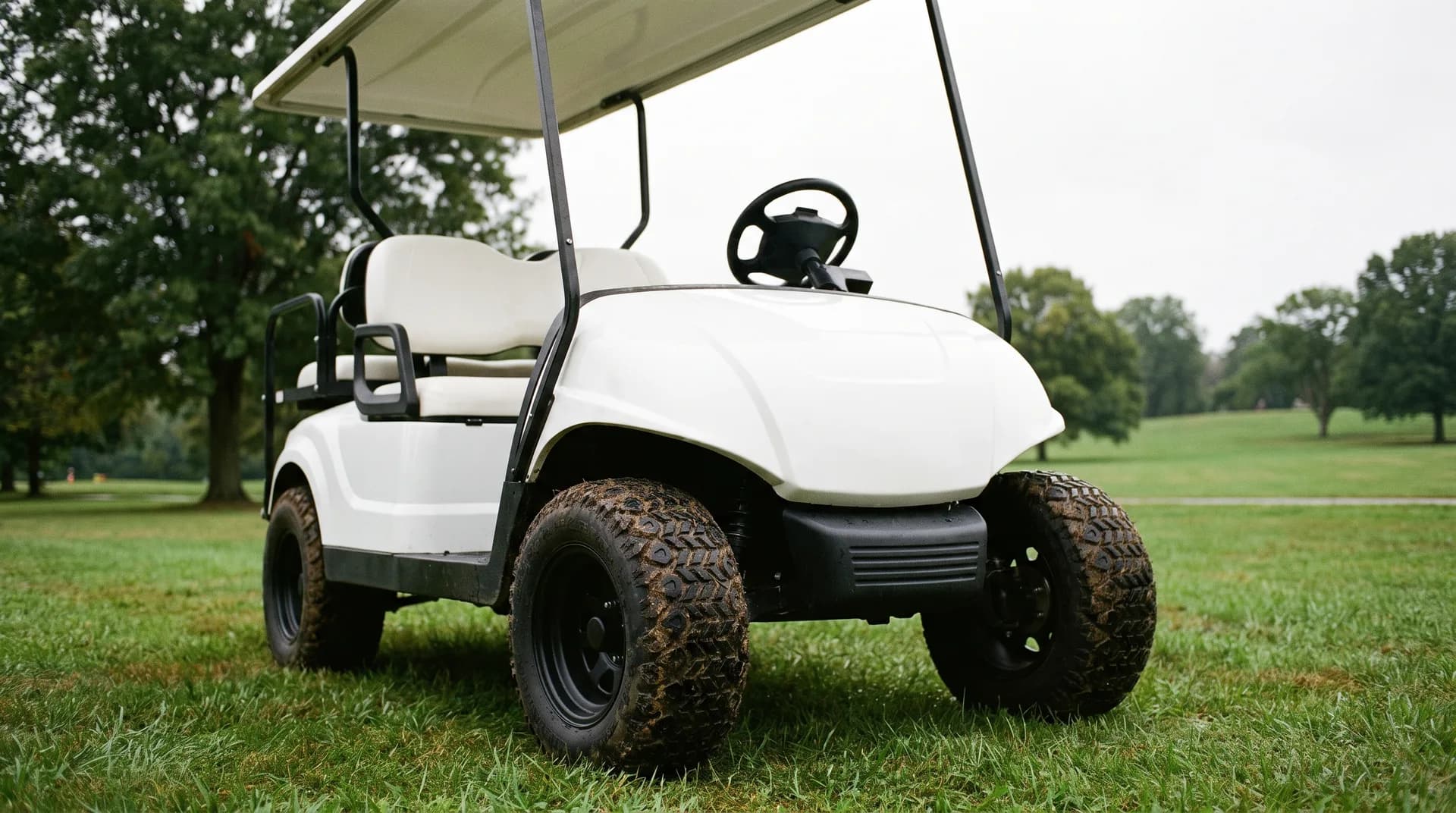
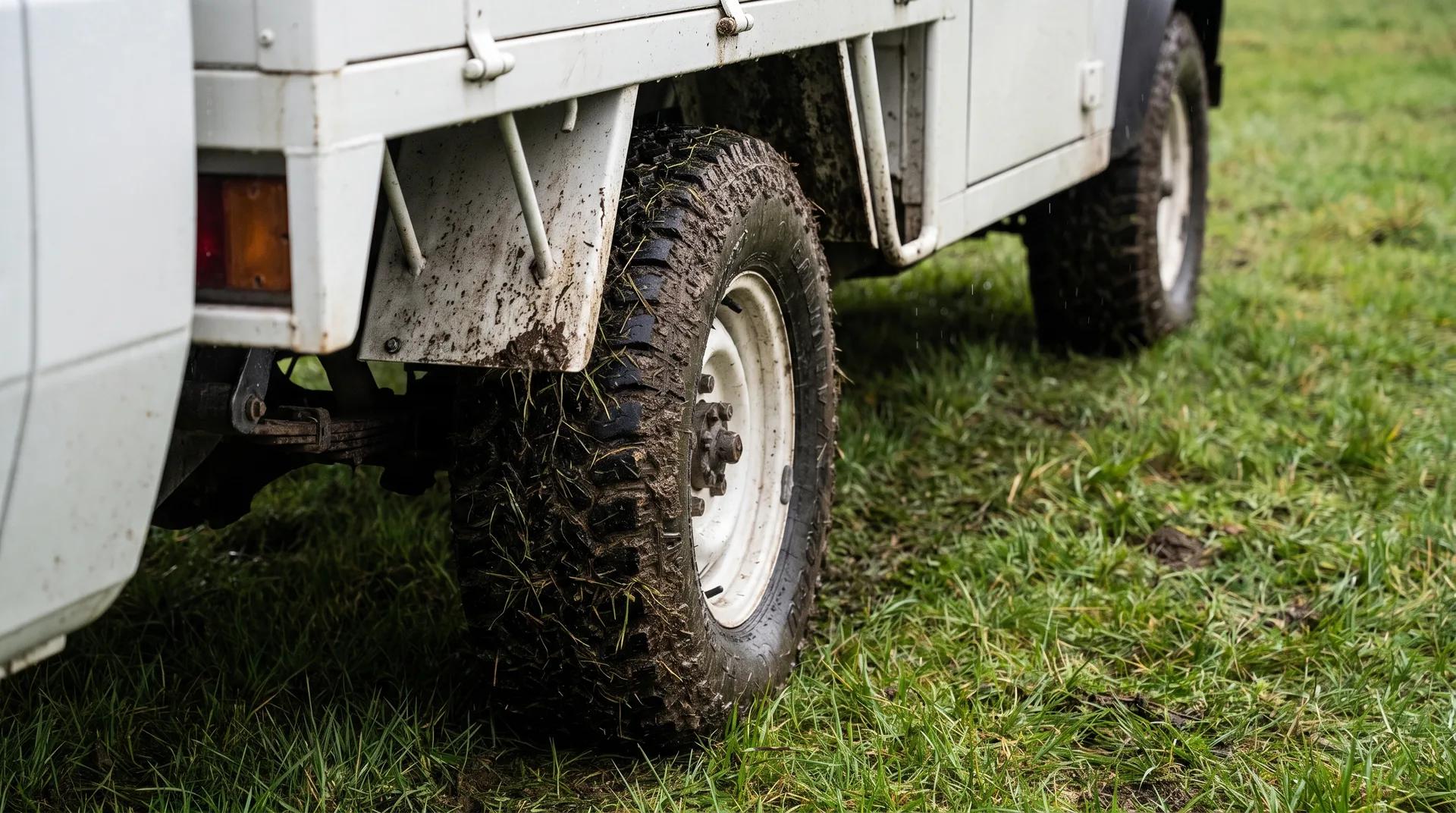
Turf tires carry a shallow, rounded tread that spreads load and grips gently, built to cross fine grass daily without marking it. They are the right choice where the surface itself is the asset: sports turf, formal lawns, greens surrounds. Their limit is bite; on mud or wet slopes they let go early. All-terrain tires are the working default for most UK sites, a deeper block tread that grips gravel, wet grass, tracks and light mud while remaining civilised on tarmac. If your routes mix surfaces, which almost every estate, campus and park does, this is where to start. Industrial tires complete the set: stiffer carcasses, puncture-resistant construction and in some cases solid or foam-filled builds, made for yards, construction compounds and waste areas where nails, glass and sharp scrap end the working day for anything softer. They ride more firmly and are heavier, so they are a choice for the ground that needs them, not a default.
- Turf
- Fine grass, formal lawns
- All-terrain
- Mixed ground: grass, gravel, tracks
- Industrial / puncture-resistant
- Yards, waste areas, debris-strewn sites
- Turf
- Limited
- All-terrain
- Good
- Industrial / puncture-resistant
- Good on hard ground, tread-dependent
- Turf
- Kindest to turf
- All-terrain
- Moderate, can mark soft wet grass
- Industrial / puncture-resistant
- Hard on soft ground
- Turf
- Standard
- All-terrain
- Standard to reinforced
- Industrial / puncture-resistant
- The reason to buy them
- Turf
- Sports grounds, formal estates
- All-terrain
- Most estates, campuses, parks
- Industrial / puncture-resistant
- Industrial yards, recycling and construction sites
| Turf | All-terrain | Industrial / puncture-resistant | |
|---|---|---|---|
| Best surface | Fine grass, formal lawns | Mixed ground: grass, gravel, tracks | Yards, waste areas, debris-strewn sites |
| Grip in wet and mud | Limited | Good | Good on hard ground, tread-dependent |
| Surface protection | Kindest to turf | Moderate, can mark soft wet grass | Hard on soft ground |
| Puncture resistance | Standard | Standard to reinforced | The reason to buy them |
| Typical buyer | Sports grounds, formal estates | Most estates, campuses, parks | Industrial yards, recycling and construction sites |
Pressure and ground pressure: the half most sites skip
Tread gets the attention, but pressure does half the work. Run high and the tire crowns: grip falls, the center of the tread wears fast, the ride hardens and the vehicle marks soft ground more, because the same weight presses through a smaller patch. Run low and the tire squirms: shoulders wear, energy use rises, and a laden sidewall runs hot and ages early. The manufacturer's figures are the starting point, and on a working vehicle they matter more than on a passenger one because the load in the bed changes the equation; a vehicle that runs laden all day may warrant the upper end of its pressure range. Ground pressure is the same idea from the grass's point of view: weight spread over the tire contact patch. Correct pressures on appropriate tires are why a laden utility vehicle can cross ground a delivery van would trench, a subject our guide on whether golf carts damage grass explores. Check pressures monthly with a gauge, and always when the season or the typical load changes.
Laden wear: why utility vehicle tires age faster
A passenger cart carries people; a utility vehicle carries whatever the job demands, and the tires feel the difference. Payload accelerates every wear mechanism: tread scrubs faster in turns, sidewalls flex more, and stop-start duty with a loaded bed puts more energy through the rubber in a morning than a golf loop does in a week. Towing adds its own signature, extra drive-axle wear from pulling and, if the trailer is loaded nose-heavy, extra load on the rear tires too. The practical response is rhythm rather than worry: walk around the vehicle monthly, look for uneven wear patterns that flag a pressure or alignment issue, check for cuts and embedded debris, especially on industrial sites, and treat any repeated puncture location as a message about either the route or the tire specification. Replace on condition, not the calendar: when tread depth no longer suits your worst surface, when cracking appears, or when punctures become a habit, and replace in matched pairs across an axle so grip stays even.
Specifying tires when you buy
The best time to get tires right is at specification, when the choice costs nothing but a conversation. Describe the routes honestly, including the worst hundred metres, the wet corner, the gravel yard, the skip area, because tires are chosen for the worst regular surface, not the average one. Sites with mixed duties sometimes split the fleet: turf tires on the vehicle that lives on the lawns, industrial on the one that works the yard, which beats compromising both on one middling choice. Every vehicle across our electric utility vehicle range is specified with tires matched to the buyer's ground as part of the build, and changing tread type later is a straightforward job, so a vehicle whose duties change is not stuck with its original rubber. If in doubt, all-terrain is the forgiving default for British ground, and the pressure card in the cab does the rest.
Frequently asked questions
What tires should a utility vehicle have for grass?+
For fine or formal grass you must not mark, turf tires at correct pressures. For ordinary grass mixed with paths and tracks, all-terrain tread is usually the better working choice, accepting slightly more marking in soft wet conditions in exchange for real grip.
Are solid or puncture-resistant tires worth it?+
On sites with debris, recycling areas, construction yards, anywhere sharp material lives, yes: a puncture-resistant or solid tire pays for itself the first time it ignores a nail. On grass and mixed estate ground they are unnecessary and give a firmer ride.
What pressure should utility vehicle tires run at?+
Follow the manufacturer's figure for the tire and vehicle, and account for load: a habitually laden vehicle may warrant the upper end of the stated range. Check with a gauge monthly. Wrong pressure causes fast center or shoulder wear, poor grip and higher energy use.
How often should tires be replaced?+
On condition rather than age: when tread depth no longer grips your worst regular surface, when sidewalls crack, or when punctures recur. Laden working vehicles reach that point sooner than passenger golf carts, so inspect monthly and replace in matched pairs across an axle.
Can I change tire type after buying the vehicle?+
Yes. Swapping between turf, all-terrain and industrial tires is a routine job, and it is a sensible response when a vehicle's duties change. Getting the specification right at purchase is cheaper, so describe your ground when you order.
Get the tires specified with the vehicle
Tell us your surfaces, loads and the worst corner of the site, and we will specify tread, pressures and drivetrain to match.
Related solutions
Ready to explore what we build?
See the vehicles and the setting this applies to, or get a tailored quote built around your site.

Ready to find the right golf cart?
Tell us how and where it will work and we will specify a vehicle and a tailored quote built around you. Every build comes with a 3-year warranty and a 24-hour priority call-out.
Our guides are written and reviewed by the Hawke Electric Vehicles team, the people who specify, build, deliver and support the vehicles. We focus on honest, practical advice and flag where a figure depends on the build rather than guessing.
More guides by Hawke